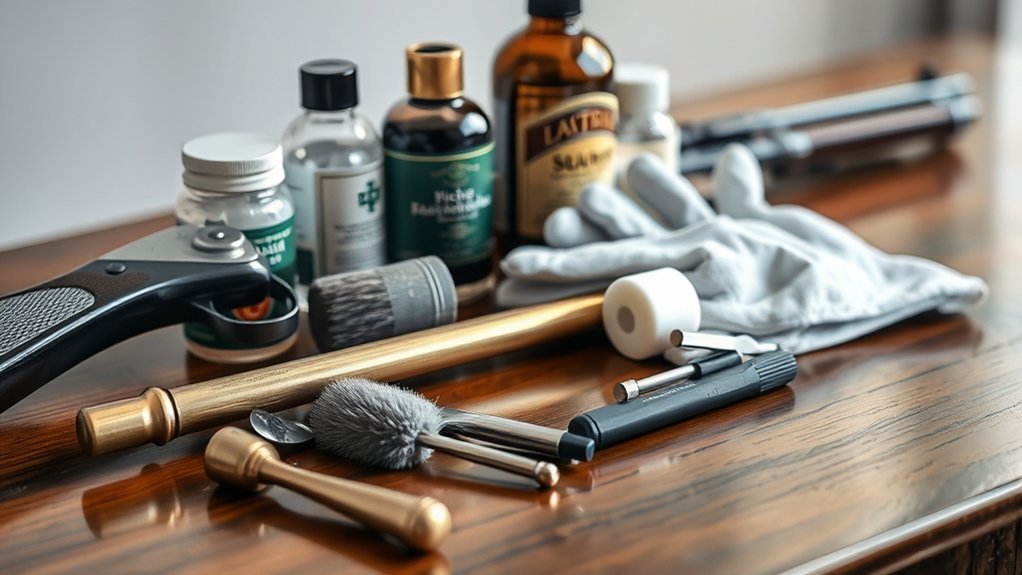
A practical gun cleaning kit should include a one-piece coated steel or carbon-fiber rod (or a caliber-matched bore snake for quick cleaning), a bore guide, caliber-matched brushes, jags, patches, a suitable solvent or CLP, firearm-rated lubricant, safety glasses, nitrile gloves, a cleaning mat, and the firearm owner’s manual. Before any cleaning, unload the firearm, verify the chamber and magazine well are empty, and remove all live ammunition from the room 1, 12. Use eye protection, good ventilation, and gloves when chemical labels or contamination risks call for them 2, 3.
Last updated: September 21, 2026.
Quick Answer
Start with the essentials: a quality bore-cleaning tool, caliber-matched brushes and patch tools, solvent or CLP, firearm-rated lubricant, PPE, a protected work surface, and the owner’s manual. Add a chamber flag, vise, light, picks, mops, or specialty solvents only when your firearm and maintenance needs justify them. Always unload first and keep live ammunition out of the cleaning area.
Key Takeaways
- Start with safety: unload, verify clear, remove live ammo from the room, ventilate the bench, and use eye protection.
- Choose caliber-matched tools, including brushes, patches, jags, mops, and a bore guide when possible.
- Use solvent, CLP, oil, or grease according to the product label and your firearm owner’s manual.
- Avoid over-lubrication because excess oil can attract fouling, lint, and debris.
- Dispose of solvent-contaminated wipes, oily rags, and lead residue carefully according to local rules and EPA guidance.
At a Glance
| Time Required | Varies by firearm, fouling, and the maintenance task. Follow the owner’s manual rather than a fixed time estimate. |
| Difficulty | Beginner to intermediate. Field-stripping and lubrication steps vary by firearm model. |
| Tools Needed | Safety glasses, nitrile gloves, cleaning mat, rod or bore snake, bore guide, patches, jags, brushes, solvent, CLP or oil, and owner’s manual. |
| Cost | Basic kits are affordable, but higher-quality rods, guides, and caliber-specific tools usually cost more and last longer. |
What Should Be in a Gun Cleaning Kit?
For most routine maintenance, separate core tools from situational add-ons. This keeps the kit easier to use and reduces the temptation to force a tool or chemical that does not match the firearm.
| Priority | What to Include | Why It Matters |
|---|---|---|
| Essential | Owner’s manual, safety glasses, nitrile gloves when appropriate, and a cleaning mat | Supports model-specific maintenance and a safer, organized workspace. |
| Essential | One-piece coated/carbon-fiber rod with bore guide, or a caliber-matched bore snake for quick cleaning 7, 10 | Provides a controlled way to clean the bore while minimizing unnecessary contact with the throat or crown. |
| Essential | Caliber-matched brushes, jags or loops, and patches | Correct sizing improves contact with the bore and reduces the risk of binding. |
| Essential | Suitable solvent or CLP plus firearm-rated oil or grease approved by the manual 5, 6 | Removes the fouling you actually have and protects approved friction or corrosion points. |
| Situational | Chamber flag, vise, mops, picks, LED light, magnetic tray, and specialty copper/lead remover | Useful for visibility, organization, stubborn fouling, or specific firearm designs; not every bench needs all of them. |
A “universal” kit is only useful when its brushes, jags, patches, adapters, and rod system actually match the firearm you are maintaining. Caliber- or gauge-specific fit still matters even when the case is sold as universal.
Warning: Never clean a loaded firearm. Unload it, open the action, visually and physically verify the chamber and magazine well, and move all live ammunition out of the cleaning room before solvent, tools, or parts come out.
Cleaning Rods and Brushes
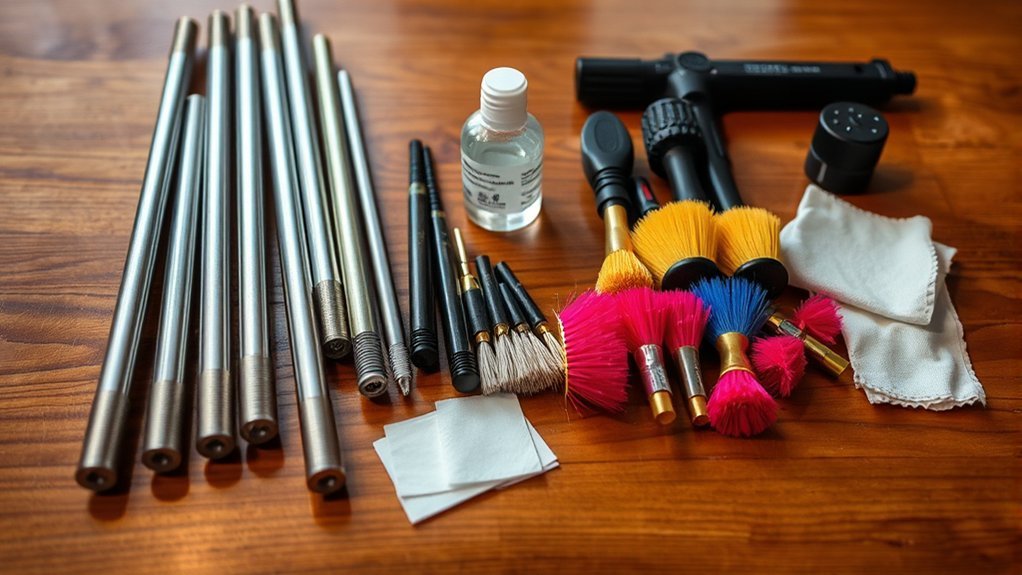
Cleaning rods and brushes are fundamental for accuracy and barrel life. For best results, prioritize a one-piece, coated steel or carbon-fiber rod with a freely rotating handle to follow the rifling. Avoid flimsy, segmented aluminum rods that can flex, embed grit, and risk bore wear 7, 8. A bore guide or muzzle guide, where breech access isn’t possible, helps center the rod and shield the throat or crown 7.
Match brushes to your caliber. Nylon is good for light fouling, while phosphor-bronze helps with stubborn carbon. Push the brush fully through before reversing to avoid binding; whenever possible, clean from the chamber end toward the muzzle 11, 12. Add caliber-specific jags, loops, and mops for patches.
Pro Tip: Label rods, jags, brushes, and mops by caliber or firearm family. That small habit prevents tight patches, loose patches, and accidental tool mix-ups at the bench.
Patches and Cleaning Cloths
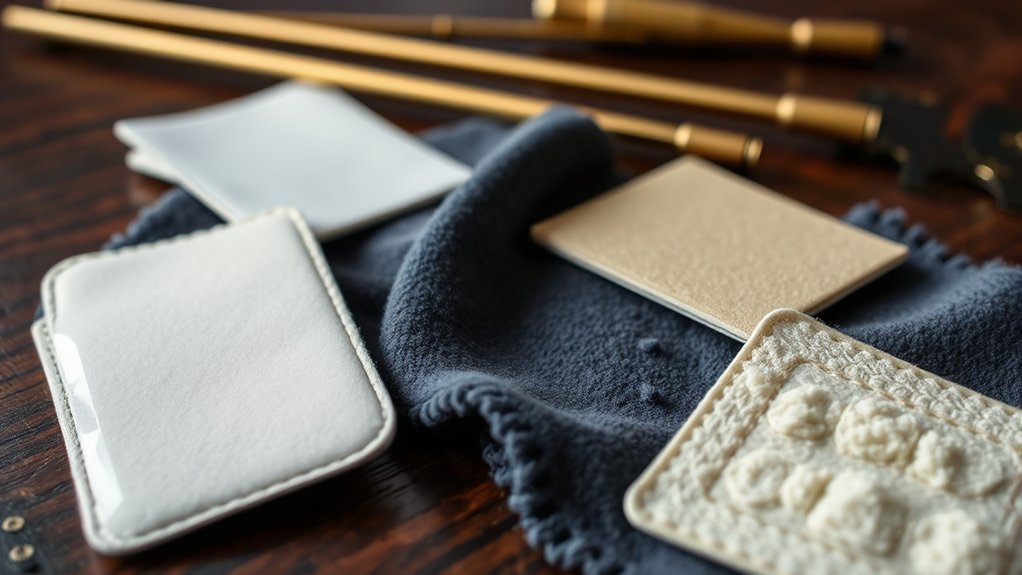
Use cotton or synthetic patches sized to the bore so they fit snugly without tearing or requiring excessive force. Keep lint-free cloths, such as microfiber, for exterior wipe-downs. Separate solvent-use cloths from oil-use cloths so you do not carry strong cleaner onto surfaces you meant to lubricate or protect.
Patch fit matters. A patch that is too loose may not contact the bore well, while one that is too tight can jam on the jag or make the rod flex. If you feel unusual resistance, stop and check the patch, jag, and bore path instead of forcing the rod.
Bore Cleaner and Solvents
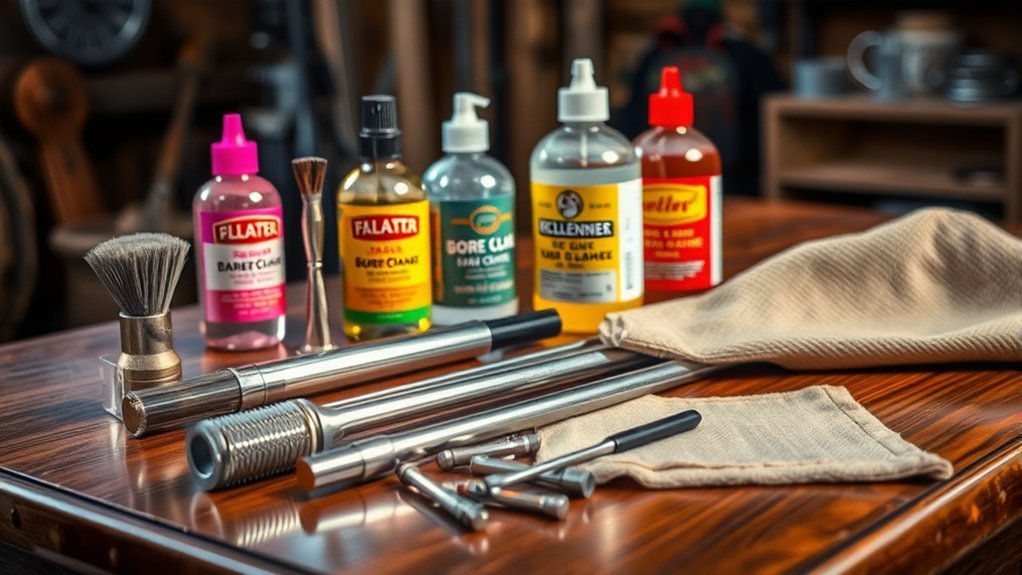
Select products appropriate to the fouling you’re treating: carbon removers, copper fouling removers, or all-in-one CLP. The current MIL-PRF-63460 specification defines U.S. military performance requirements for cleaner, lubricant, and preservative products used on weapon systems 5. Apply any solvent according to its label and listed dwell time. Work in a well-ventilated area and consult the Safety Data Sheet for handling and hazards 2, 3.
Bore snakes are excellent for field or between-strings wipe-downs, but they don’t fully replace a rod and brush for deep cleaning. Follow manufacturer directions when using them for quick maintenance 10.
Note: Copper solvents, lead removers, degreasers, and CLPs can behave differently. Do not mix products unless the labels say they are compatible, and do not exceed the listed dwell time.
Lubricants and Oils
Understanding types of lubricants and applying the right amount at the manufacturer-specified lube points improves reliability and reduces wear 6. Your owner’s manual is the best source for where to lubricate, where to leave dry, and whether grease is appropriate for high-load contact points.
Types of Lubricants
- CLP (Clean, Lubricate, Protect): A multi-purpose option; MIL-PRF-63460 defines U.S. military performance requirements for cleaner, lubricant, and preservative products used on weapon systems 5.
- Gun Oils (Synthetic/Petroleum): Use firearm-specific formulations and follow the owner’s manual for the correct locations and amount 6.
- Greases: Some firearm manuals permit grease on selected contact points; use it only where the manufacturer recommends it 6.
- Dry-Film Lubricants: Use only when the firearm manual or lubricant maker supports the application. MIL-PRF-46147 is an active DoD specification for air-cured, corrosion-inhibiting solid-film lubricants 9.
Note: Do not substitute an unrelated household product simply because it is an oil or spray. Use a product the firearm or lubricant manufacturer identifies as suitable, and follow the firearm’s manual 6.
Application Techniques
| Application Technique | Description |
|---|---|
| Patch Application | Use a lightly oiled patch to coat larger bearing surfaces evenly. |
| Drop Method | Place a small drop on critical points, such as slide rails or locking surfaces, per the manual 6. |
| Brush Technique | Use a small nylon brush to reach tight areas and distribute lubricant thinly. |
| Wipe Down | Remove excess to avoid attracting debris; a thin film protects without gumming. |
Chamber Flags and Safety Tools
Chamber flags and safety tools help you maintain a safe bench and prevent negligent discharges. They also make the firearm’s condition easier to see when more than one person is present.
Always unload, verify clear, and keep live ammunition out of the cleaning area. Use PPE and ventilate your space to minimize exposure to solvents and lead residues 1, 2, 12.
- Chamber Flags: Bright indicators that the action is open and chamber is empty.
- Dummy Rounds / Snap Caps: For function checks and dry-fire where appropriate; store separately from live ammo.
- Bore Snakes: Great for quick barrel wipes between strings; not a full substitute for rods/brushes 10.
- Safety Glasses: Protect against splashes/debris; consider nitrile gloves to reduce lead/solvent contact 2.
- Hearing Protection: Essential at the range; not typically required just for bench cleaning 1.
Gun Vise and Cleaning Mat
A gun vise stabilizes the firearm and a cleaning mat protects your surface, catching drips and small parts. Stability improves precision and reduces fatigue while you scrub, patch, and inspect components.
Importance of Stability
- Prevents slips and accidents: A steady setup minimizes drops and dings.
- Enhances precision: A secure platform supports thorough, consistent cleaning.
- Reduces fatigue: Proper support lessens hand/wrist strain.
- Promotes effective maintenance: Lets you apply appropriate pressure with rods/brushes.
- Improves organization: Keeps parts and tools contained and visible.
Protecting Your Workspace
| Tool | Function |
|---|---|
| Gun Vise | Stabilizes firearm |
| Cleaning Mat | Protects surfaces |
| Gun Oil / CLP | Lubricates and protects moving parts |
| Brushes | Loosens carbon and fouling |
| Patches & Jags | Applies/removes solvent and residue |
Spare Parts and Accessories
Keep sensible spares and accessories to streamline maintenance. Focus on consumables, including patches, brushes, and O-rings for guides; caliber-specific jags; picks, such as nylon or brass; pipe cleaners; an LED light; a magnetic tray; and your owner’s manual. For firearm parts, such as springs, follow the replacement guidance in your manufacturer’s manual because intervals vary by model and use 6. If you’re not trained, leave complex parts, such as firing pins, to a qualified armorer.
Safe Bench Workflow
A consistent workflow helps prevent mistakes and keeps small parts from getting lost. Start by reading the owner’s manual, then unload and verify the firearm is clear. Remove all live ammunition from the room before you field-strip. Lay parts on a mat in the order you remove them, and keep solvent containers closed when you are not using them.
- Unload and verify clear: Check the chamber, magazine well, and any detachable magazine.
- Set up ventilation and PPE: Wear eye protection and consider nitrile gloves before using solvents.
- Field-strip according to the manual: Do not force pins, levers, springs, or tight parts.
- Clean the bore: Use the right rod, bore guide, brush, jag, patches, and solvent for the fouling present.
- Clean accessible parts: Wipe carbon and residue from slide, bolt, chamber, frame, cylinder, or receiver areas your manual allows you to access.
- Lubricate lightly: Apply oil, CLP, or grease only where the manufacturer recommends.
- Wipe excess and reassemble: Keep the firearm pointed in a safe direction during function checks.
- Wash up and dispose safely: Clean your hands and handle contaminated wipes or rags according to local rules.
Common Cleaning Mistakes to Avoid
Many cleaning problems come from too much force, the wrong tool size, or too much lubricant. Avoid steel tools that can scratch finishes, patches that are too tight, and brushing methods that bind inside the bore. Do not flood the action with oil, and do not leave strong solvents in the bore longer than the label allows.
- Skipping the manual: Field-stripping, lube points, and function checks vary by firearm.
- Using the wrong caliber tools: Oversized brushes or patches can jam or damage components.
- Reversing a brush inside the bore: Push it fully through before changing direction.
- Over-lubricating: Excess oil attracts dirt and can migrate into places where it is not wanted.
- Poor ventilation: Solvent vapor and lead residue deserve the same respect as sharp tools.
- Unsafe bench habits: Live ammunition does not belong on the cleaning bench.
Storage, Disposal, and Lead Hygiene
After cleaning, wash your hands with soap designed to remove lead when available, or use lead-removing wipes if soap and water are not immediately available. NIOSH specifically recommends hand hygiene after shooting, handling spent cases, or cleaning firearms because lead residue can transfer from contaminated surfaces to skin 2. Keep solvents, oils, and contaminated patches away from children, pets, heat sources, and food-prep areas. Store chemicals in their original containers when possible so labels and hazard details stay with the product.
Solvent-contaminated wipes, oily rags, and lead residue may need different handling depending on what is on them and where you live. EPA’s solvent-contaminated-wipes rule applies only to qualifying wipes and includes specific conditions; state and local rules may be stricter 4. EPA also publishes lead-management guidance for shooting ranges 13. When in doubt, follow the product label and your local waste authority rather than assuming every oily or solvent-wet rag can go into household trash.
Frequently Asked Questions
What should a gun cleaning kit include?
A basic gun cleaning kit should include the firearm owner’s manual, eye protection, a protected work surface, a quality bore-cleaning tool, caliber-matched brushes and patch tools, patches, a suitable solvent or CLP, and firearm-rated lubricant. A bore guide, chamber flag, vise, light, mops, picks, and specialty solvents are useful add-ons when the firearm or fouling calls for them.
Is a bore snake enough for gun cleaning?
A bore snake is useful for quick field or between-session cleaning, but it is not always a substitute for a rod, guide, brush, jag, and patches when you need a more thorough cleaning or want to inspect what each patch removes 10.
Do you need a bore guide?
A bore guide is not compatible with every firearm, but where the design allows one, it helps keep the rod centered and can reduce unwanted contact with the chamber throat or crown 7. If breech access is not possible, follow the firearm maker’s instructions for the approved cleaning direction and tools.
How much gun oil should you use?
Use only the amount and locations your firearm manufacturer recommends. GLOCK, for example, warns that too much lubrication can affect pistol performance and directs owners to the model manual for proper lubrication points and amounts 6.
How often should you clean a firearm?
There is no single cleaning interval that fits every firearm. Use the owner’s manual as the primary rule, then clean or inspect sooner after firing, moisture, dirt, heavy fouling, or other adverse conditions. Manufacturer schedules can differ by model and intended use, so avoid treating a generic round count or time interval as universal.
Conclusion
A useful gun cleaning kit is not the one with the most pieces; it is the one with the correct, model-appropriate tools and chemicals. Start with the owner’s manual, a controlled workspace, a quality bore-cleaning setup, caliber-matched brushes and patches, suitable cleaner, and the right lubricant. Keep live ammunition out of the cleaning area, avoid forcing tools or parts, wipe away excess lubricant, and finish with proper hand hygiene and waste handling 2, 4.
References
- SAAMI. “Firearm Safety Rules.” Accessed September 21, 2026. saami.org/publications-advisories/firearm-safety-rules/
- NIOSH (CDC). “Reducing Exposure to Lead and Noise at Outdoor Firing Ranges.” DHHS (NIOSH) Publication No. 2013-104. cdc.gov/niosh/docs/wp-solutions/2013-104
- OSHA. “Protecting Workers from Lead Hazards at Indoor Firing Ranges.” OSHA 3772. osha.gov/…/OSHA3772.pdf
- U.S. EPA. “Final Rule: 2013 Conditional Exclusions From Solid Waste and Hazardous Waste for Solvent-Contaminated Wipes” and current implementation FAQs. FAQ last updated April 27, 2026. epa.gov/hwgenerators/…wipes | FAQ
- U.S. Department of Defense / DLA QuickSearch. MIL-PRF-63460, “Cleaner, Lubricant, and Preservative for Weapons and Weapon Systems.” Active specification dated November 30, 2023. quicksearch.dla.mil
- GLOCK. “Caring for Your Pistol” and downloadable owner materials for model-specific lubrication points and amounts. us.glock.com/…/caring-for-your-pistol ; us.glock.com/…/Downloadable-Materials
- American Hunter. “Know-How: Make Gun Cleaning Easy.” Guidance on one-piece rods and bore guides. americanhunter.org/…/make-gun-cleaning-easy/
- Brownells. “1-Piece Coated Rifle Cleaning Rods.” Product technical notes on coated one-piece rods. brownells.com/…/1-piece-coated-rifle-cleaning-rods/
- U.S. Department of Defense / DLA QuickSearch. MIL-PRF-46147, “Lubricant, Solid Film, Air Cured, Corrosion Inhibiting.” Active specification. quicksearch.dla.mil
- Hoppe’s. “Learn How To Clean Your Firearm.” BoreSnake and firearm-cleaning directions. hoppes.com/…/cleaning-directions.html
- NRA / American Hunter. “How to Clean a Gun.” Chamber-to-muzzle and patch/solvent basics. americanhunter.org/…/how-to-clean-a-gun/
- NRA Family. “Gun Safety: Cleaning & Maintenance Tips.” Safety guidance for cleaning and keeping live ammunition away from the cleaning area. nrafamily.org/…/gun-safety-cleaning-maintenance-tips/
- U.S. EPA. “Best Management Practices for Lead at Outdoor Shooting Ranges.” Last updated July 6, 2026. epa.gov/lead/best-management-practices-lead-outdoor-shooting-ranges
