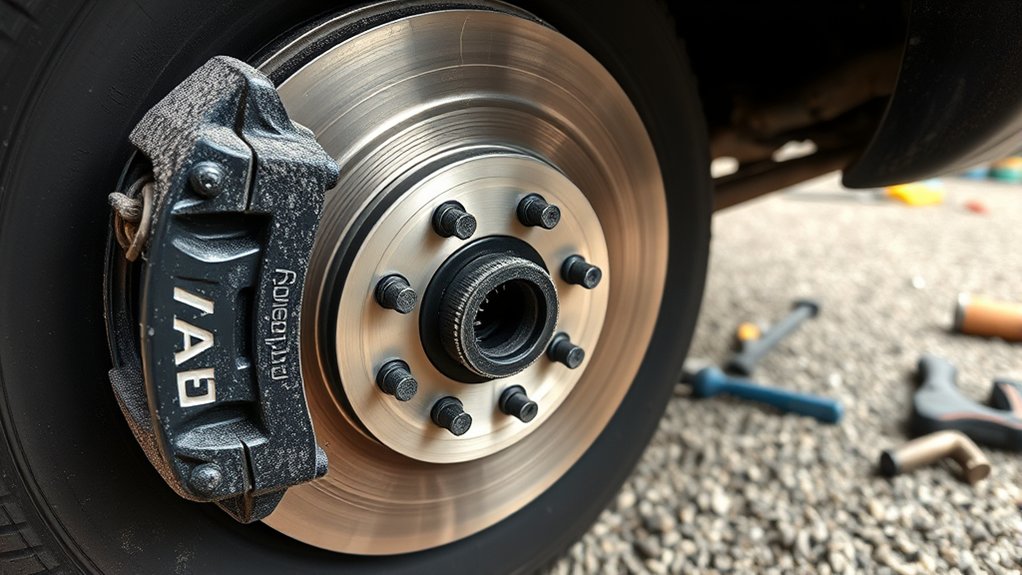
How long do Toyota Tacoma rotors last? There is no fixed replacement mileage that applies to every Tacoma. Some rotors remain serviceable through more than one set of brake pads, while others wear sooner because of towing, city traffic, corrosion, overheating, sticking calipers, or installation problems. Judge the rotors by their measured thickness, physical condition, symptoms, and the correct specification for your exact model year and brake package.
Last updated: September 19, 2026 — reviewed against Toyota maintenance documentation, Toyota technical announcements, Brembo guidance, and NHTSA recall records.
Quick Answer
Toyota Tacoma rotors have no universal replacement interval. For example, Toyota’s 2024 Tacoma maintenance guide calls for visual inspection of the brake pads and discs at 5,000 miles/6 months and again at 10,000 miles/12 months rather than scheduled rotor replacement at those mileages. Replace a rotor when it reaches the applicable minimum thickness, develops cracks or severe scoring, shows significant heat damage or corrosion, or is confirmed to be causing a braking problem. Driving conditions and the truck’s exact brake configuration matter more than mileage alone.
Key Takeaways
- Do not replace Tacoma rotors using mileage alone. Use measurements, damage, symptoms, and the correct model-year specifications.
- Toyota’s 2024 Tacoma maintenance guide calls for visual brake-pad/disc inspection at 5,000 miles/6 months and 10,000 miles/12 months; follow the complete schedule for your exact model year.
- Towing, mountain descents, stop-and-go traffic, aggressive braking, corrosion, and sticking calipers can shorten rotor life.
- Pedal pulsation does not automatically prove a rotor is warped. Runout, deposits, hub rust, wheel torque, and caliper problems can produce similar symptoms.
- Replace rotors as a pair on the affected axle and inspect the pads, calipers, hardware, hubs, hoses, and wheel bearings at the same time.
- Grinding, smoke, fluid leakage, a soft pedal, severe pulling, or reduced braking power requires immediate professional attention.
When Should You Replace Toyota Tacoma Rotors?
Replace Tacoma rotors based on measurements and condition rather than an odometer target. The following decision guide separates conditions that normally justify replacement from symptoms that need diagnosis first.
| Rotor Condition or Symptom | What It Means | Next Step |
|---|---|---|
| At or below the applicable minimum thickness | Rotor has reached its wear limit | Replace both rotors on that axle |
| Radial cracks or serious heat damage | Structural or thermal damage is present | Replace and inspect the cause of overheating |
| Deep scoring, heavy pitting, or severe corrosion | Usable friction surface may be compromised | Measure and inspect; replace when machining is unsuitable or limits would be exceeded |
| Pedal pulsation or steering-wheel vibration while braking | Could involve runout, thickness variation, deposits, hub contamination, bearing movement, or other faults | Diagnose before replacing parts |
| Light surface rust after rain or washing | Often normal temporary oxidation | Observe whether it clears during normal braking; inspect if corrosion remains severe |
| Grinding, smoke, fluid loss, soft pedal, or major loss of braking | Potential serious brake-system failure | Stop driving and arrange professional assistance |
What Affects the Lifespan of Your Tacoma Rotors?
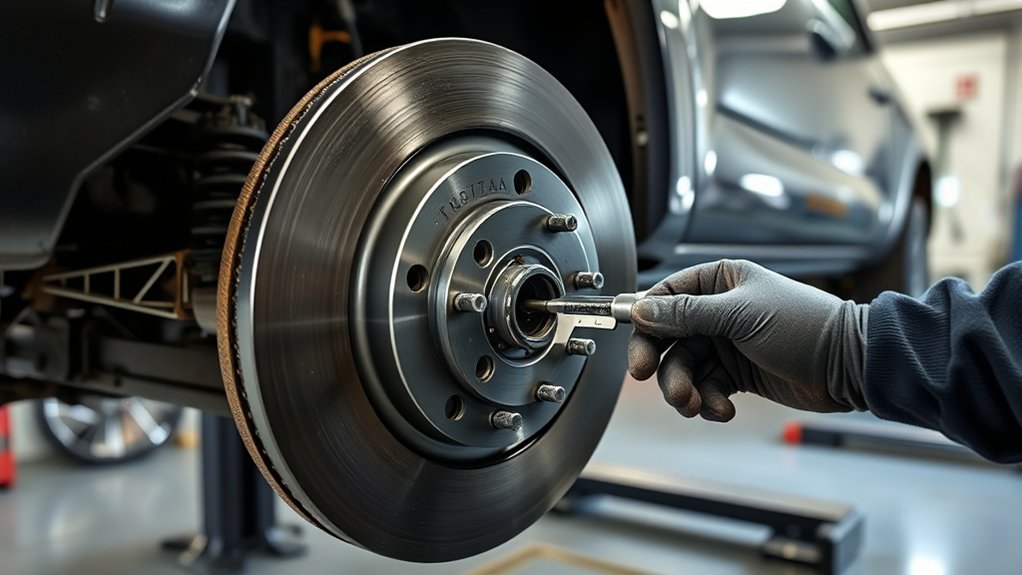
The lifespan of your Tacoma’s rotors depends on how much heat, friction, corrosion, and mechanical stress they experience. Frequent hard stops convert more of the truck’s motion into heat over a short period. Heavy towing and long downhill grades create sustained heat that can reduce braking effectiveness and accelerate wear.
Brake-pad material also matters. A pad designed for heavy-duty use may behave differently from a comfort-focused street pad. Worn pads can score a rotor, while a sticking caliper can keep a pad in contact with the rotor and overheat one wheel even when you are not braking.
Installation quality can shorten rotor life as well. Rust or debris between the rotor and hub can create runout. Uneven or excessive wheel-lug torque may also contribute to vibration and irregular brake contact. Use the tightening sequence and torque specification listed for your exact Tacoma.
Note: Tacoma brake layouts vary by generation and configuration. Toyota introduced four-wheel disc brakes on the redesigned 2024 Tacoma, while earlier trucks may use a different rear-brake arrangement. Confirm the year, trim, drivetrain, axle, and brake package before ordering parts or applying service specifications. For generation-specific brake-layout details, see the Toyota Tacoma drum brakes vs. disc brakes guide.
What Causes Toyota Tacoma Rotor Wear?
Rotor wear comes from more than mileage. The amount of braking energy, the condition of nearby components, and the environment can all change how quickly a rotor loses thickness or develops surface problems.
Driving Habits Impact Wear
Aggressive braking creates rapid temperature changes and heavy friction. City traffic also requires more braking cycles than steady highway travel. Leaving more following distance and slowing gradually can reduce unnecessary heat without changing your normal route.
| Driving Condition | Likely Effect | Useful Response |
|---|---|---|
| Frequent hard braking | Higher temperatures and faster wear | Increase following distance and brake progressively |
| Stop-and-go city traffic | More braking cycles per mile | Inspect the brakes during routine service and tire rotations |
| Steady highway driving | Usually fewer braking cycles | Continue the model-specific maintenance schedule |
| Towing or mountain driving | Greater heat load and possible brake fade | Use appropriate gearing and inspect the brakes more often |
Terrain and Load Factors
Added vehicle weight increases the energy the brakes must absorb. A loaded bed or trailer can therefore raise rotor and pad temperatures, especially during repeated stops. Mountain roads add another challenge because long descents may keep the brakes working for extended periods.
Rough roads do not directly grind away rotor material, but they can expose worn wheel bearings, loose hardware, contaminated hub surfaces, or suspension problems that contribute to vibration. If the steering wheel or pedal shakes only while braking, inspect the entire wheel, hub, rotor, and caliper assembly instead of replacing the rotor without diagnosis.
How Does Driving Style Affect Rotor Lifespan?
Smooth driving reduces repeated heat spikes. It does not prevent normal wear, but it can help pads and rotors wear more evenly. Anticipating traffic, avoiding unnecessary speed, and releasing the brakes between applications give the braking surfaces more time to shed heat.
Highway Versus City Driving
Highway travel generally uses the brakes less frequently than urban driving. City trips involve traffic lights, intersections, congestion, and low-speed maneuvers that increase the number of braking cycles.
Mileage can therefore be misleading. A Tacoma driven mostly on open highways may have less brake wear than a lower-mileage truck used for short urban trips, delivery work, off-roading, or repeated trailer towing.
Towing and Hauling Impact
Towing adds mass and increases stopping demand. Confirm that the trailer, hitch, brake controller, and load remain within the limits for your exact truck. A properly functioning trailer-brake system can help distribute braking work instead of forcing the Tacoma to handle the entire load.
- Inspect pads, rotors, calipers, hoses, and fluid condition before demanding trips.
- Use the truck’s recommended towing settings and transmission ranges.
- Allow more stopping distance when carrying or towing a heavy load.
- Investigate burning odors, smoke, pulling, or a wheel that feels unusually hot.
Aggressive Braking Habits
Repeated panic-style stops can overheat the pad and rotor surfaces. Rapid temperature changes may contribute to deposits, heat spots, cracking, glazing, and uneven wear. Brake firmly when safety requires it, but avoid routine late braking when traffic conditions allow a gradual stop.
After severe braking, give the system time to cool. Do not touch a wheel, caliper, or rotor to test its temperature because these components can cause serious burns.
How Do Weather and Road Conditions Affect Tacoma Rotors?
Moisture can create a light layer of surface rust after rain, washing, or overnight parking. This thin film often clears after several normal brake applications. Heavy scaling, pitting, flaking, or corrosion inside a ventilated rotor requires closer inspection.
Road salt and deicing chemicals can accelerate corrosion on rotors, calipers, hardware, backing plates, and hub surfaces. Rinse the underbody and wheel areas after winter exposure when local conditions permit. Avoid directing high-pressure water into seals or electrical connectors.
Rotor life depends on usable thickness and condition, not on the odometer alone.
- Long descents: Sustained braking can produce excessive heat and brake fade.
- Salt and moisture: Corrosion may damage the friction surfaces, vents, hub, and hardware.
- Extended storage: Rust can become more severe when a truck remains parked for weeks or months.
- Mud and debris: Contamination can affect caliper movement and hide leaks or damaged components.
Signs You May Need to Replace Your Tacoma Rotors
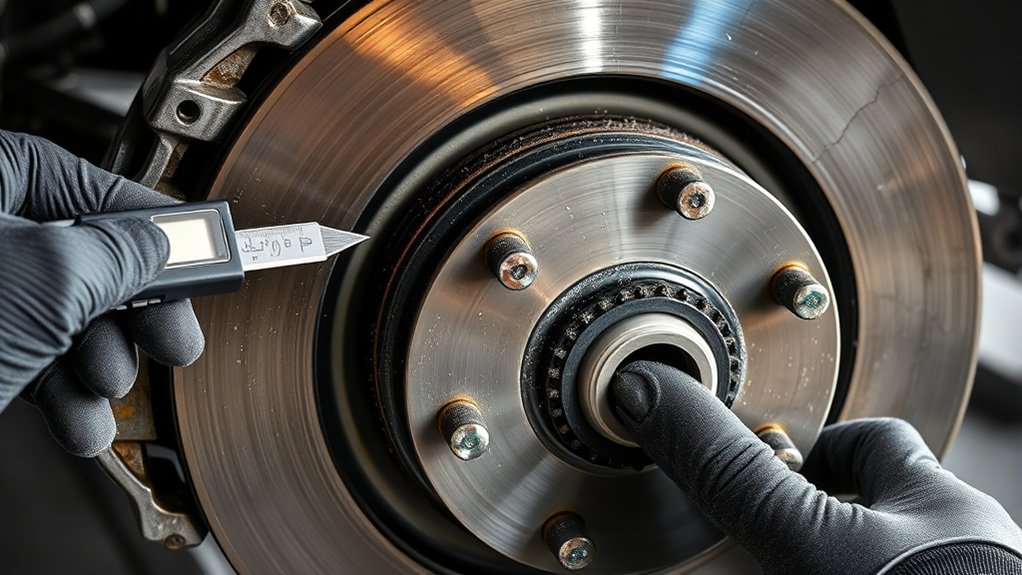
Visible cracks, deep scoring, severe rust, blue or dark heat spots, and thickness at or below the service limit can justify replacement. A technician should measure the rotor at several points with the correct tool and compare the lowest reading with the specification marked on the rotor or listed in the appropriate service information.
Brake-pedal pulsation or steering-wheel vibration needs diagnosis. Possible causes include rotor runout, disc-thickness variation, uneven pad deposits, hub rust, improper wheel torque, a sticking caliper, wheel-bearing movement, or worn suspension components.
Grinding often means the brake-pad friction material has worn away, allowing metal-to-metal contact. Continuing to drive can damage the rotor, increase repair costs, and reduce braking performance. For more detail on distinguishing pad wear from other brake noises, see the Toyota Tacoma brake-pad wear indicator guide.
Warning: Stop driving and arrange professional help if you experience major loss of braking power, a pedal that sinks or feels unusually soft, visible brake-fluid leakage, smoke, severe pulling, a red brake warning light, or loud continuous grinding. Do not rely on the parking brake or electronic safety systems to compensate for a failing service brake.
How to Inspect and Measure Tacoma Rotors
A visual check can reveal cracks, heavy scoring, corrosion, and heat discoloration, but appearance alone does not confirm that a rotor remains within specification. A complete inspection should include the following:
- Confirm the exact vehicle: Record the model year, drivetrain, trim, wheel size, axle, and brake package.
- Inspect the pads: Compare the inner and outer pads. Uneven wear may indicate a caliper, slide-pin, hose, or mounting problem.
- Measure rotor thickness: Use a brake-rotor micrometer at several positions around the friction surface while avoiding the outer rust ridge.
- Compare with the limit: Use the minimum-thickness marking or the correct Toyota service specification.
- Check runout when needed: A dial indicator can identify lateral movement, but the hub face must be clean before the result is trusted.
- Inspect related parts: Check the caliper, hardware, hoses, wheel bearing, hub, dust shield, and wheel mounting surfaces.
Brembo recommends using the lowest of several thickness measurements and replacing the rotor when it falls below the marked minimum. It also recommends replacing both rotors on the affected axle. You can review its minimum brake rotor thickness guidance for the general measurement principle.
Brake work requires stable lifting equipment, wheel chocks, the correct torque information, and experience with safety-critical components. Have a qualified technician complete the inspection if you cannot lift and support the truck safely.
Should You Replace or Resurface Tacoma Rotors?
Resurfacing can sometimes correct minor surface irregularities, but it is not suitable for every rotor. The rotor must remain above the required minimum thickness after machining. Cracks, severe heat damage, deep corrosion, major scoring, or structural defects normally require replacement.
The technician should also determine why the surface became uneven. Installing a machined or new rotor without correcting a sticking caliper, dirty hub, damaged bearing, incorrect wheel torque, or unsuitable pad can allow the problem to return.
Replace rotors as a matched pair on the affected axle. When installing new rotors, use compatible new pads unless the component manufacturer and service procedure specifically permit another approach. Inspect and service the caliper hardware at the same time.
Best Maintenance Practices to Maximize Rotor Lifespan
- Follow the maintenance guide for your exact Tacoma year and configuration.
- Inspect the brakes during scheduled services, tire rotations, and before demanding towing trips.
- Replace worn pads before their backing plates contact the rotor.
- Correct sticking calipers, seized slide pins, damaged boots, or restricted hoses promptly.
- Clean the rotor-to-hub mounting surface before installing a rotor.
- Tighten wheel nuts in the correct sequence with a calibrated torque wrench.
- Use parts that match the truck’s axle, brake package, load, and normal driving conditions.
- Inspect brake-fluid level and condition according to Toyota’s maintenance guide. Replace or service the fluid when required by the applicable service information, a repair procedure, or inspection results.
- Follow the brake-component manufacturer’s bedding procedure after replacement.
Pro Tip: Ask the repair shop to record the rotor thickness, minimum specification, pad thickness, and any runout measurement on the invoice. These numbers make future inspections more useful and help you understand why resurfacing or replacement was recommended.
Bedding New Pads and Rotors
New friction surfaces need controlled use while they establish even contact. Follow the instructions supplied by the pad or rotor manufacturer because procedures differ. Avoid unnecessary emergency-style stops, trailer towing, and prolonged brake use during the initial bedding period unless safety requires hard braking.
Brembo describes a bedding period of about 300 km, using brief, gradual brake applications while checking for abnormal vibration or noise. It warns that unnecessarily severe braking during this period can overheat new friction materials. Its general guidance is available in its brake bedding instructions.
Costs of Replacing Tacoma Rotors
The cost of Tacoma rotor service depends on the model year, axle, brake package, local labor rate, parts brand, and the condition of related components. A front-axle service may not cost the same as rear-brake work, especially because Tacoma brake layouts have changed across generations.
An itemized estimate may include:
- Two rotors for the affected axle
- A compatible brake-pad set
- Caliper hardware, boots, pins, or brackets
- Brake-fluid service when due or required by a repair
- Hub cleaning and runout diagnosis
- Caliper, hose, bearing, or dust-shield repairs
- Labor, shop supplies, taxes, and disposal fees
Resurfacing is not automatically cheaper once machining labor and the remaining rotor thickness are considered. Ask the shop to compare the complete resurfacing cost with new-rotor installation and explain the warranty for each option.
Model-Year Recalls and Service Information
Do not use a broad model-year reputation to decide whether your rotors are safe. Inspect the individual truck and review the documentation for its exact year. Toyota provides model-specific manuals and warranty information through its Manuals and Warranties portal.
For example, Toyota’s 2024 Tacoma maintenance guide lists visual inspection of the brake pads/discs at 5,000 miles/6 months and 10,000 miles/12 months. The complete schedule continues beyond those intervals and should be followed for the exact model year and configuration.
Current brake-related recall: As of September 19, 2026, NHTSA campaign 25V058 covers certain 2024–2025 Toyota Tacomas because mud and dirt can damage rear brake hoses and potentially cause a brake-fluid leak. The campaign remedy is replacement of both rear brake hoses with improved parts. Review the NHTSA campaign documentation, then use a VIN lookup to determine whether a specific Tacoma is included and whether the repair remains open.
You can enter the Tacoma’s 17-character VIN in the NHTSA recall lookup or Toyota’s recall and service-campaign lookup. A recall involving a brake hose, hydraulic component, axle, or another related system may not be obvious during a basic rotor inspection.
Sources
- Toyota Manuals and Warranties — model-specific owner and maintenance documentation.
- Toyota 2024 Tacoma Warranty & Maintenance Guide — scheduled brake inspection and maintenance information.
- Toyota USA Newsroom: 2024 Toyota Tacoma — fourth-generation brake-system changes.
- Brembo: Minimum Brake Rotor Thickness — thickness measurement, wear limits, and axle-pair replacement.
- Brembo: Brake Disc Overheating — heat, brake fade, downhill driving, and maintenance.
- NHTSA Campaign 25V058 — certain 2024–2025 Tacoma rear-brake-hose recall information.
- National Highway Traffic Safety Administration Recall Lookup — VIN-specific recall information.
Frequently Asked Questions
How long do rotors last on a Toyota Tacoma?
There is no dependable mileage that applies to every Tacoma. Rotor life depends on model year, brake configuration, driving conditions, corrosion, pad material, towing, caliper condition, and installation quality. Replace a rotor when measurements or damage show that it no longer meets the correct service specification.
How often should Toyota Tacoma rotors be inspected?
Follow the maintenance guide for your exact model year. As one factory example, Toyota’s 2024 Tacoma maintenance guide calls for visual inspection of the brake pads and discs at 5,000 miles/6 months and again at 10,000 miles/12 months, with additional scheduled inspections later in the maintenance program. Inspect sooner when braking symptoms appear or before demanding towing or mountain driving.
How much does it cost to replace rotors on a Toyota Tacoma?
The total depends on the model year, axle, brake package, labor rate, rotor and pad choice, and whether the calipers, hoses, bearings, hardware, or fluid also need service. Request an itemized estimate that identifies the affected axle and every part being replaced.
How long should Toyota rotors last?
Toyota rotors should remain in service only while they stay above the applicable minimum thickness and remain free from disqualifying cracks, severe scoring, heat damage, corrosion, or unresolved vibration. Mileage can help plan inspections, but it cannot confirm that a rotor is safe.
What is the minimum rotor thickness on a Toyota Tacoma?
There is no single minimum rotor-thickness value for every Tacoma. The specification can vary with model year, axle, and brake package. Measure the rotor at several positions, use the lowest reading, and compare it with the MIN TH marking on the rotor or the correct Toyota service information for that vehicle.
Do Tacoma rotors need to be replaced every time the brake pads are changed?
No. Rotor replacement should be based on thickness, condition, damage, and the applicable service limits rather than automatically performed with every pad change. Inspect and measure both rotors on the axle whenever the pads are serviced, and replace the rotors when they no longer meet the required specification.
What year was the worst year for the Toyota Tacoma?
No single model year can reliably be called the worst for rotor life. Owner complaints, recalls, brake layouts, maintenance history, and operating conditions differ. Check the individual truck, review its service records, and search its VIN through NHTSA rather than relying on a broad model-year label.
Can you replace only one Tacoma rotor?
Rotors should normally be replaced as a pair on the affected axle so the left and right brakes have comparable condition and performance. Inspect the pads and related hardware on both sides and correct the cause of any uneven wear.
Does brake-pedal pulsation always mean the rotors are warped?
No. Pulsation may come from rotor runout, disc-thickness variation, uneven pad deposits, rust or debris on the hub, incorrect wheel torque, a sticking caliper, wheel-bearing movement, or other worn components. Measure and inspect the system before replacing parts.
Conclusion
There is no fixed mileage at which every Toyota Tacoma rotor must be replaced. Judge each rotor by its measured thickness, physical condition, and diagnosed braking symptoms. Follow the maintenance schedule for your exact truck; for example, Toyota’s 2024 Tacoma guide begins visual brake-pad/disc inspections at 5,000 miles/6 months. Replace rotors in axle pairs when they reach their service limit or develop disqualifying damage, correct any underlying caliper, hub, bearing, or installation problem, and check the truck’s VIN for open safety recalls. Treat any major loss of braking performance, brake-fluid leakage, smoke, severe pulling, or a soft pedal as an immediate safety concern.
