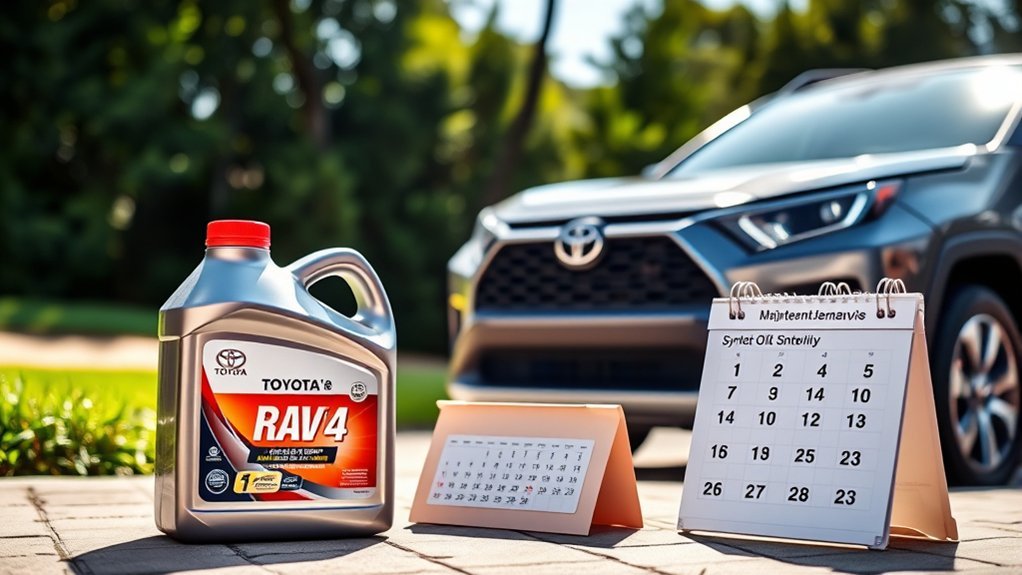
Synthetic oil can protect your Toyota RAV4 for thousands of miles, but the correct replacement interval depends on the model year, engine, market, and driving conditions. Many newer U.S.-market RAV4 models use a 10,000-mile or 12-month normal-service interval. Older models and vehicles driven mainly under demanding conditions may require more frequent oil and filter changes.
Quick Answer
Synthetic oil in many newer Toyota RAV4 models lasts up to 10,000 miles or 12 months under normal use. Toyota may require oil and filter replacement every 5,000 miles or six months when most driving involves dust, towing, heavy loading, prolonged idling, or repeated sub-five-mile trips below freezing.
Last reviewed: July 13, 2026.
Key Takeaways
- Many newer U.S. RAV4 models use a normal oil and filter interval of 10,000 miles or 12 months, whichever comes first.
- A 5,000-mile maintenance visit does not always include an oil change. It may cover inspections and tire rotation.
- Toyota commonly shortens oil service to 5,000 miles or six months when most driving occurs under listed special operating conditions.
- Do not determine the interval from oil viscosity alone. Check the maintenance guide for your exact model year and engine.
- A red low-oil-pressure warning requires immediate attention and is different from a routine maintenance reminder.
Recommended Synthetic Oil Change Intervals for Your RAV4

For applicable newer models, Toyota’s normal-service schedule can allow the engine oil and filter to remain in service for up to 10,000 miles or 12 months. The time limit matters even when you drive only a few thousand miles each year.
Toyota still schedules general maintenance at 5,000 miles or six months on current models. That visit may include tire rotation, fluid-level checks, brake inspection, and other services even when the engine oil is not due.
| Situation | Typical Guidance | What You Should Do |
| Applicable newer RAV4 under normal use | Up to 10,000 miles or 12 months | Confirm the interval in the exact model-year maintenance guide. |
| Vehicle driven primarily under Toyota’s special conditions | 5,000 miles or six months | Replace both the engine oil and oil filter at the shortened interval. |
| Routine scheduled maintenance | Often every 5,000 miles or six months | Complete the listed inspections even when an oil change is not due. |
| Older RAV4 or vehicle sold outside the United States | Varies by year, engine, and market | Do not assume that the current 10,000-mile schedule applies. |
Note: Oil viscosity does not determine the replacement interval by itself. A RAV4 using 0W-16, 0W-20, 5W-20, or 5W-30 may have different requirements depending on its model year and engine.
[Amazon Products Picked for You]

GENUINE OEM: Original Toyota/Lexus factory oil filter part number 90915-YZZN1, ensuring perfect fit and optimal performance for your vehicle

COMPATIBLE with Toyota Camry 2.5L 2010-2017, RAV4 2.5L 2009-2018, Highlander 3.5L 2008-2021, Sienna 3.5L 2007-2020, Tacoma 3.5L 2016-2021, Avalon 3.5L 2005-2021, Camry 3.5L 2007-2021, RAV4 3.5L 2006-2012, Venza 3.5L 2009-2016, Venza 2.7L 2009-2016

[Vehicle Fitment-1]: Replacement for Toyota Tacoma 2016-2023, Sienna 2007-2020, Camry 2007-2023, Highlander 2008-2022, Avalon 2005-2022, fit for RAV4 2006-2018, Venza 2009-2016; Compatible with Lotus Evora 2010-2017; Replacement for Scion tC 2011-2016 --- Engine protection for up to 10,000 miles, with 99% filtration efficiency
How to Find Your RAV4’s Exact Oil Change Interval
The safest source is the maintenance guide issued for your exact vehicle. Toyota provides an official manual and warranty lookup that lets you select the model and year.
- Confirm the model year: Use the registration, VIN label, or Toyota account rather than the purchase date alone.
- Select the correct powertrain: Gas, Hybrid, and Prime guides may be listed separately.
- Open the maintenance guide: Find the engine oil and oil filter row in the normal maintenance chart.
- Read the special-condition notes: These footnotes determine whether the shorter interval applies.
- Check the owner’s manual: Confirm the required viscosity, capacity, and oil specification before buying oil.
For example, the official 2025 RAV4 Warranty and Maintenance Guide shows oil and filter replacement at 10,000-mile increments under normal service. It shortens the interval to 5,000 miles or six months for vehicles driven primarily under its listed demanding conditions.
How Short Trips Affect Oil Lifespan
Short trips do not automatically require an early oil change. The trip length, outdoor temperature, driving frequency, and guidance in your model-year maintenance guide all matter.
[Amazon Products Picked for You]

Advanced protection against the four main causes of engine breakdown: wear friction heat and deposits


Advanced protection against the four main causes of engine breakdown: wear friction heat and deposits
Engine Warm-Up Time
During a cold start, moisture and small amounts of unburned fuel can enter the oil. A longer drive allows the engine and oil to remain hot enough to reduce much of that contamination.
Repeated very short drives may not provide enough sustained operating time. This concern is greater in freezing weather, when the engine takes longer to warm fully.
Toyota’s 2025 RAV4 guides specifically identify repeated trips of less than five miles in temperatures below 32°F or 0°C as a condition that can require 5,000-mile or six-month oil service.
Oil Contamination Risks
Repeated cold operation can contribute to moisture, fuel dilution, deposits, and faster additive depletion. These effects depend on the engine, trip pattern, temperature, and oil condition, so you should not diagnose the oil from color alone.
Watch for abnormal signs such as:
- A milky or tan appearance that may indicate coolant or heavy moisture contamination
- A strong fuel smell or an unexplained rise in the dipstick level
- Visible metal particles or unusually thick deposits
- Repeated low oil levels without an obvious explanation
- Oil-pressure, engine, or maintenance warnings
Have the vehicle inspected if you notice these symptoms. Simply replacing the oil may not correct an underlying coolant leak, fuel-system fault, oil-consumption problem, or lubrication-system failure.
Special Operating Conditions: When to Change Oil More Frequently
Toyota’s exact definitions vary by model year. In the 2025 U.S. RAV4 maintenance guide, the shortened oil and filter interval applies when the vehicle is driven primarily under one or more of these conditions:
- Dirt or dusty roads: Frequent exposure can introduce more airborne contamination and increase demands on filters and lubricants.
- Towing, roof-carrier use, or heavy loading: The added load can increase engine temperature and operating stress.
- Extensive idling or prolonged low-speed use: Examples include taxi, police, delivery, and similar service.
- Repeated sub-five-mile trips below freezing: The engine may not remain fully warm for long enough during each trip.
The shorter schedule is normally intended for vehicles that spend the majority of their driving time under the listed conditions. An occasional dusty road, roof-box trip, or cold commute does not necessarily place the vehicle on the severe schedule permanently.
Pro Tip: Keep receipts or a simple maintenance log with the date, mileage, oil viscosity, specification, filter, and service provider. This record helps you avoid missed services and supports future warranty or resale questions.
[Amazon Products Picked for You]

LONG LIFE DESIGN: Up to 20,000 mile engine protection. Follow your manufacturers change intervals

SYNTHETIC REPLACEMENT ENGINE OIL FILTER: Perfect for consumers looking to get the most from their investment in full synthetic oil, this oil filter helps get top performance from newer engines and provide maximum protection for older ones
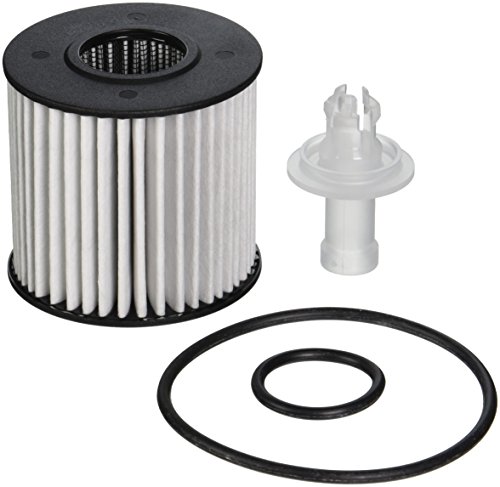
ENGINEERED FOR SYNTHETIC OILS: Superior filtration for severe conditions; Designed to handle the demands of synthetic motor oils in extreme driving conditions like towing, stop-and-go traffic, and long highway runs
Indicators Your RAV4 Requires Immediate Attention
A dashboard reminder, low oil level, and low oil pressure do not mean the same thing. Respond according to the type of warning you see.
- Maintenance reminder: This is generally tied to the vehicle’s scheduled mileage or time. It does not test the oil for contamination.
- Low oil level: Check the dipstick on level ground using the procedure in your owner’s manual. Add only the specified oil and avoid overfilling.
- Red low-oil-pressure warning: This may indicate that the engine is not receiving adequate lubrication.
- Leak or burning-oil smell: Look for fresh spots beneath the vehicle and smoke or odor from the engine area.
- Visible contamination: Milky oil, metal particles, heavy sludge, or a strong fuel smell warrants diagnosis.
- Overdue service: Change the oil and filter when either the mileage or time limit has passed, even if the oil still looks clean.
Warning: If the red low-engine-oil-pressure warning stays on while driving, pull over safely and shut off the engine. Do not continue driving merely to reach a shop. Check the owner’s manual and arrange roadside or professional assistance.
Understanding What “Synthetic Oil Lasts” Means in Your RAV4

Oil does not suddenly become unusable at one exact mileage. Its additives, contamination level, viscosity, and protective performance change gradually. The manufacturer’s interval provides a practical replacement limit for the expected engine and driving conditions.
Oil Life Versus Oil Level and Pressure
Oil life describes how long the oil remains suitable for service. Oil level describes how much oil is in the engine. Oil pressure describes whether the lubrication system is circulating oil correctly.
Fresh oil cannot protect an engine if the level is too low or the oil pump cannot maintain pressure. Check the level regularly, especially before a long trip, after detecting a leak, or when the engine has a history of oil consumption.
Use the model-year maintenance guide as your maximum interval, then shorten it only when Toyota’s listed conditions or a diagnosed mechanical problem justify doing so.
Choosing the Correct Oil Viscosity and Specification
Use the viscosity printed in your RAV4 owner’s manual or on the oil-filler-cap guidance when applicable. Do not substitute a thicker or thinner grade solely because of climate, mileage, online advice, or product availability.
Also check the required performance standard on the container. The American Petroleum Institute’s oil-category guide explains current API and ILSAC classifications, but it also advises vehicle owners to follow the manufacturer’s manual first.
A newer API service category can often cover an older gasoline-engine category, but viscosity-specific standards are not always interchangeable. The manual remains the controlling source for your RAV4.
How to Maintain Your Synthetic Oil for Optimal Performance
- Follow both mileage and time: Change the oil when either limit arrives first.
- Check the level regularly: Toyota’s maintenance guidance recommends routine oil-level checks rather than waiting for a warning.
- Use the required viscosity: Confirm it in the exact owner’s manual before every purchase.
- Verify the oil specification: Look for the required API or ILSAC certification on the container.
- Replace the oil filter: Toyota’s scheduled service pairs the engine-oil change with filter replacement.
- Inspect for leaks: Check the drain-plug area, filter area, engine, and parking space after service.
- Avoid overfilling: Too much oil can cause foaming, pressure problems, leaks, or other damage.
- Reset the reminder correctly: Reset it only after completing the required maintenance.
- Keep service records: Record the date, mileage, oil used, and work performed.
Related Guides
Frequently Asked Questions
Can I mix synthetic and conventional oil in my RAV4?
For an emergency top-up, using oil that meets the required viscosity and specification is generally safer than operating the engine with a dangerously low level. For a complete oil change, use the type and specification listed in your owner’s manual. Do not assume that any conventional or synthetic oil is suitable.
Does synthetic oil improve fuel efficiency in a RAV4?
Oil with the correct low-viscosity grade and certification can support the efficiency for which the engine was designed. However, changing from one approved oil to another does not guarantee a noticeable increase in miles per gallon. Tire pressure, temperature, speed, traffic, and driving habits usually create larger day-to-day changes.
What are the signs of oil contamination?
Possible signs include a milky or tan appearance, visible metal particles, thick deposits, a strong fuel smell, or an unexplained rise in the oil level. Dark oil alone is not proof of failure because detergent oil can darken while cleaning and suspending contaminants.
Is synthetic oil better for every Toyota RAV4?
Use the oil required by the specific owner’s manual. Many newer RAV4 engines require or are designed around low-viscosity synthetic oil, while older models may list different grades or requirements. The correct specification matters more than choosing an oil based only on the word “synthetic.”
How does climate affect synthetic oil performance?
Cold temperatures make oil harder to pump during startup, while high heat can increase oxidation and evaporation. Use the viscosity specified by Toyota instead of selecting a different grade on your own. Follow the severe-use schedule when your guide lists your driving pattern as a special condition.
Does dark engine oil mean it needs to be changed immediately?
Not necessarily. Oil can darken as it holds combustion byproducts and deposits in suspension. Follow the mileage and time schedule unless the oil contains visible contamination, smells strongly of fuel, has a milky appearance, or a technician identifies a problem.
Does the maintenance-required light measure oil quality?
No. Treat it as a scheduled-service reminder based mainly on distance or time, depending on the model. It does not analyze the oil’s viscosity, contamination, or remaining additives. Check your maintenance guide to see which services are due.
Conclusion
Synthetic oil in many newer Toyota RAV4 models can remain in service for up to 10,000 miles or 12 months under normal conditions. That number is not universal. Your exact model-year guide may specify a different interval, and Toyota commonly shortens service to 5,000 miles or six months when most driving occurs under listed demanding conditions.
Check the oil level regularly, use the specified viscosity and certification, replace the filter with the oil, and respond immediately to a low-oil-pressure warning. When the maintenance guide and general online advice disagree, follow the official guide for your exact RAV4.
Sources
- Toyota 2025 RAV4 Warranty and Maintenance Guide — normal and special-condition maintenance intervals.
- Toyota 2025 RAV4 Hybrid Warranty and Maintenance Guide — hybrid maintenance schedule and severe-use guidance.
- Toyota Customer Support: Synthetic Oil Change Intervals — Toyota’s general guidance for applicable vehicles requiring 0W-20 synthetic oil.
- Toyota Manuals and Warranties — official model-year owner’s manuals and maintenance guides.
- American Petroleum Institute Oil Categories — current API and ILSAC engine-oil classifications.
