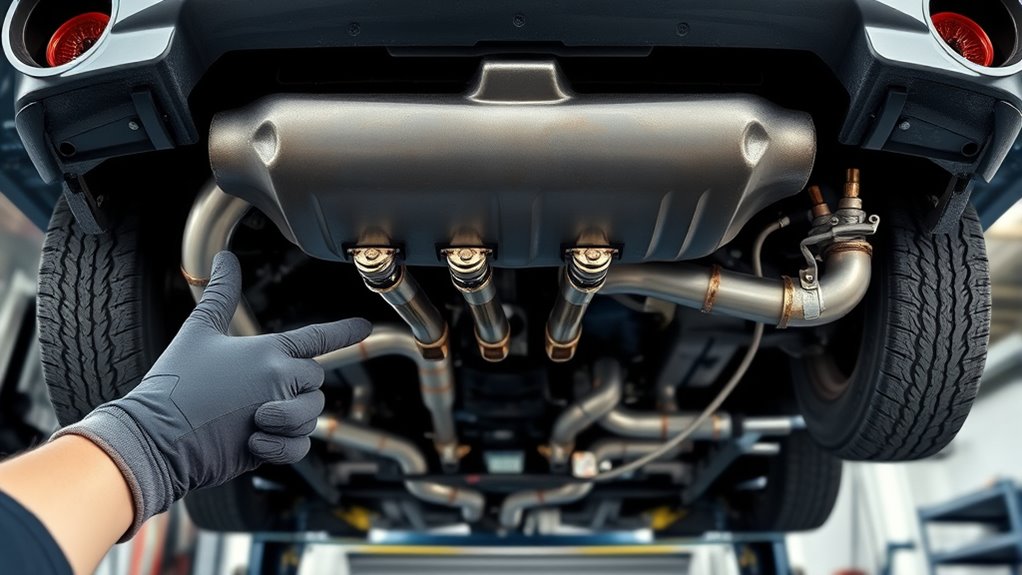
A 2012 RAV4 with the 2.5L engine uses four oxygen sensors, with two mounted upstream and two downstream of the catalytic converter. The layout affects fuel control, emissions monitoring, and fault diagnosis. Correct sensor identification matters before replacement or testing, since the wrong location can lead to poor drivability or a recurring check engine light. The part numbers and setup details are more specific than they first appear.
How Many O2 Sensors Does a 2012 RAV4 Have?
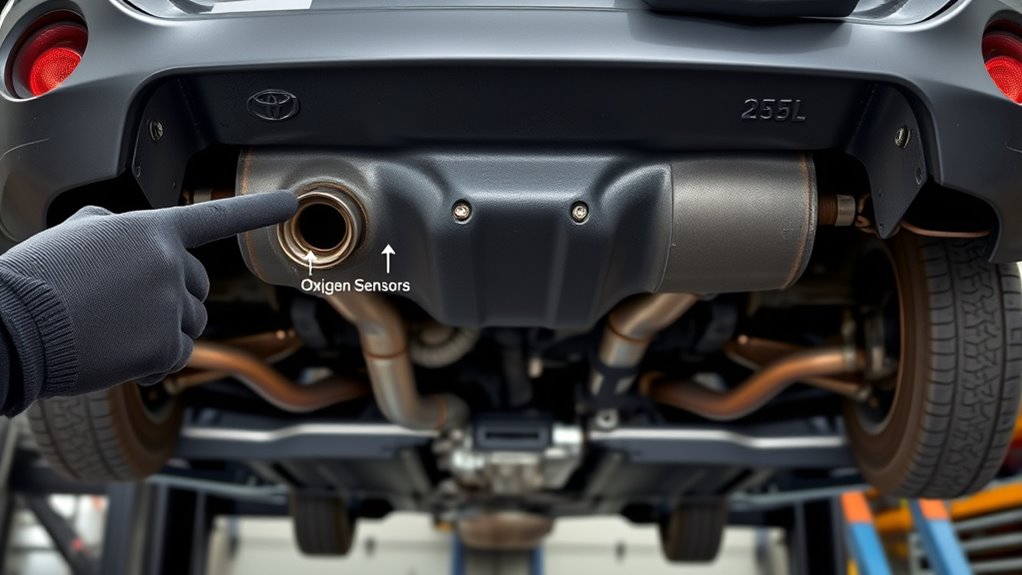
A 2012 Toyota RAV4 with the 2.5L engine is equipped with four oxygen sensors in total: two upstream sensors located before the catalytic converter and two downstream sensors positioned after it.
This Oxygen Sensor arrangement supports closed-loop fuel control and emissions diagnostics. In the 2012 Toyota RAV4, the upstream sensors measure exhaust oxygen content ahead of catalyst treatment, allowing the engine control module to adjust air-fuel delivery with precision.
The downstream sensors evaluate catalyst performance by comparing exhaust conditions after conversion. When all four units operate correctly, combustion efficiency, drivability, and emissions compliance remain stable.
Faults in any sensor can trigger diagnostic trouble codes, altered fuel trims, or reduced performance. For replacement, genuine DENSO or OEM parts are typically preferred for fitment and reliability.
This sensor architecture is standard for the 2.5L model and is central to maintaining mechanical integrity and regulatory freedom from excess pollution.
Which 2012 RAV4 O2 Sensors Are Upstream?
The upstream O2 sensors on a 2012 Toyota RAV4 2.5L are the two sensors positioned ahead of the catalytic converter, where they monitor exhaust oxygen content and feed real-time data to the ECU for air-fuel control.
The upstream O2 sensors sit before the catalytic converter, feeding real-time exhaust data to the ECU for precise fuel control.
On this Toyota RAV, the upstream pair is the primary diagnostic set for mixture correction, combustion efficiency, and emissions control. Both sensors measure oxygen concentration in exhaust gas and help the ECU adjust fueling with precision, preserving performance and reducing waste.
A common genuine replacement is DENSO part 234-4622, often supplied in original packaging for authenticity verification.
If either upstream sensor becomes slow, contaminated, or electrically faulty, the engine may set fault codes and illuminate warning lights. Immediate replacement is advisable to maintain control authority and prevent drivability loss.
For a driver seeking mechanical freedom, identifying the correct upstream sensor location and part specification is essential.
Which 2012 RAV4 O2 Sensors Are Downstream?
Downstream on the 2012 Toyota RAV4 2.5L is the single O2 sensor mounted after the catalytic converter, where it evaluates converter efficiency by comparing exhaust oxygen content before and after treatment.
This sensor is the post-cat unit, not the pre-cat sensor, and its downstream sensor functions are centered on monitoring catalyst performance and supporting ECU corrections for clean, efficient combustion.
Diagnostic attention should focus on the rear exhaust stream, where a stable voltage signal analysis reveals how well the converter is storing and releasing oxygen.
- Verify the sensor sits behind the catalytic converter.
- Inspect wiring, connectors, and exhaust leaks.
- Review live data for steady switching behavior.
- Apply sensor installation tips that preserve thread integrity and heat shielding.
A degraded downstream sensor can trigger a check engine light and reduce fuel efficiency, limiting the vehicle’s freedom to operate at peak refinement.
What Denso Part Numbers Fit a 2012 RAV4?
For the 2012 Toyota RAV4 2.5L, Denso lists two direct-replacement oxygen sensors: 234-4622 for the upstream, pre-catalytic converter position and 234-4623 for the downstream, post-catalytic converter position. These part numbers define Denso sensor compatibility with the factory engine control logic, reducing diagnostic ambiguity and supporting stable closed-loop operation.
| Position | Denso Part | Function |
|---|---|---|
| Upstream | 234-4622 | Mixture feedback |
| Downstream | 234-4623 | Catalyst monitoring |
Sensor performance benefits include correct signal timing, accurate fueling correction, and predictable readiness behavior. For drivers seeking mechanical autonomy, that precision matters. Aftermarket sensor risks include slow response, wiring mismatch, and fault codes that can obscure the true failure mode. A verified Denso match helps isolate whether a drivability complaint originates in the sensor, harness, or elsewhere in the emissions circuit. When replacement is required, these two Denso numbers are the relevant fitment references for the 2012 RAV4 2.5L.
Why Use OEM Sensors On a 2012 RAV4?
Using OEM oxygen sensors on a 2012 RAV4 2.5L helps preserve the calibration Toyota designed into the engine and emissions system, particularly where upstream fuel-trim feedback and downstream catalyst monitoring depend on clean signal behavior.
OEM Advantages are concrete: proper connector fit, correct voltage response, and reduced fault-code risk. For a driver seeking liberation from guesswork, that precision matters.
OEM advantages are concrete: proper fit, correct voltage response, and reduced fault-code risk.
- OEM DENSO sensors align with Toyota specifications.
- Sensor Longevity is improved by factory-grade materials and control.
- Performance Reliability remains stable under load and idle.
- Catalyst efficiency stays easier to monitor, supporting emissions compliance.
Non-OEM units can drift in response quality, producing inaccurate trims, poorer drivability, and elevated emissions.
OEM parts also better protect warranty-sensitive service history. In diagnostic terms, the safer choice is the sensor engineered for the platform, not a generic substitute.
How Do You Replace a 2012 RAV4 O2 Sensor?
Replacing the O2 sensor on a 2012 RAV4 2.5L begins with warming the engine to ease sensor removal, then disconnecting the negative battery terminal to reduce electrical risk. The vehicle carries upstream and downstream sensors, so O2 sensor compatibility must match the intended location. A dedicated oxygen-sensor socket is the key among installation tools. The old unit is unscrewed carefully, preserving thread integrity. Before seating the replacement, a small amount of anti-seize is applied to the threads only, not the sensing element.
| Step | Detail |
|---|---|
| Remove | Use sensor socket |
| Install | Apply anti-seize |
| Verify | Reconnect battery |
After tightening, the battery is reconnected and the engine is started to confirm no immediate fault codes. Sensor performance tips include using the correct part number and clearing codes with an OBD-II scanner, restoring diagnostic freedom through clean, controlled service.
What Should You Check After Installation?
After installation, the system should be scanned with an OBD2 tool to confirm that no new trouble codes are present and that any prior codes have cleared.
A short test drive should then verify stable idle quality, proper throttle response, and an extinguished check engine light under varying operating conditions.
The exhaust system should also be inspected for leaks or abnormal noise, since either condition can distort O2 sensor readings and fuel control.
Code Reset Check
Once the new O2 sensor is installed, the engine codes should be cleared with an OBD-II scanner to remove any stored faults tied to the old sensor.
Proper Code reset techniques rely on careful Diagnostic scanner usage and accurate Trouble code interpretation, so the system can return to clean baseline logic. After reset, confirm the dashboard remains free of warning indicators.
- Clear stored DTCs.
- Verify no pending codes remain.
- Review live O2 sensor voltage.
- Recheck for immediate CEL return.
If the check engine light reappears, the fault is not liberated; it is unresolved and demands further diagnosis of the exhaust circuit, wiring, or related controls.
Precision here prevents false conclusions and supports a clean, compliant repair outcome.
Test Drive Monitor
During the test drive, the vehicle should be monitored for any irregular idle quality, misfiring, hesitation, or delayed throttle response that could indicate a faulty installation or an unresolved sensor-related issue.
Test drive feedback should be collected across varied driving conditions, with attention to smooth acceleration, clean deceleration, and stable engine behavior under load.
If the dashboard displays a check engine light, the installation requires immediate review. An OBD2 scanner should then verify that no trouble codes remain and that sensor performance is within expected limits.
Any fluctuation in response, especially during throttle changes, suggests the system is not operating freely and may need correction.
Clear diagnostic results confirm that the new O2 sensor is functioning properly and the vehicle can move without hidden constraint.
Exhaust Noise Inspection
Following installation, the exhaust system should be inspected for abnormal noise that may indicate an improper seal or an installation error at the sensor location. A disciplined check supports exhaust leak detection and confirms that noise reduction techniques are effective.
- Listen at idle for hissing, ticking, or pulsing near joints and gaskets.
- Examine the pipe, flange, and sensor boss for soot or escaping gases.
- Verify that no rattling appears at 30–40 mph, which can expose loose shields or brackets.
- Confirm that dashboard warnings remain cleared and engine response stays stable.
These sensor installation tips help identify faults before they spread, preserving performance and reducing constraint on the exhaust path.
What Are Common 2012 RAV4 O2 Sensor Problems?
Common 2012 RAV4 O2 sensor problems often present as check engine codes, with OBD-II diagnostics identifying faults in the upstream or downstream circuits.
Sensor wear or contamination can make the sensor sluggish, causing incorrect air-fuel feedback, rough idle, hesitation, and higher emissions.
Exhaust rattles or leaks near the sensor location can also distort readings and should be inspected during diagnosis.
Check Engine Codes
When the 2012 RAV4 2.5L sets an oxygen sensor-related check engine light, the most common diagnostic codes are P0131 and P0137, which typically indicate low voltage or a sensor circuit malfunction.
The vehicle carries four O2 sensors, and each code should be traced with disciplined diagnostic tools before replacement.
- Verify freeze-frame data.
- Inspect wiring continuity.
- Confirm sensor voltage response.
- Compare upstream and downstream readings.
Regular O2 sensor maintenance preserves engine performance by sustaining the air-fuel ratio and catalytic converter efficiency.
If codes recur after testing, OEM sensors such as DENSO are generally the most reliable path to restoration.
Clear data, not guesswork, supports liberation from unnecessary repairs and prevents compounding faults.
Sensor Wear And Contamination
Beyond fault-code confirmation, the 2012 RAV4 2.5L O2 sensors are also vulnerable to wear and contamination that can distort exhaust-gas readings.
Oil ash, coolant residue, and carbon buildup can bias upstream and downstream elements, reducing sensor diagnostics accuracy. Over time, the zirconia cells age; typical replacement frequency falls between 60,000 and 100,000 miles, depending on duty cycle and maintenance quality.
As response slows, the engine may run rich or lean, producing rough idle, hesitant acceleration, higher fuel use, and emissions-test failure. DTCs such as P0131 or P0137 often accompany these symptoms.
Timely replacement preserves catalytic-converter health, limits repair costs, and restores performance impact toward clean, responsive operation.
Exhaust Rattles And Leaks
Rattling from the exhaust area on a 2012 RAV4 2.5L often points to a loose heat shield, broken hanger, or cracked component. Any resulting leak can distort oxygen sensor data. For precise rattle noise diagnosis, technicians should verify:
- heat shield inspection for loosened fasteners or corrosion
- exhaust manifold and pipe joints for seepage before the upstream sensor
- sensor wiring and connectors for heat damage or abrasion
- downstream sensor response to confirm catalytic converter efficiency
An exhaust leak upstream of the sensor can skew mixture feedback, illuminate the check engine light, and reduce drivability.
If the downstream sensor fails, converter monitoring becomes unreliable. Consistent exhaust system maintenance preserves accurate readings, stabilizes emissions control, and restores mechanical freedom from avoidable faults.
Frequently Asked Questions
How Much Does It Cost to Replace the O2 Sensor on a Toyota RAV4?
Replacement on a Toyota RAV4 typically costs $120 to $300 per sensor, depending on location and labor.
An OEM DENSO part may run about $34 online, while shop installation usually adds $75 to $150.
O2 sensor lifespan varies, but replacement timing is often driven by fault codes or fuel-trim drift.
Cost comparison favors self-purchase with professional installation, preserving diagnostic integrity and mechanical autonomy.
Should I Replace Both O2 Sensors or Just One?
He should replace both only if diagnostics indicate aging or matched failure; otherwise, one sensor is usually sufficient.
Sensor lifespan varies, and replacement frequency is driven by test results, not routine interval alone.
A failing downstream unit can create a measurable performance impact, but an upstream fault deserves separate confirmation.
Using OEM DENSO parts preserves system integrity, reduces repeat labor, and supports liberated, efficient maintenance decisions grounded in evidence.
Where Is the Oxygen Sensor Located on a 2012 Toyota RAV4?
The oxygen sensor on a 2012 Toyota RAV4 is mounted in the exhaust stream: one upstream sensor sits on the exhaust manifold, and one downstream sensor is positioned after the catalytic converter.
Oxygen Sensor Types matter because each monitors different conditions.
Sensor Testing Methods include live-data review and resistance checks.
Location Importance is critical for accurate diagnosis, safer emissions control, and liberated, informed maintenance decisions without unnecessary parts replacement.
What Are the Symptoms of a Bad Oxygen Sensor in a Toyota?
Roughly 20% of Toyota drivability complaints can trace to oxygen sensor faults.
A bad sensor often causes poor fuel efficiency impact, a glowing check engine light, rough idling, stalling, higher emissions, and sometimes rattling from improper combustion.
The Oxygen sensor function is to report exhaust oxygen so the ECU can correct mixture.
Sensor testing methods include OBD2 scan data, resistance checks, and voltage response tests to restore control.
Conclusion
In conclusion, the 2012 RAV4 2.5L uses four O2 sensors: two upstream and two downstream, all critical for closed-loop fuel control and catalyst monitoring. A useful diagnostic detail is that upstream sensors typically switch voltage far more rapidly than downstream sensors; this difference helps confirm catalytic converter efficiency. Using correct DENSO OE-spec sensors reduces false MIL alerts and drivability issues. After installation, verify live data, heater operation, and code readiness to confirm a stable repair.

