The Toyota Camry Hybrid traction battery uses fan-assisted cabin air, not a dedicated battery-coolant loop. Air enters through a model-specific intake vent, passes through a filter or protective screen where equipped, and is moved through the battery cooling path by an electric blower. Keeping dust, pet hair, luggage, clothing, and seat-cover material away from the intake helps the hybrid system maintain stable battery temperature, charging, and output.
Last updated: September 22, 2026 — Toyota service-bulletin, maintenance-guide, owner-manual, and warranty guidance were rechecked for this revision.
Quick Answer
The Toyota Camry Hybrid traction battery is cooled by fan-assisted cabin air rather than a dedicated battery-coolant reservoir. Keep the intake clear, clean only by the method Toyota specifies for your exact model year, and treat a warning that remains or returns as a diagnostic issue rather than proof that the traction battery has failed.
Key Takeaways
- The traction-battery air path is separate from the liquid-coolant circuits used by the engine and hybrid power electronics.
- Pet hair, lint, dust, luggage, clothing, and poorly positioned seat covers can restrict battery-cooling airflow.
- For covered 2007–2020 U.S. Camry Hybrid models, Toyota bulletin T-SB-0062-20 recommends a 5,000-mile filter inspection and a 20,000-mile cooling-system maintenance procedure; later models use their own maintenance guides.
- Vent location, filter design, warning wording, and owner-cleaning instructions vary by model year and market.
- Persistent warnings, reduced power, abnormal heat, loud blower noise, or hybrid-system codes require professional diagnosis.
At a Glance
| Time Required | Varies by model year and by whether the owner-accessible intake or filter can be inspected without trim removal |
| Difficulty | Easy for an accessible vent check; professional service for hidden or high-voltage-adjacent components |
| Tools Needed | Exact owner’s manual, flashlight, and only the vacuum or cleaning equipment permitted by that manual |
| Cost | Usually no cost for a visual check; filter, diagnostic, blower, wiring, and battery costs depend on the confirmed fault |
Warning: The traction battery contains high-voltage components. Do not open the battery case, touch orange cables, probe battery terminals, remove a service plug, or dismantle internal cooling components unless you have the required hybrid training, insulated tools, and safety equipment.
Common Toyota Camry Hybrid Battery Cooling Problems
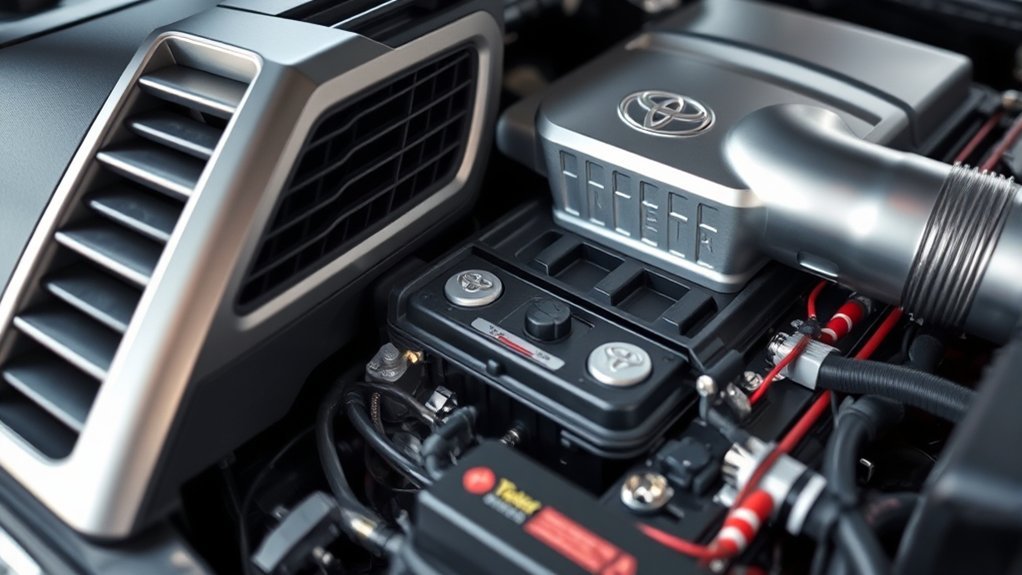
The most common cooling problem is restricted airflow. The traction-battery blower cannot move enough air when dust, lint, pet hair, or other debris covers the intake or filter. A bag, blanket, jacket, child-seat accessory, or rear-seat cover can also block the vent even when the filter itself is clean.
Other possible faults include a dirty duct, damaged blower, loose electrical connector, failed temperature sensor, wiring problem, or hybrid-control fault. Internal battery deterioration can also produce uneven temperatures that resemble a cooling problem. A warning therefore does not prove that the vent only needs cleaning.
Toyota bulletin T-SB-0074-20 documents that dust or debris in the HV battery cooling fan or filter can be associated with battery-related diagnostic trouble codes on covered 2007–2020 Camry HV models. That is why airflow inspection can be part of diagnosis even when a stored code appears to point toward battery deterioration.
The traction-battery cooling path should not be confused with the engine or inverter cooling systems. Those separate systems may use liquid coolant, pumps, reservoirs, hoses, and radiators. A low coolant level under the hood requires investigation, but it does not prove that the traction-battery air-cooling system has failed.
Note: Camry Hybrid generations do not use the same vent location, trim panel, filter, or access procedure. Older manuals may show an intake near the package tray or rear-seat area, while later designs may place it lower beside or beneath the rear seat. Use the manual for your exact year, market, and vehicle specification.
How Often Should You Inspect the Camry Hybrid Battery Cooling Intake?
Toyota’s U.S. technical bulletin T-SB-0062-20, HV Battery Cooling System Maintenance, applies to 2007–2020 Camry HV models. It recommends inspecting the battery intake filter for debris every 5,000 miles and completing the bulletin’s maintenance procedure every 20,000 miles or whenever the battery assembly is replaced.
| U.S. Model Years | Toyota Guidance | Owner Action |
|---|---|---|
| 2007–2013 | The bulletin’s general applicability table lists no internal intake filter for these Camry HV years. | Keep the visible intake clear. Hidden fan and duct cleaning may require trim removal and repair-manual procedures. |
| 2014–2020 | The bulletin lists an internal intake filter and recommends a 5,000-mile inspection plus a 20,000-mile maintenance procedure. | Follow the owner’s manual for accessible cleaning and the repair manual for filter removal, replacement, or hidden service. |
| 2021–2024 | T-SB-0062-20 does not cover these model years, so its schedule should not be carried forward automatically. | Use the exact owner’s manual, maintenance guide, and current Toyota service information for the vehicle. |
| 2025–2026 U.S. | Toyota’s U.S. maintenance charts list the battery cooling intake filter as an inspection item at 5,000-mile service points and a cleaning item at 20,000-mile intervals through the first 50,000 miles shown. | Follow the chart and the owner-cleaning procedure for the exact model year; inspect more often when the applicable manual calls for severe-use attention. |
The 2007–2020 bulletin is service guidance for the vehicles it covers, not a universal rule for every Camry Hybrid worldwide. Toyota’s 2025 U.S. Camry Warranty & Maintenance Guide shows the intake filter as a recurring inspect/clean item, while later or non-U.S. vehicles should be checked against their own current guide. Production changes and market-specific equipment can affect filter applicability, so verify the actual vehicle before purchasing parts or removing trim.
What Are the Signs of a Camry Hybrid Battery Cooling Problem?
A blocked intake or cooling-system fault may cause a dashboard message, increased blower noise, reduced hybrid assistance, or unusual changes in the battery gauge. These symptoms can have several causes, so treat them as reasons to inspect and diagnose rather than proof of a failed traction battery.
- A traction-battery cooling warning: Depending on the model year, the display may show wording such as “Maintenance Required for Traction Battery Cooling Parts See Owner’s Manual” or a message stating that hybrid-battery cooling performance is low. Photograph or write down the exact wording.
- A blower that becomes unusually loud: The fan may run faster when the battery is warm or airflow is restricted. A temporary increase during hot weather, long climbs, or heavy hybrid use is not automatically a fault, but persistent or abnormal noise deserves attention.
- Reduced hybrid assistance: The control system may limit battery charging or output when temperature is outside the preferred range. This can affect acceleration feel or fuel economy.
- Repeated battery-gauge swings: Rapid changes can be related to battery condition, temperature, driving conditions, or another hybrid-system issue. Gauge movement alone cannot identify the failed component.
- Visible debris or an obstruction: Hair, dust, fabric, luggage, or a seat cover blocking the intake should be removed promptly.
- A warning that returns after cleaning: A recurring message can indicate debris deeper in the duct, a damaged blower, an electrical fault, a sensor problem, or an underlying battery issue.
Can You Continue Driving?
| Condition | Recommended Response |
|---|---|
| An object is covering the vent, but no warning or performance change is present | Park safely, switch the vehicle off, remove the obstruction, and inspect the visible intake. |
| A cooling warning appears, but the vehicle otherwise operates normally | Follow the display and owner’s manual, avoid unnecessary heavy load, and arrange prompt diagnosis if the message remains or returns. |
| Check-hybrid-system message, master warning, reduced power, abnormal heat, burning odor, smoke, or severe noise | Stop in a safe place and follow the emergency instructions in the owner’s manual. Arrange professional assistance rather than continuing to test the vehicle. |
How Do You Maintain the Camry Hybrid Battery Cooling System?
Good maintenance starts with keeping the passenger compartment and intake area clean. The battery blower draws air from inside the vehicle, so lint, hair, dust, and loose fabric in the cabin can eventually collect at the intake, filter, or blower.
How to Inspect the Cooling Intake Safely
- Park and switch the vehicle off. Set the parking brake and confirm that the READY indicator is off before inspecting the intake area.
- Locate the correct intake. Use the illustrations in the owner’s manual for your exact model year and market. Do not rely on a photo or video showing another Camry generation.
- Remove external obstructions. Move luggage, clothing, blankets, pet bedding, seat covers, and other objects away from the vent.
- Inspect the visible surface. Use a flashlight to look for dust, lint, hair, or damaged trim. Do not push debris farther into the duct.
- Clean only as the manual directs. Some owner procedures permit vacuum cleaning or removal of an accessible cover or filter. Use only the stated method and stop if the procedure requires unlisted trim or battery-component removal.
- Reinstall accessible parts correctly. Make sure any owner-removable filter, screen, or cover is seated in the correct direction and all clips are secure.
- Check the warning status. If a message remains, returns, or appears with other symptoms, arrange a diagnostic inspection.
Select the correct year and model through Toyota’s Manuals and Warranties portal. The owner’s manual takes priority over generic internet instructions. For example, Toyota’s 2025 U.S. Camry intake-cleaning guidance is model-specific; earlier generations can use a different vent location and access procedure.
Pro Tip: Inspect the intake more often when pets regularly ride in the vehicle, the cabin becomes dusty, or seat covers and cargo are used near the rear seat. Pet hair can create a meaningful restriction before the vent looks completely blocked.
What Not to Do
- Do not open the traction-battery case or remove high-voltage covers.
- Do not touch orange cables, connectors, or the service plug.
- Do not spray liquids into the intake or wash a filter unless the exact service procedure permits it.
- Do not blow compressed air into the vent unless the applicable Toyota procedure specifically directs it; air pressure can push debris deeper into the duct or battery area.
- Do not install an improvised filter that could restrict airflow or detach inside the duct.
- Do not force the blower to run with unapproved wiring, software commands, or modifications.
- Do not disconnect the 12-volt battery or clear codes before diagnosis because stored fault information and operating history may help identify the problem.
Use the climate-control system normally during hot weather, but do not treat air-conditioning operation as a repair. A functioning cabin A/C system cannot compensate for a blocked intake, failed blower, damaged wiring, bad sensor, or deteriorating battery.
Diagnosing Cooling System Problems in Your Camry Hybrid
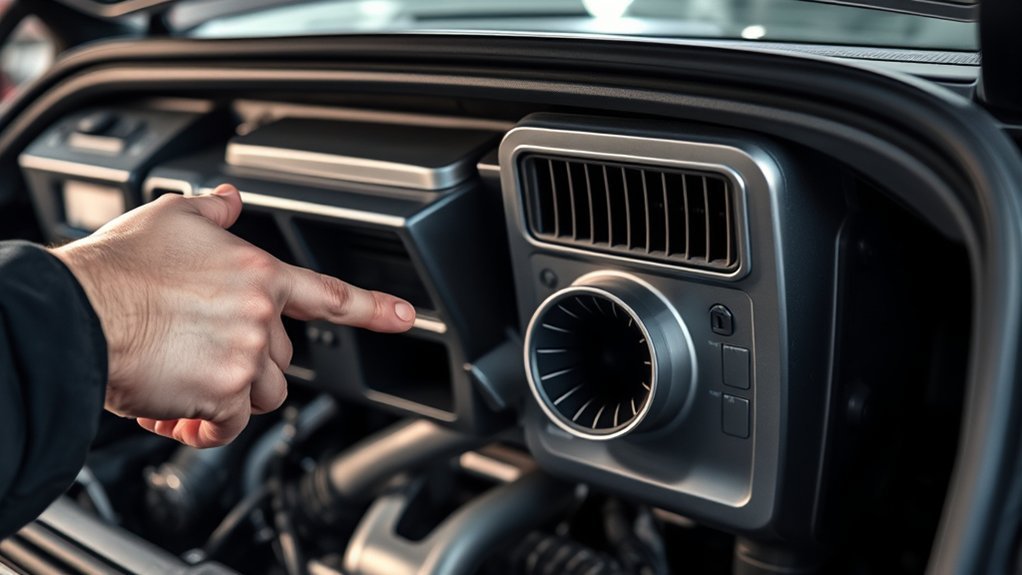
Diagnosis should begin with the exact warning message, the driving conditions when it appeared, recent maintenance, and a visual intake inspection. A technician can then determine whether the fault involves restricted airflow, blower operation, temperature sensing, wiring, battery condition, or another hybrid-control issue.
Details to Record Before Service
Before visiting a repair facility, record:
- The complete dashboard message and every warning light
- Whether the condition occurred in hot weather, heavy traffic, long climbs, or extended high-speed driving
- Whether the cooling blower sounded louder than usual
- Whether pets, luggage, clothing, blankets, or seat covers were near the intake
- Whether fuel economy or hybrid assistance changed suddenly or gradually
- Whether the battery gauge began moving more rapidly than usual
- Whether the warning disappeared after cooling and returned during the next drive
- Any recent trim, rear-seat, audio, wiring, battery, or interior work
These observations can help a technician reproduce the condition. Avoid clearing codes or disconnecting the 12-volt battery before the scan unless an emergency procedure requires it.
Diagnostic Tools Required
A basic OBD-II reader may display some powertrain codes, but complete hybrid cooling diagnosis often requires a scan tool that can communicate with Toyota hybrid-control modules. Useful data may include individual battery-temperature readings, differences between sensor readings, commanded blower speed, blower operation, and related diagnostic trouble codes.
A technician may also use a digital multimeter, wiring diagrams, electrical-load tests, and a controlled blower test. Infrared temperature measurements can support an inspection, but surface readings do not replace internal sensor data or the model-specific repair procedure.
A cooling-system pressure tester is not a normal tool for diagnosing the traction-battery air path. Pressure testing applies to liquid-coolant systems when the symptoms and applicable service procedure call for it.
Why a Professional Inspection Matters
Professional diagnosis becomes important when cleaning the accessible intake does not resolve the warning. The blower, ducting, connectors, sensors, and battery assembly may be behind interior trim or close to high-voltage components.
A qualified hybrid technician can:
- Retrieve and document trouble codes and freeze-frame information before clearing anything.
- Compare battery-temperature data under controlled operating conditions.
- Command or test the cooling blower and verify its electrical operation and airflow.
- Inspect hidden ducting and filters for restrictions, damage, or incorrect installation.
- Check sensors, wiring, grounds, and connectors with the correct diagrams and test values.
- Evaluate traction-battery condition when temperature imbalance may reflect an internal battery problem.
Toyota’s Technical Information System provides North American repair manuals, wiring diagrams, service bulletins, technical training, and diagnostic procedures.
A cooling warning does not automatically mean the vehicle is affected by a recall or service campaign. U.S. owners can check the VIN through the National Highway Traffic Safety Administration recall lookup before authorizing repairs.
What Will It Cost to Fix Your Camry Hybrid’s Cooling System?
The cost depends on the confirmed fault, model year, local labor rate, filter design, and how much interior trim must be removed. A surface obstruction may require no parts, while a hidden restriction, failed blower, damaged wiring, bad sensor, or internal battery problem requires more time and specialized testing.
| Service Level | What It May Include | Main Cost Factors |
|---|---|---|
| Owner intake check | Removing an external obstruction and cleaning an accessible surface as directed by the manual | Usually no parts and little or no cost |
| Filter or duct service | Interior trim removal, filter cleaning or replacement, and duct inspection | Filter design, part availability, access time, and labor rate |
| Blower or electrical repair | Scan-tool diagnosis, controlled blower testing, wiring checks, and component replacement | Diagnostic time, trim access, failed part, and electrical repair complexity |
| Battery-system diagnosis | Temperature-data comparison, battery-condition testing, and high-voltage procedures | Battery condition, warranty status, parts, technician qualification, and required repair |
Ask the repair facility for the trouble codes, test results, failed component, labor estimate, part number, and warranty coverage before authorizing work. A quote for a “cooling pump” or “battery coolant leak” should be clarified because the shop may be discussing the inverter or another liquid-cooling circuit rather than the traction-battery air system.
Why Timely Action Matters for Your Hybrid Battery’s Longevity
Battery temperature affects available performance, charging behavior, and long-term durability. The vehicle’s control system manages battery use and blower operation, but it cannot overcome a severely blocked intake, failed fan, damaged duct, or incorrect sensor signal.
Preventing Battery Overheating Issues
Start with the conditions you can control. Keep the intake clear, maintain a reasonably clean cabin, and respond to warning messages. Avoid storing objects against the vent, especially during hot weather, long trips, mountain driving, or stop-and-go traffic.
You do not need to drive unnaturally slowly to protect the cooling system. Smooth driving can reduce unnecessary energy demand, but a properly functioning Camry Hybrid should manage normal acceleration, regenerative braking, highway travel, and everyday traffic without owner intervention.
Maintaining Consistent Hybrid Performance
When airflow is restricted, the control system may increase blower speed or limit battery charging and output to manage temperature. You may notice less electric assistance or a change in fuel economy, but those symptoms do not identify the failed component by themselves.
Addressing a warning early can prevent a minor external obstruction from becoming a repeated high-temperature condition. Cleaning the intake should not, however, be used to dismiss codes indicating a blower, sensor, wiring, control-system, or battery fault.
Supporting Battery Service Life
No single mileage figure predicts how long every Camry Hybrid battery will last. Climate, battery chemistry, model year, manufacturing variation, driving pattern, maintenance, and existing battery condition all affect service life.
Temperature control is one part of battery protection. Research from the National Renewable Energy Laboratory on vehicle battery-pack integration explains that thermal management and temperature uniformity influence battery performance, vehicle efficiency, safety, and service life.
For U.S. Toyota hybrid vehicles beginning with model year 2020, Toyota states that the hybrid battery has limited-warranty coverage for 10 years or 150,000 miles, whichever comes first, subject to the applicable warranty terms. Coverage is not a prediction of battery lifespan.
The Role of the Cooling System in the Toyota Camry Hybrid
The battery cooling system helps the hybrid control computer keep the traction battery within an acceptable temperature range. Battery temperature can rise during charging, acceleration, regenerative braking, hot-weather driving, and extended vehicle operation.
The cooling blower does not simply run at one speed. The control system monitors battery temperatures and operating conditions, then adjusts airflow as needed. A faster or more noticeable fan can be normal when the battery is warm, although persistent excessive noise may indicate a restriction or mechanical problem.
Temperature management supports stable charging and discharging. When the battery becomes too warm, the vehicle may reduce battery input or output to protect the system. That response may feel like reduced hybrid assistance, but it does not by itself confirm permanent battery damage.
Battery chemistry, packaging, and physical placement have changed across Camry generations. Intake location, filter construction, duct routing, and service access can therefore differ even when the basic forced-air operating principle is similar.
How the Toyota Camry Hybrid Battery Cooling System Works
Where Is the Camry Hybrid Battery Cooling Vent?
The vent location changes by generation and market. Current 2025 U.S. Camry owner guidance provides a dedicated intake-cleaning procedure, while earlier Camry Hybrid manuals can place the intake elsewhere around the rear-seat or package-tray area. Use the illustration for the exact vehicle rather than copying another model year.
The traction-battery cooling system uses several components that work together:
- Air intake vent: The vent allows cabin air to enter the cooling path. Its location depends on the model year and market.
- Filter or protective screen: Where equipped, this component reduces the amount of dust, lint, and hair entering the duct and blower.
- Air duct: The duct carries air from the passenger compartment toward the blower and battery assembly.
- Electric cooling blower: The blower moves air through or around the battery pack so heat can be carried away.
- Battery-temperature sensors: These sensors report temperature conditions to the hybrid control system.
- Hybrid control system: The computer adjusts blower operation and may limit battery use when temperature or a fault requires protection.
- Air outlet path: After passing through the battery area, heated air is directed away through model-specific ducting.
This is different from a liquid-cooling loop. The traction-battery air path does not normally require the owner to check a dedicated battery coolant reservoir. Coolant under the hood belongs to other vehicle systems and must be evaluated according to the applicable cooling-system procedure.
For accurate instructions, select the exact vehicle through Toyota’s official manual portal. Repairs involving blower removal, wiring tests, battery sensors, duct disassembly, or high-voltage covers should use Toyota repair information rather than a generic diagram for another hybrid model.
Related Guides
Frequently Asked Questions
How does a Camry Hybrid battery cooling system work?
A blower draws cabin air through a model-specific intake, filter or screen where equipped, and ducting. The air passes through the traction-battery cooling path and carries heat away. Temperature sensors and the hybrid control system determine when and how fast the blower operates.
How often should I inspect the Camry Hybrid battery cooling intake?
For covered 2007–2020 U.S. Camry HV models, Toyota bulletin T-SB-0062-20 recommends inspecting the intake filter for debris every 5,000 miles and completing the bulletin maintenance procedure every 20,000 miles. Toyota’s 2025–2026 U.S. maintenance charts also show recurring intake-filter inspections at 5,000-mile service points and cleaning at 20,000-mile intervals through the first 50,000 miles shown. Other model years and markets should follow their exact maintenance guide and owner’s manual.
What does “Maintenance Required for Traction Battery Cooling Parts” mean?
The message indicates that the vehicle has detected a maintenance need or possible restriction involving the traction-battery cooling path. Check the accessible intake for an external blockage, record the exact message, and follow the applicable owner’s manual. Seek service if the message remains or returns.
What does “Cooling Performance of the Hybrid Battery Is Low” mean?
The wording indicates that traction-battery cooling is not meeting the expected level. A blocked intake or dirty filter may be responsible, but the blower, ducting, sensors, wiring, battery condition, or another hybrid-control fault may also be involved.
Does the Camry Hybrid traction battery use liquid coolant?
The traction battery uses a forced-air cooling path. The Camry also has liquid-coolant systems for the gasoline engine and hybrid power-electronics components, which is why coolant reservoirs and pumps appear elsewhere in the vehicle.
Can I clean the hybrid battery vent myself?
You can remove visible external obstructions and perform owner maintenance specifically described in the exact manual. Do not open the battery case, remove high-voltage covers, touch orange cables, or dismantle the internal blower and ducting unless the service procedure and your qualifications permit it.
Where is the Camry Hybrid battery cooling vent?
The location varies by generation and market. It may be near the package tray, rear-seat cushion, rear-seat side trim, or a lower panel beside or beneath the rear seat. Check the illustration in the owner’s manual for the exact vehicle rather than relying on a different Camry model year.
Should I continue driving after a battery cooling warning?
Follow the dashboard instructions and owner’s manual. Remove an obvious external obstruction only when it is safe. Stop driving and arrange assistance when the warning is accompanied by reduced power, a check-hybrid-system message, smoke, a burning odor, unusual heat, severe noise, or other serious symptoms.
Conclusion
Your Toyota Camry Hybrid depends on a clear air path to control traction-battery temperature. Keep luggage, fabric, pet hair, and dust away from the intake, and use the maintenance guidance for the exact model year rather than a universal filter schedule or vent-cleaning video.
If you have a cooling warning now, first record the exact message, switch the vehicle off safely, remove any obvious external obstruction, and inspect only the owner-accessible intake. If the warning remains or returns, preserve the diagnostic information and have a qualified hybrid technician check the blower, ducting, sensors, wiring, control system, and battery condition as needed.
Sources
- Toyota Manuals and Warranties — model-specific owner manuals, maintenance guides, safety instructions, and warranty documents
- Toyota Technical Service Bulletin T-SB-0062-20 — U.S. 2007–2020 Camry HV filter applicability, inspection guidance, and cooling-system maintenance procedures
- Toyota Technical Service Bulletin T-SB-0074-20 — dust/debris in the HV battery cooling fan or filter and related battery diagnostic trouble codes on covered vehicles
- 2025 Toyota Camry Warranty & Maintenance Guide — U.S. HV battery cooling intake filter inspection and cleaning chart
- 2026 Toyota Camry Warranty & Maintenance Guide — U.S. HEV battery cooling intake filter inspection and cleaning chart
- 2025 Toyota Camry Owner’s Manual: Hybrid Battery Air Intake Cleaning — model-specific owner cleaning procedure and warnings
- Toyota Technical Information System — repair manuals, wiring diagrams, service bulletins, technical training, and diagnostic procedures
- Toyota Hybrid Battery Warranty — current U.S. hybrid-battery warranty terms and mileage limits
- National Renewable Energy Laboratory: Integration Issues of Cells Into Battery Packs — vehicle-battery thermal management, temperature control, performance, efficiency, and service-life considerations
- National Highway Traffic Safety Administration Recall Lookup — VIN-specific U.S. safety recall and manufacturer-communication searches

1 thought on “Toyota Camry Hybrid Battery Cooling System Explained”