Flying with a stroller can make airport days much easier, but it also adds one more item that needs protection. Strollers can get scratched, bent, dirtied, or lost when they move through crowded terminals, jet bridges, and baggage areas. The good news is that a few simple steps can lower the risk of damage and help your stroller arrive ready for the trip.
Quick Answer
To protect a stroller when flying, gate check it when possible, remove loose accessories, lock or strap it closed, place it in a padded travel bag, and label it clearly. For extra safety, take photos before check-in and review your airline’s stroller policy before you arrive at the airport.
Key Takeaways
- Gate checking usually keeps your stroller with you longer and reduces handling time.
- A padded stroller travel bag gives the best protection against dirt, scratches, and impact.
- Remove cup holders, organizers, toys, rain covers, and other loose parts before handing over the stroller.
- Compact travel strollers are easier to carry and may fit airline cabin rules, depending on the airline.
- Always label your stroller and take clear photos before check-in in case you need to report damage.
At a Glance
| Time Required | 10 to 20 minutes before check-in or boarding |
| Difficulty | Easy |
| Tools Needed | Stroller bag, luggage tag, straps or zip ties, phone camera, and a small pouch for accessories |
| Cost | Free if you use items you already own; more if you buy a padded stroller travel bag |
Gate Check Your Stroller
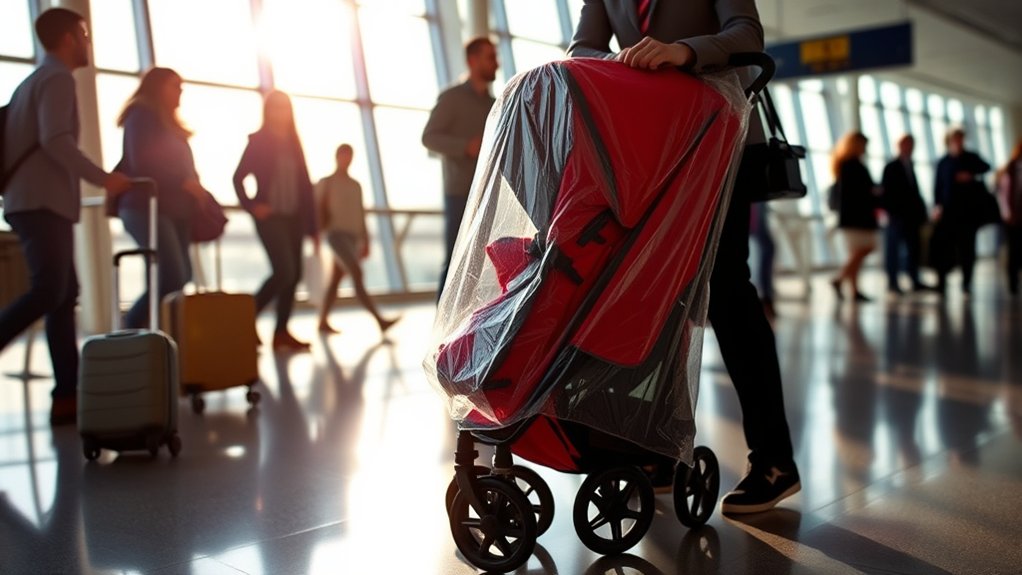
When you gate check your stroller, you can keep it with you until the last moment. That makes airport walks, security lines, and boarding with a tired child much easier. It also means the stroller spends less time moving through the regular baggage system.
Gate checking can reduce handling because you usually hand the stroller over near the aircraft door or at the end of the jet bridge. In many cases, the airline returns it near the gate after landing. This can make your arrival smoother, especially when you need the stroller right away for a long connection or a busy airport.
For maximum stroller safety, remove all loose items and accessories before gate checking. Take off toys, snack trays, cup holders, parent organizers, hooks, blankets, and anything clipped to the handlebar. Loose parts can fall off, snag, or break during handling.
Secure your stroller in a collapsed position using the stroller’s lock, a strap, or a reusable tie. This helps prevent accidental opening during transport. If your stroller has exposed wheels or a delicate handlebar, keep those parts facing inward when you place it in a bag.
Pro Tip: Ask for the gate-check tag before boarding starts. Attach it securely to the stroller frame or travel bag so you are not rushing while holding your child and carry-on bags.
Use a Protective Stroller Bag
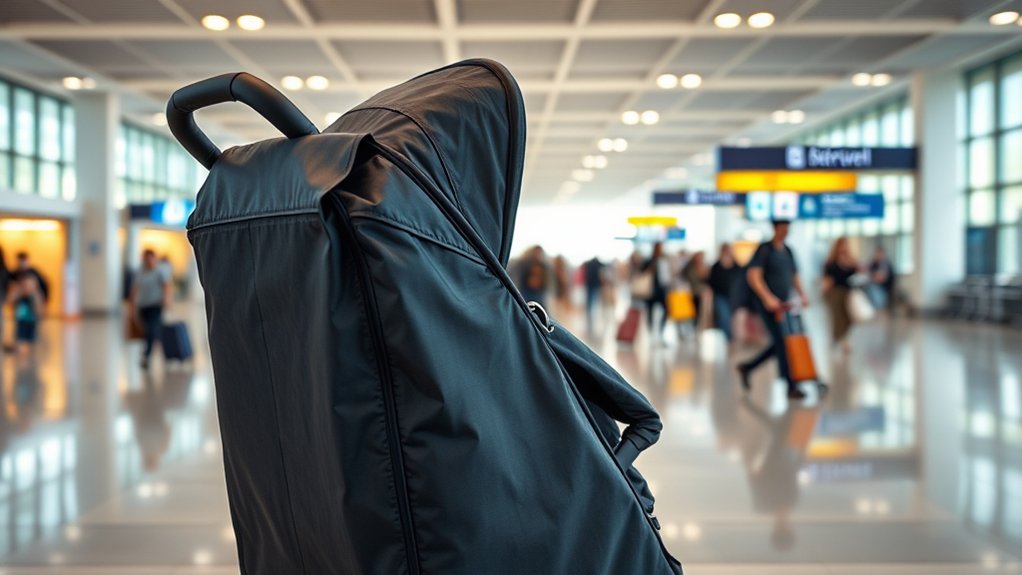
To keep your stroller safer during air travel, using a protective stroller bag is one of the smartest steps. A travel bag helps shield the stroller from scratches, dirt, grease, moisture, and rough contact with other luggage. It also keeps straps, wheels, and fabric contained in one easy-to-handle package.
Some stroller bags are thin covers that mainly protect against dirt. Others are padded bags that offer better impact protection. If you fly often or own a higher-cost stroller, a padded option is usually worth considering.
Importance of Protection
Protecting your stroller during air travel matters because stroller frames, wheels, folding joints, brake parts, and fabric can all be vulnerable. A protective stroller bag helps keep the stroller clean and easier to identify. It also gives baggage handlers a better surface to grip.
Many stroller brands offer bags made for their own models. These can fit more snugly and reduce movement inside the bag. A snug fit matters because extra movement can allow the stroller to shift, rub, or take harder hits during loading and unloading.
A padded bag adds an extra layer of cushioning around the frame. It can be especially helpful if your stroller has a delicate handlebar, exposed wheels, adjustable footrest, or removable seat frame. Some stroller makers also offer travel protection programs when you use an approved bag, so check your stroller brand’s terms before flying.
Choosing the Right Bag
Finding the right protective stroller bag can make a major difference in your travel experience. Start by checking the folded dimensions of your stroller, then compare them with the bag’s interior dimensions. Do not rely only on “universal fit” wording.
Here are the key features to consider:
- Padded protection: Helps absorb light impacts during gate check or baggage handling.
- Brand-specific design: Gives a better fit for certain stroller models and frame shapes.
- Durable material: Resists tearing when the bag rubs against carts, belts, or other luggage.
- Strong handles: Makes the stroller easier to lift and carry through the airport.
- Secure closure: Zippers, buckles, or drawstrings help keep the stroller contained.
- Extra storage: Useful for small stroller parts, rain covers, or travel accessories.
- Clear name tag area: Helps airline staff identify the bag quickly.
Note: A stroller bag protects your gear, but it does not guarantee the airline will cover every type of damage. Keep receipts, photos, and policy details handy before you travel.
Travel With a Compact Stroller Instead

When you choose a compact stroller, you reduce bulk and make airport movement easier. Compact travel strollers are usually lighter, faster to fold, and easier to carry through tight spaces. Some models may fit in overhead compartments, but airline rules vary, so always check before counting on cabin storage.
A compact stroller can also lower the chance of damage because there is less frame, fabric, and extra hardware exposed. If your full-size stroller is expensive, heavy, or difficult to fold, traveling with a smaller stroller may be the safer choice.
Space-Saving Design Benefits
Traveling with a compact stroller offers useful space-saving advantages. These strollers are easier to maneuver through check-in lines, elevators, restrooms, and narrow boarding areas. They also reduce the chance of bumping into seats, counters, or other travelers.
Key space-saving benefits include:
- Smaller folded size for easier carrying and storage.
- Lower weight compared with many full-size strollers.
- Quick folding for boarding, security, taxis, and hotel transfers.
- Less need to check a bulky stroller at the ticket counter.
- Easier handling during layovers and tight connections.
Embracing a compact stroller can transform your travel day. You get more freedom to move without sacrificing comfort for your child.
Lightweight for Easy Handling
Compact strollers are not just about saving space. They also offer lightweight handling that simplifies your travel experience. Many travel strollers weigh far less than full-size models, which makes a real difference when you are carrying bags, snacks, documents, and your child’s essentials.
Lightweight designs help with airport navigation. You can lift the stroller into a car, place it in a travel bag, or carry it up stairs more easily. One-hand folding mechanisms can also help when you need to move quickly from stroller mode to boarding mode.
Keeping your stroller close also minimizes the risk of damage from baggage handling. With additional storage features, you can keep wipes, snacks, a small toy, and travel papers within reach while still moving efficiently.
Durability and Travel Readiness
As you plan your next trip, consider how a durable and travel-ready stroller can make the day less stressful. A good travel stroller should fold securely, roll smoothly, and handle repeated lifting without parts feeling loose.
Look for these features before you fly:
- Lightweight design: Easier to carry during boarding, transfers, and security checks.
- Durable materials: Strong fabric and a reliable frame help the stroller handle travel wear.
- One-handed folding: Useful when you are holding your child or managing luggage.
- Compact size: Helps with storage in cars, hotel rooms, and airport seating areas.
- Travel-friendly extras: Carry straps, storage pockets, rain covers, and bags can help families on the go.
Choosing a compact stroller means embracing freedom and convenience. It lets you move through the airport with less stress and fewer bulky items to manage.
Wrap Your Stroller for Protection
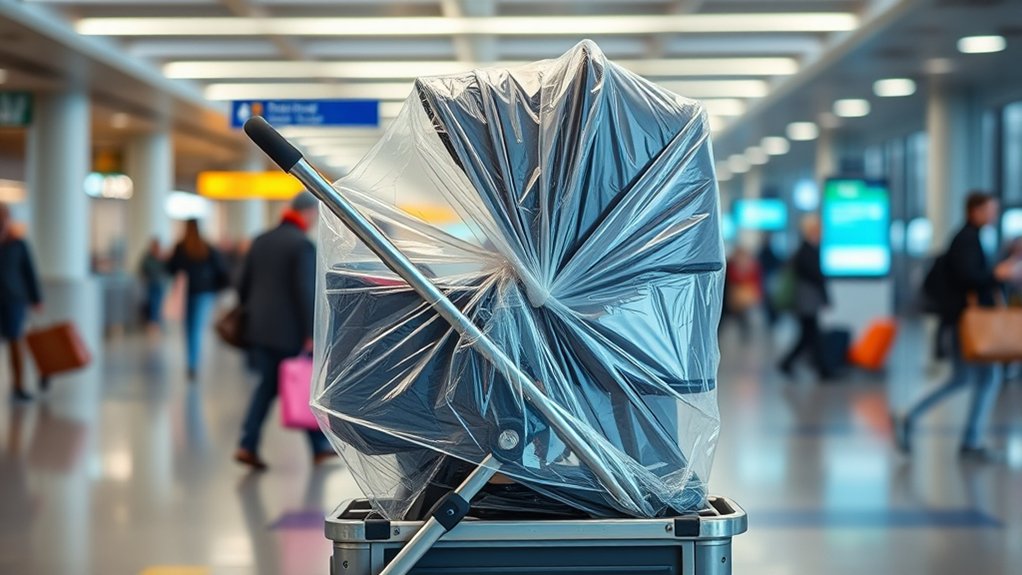
When it comes to protecting your stroller during a flight, wrapping it properly can make a real difference. Bubble wrap, plastic wrap, foam padding, or a stroller travel bag can add a protective layer against scratches and scuffs. This is especially helpful around the handlebar, frame corners, brake area, and wheels.
Some airports offer plastic wrapping services. This can help keep the stroller clean and contained, but it may not provide the same padding as a proper stroller bag. If you use wrap, avoid covering airline tags or your name label.
| Protection Method | Benefits |
|---|---|
| Bubble Wrap | Cushions against impacts |
| Plastic Wrap | Shields from dirt and moisture |
| Pool Noodles | Absorbs shocks around the frame |
| Sturdy Box | Provides structural support |
Before wrapping, secure your stroller in a collapsed position with its built-in lock, a luggage strap, or zip ties. This prevents accidental unfolding and makes the stroller easier to handle. If you use zip ties, pack a small pair of travel-safe nail clippers or ask airline staff for help removing them after arrival.
Pay extra attention to exposed parts. Wrap the handlebar, wheel joints, footrest, and frame corners. These areas tend to take the most contact when a stroller is moved, stacked, or placed beside other baggage.
Warning: Do not wrap the stroller so tightly that it bends the frame, presses on the brake, or traps the folding mechanism under tension. The stroller should stay closed, not strained.
Take Off All Stroller Accessories

Removing all accessories from your stroller is a crucial step before flying. Accessories make the stroller bulkier and create more pieces that can snap, fall off, or disappear during handling. A clean, folded stroller is easier for airline staff to move and easier for you to pack.
Sticking to only necessary accessories also makes maneuvering the airport smoother. You will have fewer loose pieces to watch, fewer items hanging from the handlebar, and less weight on the stroller frame.
Here are common accessory types to remove:
- Parent organizers
- Cup holders
- Snack trays
- Clip-on fans
- Stroller hooks
- Toys and toy straps
- Canopies, if removable
- Rain covers
- Mosquito nets
- Diaper bags
- Umbrellas
Use effective removal techniques by packing accessories separately in your luggage or a small pouch. This strategy prevents loss and protects small parts from potential damage. It also reduces the stroller’s overall size, which makes gate checking or fitting into a travel bag easier.
Never leave valuables in stroller pockets. Passports, wallets, phones, keys, medicine, and important documents should stay in your personal item. Airline staff may move the stroller quickly, and small pocket items can fall out without anyone noticing.
Follow the Airlines’ Stroller Policies
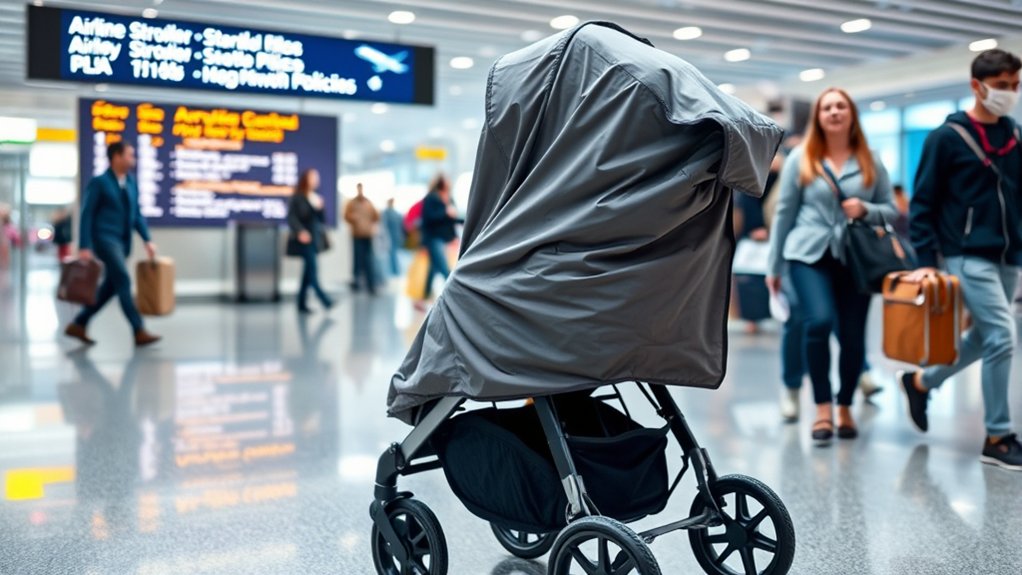
Understanding your airline’s stroller policies can make all the difference in your travel experience. Each airline sets its own rules for stroller dimensions, weight limits, gate checking, counter checking, and cabin storage. Check the policy before you pack, then check again before your return flight if you are flying with a different carrier.
Many airlines allow one stroller per child to be checked without counting it as a standard checked bag. However, rules can vary by route, aircraft size, fare type, and stroller size. Double strollers, wagon strollers, and heavy full-size models often face stricter limits.
If you have a small, foldable stroller, some airlines may allow it as cabin baggage when it meets size rules. Do not assume this will happen. If the overhead bins are full or the aircraft is small, staff may still ask you to gate check it.
Before leaving home, confirm these details:
- Whether your stroller can be gate checked
- Whether it can be checked at the ticket counter
- Whether a compact stroller can be carried on board
- Size and weight limits for strollers
- Rules for double strollers or stroller wagons
- Where the stroller will be returned after landing
- How to report damage before leaving the airport
By familiarizing yourself with the airline’s stroller policies, you can avoid last-minute surprises and make travel feel smoother. You will also know what to expect if staff ask you to check the stroller earlier than planned.
Label and Document Your Stroller Before Flying
A clear label helps your stroller find its way back to you. Use a durable luggage tag with your name, phone number, email address, and destination city. If you use a stroller travel bag, label both the bag and the stroller frame inside it.
Bright tags or ribbons can also help you spot your stroller quickly at the gate or baggage area. Choose something secure that will not snag or fall off during handling.
Before you hand over the stroller, take photos from several angles. Capture the frame, wheels, handlebar, seat, canopy, and any existing marks. These photos can help if you need to file a damage report after landing.
Keep your gate-check receipt or baggage tag until the stroller is safely back in your hands. If the stroller is delayed, that tag helps airline staff track it faster.
Prepare Your Stroller Before Security and Boarding
Airport security can feel rushed when you are traveling with a child, so prepare your stroller early. Empty the basket before you reach the screening area. Remove bottles, blankets, toys, snacks, and anything that may need to go through the scanner separately.
Practice folding the stroller before travel day if it is new or unfamiliar. You do not want to learn the fold mechanism while people are waiting behind you. A smooth fold also lowers the chance of forcing a latch or bending a part.
If your stroller has removable wheels, decide whether removing them helps or creates more hassle. For some models, removing the wheels makes the stroller fit better in a bag. For others, it adds loose parts you need to track carefully.
After security, reorganize your stroller before boarding starts. Keep only the items you need until the gate, then pack everything away before you hand over the stroller.
Choose Between Gate Checking and Counter Checking
Gate checking is often the best choice when you need the stroller inside the airport. It helps with long walks, tired toddlers, and connecting flights. It also reduces the amount of time your stroller spends away from you.
Counter checking may make sense if your stroller is very large, if you are using a stroller box, or if you want fewer items to manage through security. It can also help if you are traveling with multiple children and need to simplify boarding.
Use this simple guide:
| Gate Check | Best when you need the stroller until boarding or during a layover. |
| Counter Check | Best for bulky strollers, boxed strollers, or families who want fewer items after check-in. |
| Carry-On Stroller | Best only when your stroller meets the airline’s cabin-size rules and staff approve it. |
What to Do If Your Stroller Is Damaged
If your stroller is damaged during a flight, do not leave the airport before reporting it. Go to the airline baggage service desk or gate staff as soon as you notice the problem. Ask how to file a damage report and what documents they need.
Take clear photos of the damage, the stroller tag, and the travel bag if you used one. Keep your boarding pass, baggage claim receipt, and any repair estimate you receive later. These details can help support your claim.
Check the stroller carefully before using it again. Look at the folding lock, brakes, wheels, handlebar, frame joints, harness, and seat attachment points. If any safety part seems bent, loose, or unreliable, avoid using the stroller until it has been inspected or repaired.
Warning: Never place your child in a stroller that has a bent frame, unreliable brake, broken wheel, damaged harness, or folding lock that will not fully secure.
Frequently Asked Questions
Can I bring my stroller on board as a carry-on?
You usually cannot bring a full-size stroller on board as a carry-on. Some compact travel strollers may be allowed if they meet the airline’s cabin-size rules, but approval depends on the airline, aircraft, and available overhead space. Always check before flying.
What is the best type of protective stroller bag?
The best protective stroller bag is a padded bag that fits your folded stroller snugly. It should have strong handles, durable fabric, secure closures, and enough room for the stroller without forcing the frame. A brand-specific bag is often the best fit when available.
Are there fees for gate checking a stroller?
Many airlines let you gate check a stroller without an extra fee, but policies can vary. Check your airline’s stroller rules before travel, especially if you have a double stroller, stroller wagon, oversized model, or multiple child items.
How should I label my stroller for travel?
Use a durable luggage tag with your name, phone number, email address, and destination city. Label the stroller frame and the travel bag. Bright tags, ribbons, or handle wraps can also help you spot it quickly after landing.
What should I do if my stroller is damaged during flight?
Report the damage before leaving the airport. Take photos, keep your baggage or gate-check tag, and ask the airline how to file a claim. Do not use the stroller if the frame, brakes, wheels, harness, or folding lock appears unsafe.
Should I use a stroller bag for gate checking?
Yes, a stroller bag is still useful for gate checking. Even though the stroller spends less time away from you, it can still be handled, stacked, or exposed to dirt. A padded bag gives better protection than a thin cover.
Can I leave items in the stroller basket when flying?
No, empty the stroller basket before security, gate check, or counter check. Loose items can fall out, get lost, or damage the stroller. Keep valuables, documents, medicine, and child essentials in your carry-on or personal item.
Conclusion
Protecting your stroller when flying comes down to preparation. Gate check it when possible, use a protective stroller bag, remove accessories, secure the fold, label it clearly, and take photos before handing it over. These small steps can prevent scratches, missing parts, and stressful arrival surprises.
Think of your stroller as one of your most important travel tools. When it arrives clean, safe, and ready to roll, your whole trip feels easier. With the right plan, you can move through the airport with more confidence and focus on enjoying the journey with your little one.

