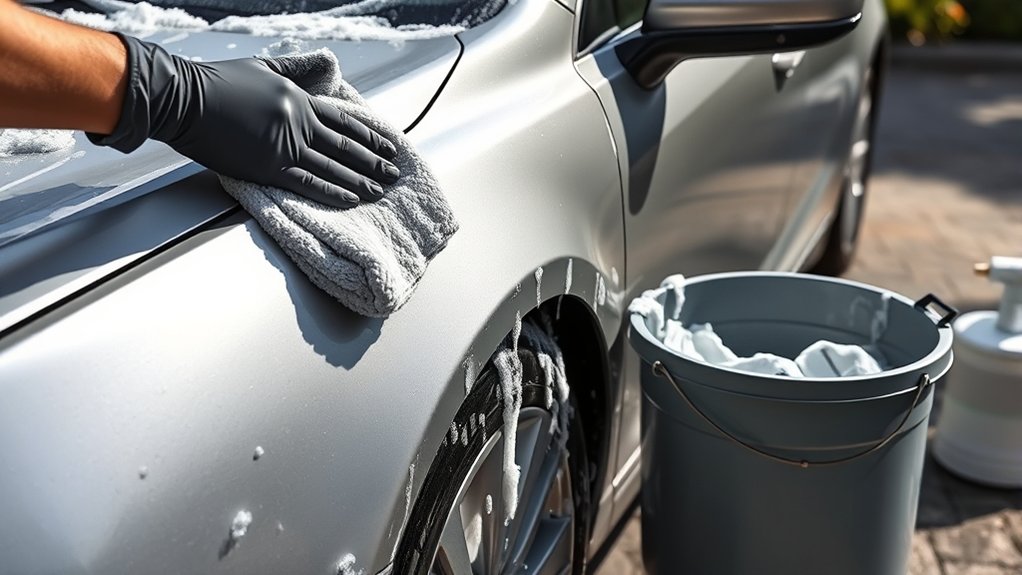
Last Updated: September 22, 2026
To hand wash a Toyota Camry without adding avoidable swirl marks, remove loose grit before any contact, use dedicated car-wash shampoo and clean microfiber tools, keep wheel contamination separate, wash cool panels from the roof down, and dry before water evaporates. Toyota’s exterior-care guidance also varies by model year, so check the manual for your exact Camry before using high-pressure water around sensors, seals, trim, or other sensitive areas.
Quick Answer
Hand wash your Toyota Camry on a cool surface with automotive shampoo, two buckets, clean microfiber mitts, and separate wheel tools. Rinse off loose grit first, wash from the roof downward with light pressure, rinse each panel before soap dries, and dry immediately with clean microfiber towels or a dedicated car dryer.
Key Takeaways
- Wash only when the paint, glass, wheels, and brakes are cool to the touch.
- Use automotive shampoo, clean microfiber mitts, and separate brushes and buckets for the wheels.
- Pre-rinse thoroughly, use light pressure, and clean one panel at a time from the roof downward.
- Do not allow shampoo or rinse water to dry on the surface.
- Dry immediately and apply wax or sealant only when the existing protection needs renewal.
- Check the owner’s manual for your exact Camry year before using high-pressure water around cameras, radar, seals, trim, or the engine compartment.
At a Glance
| Time Required | Varies with dirt level, vehicle condition, and whether you clean the wheels or interior; do not rush while soap or rinse water is on the surface |
| Difficulty | Easy, with careful tool handling and frequent rinsing |
| Tools Needed | Two buckets, grit guards, microfiber wash mitts, automotive shampoo, separate wheel tools, hose, and microfiber drying towels |
| Cost | Varies by the supplies you already own and the products you choose; no special machine is required for a basic hand wash |
Essential Supplies for Hand Washing Your Toyota Camry
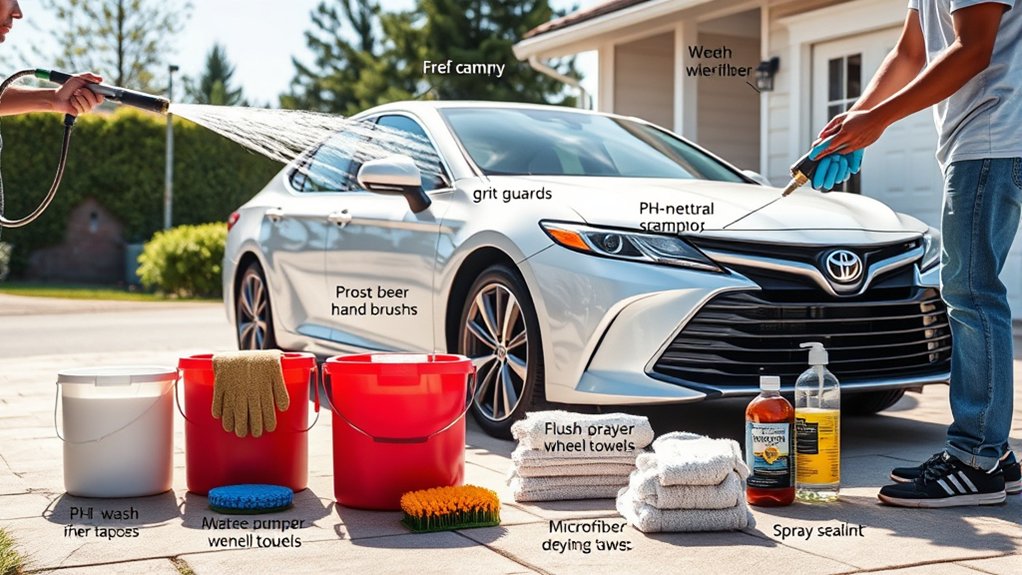
Clean tools and a well-lubricated automotive shampoo are more important than using a large collection of detailing products. Gather everything before wetting the car so you do not have to leave soap drying on the paint while searching for a towel or brush.
- Automotive car-wash shampoo: Choose a product labeled safe for clear-coated paint and for any wax, sealant, paint-protection film, or ceramic coating already on the vehicle. A shampoo does not need to contain wax to clean safely.
- Two buckets with grit guards: Put the shampoo solution in one bucket and plain rinse water in the second. A grit guard helps keep settled debris away from the mitt, although it does not replace frequent water changes.
- Two or more microfiber wash mitts: Reserve one clean mitt for the roof, glass, hood, trunk, and upper doors. Use another for rocker panels, bumpers, and other heavily contaminated lower areas.
- Separate wheel tools: Use a dedicated wheel bucket, soft wheel brush, tire brush, and towels that never touch the paint. Brake dust and road grit can scratch clear coat.
- Hose with a shutoff nozzle: A gentle stream is enough for normal rinsing. A pressure washer is optional, not required.
- Microfiber drying towels: Use clean, soft towels intended for vehicle drying. Keep wheel, door-jamb, interior, and paint towels separate.
- Optional car dryer: A dedicated filtered dryer can remove water from mirrors, trim, badges, and panel gaps with little paint contact.
- Optional protection: Wax, sealant, or a compatible spray protectant may be applied after washing when the existing protection needs renewal.
An all-purpose interior cleaner, vacuum with attachments, glass cleaner, and upholstery products can be useful if you are also cleaning the cabin. Confirm that each cleaner is approved for the surface being treated. For leather-trimmed seats, use a product labeled for automotive leather and follow the product directions rather than saturating the material.
Warning: Do not use laundry detergent, abrasive household cleaners, scouring pads, old kitchen sponges, or towels that have touched the ground. Strong detergents may strip existing protection, while trapped grit can create visible scratches and swirl marks.
[Amazon Products Picked for You]
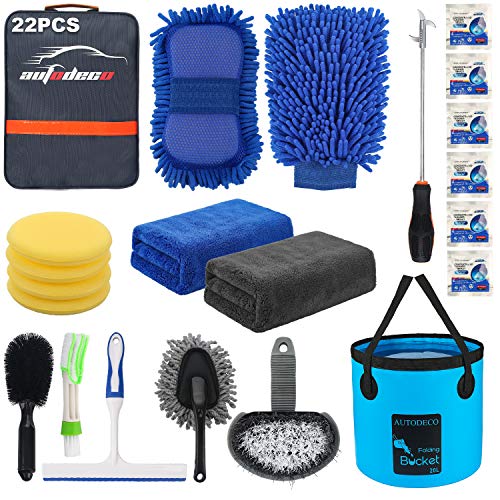
22PCS CAR WASH CLEANING KIT: 1 portable collapsible bucket(20L/5 Gallon), 1 extra large chenille microfiber wash mitt(8'' x 11''), 1 microfiber wash sponge, 2 super absorbent towel(15.7"*15.7"), 1 window water scraper, 1 car tire brush, 1 car wheel brush with handle, 1 mini duster for car air vent, 1 car tire clearing stone hook, 1 car duster, 4 wax applicator pad, 1 blue storage zipper bag

45 Pcs-in-1 Car Detailing Kit: 1 vacuum with long cord & 3 attachments, 1 low-pressure foam gun with 6 accessories, 1 collapsible bucket, 1 windshield cleaning tool with 3 pads 1 spray bottle, 5 detailing brushes, 4 drill brushes, 3 wire brushes, 2 foam drill polishing pads, 2 woolen polishing pads, 1 pad connector, 2 wax applicator, 2 towels, 1 wash mitt, 1 cleaning gel, 1 duster brush, 1 tire brush, 1 interior detailing brush with soft bristle, 1 crevice brush, 1 bag ( DRILL IS NOT INCLUDED )

【62" Extra Long Car Wash Brush】Revolutionize your car cleaning with @UTOS car washing mop! Crafted with 4 sturdy aluminum alloy rods and chenille microfiber heads, it's detachable and easy to assemble. Easily wash roof of car, SUV, truck, and hard-to-reach surfaces.
Prepare Your Toyota Camry Before Washing
Park on a stable surface in open shade or wash during a cooler part of the day. Avoid working under a dusty tree or anywhere wind can blow sand, leaves, or grit onto wet paint.
- Let the vehicle cool: The paint, glass, wheels, and brake components should be cool to the touch. Water and shampoo can dry rapidly on hot surfaces, increasing the risk of streaks and mineral spots.
- Close and inspect the vehicle: Confirm that the windows, doors, hood, trunk, fuel door, and sunroof are closed. Look for loose trim, damaged weather seals, peeling paint, stone chips, or lifted paint-protection film before using pressurized water.
- Check the finish type: Matte paint, vinyl wraps, paint-protection film, ceramic coatings, and recently repaired paint may require specific products. Follow the installer’s instructions and your exact model-year documentation.
- Remove scratch hazards: Take off rings, watches, bracelets, belt buckles, or clothing accessories that may contact the paint. Inspect mitts, brushes, and towels for hard particles.
- Plan the runoff: Check local water-use and storm-drain rules. Use a shutoff nozzle, avoid unnecessary runoff, and do not allow dirty wash water or concentrated chemicals to flow directly into a storm drain.
Camry-Specific Checks Before You Start
Toyota’s exterior-care instructions are not identical across every Camry model year. For example, the 2023 Camry owner’s manual tells owners to rinse the body from top to bottom, use car-wash soap for difficult marks, wipe away water, and wax when the waterproof coating has deteriorated. It also warns not to apply water inside the engine compartment. On Smart Key-equipped 2023 Camrys, Toyota notes that wet door handles can repeatedly lock and unlock if the electronic key remains within range; the manual says to keep the key at least 6 ft (2 m) away or use battery-saving mode while washing.
Toyota provides model-specific manuals through its official Manuals and Warranties portal. Select your Camry’s model year and follow any finish, sensor, accessory, Smart Key, or exterior-care instructions that differ from general detailing guidance.
Note: This guide combines Toyota owner-manual guidance with conservative detailing practice; it does not claim controlled product testing. It does not replace the owner’s manual, product labels, coating warranty terms, or instructions from a body shop that recently painted the vehicle.
How to Hand Wash a Toyota Camry Without Scratching: Step by Step
[Amazon Products Picked for You]

SIGNATURE SERIES WHEEL CLEANER (CLD_203_16SW) – High-performance car wheel cleaner formula breaks down heavy brake dust, road grime, and oxidation from wheels, calipers, and more

Keep your wheels and tires dirt-free with Armor All Extreme Wheel and Tire Cleaner. This tire and wheel cleaner is powerful enough to clean even the dirtiest wheels, while remaining gentle and safe enough to be used on all factory and aftermarket finishes. Specially formulated deep-cleansing agents penetrate into hard-to-reach areas, dislodging stubborn dirt, grease, tar and brake dust. The result is beautifully clean and shiny-looking wheels and tires. To use, first ensure the wheels and tires are cool to the touch. Then, saturate the wheels and tires with this wheel cleaning tool and let it soak for 30 seconds to remove grease, grime and brake dust. Rinse the wheels and tires, and dry with a soft cloth to prevent water spots. In addition to wheel and tire cleaner, Armor All also makes car tire cleaner spray, tire spray, car valeting accessories, and other car cleaning products to add to your car wheel cleaning kit. Give your vehicle the finish it deserves with Armor All.

Powerful Brake Dust Removal: Cuts through tough brake dust, grime, and road contaminants with ease. This high-performance cleaner is designed to lift away embedded dirt and iron buildup, restoring your wheels to a factory-fresh look
1. Clean the Wheels and Tires First
Clean cool wheels before washing the body so brake dust and wheel-cleaner overspray do not land on freshly washed paint. Work on one wheel at a time.
- Rinse the wheel, tire, wheel well, and surrounding area.
- Apply a wheel cleaner that is specifically labeled safe for the wheel’s finish.
- Agitate the tire and wheel with separate brushes, reaching the spokes and barrel only as far as you can do safely.
- Rinse thoroughly before the cleaner dries.
- Repeat for the remaining wheels, changing dirty water as needed.
Never use the wheel mitt, brushes, bucket, or drying towel on painted body panels.
2. Pre-Rinse Loose Dirt
Rinse the entire Camry from the roof downward. Spend extra time on wheel arches, rocker panels, the lower doors, front bumper, rear bumper, and areas behind the wheels. The goal is to float away loose sand, mud, salt, and grit before anything touches the paint.
If mud is caked onto the vehicle, soften and rinse it repeatedly rather than scrubbing. A wash mitt should not be used to break apart dry or gritty deposits.
3. Use a Pressure Washer Only When Appropriate
A normal garden hose is sufficient for most maintenance washes. Toyota’s high-pressure-wash precautions vary by Camry model year, so use the instructions for your exact vehicle as the controlling guidance. As one concrete example, the 2023 Camry manual says not to spray the camera or its surrounding area directly, not to spray the radar behind the emblem, to keep the cleaning nozzle at least 11.9 in. (30 cm) from the vehicle body, not to hold the nozzle continuously in one place, not to spray the lower windshield continuously, and not to high-pressure wash the underside.
- Use a broad fan pattern rather than a concentrated or zero-degree jet.
- Start farther away and move closer only when both the pressure-washer instructions and your Camry manual permit it.
- Keep the wand moving instead of concentrating pressure on one spot.
- Avoid close-range spray at damaged paint, loose trim, weather seals, badges, cameras, radar areas, parking sensors, electrical connectors, and edges of wraps or paint-protection film.
- Never point the spray at yourself, another person, or an animal.
4. Prepare the Two-Bucket Wash
Fill the wash bucket according to the shampoo manufacturer’s dilution directions. Fill the second bucket with clean rinse water. Place a clean microfiber mitt in the wash solution and keep the lower-panel mitt separate.
Do not add more shampoo simply to create extra foam. Too much product can be harder to rinse and may leave residue. Lubrication, clean tools, and correct dilution matter more than foam height.
5. Wash from the Roof Down
Wash one manageable section at a time, beginning with the roof and glass. Then clean the hood, trunk lid, upper doors, fenders, and bumpers. Save rocker panels and the lowest sections for the dedicated lower-panel mitt.
- Load the mitt with shampoo solution.
- Move it across the panel using light pressure and short, overlapping passes.
- Do not press down to remove stubborn contamination. Add more lubrication and allow the shampoo time to soften it.
- After each panel or visibly dirty section, rinse the mitt in the clean-water bucket.
- Agitate the mitt gently against the grit guard, inspect it, and reload it with shampoo.
- Replace the rinse water whenever it becomes visibly dirty.
Straight passes make any accidental marks easier to identify than tight circular scrubbing, but direction alone does not prevent scratches. Clean tools, lubrication, low pressure, and frequent rinsing are the important controls.
Pro Tip: Use a second paint-safe mitt for the rocker panels and areas behind the wheels. These sections usually hold the most abrasive road film, and isolating them reduces the chance of carrying grit onto the hood, roof, or trunk.
6. Rinse Before Shampoo Dries
Rinse completed sections as necessary while you work. On warm, dry, or breezy days, smaller sections are safer than attempting to soap the entire vehicle at once.
Give the complete Camry a final top-down rinse. Check around mirrors, badges, door handles, window trim, the fuel door, trunk seams, grille openings, and the lower edges of the doors for trapped suds.
7. Treat Stubborn Contamination Safely
Do not attack bird droppings, bugs, tree sap, tar, or bonded particles with hard scrubbing.
- Bird droppings and bugs: Soak the area with water or a paint-safe pre-treatment, allow it to soften, and wipe gently with a clean microfiber towel.
- Tree sap or tar: Use a product specifically labeled safe for automotive paint, then wash and rinse the treated area.
- Road salt: Rinse wheel wells, rocker panels, lower body seams, and the underbody where safely accessible.
- Bonded roughness: Clay or synthetic decontamination media can mar paint when misused. Use ample lubricant and the least aggressive method, or consult a professional detailer.
If a stain remains after safe chemical treatment, stop rather than increasing pressure. The mark may require polishing or professional correction rather than more washing. For a deeper procedure, see how to remove bugs and tar from a Toyota Camry.
How to Dry Your Car to Avoid Water Spots
Water spots form when droplets evaporate and leave dissolved minerals or other residue behind. Begin drying as soon as the final rinse is complete.
[Amazon Products Picked for You]

The One-Towel Solution: Boasting a 48x24-inch size—larger than the standard 36x24-inch towels on the market—our microfiber towels offers superior coverage and drying efficiency. Easily dry a full-size cars, trucks, and SUVs without the need for wringing, cutting your dry time in half, ditch the small towels!
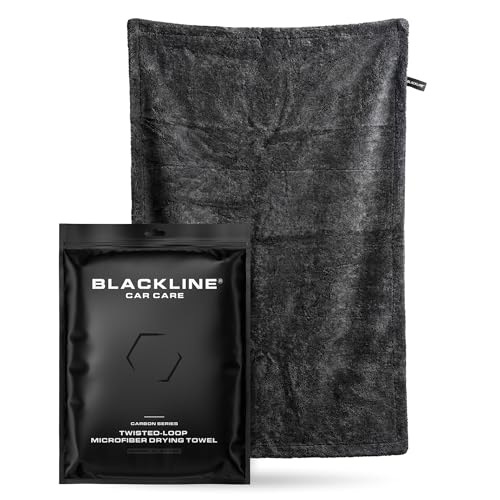
NO WATER SPOTS OR STREAKS - Only one pass and your car will be 100% dry, streak-free and will have zero water spots. Our Twisted Loop Technology allows the towel to glide across the surface of your car and pick up every single drop of water. It can absorb up to an entire gallon!

Professional-Grade Drying: Experience professional-grade drying with our AIDEA microfiber dryer towel; features over 300,000 fibers per square inch; absorbs up to twenty times its weight in liquid; effortlessly and safely dries your car, leaving no stains or streaks behind
Use a Gentle Sheeting Rinse
When practical, remove the spray nozzle and let a gentle stream of water flow over the roof and panels. On a well-protected finish, the flowing water may carry smaller droplets off the surface and reduce the amount left to towel-dry.
Blow Water from Crevices Carefully
A dedicated filtered car dryer is useful around mirrors, trim, emblems, grille openings, door handles, wheel nuts, and panel seams. A clean blower may also be used when its intake and the surrounding area are free of dust and debris.
Keep a hard blower nozzle away from the surface and never drag it across the paint. Do not use a blower where it may pick up sand, grass clippings, or loose gravel.
Dry with Clean Microfiber Towels
- Begin with the roof, glass, hood, and trunk.
- Lay the towel flat and gently pull it across the panel or blot the water rather than pressing and scrubbing.
- Turn or replace the towel when it becomes saturated or picks up contamination.
- Dry the lower body with a separate towel.
- Use wheel-only towels for the wheels and tires.
- Open doors and the trunk to dry accessible jambs, seals, and drain areas without soaking the interior.
Wash microfiber towels separately from lint-producing cotton items. Follow the towel manufacturer’s directions and avoid fabric softener, which can coat the fibers and reduce absorbency. Store clean towels in a closed container so they do not collect garage dust.
Dry Wet Brakes Before Parking When Your Manual Calls for It
The 2023 Camry owner’s manual notes that wet brake pads or disc rotors can develop rust and stick if the vehicle is parked immediately after washing. It advises driving slowly and applying the brakes several times to dry the parts before parking. Follow the instructions for your exact model year and do this only where it is safe to drive and brake gently.
What to Do About Existing Water Spots
Fresh surface residue may come off with another wash or a paint-safe water-spot remover used according to its label. Test any remover in a small, inconspicuous area first. If a spot has etched the clear coat, additional washing will not remove it; careful machine or hand polishing may be required.
Do not repeatedly scrub mineral spots with a dry towel. That creates friction without dissolving the deposit. For a dedicated treatment workflow, see how to remove water spots from a Toyota Camry.
Maintaining Your Car’s Finish: What to Do After Washing
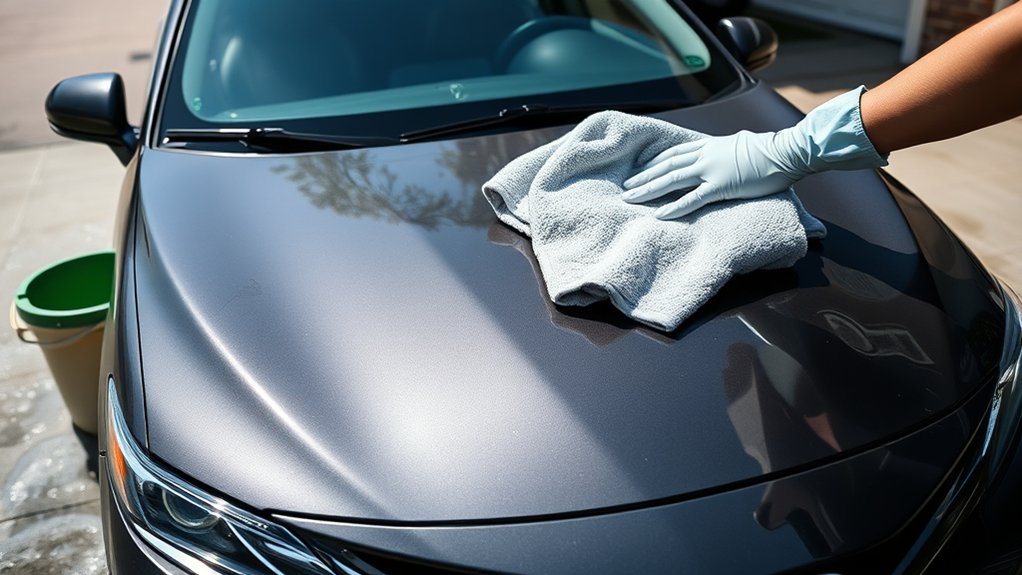
Inspect the clean, dry paint under soft daylight. Look for missed dirt, water trapped in trim, bird-dropping stains, scratches, and areas where water no longer beads or sheets as expected.
Apply Wax or Sealant When Needed
Wax or synthetic sealant can add gloss and make later cleaning easier, but it is not required after every wash. Apply protection when the current layer has weakened or at the interval stated on the product label.
- Confirm compatibility with ceramic coatings, paint-protection film, wraps, and matte finishes.
- Apply the product to clean, cool, dry paint.
- Use a clean applicator and thin, even coverage.
- Keep the product away from surfaces the label excludes.
- Buff with a separate clean microfiber towel as directed.
Inspect Scratches Before Polishing
Polish is not the same as wax. Many polishes contain abrasives that remove a very small amount of clear coat to level defects. Use the least aggressive method, test a small area, and stop if you are unsure about paint thickness or repair history.
Deep scratches that catch a fingernail, expose primer or metal, or show peeling paint should be assessed by a qualified body or paint professional rather than aggressively polished.
Protect the Car Between Washes
- Remove bird droppings, bug residue, sap, and road salt promptly using paint-safe methods.
- Park in a garage or shaded location when practical, but avoid prolonged parking beneath trees that drip sap or attract birds.
- Do not place a cover over a dusty or wet car because movement between the cover and dirt may mark the paint.
- Clean door jambs, seals, carpets, leather, plastics, and other wear areas when contamination appears, using products approved for each material.
Top Mistakes to Avoid When Hand Washing Your Toyota Camry
Using Wrong Cleaning Products
Use products labeled for the exact automotive surface. Household detergents may remove wax or sealant, while abrasive cleaners can haze paint, glossy trim, instrument plastics, and clear surfaces.
A suitable automotive shampoo should provide lubrication and rinse clean at the manufacturer’s recommended dilution. It does not have to contain wax, ceramic additives, or gloss enhancers to be useful.
Using One Tool for Wheels and Paint
Wheel residue may contain abrasive brake dust and road grit. Maintain separate buckets, brushes, mitts, and towels for the wheels, lower body, paint, glass, interior, and door jambs.
Washing Hot Paint in Direct Sun
Hot panels speed evaporation and may cause shampoo residue and mineral spots. Move the vehicle into shade and let it cool rather than trying to compensate by rushing.
Using a Brush-Style Automatic Car Wash When Minimizing Swirls Is the Goal
Toyota Camry owner’s manuals warn that brushes used in automatic car washes may scratch the vehicle surface and harm the paint. If minimizing wash marring is your priority, a careful hand wash gives you more control over the tools touching the paint. A touchless wash avoids brush contact, but it may leave heavier road film behind.
Scrubbing Stubborn Dirt
More pressure is not the answer to stuck contamination. Re-soak the area, use a suitable paint-safe chemical, or seek professional help. Scrubbing gritty deposits is one of the fastest ways to create scratches.
Letting a Dirty Mitt or Towel Touch the Car
If a mitt or towel falls on the ground, remove it from service until it has been properly washed and inspected. Shaking it out is not enough to remove embedded grit.
Neglecting Proper Drying Techniques
Air-drying can leave mineral spots, while old bath towels may contain hard fibers, lint, detergent residue, or trapped particles. Dry promptly with clean automotive microfiber towels or a clean dedicated dryer.
Assuming Any Touchless or Waterless Wash Is Scratch-Proof
No car-wash method can guarantee zero marks. A touchless wash reduces brush contact but may not remove heavy road film. A waterless product can work for light dust or small spot cleaning, but wiping mud, salt, or gritty dirt without a thorough rinse can scratch the finish.
Use a traditional rinse wash for a heavily soiled Camry. A rinseless or waterless method should be used only when the product instructions, contamination level, towel supply, and working conditions make it appropriate.
Additional Resources for Toyota Camry Care and Maintenance
Your Camry’s exact model year, paint condition, installed accessories, and previous repairs can affect the correct care method. Use these resources when general guidance is not enough:
- Toyota Manuals and Warranties: Select your Camry’s year to review model-specific owner information and exterior-care warnings.
- Toyota Technical Information System: Toyota’s technical-publication portal provides access to service and repair information.
- Installer or body-shop instructions: Follow written care requirements for recently painted panels, wraps, paint-protection film, ceramic coatings, and replacement trim.
- Product labels and safety data: Confirm dilution, surface compatibility, dwell time, protective equipment, and disposal instructions before using a new chemical.
- Local environmental guidance: Check city or utility rules for outdoor washing, drought restrictions, runoff, and storm-drain protection.
The safest wash is not the one with the most products. It is the one that removes loose grit before contact, keeps dirty tools away from clean paint, and uses the least pressure needed.
The U.S. Environmental Protection Agency explains that polluted runoff carried through many municipal storm systems may be discharged untreated into local water bodies. Review the EPA’s municipal stormwater guidance, use only the amount of water and cleaner you need, and follow local rules.
Related Guides
Frequently Asked Questions
How do I wash my car without scratching it?
Work on cool paint, pre-rinse away loose grit, use automotive shampoo and clean microfiber mitts, keep wheel tools separate, wash one panel at a time with light pressure, rinse the mitt frequently, and dry immediately. Never scrub dry dirt or reuse a towel that has touched the ground.
What kind of car wash does not scratch your car?
No method is completely scratch-proof. A careful hand wash with a thorough pre-rinse, lubricating automotive shampoo, clean microfiber tools, separate wheel equipment, and minimal pressure gives you strong control over contamination. Touchless washing reduces contact but may leave road film, while waterless washing should be limited to very light dirt.
How do you wash a Toyota Camry?
Let the Camry cool, close all openings, inspect the paint, clean the wheels with separate tools, pre-rinse the body, and wash from the roof downward using the two-bucket method. Rinse before soap dries, dry with clean microfiber towels or a dedicated dryer, and apply compatible protection only when needed.
How do I avoid micro-scratches when washing a car?
Remove as much grit as possible before contact, use more than one clean mitt, rinse after every panel, isolate dirty lower areas, and avoid pressing down. Replace visibly dirty water and never use a dropped mitt or towel until it has been washed and inspected.
Can I pressure wash a Toyota Camry?
A pressure washer may be used cautiously when the paint and trim are in good condition and the equipment and owner’s-manual instructions permit it. Use a broad fan, conservative pressure, and safe distance. Avoid concentrated nozzles, damaged paint, seals, cameras, parking sensors, badges, electrical areas, and edges of wraps or protective film.
Can I use dish soap to wash my Camry?
Automotive shampoo is the safer routine choice. Strong dishwashing detergents may remove wax or sealant and are not formulated to provide the same paint-safe lubrication as a dedicated car-wash product. Use a shampoo labeled safe for your paint and any existing coating.
Should I use an automatic car wash on a Toyota Camry?
If your goal is to minimize wash-related marring, a careful hand wash gives you more control. Toyota Camry owner’s manuals warn that brushes used in automatic car washes may scratch the vehicle surface and harm the paint. A touchless wash avoids brush contact, although it may not remove heavy road film as thoroughly.
How often should I hand wash my Toyota Camry?
Wash when dirt, road salt, bugs, bird droppings, sap, or other contamination is present rather than following one rigid schedule. Climate, parking conditions, mileage, road treatment, and the type of paint protection all affect how quickly the vehicle becomes dirty.
What should I do if my water leaves spots?
Wash in shade, keep panels wet until the final rinse, and dry immediately. A gentle sheeting rinse and clean drying towel can reduce leftover droplets. Use a paint-safe water-spot remover for fresh mineral residue, but seek professional correction when spots have etched the clear coat.
Conclusion
To hand wash a Toyota Camry without creating avoidable scratches, focus on contamination control rather than scrubbing power. Cool the car, isolate wheel dirt, rinse thoroughly, use clean lubricated mitts, work from the roof down, and dry before water evaporates.
Wax or sealant can help preserve gloss, but careful washing and drying are what prevent most wash-related marks. When the paint is damaged, heavily contaminated, recently repaired, wrapped, matte, or professionally coated, follow the specific care instructions for that finish rather than forcing a standard process.
Sources
- Toyota Manuals and Warranties — official portal for selecting model-year-specific Toyota owner information.
- Toyota Technical Information System — Toyota technical and service publication access.
- U.S. Environmental Protection Agency: Stormwater Discharges from Municipal Sources — explains how polluted runoff may be transported through municipal storm systems and discharged into local waters.
