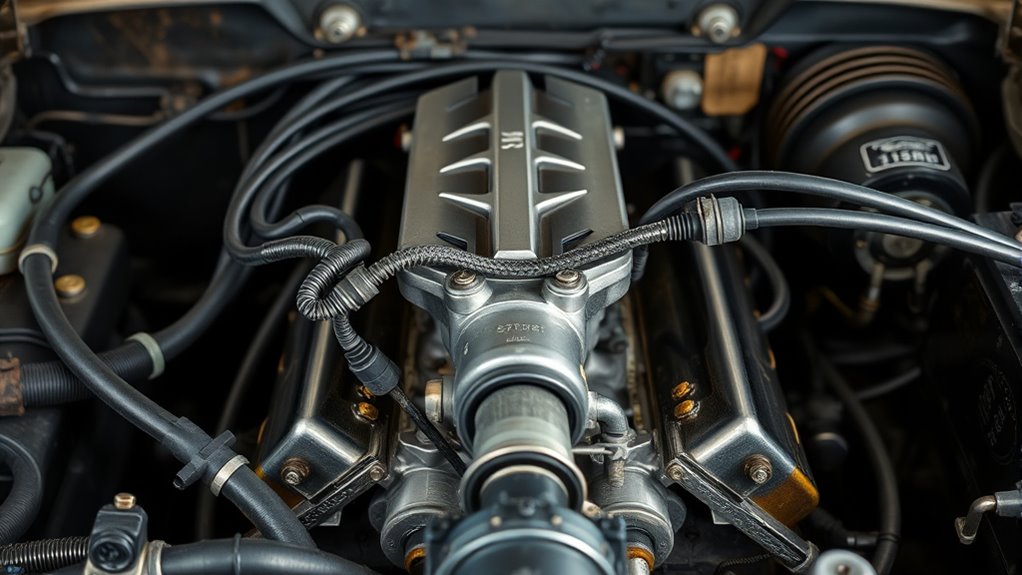
For a 1986 non-EFI Ford 302, the correct spark plug wires depend on boot angle, terminal style, and wire diameter. Straight or 135-degree boots are often the best fit for Ford V8 routing, while 8mm wires offer a solid balance of durability and conductivity. OEM Motorcraft and MSD both have workable options, but the wrong terminals can create fitment problems. The key details are not always obvious at first glance.
What Spark Plug Wires Fit a 1986 Ford 302?
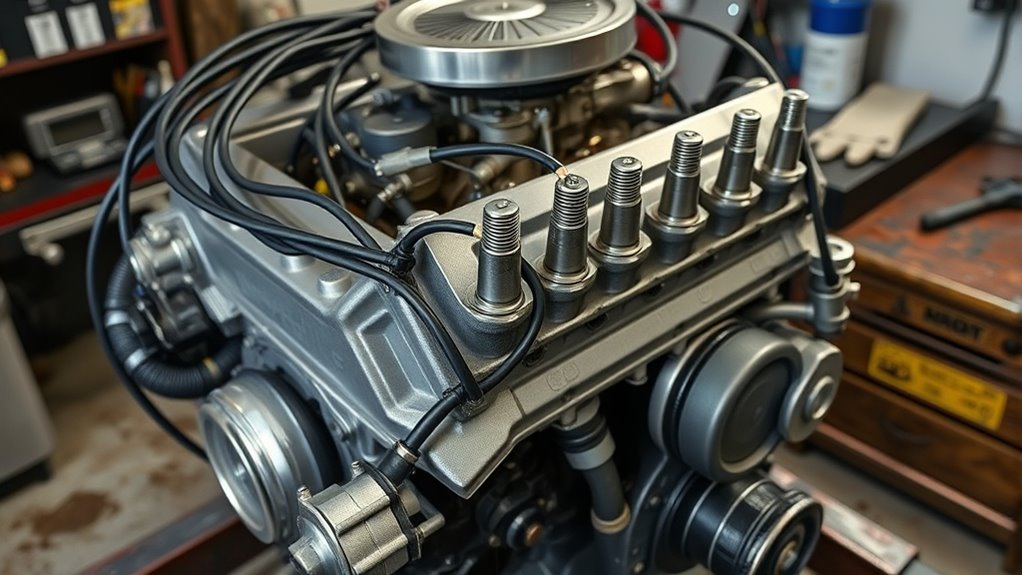
For a 1986 Ford 302 non-EFI engine, the best-fit spark plug wires are typically 8mm sets matched to the ignition configuration, with MSD wires and Motorcraft racing wires being common, reliable choices.
These spark plug wires should be selected by verifying whether the system uses HEI or non-HEI terminals, because fitment and resistance must align with the distributor and plugs. A straight boot design is preferred, since angled boots can promote arcing near the valve covers and reduce ignition integrity.
In a stock or lightly modified setup, quality OEM wires may still function, but upgraded 8mm sets usually provide better durability and cleaner spark delivery.
Motorcraft racing wires suit naturally aspirated engines well, while MSD sets offer robust construction for consistent performance.
The practical goal is simple: match length, terminal style, and boot geometry to the engine so the ignition system works without drama, keeping the driver free from avoidable misfires and weak starts.
Best Spark Plug Wire Types for a Stock 302
For a stock 1986 Ford 302, wire choice should prioritize correct fitment, with Motorcraft or quality aftermarket MSD sets as practical options.
OEM versus aftermarket selection mainly depends on desired durability, with MSD’s 8mm wires offering strong conductivity and Motorcraft providing proven compatibility.
A straight boot design and high-quality insulation are important to reduce arcing, maintain a secure fit, and improve service life.
Stock Wire Fitment
A stock 1986 non-EFI Ford 302 responds well to quality 8mm spark plug wires with a straight boot design, since this setup offers reliable conductivity, proper fitment, and better clearance in tight engine bays.
A proper spark plug wire set should match the factory routing and terminal angles without forcing bends that invite wear. Motorcraft spark plug wires remain a dependable choice for stock fitment because they align with original hardware and minimize compatibility issues.
MSD Ignition Wire Sets also suit this engine when extra durability is preferred. Straight boots help reduce arcing near exhaust manifolds and plug walls, giving the driver more control over ignition integrity.
Regular inspection for cracks, loose boots, and resistance rise keeps the system ready and prevents misfire.
OEM Vs Aftermarket
OEM Motorcraft spark plug wires remain the safest choice for a stock 1986 non-EFI Ford 302 because they match factory specifications, route correctly, and deliver dependable ignition reliability with minimal fitment issues.
For a vehicle kept near original condition, OEM parts preserve factory behavior and reduce guesswork, which supports practical freedom from constant troubleshooting.
An aftermarket set can still make sense, especially from brands such as MSD Ignition, when added durability or sharper throttle response is desired.
Most quality wires for this engine use 8mm construction and should be selected only after confirming compatibility with the non-HEI ignition setup.
The correct choice depends on priorities: OEM for straightforward originality, aftermarket for upgraded service life and performance flexibility.
Boot And Insulation Quality
Boot and insulation quality matter just as much as brand choice on a stock 1986 Ford 302, because good wires must survive heat, vibration, and underhood contamination without breaking down.
Quality insulation should resist high temperatures, oil, and moisture, so voltage stays contained and misfire risk stays low. A straight boot design is practical in tight engine bays, reducing arcing and making installation simpler around headers, valve covers, and firewall clearance.
Eight-millimeter wires offer a useful balance of conductivity and durability for the ignition load on this engine. MSD-style wires are a strong benchmark because they combine robust insulation with long service life.
In a stock setup, that means cleaner spark delivery, steadier throttle response, and fewer failures that limit dependable street freedom.
Why 135-Degree Boots Matter on Ford V8s
On Ford V8s, 135-degree boots are used to improve plug-wire routing and clearance around headers, valve covers, and other nearby components. In a tight 1986 302 bay, 135-degree boots let spark plug wires exit cleanly, reducing bends, heat soak, and unwanted contact.
That freedom matters: fewer chafe points, less arcing, and steadier ignition under load. The angle also supports accurate alignment, so wires do not fight the engine layout or pull against terminals.
Installation becomes simpler, with less stress on the conductor and insulation, which helps the set last longer in service.
- Less heat damage
- Better wire alignment
- Easier installation
- More reliable spark
When clearances are controlled, the engine is less constrained by packaging problems. The result is practical liberation: the wiring is guided, protected, and able to do its job without interference, preserving performance and consistency.
Msd, Motorcraft, And Ford-Compatible Wire Options
MSD performance wires are commonly selected for their durability and stronger ignition performance, making them a practical upgrade for a 1986 non-EFI Ford 302.
Motorcraft wires provide OEM fit and reliable stock compatibility without modification, which suits original-equipment service needs.
Ford-compatible wire options in 8mm with straight boots are generally the most practical choice for maintaining secure fitment and reducing arcing risk.
MSD Performance Wires
For a 1986 non-EFI Ford 302, MSD Performance Wires are a strong choice because they offer durable construction, high-temperature resistance, and improved electrical performance under load.
These MSD Performance Wires use 8mm conductors and low resistance design to support stable spark delivery, especially when the engine is worked hard. Straight boot ends help reduce arcing and improve fit in tight bays, giving the installer more control and fewer compromises.
- Stronger spark transfer
- Better heat tolerance
- Cleaner routing freedom
- Reliable high-load operation
For drivers seeking mechanical independence, this setup removes weak links without unnecessary complexity.
The result is practical ignition performance suited to a non-EFI 302 that still demands solid electrical integrity and dependable service under pressure.
Motorcraft OEM Fit
Motorcraft OEM-fit wire sets remain a practical choice for a 1986 non-EFI Ford 302 because they match factory routing, boot geometry, and length requirements with minimal adjustment. Motorcraft wire sets suit standard engines; MSD options fit performance builds. Both should use robust 8mm insulation to resist heat, oil, and moisture. Proper boot design and measured lead length reduce arcing and preserve ignition energy.
| Feature | Practical note |
|---|---|
| Motorcraft | OEM fit, dependable |
| MSD | Durability, performance |
| 8mm wire sets | Preferred diameter |
| Boot/length control | Limits arcing |
For users seeking mechanical autonomy, these choices support clean installation and reliable service without needless modification.
Ford-Compatible Wire Choices
A few Ford-compatible wire choices stand out for a 1986 non-EFI Ford 302, with MSD favored for durability and stronger insulation in performance use, and Motorcraft remaining the dependable option for stock ignition systems.
Quality spark plug wires in 8mm size support clean voltage delivery and stable firing across HEI and non-HEI setups. Good plug wires with multi-angle boots can reduce arcing, lock in the connection, and keep ignition demand controlled.
- MSD: stronger insulation, sharper response.
- Motorcraft: OEM fit, quiet reliability.
- 8mm sets: practical voltage flow.
- Multi-angle boots: secure, liberated performance.
How Wire Size And Resistance Affect Spark
Wire size and resistance directly shape how effectively spark plug wires deliver voltage to the plugs. Larger wire size, such as 8mm, can support stronger voltage transfer in high-output builds, while smaller conductors may limit delivery under load.
Resistance matters just as much: lower resistance wires preserve more energy, helping the spark reach the plug with greater force. That stronger spark supports steadier combustion and better engine response.
Lower resistance wires preserve more energy, helping the spark reach the plug with greater force.
On a stock 1986 Ford 302, OEM coils around 20,000 volts are usually sufficient, but wider plug gaps raise demand and expose weak wires fast. High resistance can cause misfires, rough running, and power loss.
Quality insulation also matters because it blocks arcing and keeps voltage on course in heat and vibration. For an owner seeking mechanical freedom from hesitation and weak ignition, the right balance of wire size, resistance, and durability is the practical path.
How To Match Spark Plug Wires To Autolite 2545 Plugs
Matching spark plug wires to Autolite 2545 plugs begins with confirming correct wire end fitment for the 302’s terminal style.
A straight boot or proper boot angle should be selected to maintain clearance and reduce arcing near the plug and surrounding hardware.
Wire sets designed specifically for the 1986 Ford 302, with durable insulation and low resistance, provide the most reliable connection.
Wire End Fitment
Proper wire end fitment is critical when pairing spark plug wires with Autolite 2545 plugs on a 1986 non-EFI Ford 302.
The correct spark plug wires should use a 5/8 inch socket size and a 14 mm thread-compatible terminal to lock onto the plug without strain.
Straight boot designs are often preferred because they deliver secure contact and reduce arcing risk.
An 8mm conductor size supports durability and stable voltage delivery, helping the ignition system work with less drag and more freedom.
- Secure engagement builds confidence.
- Correct sizing prevents wasted effort.
- Clean contact preserves ignition authority.
- Proper wire end fitment protects performance.
Boot Angle And Clearance
Clearance at the plug end matters just as much as terminal fit when pairing spark plug wires with Autolite 2545 plugs on a 1986 non-EFI Ford 302.
Straight boots often work best where heat and nearby components restrict space, because they reduce arcing risk and simplify routing. In tighter areas, a multi-angle boot can improve access without forcing the wire into a sharp bend. That boot angle should support clean seating and maintain clearance from headers, brackets, and valve covers.
An 8mm wire is usually the practical choice, since its insulation helps protect against crossfire while still fitting common routing paths. Wire length should allow relaxed installation, not tension.
Proper fit at the thread size and a snug terminal connection help prevent misfire and preserve mechanical freedom.
Common Fitment Problems On 1986 F-150s
On many 1986 F-150s with the non-EFI 302, fitment problems usually come from confusion between carbureted and EFI ignition setups, since wire sets built for later fuel-injected engines often have different boot angles and lengths.
Those spark plug wires can bind, pull loose, or cross hot surfaces, creating fitment problems that waste time and weaken confidence in the truck’s ignition layout. Correct selection restores control.
- Wrong boot angle can press against valve covers, distributor towers, or headers.
- Incorrect length can leave wires stretched tight, inviting arcing and misfire.
- Mismatched ends may not seat fully on the distributor or spark plugs.
- Low-grade wire construction can fail early, limiting dependable road freedom.
An 8mm set with verified 1986 non-EFI part numbers reduces ordering errors.
Reference engine type carefully before purchase.
When To Choose Stock Vs Performance Wires
Stock spark plug wires are generally sufficient for standard 1986 Ford 302 applications, especially in daily-driven trucks with factory compression and untouched ignition systems. In this scenario, OEM-quality wires provide reliable service at a lower cost.
Stock wires satisfy the engine’s voltage demand without unnecessary expense or complexity. They suit owners who value practical maintenance and want to keep the vehicle functioning as intended.
Performance wires become the superior choice when the engine has been modified for higher output, higher compression, or a more aggressive tune. Lower resistance and stronger insulation can enhance voltage delivery, helping reduce misfires and sharpen throttle response.
An 8mm performance set is often selected for these builds because it supports greater spark demand more effectively. For a liberated approach to ownership, the decision should follow engine needs, not branding.
Choose stock for reliability and economy; choose performance when the ignition system must support increased cylinder pressure and power output.
Signs Your Spark Plug Wires Need Replacing
Spark plug wires should be inspected when misfiring, rough idle, poor acceleration, or reduced fuel economy begins to appear, as these symptoms often point to deterioration in the ignition path.
Visible signs of arcing, cracked insulation, or corrosion at the terminals confirm that spark plug wires are losing control of voltage and should be replaced without delay. A healthy system should deliver the needed energy cleanly; when demand rises toward 12,000 volts to bridge the gap, weak wires often expose themselves through erratic spark.
- Frustration grows when the engine stumbles under load.
- Concern follows when fuel is wasted without reward.
- Relief comes from restoring crisp, reliable ignition.
- Confidence returns when performance is freed from electrical loss.
Regular inspection keeps the engine responsive and prevents avoidable performance decline.
Where To Buy Ford 302 Spark Plug Wires
When sourcing spark plug wires for a 1986 Ford 302, buyers typically turn to Summit, Jegs, MSD Ignition, Carquest, or eBay for a mix of performance and budget-focused options.
Ford Racing wires are commonly stocked by Summit and Jegs, giving access to proven parts for durability and ignition consistency.
MSD Ignition Wire Sets suit owners seeking stronger performance, while Carquest Spark Plug Wire Sets cover stock replacement needs at a lower cost.
Typical spark plug wires for this application range from $39.99 to $165.99, allowing selection without surrendering mechanical control to overpriced catalogs.
eBay can be useful for locating discontinued or hard-to-find sets for non-EFI engines, but compatibility should be checked carefully against the specific distributor, plug routing, and engine configuration.
For a liberated, practical build, the goal is simple: match the wire set to the intended use, confirm fitment, and buy from vendors with clear specifications and return policies.
Frequently Asked Questions
What Are the Best Spark Plugs for a 302 Ford Engine?
For a 302 Ford engine, Autolite 2545 is a solid standard choice, while Autolite AP2545 suits HEI setups and offers longer service life.
NGK 7060 TR5-1 V-Power is also a reliable option. Matching the correct 14 mm thread and 5/8 inch socket is essential.
These spark plug types support clean combustion, reduce misfire, and function as practical performance upgrades for those seeking mechanical independence.
Does It Matter What Kind of Spark Plug Wires I Use?
Yes, it matters. Like a clean river carrying current, the right wires keep ignition strong and steady.
Spark plug types and wire materials should match the system, with low resistance, durable insulation, and proper fit. High-quality silicone or spiral-core wires resist heat and arcing better than cheap carbon types.
For practical reliability, the engine should receive consistent voltage, freeing it from misfires, weak starts, and performance loss.
How Much Horsepower Did a 1986 Ford 302 Engine Have?
The 1986 Ford 302 engine had an approximate horsepower rating of 150 hp at 3,800 RPM.
Its engine specifications also listed about 240 lb-ft of torque at 2,000 RPM, reflecting a tuning emphasis on drivability, emissions compliance, and fuel economy rather than maximum output.
For practical use, it remained a durable small-block V8, suitable for daily service and light-duty work.
Its specification set favored reliable, accessible performance over excess.
Are a 302 and a 5.0 the Same?
Yes, a 302 and a 5.0 are the same engine in practical terms, like a fax machine in a digital age.
The 5.0L name is Ford’s metric label for the 302 cubic-inch small-block, so engine specifications largely match.
For non-EFI applications, parts compatibility is high, and performance upgrades usually interchange cleanly.
This equivalence gives builders freedom to choose ignition components, including spark plug wires, with confidence and simplicity.
Conclusion
For a 1986 non-EFI Ford 302, the correct spark plug wires are usually 8mm, Ford-compatible, and fitted with the proper terminal ends and boots. Straight or 135-degree boots can prevent routing headaches that seem designed by committee. Motorcraft keeps things stock and civil; MSD adds durability without much drama. The real lesson is simple: match the wire to the engine, not the marketing to the ego, and the ignition will likely behave like it was paid to do.

