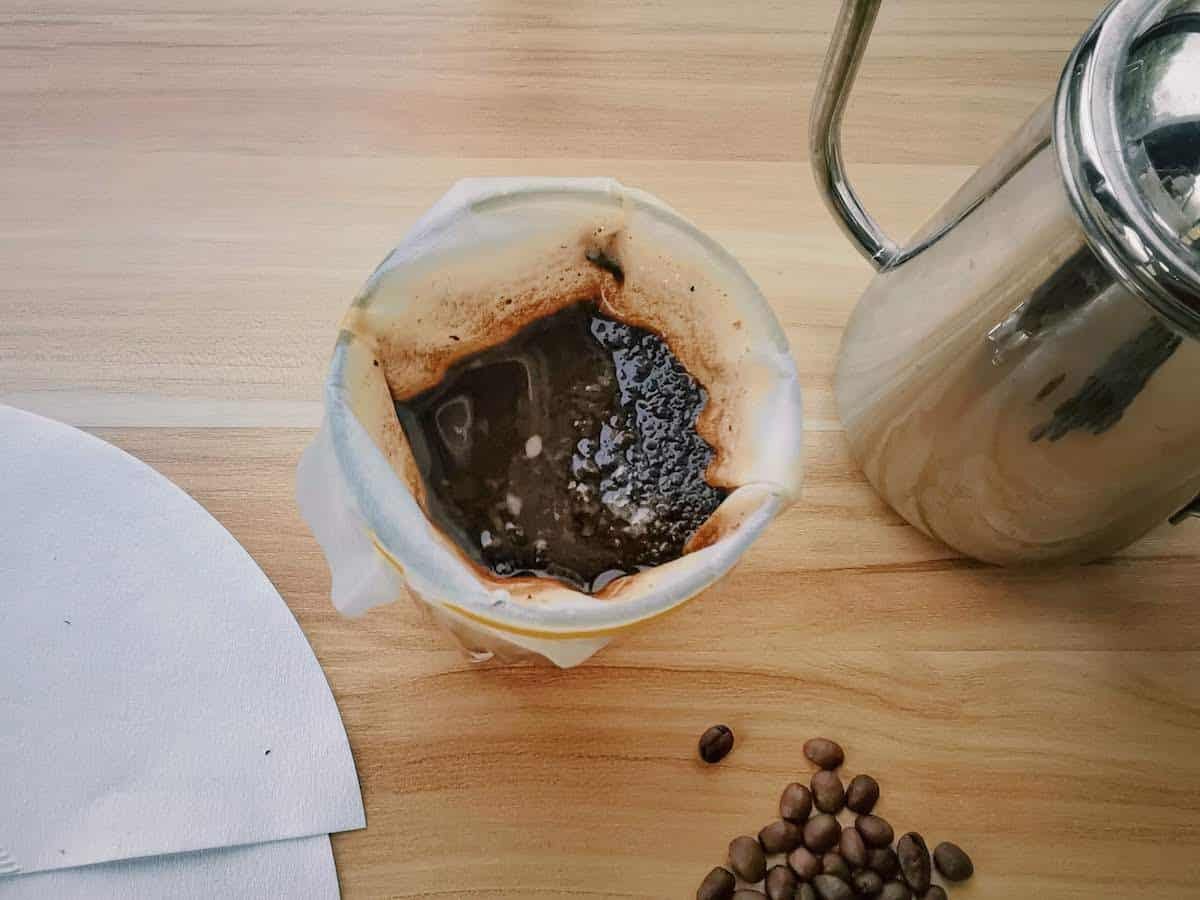
You can make coffee without a coffee maker by combining ground coffee with hot water, steeping for about 4 minutes, then separating the grounds with a strainer, paper coffee filter, or clean food-safe cloth. For a simple saucepan cup, start with 1–2 tablespoons of coffee per 6 ounces of water and adjust to taste.
Last updated: September 11, 2026
When your coffee maker breaks, you are traveling, or you simply want a low-tech option, the basics stay the same: use fresh coffee, clean water, the right grind, and enough time for the water to extract flavor from the grounds.
Quick Answer
To make coffee without a coffee maker, add ground coffee to hot water, let it steep for about 4 minutes, then separate the grounds with a strainer, paper coffee filter, or clean food-safe cloth. Start with 1–2 tablespoons of coffee per 6 ounces of water; use the higher end for a stronger cup.
Key Takeaways
- The easiest no-machine method is saucepan coffee: steep grounds in hot water, wait, then strain.
- Use coarse grounds for French press and cold brew, medium grounds for pour-over, and medium-fine grounds for a Moka pot.
- For most hot methods, water just off the boil works well. Aim for about 93 ± 3°C, or roughly 194–205°F.
- Cold brew takes longer, but it needs only coffee, cool water, a jar, and a filter or strainer.
- If your coffee tastes bitter, use a coarser grind, cooler water, or a shorter brew time.
At a Glance
| Time Required | About 3–8 minutes for hot methods; about 12 hours for cold brew |
| Difficulty | Easy |
| Tools Needed | Coffee, water, heat source, mug, spoon, saucepan or jar, and a strainer, filter, cloth, or French press |
| Cost | No extra equipment cost if you already have coffee and basic kitchen tools |
Introduction To Coffee Making Without A Machine
Manual coffee making is simple once you understand extraction. Hot or cool water pulls flavor, aroma, oils, and caffeine from ground coffee. Your job is to control four things: coffee amount, grind size, water temperature, and brew time.
The National Coffee Association notes that brewing method, grinding, and cleanup all affect the quality of your cup. That means you can still brew good coffee without an automatic machine if you use a reliable process.
Benefits Of Manual Coffee Making
Manual brewing gives you more control. You can change the strength, adjust the water temperature, steep longer, or use a cleaner filter depending on the taste you want.
It can also save space and money. A saucepan, jar, or strainer can work when you do not want to buy another appliance.
Manual methods are useful during travel, camping, power outages, or kitchen emergencies. Once you learn one or two methods, you can make coffee almost anywhere.
Common Misconceptions
Many people think coffee made without a machine tastes weak or muddy. That usually happens because the grind is too fine, the coffee steeps too long, or the grounds are not strained well.
You also do not need fancy gear. A pot, mug, spoon, and clean cloth can make a satisfying cup. A scale and thermometer help, but they are optional.
Credit: www.caffesociety.co.uk
Essential Tools And Ingredients
Start with fresh coffee and clean water. For the best flavor, use whole beans and grind them right before brewing. If you only have pre-ground coffee, you can still make a good cup by matching the method to the grind as closely as possible.
Basic Equipment Needed
- A saucepan, kettle, or microwave-safe container for heating water
- A mug, jar, or heat-safe pitcher
- A spoon for stirring
- A fine mesh strainer, paper coffee filter, cheesecloth, or clean food-safe cotton cloth
- Optional tools: kitchen scale, thermometer, grinder, French press, pour-over dripper, or Moka pot
Warning: Use heat-safe containers only. Boiling water can crack thin glass, soften unsafe plastic, and cause burns. If you use a Moka pot, keep the safety valve clear and never pack the coffee grounds tightly.
Choosing The Right Coffee Beans
Fresh, whole beans usually taste better than old pre-ground coffee because grinding exposes more surface area to air. Store beans in an airtight, opaque container in a cool, dark place, and grind only what you need before brewing. The National Coffee Association’s storage guide recommends protecting coffee from air, moisture, heat, and light.
Use this grind guide as a starting point:
| Method | Best Grind | Best For |
| Saucepan / cowboy coffee | Medium to coarse | No equipment |
| French press | Coarse | Rich body |
| Pour-over | Medium | Clean flavor |
| Moka pot | Medium-fine | Strong coffee |
| Cold brew | Coarse | Smooth iced coffee |
Choose The Best Method For Your Situation
Not every method fits every morning. Use this quick guide to choose the easiest option based on what you have.
| You Want | Use This Method | Why It Works |
| Fastest hot coffee | Saucepan coffee | Needs only a pot, water, coffee, and strainer |
| Cleanest taste | Pour-over | A paper filter removes grit and some oils |
| Full body | French press | Immersion brewing keeps more oils in the cup |
| Strong coffee for milk | Moka pot | Produces concentrated stovetop coffee |
| Smooth cold coffee | Cold brew | Cool water extracts slowly and smoothly |
Making Coffee In A Saucepan
A saucepan is the easiest method when you do not have any coffee gear. This method is often called cowboy coffee, but you can make it cleaner by letting the grounds settle and pouring slowly through a strainer.
Step-by-step Guide
- Heat 6 ounces of water per cup in a small saucepan until it reaches a gentle boil.
- Remove the pan from the heat and wait about 30 seconds.
- Add 2 tablespoons of medium or coarse ground coffee per 6 ounces of water.
- Stir once, cover, and let the coffee steep for 4 minutes.
- Tap the side of the pan gently and let the grounds settle for 30 seconds.
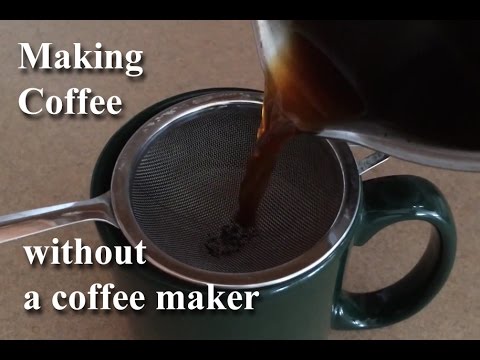
- Pour slowly through a fine mesh strainer, coffee filter, or clean cloth into your mug.
Pro Tip: If you do not have a strainer, sprinkle one or two teaspoons of cool water on top after steeping. This helps some grounds sink before you pour.
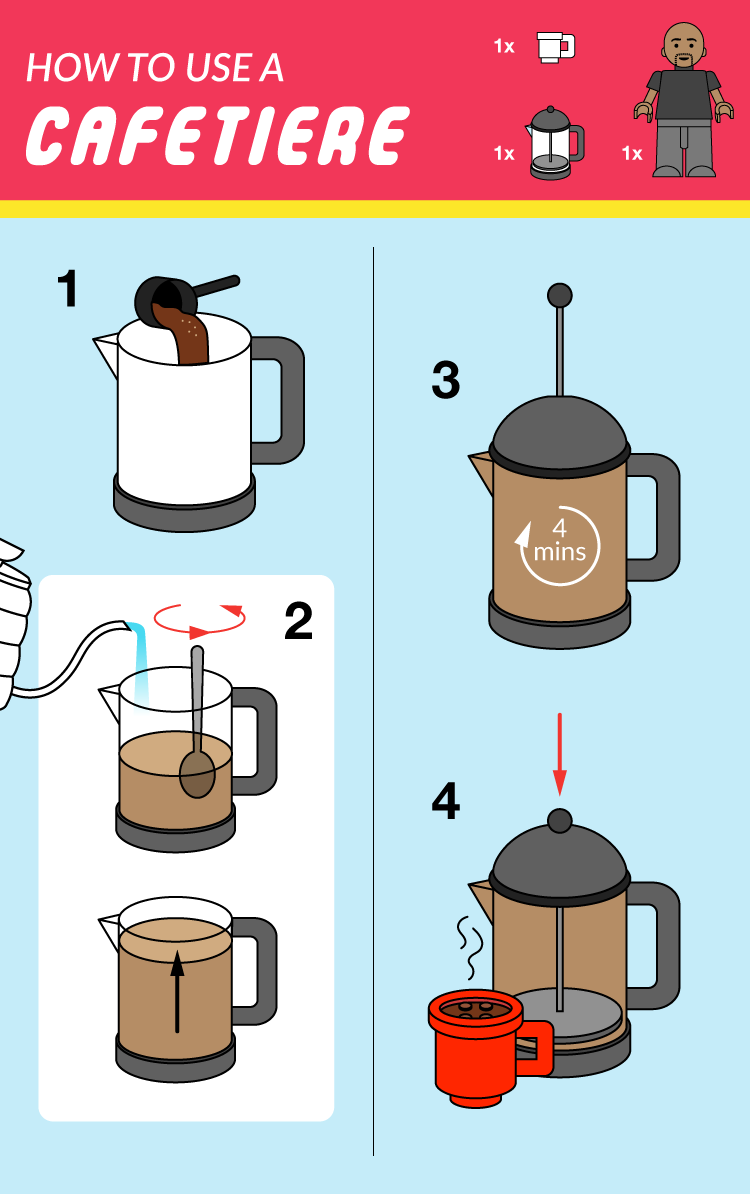
Using A French Press
A French press is one of the best ways to make coffee without an electric coffee maker. It gives you a rich, full-bodied cup because the grounds steep directly in the water.
Step-by-step Guide
- Add coarse ground coffee to the French press. A practical starting point is about 1:16 coffee-to-water by weight; the NCA French press guide gives a broader 1:10–1:16 range.
- Heat water until just off the boil. The same NCA guidance recommends about 93 ± 3°C (roughly 194–205°F).
- Pour enough water to wet all the grounds, then stir gently.
- Add the remaining water and place the lid on top without pressing the plunger.
- Steep for 4 minutes.
- Press the plunger down slowly and pour the coffee right away.
Tips For Best Results
Use a coarse grind. Fine grounds can slip through the mesh filter and make the coffee gritty or bitter.
Do not leave brewed coffee sitting on the grounds after pressing. Pour it into your mug or a separate carafe so it does not keep extracting.
Making Coffee With A Moka Pot
A Moka pot makes strong stovetop coffee. It is not true espresso, but it works well when you want a bold cup or a coffee base for warm milk. Bialetti’s Moka Express instructions say to fill the base just below the safety valve, loosely fill the funnel with coffee, and never press the grounds down.
Setup And Preparation
- Fill the bottom chamber with water up to, but not above, the safety valve.
- Add medium-fine coffee to the filter basket.
- Level the grounds gently with your finger or a spoon.
- Do not tamp or press the grounds down.
- Screw the top and bottom chambers together firmly.
Brewing Process
- Place the Moka pot on low to medium heat.
- Keep the heat moderate so the handle and sides are not exposed to excessive flame.
- Let the coffee rise into the upper chamber.
- Remove the pot from the heat when the upper chamber is full; do not keep boiling it.
- Stir the coffee in the upper chamber, then pour and serve.
Note: A Moka pot uses pressure. Keep the safety valve clean, avoid overfilling the water chamber, and never pack the coffee basket tightly.
The Pour-over Method
Pour-over coffee gives you a clean cup with clear flavor. You can use a proper dripper, or you can improvise with a paper coffee filter set over a mug.
Equipment And Technique
You need ground coffee, hot water, a filter, and something to hold the filter above your cup. A pour-over dripper works best, but a heat-safe funnel can work in a pinch.
- Place a filter in the dripper or funnel and set it over your mug.
- Rinse the filter with hot water, then discard the rinse water.
- Add medium ground coffee. A good starting range is 1 gram of coffee to 13–16 grams of water, based on the NCA pour-over guide.
- Pour a small amount of hot water over the grounds and wait 30–45 seconds for the bloom.
- Slowly pour the rest of the water in circles, keeping the coffee bed evenly wet.
- Let the coffee drain. Total water contact time should be about 2–4 minutes.
Adjusting Brew Strength
For stronger coffee, use more grounds or slightly less water. For milder coffee, use less coffee or more water.
If the coffee tastes bitter, use a coarser grind or pour faster. If it tastes weak, use a slightly finer grind or pour more slowly.
Cold Brew Coffee At Home
Cold brew is a simple no-heat method. It takes longer than hot coffee, but it is easy to make in a jar and usually tastes smooth and mellow.
Ingredients And Preparation
You need coarsely ground coffee, cool or room-temperature water, and a jar or pitcher. The NCA cold brew guide lists a 1:4–1:5 coffee-to-water ratio by weight for cold brew concentrate and about 12 hours of contact time. Because ground-coffee volume changes with grind and density, use a scale when following that concentrate ratio.
- Add 160 grams of coarsely ground coffee to a clean jar.
- Add 800 grams of cool or room-temperature water for a 1:5 concentrate ratio.
- Stir gently until all grounds are wet.
- Cover the jar and let it steep for about 12 hours.
- Strain through a paper coffee filter, cheesecloth, or fine mesh sieve.
- Dilute the concentrate with water or milk to taste.
Brewing Time And Tips
Start with about 12 hours, then adjust the next batch by taste. Avoid very fine grounds because they can make cold brew muddy and difficult to strain.
Store strained cold brew in a clean, covered container in the refrigerator and use it promptly. If it develops an off smell, off taste, or unusual appearance, discard it.
Instant Coffee Hacks
Instant coffee is already brewed, dried, and ready to dissolve. The NCA instant coffee guide uses about 1 teaspoon of instant coffee per 6 ounces of water and recommends water around 80°C (176°F), slightly below boiling.
Improving Instant Coffee Taste
- Use fresh water and heat it to about 80°C (176°F), or let freshly boiled water cool briefly before mixing.
- Add the instant coffee to your mug.
- Mix it first with a spoonful of cool or warm water to make a smooth paste.
- Add the rest of the hot water and stir well.
- Add milk, cream, or sweetener if you like.
Creative Additions
Try cinnamon, nutmeg, vanilla extract, cocoa powder, honey, maple syrup, or warm milk. These additions help instant coffee taste fuller and less sharp.

Credit: www.fooddrinkslife.com
Making Coffee With A Jar And Strainer
A jar works like a simple immersion brewer. This method is helpful when you do not have a French press.
How To Brew In A Jar
- Add 2 tablespoons of medium-coarse coffee to a heat-safe jar or mug.
- Pour in 6 ounces of hot water just off the boil.
- Stir once and cover loosely.
- Steep for 4 minutes.
- Pour through a fine strainer, filter, or clean cloth into another mug.
If you use glass, make sure it is heat-safe. Do not pour boiling water into a cold thin glass jar.
Making Coffee With Just A Filter
If you have a paper coffee filter but no dripper, you can still make a simple pour-over.
Improvised Filter Method
- Place a coffee filter in a heat-safe funnel, sieve, or small strainer.
- Set it securely over a mug.
- Add 2 tablespoons of medium ground coffee.
- Pour a small splash of hot water over the grounds and wait 30 seconds.
- Slowly add the rest of the water.
- Let the coffee drip through before removing the filter.
Do not hold the filter in your hand while pouring hot water. Set it in something stable so you do not burn yourself.
How To Make Coffee Without A Filter Or Strainer
If you have only ground coffee, hot water, and a mug or saucepan, use a settle-and-pour method. The cup will have more sediment than filtered coffee, but a coarse grind and a short rest help keep most grounds at the bottom.
- Add 2 tablespoons of medium-coarse or coarse coffee to a heat-safe mug or saucepan.
- Pour in 6 ounces of hot water just off the boil.
- Stir once and let the coffee steep for about 4 minutes.
- Wait another 30–60 seconds so more grounds settle.
- Sip carefully from the top, or pour slowly into a second mug and leave the last small amount behind with the grounds.
Pro Tip: Coarser grounds settle more cleanly. If you have a paper coffee filter or clean food-safe cloth, use it for a clearer cup.
Troubleshooting Bad Coffee Without A Machine
Small adjustments can fix most problems. Change only one variable at a time so you know what worked.
| Problem | Likely Cause | Fix |
| Bitter coffee | Over-extraction, too fine a grind, or excessive heat/contact time | Use a coarser grind, steep less time, or let boiled water cool briefly |
| Weak coffee | Too little coffee or too short a brew | Add more grounds or steep slightly longer |
| Gritty coffee | Grounds are too fine or filter is too loose | Use a coarser grind and strain through paper or cloth |
| Sour coffee | Under-extraction | Use hotter water, a finer grind, or longer contact time |
| Muddy cold brew | Fine grounds or poor filtration | Use coarse grounds and strain twice |
Final Thoughts And Experimentation
Making coffee without a coffee maker is less about perfect equipment and more about repeatable steps. Start with one method, write down the ratio you used, then adjust the next cup based on taste.
Customizing Your Brew
For stronger coffee, increase the coffee grounds before you increase the brew time. Long steeping can add bitterness, especially with fine grounds.
For smoother coffee, try a coarser grind, a paper filter, or slightly cooler water. For a brighter cup, try a medium roast and a pour-over style method.
Exploring Different Methods
Use saucepan coffee when you need the fastest backup. Use French press when you want body. Use pour-over when you want clarity. Use cold brew when you have time and want a chilled drink. Use instant coffee when speed matters most.
Credit: www.youtube.com
Related Guides
Frequently Asked Questions
How do you make coffee on a stovetop?
Heat water in a saucepan, remove it from the heat, add ground coffee, stir, and steep for about 4 minutes. Let the grounds settle, then pour the coffee through a strainer, filter, or clean cloth into a mug.
What can I use instead of a coffee machine?
You can use a saucepan, French press, Moka pot, pour-over dripper, jar, fine mesh strainer, paper filter, cheesecloth, or clean cotton cloth. The best substitute depends on whether you want fast coffee, strong coffee, clean filtered coffee, or cold brew.
How do you make one cup of coffee without a coffee maker?
Add 2 tablespoons of ground coffee to 6 ounces of hot water. Stir, steep for 4 minutes, then strain into a mug. Use less coffee for a milder cup or more coffee for a stronger cup.
How do you make coffee with just a filter?
Place a filter in a stable funnel, sieve, or strainer over a mug. Add medium ground coffee, wet the grounds with a small amount of hot water, wait 30 seconds, then slowly pour in the rest of the water.
Can you make coffee by boiling grounds in water?
Yes, but avoid hard boiling the grounds for several minutes because it can make coffee harsh and bitter. A better method is to boil the water first, remove it from heat, add the grounds, steep for about 4 minutes, and strain.
What is the best grind for coffee without a coffee maker?
Use medium to coarse grounds for saucepan coffee, coarse grounds for French press and cold brew, medium grounds for pour-over, and medium-fine grounds for a Moka pot. If your coffee tastes bitter or gritty, go coarser.
Can you make coffee without a filter or strainer?
Yes. Add medium-coarse or coarse grounds to hot water, steep for about 4 minutes, then wait 30–60 seconds for the grounds to settle. Sip carefully from the top or pour slowly into a second mug, leaving the sediment behind.
Can you make coffee in the microwave without a coffee maker?
Yes. Heat water in a microwave-safe mug or container, then add ground coffee after heating. Steep for about 4 minutes and strain or let the grounds settle before drinking. Use care when handling very hot liquid.
Conclusion
Making coffee without a coffee maker is simple once you choose the right method. A saucepan gives you the easiest backup cup, a French press gives you body, a pour-over gives you clarity, a Moka pot gives you strength, cold brew gives you a smooth chilled option, and a settle-and-pour method works when you have no filter or strainer.
For improvised hot coffee, start around 1–2 tablespoons of coffee per 6 ounces of water, then adjust based on taste and method. Use fresh coffee, clean tools, and safe heat handling, and you can make a reliable cup even without an automatic machine.
Sources
- National Coffee Association: Brewing — supports manual brewing methods and the importance of brewing technique.
- National Coffee Association: Storage and Shelf Life — supports coffee storage guidance for freshness.
- National Coffee Association: French Press Coffee — supports French press equipment, temperature, and grind guidance.
- National Coffee Association: Pour-Over Coffee — supports pour-over ratios, temperature, bloom, and brew time.
- National Coffee Association: Cold Brew Coffee — supports cold brew ratio, grind, and steeping-time guidance.
- Specialty Coffee Association: Coffee Standards — supports standards-based coffee brewing and equipment references.
- National Coffee Association: Drip Coffee — supports the 1–2 tablespoons per 6 ounces starting ratio.
- National Coffee Association: Instant Coffee — supports instant coffee ratio and water-temperature guidance.
- Bialetti: How to Use the Moka Express — supports Moka pot water level, heat, and no-tamping instructions.