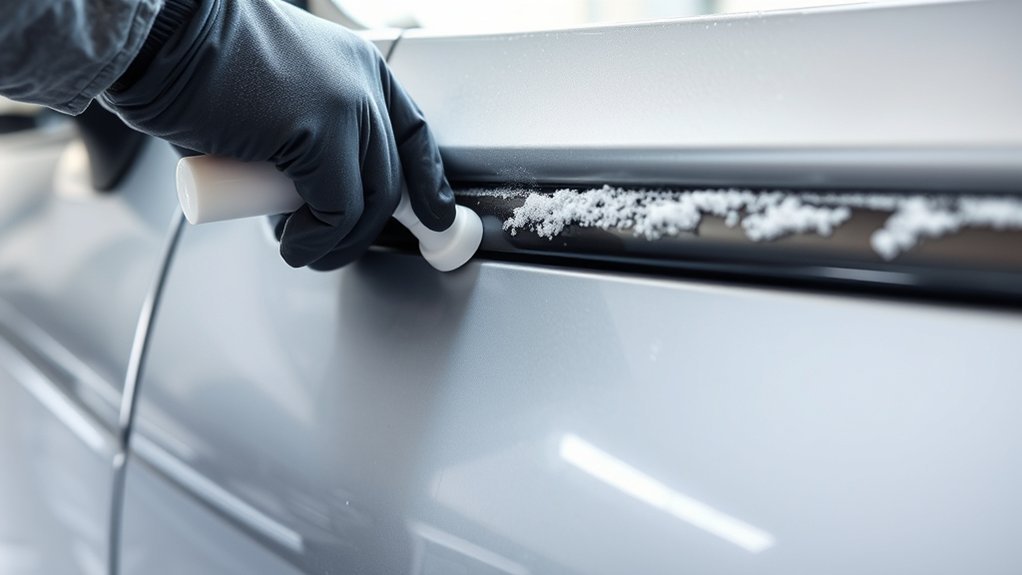
Frozen or sticky door seals can make a Toyota Camry difficult to open after snow, freezing rain, a car wash, or a rapid temperature drop. The safest preventive method is to clean and dry the weatherstripping, then apply a thin film of silicone lubricant that is specifically labeled safe for rubber. Product choice and careful application matter because the wrong lubricant can attract dirt, leave slippery residue, or be incompatible with the seal material.
Quick Answer
Clean and fully dry the Camry’s rubber weatherstripping, then wipe on a very thin coat of silicone lubricant labeled safe for rubber. Apply it with a cloth instead of spraying directly, remove excess, and cycle the door several times. Avoid forcing a frozen door or using petroleum products unless Toyota or the product maker approves them.
Key Takeaways
- Use a silicone lubricant whose label specifically permits use on rubber or automotive weatherstripping.
- Clean and completely dry the seals before applying any product.
- Spray the lubricant onto a cloth, not directly into the door opening, to control overspray.
- A thin, even film is enough; heavy buildup collects dirt and can transfer to clothing.
- Lubrication cannot repair torn, loose, badly flattened, or hardened weatherstripping.
At a Glance
| Time Required | About 15–25 minutes, including cleaning and drying |
| Difficulty | Easy |
| Tools Needed | Mild soap, water, two clean cloths, and a rubber-safe silicone lubricant |
| Cost | Low—the cost of one can or tube of rubber-safe lubricant |
Why Properly Lubricating Door Seals Prevents Winter Sticking
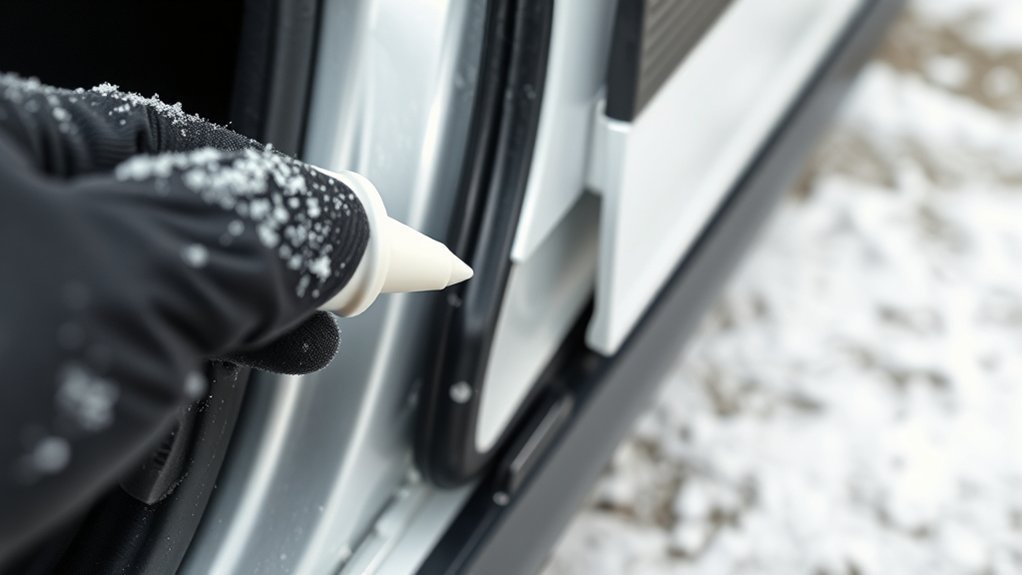
A Camry door seal can freeze to the painted door frame when moisture remains between the two contacting surfaces and turns to ice. Dirt, road salt, old product residue, and damaged weatherstripping can make the problem worse by holding moisture or creating uneven contact points.
A thin film of rubber-safe silicone lubricant reduces direct sticking between the weatherstrip and the surface it touches. It also leaves a water-resistant lubricating layer that helps the rubber slide away from the door frame when the door opens. For example, the manufacturer of WD-40 Specialist Silicone states that the product leaves a water-resistant film and is safe on most common rubbers when used as directed.
Note: “WD-40” is a brand with several formulas. When this guide refers to a WD-40 product, it means WD-40 Specialist Silicone—not an automatic recommendation for the standard WD-40 Multi-Use Product.
Lubrication can help a healthy seal remain flexible and release cleanly, but it is not a repair for cracked, torn, detached, or permanently compressed weatherstripping. Inspecting the seal before treatment prevents lubricant from hiding a problem that requires replacement.
Cleaning Your Door Seals Before Lubrication
Lubricant works best on a clean, dry surface. Applying it over grit or old residue can produce an uneven coating and trap abrasive dirt against the rubber.
- Park in a suitable area. Work in a well-ventilated location with the doors open and follow all precautions on the lubricant label.
- Mix a mild cleaning solution. Add a small amount of mild car-wash soap or gentle dish soap to clean water. Avoid harsh solvents, bleach, strong degreasers, and abrasive cleaners.
- Wipe the weatherstrip. Use a soft cloth or sponge to clean the full perimeter of the seal. Pay attention to folds and lower sections where salt and grit collect.
- Clean the mating surface. Wipe the painted or finished surface that contacts the weatherstrip so dirt is not transferred back to the rubber.
- Remove soap residue. Wipe both surfaces with a separate cloth dampened with clean water.
- Dry everything completely. Use a lint-free cloth and allow trapped moisture in folds or corners to evaporate before applying lubricant.
Pro Tip: Clean the seals before the first hard freeze and after any winter wash that leaves wax, soap, road salt, or grime along the door opening.
While cleaning, look for cuts, missing sections, loose adhesive, hardened rubber, severe flattening, or areas that no longer make even contact. These conditions may require weatherstrip adjustment or replacement rather than more lubricant.
Choosing the Right Lubricant for Your Camry Door Seals
The best general choice is a silicone spray or silicone paste whose label specifically permits use on rubber, vinyl, or automotive weatherstripping. The exact seal material and Toyota recommendations can vary by model year, so consult the manual for your vehicle through the Toyota Owners manual selector when model-specific instructions are available.
| Product Type | Suitability | What to Know |
|---|---|---|
| Rubber-safe silicone spray | Best general option | Easy to spread in a thin film. Spray it onto a cloth to prevent overspray. |
| Rubber-safe silicone paste or grease | Useful when its label permits weatherstrip use | More concentrated than spray, so apply an extremely thin layer and wipe away excess. |
| Rubber conditioner or protectant | Product-dependent | A product such as Armor All Original Protectant is labeled for rubber protection, but a protectant is not automatically a dedicated cold-weather weatherstrip lubricant. |
| Generic penetrating or multi-use oil | Not recommended without explicit label approval | Do not assume that every product used on metal hinges is compatible with rubber weatherstripping. |
| Petroleum jelly or Vaseline | Compatibility-dependent | Do not use it as a blanket substitute unless Toyota or the product manufacturer confirms compatibility with the seal material. |
| Graphite or dry lock lubricant | For approved lock mechanisms, not flexible seals | The lock cylinder, latch, hinge, and rubber weatherstrip are separate components and may require different products. |
Warning: Read the product label before use. Test unfamiliar products on a small, inconspicuous section first. Keep aerosol away from ignition sources, avoid breathing the spray, and do not leave lubricant on glass, upholstery, pedals, handles, or any surface where slipperiness could create a hazard.
Step-by-Step Guide to Applying Lubricant to Door Seals
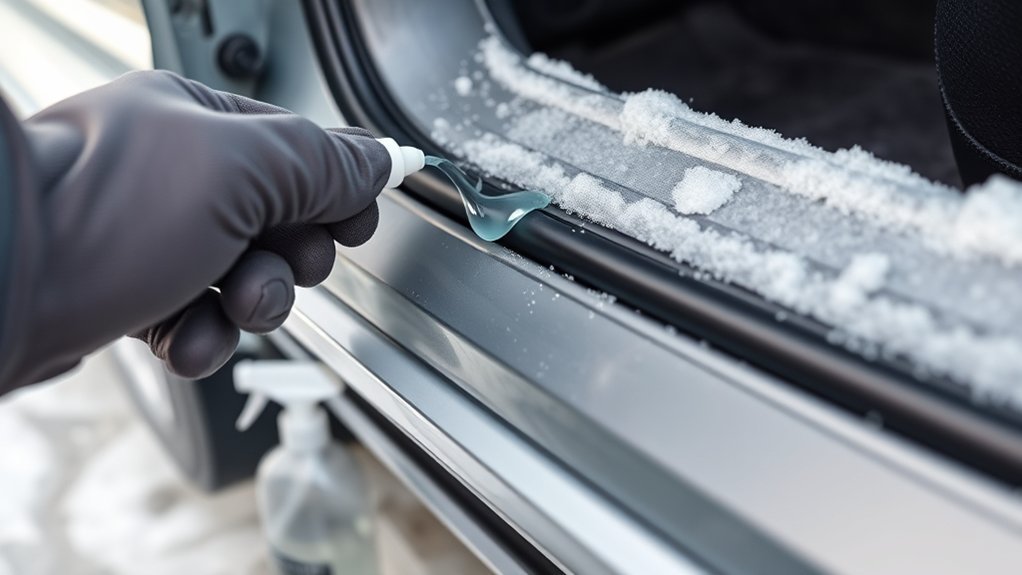
Apply the lubricant only after the weatherstrip and its mating surface are clean, dry, and free of damage that requires repair.
Essential Lubricants for Seals
Choose one appropriate product rather than layering several treatments:
- Rubber-safe silicone spray: A practical choice for controlled, even coverage.
- Rubber-safe silicone paste: A thicker alternative when the label specifically approves its use on automotive seals.
- Weatherstrip conditioner: Suitable when it is designed for automotive rubber and cold-weather exposure.
- Rubber protectant: May help with surface care, but confirm that it also provides the lubrication needed for weatherstrip contact points.
Do not apply graphite powder to the rubber weatherstrip. If a lock cylinder also freezes, treat it as a separate component and use only a lock product approved for that mechanism.
Application Techniques Explained
- Shake or prepare the product as directed. Follow the manufacturer’s label rather than assuming every silicone formula is used the same way.
- Apply the product to a cloth. For aerosol silicone, spray a small amount onto a clean lint-free cloth away from the vehicle opening. This limits contact with paint, glass, upholstery, and interior trim.
- Wipe the full seal perimeter. Run the cloth along the weatherstrip, including folds and corners, while avoiding unnecessary stretching or pulling.
- Cover the contact surface lightly. The goal is a thin, continuous film—not a visibly wet or greasy coating.
- Remove excess product. Use a second clean cloth to wipe away drips, pools, or residue that could collect dirt or transfer to clothing.
- Cycle the door. Open and close the door several times without slamming it. This helps distribute the film across the contact area.
- Inspect the result. Check for residue on paint, glass, trim, or the door sill and clean it according to the product instructions.
More lubricant is not better. A nearly invisible, even film protects the contact surface more cleanly than a heavy coating that traps winter grit.
Maintenance Tips for Longevity
There is no universal calendar interval for every product, climate, or Camry model year. Inspect the weatherstripping before winter and recheck it after repeated washes, severe icing, visible contamination, or renewed sticking. Reapply only when the product label permits it and the previous film is no longer effective.
- Inspect: Check for cracks, cuts, loose mounting sections, or permanent compression.
- Clean: Remove grit and old residue before adding more product.
- Lubricate: Restore only a thin film with a compatible silicone or weatherstrip treatment.
- Test: Confirm that the door opens, closes, and latches normally.
What to Do if a Camry Door Is Already Frozen
Preventive lubricant will not instantly release a seal that is already bonded by ice. Use a gentle recovery process to avoid tearing the weatherstrip or damaging the handle.
- Do not yank the handle. Pulling hard can damage the handle, latch linkage, or frozen rubber.
- Try another door. If another door opens safely, enter the vehicle and use the heater and defroster to warm the cabin gradually.
- Clear loose ice. Brush snow and gently remove loose ice from the perimeter without using sharp tools against paint or rubber.
- Press before pulling. Gently press the door inward around the frozen edge to help break the ice bond, then try the handle again with light force.
- Use an automotive de-icing product only as labeled. Keep it away from surfaces the manufacturer excludes and wipe away residue afterward.
- Dry and inspect the seal. Once the door opens, dry the weatherstrip, look for tears or pulled sections, and apply compatible lubricant only after the area is clean and dry.
Warning: Do not pour boiling or very hot water over a frozen door. It can create additional ice as it cools, enter the latch area, and expose cold glass or finishes to a rapid temperature change.
Best Practices for Winter Door Seal Maintenance
Effective winter care combines inspection, cleaning, compatible lubrication, and prompt attention to damage. Treat the weatherstrip before severe cold rather than waiting until the door freezes shut.
Regular Seal Inspections
- Look for surface damage. Check the complete perimeter for splits, missing pieces, abrasion, or brittle areas.
- Check attachment points. Make sure the weatherstrip has not pulled away from clips, channels, or adhesive surfaces.
- Examine compression. Deeply flattened areas may no longer seal evenly against wind, water, and noise.
- Check for moisture paths. Water staining, damp carpet, wind noise, or repeated ice in one location may indicate poor alignment or a damaged seal.
- Document recurring trouble. A photo can help a Toyota dealer or qualified repair shop identify a section that repeatedly moves or freezes.
Effective Lubrication Techniques
Use the product that matches the actual component. Rubber weatherstripping needs a rubber-compatible surface treatment; lock cylinders, hinges, and latches may require different products and service procedures.
| Component | Preferred Approach | Winter Problem Addressed |
|---|---|---|
| Rubber weatherstrip | Thin film of rubber-safe silicone lubricant | Reduces sticking between contacting surfaces |
| Lock cylinder | Lock-specific lubricant approved by the lock or product manufacturer | Helps prevent or address a frozen key mechanism |
| Latch and hinge | Vehicle-approved lubricant applied at the specified points | Supports normal mechanical movement |
Seasonal Maintenance Reminders
- Inspect and clean the weatherstripping before the first sustained freeze.
- Dry door openings after washing the vehicle in freezing weather.
- Remove road salt and grit before reapplying lubricant.
- Keep the silicone film thin and wipe off residue.
- Reinspect the seal after a door has frozen shut or been pulled loose.
- Replace damaged weatherstripping instead of repeatedly coating it.
How to Spot Door Seal Problems?
Door weatherstripping needs more than lubrication when the rubber or its mounting system can no longer form a consistent seal. Watch for these symptoms:
- Visible cracks or tears: Openings in the rubber allow water, air, and dirt to pass through.
- Loose or hanging sections: The seal may have pulled out of its channel or separated from an attachment point.
- Permanent flattening: Compressed areas may not spring back when the door opens.
- Hard or brittle texture: Rubber that no longer flexes may continue to stick even after surface treatment.
- Repeated ice in one spot: Concentrated freezing can indicate trapped water, poor drainage, misalignment, or damaged weatherstripping.
- Wind noise or water entry: New cabin noise, damp trim, or water staining can signal an incomplete seal.
- Binding or unusual sounds: A seal may be folded, displaced, or rubbing where it should not.
Clean and inspect the area first. If the rubber is torn, detached, severely compressed, or still leaks after cleaning and correct installation, have the weatherstrip examined by a Toyota dealer or qualified repair shop. Lubricant may reduce surface friction, but it cannot restore missing material or correct door alignment.
Additional Winter Preparation Tips for Your Camry

Door-seal care is only one part of winter preparation. The National Highway Traffic Safety Administration’s winter guidance recommends checking tires, the battery, lights, wipers, winter washer fluid, and manufacturer-specified coolant before severe weather.
- Prepare the tires: Check cold tire pressure against the specification on the driver-side door label or in the owner’s manual. Inspect tread and damage, and consider winter tires where snow and ice conditions justify them.
- Check the cooling system: Confirm that the coolant level and mixture meet Toyota’s specifications for the exact Camry model year. Inspect for leaks rather than simply topping off an unknown coolant.
- Maintain visibility: Replace worn wiper blades, test the defrosters, and fill the washer reservoir with winter-rated fluid suitable for expected temperatures.
- Test the battery: Cold weather reduces available battery power and can make an already weak battery more likely to fail. Have the battery and charging system checked when starting becomes slow or the battery’s condition is uncertain.
- Check exterior lights: Verify the headlights, brake lights, turn signals, and emergency flashers, and keep them clear of snow and road grime.
- Carry winter supplies: Keep an ice scraper, snow brush, flashlight, phone charger, warm clothing or blankets, water, food, and other region-appropriate emergency items in the vehicle.
Related Guides
Frequently Asked Questions
What do you put on car door seals to keep them from freezing?
Use a thin film of silicone lubricant or weatherstrip treatment whose label specifically permits use on rubber or automotive seals. Apply it to a cloth, wipe the clean and dry seal evenly, and remove excess. Check the exact Toyota manual and product label before using an unfamiliar formula.
How do you stop rubber door seals from sticking?
Remove dirt, road salt, wax, and old residue with mild soap and water. Dry the weatherstrip completely, inspect it for damage, and apply a very thin layer of rubber-safe silicone lubricant. If one area continues to bind, check for a folded seal, loose attachment, permanent compression, or door-alignment problem.
Will WD-40 keep car doors from freezing shut?
WD-40 Specialist Silicone is marketed for lubricating door seals and is labeled safe on most rubbers when used as directed. Do not treat “WD-40” as one universal formula or assume that the standard Multi-Use Product is interchangeable with Specialist Silicone. Verify the exact product name and label before application.
Can you put Vaseline on door seals to prevent freezing?
Do not assume petroleum jelly is compatible with every automotive weatherstrip compound. Use it only when Toyota or the product manufacturer confirms that it is suitable for the seal material. A silicone lubricant labeled safe for rubber is the more dependable general recommendation.
How often should Camry door seals be lubricated?
Inspect them before winter and after repeated washing, severe icing, visible contamination, or renewed sticking. Reapply according to the lubricant label rather than following an arbitrary monthly schedule. Clean off dirt and old buildup before adding another coat.
What should I do when the door is already frozen shut?
Do not pull hard on the handle. Clear loose ice, try another door, warm the cabin gradually if possible, and gently press inward around the frozen edge before pulling lightly. Avoid boiling water. After the door opens, dry and inspect the weatherstrip before applying any compatible treatment.
Conclusion
Preventing a Camry door seal from freezing starts with three simple steps: clean the weatherstrip, let it dry completely, and apply a thin coat of silicone lubricant labeled safe for rubber. Use a cloth for controlled coverage, wipe away excess, and keep lock, latch, hinge, and weatherstrip treatments separate. If a seal is torn, loose, brittle, or permanently flattened, replace or repair it instead of relying on more lubricant. Completing this maintenance before severe cold is easier and safer than trying to free a frozen door.
Sources
- WD-40 Specialist Silicone — product compatibility, water-resistant film, and stated automotive door-seal use
- Armor All Original Protectant — manufacturer guidance concerning use on rubber surfaces
- Toyota Manuals and Warranties — model-year-specific Toyota owner information
- NHTSA Winter Weather Driving Tips — tire, battery, coolant, visibility, and winter-emergency preparation guidance