
The Toyota RAV4 Hybrid automatically combines a gasoline engine, electric motor-generators, a traction battery, and a power-split transaxle. The driver does not have to select which power source is used or plug in the standard hybrid. A control computer continually chooses the most efficient combination based on speed, acceleration, battery charge, temperature, traction, and other conditions.
Quick Answer
The RAV4 Hybrid blends a gasoline engine with electric motor-generators through a power-split transaxle. Electric power can move the SUV at low speed, assist acceleration, recover energy while braking, and drive the rear wheels on AWD models. The computer manages every transition, so the standard hybrid never needs to be plugged in.
Key Takeaways
- The gas engine and electric motors can power the wheels separately or together, depending on driving conditions.
- Regenerative braking converts some of the vehicle’s motion back into electricity and stores it in the traction battery.
- The standard RAV4 Hybrid is a self-charging hybrid electric vehicle, not a plug-in hybrid.
- AWD models use a dedicated electric rear motor to add rear-wheel torque when the control system determines it is useful.
- Specifications, drive modes, battery chemistry, and fuel-economy ratings vary by model year and trim.
Note: Current specifications in this article refer to the U.S.-market 2026 RAV4 Hybrid where a model year is stated. Earlier RAV4 Hybrid models use previous generations of Toyota’s hybrid system and have different horsepower, battery, drivetrain, and fuel-economy specifications.
How Does the Toyota Hybrid System Work in the RAV4?

The RAV4 Hybrid uses a power-split hybrid system, sometimes described as a series-parallel design. It can send gasoline-engine power to the wheels, convert some engine power into electricity, use stored electricity to drive the wheels, or combine engine and electric power for stronger acceleration.
For the redesigned 2026 RAV4, Toyota pairs a 2.5-liter four-cylinder engine with two front motor-generators through a planetary-type continuously variable transaxle. AWD models add a dedicated rear electric motor. Toyota describes the current system in its 2026 RAV4 technical overview.
Main RAV4 Hybrid Components
- Atkinson-cycle gasoline engine: Delayed intake-valve closure creates a shorter effective compression stroke and a longer expansion stroke. This helps extract more useful energy from the fuel, while electric assistance compensates when additional low-speed torque is needed.
- Motor/Generator 1 (MG1): Primarily starts the gasoline engine, generates electricity, and helps the transaxle control engine speed.
- Motor/Generator 2 (MG2): Acts as the main front drive motor, assists the engine during acceleration, and generates electricity during regenerative braking.
- Traction battery: Stores electrical energy for motor assistance and limited electric-only operation. The hybrid computer keeps the battery within a managed operating range rather than routinely charging it from empty to full.
- Inverter and converter: Manage electrical voltage and convert power between the battery and the motor-generators.
- Power-split transaxle: Uses planetary gearing and the motor-generators to vary the relationship between engine speed and road speed.
- Hybrid control computer: Coordinates the engine, motors, battery, braking system, and available AWD.
- Rear motor on AWD models: Supplies electronically controlled torque to the rear wheels when added traction, acceleration, or stability support is useful.
Warning: The traction battery, inverter, and orange high-voltage cables can cause serious injury or death. Do not open the battery enclosure, disconnect high-voltage components, or attempt collision-related hybrid repairs without the required training and protective equipment. Follow the Toyota owner’s manual and use a qualified hybrid technician.
How Do the Gas Engine and Electric Motors Team Up?
The RAV4 Hybrid does not follow one fixed operating sequence. Its computer changes the power flow many times during a trip. The driver may hear the engine stop, restart, or change speed without a conventional gearshift because the system is responding to power demand and battery conditions.
| Driving situation | What the hybrid system may do |
|---|---|
| Starting or moving slowly | MG2 may move the vehicle using battery power if the battery charge, temperature, speed, climate-control demand, and other conditions permit. |
| Moderate acceleration | The gasoline engine starts and works with MG2. The system can use battery power to supplement engine output. |
| Hard acceleration or climbing | The engine and drive motor provide stronger combined output. AWD models may also send electric torque to the rear wheels. |
| Steady cruising | The engine may power the wheels efficiently while also generating electricity. Under light demand, the engine may shut off for brief periods. |
| Coasting or braking | The drive motor operates as a generator, slowing the vehicle and returning some kinetic energy to the battery. |
| Stopped | The gasoline engine can shut off while the vehicle remains ready to move. It may restart to provide cabin heat, charge the battery, or meet another system demand. |
Why the eCVT Feels Different
The hybrid transaxle is commonly called an electronically controlled continuously variable transmission, or eCVT. It is not the same as a conventional belt-and-pulley CVT. Planetary gearing and the two motor-generators allow the control system to adjust engine speed and wheel power without stepping through fixed gears.
During strong acceleration, the engine may hold a steady, elevated speed while the vehicle continues gaining road speed. That behavior is normal for a power-split hybrid and does not necessarily indicate transmission slipping.
Does the Standard RAV4 Hybrid Need to Be Plugged In?
No. The standard RAV4 Hybrid is a hybrid electric vehicle, or HEV. It charges its traction battery through the gasoline engine and regenerative braking. There is no external charging port.
The RAV4 Plug-in Hybrid is a different model. It has a larger battery, can be charged from an external power source, and is designed to travel much farther on electricity before operating like a conventional hybrid.
How Does Regenerative Braking Enhance the RAV4 Hybrid’s Efficiency?

In a conventional vehicle, most braking energy becomes heat at the brake discs and pads. The RAV4 Hybrid can recover some of that energy by using MG2 as a generator. The generator creates electrical resistance that helps slow the vehicle while sending electricity back to the traction battery.
The brake-control system blends this regenerative force with the hydraulic friction brakes. Friction braking still performs an essential role during harder stops, at very low speeds, when traction is limited, when the battery cannot accept as much charge, and whenever the system determines that additional braking force is needed.
Regeneration cannot recover all of the vehicle’s kinetic energy. Conversion losses, aerodynamic drag, tire resistance, battery limits, road grip, speed, and braking demand all affect how much energy reaches the battery.
Pro Tip: When traffic and safety permit, look ahead and brake smoothly rather than waiting for a hard stop. Gradual deceleration generally gives the system more opportunity to use regenerative braking. Always prioritize safe stopping distance over the energy-flow display.
Regenerative braking can also reduce friction-brake use. The U.S. Department of Energy notes that hybrid brake systems generally last longer than conventional brakes because part of the braking workload is handled electrically. However, brake components still require inspection and can develop corrosion or wear.
Benefits of AWD in the RAV4 Hybrid
AWD-equipped RAV4 Hybrid models use a dedicated electric motor at the rear axle. The vehicle computer considers wheel speed, throttle position, steering input, acceleration, and detected slip when deciding how much rear-wheel torque to provide.
The rear motor can assist when starting on a slippery surface, accelerating, cornering, or responding to front-wheel slip. Because the rear axle is electrically driven, the system can change front-to-rear torque quickly without relying on a traditional part-time four-wheel-drive transfer case.
Electronic AWD can improve traction and stability, but it does not create unlimited grip. Tire type, tire condition, vehicle speed, snow depth, mud, ground clearance, and driver input remain critical. AWD also does not shorten braking distance on ice.
Note: Quality winter tires can provide a larger cold-weather traction improvement than AWD alone. Use tires appropriate for the climate and maintain the pressure listed on the driver-door placard.
Why Choose the RAV4 Hybrid as an Eco-Friendly Option?
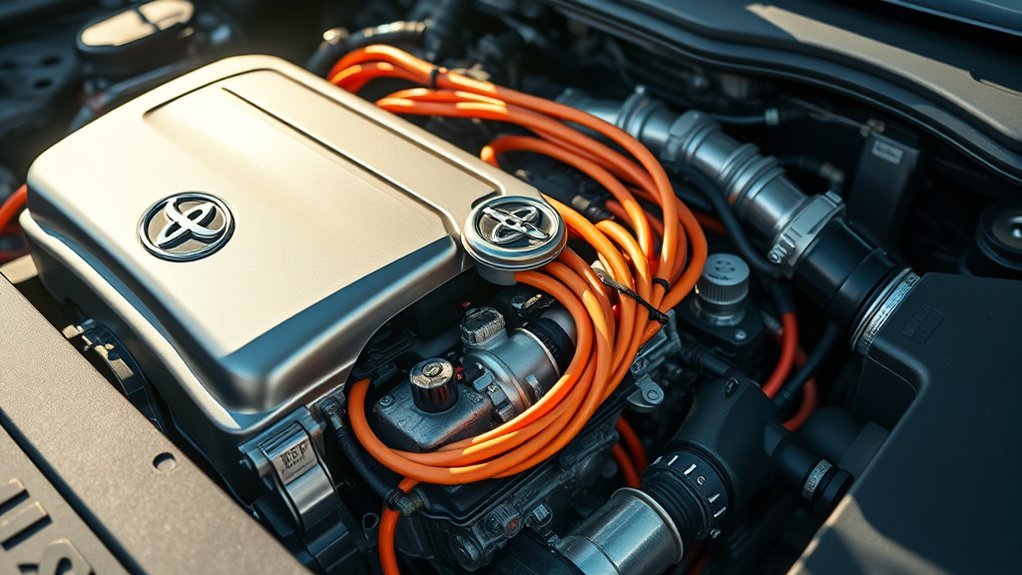
A RAV4 Hybrid can use less gasoline than a comparable non-hybrid SUV by shutting off the engine when it is not needed, operating the engine in an efficient range, adding electric assistance, and recovering some braking energy. Lower gasoline consumption generally means lower tailpipe carbon-dioxide emissions for the same distance traveled.
It is important to keep the environmental benefit in perspective. The standard RAV4 Hybrid still burns gasoline, produces tailpipe emissions, and depends on battery and vehicle manufacturing. Its main advantage is reduced fuel use without requiring routine external charging—not zero-emission driving.
For the U.S.-market 2026 model, Toyota lists 226 net combined horsepower for FWD versions and 236 net combined horsepower for AWD versions. Manufacturer-estimated fuel economy varies by trim and drivetrain, with Toyota listing up to 43 MPG combined for an FWD grade in its May 2026 model update. Readers should check the exact trim’s window sticker or current official specification page rather than applying one MPG figure to every RAV4 Hybrid.
The redesigned 2026 RAV4 Hybrid increases net combined output to 226 horsepower with FWD or 236 horsepower with AWD, replacing the previous generation’s commonly quoted 219-horsepower figure.
| Feature | Practical benefit and limitation |
|---|---|
| Toyota Hybrid System | Automatically combines gas and electric power; actual efficiency still depends on the route, weather, speed, load, and driving style. |
| Regenerative braking | Recovers part of the energy normally lost during braking; it cannot recover all braking energy or replace the friction brakes. |
| Atkinson-cycle engine | Improves thermal efficiency; electric-motor assistance helps supply responsive torque when engine-only output would be less effective. |
| Electronic AWD | Adds rear-wheel torque when useful; it does not replace suitable tires or guarantee traction on every surface. |
| Limited EV operation | Can move the vehicle quietly for short periods under suitable conditions; it is not intended for long-distance electric driving. |
| No external charging | Provides hybrid efficiency without installing a charger; drivers seeking substantial electric range need the plug-in-hybrid model instead. |
How Is the RAV4 Hybrid Battery Charged?
The hybrid control system charges the traction battery in two main ways:
- Regenerative braking: MG2 converts some vehicle motion into electricity during deceleration.
- Engine-driven generation: The gasoline engine can turn MG1 to generate electricity when the system needs additional battery charge or electrical power.
The driver does not need to keep the battery gauge full. The control system intentionally maintains a working reserve so the battery can accept regenerated energy and provide motor assistance. A displayed charge level below full is therefore normal.
Can the RAV4 Hybrid Drive on Electricity Alone?
Yes, but only for limited periods. The 2026 RAV4 Hybrid includes an EV mode that may permit short, low-speed electric operation when battery charge, temperature, speed, acceleration demand, and climate settings allow it.
The gasoline engine may start even when EV mode is selected. Common reasons include low battery charge, rapid acceleration, high vehicle speed, cold engine conditions, cabin-heating demand, windshield defrost use, or a need to protect the hybrid system. EV mode is best viewed as an occasional operating function for places such as parking structures—not as a substitute for a plug-in vehicle’s electric range.
RAV4 Hybrid Drive Modes and Energy Monitor
Available modes vary by model year and trim, but current RAV4 Hybrid models can include Normal, Eco, Sport, Custom, and EV settings.
- Normal: Balances response, comfort, and efficiency for everyday driving.
- Eco: Softens accelerator response and may reduce climate-control energy demand to encourage efficient driving.
- Sport: Makes accelerator and steering response feel more immediate. It does not increase the system’s maximum rated horsepower.
- Custom: Allows selected vehicle responses to be configured on equipped models.
- EV: Requests short electric-only operation when system conditions permit.
The energy monitor can show whether power is moving from the engine or battery to the wheels and whether regenerative braking is returning energy to the battery. It is useful for learning how the system behaves, but drivers should keep their attention on the road rather than trying to force a particular display pattern.
RAV4 Hybrid Maintenance and Battery Warranty
A RAV4 Hybrid still has a gasoline engine, engine oil, filters, coolant, spark plugs, tires, suspension components, and friction brakes. It therefore requires many of the same scheduled services as a conventional vehicle. Follow the maintenance schedule for the exact model year, mileage, operating conditions, and market.
The battery, motor-generators, inverter, and related electronics generally require little routine scheduled maintenance. Regenerative braking can reduce pad and rotor use, although the friction brakes still need periodic inspection.
Toyota states that its hybrid battery is covered for 10 years or 150,000 miles, whichever comes first. Warranty terms, exclusions, and coverage for other hybrid components are explained in the applicable warranty guide. Battery life beyond the warranty cannot be predicted from age alone; temperature exposure, mileage, operating history, physical damage, and individual battery condition all matter.
There is no reliable universal annual maintenance-cost figure. Ownership cost depends on labor rates, mileage, tires, alignment, fluid service, wear items, damage, and repairs outside warranty. A pre-purchase inspection and service-history review are more useful for a used RAV4 Hybrid than a broad annual estimate.
What Affects RAV4 Hybrid Fuel Economy?
Official ratings provide a standardized comparison, not a guaranteed result. Real-world MPG can change because of:
- Short trips with a cold engine
- Low outside temperatures and cabin-heater use
- High speeds and rapid acceleration
- Roof racks, cargo, passengers, and trailer weight
- Low tire pressure or unsuitable tires
- Snow, rain, wind, hills, and rough roads
- Extended idling or remote-start warmups
- Differences among FWD, AWD, wheel, tire, and trim configurations
FuelEconomy.gov reports that hybrid fuel economy can fall about 30% to 34% in city testing at 20°F compared with 77°F. It also gives broader typical reductions of approximately 20% to 40% in cold-weather city driving and 25% to 45% on short trips. These are fleet-wide estimates, not a prediction for every RAV4 Hybrid.
Combining short errands, maintaining tire pressure, removing unused roof accessories, avoiding unnecessary idling, and accelerating smoothly can improve efficiency. However, safe speed, visibility, braking, and cabin comfort should take priority over maximizing the MPG display.
Frequently Asked Questions
How long does the RAV4 Hybrid battery last?
There is no single replacement age that applies to every battery. Toyota covers its hybrid battery for 10 years or 150,000 miles, whichever comes first. Many batteries may operate beyond the warranty, but actual life depends on age, mileage, temperature exposure, condition, and operating history.
Can the RAV4 Hybrid run on electric power alone?
Yes, it can use electric power alone for short periods at low speeds when battery charge, temperature, climate demand, and other conditions permit. The engine can start automatically at any time, so EV mode should not be confused with the sustained electric range of a plug-in hybrid.
Do you have to plug in a Toyota RAV4 Hybrid?
No. The standard RAV4 Hybrid charges its traction battery through regenerative braking and engine-driven generation. Only the separately sold RAV4 Plug-in Hybrid is designed to accept external charging.
What is the maintenance cost for a RAV4 Hybrid?
There is no dependable universal annual amount. Costs depend on mileage, model year, local labor rates, tires, wear, damage, and warranty status. Routine engine and chassis maintenance is similar to a gasoline vehicle, while the electric drive components generally require little scheduled service.
How does cold weather affect RAV4 Hybrid performance?
Cold temperatures can reduce battery performance, regenerative-braking availability, engine efficiency, and tire pressure while increasing cabin-heating demand. Government estimates indicate that hybrid MPG reductions can be substantial in 20°F weather, especially on short trips, but the exact loss varies by vehicle and conditions.
Are there tax incentives for purchasing a RAV4 Hybrid?
The standard RAV4 Hybrid is not a plug-in vehicle and does not qualify as a plug-in EV under the federal clean-vehicle rules. As of July 2026, the IRS also states that federal new, used, and commercial clean-vehicle credits are unavailable for vehicles acquired after September 30, 2025. State, local, utility, parking, or registration programs vary, so verify the exact vehicle and location through the U.S. Department of Energy state incentive database.
What is the difference between the RAV4 Hybrid and RAV4 Plug-in Hybrid?
The standard RAV4 Hybrid has a smaller traction battery, does not plug in, and uses electric-only operation mainly for short, low-speed periods. The RAV4 Plug-in Hybrid has a larger externally rechargeable battery and is designed to cover substantially more distance before the gasoline engine is needed.
Conclusion
The Toyota RAV4 Hybrid improves efficiency by coordinating an Atkinson-cycle gasoline engine, electric motor-generators, a managed traction battery, regenerative braking, and a power-split transaxle. Electric assistance supports acceleration, regeneration recovers part of the energy used to slow the vehicle, and AWD versions can add electronically controlled rear-wheel torque.
The system requires no routine external charging, but it should not be confused with a fully electric or plug-in vehicle. Its real-world fuel economy and traction depend on the exact model, weather, tires, route, load, and driving conditions. Check specifications and maintenance instructions for the applicable model year rather than relying on figures from another RAV4 generation.
Sources
- Toyota USA Newsroom — 2026 RAV4 technical overview — current hybrid components, output, regenerative braking, AWD operation, drive modes, EV mode, MPG estimates, and warranty details.
- Toyota USA Newsroom — How the Toyota Hybrid System works — manufacturer explanation of Toyota hybrid power management.
- Toyota — Hybrid battery warranty — 10-year or 150,000-mile hybrid battery coverage and battery-life guidance.
- FuelEconomy.gov — Fuel economy in cold weather — government estimates and causes of cold-weather MPG reductions.
- U.S. Department of Energy Alternative Fuels Data Center — Vehicle maintenance — HEV maintenance requirements, electrical-system service, and regenerative-brake wear.
- Internal Revenue Service — Clean vehicle tax credits — current federal credit eligibility and the September 30, 2025 acquisition cutoff.
