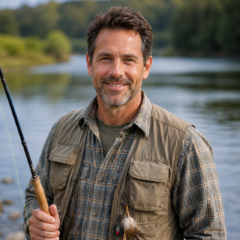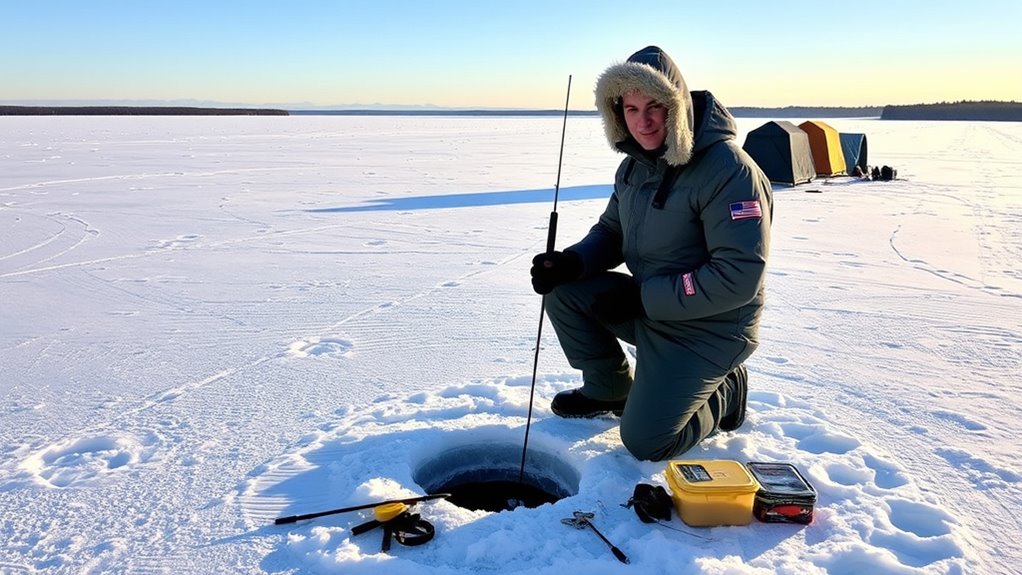
Ice fishing is a peaceful winter adventure that lets you enjoy quiet frozen lakes, simple gear, and the excitement of catching fish through the ice. Before you go, focus on safety first: check local ice conditions, confirm the ice is thick enough for foot travel, and bring the right clothing, tools, bait, and rescue gear. With a little planning, you can make your first ice fishing trip safer, warmer, and much more enjoyable.
Quick Answer
To start ice fishing, choose a legal fishing spot, check that clear ice is at least 4 inches thick for walking, dress in warm layers, drill a hole with an auger, and fish with a short ice rod, tip-up, jig, spoon, or live bait. Always bring ice picks, traction cleats, and a fishing buddy.
Key Takeaways
- Use at least 4 inches of clear, solid ice as a basic walking guideline, but test often because ice thickness can change across the same lake.
- Start with simple gear: an ice auger, short ice rod, small reel, line, bait, skimmer, warm clothing, bucket or chair, and safety picks.
- Look for fish near weed edges, drop-offs, rocky points, humps, and other underwater structure.
- Live bait such as minnows, wax worms, and nightcrawlers works well, while jigs and spoons help you cover water actively.
- Never fish alone on questionable ice, and avoid pressure cracks, current, springs, inlets, outlets, and dark or slushy areas.
At a Glance
| Time Required | 2 to 6 hours for a beginner-friendly outing, plus travel and setup time. |
| Difficulty | Easy to moderate, depending on weather, ice conditions, walking distance, and gear weight. |
| Tools Needed | Ice auger, spud bar, skimmer, short rod, reel, line, bait, tackle, bucket or chair, sled, cleats, and ice picks. |
| Cost | Basic starter setups can be budget-friendly, but shelters, electronics, powered augers, and cold-weather clothing add cost. |
Ice Fishing Overview
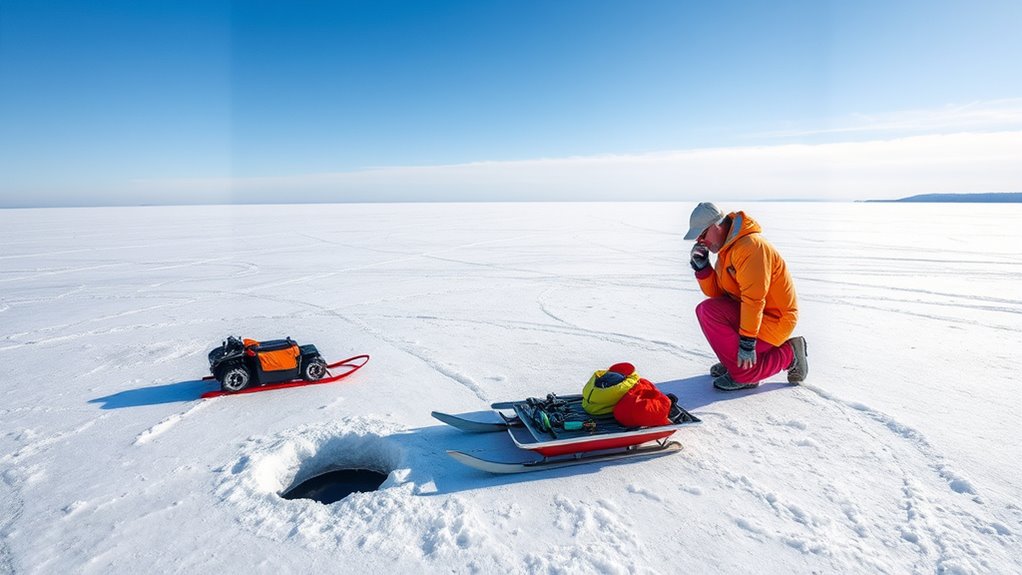
Ice fishing offers a unique thrill that combines the quiet of winter with the excitement of the catch. It is a great choice for anglers of many skill levels because you can start with simple equipment and build your setup over time.
During the colder months, many freshwater fish still feed under the ice. Once the ice reaches a safe thickness for foot travel, you can drill a hole, set your bait, and enjoy a slower, more relaxed style of fishing.
To improve your odds, keep a few ice fishing tips in mind. Target depths of 3 to 20 feet when you are learning, then adjust based on the lake, species, and season. Look for underwater structures like rock piles, weed beds, points, drop-offs, and humps because fish often use these areas for food and cover.
An ice auger is essential for drilling holes, and a skimmer helps keep slush from blocking your line. You will also need a short rod, small reel, bait, tackle, and a simple way to sit or shelter from the wind.
Most importantly, prioritize fishing safety. Carry ice picks, wear traction cleats, test the ice often, and avoid areas where current, springs, or pressure cracks may weaken the ice.
Whether you’re a seasoned pro or a newcomer, ice fishing can be a rewarding and social experience. With the right preparation, you can enjoy the quiet scenery, learn new skills, and bring home a fresh catch.
Warning: No ice is ever completely safe. Thickness, strength, and stability can change quickly because of current, snow cover, warm weather, springs, pressure ridges, and old fishing holes.
Essential Gear for Ice Fishing
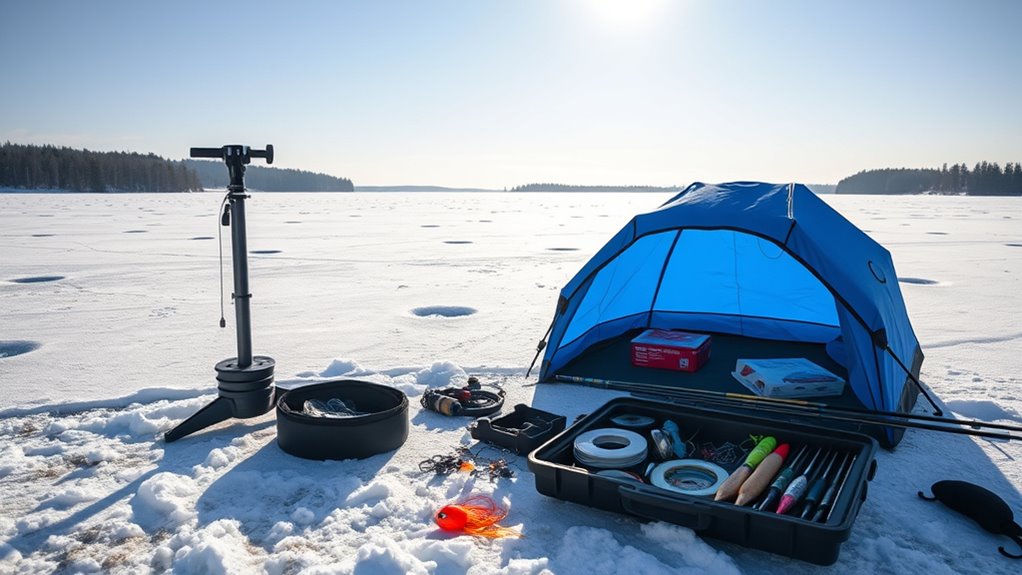
When you head out onto the frozen expanse for a day of ice fishing, having the right gear can make all the difference between a successful outing and a frustrating experience.
Heading out ice fishing? The right gear helps you fish better, stay warmer, move safely, and handle changing winter conditions with more confidence.
To maximize your chances of reeling in that big catch, be sure to pack the following essentials:
- Ice auger: A 4 to 6-inch hand auger is perfect for drilling starter holes in the ice. Larger holes can help with bigger fish, but they also require more effort to drill.
- Ice fishing rod: Choose a short rod, usually 3 to 4 feet long, with a sensitive tip and a small spinning reel. Pair it with 6 to 8 pound test line for many common panfish and walleye situations.
- Tip-ups: These handy devices let you set multiple lines where legal while you relax, watch flags, or jig nearby.
- Hole skimmer: Clear slush and ice chips from your fishing holes for better line movement and easier access.
- Winter clothing: Dress in layers, using waterproof snow pants, insulated boots, warm gloves, and a wind-resistant outer layer.
You should also pack a sled, bucket or folding chair, bait container, tackle box, small towel, measuring tool, fish grabber, headlamp, and a trash bag. Bring food and water as well because cold weather can make you burn energy faster than you expect.
Safety gear matters just as much as fishing gear. Carry ice picks around your neck or in an easy-to-reach pocket, wear traction cleats, bring a spud bar, and consider a throw rope or flotation aid when conditions are uncertain.
With this gear in tow, you’ll be ready to enjoy a successful ice fishing adventure while staying safer and more comfortable on the ice.
Understanding Ice Thickness
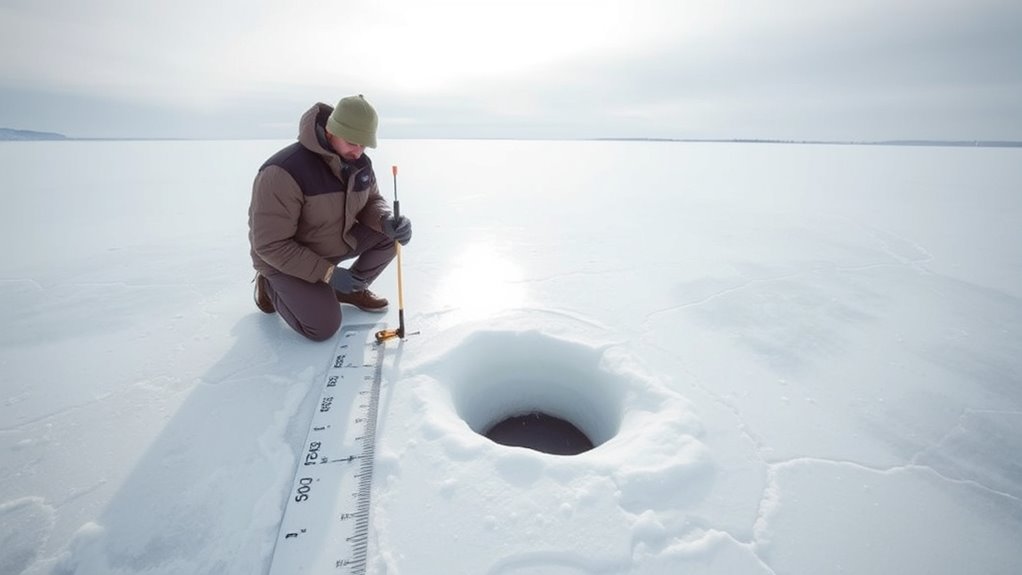
Safety should always be your top priority on the ice, and understanding ice thickness is essential for a secure fishing experience. A minimum of 4 inches of clear black ice is a common guideline for walking, while thicker ice is needed for heavier loads.
Keep in mind that ice thickness can vary considerably across different bodies of water. Smaller, shallow lakes may freeze more quickly than large lakes, rivers, or reservoirs. Even on one lake, one area can be much weaker than another.
It’s a good idea to continuously test the ice thickness as you venture away from shore. Use a spud bar, auger, or ice chisel, and check often rather than trusting one measurement at the access point.
Be cautious near flowing water, springs, bridges, culverts, pressure cracks, inlets, outlets, docks, and old ice holes. These areas can weaken the ice structure and create hidden hazards.
If you encounter white, gray, honeycombed, or opaque ice, treat it with extra caution. Clear black ice is usually stronger than white ice, so weaker ice may require more thickness and more careful judgment.
Always prioritize your safety by evaluating the ice before you settle in for a day of fishing. When in doubt, stay off the ice and choose another day.
Note: Snow on top of ice can hide cracks and slow new ice growth. It can also make thin ice look safer than it really is.
Planning Your Ice Fishing Trip
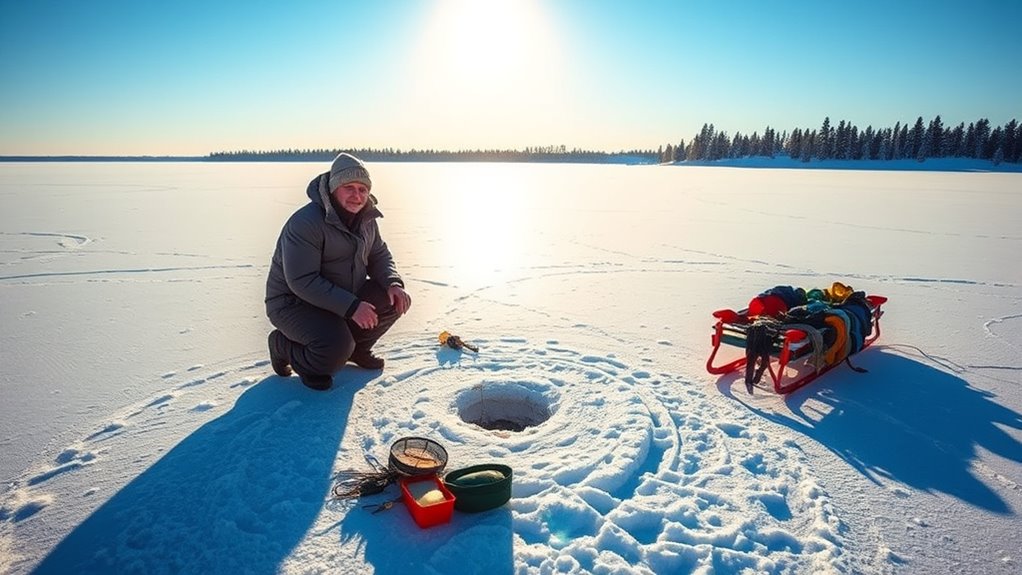
Planning an ice fishing trip requires careful consideration to guarantee a rewarding and enjoyable experience. Start by making sure you have a valid fishing license and understand the local rules for the water you plan to fish.
Check season dates, possession limits, size limits, bait rules, shelter rules, and how many lines you can legally use. Regulations can change by state, province, lake, species, and season, so do this before you pack.
Timing is vital. Early morning and late afternoon are often productive because fish may feed more actively during low-light periods. Still, midday can also work well when fish are moving or when weather is stable.
Always check the weather forecast before heading out. Pay close attention to wind, temperature, snow, freezing rain, visibility, and sudden warmups, because all of these can affect comfort and safety.
Here are some essential tips to keep in mind:
- Confirm the ice thickness; at least 4 inches of clear black ice is a common minimum guideline for walking.
- Research local fishing spots known for good action, like areas with rock piles, weed beds, points, flats, or drop-offs.
- Dress in layers to stay warm and comfortable as the temperature changes.
- Bring essential gear, including an ice auger, fishing rod, plenty of fishing line, bait, and tackle.
- Don’t forget safety items like ice picks, cleats, a spud bar, a charged phone, and a simple first aid kit.
- Tell someone where you are going, when you plan to return, and who is going with you.
- Bring a sled to move gear more easily and reduce fatigue on long walks.
With these preparations, you’re set for an exciting day on the ice!
Choosing the Right Bait
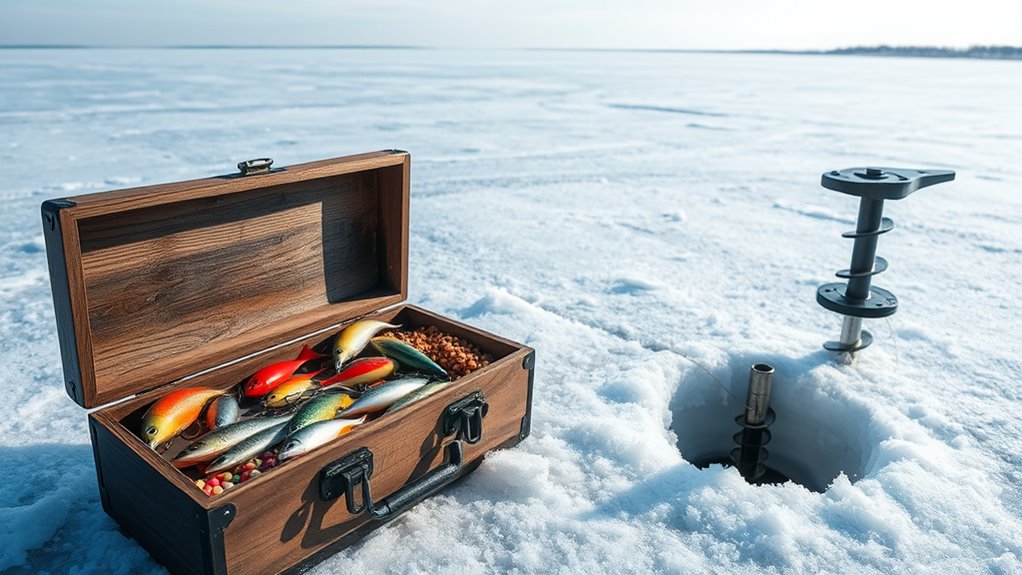
When it comes to ice fishing, choosing the right bait can make all the difference in your success.
Live bait like small minnows or wax worms is often the go-to for beginners because it attracts fish with natural movement, scent, and profile.
As you gain confidence, don’t hesitate to experiment with jigs and spoons to see what works best for your target species, depth, and water clarity.
Live Bait Options
Choosing the right live bait can make all the difference on the ice, and there are several effective options to reflect upon.
Here are some top bait types to consider:
- Live Minnows: Shiners are particularly effective. Choose smaller minnows for panfish and larger minnows for walleye, pike, or bigger predators where allowed.
- Chubs: A cost-effective alternative to shiners that still attracts fish, especially larger game fish.
- Wax Worms: Versatile and enticing for various fish species, great for beginners and panfish anglers.
- Nightcrawlers: Useful when fish want a natural scent and softer presentation.
- Swedish Pimple: Use this jig tipped with live bait to mimic natural prey movements.
- Experiment: Fish preferences can change with water conditions, light levels, and pressure, so don’t hesitate to try different baits.
Keep live bait lively and protected from freezing. A small insulated bait container can help minnows stay active longer, especially during windy or extremely cold conditions.
Artificial Bait Choices
Have you ever wondered how artificial bait can enhance your ice fishing experience?
Artificial baits, like jigs and spoons, are excellent alternatives to live bait, especially in cold waters where movement and color changes can attract fish. Opt for bright colors or reflective surfaces in stained water, and use more natural colors in clear water or on pressured fish.
Experiment with different jigging techniques. Try rapid lifts and drops to mimic the erratic movement of injured prey, then pause to let the lure flutter. Sometimes the pause triggers the bite.
Don’t forget to pair your artificial lures with scent attractants or small bait pieces when legal, as they can boost effectiveness on slow days.
For beginners, starting with simple options like small jigs tipped with soft plastics makes handling easier and increases your chances of success.
Happy fishing!
Pro Tip: If fish follow your bait but won’t bite, downsize your jig, slow your movement, or add a longer pause before lifting again.
Drilling Your Ice Fishing Hole
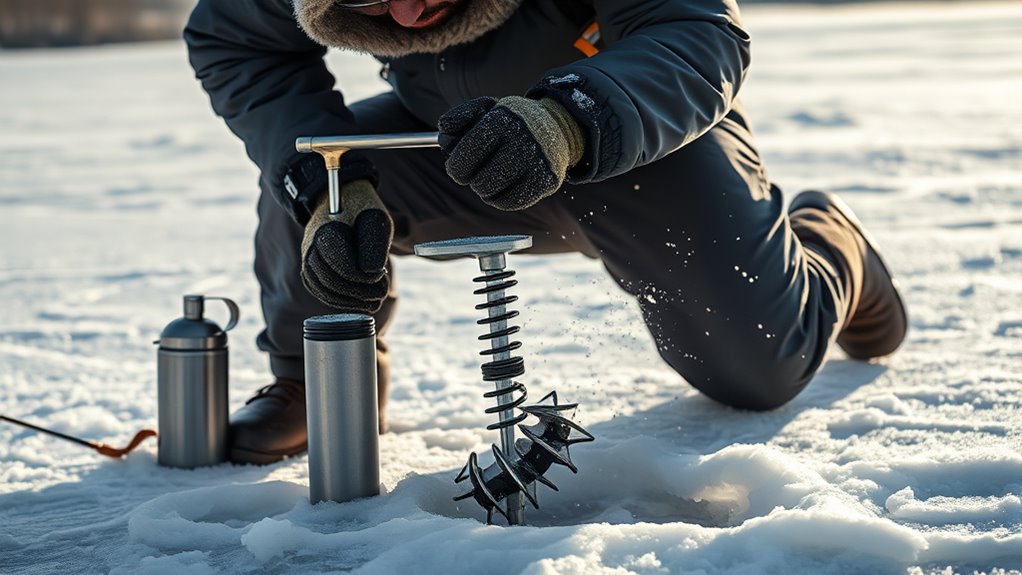
Drilling your ice fishing hole is an essential step that can greatly impact your success on the ice. The right location, hole size, and clean setup make fishing easier and safer.
To guarantee you’re well-prepared, follow these key tips:
- Check ice thickness: Make sure the ice is at least 4 inches thick for foot travel, using a spud bar or auger as you move.
- Choose the right tool: A hand auger with a 4 to 6-inch blade is ideal for managing your hole size when targeting panfish or smaller fish.
- Start drilling correctly: Position the auger blades flat against the ice surface before applying pressure.
- Drill at a steady pace: This helps avoid overheating or dulling the blades, keeping them sharp for easier drilling.
- Clear the hole: Use a scoop or skimmer to remove ice shavings immediately after drilling for better visibility.
Space your holes with care so people do not trip or step into them. If you are fishing with kids, mark holes clearly and keep everyone aware of open areas.
When the hole starts freezing over, skim it again instead of forcing your line through slush. Clean holes help your bait move naturally and make it easier to land fish.
Basic Fishing Techniques
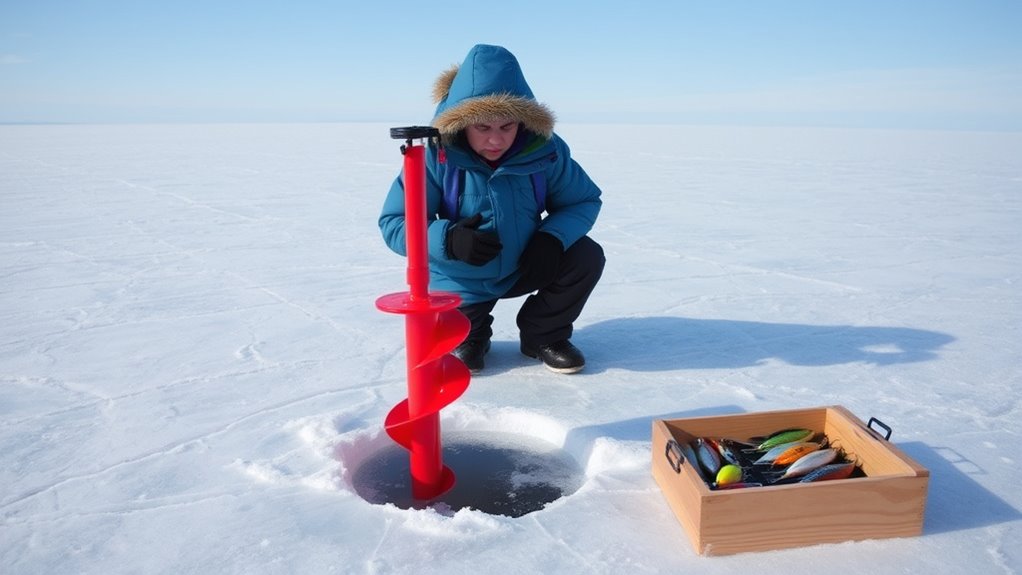
While ice fishing can seem intimidating at first, mastering basic fishing techniques can make your time on the ice both productive and enjoyable.
Start with user-friendly tip-ups, which allow you to relax while waiting for a bite. Once you locate fish, switch to jigging for a more active approach.
Begin with easy-to-use tip-ups for a laid-back experience, then transition to jigging when you want a more hands-on fishing style.
Focus your jigging efforts near the bottom, using slow, steady motions to entice bites. Then try different parts of the water column if fish are suspended.
Adjust the depth of your bait based on fish activity, and experiment with a mix of live bait, like shiners or nightcrawlers, and artificial lures such as jigs or spoons.
Patience is vital; bites can be subtle in cold conditions. Keep an eye on line sensitivity to know when to set the hook.
With the right techniques and a bit of practice, you’ll be ready to reel in your catch and truly enjoy the ice fishing experience!
How to Read a Bite
Ice fishing bites can feel different from open-water bites. Sometimes the rod tip bounces hard, but other times the line simply goes slack or feels slightly heavier.
Watch the rod tip closely and keep one finger near the line when jigging. If the lure feels different, lift gently at first, then set the hook with a firm upward motion.
For panfish, avoid swinging too hard because small hooks can pull free. For larger fish, keep steady pressure and guide the fish through the hole slowly.
Where to Place Your Hole
Good hole placement starts with structure. Fish often move along weed lines, points, break lines, flats, creek channels, and humps.
Early in the ice season, fish may stay near healthy green weeds or shallow feeding areas. As winter progresses, they may move deeper or suspend over basins.
Drill a few test holes where legal and safe, then move if you do not see activity after a reasonable amount of time. Staying mobile can help you find active fish faster.
Safety Tips for Ice Fishing
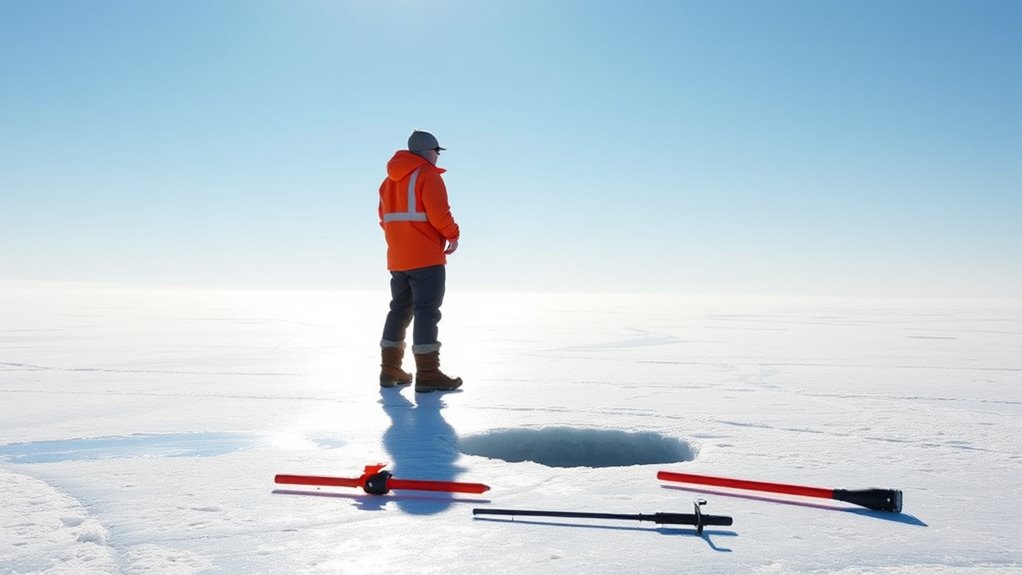
Before you step onto the ice, it’s important to prioritize safety to guarantee a successful fishing trip. Understanding ice thickness is significant; always look for at least 4 inches of clear black ice as a basic walking guideline.
Here are some critical safety tips to keep in mind:
- Regularly check ice thickness with a spud bar or auger as you move away from shore.
- Steer clear of areas near flowing water, springs, pressure cracks, inlets, outlets, bridges, and culverts where ice may be unstable.
- Carry necessary safety equipment like ice picks for self-rescue and a compass or GPS tool for navigation.
- Inform someone about your fishing plans before hitting the ice.
- Dress in layers, including a quality winter coat and waterproof snow pants, to stay warm.
- Go with a friend when possible, especially when you are new to the lake or unsure about conditions.
- Keep your phone charged and protected from the cold in an inside pocket.
If someone falls through, do not rush straight toward the hole. Call for help, reach from a safe distance with a rope, branch, sled, or flotation device, and spread your weight low on the ice.
If you fall in, try to stay calm. Turn toward the direction you came from, use ice picks to pull your chest onto solid ice, kick your legs, and roll away from the hole before standing.
Staying Warm While Ice Fishing
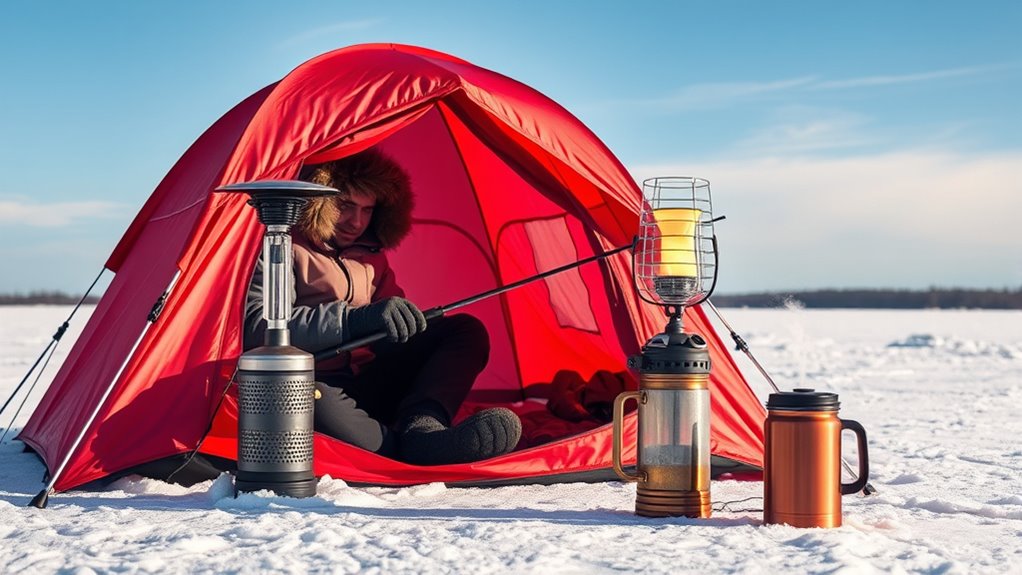
As you venture onto the icy expanse, staying warm is essential to enjoying your time fishing and maintaining your safety. Dressing in layers is key; start with a wool or synthetic base layer to trap warmth while allowing freedom of movement. Avoid cotton next to the skin because it holds moisture.
A quality winter coat and waterproof snow pants are must-haves to keep moisture and wind out. Warm boots, gloves, and headwear matter just as much because feet, hands, and ears get cold quickly on exposed ice.
Here’s a quick guide to help you stay cozy:
| Clothing Item | Tips |
|---|---|
| Base Layer | Choose wool, fleece, or synthetic fabric for warmth and moisture control. |
| Outer Layer | Invest in a wind-resistant, waterproof winter coat and snow pants. |
| Footwear | Opt for insulated winter boots with room for warm socks. |
| Accessories | Use warm socks, gloves, a hat, neck gaiter, and hand warmers. |
Taking regular breaks inside a heated shelter will help you stay away from the cold and enjoy a good time outdoors, preventing hypothermia in frigid temperatures.
Bring extra gloves and socks in a dry bag. Even one wet glove can turn a fun trip into a miserable one, especially when the wind picks up.
Making Ice Fishing Enjoyable for Everyone
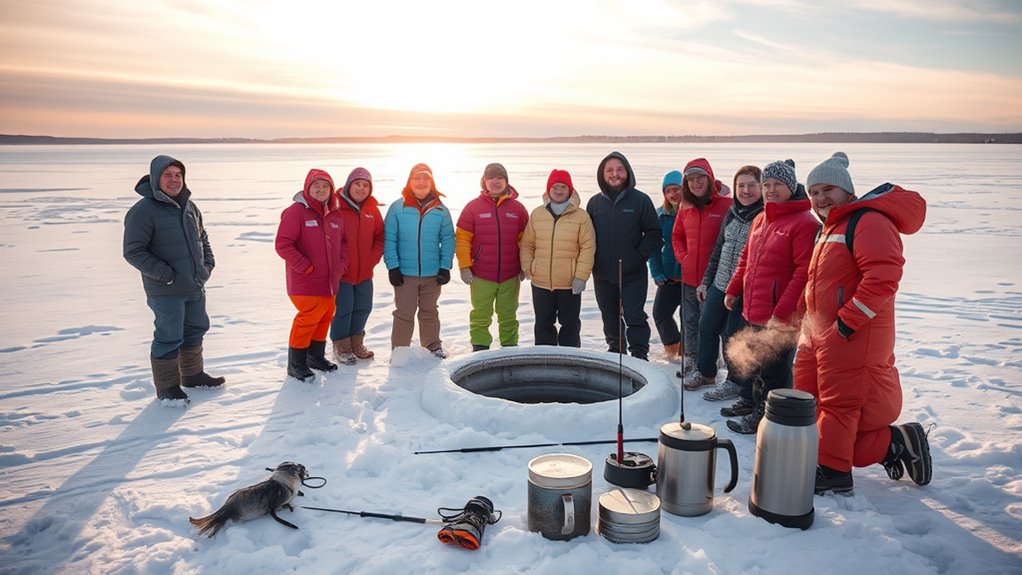
To make ice fishing enjoyable for everyone, get kids involved with fun activities like building snowmen or tossing a football during those slow fishing moments.
Pack some snacks and warm drinks to keep spirits high, and consider cooking up a simple meal on a portable grill where local rules allow it. Food, warmth, and comfort can make the trip feel more like a winter picnic than a waiting game.
With a few friendly competitions and comfortable seating, you’ll create lasting memories that everyone will cherish.
Engage Kids Actively
While ice fishing can be a peaceful retreat, it’s essential to keep kids actively engaged to guarantee everyone has a great time on the ice.
Here are some fun ways to make sure they’re involved:
- Pack engaging activities like a football or snowball-making supplies for creative play.
- Bring along snacks and warm beverages to create a cozy atmosphere while waiting for bites.
- Involve kids in the fishing process by letting them help scoop slush, choose bait, or watch the rod tip.
- Let adults handle drilling or closely supervise children around the auger, open holes, and sharp tackle.
- Set friendly competition challenges, like who can catch the most fish or the largest fish.
- Teach them about different fish species and bait selection, making the experience educational and interactive.
These strategies help foster excitement, ensuring a memorable ice fishing adventure for everyone.
Create Memorable Experiences
Creating memorable experiences during ice fishing goes beyond just catching fish; it’s about fostering connections and enjoying the great outdoors together.
Engage everyone, especially kids, with fun activities like tossing a football on the ice or building snowmen to keep spirits high between bites. Pack a variety of snacks and a thermos of warm drinks to keep everyone energized throughout the day on the ice.
Introduce friendly competitions for the biggest or most fish to spark excitement and camaraderie. Comfortable folding chairs and a heated ice shack enhance the experience, ensuring enjoyment for all ages.
Finally, gather around the fire where legal, or relax in the shack to share stories, strengthening family bonds and creating lasting memories.
Common Beginner Mistakes to Avoid
Many first-time ice anglers struggle because they focus only on catching fish and forget about comfort, safety, and mobility. Avoiding a few common mistakes can make your day much smoother.
- Staying in one dead spot too long: If you do not see bites or fish activity, try a different depth or nearby structure.
- Bringing too much gear: Heavy gear makes walking harder and can tire you out before fishing even starts.
- Ignoring wind: Wind can make the temperature feel much colder, so bring face protection and a windproof layer.
- Using dull auger blades: Dull blades make drilling slow, tiring, and frustrating.
- Forgetting regulations: Rules for bait, lines, species, and shelters can vary, so check before you fish.
- Leaving trash behind: Pack out bait containers, line, food wrappers, and anything else you bring onto the ice.
Related Guides
Frequently Asked Questions
What Types of Fish Can I Catch Ice Fishing?
You can catch popular ice fishing species such as perch, walleye, crappie, bluegill, trout, northern pike, and lake trout, depending on your location. Check local regulations for legal seasons, size limits, possession limits, and approved bait before you go.
How Do I Transport My Ice Fishing Gear?
Use a sled, ice fishing bucket, backpack, or small gear box to keep everything organized. Place heavy items low in the sled, protect rods in a case, keep bait from freezing, and pack safety gear where you can reach it quickly.
Can I Ice Fish Alone or Should I Go With Others?
You can ice fish alone, but the buddy system is safer, especially for beginners or unfamiliar lakes. A partner can help test ice, carry gear, respond in an emergency, and make the trip more enjoyable.
What Weather Conditions Are Best for Ice Fishing?
Stable weather, lighter wind, and safe ice conditions usually make the best beginner trips. Early morning and late afternoon can be productive, but comfort matters too. Avoid storms, poor visibility, sudden warmups, and extreme wind chill.
Are There Any Ice Fishing Competitions I Can Join?
Yes, many local clubs, bait shops, communities, and outdoor groups host ice fishing tournaments and contests. Review the rules before joining because competitions may have special boundaries, registration steps, legal requirements, and species categories.
What Is the Best Ice Fishing Setup for Beginners?
A beginner-friendly setup includes a hand auger, short medium-light ice rod, small spinning reel, 4 to 8 pound test line, small jigs, a few spoons, live bait where legal, a skimmer, warm clothing, cleats, and ice picks.
How Far Apart Should Ice Fishing Holes Be?
Hole spacing depends on safety, local rules, and how many people are fishing. Give yourself enough room to walk safely, land fish, and avoid tangled lines. Keep children and pets away from open holes.
Conclusion
Now that you’re equipped with the basics of ice fishing, it’s time to plan your first safe trip. Start with a legal location, check the weather, test the ice often, and bring the right gear for warmth, comfort, and safety.
With the right preparation, patience, and a smart setup, you can create unforgettable memories on the frozen lake. Remember to prioritize safety and warmth, respect local fishing rules, and pack out everything you bring with you.
Soon you’ll be sharing your own stories of the big catch with friends and family. Happy fishing!
Sources
- Minnesota Department of Natural Resources Ice Safety — supports basic ice thickness and ice hazard guidance.
- National Weather Service Cold Weather Safety — supports cold-weather safety, wind chill awareness, and winter exposure precautions.
- Take Me Fishing Ice Fishing Basics — supports beginner gear, bait, and technique guidance.
- U.S. Fish & Wildlife Service Fishing Regulations — supports checking local fishing rules, seasons, and license requirements.