
For most freshwater fishing, a practical starting range is 5 to 15 mph: enough wind to create surface chop and move bait without automatically making casting or boat control difficult. But wind speed is not a universal safety limit. A 15 mph wind across a sheltered pond is different from the same wind blowing across miles of open water. Judge conditions by wind direction, gusts, fetch, wave height, current, water temperature, and your craft, not mph alone.
Last updated: September 21, 2026 — revised wind-safety thresholds, Beaufort guidance, fetch explanation, lure advice, sources, FAQs, and internal links.
Quick Answer
Good wind conditions for fishing are often around 5 to 15 mph because light to moderate wind can create useful surface chop, move forage, and make fish less wary. Treat that as a fishing range, not a boating-safety threshold. As wind rises, also check gusts, fetch, wave height and period, current, water temperature, marine advisories, and the limits of your boat or kayak. If waves, gusts, lightning, or boat control make the trip unsafe, stay ashore or fish protected water.
Key Takeaways
- For fishing productivity, about 5 to 15 mph is a useful starting range, not a universal safety cutoff.
- Wind direction matters most when you translate it into windward banks, protected shores, water clarity, and bait movement.
- Fetch matters: the farther wind blows unobstructed across open water, the more opportunity waves have to build.
- Moderate wind can improve fishing around wind-blown banks, points, flats, grass lines, docks, and current breaks.
- Before boating or kayaking, check sustained wind, gusts, wave height and period, current, thunderstorms, marine advisories, and a safe route home.
At a Glance
| Useful Fishing Range | About 5 to 15 mph for many freshwater situations; adjust for waterbody, species, waves, and skill |
| Beaufort Context | 13–18 mph is a Moderate Breeze, 19–24 mph a Fresh Breeze, and 25–31 mph a Strong Breeze on the NWS Beaufort scale |
| Safety Decision | Do not use mph alone; evaluate gusts, fetch, waves, current, water temperature, advisories, boat size, experience, and return route |
| Best Strategy | Fish wind-blown structure when safe, cast lower, control line bow, adjust lure weight, and move to protected water before conditions exceed your limits |
Understanding Wind Direction and Its Impact on Fishing
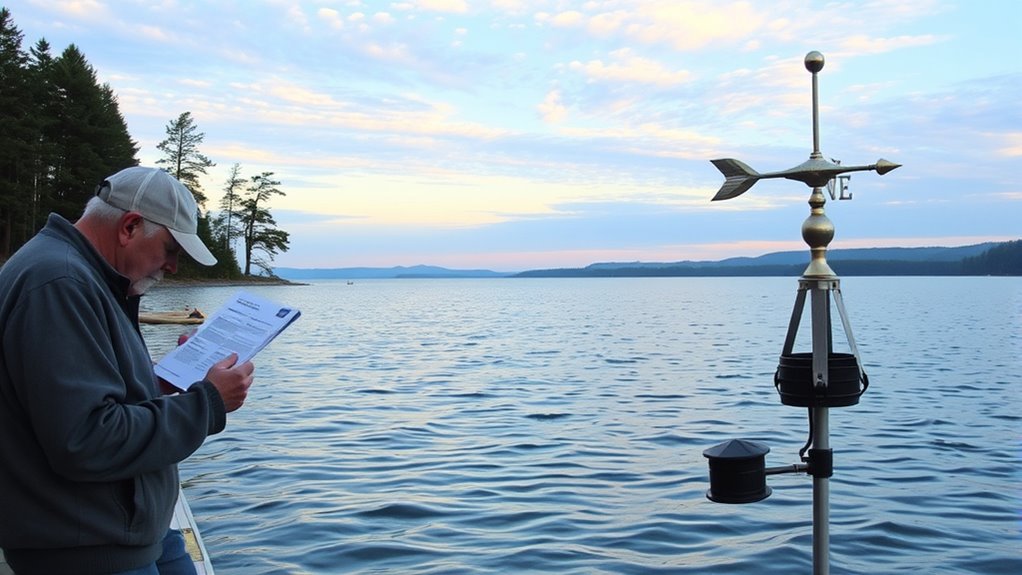
Wind direction matters because it shows where surface water, drifting food, waves, and sometimes baitfish are being pushed. Instead of treating north, south, east, or west as automatically good or bad, look at what that direction is doing to the specific shoreline in front of you.
The bank the wind blows toward is the windward or downwind bank. It often develops more chop, current, stirred sediment, and concentrated food. Points, grass lines, riprap, docks, reefs, bridge structure, and shallow flats on that side can become productive feeding areas.
Wind is not automatically good or bad for fishing. Read where it moves water and bait, how much wave action it creates, and whether the resulting water is still safe and fishable.
Fish the Windward Side When Conditions Allow
Start on the windward side when the waves are manageable and the water still has useful visibility. Wind-driven chop can break up light, stir food, and create predictable feeding lanes. If the bank becomes heavily muddied, covered in debris, or too rough to fish safely, move toward the nearest transition between dirty and cleaner water or into a partially protected pocket.
Do Not Overvalue Compass Direction
An east, west, north, or south wind does not produce the same result everywhere. Compass direction often matters because it arrives with a particular weather system or changes water temperature on a certain shoreline. A cold front, warming trend, falling temperature, cloud cover, season, depth, and local geography can matter more than the compass point itself.
After a cold front, for example, shallow fish may become less aggressive regardless of whether the wind is technically north or east. Slower presentations, deeper cover, protected pockets, and stable water may become more useful. Before a weather change, active fish may move shallow or feed harder, but that pattern is not guaranteed.
Why Does Fetch Matter?
Fetch is the distance wind travels across open water before reaching you. It explains why wind speed alone can be misleading. A 15 mph wind blowing across a small protected pond may produce manageable chop, while the same wind traveling several miles across a reservoir, large lake, or bay has more room to build waves.
When planning a trip, look at both direction and open-water distance. Islands, bluffs, trees, points, coves, seawalls, and shoreline bends can reduce effective fetch. Long open stretches can increase it. This is especially important for kayaks and small boats.
Best Wind Conditions for Fishing: Speed, Waves, and Safety
Wind speed affects casting, line control, drift speed, boat positioning, wave development, and where bait may collect. For fishing productivity, roughly 5 to 15 mph is often a useful range. For safety, there is no single universal cutoff.
The National Weather Service Beaufort Wind Scale classifies 13–18 mph as a Moderate Breeze, 19–24 mph as a Fresh Breeze, and 25–31 mph as a Strong Breeze. These classifications describe wind and expected surface effects; they are not guarantees that a particular boat, lake, bay, river, or shoreline is safe.
How Different Wind Speeds Affect Fishing
Calm to very light wind under 5 mph makes boat control and lure placement easier. In clear shallow water, however, a glassy surface can make fish more sensitive to boat movement, shadows, line, and noisy presentations.
Light wind around 5 to 12 mph often provides a useful mix of surface movement and manageable casting. Look for bait activity, slight color changes, wind-facing points, grass edges, riprap, and shallow cover.
Moderate breeze around 13 to 18 mph produces more noticeable chop and can create productive wind-blown structure. It also makes crosswind casting, boat positioning, kayak travel, and line control harder. The NWS Beaufort scale notes that whitecaps can occur within this range.
Fresh breeze around 19 to 24 mph creates many whitecaps in open-water conditions on the Beaufort scale. Fishing may still be possible from protected banks or sheltered water, but small-craft conditions can deteriorate quickly with long fetch, gusts, current, or cold water.
Strong breeze around 25 to 31 mph can produce large waves and widespread whitecaps on exposed water. Do not interpret 25 mph as a magic boundary where everything below it is safe and everything above it is unsafe. Instead, treat rising wind in this range as a strong reason to reassess the trip, especially from a kayak or small boat.
Safety Considerations
The National Weather Service states that marine forecasts include wind direction and speed, wave height and period, and significant weather. Small Craft Advisory thresholds also vary by geographic area, so local advisories matter more than a generic internet wind-speed chart.
- Check sustained wind and gusts: A forecast average can hide much stronger gusts.
- Check fetch: Long stretches of open water give waves more room to build.
- Check wave height and period: Closely spaced waves can create a rougher, more tiring ride than longer-period waves.
- Check current and tide: Wind opposing current can make waves steeper.
- Check water temperature: Falling into cold water greatly increases the consequences of a capsize.
- Check your craft: A protected shoreline, fishing kayak, small aluminum boat, deep-V boat, and offshore vessel do not share the same limits.
- Check your route home: The return leg may put you directly into stronger wind and waves.
- Check advisories and storms: Follow local marine warnings and change plans when thunderstorms, strong winds, or hazardous waves are forecast.
Warning: Do not decide whether boating is safe from wind speed alone. The National Weather Service marine forecast guidance emphasizes wind, waves, changing weather, advisories, and local conditions. If you cannot confidently control the boat, kayak, cast, or return route, choose protected water or stay ashore.
Essential Gear for Windy Water Success
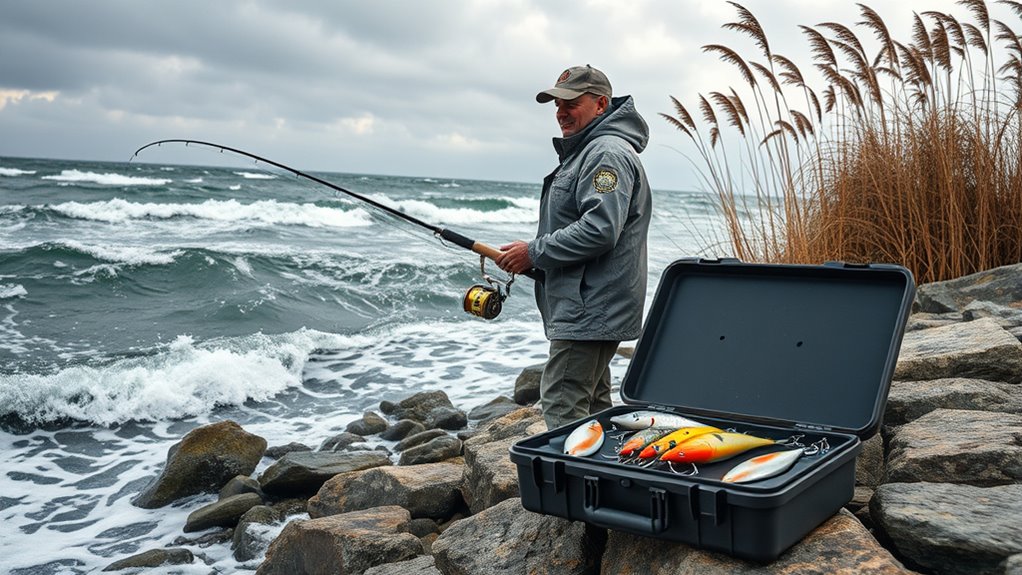
There is no single rod, reel, or line setup that is best for every windy fishing situation. Match your tackle to the species, lure weight, depth, current, cover, and casting distance you expect.
For bass, pike, larger freshwater species, or inshore fishing, a medium or medium-heavy rod can provide useful casting control with heavier lures. Trout, panfish, finesse fishing, and other light-tackle situations may still call for lighter gear.
A reel that picks up line efficiently helps when crosswinds create slack or a boat drifts toward your lure. You do not need a specific gear ratio for every technique; the goal is simply to maintain contact with the presentation.
Braided line can be useful because its low stretch improves sensitivity and many thin-diameter braids cast well. Fluorocarbon and monofilament still have advantages in other situations, so line choice should follow the technique rather than wind alone.
Heavier lures, jigheads, or sinkers can reduce line bow and improve accuracy, but use only enough weight to maintain control. Too much weight can change lure action or cause unnecessary snagging.
Windproof or waterproof outerwear, polarized sunglasses, secure footwear, and a properly fitted personal flotation device become increasingly important as conditions deteriorate.
Windy-Day Fishing Gear Checklist
- Rod matched to lure weight: Use enough power to control the presentation without automatically oversizing the tackle.
- Reel with reliable drag and line pickup: Helps manage slack and moving fish.
- Appropriate line: Braid can reduce stretch and line diameter; mono or fluorocarbon may suit other techniques better.
- Heavier jigheads or sinkers when needed: Add only enough weight to maintain bottom or lure contact.
- Reaction baits: Spinnerbaits, vibrating jigs, crankbaits, spoons, and swimbaits can cover turbulent water efficiently.
- Polarized sunglasses: Help you read water color, cover, waves, and shallow hazards.
- Personal flotation device: Wear a properly fitted PFD when boating or kayaking.
- Communication and safety gear: Carry the equipment appropriate for your water, distance from shore, and local boating requirements.
Fishing Techniques and Strategies in Windy Conditions
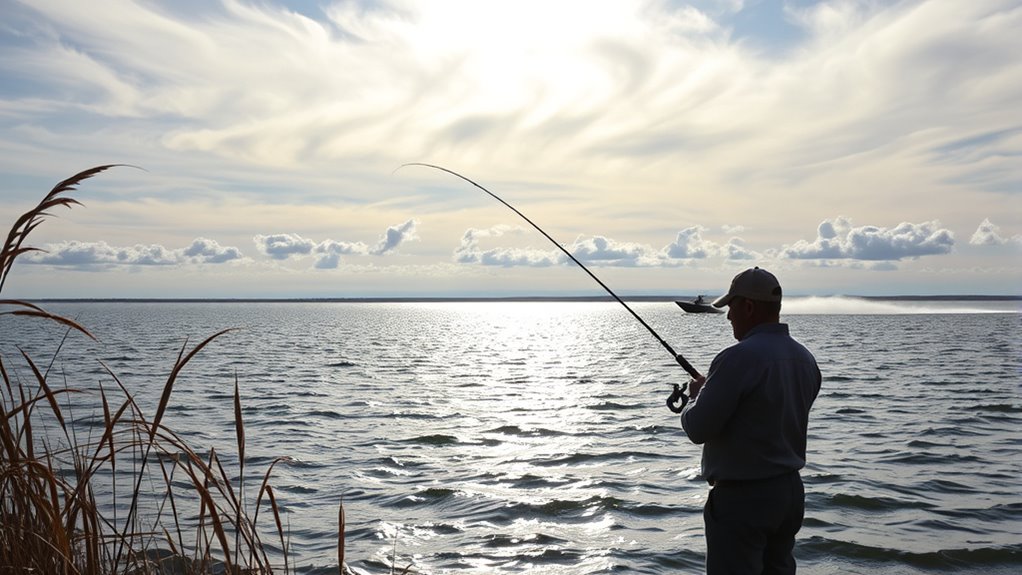
Use wind to narrow the search area instead of fighting it everywhere. Start by identifying where the wind has had enough time and distance to move surface water, create chop, change water clarity, or concentrate forage.
- Cast with or quartering across the wind when possible for easier distance and control.
- Use enough lure or sinker weight to maintain contact without overpowering the presentation.
- Target wind-blown banks, points, grass lines, riprap, docks, reefs, and bridge pilings when conditions are safe.
- Look for mud lines or color transitions where stirred water meets cleaner water.
- Seek sheltered water behind islands, bluffs, jetties, points, seawalls, or shoreline bends when exposed water becomes difficult.
- Watch wind-driven current because it can change bait position and boat drift.
- Keep the rod tip lower when appropriate to reduce line bow.
- Shorten casts when crosswinds make long casts inaccurate.
- Use moving or vibrating lures when fish are actively chasing in stained or choppy water.
- Slow down with jigs, soft plastics, live bait, or other controlled presentations when fish stop chasing.
Pro Tip: Start on a safely fishable windward bank, then look for a second clue such as baitfish, birds, a mud line, grass, rock, a point, or a depth change. Wind tells you where to look; visible forage and structure tell you where to cast.
How to Cast Better in the Wind
Keep casts lower and more direct so the lure spends less time being pushed sideways. Sidearm or compact casts often work better than high overhead casts in a crosswind.
If you use a baitcaster, increase braking or spool control before repeatedly casting into a headwind. With spinning gear, close the bail by hand after the cast and remove excess slack before starting the retrieve.
With wind behind you, use it for distance without sacrificing accuracy. Into a headwind, choose a more aerodynamic or slightly heavier lure, lower the trajectory, and shorten the cast. In a crosswind, aim slightly upwind when necessary so the lure finishes near the target.
Where Fish Position on Windy Days
On lakes and ponds, check wind-facing points, rocky banks, shallow flats, grass edges, dock lines, and the cleaner edge of stirred water. Do not assume every fish moves onto the windward bank; depth, temperature, forage and cover still control fish position.
In rivers, combine wind with the underlying current. Eddies, seams, shoreline cover, points, bridge pilings, and slack-water pockets can remain more important than wind alone.
In saltwater, wind interacts with tide and swell. Check beaches, jetties, marsh drains, oyster bars, flats, passes, and bridge structure where bait is being moved. If the wind turns a productive flat into opaque, excessively rough water, move toward the nearest protected or cleaner edge.
Best Lures to Use in Windy Weather
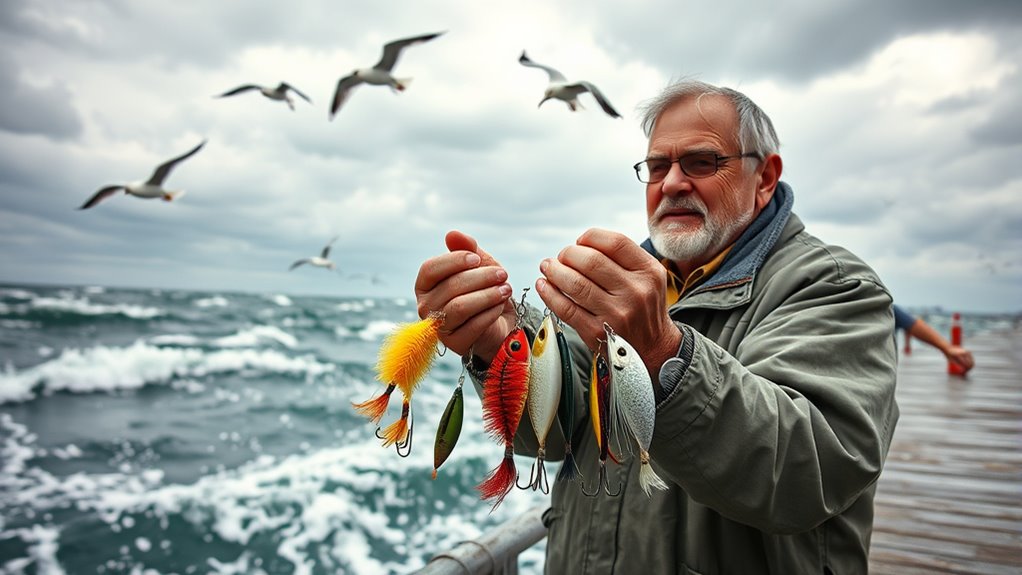
In wind, choose lures according to three practical needs: castability, depth control, and detectability. A good windy-day lure should reach the target without excessive line bow, stay in the intended depth range, and give fish enough movement, vibration, flash, silhouette, or water displacement to locate it.
Heavier or more aerodynamic lures often cast more accurately than very light presentations. In stained or turbulent water, vibration and contrast can help. In clear water, natural baitfish colors may remain effective even when waves are present.
Choose a windy-day lure because you can cast it accurately and control its depth and action—not simply because it is heavy or loud.
Top Lure Types for Windy Days
- Spinnerbaits: Useful around stained water, grass, wood, and wind-blown banks because they combine flash and vibration.
- Vibrating jigs: Strong vibration can help cover water around grass, flats, and shallow structure.
- Crankbaits: Good for covering rock, points, riprap, flats, and other defined depth zones.
- Spoons: Aerodynamic shapes can cast efficiently and provide flash in both freshwater and saltwater.
- Swimbaits: Useful when wind concentrates baitfish along points, flats, grass lines, and shoreline structure.
- Jigs: Help maintain bottom contact around rocks, docks, deeper cover, and post-front fish.
- Topwater lures: Can work in light or moderate chop, but heavy waves may make small surface lures harder to control or detect.
Importance of Tides in Fishing
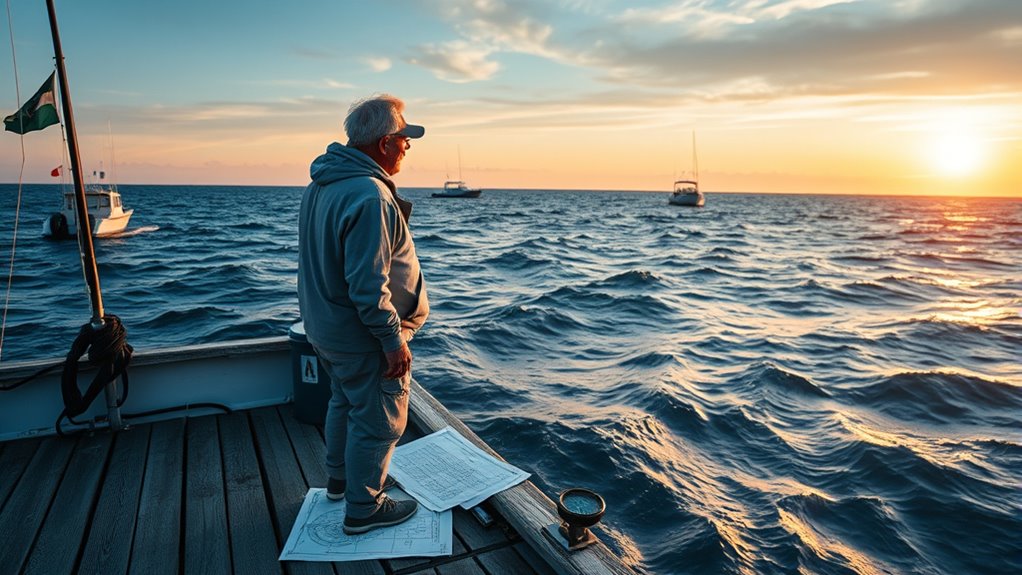
In saltwater and tidal rivers, wind should be read together with tide and current. Moving water can position bait and predators around cuts, drains, creek mouths, bridges, oyster bars, sandbars, points, and channel edges.
A tide table tells you the expected water-level cycle, while local current predictions help show when and how strongly water is expected to move. Actual conditions can also be influenced by sustained wind and weather.
- Tidal stage can change fish access to flats, marshes, channels, and shoreline cover.
- Moving current often creates feeding lanes around structure and depth changes.
- Wind opposing current can make waves steeper and rougher.
- Wind traveling with current can alter drift speed and boat positioning.
- Tidal range and current strength vary greatly by location.
- Use local tide and current predictions rather than assuming the same timing applies everywhere.
Note: Wind and current can reinforce or oppose each other. When they oppose, waves can become steeper and more closely spaced, so check the actual water rather than relying only on the forecast wind number.
Offshore Weather Considerations for Safe Fishing
Offshore decisions require more than a wind-speed forecast. Check the National Weather Service marine forecast, buoy observations, wave height, wave period, swell direction, tides, current, visibility, thunderstorms, and current advisories before leaving.
Marine forecasts commonly provide wind speed and direction, wave information, and significant weather. Conditions can also vary across the forecast area, so plan for changes rather than assuming the published range describes every mile of water.
Wave period deserves particular attention. Two forecasts with similar wave heights can feel very different if one has steep, closely spaced waves and the other has longer spacing. Wind direction versus swell or current direction can also change how rough the water becomes.
Many coastal areas develop stronger afternoon wind on some weather patterns, but that is not universal. Use the local hourly and marine forecast to choose departure and return times, and leave enough margin to get home before conditions deteriorate.
What to Check Before Fishing Offshore
- Wind speed and gusts: Gusts may be substantially stronger than sustained wind.
- Fetch: Long open-water exposure allows larger waves to develop.
- Wave height: Larger waves increase workload and risk.
- Wave period: Shorter spacing can create steep, uncomfortable seas.
- Wind versus swell direction: Opposing directions can produce confused or rough conditions.
- Tide and current: Strong flow can increase drift and make inlets, passes, bars, and channels more demanding.
- Thunderstorms: Lightning and sudden wind shifts are reasons to seek safe shelter rather than continue fishing.
- Marine advisories: Read the actual advisory and local criteria instead of relying on a generic mph threshold.
- Float plan: Tell someone your route and expected return time.
Bank, Kayak, and Boat Fishing in the Wind
The same forecast can mean very different things to a bank angler, kayak angler, and boat angler. Match your plan to how exposed you will be and how easily you can retreat.
Bank anglers can often move to protected shorelines or position the wind behind them for easier casting. Avoid slippery rock, breaking waves, exposed jetties, seawalls, unstable banks, and any location where rising water or surf could cut off the return route.
Kayak anglers should be conservative. Wind can push a kayak away from shore or a launch quickly, especially when the return trip requires paddling into the wind. Wear a properly fitted life jacket, stay within water you can manage, carry a communication device and whistle, and avoid exposed crossings when conditions are deteriorating.
Boat anglers need to consider hull size and design, freeboard, engine reliability, fuel or battery reserve, passenger experience, fetch, wave conditions, and the distance to safe harbor. A sheltered cove and an exposed main lake are not equivalent even when the forecast wind speed is identical.
Related Guides
Frequently Asked Questions
What are good wind conditions for fishing?
About 5 to 15 mph is a useful starting range for many freshwater fishing situations because it creates surface movement without automatically making casting difficult. It is not a safety threshold. Also consider gusts, fetch, waves, current, water temperature, your craft, and local advisories.
Is a 15 mph wind strong for fishing?
A 15 mph wind falls within the NWS Beaufort Moderate Breeze range of 13 to 18 mph. It can create useful chop but also makes casting and boat control more demanding. Whether it is manageable depends on fetch, gusts, waves, waterbody, craft, and experience.
Can you fish in 25 mph winds?
Fishing from a protected shore may still be possible in some locations, but 25 mph begins the Strong Breeze range on the NWS Beaufort scale and can create difficult open-water conditions. For boating or kayaking, check gusts, waves, fetch, current, local advisories, and the limits of your craft before deciding whether to launch.
Is 20 mph wind strong for boating?
A 20 mph wind is within the NWS Beaufort Fresh Breeze range of 19 to 24 mph, where many whitecaps can develop on exposed water. It can be demanding for small boats and kayaks, especially with long fetch or stronger gusts. Use the local marine forecast, waves, advisories, boat capability, and experience rather than wind speed alone.
Do fish bite better when it is windy?
Wind can improve fishing when it moves forage, creates manageable chop, reduces light penetration, or forms feeding lanes around structure. It does not guarantee a better bite. Water temperature, season, forage, pressure trends, current, clarity, depth, and fishing pressure still matter.
Should you fish the windy side or calm side?
Start with the windward side when it is safe because wind-driven water can concentrate food and create active feeding areas around points, banks, grass, rock, and other structure. Move toward protected water or a cleaner-water edge if waves become unsafe or the windward bank turns excessively muddy.
Conclusion
Wind conditions for fishing are best judged with more than one number. About 5 to 15 mph can be productive for many anglers, but the same wind speed can create completely different water conditions depending on direction, fetch, gusts, current, waves, and shoreline exposure.
Use the wind to find food and structure: check windward points, banks, flats, grass, rock, docks, reefs, current seams, and color changes. Then adjust casting angle, lure weight, line control, and boat position to match what you see.
For safety, check the local forecast and advisories before launching. Pay attention to wave height and period, thunderstorms, current, water temperature, your craft, and the route home. A productive wind is useful only when you can fish it safely.
Sources
- National Weather Service Marine Forecasts — supports checking marine wind, wave, significant-weather, and advisory conditions.
- National Weather Service Safe Boating — supports planning for changing weather and hazardous boating conditions.
- National Weather Service Beaufort Wind Scale — supports the Moderate, Fresh, and Strong Breeze wind-speed classifications used in this guide.
- NOAA Tides & Currents — supports tide, current, water-level, and coastal planning guidance.
- U.S. Coast Guard Boating Safety — supports general recreational boating preparation and safety guidance.
