No new Toyota RAV4 sold in the United States has a six-cylinder engine. Toyota offered an optional 3.5-liter V6 from the 2006 through 2012 model years, then removed it when the fourth-generation RAV4 arrived for 2013. The all-new 2026 lineup uses hybrid and plug-in-hybrid systems built around a 2.5-liter four-cylinder engine.
Quick Answer
No new Toyota RAV4 uses a six-cylinder engine. In the U.S., Toyota offered a 3.5-liter V6 from the 2006 through 2012 model years. The V6 disappeared with the 2013 redesign. For 2026, every RAV4 uses a 2.5-liter four-cylinder hybrid or plug-in-hybrid powertrain.
Key Takeaways
- The Toyota RAV4 V6 was available in the United States from 2006 through 2012.
- The 2012 RAV4 was the final model year with the optional 3.5-liter V6.
- The 2026 RAV4 is available only as a hybrid or plug-in hybrid, although both systems still use a 2.5-liter four-cylinder gasoline engine.
- The old V6 produced 269 horsepower and could tow up to 3,500 pounds when properly equipped with the towing package.
- A 2026 RAV4 Plug-in Hybrid produces 324 net combined horsepower, making it more powerful and quicker than the old V6.
- Certain 2006–2009 RAV4 V6 vehicles were included in Toyota Limited Service Campaign 90K for a VVT-i oil hose that could degrade and leak, so used buyers should verify repair history.
Last updated: September 19, 2026
The Evolution of the Toyota RAV4: A Brief Overview
Toyota introduced the RAV4 in Japan in 1994 and brought it to the United States for the 1996 model year. Its unitized body, independent suspension, raised ride height, and available all-wheel drive helped establish the modern compact crossover format.
The first U.S. RAV4 came in three-door and five-door forms with a 2.0-liter four-cylinder engine. Toyota introduced the second generation in 2000, with U.S. second-generation models commonly listed as 2001–2005 model years; it brought more interior room and a five-door-only body.
The third generation, sold for the 2006 through 2012 model years, grew considerably and offered optional third-row seating. It was also the only RAV4 generation sold in the United States with a V6 engine.
The 2006–2012 RAV4 was the only U.S. generation available with Toyota’s 3.5-liter V6.
Toyota launched the fourth-generation RAV4 for 2013 with a four-cylinder-only lineup. The first RAV4 Hybrid followed for the 2016 model year. A fifth generation arrived for 2019, and the first RAV4 plug-in hybrid joined the lineup for 2021.
The sixth-generation 2026 RAV4 completes another major change. Toyota now sells the U.S. model exclusively with hybrid or plug-in-hybrid powertrains.
Why Did Toyota Discontinue the RAV4 V6 Engine?
Toyota removed the V6 when it redesigned the RAV4 for the 2013 model year. The company replaced the previous generation’s four-speed and five-speed automatic transmissions with a six-speed automatic paired with a 2.5-liter four-cylinder engine.
At the 2013 RAV4 reveal, Toyota said the segment was moving toward greater fuel efficiency and pointed to the Highlander for shoppers who needed more power. Toyota’s launch material also confirms that the previous generation’s optional V6 was discontinued, but it does not assign the decision to one publicly documented sales percentage.
The old V6 delivered strong acceleration, but its fuel use was higher than that of the four-cylinder models. Toyota rated the 2012 V6 at 19 MPG city and 27 MPG highway with front-wheel drive, or 19 city and 26 highway with four-wheel drive.
Note: Claims that V6 sales fell below a specific percentage should not be treated as established fact unless they are supported by Toyota sales data. Toyota’s official material confirms the model change, but not that frequently repeated percentage.
Which Toyota RAV4 Model Years Had a V6?
The RAV4 did not move from a V6 directly to its current powertrain. Its engine history includes several distinct stages:
| U.S. Model Years | Main Powertrain Choices | V6 Available? |
|---|---|---|
| 1996–2005 | Four-cylinder gasoline engines | No |
| 2006–2012 | Four-cylinder or optional 3.5-liter V6 | Yes |
| 2013–2015 | 2.5-liter four-cylinder gasoline engine | No |
| 2016–2018 | Gasoline four-cylinder or hybrid | No |
| 2019–2025 | Gasoline, hybrid, or plug-in hybrid, depending on year | No |
| 2026 | Hybrid or plug-in hybrid only | No |
A current RAV4 still contains a four-cylinder gasoline engine, but the engine does not work alone. Electric motors assist it, and Toyota reports the vehicle’s total output as net combined system horsepower.
This distinction explains why comparing the old V6’s engine horsepower with a modern hybrid’s total system horsepower requires care. The current figures include gasoline and electric propulsion working together.
How Does the 2026 RAV4 Compare With the Old V6?
For 2026, the RAV4 Hybrid combines a 2.5-liter four-cylinder engine with Toyota’s fifth-generation hybrid system. Front-wheel-drive versions produce 226 net combined horsepower, while all-wheel-drive versions produce 236 net combined horsepower.
These figures replace the 203-horsepower gasoline-engine and 219-horsepower hybrid specifications associated with the outgoing fifth-generation lineup.
Power Output Comparison
| Powertrain | Output | Key Characteristic |
|---|---|---|
| 2006–2012 3.5L V6 | Up to 269 horsepower | Strong acceleration and up to 3,500-pound towing capacity with the towing package |
| 2026 Hybrid FWD | 226 net combined horsepower | Highest fuel-economy configuration in the standard hybrid range |
| 2026 Hybrid AWD | 236 net combined horsepower | Rear electric motor provides electronic on-demand all-wheel drive |
| 2026 Plug-in Hybrid AWD | 324 net combined horsepower | Most powerful current RAV4, with a Toyota-listed 5.4-second 0–60 mph time |
The old V6 remains appealing because of its conventional power delivery and five-speed automatic transmission. However, the 2026 Plug-in Hybrid produces substantially more total power and accelerates more quickly.
Towing capacity cannot be determined from horsepower alone. Toyota advertises a maximum 2026 RAV4 towing capacity of 3,500 pounds, but the exact rating depends on grade and drivetrain. For example, Toyota lists 1,750 pounds for the 2026 LE AWD and 3,500 pounds for qualifying AWD configurations. For model-specific limits, see our Toyota RAV4 towing capacity guide.
Warning: Installing a hitch does not increase a RAV4’s factory towing rating. Check the owner’s manual, certification label, hitch rating, trailer weight, cargo load, and grade-specific limit before towing.
Fuel Efficiency Ratings
The most efficient 2026 RAV4 Hybrid configuration carries an estimated rating of up to 47 MPG city and 40 MPG highway. Actual ratings vary by grade, drivetrain, wheels, tires, weather, speed, and driving conditions.
The old 2012 V6 was rated at 19 MPG city and 27 MPG highway with front-wheel drive, or 19 city and 26 highway with four-wheel drive.
The comparison shows the central tradeoff. The V6 offers traditional engine sound and response, while the current hybrid systems provide much better fuel economy without making the RAV4 slow.
What Replaced the RAV4 V6?
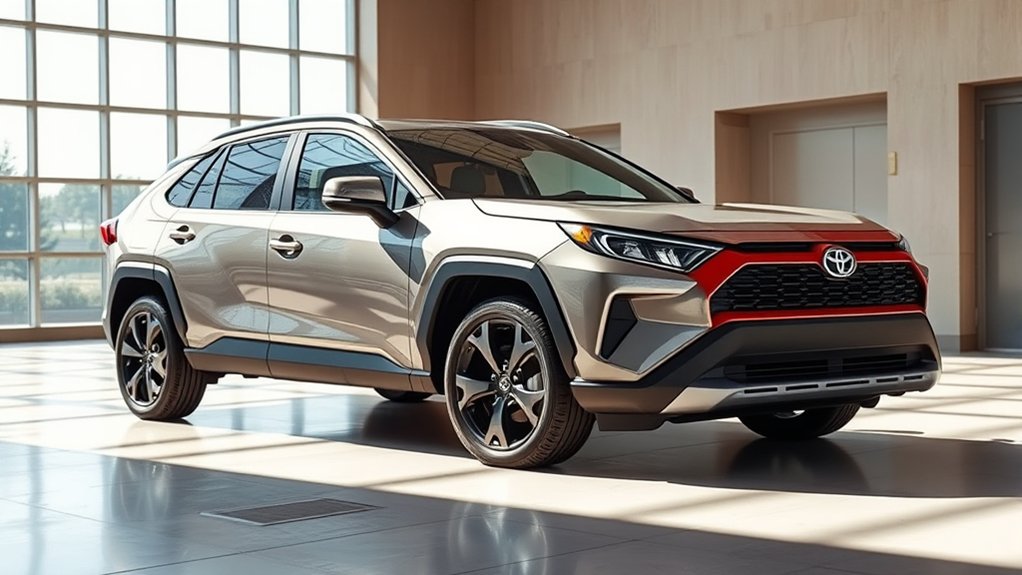
The 2026 RAV4 lineup has two basic powertrain types: Hybrid Electric Vehicle and Plug-in Hybrid Electric Vehicle. Toyota used the RAV4 Prime name through the 2024 model year and renamed it RAV4 Plug-in Hybrid for 2025, so “RAV4 Prime” still appears in used listings and older reviews.
Hybrid Powertrain Benefits
The standard RAV4 Hybrid does not need to be plugged in. Its gasoline engine, electric motors, battery, and regenerative braking system manage energy automatically while you drive.
- Front-wheel-drive versions produce 226 net combined horsepower.
- All-wheel-drive versions produce 236 net combined horsepower.
- The most efficient configuration reaches an estimated 47 MPG city and 40 MPG highway.
- Electronic on-demand AWD uses a dedicated rear electric motor instead of a mechanical driveshaft to the rear axle.
- Available towing capacity varies by trim and can reach 3,500 pounds on qualifying AWD models.
The hybrid is the most straightforward current choice when you want improved fuel economy without regular charging. For the system itself, see our guide to how the Toyota RAV4 Hybrid engine works.
RAV4 Plug-in Hybrid Features
The 2026 RAV4 Plug-in Hybrid combines a 2.5-liter four-cylinder engine, a larger rechargeable battery, and electric motors. Toyota lists 324 net combined horsepower and a 5.4-second 0–60 mph time.
The SE carries an EPA-estimated all-electric range of up to 54 miles. Range differs by grade, equipment, temperature, speed, climate-control use, and other conditions.
All-wheel drive is standard on the plug-in hybrid, but charging hardware differs by grade. The 2026 Woodland and XSE use an 11-kW onboard AC charger and a CCS1 port with DC fast-charging capability. The SE and GR SPORT use a 7-kW onboard charger and a J1772 port for Level 1 and Level 2 AC charging. For charging setup details, see our RAV4 Plug-in Hybrid charging guide.
Pro Tip: Choose the regular Hybrid when you cannot charge consistently. Consider the Plug-in Hybrid when you can charge at home and want stronger acceleration plus meaningful electric-only driving.
What Do Owners Miss About the RAV4 V6?
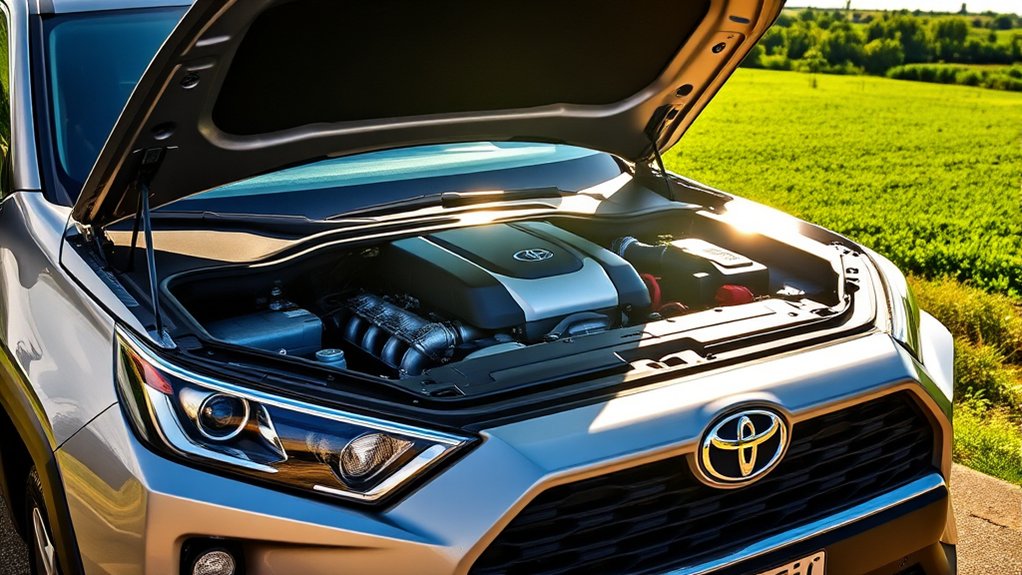
Drivers who prefer the old RAV4 V6 usually focus on its uncomplicated power delivery, strong passing performance, and towing capability. Toyota’s 3.5-liter 2GR-FE engine produced up to 269 horsepower and 246 pound-feet of torque in the 2012 model.
- Acceleration: Toyota reported that the third-generation V6 could reach 60 mph in approximately 6.3 seconds.
- Towing: A properly equipped V6 model with the optional towing package could tow up to 3,500 pounds.
- Highway response: The V6 provided immediate power without relying on electric assistance or a turbocharger.
- Used-market value: It remains one of the few compact crossovers from its period with a naturally aspirated six-cylinder engine.
- Mechanical character: Some owners simply prefer the sound and feel of a conventional V6 and automatic transmission.
However, a V6 badge does not automatically make a used vehicle the better purchase. Condition, maintenance history, corrosion, accident repairs, tire age, fluid leaks, and recall completion matter more than the cylinder count alone.
How Did RAV4 Powertrains Change After the V6?
The RAV4’s powertrain changes reflect a long development path rather than one sudden decision. Toyota first removed the V6, later introduced the RAV4 Hybrid, added a plug-in hybrid, and finally moved the 2026 lineup entirely to electrified powertrains.
| Priority | Effect on the RAV4 | Current Result |
|---|---|---|
| Fuel economy | Greater use of hybrid assistance | Up to an estimated 47 city/40 highway MPG |
| Performance | Electric motors add immediate torque and total system output | Up to 324 net combined horsepower |
| Electric driving | Larger battery and external charging | Up to 54 EPA-estimated electric miles on the Plug-in Hybrid SE |
| Utility | Grade-specific AWD and towing hardware | Up to 3,500 pounds of towing capacity on qualifying models |
The result is not a return to six cylinders. Toyota now uses electric assistance to deliver the power, efficiency, and traction expected from a modern compact SUV.
Which RAV4 Fits Your Priorities?
The best RAV4 for you depends on what you liked about the V6:
- You specifically want a RAV4 with six cylinders: Shop for a well-maintained 2006–2012 RAV4 equipped with the 3.5-liter V6.
- You want the quickest RAV4: The 2026 RAV4 Plug-in Hybrid produces 324 net combined horsepower and is quicker than the old V6.
- You want strong towing capability: Compare qualifying 2026 AWD grades rated for up to 3,500 pounds, and verify the exact rating before buying.
- You want lower fuel use without charging: Choose a current RAV4 Hybrid.
- You want a used RAV4 rather than a new one: Prioritize condition, maintenance records, campaign history, corrosion, and a pre-purchase inspection over the V6 badge alone.
A used V6 RAV4 and a new hybrid RAV4 serve different priorities. The used model provides traditional six-cylinder performance, while the new model adds modern safety, technology, fuel economy, and warranty coverage.
What Should You Check Before Buying a Used RAV4 V6?
Start with the model year. A U.S.-market RAV4 cannot be a factory V6 unless it is from the 2006 through 2012 model years.
Next, confirm the engine instead of relying on a seller’s description. The factory V6 is Toyota’s 3.5-liter 2GR-FE engine. You can check the underhood emissions label, service records, original window sticker, or VIN information.
The free NHTSA VIN Decoder can help identify vehicle details, although you should still inspect the vehicle and supporting records before purchase.
Used RAV4 V6 Buying Checklist
- Confirm that the model year is between 2006 and 2012.
- Verify the 3.5-liter V6 through the engine label, VIN records, or service documents.
- Review maintenance records for regular oil, coolant, brake-fluid, and transmission service.
- For certain 2006–2009 V6 models, verify whether Toyota Limited Service Campaign 90K was completed; it addressed a VVT-i oil hose that could degrade and leak.
- Inspect the engine, cooling system, transmission, suspension, brakes, and exhaust for leaks or damage.
- Check the body and undercarriage for corrosion, especially in areas that use road salt.
- Test every warning light, electrical accessory, climate-control function, and all-wheel-drive system.
- Use the VIN at the NHTSA recall lookup to check for open safety recalls.
- Arrange an independent pre-purchase inspection before exchanging money.
If towing matters, verify the exact model-year rating and whether the vehicle has the required factory towing package. Toyota stated that the optional tow package on the 2012 V6 increased maximum towing capacity to 3,500 pounds.
Note: A seller-installed receiver hitch does not prove that the original towing package is present. Confirm the equipment through records, part inspection, and the applicable Toyota owner’s manual.
Are RAV4 V6 Conversions Practical?
Installing a V6 in a RAV4 that was built with a four-cylinder engine is not a simple performance upgrade. The project may require changes to the engine, transmission, mounts, wiring harnesses, computers, fuel system, cooling system, exhaust, suspension, brakes, and drivetrain.
A modern RAV4 also integrates its powertrain with stability control, airbags, driver-assistance systems, immobilizers, emissions monitoring, and networked electronic modules. A running engine does not prove that the finished vehicle remains safe, reliable, or legally compliant.
Warning: Engine swaps can violate federal or state emissions rules if they disable, bypass, or make emissions-control systems ineffective. Consult qualified automotive engineers, your inspection authority, emissions regulators, and your insurer before beginning a conversion.
For most drivers, buying a factory-built 2006–2012 RAV4 V6 is safer and less expensive than attempting to convert a later four-cylinder RAV4.
What Does the Future Hold for the RAV4 Engine Lineup?
Toyota has not announced a future RAV4 V6 revival. Its current direction points the other way: every 2026 U.S. RAV4 uses either a hybrid or plug-in-hybrid powertrain.
The regular hybrid now offers 226 or 236 net combined horsepower, depending on drivetrain. The Plug-in Hybrid reaches 324 horsepower and can drive up to an EPA-estimated 54 miles on electricity in the SE configuration.
Toyota has not announced a RAV4 V6 return as of September 19, 2026. Future specifications can change with each model year, so treat any six-cylinder comeback claim as unconfirmed unless Toyota publishes it. For now, electric motors are the RAV4’s route to higher total system output.
Frequently Asked Questions
What year was the last Toyota RAV4 with a V6 engine?
The 2012 RAV4 was the final U.S. model year available with Toyota’s 3.5-liter V6. Toyota discontinued the V6 when the redesigned 2013 RAV4 arrived.
Which Toyota RAV4 model years offered a V6?
Toyota offered the optional 3.5-liter V6 in U.S.-market RAV4 models from 2006 through 2012. No earlier or later U.S. RAV4 model year had a factory V6.
Does the 2026 Toyota RAV4 have a gasoline-only engine?
No. The 2026 U.S. RAV4 lineup consists of hybrid and plug-in-hybrid models. Both use a 2.5-liter four-cylinder gasoline engine as part of an electrified system, but Toyota does not offer a gasoline-only 2026 RAV4.
Can every Toyota RAV4 tow 3,500 pounds?
No. Towing capacity varies by model year, powertrain, trim, drivetrain, and equipment. The old V6 required its towing package to reach 3,500 pounds. Toyota also limits some 2026 configurations to less than the advertised maximum.
What should I check on a 2006–2009 RAV4 V6?
Check maintenance records, inspect for oil leaks, and verify whether Toyota Limited Service Campaign 90K was completed if the VIN was affected. That campaign covered certain 2006–2009 RAV4 V6 vehicles with a VVT-i oil hose that could degrade and leak.
Are aftermarket RAV4 V6 conversions available?
You should not assume that a complete, emissions-compliant bolt-in conversion exists for your model. A V6 swap can require extensive mechanical, electronic, safety, and emissions work. Buying a factory-built 2006–2012 V6 is usually the more practical route.
How does the current RAV4 compare with the old V6?
The old V6 produced up to 269 horsepower and offered strong conventional acceleration. The 2026 Hybrid produces 226 or 236 net combined horsepower, while the Plug-in Hybrid produces 324 horsepower and accelerates more quickly than the old V6.
How have owners responded to the RAV4’s engine changes?
Owner opinions are mixed. Some enthusiasts still prefer the sound, simplicity, and towing performance of the old V6. Other drivers value the current hybrid lineup’s fuel economy, electric assistance, technology, and available plug-in range. No single opinion represents every RAV4 owner.
Does Toyota plan to bring back a RAV4 V6?
Toyota has announced no RAV4 V6 revival as of September 19, 2026. The sixth-generation lineup is fully electrified, with hybrid and plug-in-hybrid powertrains providing the available performance increases.
Conclusion
The Toyota RAV4 no longer offers a six-cylinder engine, but the V6 remained available much later than some sources claim. U.S. buyers could order the 3.5-liter V6 from 2006 through the final 2012 model year.
The current RAV4 follows a different performance strategy. Its four-cylinder hybrid systems use electric motors to improve response, efficiency, and traction. The 2026 Plug-in Hybrid’s 324 net combined horsepower also exceeds the old V6’s output.
If six-cylinder power is non-negotiable, the factory option is a well-inspected 2006–2012 RAV4 V6. A current Hybrid or Plug-in Hybrid better fits shoppers who prioritize fuel economy, newer technology, warranty coverage, and electric-assisted performance.
Sources
- Toyota: 2026 RAV4 — current fuel-economy, towing, and lineup information.
- Toyota: 2026 RAV4 Plug-in Hybrid — horsepower, electric range, and acceleration specifications.
- Toyota USA Newsroom: 25 Years of the RAV4 in North America — generation dates, model history, and V6 background.
- Toyota USA Newsroom: 2012 Toyota RAV4 — V6 horsepower, fuel economy, acceleration, and towing-package information.
- Toyota USA Newsroom: 2013 RAV4 Launch — confirmation that Toyota discontinued the previous generation’s V6.
- U.S. Environmental Protection Agency: Vehicle and Engine Tampering Policy — emissions considerations for engine and powertrain modifications.
- Toyota USA Newsroom: 2013 RAV4 Reveal — Toyota’s stated fuel-efficiency direction and V6 discontinuation context.
- Toyota USA Newsroom: 2026 RAV4 Arrival — 2026 towing and Plug-in Hybrid charging hardware by grade.
- Toyota USA Newsroom: 2025 RAV4 Plug-in Hybrid — confirmation that RAV4 Prime was renamed RAV4 Plug-in Hybrid for 2025.
- NHTSA: Toyota Limited Service Campaign 90K Extension — VVT-i oil-hose campaign details for certain 2006–2009 RAV4 V6 vehicles.

