When it comes to low light fishing, timing, lure choice, safety, and confidence all work together. Early mornings, late evenings, cloudy days, and full-dark periods can put bass in a feeding mood, especially around cover, shade lines, grass edges, docks, rocks, and baitfish activity. To maximize your success, you’ll want lures that bass can find through vibration, sound, profile, and natural movement, not just bright color. Understanding bass behavior during these twilight hours can greatly improve your catch rate and help you fish with more purpose when visibility drops.
Quick Answer
For low light bass fishing, focus on dawn, dusk, overcast conditions, and night hours near cover or baitfish. Use lures that create vibration, sound, silhouette, or subtle movement, such as spinnerbaits, chatterbaits, topwater baits, lipless crankbaits, jigs, Senkos, Ned rigs, and soft plastics.
Key Takeaways
- The best low light fishing windows are usually early morning, late evening, cloudy periods, and night hours when bass feel safer feeding shallow.
- Bass use sight, vibration, sound, scent, and their lateral line, so your lure does not need to be highly visible to work.
- Loud lures help you cover water, while finesse lures help you pick apart specific targets when bass are cautious.
- Dark colors often create a strong silhouette, while white, chartreuse, and reflective finishes can help when some light remains.
- Safe night fishing requires lights, organized gear, slower boat operation, weather awareness, and a clear plan before you launch.
At a Glance
| Best Time | Dawn, dusk, cloudy days, moonlit nights, and calm night periods near cover or baitfish |
| Difficulty | Moderate, because you must manage visibility, casting accuracy, lure feel, and safety |
| Best Lures | Spinnerbaits, chatterbaits, topwater plugs, lipless crankbaits, jigs, Ned rigs, Senkos, and soft plastics |
| Key Gear | Headlamp, spare batteries, pliers, landing net, life jacket, navigation lights, bug spray, and organized tackle |
Optimal Fishing Times for Low Light Success
When you plan your fishing trips, consider that the best times to hit the water are often during the early morning and late evening. Low-light conditions can boost fish activity because bass often feel less exposed while they move shallow to feed.
Many anglers see stronger bass movement around sunrise and sunset. During dawn and dusk, baitfish may also move along banks, grass lines, dock edges, laydowns, and points, which can draw hungry bass into reachable casting range.
To maximize your chances, arrive early and stay late. This gives you time to rig your rods, study the water, and take advantage of the feeding windows that can happen when light levels change.
Tournament anglers often prioritize these low-light hours for good reason. The right timing can improve your odds, especially when you pair it with accurate casting, quiet movement, and a lure that matches the mood of the fish.
Cloud cover, rain, wind, moon phase, water clarity, and seasonal temperature shifts can also affect the bite. A heavily overcast afternoon can fish like dusk, while a clear, bright morning may push bass tighter to shade or deeper cover sooner.
Pro Tip: Use the first 20 to 30 minutes after you arrive to watch for bait flickers, surface swirls, bird activity, bluegill popping near cover, or shad movement. Those small clues can tell you where to cast first.
Understanding Bass Behavior in Twilight Conditions
As daylight fades and twilight sets in, bass often become more active while searching for baitfish, crayfish, frogs, insects, and other easy prey. Reduced light can make prey more vulnerable, especially around edges where bass can ambush.
Bass have strong sensory tools that help them feed when visibility drops. Their lateral line helps them detect vibration and water displacement, which is why thumping blades, rattles, walking baits, and slowly moving soft plastics can still work well after dark.
During these hours, targeting structures like submerged rocks, fallen trees, dock posts, weed edges, riprap, brush piles, and dense vegetation is key. Bass often hold near these areas to ambush their next meal.
Targeting submerged rocks, fallen trees, dock edges, and dense vegetation is crucial because bass often use these places as ambush cover in low light.
Understanding that baitfish also feed and move during twilight can help you time your fishing efforts effectively. As full daylight approaches, bass may slide back toward deeper water, shade, or thicker cover, especially in clear water or heavy fishing pressure.
With this knowledge, you can plan your outings around these peak activity times, increasing your chances of a successful catch. Stay alert, and be ready to cast when you hear movement, see surface rings, or notice bait suddenly scattering.
Effective Lures for Attracting Fish in Low Light
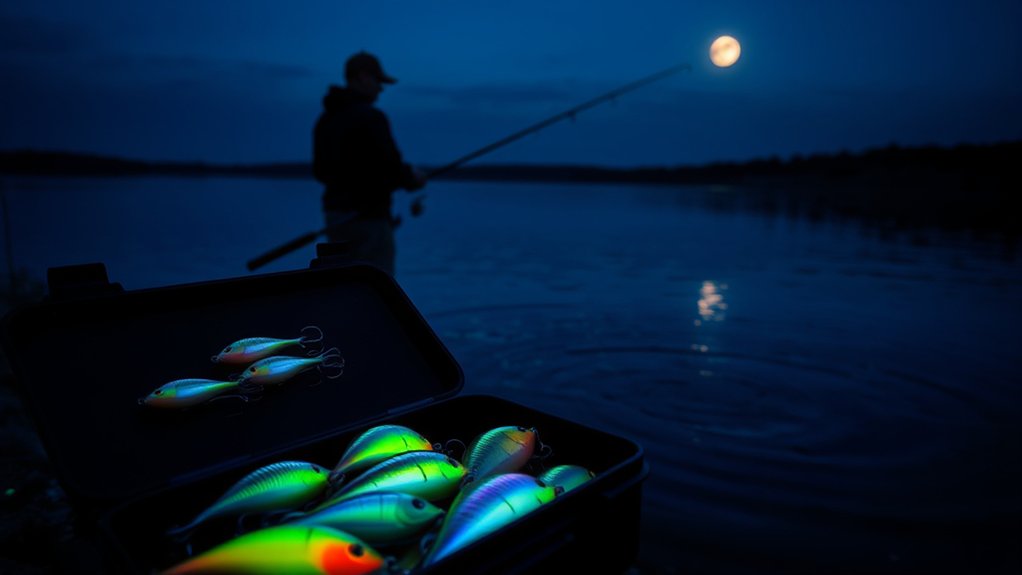
To effectively attract fish in low light conditions, choosing the right lures is essential. You’ll want options that create vibration, sound, silhouette, flash, water movement, or natural action.
Here are some effective choices:
- Spinnerbaits and lipless crankbaits: Their vibrations and flashes can lure bass even when visibility is low.
- Topwater baits: Try the Storm Arashi Top Walker during early mornings or late evenings for surface commotion that excites aggressive bass.
- Chatterbaits: These loud hardbaits provide auditory and vibration cues that help fish locate them in the dark.
Additionally, consider using finesse lures like weightless, wacky-rigged Zoom Fluke Sticks to target less aggressive bass while mimicking natural prey movement.
Don’t forget to use darker or vibrant colors based on the available light. Black, blue, and dark purple can create a clear silhouette at night, while white, chartreuse, chrome, gold, and IU-style finishes with green backs and white sides can help when some daylight or moonlight remains.
If the water is muddy, add more vibration or bulk. If the water is clear and calm, downsize your presentation and use a slower retrieve. Matching lure action to water clarity often matters more than choosing one “perfect” color.
Best Colors for Low Light Bass Fishing
Lure color matters in low light, but not always in the way anglers expect. When light is weak, bass often react to contrast, silhouette, vibration, and movement before they react to fine color detail.
Use these color guidelines as a starting point:
- Black, black-blue, and dark purple: Best for strong silhouettes at night, in muddy water, or under heavy cloud cover.
- White and pearl: Good around shad, open water, moonlight, and clear twilight conditions.
- Chartreuse and chartreuse-white: Useful in stained water, around wind-blown banks, or when you need extra visibility.
- Green pumpkin and watermelon: Strong choices for clear water, finesse fishing, grass, docks, and pressured bass.
- Chrome, gold, and reflective finishes: Helpful when baitfish are flashing near the surface during dawn or dusk.
When you are unsure, start with a dark lure for silhouette or a white lure for baitfish imitation. Then adjust after a few casts based on strikes, follows, short bites, or missed blowups.
Seasonal Considerations for Night Fishing
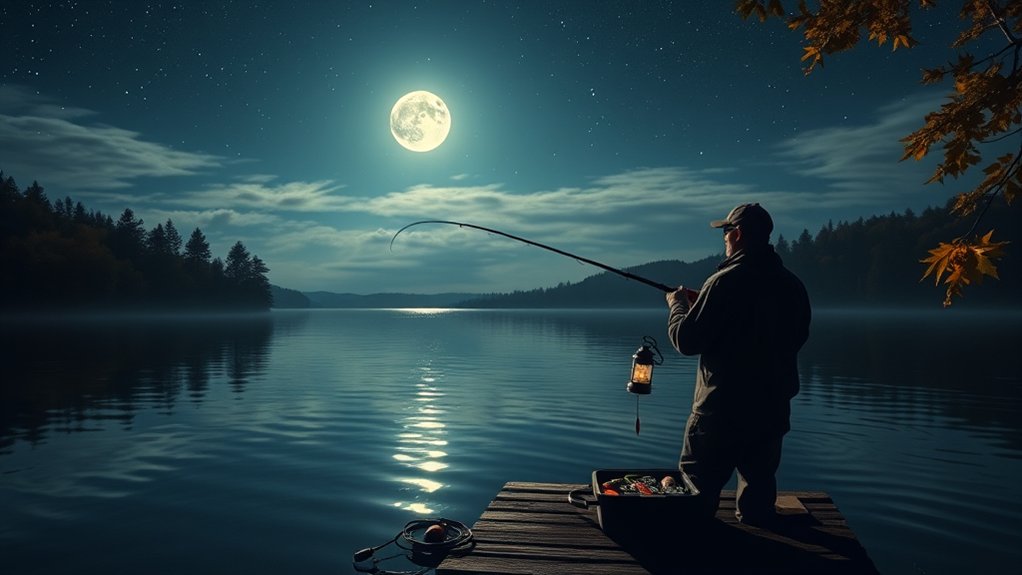
Fishing in low light can be rewarding throughout the seasons, but understanding seasonal considerations can greatly impact your success.
In late winter and early spring, cold water temperatures can still offer successful night fishing opportunities, especially during warming trends. Bass and baitfish may remain active, though they often hold near deeper breaks, rocky banks, channel swings, or steeper cover.
During seasonal changes, matching your lures to the bass’s diet is essential. This helps your bait mimic the natural prey available at that time, whether bass are feeding on shad, bluegill, crayfish, frogs, insects, or young baitfish.
In spring, focus on warming pockets, shallow cover, spawning flats, and nearby staging areas. In summer, night fishing can be excellent because bass may feed more comfortably after daytime heat fades.
In fall, baitfish movement becomes a major clue. Watch for shad, minnows, or surface feeding near creeks, points, and wind-blown banks. In winter, slow down and target high-percentage structure rather than covering too much water.
The Importance of Preparation and Timing
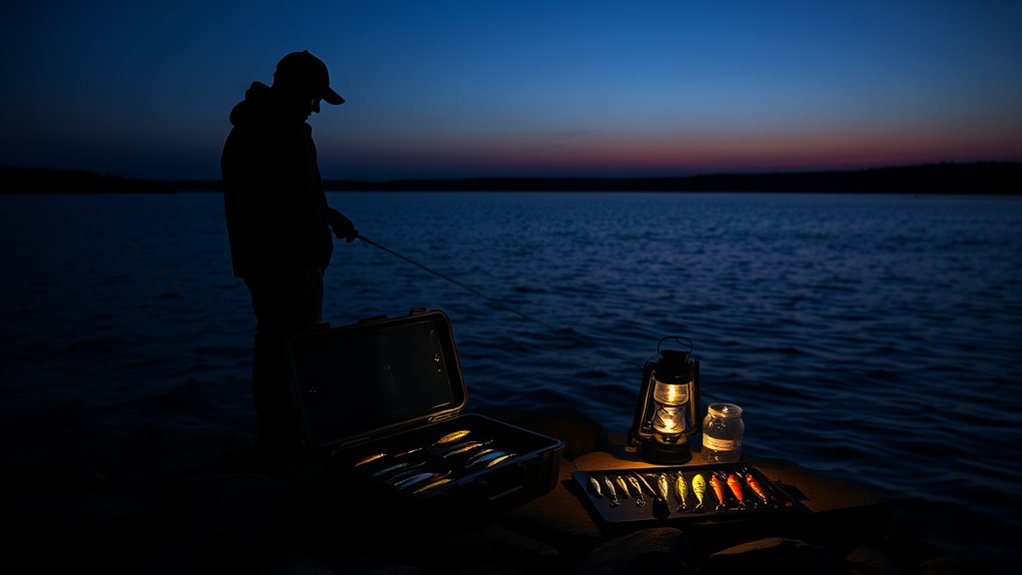
While many anglers underestimate the significance of preparation and timing, these factors can make all the difference in low-light fishing success. Arriving early and staying late on the water during dawn and dusk maximizes your chances of catching bass, as these are often peak feeding times.
To enhance your fishing experience, consider the following:
- Observe weather patterns to identify the best days for fishing.
- Select lures and techniques tailored to low-light conditions.
- Stay updated with local fishing reports to know when conditions are favorable.
Being adaptable and opportunistic during twilight can lead to increased success. By planning your trips around these critical times and preparing adequately, you position yourself to capitalize on the bass’s heightened activity.
Before you leave, rig several rods if possible. A topwater bait, spinnerbait, chatterbait, jig, and finesse soft plastic can cover most low-light situations without forcing you to retie constantly in the dark.
Also organize your tackle, pliers, scale, net, and light source before the bite starts. Low light fishing becomes much easier when every item has a place and you do not need to dig through a tackle bag with one hand.
Warning: If you fish from a boat after dark, use required navigation lights, wear a life jacket, slow down, watch for floating debris, and avoid unfamiliar hazards. Shore anglers should also carry a headlamp and watch their footing near rocks, mud, and steep banks.
Strategies for Using Finesse Tackle at Night
When you’re fishing at night, subtle presentations become essential for attracting wary bass.
Focus on targeting specific locations like drop-offs, grass edges, docks, riprap, laydowns, brush piles, and structure where fish are likely to hide.
Adjust your techniques based on conditions, experimenting with different retrieval speeds and pauses to maximize your chances of a bite.
Subtle Presentations Matter
Even in the darkness of night, subtle presentations can make all the difference in your fishing success.
When bass rely on their senses other than sight, finesse techniques become your best allies. Here are a few strategies to enhance your night fishing:
- Use small jigs with trailers or a weightless, wacky-rigged Zoom Fluke Stick for a natural, enticing movement.
- Opt for finesse lures that mimic the delicate motions of natural prey, drawing in even non-aggressive bass.
- Adjust your tactics to create quieter presentations, as bass may prefer less intrusive offerings in low light.
A slow fall, soft twitch, long pause, or gentle bottom drag can trigger bass that ignore faster lures. This is especially true on calm nights, pressured lakes, and clear-water fisheries.
Target Specific Locations
To maximize your success with finesse tackle at night, pinpointing specific locations is essential. Focus on casting near underwater structures, as bass often use these areas to ambush prey in low-light conditions.
Employ subtle presentations with lighter gear, like wacky-rigged Senkos or small jigs, to entice cautious bass that might be less aggressive after dark. A slow and steady retrieve mimics natural prey movements, enhancing your chances of attracting strikes.
Additionally, listen for auditory cues like splashes or disturbances on the surface. These can guide your casts to promising spots where bass may be feeding.
Experiment with varying depths and retrieve speeds based on water temperature and bass activity, as these factors influence their nighttime feeding behavior.
If you catch one fish, make several follow-up casts to the same target. Low light bass often group around productive cover, and one bite can reveal a small feeding zone.
Adjust Techniques Based On Conditions
Adjusting your techniques based on conditions is essential for successful night fishing with finesse tackle.
At night, bass rely more on their other senses, so using the right finesse strategies can make a difference. Consider these tactics:
- Use weightless, wacky-rigged soft plastics like the Zoom Fluke Stick for unique action.
- Focus on subtle presentations with small jigs or Ned rigs to entice bass.
- Employ loud, vibrating baits like chatterbaits to cover larger areas and create commotion.
Remember to adjust your fishing speed according to the bass’s behavior.
Slower retrieves may be necessary in specific spots or when bass are less aggressive. Experiment with various finesse baits to align with their nocturnal feeding habits for better success.
When bass short-strike a moving bait, follow up with a soft plastic. Cast to the same line, let it sink, and work it slowly through the strike zone.
Community Insights on Low Light Fishing Techniques
While fishing at night can be challenging, many anglers have found success by relying on a mix of techniques tailored for low light conditions. The fishing community emphasizes that bass can detect baits using tactile and auditory cues, not just visual ones. Finesse lures like Ned rigs and soft plastics often shine at night, despite visibility challenges.
Here’s a quick comparison of techniques based on community insights:
| Technique | Best Use | Expected Result |
|---|---|---|
| Loud/Vibrating Baits | Covering more water | Attracts fish in dark areas |
| Finesse Lures | Targeting specific spots | Subtle presentations yield success |
| Daytime Lures | Traditional methods | Mixed results at night |
| Adaptation | Adjusting based on conditions | Versatility in approach |
Ultimately, it’s all about finding what works for you and adapting your strategy to the bass’s behavior at night.
Some anglers start with loud lures until they find active fish, then slow down with finesse tackle. Others begin with subtle baits around known cover and only switch to louder options when they need to locate fish faster.
Adapting Lures Based on Light Conditions
As the light fades, adapting your lure selection becomes essential for successful bass fishing. In these low-light conditions, bass rely more on their other senses to locate prey, so choosing the right lures can make all the difference.
Here are some effective options to evaluate:
- Loud and vibrating baits like chatterbaits and topwater plugs to grab attention.
- Finesse lures such as Senkos and Ned Rigs for subtle presentations that entice bass.
- Spinnerbaits and lipless crankbaits to mimic baitfish movement and increase strike rates.
Remember to adjust the depth of your lures based on water temperature and seasonal changes, as bass can be more active and hunting for food during these times.
For shallow feeding bass, keep your lure high in the water column with topwater baits, wake baits, spinnerbaits, or weightless plastics. For inactive bass, let jigs, Texas rigs, Ned rigs, or soft plastics reach the bottom and work them slowly.
In stained water, use stronger vibration and a larger profile. In clear water, use natural colors, lighter line, longer casts, and quieter entries so you do not spook fish holding near shallow cover.
How to Build a Low Light Bass Fishing Plan
A simple plan helps you avoid random casting when visibility drops. Start by choosing a small area with multiple high-percentage targets, then rotate through lures until bass tell you what they want.
- Start with visible or audible activity. Cast near baitfish, surface swirls, frogs, bluegill beds, dock lights, or wind-blown banks.
- Cover water first. Use a spinnerbait, chatterbait, lipless crankbait, or topwater bait to find aggressive fish.
- Slow down after contact. If you get a bite, miss a fish, or see movement, follow up with a Senko, Ned rig, jig, or soft plastic.
- Repeat the best angles. In low light, casting angle can matter as much as lure choice. Bring the bait past cover naturally.
- Adjust every 15 to 20 minutes. Change depth, speed, lure size, color, or location if nothing happens.
This approach keeps you efficient. You cover enough water to find active bass, but you still slow down when a target deserves more attention.
Confidence in Casting in Obscured Environments
Casting into obscured environments can be challenging, but building confidence is essential for success in low-light conditions. Trusting your gear and instincts is key, as many successful catches occur where visibility is limited.
Pay attention to auditory cues like splashes or movement in the water. These sounds can guide your casting decisions and help you pinpoint where fish are feeding.
To enhance your success, adapt your casting approach to the unique challenges of low visibility. Fish often become more active and less wary in these conditions, so you have a better chance of making that perfect catch.
Practicing your casting technique in various light conditions will build your confidence, allowing you to make accurate casts even when you can’t see your target clearly.
Use short, controlled casts around docks, bushes, laydowns, and rocks until your accuracy improves. Long casts help in open water, but short casts can reduce snags and improve feel around tight cover.
Note: A headlamp helps with knots and fish handling, but keep it pointed down when possible. Bright light on the water can alert fish in shallow, clear conditions.
Success Stories: Real Experiences From Low Light Fishing
When it comes to low light fishing, many anglers have experienced impressive results that highlight the effectiveness of finesse tackle.
For instance, some partners in night tournaments have caught sizable bass using subtle presentations, proving that small jigs and soft plastics can attract fish even in total darkness.
These success stories show that bass rely on their senses beyond sight, making finesse techniques a valuable approach during nighttime fishing.
Night Tournament Triumphs
Although night tournaments can be challenging, many anglers have found success by adapting their strategies to low light conditions. For instance, one partner caught a 7 lb bass using finesse tackle, proving that subtle presentations can be effective.
Here are some key insights from successful night anglers:
- Small jigs with trailers excel in total darkness, showcasing finesse techniques’ versatility.
- Ned rigs can attract bass even when visibility is low, emphasizing the need for targeted approaches.
- Many anglers believe bass rely on their other senses at night, making smaller, less flashy lures more effective.
The lesson is simple: do not assume night fishing always requires the biggest, loudest lure. Loud baits have their place, but a small, natural-looking bait can still produce when bass are feeding carefully.
Finesse Tackle Success
Successful night anglers often turn to finesse tackle to maximize their chances in low light conditions. Many have reported impressive results using small jigs and Ned rigs, with one partner even landing a 7 lb bass during a night tournament.
Soft plastics, like Senkos and Flukes, thrive in these situations, drawing bass with their subtle presentation. Since bass rely on their other senses in the dark, smaller baits become more effective.
Nighttime fishing creates opportunities to use finesse lures that might be ignored during daylight hours. By adapting your tactics and targeting specific areas, you can greatly increase your success rate.
Embrace finesse techniques, and you’ll likely find yourself reeling in more trophies when the sun goes down.
Common Low Light Fishing Mistakes to Avoid
Low light fishing rewards patience, but a few common mistakes can cost you bites. Avoid rushing from spot to spot before you understand how bass are using the area.
- Fishing too fast: A fast retrieve can work, but slow down if bass miss the bait or only bump it.
- Ignoring shallow cover: Bass may move shallow at night, even on banks that look empty during the day.
- Using only one lure style: Rotate between loud search baits and subtle follow-up baits.
- Overusing bright lights: Light helps you work safely, but constant shining over shallow water can hurt your approach.
- Poor gear organization: Tangled rods, loose hooks, and buried pliers become bigger problems after dark.
- Skipping weather checks: Wind, lightning, fog, and sudden temperature drops can quickly change a safe trip into a risky one.
The best low-light anglers stay organized and flexible. They make every cast with a reason, then adjust when the fish give them feedback.
Frequently Asked Questions
What Is the 80/20 Rule in Fishing?
The 80/20 rule in fishing means that a large share of your catches often comes from a small share of your spots. Instead of fishing every inch of water, focus on high-activity areas like points, grass edges, docks, laydowns, rocks, baitfish schools, and current breaks.
How Do You Fish in the Dark?
To fish in the dark, prepare your gear before sunset, use a headlamp, slow your movements, and target cover where bass can ambush prey. Use loud lures to find active fish, then follow up with jigs, Senkos, Ned rigs, or soft plastics when bass act cautious.
What Is the 90/10 Rule in Fishing?
The 90/10 rule in fishing means that most fish are often found in a small percentage of the water. For low light bass fishing, that small percentage may include shade lines, shallow feeding flats, dock lights, grass edges, riprap, brush piles, and baitfish-heavy banks.
What Fish Bite the Most at Night?
Bass, catfish, walleye, crappie, pike, and muskie can all bite at night. The best species depends on your waterbody, season, weather, and local forage. For bass, target cover, baitfish movement, and shallow feeding areas during low light windows.
Are Dark Lures Better for Night Fishing?
Dark lures often work well at night because they create a strong silhouette against the surface or lighter background. Black, black-blue, and dark purple are reliable choices. Still, white, pearl, chartreuse, chrome, and gold can work when moonlight, dock lights, or remaining daylight help bass see baitfish.
Do Bass Bite Better at Sunrise or Sunset?
Both sunrise and sunset can be excellent. Sunrise often works well when bass feed after a quiet night, while sunset can trigger movement after daytime heat or pressure fades. Try both windows and track which one produces better on your lake.
Conclusion
In low light fishing, timing and technique are everything. As you head out during those twilight hours, you might find that the same submerged rocks, dock posts, or grass edges you’ve fished before hold a surprising number of bass today.
That loud chatterbait you dismissed last trip could help you locate aggressive fish, while a quiet Senko, Ned rig, or small jig could catch the bass that only follows or bumps a faster lure.
Trust your instincts, adjust your lures, and embrace the challenge. The best low-light fishing happens when you stay prepared, read the water, fish safely, and let the bass tell you whether they want sound, vibration, flash, silhouette, or subtle movement.