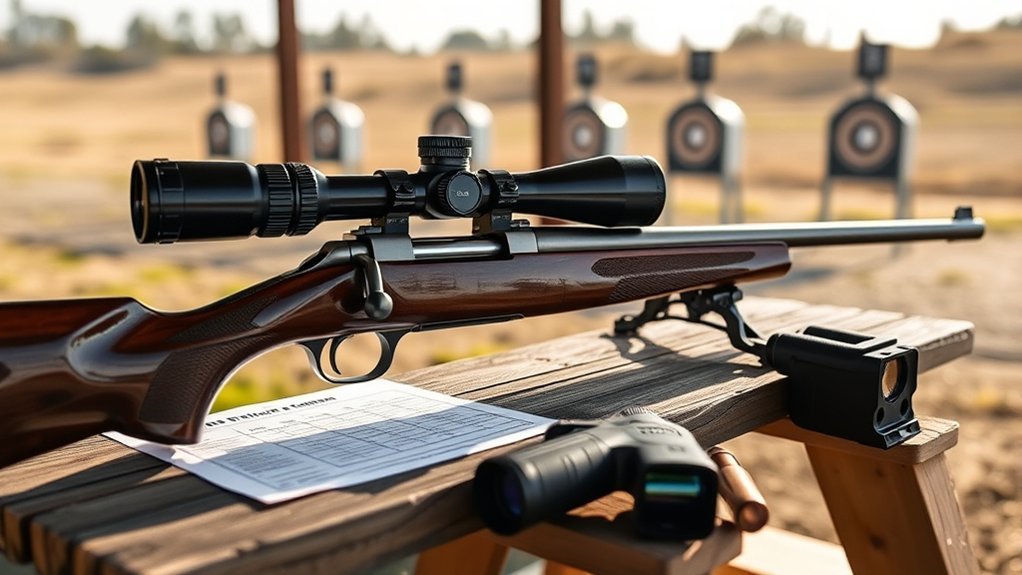
Manufacturers use 2-12x scope magnification because the range combines a relatively wide low-power view with substantially more image enlargement at the high end. That makes it useful for hunters who move between timber, fields, and other mixed terrain. However, magnification alone does not determine optical performance. Field of view, exit pupil, objective size, eye relief, parallax, reticle design, glass quality, and weight can differ significantly between two scopes that both say 2-12x.
Last updated: September 19, 2026
Quick Answer
Manufacturers choose 2-12x because it gives a sixfold magnification range in one general-purpose optic. The 2x setting favors a wider field of view, while 12x produces a larger apparent image. The format is versatile, but actual brightness, field of view, eye relief, parallax, and image quality depend on the individual scope.
Key Takeaways
- 2-12x is a 6:1 magnification range: 12 divided by 2 equals six.
- Lower magnification generally provides a wider field of view within the same scope.
- Higher magnification enlarges the apparent image but also narrows the visible area.
- A 2-12x label does not tell you the scope’s field of view, exit pupil, eye relief, parallax behavior, weight, or optical quality.
- Low-light performance depends on exit pupil, effective objective diameter, lens coatings, glass quality, and the user’s eye—not magnification alone.
- Compare the complete specification sheet rather than choosing a scope only by its magnification range.
What 2-12x Scope Magnification Means
A 2-12x variable-power scope can change from approximately twice the apparent image size of an unmagnified view to twelve times magnification. Because 12 divided by 2 equals six, manufacturers often describe this as a 6x zoom ratio.
The main advantage of 2-12x is not a specific shooting distance; it is the ability to move between a wider low-power view and a more enlarged high-power image without changing optics.
At 2x, a scope normally shows substantially more of the surrounding scene than it does at 12x. That wider view can make observation and tracking easier. Turning the scope toward 12x enlarges details but reduces the amount of the scene visible through the optic.
The magnification markings do not define every other optical characteristic. Two 2-12x scopes may have different objective diameters, field-of-view measurements, exit pupils, reticles, parallax systems, eye relief, weight, length, and glass quality.
Note: Treat “2-12x” as the magnification range, not as a complete performance specification. The manufacturer’s full data sheet matters just as much as the numbers printed on the magnification ring.
Why a 2-12x Scope Fits Many Hunting Conditions
A 2-12x scope is commonly positioned as a general-purpose hunting optic because the range can accommodate changing terrain without forcing the user to carry separate low- and high-magnification scopes.
The low end favors a wider view, while the upper end provides greater apparent image size. That combination can make the format practical for hunters who encounter both confined and open terrain during the same season.
Current products illustrate the category’s continued popularity across price tiers. Premium options from manufacturers including Nightforce and ZEISS sit alongside mid-range 2-12x scopes from brands such as Athlon, all built around hunting or mixed field use. The exact specifications differ — sometimes substantially — reinforcing why the magnification range should be considered only one part of the buying decision.
Warning: Never use a rifle scope as a substitute for binoculars when identifying unknown movement. Positively identify the target and confirm what is in front of it and beyond it before any firearm is pointed or fired.
How a 2-12x Scope Handles Lower and Higher Magnification
The usefulness of a 2-12x scope comes from moving between two different optical priorities. Lower settings emphasize visual coverage, while higher settings emphasize enlargement.
Neither end of the range automatically determines an appropriate shooting distance. Conditions, target size, optical clarity, stability, firearm capability, local rules, and the user’s demonstrated skill remain separate considerations.
Lower-Power Viewing
At or near 2x, a variable scope normally offers its widest field of view. That makes it easier to see more of the surrounding area through the optic and reduces the tunnel-like effect associated with high magnification.
Actual field of view is model-specific. For example, the Nightforce NX6 2-12×42 is specified at approximately 50 feet at 100 yards on 2x, the ZEISS Conquest V6 2-12×50 is specified at approximately 62 feet at 100 yards on 2x, and the mid-range Athlon Helos BTR GEN2 2-12×42 publishes about 55.7 feet at 100 yards on 2x [VERIFY: confirm against Athlon Optics’ own manufacturer spec sheet].
Those figures show why statements such as “all 2x scopes have the same field of view” are incorrect. Optical design matters as much as the magnification marking.
Higher-Power Detail
At 12x, the target image appears larger than it does at 2x, which can make fine visual details easier to see. The trade-off is a narrower field of view and usually a smaller exit pupil.
On the same Nightforce NX6 example, field of view falls from about 50 feet at 100 yards on 2x to about 10 feet on 12x. ZEISS publishes a similar high-end figure of about 10 feet at 100 yards for its Conquest V6 2-12×50, and the Athlon Helos BTR GEN2 falls to about 9.6 feet at 12x [VERIFY: confirm against Athlon Optics’ own manufacturer spec sheet] — all three land in a tight band despite the price difference between them.
Higher power also makes normal movement in the sight picture appear more obvious. For that reason, maximum magnification is not automatically the most useful setting in every circumstance.
How a 2-12x Scope Balances Field of View
Field of view describes how much horizontal area can be seen through the scope at a stated distance. It normally becomes narrower as magnification increases.
That relationship explains much of the appeal of the 2-12x format. The user can select a broad view at the low end and switch to a more enlarged but narrower view when more visual detail is useful.
Wide Low-End View
In practice, that wider low-power view matters most in three situations: tracking a moving animal through brush, keeping peripheral awareness of a hunting partner or what is beyond the target, and re-acquiring a target quickly after a shot. None of those tasks require resolving fine detail — they require seeing more of the scene at once, which is exactly what a larger field-of-view figure at low magnification provides.
However, field of view cannot be calculated accurately from magnification alone. Eyepiece design, internal optical construction, and other factors influence the published measurement.
Pro Tip: When comparing two 2-12x scopes, check their published field of view at both 2x and 12x. The scope with the same magnification numbers may still feel noticeably more open or more restrictive.
High-End Trade-Off
At 12x, image enlargement increases while field of view decreases. This is a normal optical trade-off rather than a flaw unique to 2-12x scopes.
The quality of the view at maximum magnification also depends on resolution, contrast, lens coatings, chromatic-aberration control, mechanical alignment, and environmental conditions. A larger magnification number cannot compensate for poor optical quality.
This is why comparing magnification alone can be misleading. A well-designed 2-12x scope may provide a clearer and more comfortable image than a higher-powered scope of poorer optical quality.
How 2-12x Magnification Affects Low-Light Viewing
Low-light performance is more complicated than saying that lower magnification “transmits more light.” A scope has an overall light-transmission percentage determined by its optical system, while the exit pupil describes the diameter of the light beam leaving the eyepiece.
In general, the exit pupil becomes smaller as magnification rises. ZEISS lists an exit pupil of approximately 9.7 mm at 2x and 4.2 mm at 12x for its Conquest V6 2-12×50. Nightforce lists approximately 7.5 mm at 2x and 3.5 mm at 12x for its NX6 2-12×42.
A larger exit pupil can make eye placement more forgiving and can help in dim conditions when the user’s pupil is large enough to use the available light. Objective size, effective lens diameter, coatings, optical transmission, contrast, and the viewer’s eyesight also affect the result.
Therefore, a 2-12×50 and a 2-12×42 should not be expected to behave identically simply because their magnification ranges match.
What the 2-12x Number Does Not Tell You
The most important buying mistake is treating magnification as the entire specification. Several other measurements have a direct effect on how a scope looks and feels in use.
| Specification | What It Describes | Why It Matters |
| Field of view | Width of the visible scene at a stated distance | Determines how much surrounding area is visible through the optic. |
| Exit pupil | Diameter of the light beam leaving the eyepiece | Influences eye-placement forgiveness and perceived brightness in dim conditions. |
| Eye relief | Distance between the eye and eyepiece for a full view | Affects comfort, mounting position, and clearance from the eyepiece. |
| Parallax | Relationship between the target image and reticle planes | Some scopes use a fixed setting; others provide adjustable parallax. |
| Objective diameter | Nominal diameter of the front lens | Interacts with magnification and optical design to influence exit pupil, size, and mounting height. |
| Focal plane | Whether the reticle is in the first or second focal plane | Determines how the reticle appears and how its subtensions behave as magnification changes. |
FFP vs. SFP in a 2-12x Scope
A 2-12x scope may use either a first focal plane (FFP) or second focal plane (SFP) reticle. Magnification range alone does not determine which design is used.
With an FFP scope, the reticle appears to grow and shrink with the image as magnification changes, so its angular subtensions remain proportional throughout the zoom range.
With an SFP scope, the reticle maintains approximately the same apparent size while the target image changes size. Any calibrated reticle subtensions therefore apply at the magnification specified by the manufacturer.
Neither design is universally better. The appropriate choice depends on reticle design, intended use, visibility preferences, simplicity, and how the manufacturer expects the optic to be used.
How 2-12x Compares With 3-9x and 4-16x
Looking at neighboring magnification ranges helps explain why manufacturers continue to offer 2-12x scopes.
| Range | General Character | Main Trade-Off |
| 3-9x | Traditional, relatively simple general-purpose range | Less low-end and high-end range than 2-12x. |
| 2-12x | Broad sixfold range with a relatively low starting point | More optical complexity than simpler zoom ranges; specifications vary substantially by model. |
| 4-16x | Greater image enlargement at the high end | Higher minimum magnification generally means less low-power visual coverage. |
This comparison should not be read as a ranking. Actual field of view, resolution, brightness, weight, reticle design, and ergonomics can matter more than the nominal zoom range.
[Amazon Products Picked for You]

CLEAN SIMPLE RETICLE: The DLR configuration features a non-illuminated reticle for hunters who prefer a clean, straightforward sight picture without illumination, keeping the optic focused on the essentials for versatile field use.

TANGO-MSR 2-12X44MM - Expanding SIG's extensive line of riflescopes to incorporate high-magnification capability, the TANGO-MSR 2-12x44mm First Focal Plane scope provides an incredible value for the recreational shooter; This 34mm maintube diameter shooting scope features a high-performance 6x optical system with low dispersion glass, ensuring crystal-clear images and precise targeting

2-12x44 magnification range for versatile mid-range shooting and hunting.
Who Should Choose a 2-12x Scope
A 2-12x scope makes the most sense for someone who wants one optic to cover a broad range of viewing conditions rather than optimizing the rifle around one narrow magnification requirement.
It is especially relevant when terrain changes frequently and when both a relatively wide low-power sight picture and additional high-end image enlargement are useful. Buyers who value versatility may find the 2-12x range more adaptable than a scope that starts at substantially higher magnification. The format also shows up often on muzzleloaders and other firearms with a naturally limited effective range, where a true long-range magnification ceiling would add bulk and cost without matching what the cartridge can actually reach.
However, the choice should be based on the complete optic. Compare field of view, weight, eye relief, parallax, reticle visibility, focal plane, objective size, illumination, warranty, optical quality, and mounting requirements before deciding.
When a 2-12x Scope Falls Short
No magnification range is ideal for every application. A 2-12x scope involves several compromises.
- It does not provide a true unmagnified 1x view. Users who specifically require a true or near-true 1x optical experience may prefer a different category.
- Its 12x ceiling is lower than specialized high-magnification optics. Applications centered on observing very small details may favor scopes designed around a higher upper range.
- Maximum power narrows field of view. This is normal for variable optics and can make the sight picture feel more restrictive.
- Exit pupil usually becomes smaller as magnification increases. Low-light comfort therefore depends heavily on objective size and the individual optical design.
- Eye relief and eyebox behavior must be checked model by model. They should not be assumed from the 2-12x label.
- Parallax behavior varies. Some models use a fixed parallax setting while others provide adjustment over a specified range.
These limits do not make 2-12x ineffective. They simply explain why it is best understood as a versatile middle-ground format rather than a replacement for every specialized optic.
[Amazon Products Picked for You]
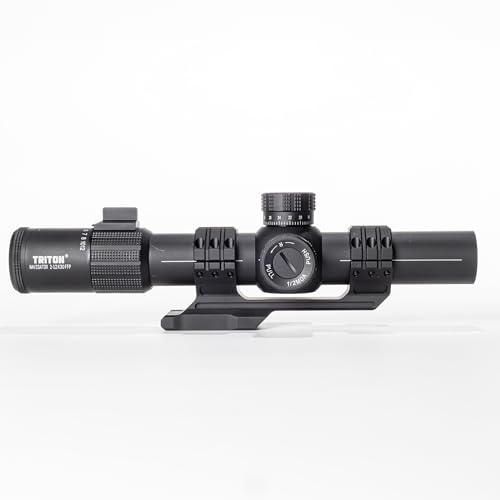
First Focal Plane C5 Reticle: The C5 circle dot BDC reticle scales accurately through the entire magnification range, maintaining precise holdovers and ranging references for dynamic target engagement.

Purpose Built to Hunt: Hair-splitting contrast, resolution and supreme low-light performance are yours for the taking in this optical upgrade of our legendary Banner series. It's built tough for deadly accuracy when you need it most. It’s Purpose-Built to Hunt.

The Crossfire HD 4-12x44 Second Focal Plane riflescope has an HD Optical System that uses select glass elements to deliver sharp resolution, reduces chromatic aberration, and provides excellent color fidelity with edge-to-edge clarity.
Frequently Asked Questions
What Is a 2-12x Scope Good For?
A 2-12x scope is generally chosen as an all-around hunting optic for terrain that changes during the same outing, such as timber, field edges, and open ground. The low end keeps a wide sight picture for tracking, and the high end adds image enlargement when more detail helps confirm a shot. It is not built around one fixed distance or one type of terrain, which is the trade-off for that versatility.
Is a 2-12x Scope Better Than a 3-9x Scope?
Neither range is universally better. A 3-9x scope covers a smaller, more traditional 3:1 zoom band, while a 2-12x scope offers a wider 6:1 range with a lower starting magnification and a higher ceiling. The 2-12x format generally adds more optical complexity and can weigh more, so the right choice depends on whether the extra range at both ends is worth that trade-off for a specific rifle and hunting style.
What Magnification Do Military Snipers Use?
There is no single magnification range used by all military snipers. Optics differ among countries, services, weapon systems, missions, and generations of equipment. It is therefore more accurate to describe a particular optic or system than to claim that military snipers universally use one magnification range.
What Is the Best Magnification for Shooting at 300 Yards?
There is no universal best magnification for a fixed distance. Useful magnification depends on target size, eyesight, optical resolution, lighting, stability, weather, and the type of shooting involved. More magnification enlarges the apparent image, but it also narrows field of view and can make movement appear more pronounced.
What Magnification Is Ideal for Shooting 1,000 Yards?
There is no single ideal magnification for that distance. Specialized target disciplines may use optics with considerably more magnification than a 2-12x scope, but optical quality, atmospheric conditions, target size, reticle design, stability, and the shooter’s needs all affect the useful setting. Long-distance shooting should be conducted only in a controlled environment with a safe backstop.
Do Snipers Prefer FFP or SFP?
There is no universal preference that applies to every sniper or organization. In an FFP scope, the reticle changes apparent size with magnification and keeps the same angular relationship to the target. In an SFP scope, the reticle stays approximately the same apparent size, so calibrated subtensions apply at the manufacturer’s specified magnification.
Sources
- Nightforce Optics — NX6 2-12x42mm F1 specifications — supports field of view, exit pupil, eye relief, parallax, dimensions, and weight examples.
- ZEISS — Conquest V6 2-12×50 technical specifications — supports field of view, exit pupil, objective diameter, eye relief, and optical-design comparisons.
- ZEISS Hunting — Exit Pupil technical guidance — supports the explanation of exit pupil and low-light viewing.
- Athlon Optics — Helos BTR GEN2 2-12×42 specifications — supports the mid-range field-of-view comparison points. [VERIFY: confirm against Athlon Optics’ own manufacturer spec sheet; figures currently sourced from a retailer listing]
- Vortex Optics — FFP vs. SFP technical FAQ — supports the focal-plane explanation. [VERIFY: confirm current URL for this resource before publishing]
- Hunter Education safety guidance — supports positive target identification, safe-backstop guidance, and the warning against using a rifle scope as binoculars. [VERIFY: confirm specific hunter-education resource/URL before publishing]
Conclusion
Manufacturers choose 2-12x scope magnification because it creates a broad sixfold zoom range that combines a relatively wide low-power view with useful high-end image enlargement. That versatility explains why the format remains common in modern hunting optics.
The magnification label should not be mistaken for a complete performance rating. Field of view, exit pupil, objective size, transmission, glass quality, eye relief, parallax, reticle design, focal plane, weight, and ergonomics can differ significantly between 2-12x models. For that reason, the strongest comparison is not simply 2-12x versus another magnification range; it is the complete specification and optical design of one scope versus another.
