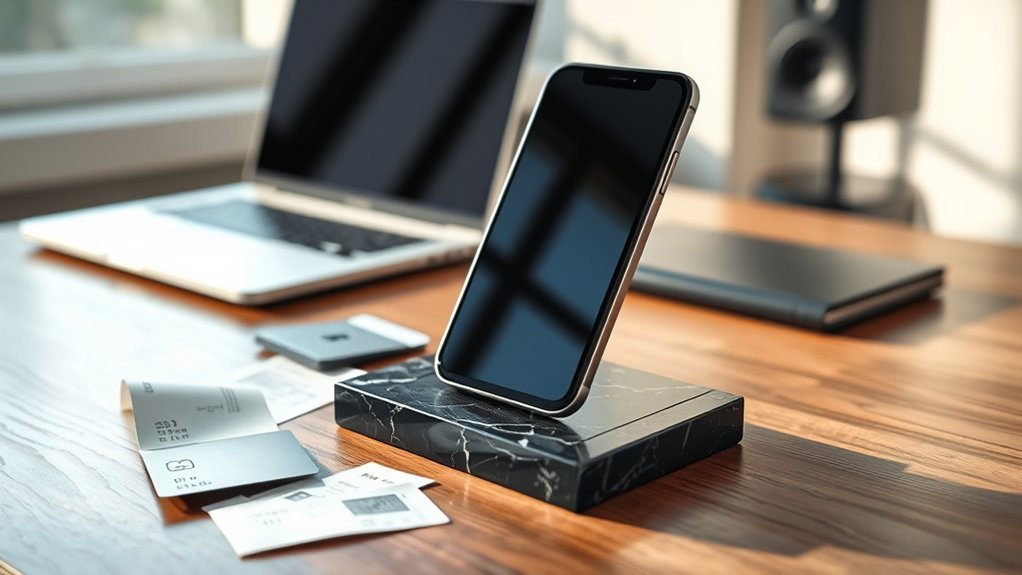
There is no official worldwide registry that identifies one phone stand as the absolute most expensive, so claims of a single $2,500, $5,000, or gemstone-covered record holder should be treated cautiously unless a real manufacturer listing or documented sale supports them. Among premium phone stands with verifiable manufacturer pricing in 2026, prices range from about $50 for multifunction magnetic accessories to $250 for high-end machined desk stands.
Quick Answer
Among currently verifiable mainstream phone stands checked in September 2026, Grovemade’s Brass MagSafe Stand is one of the most expensive at $250. Its wood versions cost $190, while premium charging stands such as Nomad’s Stand One Max cost $169. There is no credible evidence establishing a $2,500–$5,000 phone stand as the worldwide record holder.
Key Takeaways
- There is no authoritative global database for the world’s most expensive phone stand.
- A verified high-end example is the Grovemade Brass MagSafe Stand at $250; its standard wood versions are $190.
- Higher prices can pay for premium materials, heavy machined bases, charging hardware, motors, or multi-device charging rather than better phone support alone.
- Nomad’s $169 Stand One Max adds Qi2 25W charging for a phone plus Apple Watch and earbud charging.
- MOFT’s Trackable Snap-on Phone Stand & Wallet is $49.99 and combines a stand, two-card wallet, grip, and Apple Find My support.
- Before paying a premium, check compatibility, charging speed, what accessories are included, and whether the design solves a problem you actually have.
What Is the Most Expensive Phone Stand?
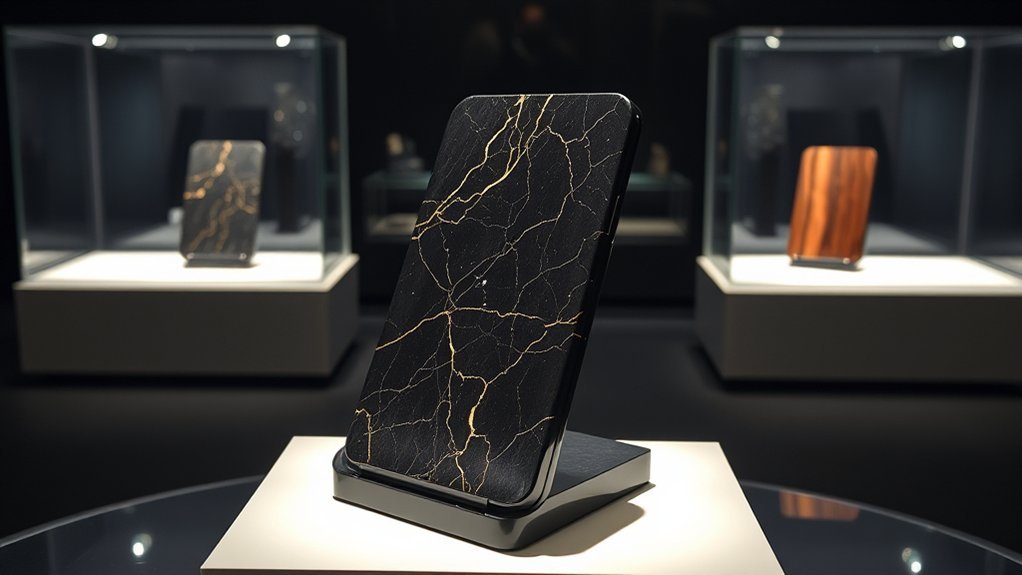
There is no independently maintained record of the world’s most expensive phone stand. Custom jewelry pieces or one-off commissions could theoretically cost far more than normal retail accessories, but they should not be described as record holders without a named product, manufacturer, price, and verifiable sale or listing.
Among manufacturer-listed premium phone stands that can be verified in 2026, Grovemade’s MagSafe Stand range provides a useful upper benchmark. The company lists walnut and maple versions at $190 and a brass version at $250. The stand uses a heavy metal base and is designed around Apple’s MagSafe Charger, which is not included.
That makes the $250 brass model substantially more expensive than mainstream magnetic stands, but its price comes mainly from materials and manufacturing rather than advanced electronics.
By comparison, Nomad’s Stand One Max is listed at $169 and incorporates Qi2 25W phone charging, Apple Watch fast charging, and a separate charging area for compatible earbuds. In this case, more of the purchase price goes toward charging hardware and multi-device functionality.
Note: Accessory prices change with sales, regional pricing, materials, and product revisions. The prices in this article were checked against manufacturer information in September 2026 and should be treated as current snapshots rather than permanent list prices.
Why Can a Premium Phone Stand Cost $250?
A $190 to $250 phone stand is not expensive because holding a phone requires costly technology. The premium usually comes from the way the stand is manufactured, the materials used, its weight and finish, and whether the product is made in relatively small quantities.
Grovemade, for example, uses hardwood, vegetable-tanned leather, and substantial steel or brass components. Its manufacturer information lists the steel version at about 2.8 pounds and the brass version at about 3 pounds. That mass lets the stand remain planted on a desk when a magnetically attached phone is removed.
Electronics create a different kind of premium. A powered stand may incorporate charging coils, magnetic alignment, power-management circuitry, watch charging, USB-C input, thermal management, or motorized movement. Those functions can add more practical value than decorative materials.
For example, Belkin’s Auto-Tracking Stand Pro was introduced at $179.99 and adds 360-degree subject tracking, motorized 90-degree tilt, an internal battery for tracking, and up to 15W MagSafe charging when properly powered. Its higher price therefore reflects motors and tracking technology rather than exotic materials.
What Materials Make a Phone Stand Premium?
Material choice affects weight, stability, finish, manufacturing cost, and how a stand feels on a desk. It does not automatically make one stand functionally better than another.
| Material | Typical reason for using it | What the buyer gains |
|---|---|---|
| Aluminum | Rigid structure with relatively low weight | Durability and a clean machined finish |
| Steel | Adds substantial base weight | Improved desk stability |
| Brass | High mass and distinctive appearance | Premium finish and a very heavy base |
| Hardwood | Decorative desk-focused construction | Natural appearance and tactile quality |
| Leather or synthetic leather | Surface finishing and device protection | Softer contact points and refined appearance |
| Silicone, rubber, or TPU | Grip and surface protection | Less sliding and reduced scratching |
Grovemade’s premium pricing is a useful example because the company explicitly describes solid steel or brass bases, hardwood, leather, and locally manufactured metal components. By contrast, Nomad combines a solid metal chassis with glass, TPU, and integrated charging electronics.
Claims that a phone stand uses carbon fiber, aerospace-grade aluminum, rare wood, precious metal, or hand craftsmanship should be checked against the actual manufacturer’s specification rather than inferred from the product’s price.
Which Features Justify the High Price?
A premium stand is easier to justify when its extra cost solves a measurable problem. The most useful upgrades generally fall into four areas.
- Stable construction: A heavy base or carefully balanced structure can let you attach and remove a phone without lifting or tipping the stand.
- Integrated charging: A charging stand can eliminate a separate cable or charging pad. Current high-end designs may support Qi2 or MagSafe-compatible magnetic alignment.
- Multi-device charging: Some stands power a phone, smartwatch, and earbuds from a single station, which can reduce the number of chargers on a desk or nightstand.
- Specialized movement or positioning: Adjustable hinges, motorized tracking, portrait/landscape rotation, and tripod mounting can matter for video calls, recording, streaming, or content creation.
Charging speed deserves special attention. The Wireless Power Consortium says Qi2 25W was introduced with Qi v2.2.1 in July 2025. A current premium charging stand that supports Qi2 25W therefore offers a meaningful technology upgrade over older 7.5W or 15W wireless products when used with compatible hardware.
A higher price does not automatically mean faster charging: some of the most expensive desk stands are premium holders that require you to supply the charger separately.
How Does It Compare to Other Premium Stands?
Verified products show that expensive phone stands fall into several different categories. Comparing price alone can be misleading because a $250 handcrafted stand and a $169 three-device charger are selling different benefits.
| Product | Verified price reference | Main reason for the premium | Charging hardware |
|---|---|---|---|
| Grovemade Brass MagSafe Stand | $250 | Machined brass, substantial weight, premium desk construction | Apple MagSafe Charger required separately |
| Grovemade Wood MagSafe Stand | $190 | Hardwood, leather, heavy steel base | Apple MagSafe Charger required separately |
| Nomad Stand One Max | $169 | Metal/glass build and three-device charging | Qi2 25W phone charging plus watch and earbud charging; power adapter not included |
| Belkin Auto-Tracking Stand Pro | $179.99 launch price | Motorized subject tracking and tilt | Up to 15W MagSafe charging when connected to suitable power |
| Twelve South HiRise 3 Deluxe | $99.99 | Three-device charging and premium desk design | Integrated charging; 36W power adapter included |
| MOFT Trackable Snap-on Phone Stand & Wallet | $49.99 | Stand, grip, two-card wallet, and Find My functionality | Not an integrated phone charger |
Price Vs Prestige
Price begins to separate from functionality once a stand already holds the phone securely and places it at a useful viewing angle. A heavier base, carefully machined metal, hardwood, leather, or detailed finishing may still have genuine manufacturing value, but these improvements do not necessarily make a phone charge faster or make video calls clearer.
That distinction is visible in Grovemade’s range. Its $250 brass stand costs more than Nomad’s $169 Stand One Max, yet the Grovemade stand requires a separate MagSafe charging puck while the Nomad product contains a multi-device charging system.
The better choice therefore depends on what the buyer values: furniture-like desk design, charging technology, portability, or specialized functions.
Materials And Craft
Premium construction can still be a rational reason to spend more. A well-weighted base can improve one-handed use, while durable materials may stay visually appealing longer than inexpensive molded plastic.
Grovemade says its MagSafe Stand is designed and manufactured in Portland, Oregon, with locally made metal components. Its combination of hardwood, leather, steel, or brass explains much of the price without needing unsupported claims about gemstones or artificial scarcity.
Nomad takes a more electronics-focused approach, using a metal chassis and glass panel around an integrated Qi2 charging system. Neither approach is automatically superior; they target different buyers.
Features Vs Exclusivity
A useful way to judge an expensive stand is to separate the purchase price into functional and nonfunctional benefits.
- Functional value: charging speed, extra charging positions, motorized tracking, adjustability, device compatibility, stability, and included power hardware.
- Material value: hardwood, machined metal, leather, glass, heavier bases, and more labor-intensive construction.
- Aesthetic value: finish, matching desk accessories, design consistency, and brand presentation.
Scarcity or limited production can influence price, but it does not guarantee resale value. A phone stand should not be treated as an investment unless there is actual market evidence supporting collectible demand.
Who Should Buy a $190–$250 Premium Phone Stand?
A high-priced stand makes the most sense for someone who cares about the stand as a permanent part of a desk setup rather than simply needing a place to put a phone.
Someone who only needs hands-free viewing can spend far less. The premium becomes easier to justify when material quality, weight, design, charging integration, or specialized features will be used every day.
Luxury Desk Enthusiasts
Premium desk enthusiasts are the clearest audience for products such as Grovemade’s wood and brass stands. The stand is visible even when the phone is absent, so its materials and finish become part of the workspace.
- A heavy base provides a planted feel during one-handed phone removal.
- Wood, metal, and leather can coordinate with other desk accessories more naturally than inexpensive molded plastic.
- A fixed desktop stand can provide a consistent location for calls, notifications, charging, and iPhone StandBy.
Apple’s StandBy feature works while a compatible iPhone is charging and positioned on its side, making landscape-capable charging stands particularly useful on desks and nightstands.
Premium Gift Buyers
A premium stand can work as a gift when presentation and materials matter as much as utility. Before buying, however, compatibility deserves more attention than appearance.
Check the recipient’s phone model, case, charging standard, smartwatch ecosystem, and whether the product includes the required power supply or charging puck. For example, Grovemade’s stand requires an Apple MagSafe Charger that is sold separately, while Twelve South includes a power adapter with the HiRise 3 Deluxe.
Pro Tip: When comparing premium charging stands, calculate the complete setup cost. A $190 stand that needs a separate charging puck may ultimately cost more than a $169 charging station with the charging hardware built in.
Collectors And Executives
Collectors and design-focused professionals may care about machining, unusual materials, domestic manufacturing, coordinated desk collections, or a product’s visual presence. Those preferences can justify a higher personal budget, but they should be separated from claims about performance.
A brass or hardwood stand can be more distinctive than a mass-market alternative without being technologically superior. Likewise, a motorized tracking stand may provide more useful technology while looking less like a luxury desk object.
Resale value is uncertain. There is not enough established secondary-market evidence to assume an expensive phone stand will appreciate simply because it is costly or made in relatively small quantities.
Is a $250 Premium Phone Stand Worth It?
A $250 stand can be worth the money for a buyer who specifically wants premium materials, substantial weight, detailed manufacturing, and a desk-focused design. It is difficult to justify purely on the basic task of holding a smartphone.
The Grovemade Brass MagSafe Stand illustrates that distinction. Its price buys machined brass, a roughly three-pound structure, and a carefully finished desktop object, but the MagSafe charging puck is still purchased separately.
Someone who values charging functionality may get more practical utility from a lower-priced product. Nomad’s $169 Stand One Max, for example, incorporates up to 25W Qi2 phone charging, Apple Watch fast charging, and an additional wireless charging area for compatible earbuds.
For video creators, Belkin’s motorized tracking stand adds another type of value through automatic movement rather than luxury materials.
The deciding question is therefore not whether an expensive phone stand is universally “worth it,” but whether its expensive components correspond to features or materials the buyer will actually use and appreciate.
What Are the Best Cheaper Alternatives?
Buyers do not need to spend $190 to $250 to get a capable phone stand. Several verified products provide useful functions at much lower prices.
It is also worth separating desk stands from car mounts, since they solve different problems and the money goes to different places. A car mount is judged on grip and vibration rather than materials — see our picks for vehicle-specific car mounts for how that comparison works.
- MOFT Trackable Snap-on Phone Stand & Wallet — $49.99: A compact option combining a magnetic stand, grip, two-card wallet, three viewing modes, and Apple Find My support. It weighs 2.1 ounces and is intended for compatible magnetic phones and cases.
- MOFT Snap-on Phone Stand & Wallet AERA — from about $29.99: A simpler folding wallet/stand without the same tracking hardware. It is useful when portability matters more than desktop weight.
- Twelve South HiRise 3 Deluxe — $99.99: A better fit for buyers who want one station for an iPhone, Apple Watch, and AirPods or another compatible device. A 36W power adapter is included.
- Nomad Stand One Max — $169: Still premium, but cheaper than Grovemade’s $190–$250 stands while adding Qi2 25W phone charging and dedicated watch and earbud charging positions.
For a basic non-charging desk holder, even these products may be more than necessary. A stable stand with the correct viewing angle and enough room for the phone’s case can satisfy the core function without premium materials or electronics.
Should You Buy the Most Expensive Phone Stand?
Buying the most expensive stand available is rarely the best way to choose one. Start with the job the stand needs to perform, then decide which upgrades deserve extra money.
For a permanent executive-style desk setup, a $190–$250 Grovemade stand may make sense because its weight, hardwood, leather, and metal construction are central to the product. For charging several Apple devices, a multi-device charging stand may provide greater day-to-day utility. For filming or video calls, a tracking stand can justify its cost through movement and framing rather than decorative materials.
Check five things before paying a premium:
- Compatibility: Confirm your exact phone and case work with the stand or magnetic attachment.
- Charging standard: Check whether the product supports the charging speed your phone can actually use.
- Included hardware: Determine whether the required charger, cable, or power adapter is included.
- Positioning: Make sure the stand supports the portrait, landscape, height, and angle you need.
- Total cost: Compare the complete setup rather than the stand’s advertised price alone.
Warning: MagSafe-compatible phones and accessories contain magnets that may interfere with some implanted medical devices. Apple advises keeping them more than 6 inches (15 cm) from such devices, or more than 12 inches (30 cm) away while wirelessly charging, and following guidance from your physician and medical-device manufacturer.
Frequently Asked Questions
What Is the Most Expensive Phone in the World Right Now, as of 2026?
There is no independently verified global registry for the world’s most expensive privately owned phone. The Falcon Supernova iPhone 6 Pink Diamond is frequently described online as a $48.5 million phone, but authoritative confirmation of the reported purchase and ownership is difficult to establish. Treat that figure as a widely repeated luxury-product claim rather than a verified current market record.
What Is the Best Phone Stand?
There is no single best stand for every buyer. A heavy Grovemade stand suits a premium fixed desk setup, Nomad’s Stand One Max emphasizes multi-device charging, Belkin’s Auto-Tracking Stand Pro is designed for moving subjects and video, and MOFT’s folding models prioritize portability. Choose according to compatibility, stability, charging needs, viewing angle, and budget.
What Phones Do Billionaires Use?
There is no reliable dataset showing that billionaires generally use a particular phone brand. Public photographs and individual reports cannot establish a meaningful group-wide pattern, and wealth does not necessarily mean someone uses a jewel-covered or boutique smartphone.
Which Phone Is Value for Money in 2026?
Phone value depends on country, budget, carrier pricing, software-support requirements, camera needs, and how long the device will be kept. Because those factors change frequently, compare current manufacturer pricing and support policies rather than using the cost of a phone stand as a guide to smartphone value.
Does a $250 Phone Stand Charge Faster Than a $100 Stand?
Not necessarily. Grovemade’s $250 brass stand does not include the MagSafe charging puck, so its price is primarily tied to construction and materials. Charging speed depends on the charger, phone, power supply, and charging standard. Some less expensive integrated stands may therefore charge faster.
Is Qi2 25W Worth Looking for in a Premium Charging Stand?
Yes, when your phone supports it and charging speed matters. The Wireless Power Consortium introduced Qi2 25W with Qi v2.2.1 in 2025. A certified compatible stand can provide faster magnetic wireless charging than older lower-power designs, although actual performance still depends on the phone and power adapter.
Conclusion
The verified premium phone-stand market looks very different from the original $2,500 to $5,000 luxury claims. Among current manufacturer-listed examples checked in 2026, Grovemade’s $250 brass MagSafe Stand represents a genuinely expensive mainstream desk stand, while $190 wood versions, Nomad’s $169 charging hub, Twelve South’s $99.99 three-device charger, and MOFT’s $49.99 trackable wallet stand show how quickly prices fall when the buying priority changes.
Paying more can deliver better materials, greater desk stability, faster or multi-device charging, motorized tracking, or refined design. It does not automatically provide better basic phone support. The strongest purchase is the stand whose expensive features match the job you need it to do.
Sources
- Grovemade — MagSafe Docks and Stands — current premium stand pricing, including $190 wood and $250 brass versions.
- MOFT — Trackable Snap-on Phone Stand & Wallet — current price, dimensions, weight, card capacity, materials, and viewing modes.
- Nomad — Stand One Max — current $169 pricing, Qi2 25W charging, materials, and multi-device charging specifications.
- Twelve South — HiRise 3 Deluxe — current price, three-device charging design, and included power adapter.
- Wireless Power Consortium — Qi Wireless Charging — Qi2 and Qi2 25W standards information.
- Apple — Important Safety Information for iPhone — magnetic and wireless-charging precautions around implanted medical devices.