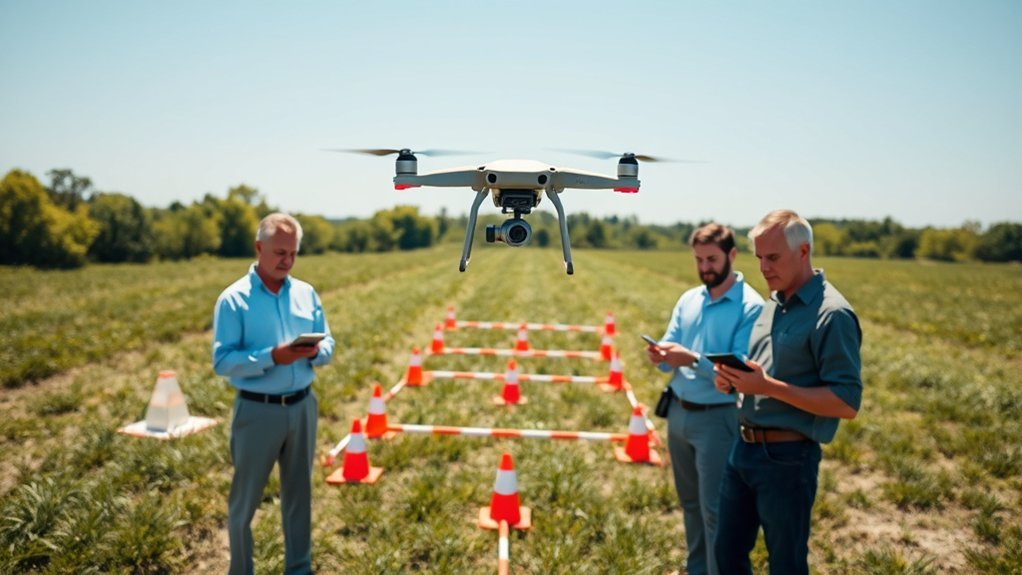
Obstacle avoidance systems help autonomous vehicles, drones, mobile robots, warehouse robots, and driver-assistance features detect hazards before contact happens. These systems use sensors such as LiDAR, radar, ultrasonic sensors, sonar, and cameras, then process that data through collision-avoidance algorithms. Their biggest strength is faster, more consistent hazard awareness. Their biggest limitation is that no sensor or algorithm works perfectly in every real-world condition.
Quick Answer
Obstacle avoidance systems detect nearby objects, estimate collision risk, and guide a robot or vehicle around hazards. They improve safety, navigation efficiency, and automation, but they can struggle with poor weather, glare, sensor blind spots, fast-moving objects, crowded spaces, and limited real-time processing power.
Key Takeaways
- Obstacle avoidance systems combine sensors, software, and control decisions to reduce collision risk.
- LiDAR, radar, cameras, sonar, and ultrasonic sensors each have strengths and weaknesses.
- Sensor fusion improves reliability because one sensor can help cover another sensor’s blind spots.
- Real-world performance depends on lighting, weather, object type, speed, processing latency, and testing quality.
- Good validation includes simulations, controlled tests, edge cases, and real-world trials before deployment.
Overview of Obstacle Avoidance Systems
As autonomous vehicles and robots move through complex environments, obstacle avoidance systems play an essential role in improving safety and efficiency. These systems help a machine recognize nearby objects, judge whether those objects create a collision risk, and choose a safer path or stop when needed.
You’ll find obstacle avoidance in self-driving vehicle research, advanced driver-assistance systems, delivery robots, drones, warehouse automation, robotic vacuum cleaners, agricultural robots, and industrial mobile robots. The exact design changes by use case, but the basic workflow stays similar: sense the environment, interpret the scene, predict movement, and act quickly.
These systems employ various sensing technologies, including LiDAR, cameras, radar, sonar, and ultrasonic sensors, to support safe navigation in both static and dynamic settings. By integrating algorithms such as reactive methods, path-planning methods, control-based approaches, and machine learning techniques, these systems detect and classify obstacles while planning safer paths in real time.
Sensor fusion techniques greatly enhance the reliability and accuracy of obstacle detection by combining data from multiple sensors. For example, radar may keep detecting a vehicle in rain or fog, while a camera may help classify lane markings, signs, pedestrians, or animals. LiDAR can add 3D structure, while ultrasonic sensors can help with short-range detection.
However, challenges remain. Environmental factors, sensor limitations, object shape, object material, and real-time processing constraints can impact effectiveness. A system may perform well in a controlled lab yet still struggle in glare, heavy rain, dust, snow, dense crowds, construction zones, or highly reflective surfaces.
Looking forward, the trend is shifting toward AI-driven systems, better sensor fusion, improved edge computing, and collaborative vehicle networks. These advances can improve obstacle awareness, but they still require careful testing because safety-critical systems need predictable behavior, not just impressive performance in ideal cases.
Note: Obstacle avoidance is not the same as full autonomy. A robot may avoid nearby objects without understanding traffic laws, human intent, route planning, or every possible safety scenario.
How Obstacle Avoidance Systems Work
An obstacle avoidance system usually follows a loop that repeats many times per second. The system collects sensor data, filters noise, detects objects, estimates distance and movement, predicts collision risk, and sends commands to steer, brake, slow down, hover, reroute, or stop.
| Sensing | Collects information from LiDAR, radar, cameras, sonar, ultrasonic sensors, or other sensors. |
| Perception | Identifies obstacles, estimates distance, and may classify objects such as people, vehicles, walls, animals, or furniture. |
| Prediction | Estimates where moving obstacles may go next based on speed, direction, and recent sensor readings. |
| Planning | Chooses a safe path, speed change, or stop command while considering the robot’s size and movement limits. |
| Control | Turns the decision into steering, braking, throttle, wheel-speed, or flight-control commands. |
This loop must happen quickly because a slow decision can be as dangerous as a wrong decision. For fast vehicles or drones, even a small delay can reduce the time available to avoid impact. For slow indoor robots, latency still matters when people, pets, forklifts, or other robots move unpredictably.
Key Technologies in Obstacle Detection
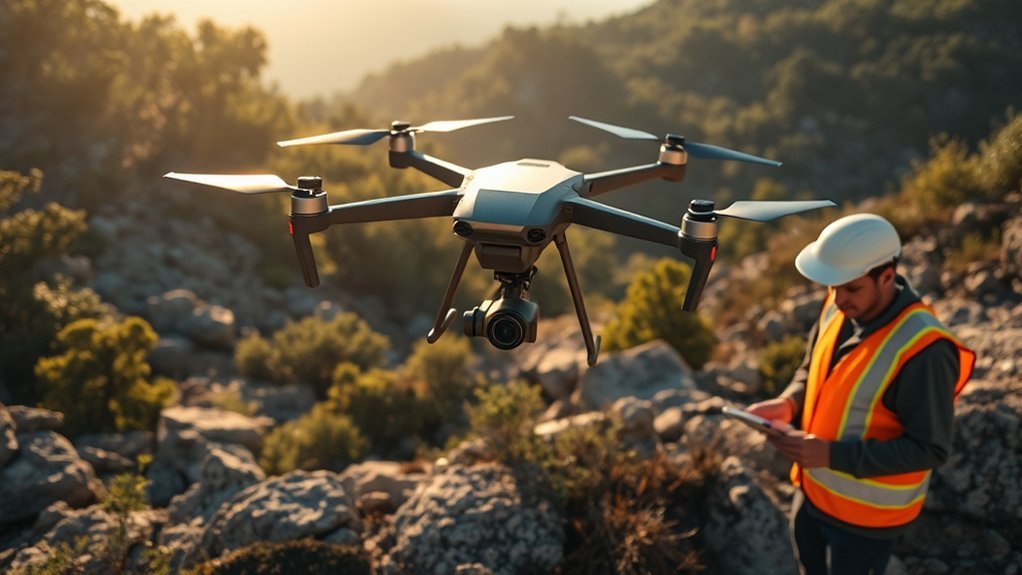
Obstacle detection systems rely on advanced sensor technologies to navigate complex environments effectively. No single sensor is perfect, so many systems combine several sensor types to create a more reliable picture of the surroundings.
These systems utilize a variety of sensors, including LiDAR, radar, sonar, ultrasonic sensors, and cameras, each offering distinct advantages in range, resolution, cost, size, and adaptability. The best choice depends on the robot’s speed, operating environment, safety requirements, budget, and available computing power.
LiDAR sensors generate precise 3D representations, enabling strong obstacle detection in many structured and semi-structured environments. They can help measure distance and shape with high detail, which makes them useful for mapping, localization, and path planning.
In contrast, radar systems often excel in adverse weather conditions and can provide reliable long-range detection. Radar usually has lower spatial resolution than LiDAR or cameras, but it can be effective for detecting moving objects and estimating relative speed.
Cameras provide rich visual detail. They can help identify traffic lights, signs, lane markings, humans, animals, and object categories. However, camera-based systems can struggle with poor lighting, glare, shadows, dirt on the lens, and weather conditions that reduce visibility.
Sonar and ultrasonic sensors are common in short-range applications. They can help small robots, parking systems, and indoor devices detect nearby walls, furniture, or objects. Their range and resolution are limited, but they are affordable and useful for close-distance awareness.
| Sensor Type | Main Strength | Common Limitation |
|---|---|---|
| LiDAR | Detailed distance and 3D structure | Can be affected by cost, reflective surfaces, dirt, fog, or heavy precipitation |
| Radar | Longer-range detection and speed estimation | Lower object detail than cameras or LiDAR |
| Camera | Visual classification and scene context | Sensitive to lighting, glare, dirt, and visibility |
| Ultrasonic / Sonar | Low-cost short-range detection | Limited range, detail, and performance in complex acoustic environments |
Pro Tip: When evaluating an obstacle avoidance design, look at the full sensor stack instead of one impressive sensor. Reliable systems often depend on redundancy, calibration, and software quality.
Algorithmic Approaches for Collision Avoidance
While maneuvering through complex environments, robotic systems must employ effective algorithmic approaches for collision avoidance to support safety and efficiency. These algorithms turn raw sensor data into decisions that help a machine slow, stop, steer, reroute, or continue safely.
Some algorithms focus on immediate reactions. Others plan longer routes through a map. More advanced systems may combine local obstacle avoidance with global route planning, prediction models, and machine learning. The right approach depends on whether the robot operates indoors, outdoors, on roads, in the air, underwater, or in a controlled industrial area.
| Approach | Description | Strengths |
|---|---|---|
| Reactive Methods | Adapt in real-time using sensor data | Dynamic response to changing obstacles |
| Virtual Force Field Method | Uses attractive and repulsive forces | Addresses local minima issues |
| Sampling-based Methods (RRT) | Explores high-dimensional spaces for feasible paths | Suitable for traversing complex environments |
| Ideal Control Methods | Utilizes differential equations for ideal paths | Secures the most efficient collision-free route |
| Machine Learning Techniques | Learns from experience to enhance decision-making | Improves performance in diverse scenarios |
These algorithmic techniques collectively empower robotic systems to maneuver around obstacles effectively, securing safer operations in varied environments. Still, each approach has trade-offs. Reactive methods can respond quickly but may not choose the best long-term route. Sampling-based methods can explore complex spaces but may require more computation. Machine learning can improve pattern recognition, but it needs careful training, validation, and monitoring.
In practice, many systems use layered control. A global planner may choose the main route, while a local planner handles nearby hazards. A safety layer may override both when a sudden obstacle appears. This layered approach helps reduce risk because the system does not depend on a single decision method.
The best collision-avoidance algorithm is not always the most complex one. It is the one that responds safely, predictably, and fast enough for the environment where the robot operates.
Strengths of Obstacle Avoidance Systems
Obstacle avoidance systems offer clear advantages when they are designed, calibrated, and tested well. They can improve safety by detecting hazards earlier than a human operator or basic programmed route might. They also reduce the need for constant manual control in repetitive or hazardous environments.
For robots, obstacle avoidance can improve productivity. A warehouse robot can reroute around a blocked aisle. A cleaning robot can move around furniture. A drone can adjust its path near trees, walls, poles, or buildings. A vehicle safety feature can warn, slow, or assist when a hazard appears ahead.
- Better collision prevention: Systems can detect obstacles and trigger avoidance behavior before impact.
- Improved navigation efficiency: Robots can choose smoother paths instead of stopping at every unexpected object.
- Higher automation potential: Machines can operate with less direct human control in defined environments.
- Consistent monitoring: Sensors can scan continuously without fatigue.
- Scalable operations: Fleets of robots can use obstacle avoidance to work in shared spaces more safely.
These benefits are strongest when the operating environment is well understood. For example, an indoor delivery robot in a mapped building faces fewer unknowns than a road vehicle in heavy traffic. Clear boundaries, speed limits, sensor maintenance, and controlled routes all improve system reliability.
Challenges Faced by Obstacle Avoidance Systems
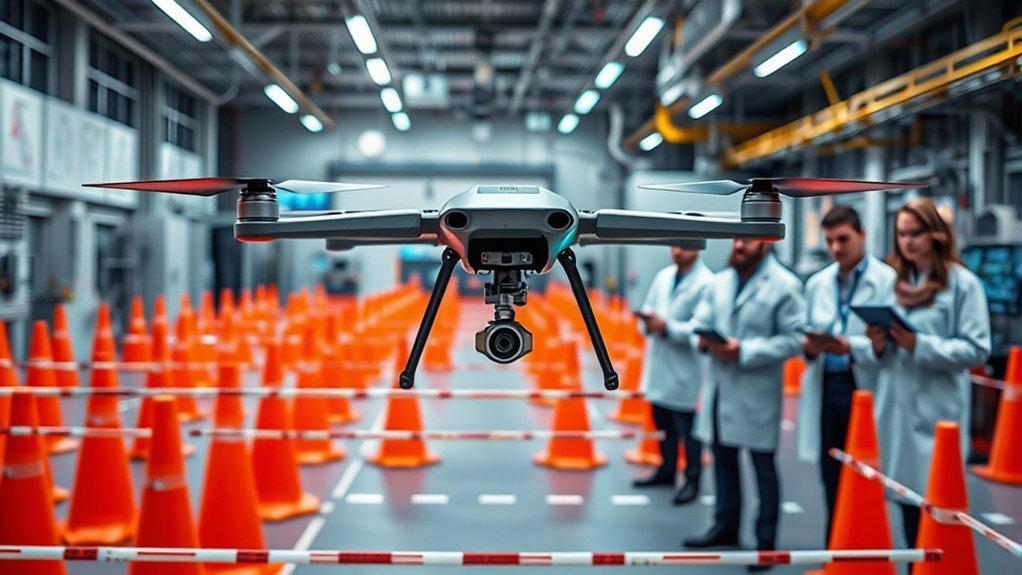
Even with advanced algorithmic approaches for collision avoidance, significant challenges persist in the operation of obstacle avoidance systems. These challenges matter because real-world environments are messy, unpredictable, and filled with edge cases.
Environmental factors, like lighting conditions and weather, can severely limit sensor effectiveness, leading to detection failures. Cameras may struggle at night, in direct sunlight, or in heavy glare. LiDAR and camera lenses may be affected by dirt, fog, snow, dust, or water droplets. Radar may detect objects but provide less visual detail for classification.
Sensor limitations, including range and resolution, may cause systems to miss obstacles or misclassify them, complicating navigation for autonomous vehicles and robots. Small, low, transparent, dark, reflective, or fast-moving objects can be harder to detect. Thin objects such as wires, poles, glass doors, table legs, or branches may also challenge some systems.
Real-time processing constraints further challenge decision-making algorithms, particularly in dynamic environments where rapid responses are essential to avert collisions. A robot must process sensor data, understand the scene, predict motion, and send control commands within a short time window. If the system lags, the chosen maneuver may arrive too late.
Complex scenarios, such as crowded settings or swiftly moving obstacles, can overwhelm existing algorithms, hindering effective system responses. Additionally, the variability in obstacle types, ranging from static structures to dynamic entities, adds another layer of complexity. This variability makes it difficult to develop robust response strategies that work equally well across every environment.
Addressing these challenges is imperative for enhancing the reliability and safety of obstacle avoidance systems in real-world applications. Strong design requires redundancy, fail-safe behavior, sensor cleaning, software updates, clear operating limits, and rigorous testing across expected and unexpected conditions.
Warning: Obstacle avoidance should never be treated as a guarantee that a robot, drone, or vehicle will avoid every crash. Users still need to follow operating limits, safety instructions, maintenance requirements, and local rules.
Common Real-World Use Cases
Obstacle avoidance systems appear in many industries because machines increasingly need to move through spaces shared with people, vehicles, equipment, and unpredictable objects. The use case affects the sensor design, speed limits, safety rules, and testing process.
- Autonomous vehicles and driver-assistance systems: These systems may help detect vehicles, pedestrians, cyclists, lane obstacles, or sudden hazards.
- Mobile warehouse robots: Robots use obstacle detection to move around pallets, carts, workers, forklifts, and temporary aisle blockages.
- Drones: Aerial systems use obstacle avoidance near trees, buildings, power lines, walls, terrain, and other aircraft.
- Service robots: Delivery robots, cleaning robots, and hospitality robots need short-range detection in crowded indoor or sidewalk environments.
- Agricultural robots: Robots may detect crops, rocks, animals, fences, humans, irrigation equipment, and uneven terrain.
- Industrial automation: Automated guided vehicles and autonomous mobile robots use obstacle avoidance to support safer movement in factories and logistics centers.
The more open and unpredictable the environment, the harder the task becomes. A robot operating in a fixed warehouse layout can rely on maps and known routes. A road vehicle or outdoor drone must handle far more uncertainty, including weather, lighting, human behavior, and changing terrain.
Testing and Validation of Obstacle Avoidance Solutions
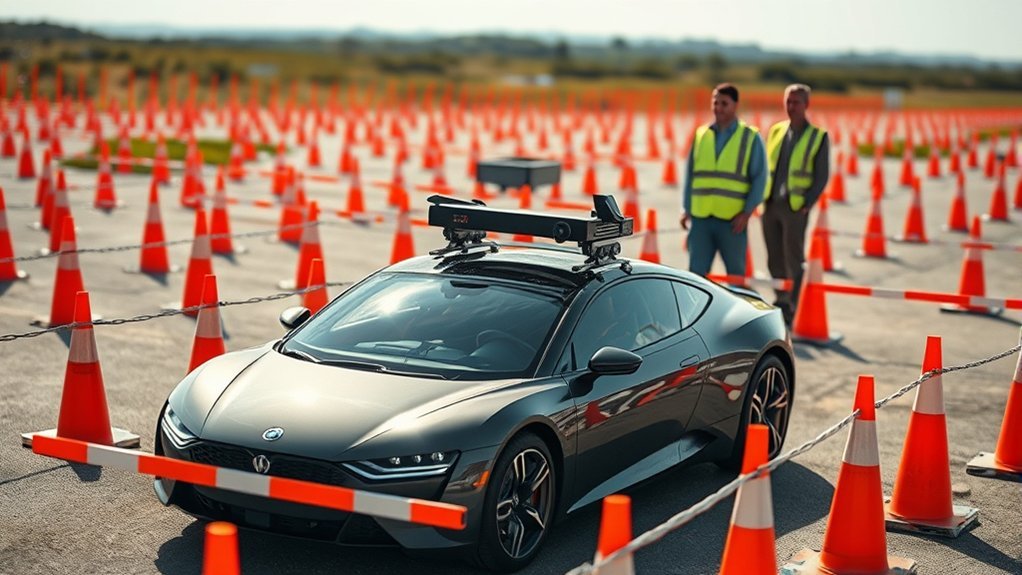
To guarantee obstacle avoidance solutions function effectively across various environments, rigorous testing and validation processes are essential. You’ll need to employ both simulations and real-world scenarios to assess algorithm performance in diverse conditions.
Testing often starts in simulation because simulated environments can safely repeat dangerous scenarios. Engineers can test sudden obstacles, low-visibility conditions, sensor noise, blocked paths, unusual object shapes, or near-collision events without risking real equipment or people. However, simulation alone is not enough because real sensors and real environments introduce noise, wear, calibration drift, and unpredictable behavior.
Key performance metrics, like collision rates, response times, false positives, false negatives, near-miss distance, path efficiency, braking smoothness, and recovery behavior, provide critical insights into the success of your systems during these evaluations.
Key performance metrics such as collision rates and response times are essential for evaluating system effectiveness.
Real-time processing capabilities are paramount, requiring validation under varying speeds and unexpected dynamic obstacles to ascertain reliability. Integrating sensor data fusion techniques enhances the robustness of obstacle detection and avoidance, improving overall system performance.
Continuous iteration and refinement of your algorithms based on testing outcomes are necessary to tackle challenges such as sensor noise, environmental variability, and inherent algorithmic limitations. This structured approach not only optimizes your obstacle avoidance solutions but also prepares them for real-world applications, ensuring they perform as intended in complex environments.
Important Test Scenarios
- Static obstacles: Walls, boxes, parked vehicles, furniture, posts, barriers, and curbs.
- Dynamic obstacles: People, pets, forklifts, cyclists, vehicles, drones, and other robots.
- Low-visibility conditions: Night, glare, smoke, dust, fog, rain, snow, shadows, or dirty sensors.
- Edge cases: Transparent glass, reflective objects, thin wires, dark surfaces, unusual shapes, and partially hidden obstacles.
- Recovery behavior: What the robot does after stopping, losing sensor input, or finding a blocked path.
- Fail-safe actions: How the system behaves when sensors disagree, data is missing, or processing slows down.
A strong validation plan does not only ask, “Did the robot avoid the object?” It also asks whether the response was timely, smooth, predictable, repeatable, and safe for nearby people. That distinction matters because a sudden or confusing avoidance maneuver can create a new risk even when the robot avoids the first obstacle.
Best Practices for Safer System Design
Developers and operators can improve obstacle avoidance performance by treating safety as a complete system, not just a sensor feature. Hardware, software, operating rules, testing, maintenance, and user training all affect the final result.
- Use sensor redundancy: Combine complementary sensors when the environment demands higher reliability.
- Calibrate sensors regularly: Poor calibration can cause inaccurate distance estimates and object positions.
- Define the operating design domain: Clearly state where the system can and cannot operate safely.
- Limit speed when uncertainty rises: Slowing down gives the system more time to detect, plan, and stop.
- Build fail-safe behavior: The system should slow or stop when sensor data is unreliable or contradictory.
- Test with edge cases: Include low, thin, reflective, transparent, dark, fast-moving, and partially hidden obstacles.
- Monitor performance after deployment: Real-world logs can reveal problems that controlled tests missed.
Obstacle avoidance also benefits from clear human expectations. Operators should understand that the system has limits. Maintenance teams should keep sensors clean and inspect mounts, cables, lenses, and firmware. Product teams should avoid overstating capabilities because misleading claims can create unsafe behavior from users.
Frequently Asked Questions
What are the advantages of an obstacle avoiding robot?
Obstacle-avoiding robots enhance safety, minimize collision risks, and improve operational efficiency. They use sensors for real-time hazard detection, optimize path planning, and adapt to changing surroundings. This makes them useful for warehouses, homes, hospitals, farms, factories, sidewalks, and other environments where robots must move near people or objects.
What are the advantages of an obstacle detector?
Obstacle detectors enhance safety by identifying nearby objects and helping a system respond before contact occurs. They improve navigation efficiency through distance measurement, object detection, and sensor fusion. When paired with good software, they can reduce collision risk and improve reliability for autonomous systems.
What are the disadvantages of an obstacle avoiding robot?
Obstacle-avoiding robots can struggle with sensor blind spots, poor lighting, bad weather, reflective surfaces, transparent objects, moving crowds, processing delays, and unexpected edge cases. They also need calibration, maintenance, and careful testing. Without those safeguards, the robot may stop too often, miss hazards, or choose an unsafe path.
What is an efficient approach for obstacle avoidance and navigation in robots?
An efficient approach combines real-time sensor data processing, sensor fusion, local path planning, safe control decisions, and machine learning where it adds value. The system should also include fail-safe behavior, speed limits, and testing across realistic conditions. Efficiency means the robot avoids hazards safely without wasting movement, energy, or time.
Which sensor is best for obstacle avoidance?
No single sensor is best for every situation. LiDAR offers strong distance and 3D structure. Radar works well for range and speed detection, especially in some poor-weather conditions. Cameras provide visual classification. Ultrasonic sensors help with short-range detection. The safest systems often combine multiple sensors.
Why do obstacle avoidance systems fail?
They may fail because of poor visibility, sensor noise, dirty sensors, blind spots, software errors, slow processing, bad calibration, unusual object shapes, or conditions outside the system’s operating limits. Failures can also happen when the algorithm detects an object but does not choose a safe response quickly enough.
Conclusion
In the domain of autonomous navigation, obstacle avoidance systems act as vigilant sentinels, guiding vehicles and robots through complex environments. Their strengths include faster detection, continuous monitoring, improved path planning, and reduced collision risk. Their limitations include sensor blind spots, difficult weather, poor visibility, processing delays, and unpredictable real-world behavior.
Rigorous testing serves as the crucible that refines these systems and improves reliability. Simulations, controlled trials, edge-case testing, and real-world validation all matter. As technology advances, continuous iteration and validation remain essential, ensuring these systems stay sharp, predictable, and effective in an ever-evolving landscape of challenges.