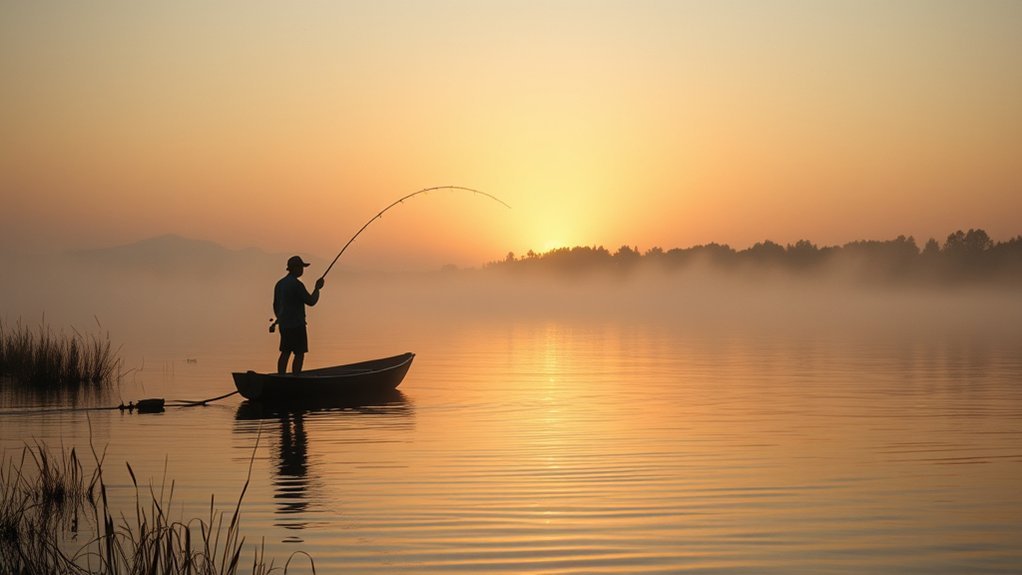
Dawn fishing offers calm water, cooler air, active fish, and the quiet feeling of nature waking up around you. When you understand how fish behave in low light, choose the right lures, and move quietly, you can improve your chances of a productive early-morning trip. The best results usually come from preparing your gear before sunrise, starting shallow, using topwater lures first, and adjusting as the light changes.
Quick Answer
Dawn fishing is often productive because low light, cooler temperatures, and active baitfish push many game fish into shallower feeding areas. Start with quiet casts, topwater lures, and slow retrieves, then switch to deeper-running baits as the sun rises and fish move away from the surface.
Key Takeaways
- Dawn is a strong feeding window because fish can use low light to ambush baitfish in shallow water.
- Topwater lures, slow retrieves, and quiet movement often work best before the sun gets high.
- As light increases, switch to crankbaits, soft plastics, or other deeper presentations.
- Safety gear matters before sunrise, especially a PFD, headlamp, layered clothing, and waterproof footwear.
- A short post-trip review helps you remember productive spots, lures, weather, and fish behavior for your next outing.
At a Glance
| Best Time | About 30 minutes before sunrise through the first few hours of daylight |
| Difficulty | Easy to moderate, depending on location, light, weather, and casting accuracy |
| Tools Needed | Rod and reel, line, topwater lures, crankbaits, soft plastics, pliers, headlamp, PFD, and weather-appropriate clothing |
| Best Approach | Start shallow and quiet, fish surface lures slowly, then move deeper as sunlight increases |
Advantages of Dawn Fishing
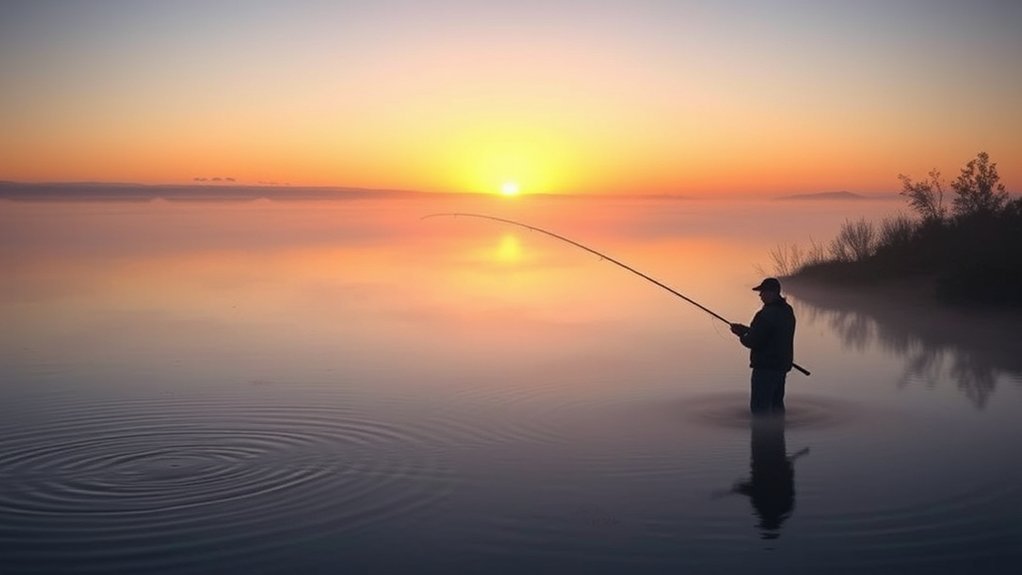
One of the biggest advantages of dawn fishing is the peaceful environment. You can focus on the water, listen for surface activity, and make careful casts before boat traffic, wind, and heat build later in the day.
At this time of day, many fish become more active because low-light conditions make feeding safer and easier. Bass and other predators often move into shallow waters where baitfish gather near grass, docks, points, rocks, or shoreline cover. Being one of the first anglers at your chosen spot can improve your chances because the fish have faced less pressure.
Dawn also gives predators an ambush advantage. With the sun low on the horizon, bass can use shadows, cover, and changing light to attack baitfish. The calmer water can also make surface strikes easier to see, which helps you adjust your casts quickly.
Additionally, underwater visibility is often better early in the morning before wind stirs up sediment. Cooler temperatures also make the trip more comfortable than fishing through midday heat. Together, these factors make dawn a prime time for anglers who want a quieter and more productive fishing session.
Note: Dawn fishing does not guarantee a catch. Weather, water temperature, pressure, seasonal patterns, and fishing pressure can all change how fish behave on a given morning.
Best Fishing Techniques for Early Morning
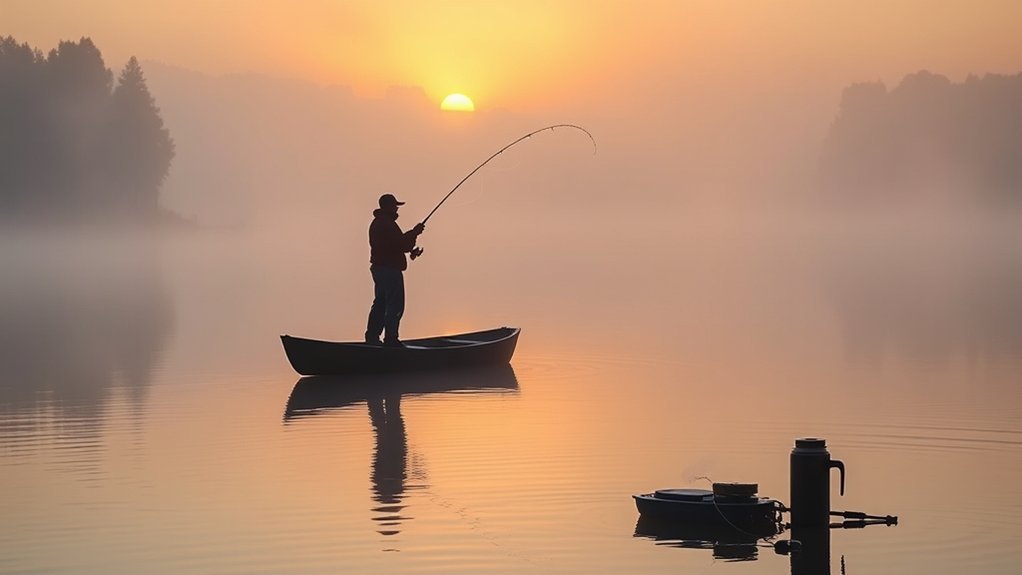
To maximize your chances of catching fish in the early morning, begin with surface lures such as the Jitterbug or Hula Popper. These lures create sound, movement, and surface disturbance that help fish locate them in low-light conditions.
Use a slow retrieval technique at first. Fish may need an extra moment to track the lure, especially when light is limited. After a strike, pause briefly before setting the hook so the fish has time to take the bait fully. As the sun rises, switch to crankbaits, soft plastics, or other subsurface lures to target fish that slide into deeper water.
Surface Lure Selection
What makes surface lures so effective for early morning fishing? In low-light conditions, topwater lures like the Jitterbug or Hula Popper create vibration and sound that can attract bass feeding near the surface. These lures work especially well around shallow cover, grass edges, docks, laydowns, points, and calm pockets where baitfish are active.
When it is time to catch, use a steady and slow retrieval technique. Let the lure make a clear surface pattern instead of rushing it back to you. Bass rely on sight, vibration, and sound, so patience is key. After a strike, pause briefly before setting the hook. This can increase your chances of landing the fish because bass may take a moment to fully engulf the lure.
As the sun rises, bass often become less willing to expose themselves at the surface. That is when crankbaits like a Rapala minnow, darker soft plastics, or artificial worms can help you reach fish that have moved deeper or tighter to cover.
Retrieval Techniques Overview
Effective retrieval techniques are crucial for maximizing your success during early morning fishing trips. As the morning changes from dawn to full daylight, adjust your approach instead of using one retrieve the entire time.
- Start with surface lures like Jitterbugs or Hula Poppers, and retrieve them slowly to attract fish in low light.
- After a strike, pause briefly before setting the hook to help ensure the fish has taken the bait fully.
- As the sun rises, switch to crankbaits like a Rapala minnow to target fish holding deeper.
- In deeper water later in the morning, use artificial worms or soft plastics around structure and cover.
- Pay attention to retrieval speed, and vary your method when fish follow but do not strike.
- Add pauses near cover, shade lines, grass edges, and points where bass may be waiting to ambush prey.
These techniques help you adapt as light, water movement, and fish activity change throughout the morning.
Pro Tip: If fish miss a topwater lure, do not yank it away immediately. Pause for a second, then give it a short twitch. Many bass come back for a second strike.
Understanding Bass Behavior at Dawn

As dawn breaks and the world shifts from darkness to light, bass become increasingly active, making it a prime time for anglers. During these early hours, bass often move into shallower waters to feed on baitfish, insects, frogs, or other easy prey that gather near the bank.
Bass primarily rely on sight, but they also use hearing, smell, and their lateral line to sense movement and vibration in the water. That lateral line helps them detect struggling baitfish, lure vibration, and surface commotion even when visibility is low.
As light conditions change, feeding patterns also shift. In the earliest light, topwater lures can produce strong results because bass may be willing to strike at the surface. Once the sun gets higher, fish often move toward shade, deeper edges, grass lines, docks, or submerged structure.
Keep in mind that bass can be cautious during low light, especially in clear or pressured water. A stealthy approach, quiet footwork, long casts, and softer lure presentations can improve your chances. By understanding these behaviors, you can make better choices and maximize your success when fishing for bass at dawn.
Essential Gear for Dawn Fishing
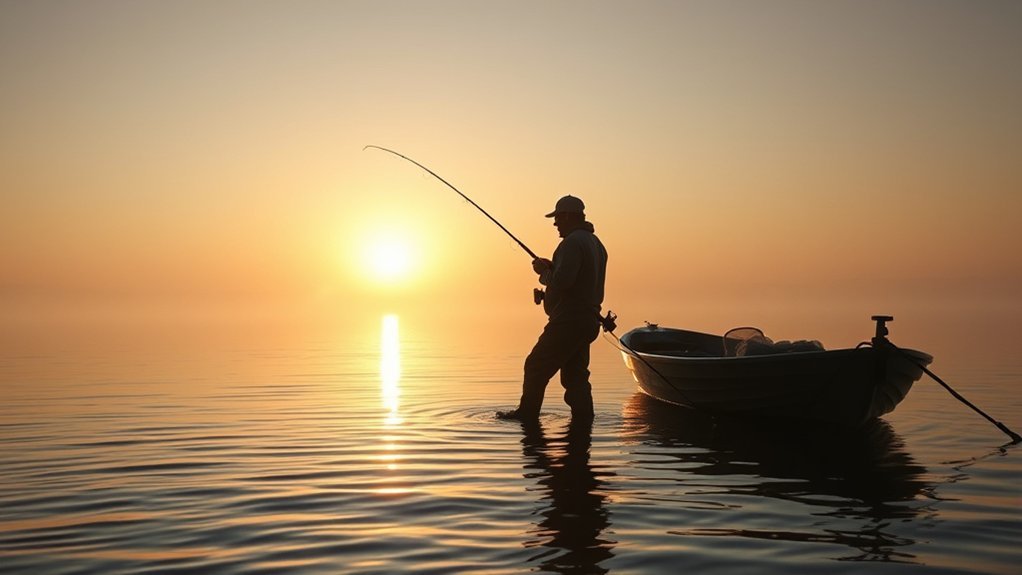
When you are gearing up for dawn fishing, choosing the right rod, tackle, and safety items is vital for a successful outing. A stout rod paired with strong line can help you handle aggressive bass strikes, while essential tools like pliers, a headlamp, and a variety of lures keep your trip smooth and adaptable.
Because dawn conditions can change quickly, pack for low light, cool air, wet grass, slick banks, and possible fog. Preparing before you leave home helps you spend more time fishing and less time searching through gear in the dark.
Recommended Fishing Rods
Choosing the right fishing rod can greatly enhance your early morning experience on the water. For successful dawn fishing, consider these recommendations:
- Stout rod with medium to heavy action: Ideal for battling strong bass strikes near cover.
- Shorter rod between 6 and 7 feet: Helps with accuracy in tight casting spots near the shore.
- Fast-action rod: Improves responsiveness for quicker hook sets with topwater lures in low-light conditions.
- Braided line in 30-50 lb test strength: Provides low stretch and high sensitivity for detecting subtle strikes.
- Versatile rod selection: Keep a topwater rod and crankbait rod rigged for changing conditions as the sun rises.
If you fish from shore, a slightly shorter rod can help around trees, brush, and tight banks. If you fish from a boat or kayak, a longer rod may help with casting distance and line control.
Essential Tackle Items
Essential tackle items play a fundamental role in maximizing your success during dawn fishing. For battling bass effectively in open water, a stout rod paired with heavy line provides the strength needed to handle aggressive strikes.
You will also want needle-nosed pliers. These tools make unhooking fish safer and more efficient, which helps reduce stress on your catch. A variety of topwater lures, like Zara Spook and black Jitterbug, can increase your chances of enticing bass in low-light conditions.
Carry a small selection of follow-up lures too. Soft plastics, crankbaits, spinnerbaits, and artificial worms can help when fish stop hitting the surface. Keep your tackle organized so you can change quickly as the sun rises and fish shift locations.
Do not forget a digital camera or phone in a waterproof pouch to capture memorable moments on the water. When handling bass, grip them carefully by the lower jaw, support larger fish with your other hand, and return them gently to promote conservation and sustainability.
Safety and Comfort Gear
Although dawn fishing can be exhilarating, being prepared with the right safety and comfort gear is essential for an enjoyable experience. Start by dressing in layers so you can adapt to the morning chill and remove outer layers as the day warms.
Invest in waterproof boots to keep your feet dry and warm while moving through wet grass, muddy banks, or shallow launch areas. A wide-brimmed hat and polarized sunglasses will protect your eyes from the low-angle sun and reduce glare on the water once daylight strengthens.
For safety, always wear a personal flotation device, especially from a boat, kayak, canoe, dock, or steep bank. A reliable flashlight or headlamp also helps you rig tackle, move safely, and find your fishing spot before sunrise.
- Waterproof boots
- Wide-brimmed hat
- Polarized sunglasses
- Personal flotation device
- Flashlight or headlamp
- Layered clothing
- Waterproof pouch for phone, keys, and license
- Small first-aid kit
Warning: Low light makes slips, falls, and boating hazards harder to see. Wear a PFD near deep or moving water, carry a light, and avoid unsafe banks, storms, or foggy runs across open water.
Effective Casting Techniques
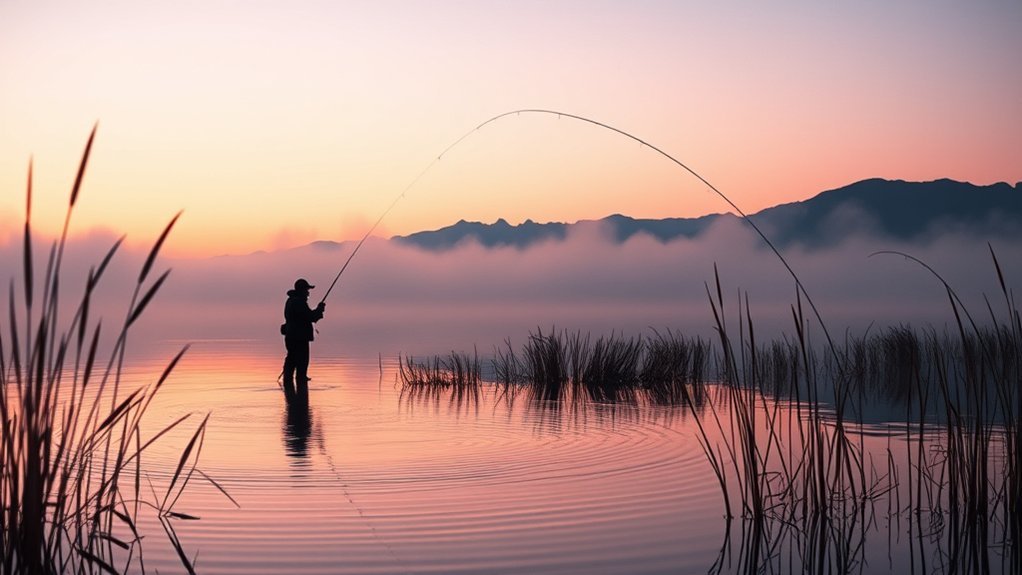
Mastering effective casting techniques is essential for a successful dawn fishing trip. To make it easier to attract fish, wait for the ripples to settle before you begin your retrieve. This allows fish to feel more comfortable and increases your chances of a strike.
Cast your lure near areas where bass are actively breaking the surface, as these hotspots often indicate feeding fish. Watch for baitfish flickering, surface swirls, bubbles, shoreline wakes, or birds working nearby. These clues can help you choose your next cast.
If you are targeting a single fish, retrieve your lure immediately to trigger a quick reaction. When fishing along shorelines, position your lure parallel to the bank instead of casting directly at it. This creates a more natural presentation and keeps your bait in the strike zone longer.
Start with a steady retrieve to gauge fish behavior, then adjust your speed, pause length, and rod movement based on their reactions. If fish follow without striking, slow down. If they ignore a slow lure, add short twitches or switch to a different profile. By fine-tuning these techniques, you can enhance your chances of landing a catch during those quiet dawn hours.
Topwater Lure Recommendations
When it comes to maximizing your success during dawn fishing, choosing the right topwater lures can make all the difference. The best lure depends on water clarity, wind, cover, fish activity, and the size of the baitfish in the area.
Here are some recommendations that can enhance your chances of landing that big catch:
- Zara Spook: Mimics baitfish movement on the surface, drawing in curious predators with a side-to-side walking action.
- Black Jitterbug: Its silhouette and wobbling sound make it a strong option in low-light conditions.
- Handmade Cedar Dual Prop Lures: These create splashing and vibration, especially when retrieved with changing speeds and pauses.
- Black Buzzbait: The noise and surface churn can attract attention, making it useful for targeting active bass at dawn.
- Dark Gray Poppers: Ideal for open water, calm pockets, and areas where bass are feeding on smaller bait near the surface.
Use darker lure colors when the sky is still dim because they can create a stronger silhouette. On clear mornings after sunrise, natural baitfish colors may look more realistic. Keep several sizes available so you can match the baitfish that bass are chasing.
Where to Fish at Dawn
The right location can matter as much as the right lure. At dawn, focus on areas where baitfish gather and bass can ambush them with little effort. Shallow cover, shade, and structure are good starting points because they give predators places to hide.
- Grass edges: Bass often patrol the outside edge for baitfish and frogs.
- Rocky banks: Rocks hold warmth, bait, and crawfish, making them useful early targets.
- Docks and pilings: These create shade, cover, and ambush lanes.
- Points: Bass may push bait across the shallow top or along the drop-off.
- Laydowns and brush: Wood cover gives bass a place to wait for passing prey.
- Creek mouths: Moving water and bait activity can make these areas productive at first light.
Make your first casts from a distance before walking or boating too close. Fish in shallow water can spook quickly, especially when the water is calm and clear.
Common Dawn Fishing Mistakes
Dawn fishing rewards preparation, but small mistakes can reduce your chances quickly. The most common problem is arriving late. If you start setting up after the sun is already high, you may miss the best shallow feeding window.
Another mistake is fishing too fast. Low-light fish may be active, but they still need time to locate your lure. A slow, steady retrieve with short pauses often works better than rushing a lure back to shore or boat.
- Making too much noise: Dropping gear, slamming hatches, or walking heavily can spook shallow fish.
- Using only one lure: Fish may change depth and mood as light increases.
- Ignoring wind direction: Wind can push baitfish toward banks, points, and pockets.
- Skipping safety gear: Low light increases the risk of slips, falls, and boating accidents.
- Forgetting local rules: License requirements, size limits, and seasonal rules can vary by location.
A simple plan helps you avoid these mistakes. Rig rods the night before, check your light, pack your safety gear, and choose your first three fishing spots before you leave home.
Post-Fishing Routine and Reflection
As you wrap up your dawn fishing session, establish a post-fishing routine that helps you unwind and improves future outings. Aim to conclude your fishing before heat, wind, and boat traffic reduce comfort and fish activity. For many anglers, that may be around midmorning, though the exact time depends on the season and weather.
Once you are done, drink water, eat a snack, and organize your gear before heading home. Check your hooks, retie worn knots, dry wet tackle, and remove weeds or debris from lures. This makes your next trip easier and helps protect your equipment.
Take a moment to review any photos you snapped during your trip. They can remind you of catches, water clarity, lure choices, and weather conditions. Reflect on the techniques that worked well, especially which lures triggered bites and where fish were positioned.
Finally, start planning future fishing trips by jotting down notes about what you learned. Record the date, time, temperature, sky conditions, water level, lure, retrieve style, and best location. This reflective process will help you become a more effective angler and maximize your success on the water.
Frequently Asked Questions
Are fish more active at dawn?
Yes, many fish are more active at dawn because cooler temperatures and low-light conditions encourage feeding. You may find bass and other predators closer to shallow cover where baitfish gather before the sun gets high.
What is the 80/20 rule in fishing?
The 80/20 rule in fishing means a large share of your catches often comes from a small share of the water. Instead of casting everywhere, focus on high-percentage areas such as grass edges, drop-offs, docks, points, and visible bait activity.
What is the 90/10 rule in fishing?
The 90/10 rule in fishing suggests that most fish often hold in a small portion of the available water. Look for productive zones such as weed beds, shade lines, drop-offs, creek mouths, rocky banks, and submerged structure.
Is it good to fish at dawn?
Yes, dawn can be an excellent time to fish. The water is often calmer, temperatures are cooler, and many fish feed actively in shallow areas. It is also a quieter time before midday heat and heavy boat traffic arrive.
What lure should I throw first at dawn?
Start with a topwater lure if the water is calm and fish are feeding shallow. Good choices include a Jitterbug, Hula Popper, Zara Spook, buzzbait, or popper. If fish do not respond, switch to a crankbait, spinnerbait, or soft plastic.
How early should I arrive for dawn fishing?
Arrive early enough to park, walk in, launch, rig your rods, and make your first cast around first light. Preparing gear the night before helps you avoid wasting the best part of the morning.
Conclusion
As the sun peeks over the horizon and casts golden light across the water, dawn fishing becomes more than a search for your next catch. It is a quiet rhythm of preparation, observation, patience, and timing.
Start with shallow targets, use slow topwater presentations, and stay ready to adjust as the sun rises. Keep safety gear close, move quietly, and pay attention to small clues on the water. Each ripple, swirl, missed strike, and successful cast teaches you something useful.
Pack your gear before sunrise, tune into the movement of the morning, and savor every moment on the water. With the right approach, dawn can become one of your most rewarding times to fish.