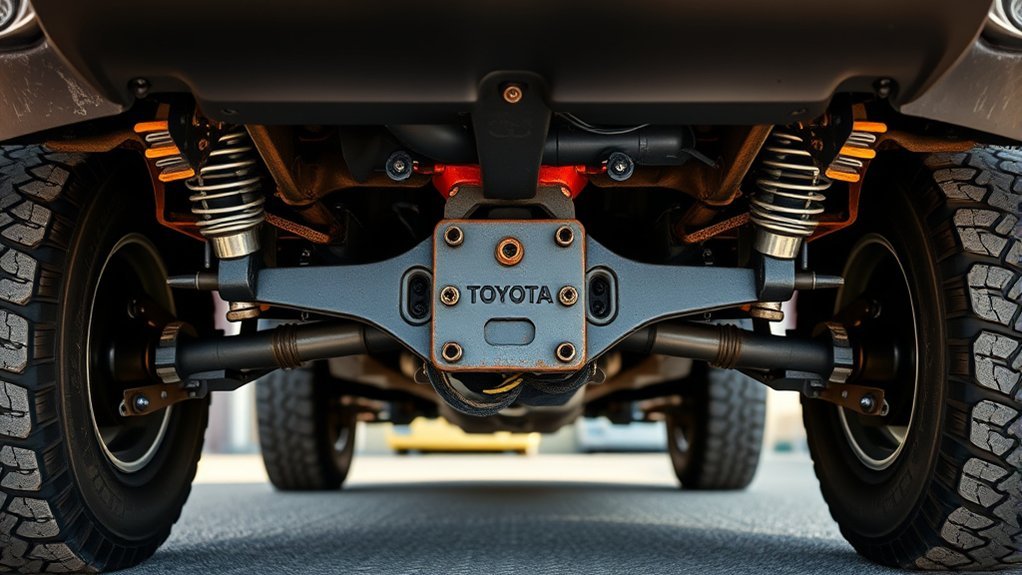
The Toyota Tacoma front jack point is easy to miss if you are unfamiliar with the truck’s underbody. Using the wrong spot can damage the oil pan, skid plate, or suspension. This guide covers the correct lift point, jack selection, stand placement, and safe lifting procedure for the third-generation Tacoma, including the 2017 TRD Sport.
Quick Answer
On a 2016–2023 Toyota Tacoma, the front center floor-jack point is the reinforced center of the front crossmember beneath the engine. Position a properly rated floor jack squarely under this point. After lifting, lower the truck onto jack stands at Toyota’s specified frame support locations. Never work underneath a Tacoma supported only by a hydraulic jack.
At a Glance
| Difficulty | Intermediate; requires correct lifting and support procedures |
| Tools Needed | Rated hydraulic floor jack, compatible jack stands, wheel chocks, and the vehicle-specific lifting diagram |
Where Is the Tacoma Front Jack Point?
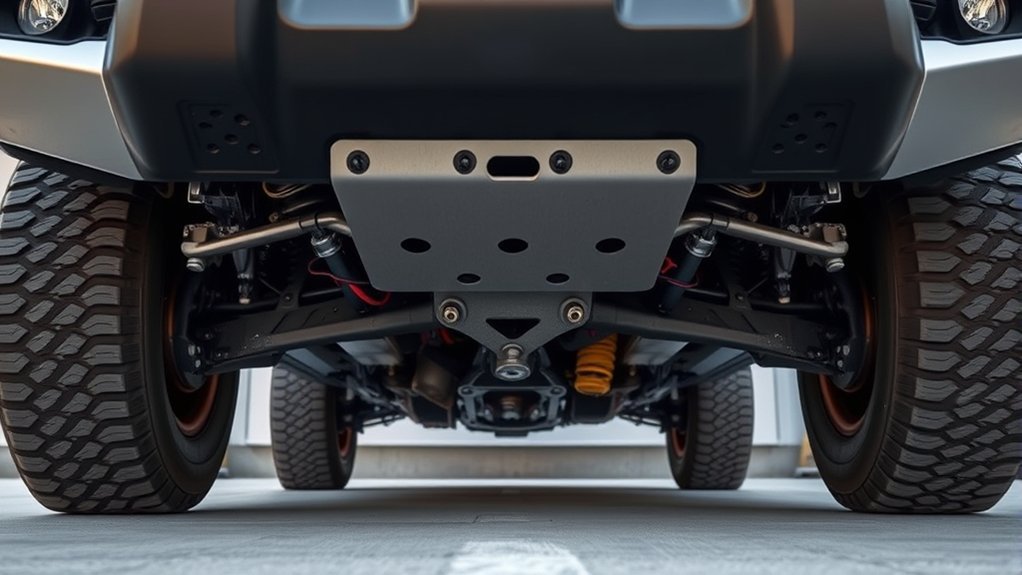
The front center jack point on a third-generation Toyota Tacoma is at the center of the front suspension crossmember. This reinforced structural member runs across the underside of the truck beneath the engine.
On a 2017 Tacoma TRD Sport Double Cab Short Bed (DCSB), you can locate the lifting area by looking underneath the front of the vehicle. The floor-jack contact point is on the central crossmember, not on the bumper, oil pan, or protective skid plate.
The correct position is shown in the Toyota Tacoma service lifting and support diagram, which identifies the front jack location as the center of the crossmember.
The diagram also identifies separate locations for supporting the raised vehicle with safety stands. These are not interchangeable with every part of the crossmember.
Before lifting, inspect the underside for damage, aftermarket skid plates, or suspension modifications that could obstruct the factory lifting point.
How to Identify the Front Crossmember
The front crossmember is a strong metal structure that connects parts of the truck’s front chassis. Its center section provides the designated floor-jack contact area.
To identify it correctly:
- Look underneath the front bumper toward the underside of the engine.
- Find the structural crossmember running across the front chassis.
- Locate its reinforced center section, where the lifting diagram indicates jack placement.
- Check that the jack saddle can contact the structural member directly without pressing against a skid plate or nearby component.
- Compare the location with the Toyota service diagram for your truck’s configuration.
On the 2017 Tacoma, the center lifting section may appear as a raised or bulged area of the crossmember. However, appearance alone is not enough to confirm a safe jack point.
Do not confuse the crossmember with the thin metal or plastic shielding around the engine. Those parts protect components from debris but are not intended to support the truck’s weight.
You can also consult the official 2017 Toyota Tacoma owner’s manual for Toyota’s separate emergency tire-jacking instructions.
The factory tire-jack locations and the central lifting positions used with a service floor jack are different procedures. Use the instructions that match your equipment and repair.
What Jack Should You Use on a Tacoma?
A hydraulic floor jack is generally the preferred tool for raising the front of a third-generation Tacoma during maintenance. It provides a broad base, controlled lifting, and better positioning than a narrow bottle jack.
A 3-ton floor jack is a practical choice for a 2017 Tacoma TRD Sport DCSB, provided its lifting range and rated capacity are suitable for the load. The rating must cover the weight being lifted, and the saddle must reach the designated contact point.
Consider these features when choosing a jack:
- Load capacity: The jack must safely support the load applied during lifting.
- Lifting height: It must reach the crossmember and provide enough height for the intended work.
- Stable base: The wheels and frame must remain supported on a hard, level surface.
- Controlled release: The lowering valve should allow gradual descent.
- Saddle compatibility: The contact surface must fit the lifting point without slipping.
A bottle jack may be useful in limited situations, but its narrow base and saddle require particular care. Do not place loose wood or improvised spacers between the jack and vehicle. Use only lifting attachments approved for the equipment and application.
The factory-supplied tire jack is intended for roadside tire replacement, not routine underbody maintenance. It must never serve as the sole support for anyone working beneath the truck.
For service work, select properly rated jack stands as well. Check whether their advertised capacity applies to each stand or to the pair, and follow the manufacturer’s loading instructions.
Warning: Never crawl beneath a Tacoma held up only by a floor jack or bottle jack. Hydraulic equipment can lose pressure or shift without warning. Use properly rated stands at approved support locations before entering the space beneath the vehicle.
How to Lift the Tacoma Front End
To lift the Tacoma’s front end, use the center of the front crossmember with a suitable floor jack. Complete the safety checks before placing any weight on the jack.
Follow this sequence for a controlled front lift:
- Choose the work area. Park the unloaded truck on hard, level concrete or another suitable rigid surface. Do not lift it on sloped ground, gravel, or soft soil.
- Secure the vehicle. Turn off the engine and keep everyone out of the cab. Chock both sides of the rear wheels before lifting the front axle. Follow Toyota’s applicable service procedure for transmission and parking-brake settings.
- Inspect the equipment. Check the floor jack for leaks, damaged wheels, a bent saddle, or other defects. Confirm the jack and stands have adequate load capacity.
- Find the lift point. Locate the center of the front crossmember under the engine. Verify it against the service diagram.
- Position the jack. Roll the floor jack beneath the crossmember. Center its saddle squarely under the designated reinforced lifting area.
- Begin lifting slowly. Raise the saddle until it contacts the crossmember. Pause to confirm proper alignment and that no shielding or other component is trapped.
- Raise the front end. Pump the jack gradually while watching for saddle movement, unusual tilting, or slipping. Raise the truck only as far as needed to place the stands.
- Install the stands. Position both stands at the manufacturer-designated support locations and adjust them to an equal height.
- Transfer the weight. Lower the jack slowly until the truck rests securely on the stands. Confirm that both stands are properly seated before beginning work.
Toyota’s service procedure for lifting the vehicle specifies using wheel chocks, releasing the parking brake, and placing the transmission in Neutral. That service-lift procedure differs from the parking-brake and transmission settings Toyota gives for roadside tire replacement. Use the instructions appropriate to the work being performed.
Keep the floor jack clear of unintended contact with the oil pan, suspension arms, radiator support, or other nearby parts throughout the lift.
After transferring the load to the stands, visually inspect their position and confirm the vehicle is stable from outside the underbody area.
Never try to straighten or reposition a loaded stand. Raise the vehicle again, make the necessary adjustment, and repeat the weight-transfer process.
How to Place Jack Stands on a Tacoma
Jack stands must contact the structural support points specified for the vehicle. On a third-generation Tacoma, Toyota’s service diagram identifies front and rear support positions along the chassis.
These support points differ from the central locations used by the floor jack. The jack raises the vehicle, while the stands hold it securely during maintenance.
Use government guidance on vehicle support stands to check the basic requirements: adequate load rating, a hard level surface, properly engaged locking mechanisms, and suitable wheel chocks.
Front Stand Placement
The front stands should support the Tacoma at the specified frame-rail support locations, one on each side. Toyota’s lifting diagram marks the correct chassis contact areas.
To position the front stands:
- Identify the support locations shown in the service diagram.
- Inspect both points for corrosion, damage, or attached components that could interfere with the saddle.
- Place one stand beneath each designated support point.
- Adjust both stands to the same appropriate height and fully engage their locking mechanisms.
- Lower the floor jack carefully until the frame rests securely on both stands.
- Inspect the contact surfaces and stand bases before working beneath the truck.
The frame rail should sit securely in the stand saddle. Avoid a setup where the chassis balances on a narrow saddle peak or contacts the stand unevenly.
The Toyota service diagram also warns against supporting certain resin components near the designated support areas. A jack stand must contact the structural support point, not adjacent plastic or shielding.
A lightly engaged floor jack may provide additional redundancy, but it does not replace properly installed stands.
Rear Stand Positioning
Rear support depends on the work being performed and whether the rear suspension must remain loaded or hang free. Toyota’s service lifting diagram identifies rear frame support points for safety stands.
For a conventional service setup, use the designated rear frame locations rather than assuming any section of the axle is suitable.
Some maintenance procedures support the rear axle tubes with suitable equipment. If the procedure specifically calls for axle support, a suitable location may be near the leaf-spring U-bolt plates and inboard of the mounting hardware.
However, this arrangement is not interchangeable with frame support. For suspension repairs, the axle may need separate support while the frame rests on stands.
A castle-top or V-shaped saddle can help cradle a round axle tube when the equipment is compatible. The saddle must contact the tube securely, without resting on a brake line, bracket, weld, or U-bolt.
For central rear lifting on a third-generation Tacoma, Toyota identifies the center of the rear differential housing as the floor-jack location.
Do not confuse that central lifting position with the support locations for stands.
Note: If you cannot positively identify a frame or axle support point, have a qualified technician verify it before lifting. Suspension modifications, corrosion, or previous damage can affect safe equipment placement.
Common Tacoma Jacking Mistakes
The most common Tacoma lifting mistakes involve incorrect jack placement, poorly seated stands, or unstable ground. These problems can damage the truck or cause it to fall.
A safe lift requires three separate checks: the jack must contact the correct lifting point, the stands must support the correct structures, and the ground must remain stable under the load.
Wrong Front Lift Point
The oil pan, skid plate, and suspension arms are not substitutes for the designated front crossmember lifting point.
Using one of these parts can concentrate vehicle weight on a component that was not designed for the load.
- Oil pan: The thin metal housing may bend, crack, or leak if used for lifting.
- Skid plate: Protective panels and their mounting bolts may not be rated to lift the vehicle.
- Suspension arms: Incorrect lifting can damage components or change the suspension’s position unexpectedly.
- Outer frame edge: Lifting from an unapproved edge may cause the saddle to slip or damage the metal.
- Radiator support: This structure is not the designated central jack point.
If the saddle does not align with the crossmember’s designated reinforced section, stop and reposition the jack before applying further pressure.
Unsafe Stand Placement
Unsafe jack stand placement can cause a vehicle to fall even when the floor jack was positioned correctly.
The most serious errors include placing stands on the wrong parts of the chassis, using damaged stands, or failing to lock their height-adjustment mechanisms.
Before transferring weight, check for:
- Stand saddles that do not sit squarely against the support points.
- Frame contact on narrow saddle peaks rather than secure contact surfaces.
- Bent posts, cracked welds, worn locking pawls, or damaged pins.
- Unequal stand heights that could leave one side unstable.
- Stand feet resting on uneven concrete, loose material, or an improvised support.
Never adjust a stand’s height while it carries the truck’s weight.
After lowering the truck onto the stands, inspect all contact points and confirm that the vehicle is stable before entering the work area underneath.
Unstable Jack Setup
An unstable setup usually begins with poor ground conditions, incorrect jack alignment, or inadequate wheel chocking.
Floor jacks need to move slightly as their lifting arms rise and fall. If the jack’s wheels cannot roll normally, the saddle may be pulled sideways against the lifting point.
Avoid these common mistakes:
- Using a floor jack on gravel, dirt, or sloping ground.
- Allowing the saddle to contact the crossmember off-center.
- Using a jack with insufficient rated capacity or lifting height.
- Placing loose wood between the jack and chassis.
- Failing to chock the wheels that remain on the ground.
- Working beneath the truck before transferring its weight to suitable stands.
The UK Health and Safety Executive’s guidance on working under vehicles specifically warns against relying on jacks alone. It also stresses correct lifting points, wheel chocks, and rigid support equipment.
If the Tacoma moves unexpectedly, the jack shifts, or a stand begins to tilt, stop the procedure. Do not reach underneath to correct the problem while the vehicle is unstable.
How to Lower the Tacoma Safely
To lower a Tacoma supported on jack stands, use the floor jack to lift it slightly above the stands, remove them, and lower the truck slowly to the ground.
Before starting, confirm that all repairs are complete and no one is beneath the vehicle.
Follow these steps:
- Clear the area. Remove tools, loose hardware, and equipment from the lowering path. Keep people away from the underside.
- Reposition the floor jack. Center its saddle at the approved front crossmember lifting point.
- Raise the truck slightly. Pump the jack only enough to remove the load from both stands.
- Remove the stands. Take out each stand without placing any part of your body beneath an unsupported area.
- Lower the truck gradually. Open the jack’s release valve slowly, following its operating instructions.
- Watch for movement. Stop if the vehicle tilts unexpectedly or the jack shifts.
- Finish lowering. Allow the tires to contact the ground completely, then remove the jack.
- Complete the final check. Confirm that all equipment is clear, the tires are resting normally, and the vehicle is ready for operation.
Do not release the hydraulic valve suddenly. An uncontrolled descent can damage the truck, jack, or nearby equipment.
After removing the jack, restore the vehicle’s normal parking configuration before moving it.
If wheels were removed, complete the manufacturer’s required wheel-installation and tightening procedure before driving.
Frequently Asked Questions
Where to Place Jack to Lift Front of Truck?
On a third-generation Toyota Tacoma, place a suitable floor jack beneath the center of the front crossmember. Make sure the saddle contacts the reinforced lifting point. After raising the front end, support the truck at Toyota’s specified frame locations with properly rated jack stands.
What Year Was the Worst Year for Toyota Tacoma?
The 2016 Toyota Tacoma is frequently identified as a troublesome model year, particularly because of early third-generation transmission complaints. However, there is no universally accepted worst year. Reliability varies by vehicle condition, maintenance history, and the problems included in each comparison. This does not change the prescribed lifting locations.
Where Are the Jack Points on a 2026 Toyota Tacoma?
The 2026 Toyota Tacoma has designated front and rear tire-jacking locations shown in its owner’s manual. It belongs to the fourth generation, so do not assume the third-generation floor-jack and stand positions in this guide are identical. Use the 2026 model’s lifting diagram and the appropriate service instructions before positioning a floor jack or stands.
Where Is the Jacking Point on a 2017 Toyota Tacoma Located?
The front center floor-jack point on a 2017 Tacoma is the reinforced center of the front crossmember beneath the engine. For a central rear lift, Toyota identifies the center of the rear differential housing. These lifting points are separate from the locations used to support the vehicle with jack stands.
Can You Jack Up a Toyota Tacoma by the Skid Plate?
No. Do not use an ordinary skid plate as the lifting point for a Toyota Tacoma. Skid plates protect components from impacts and debris, but their panels and mounting hardware are not automatically rated to lift the vehicle. Position the jack at Toyota’s designated structural lifting point instead.
Conclusion
The safest way to lift the front of a third-generation Toyota Tacoma is to use the designated center crossmember jack point, then transfer the vehicle’s weight to properly positioned stands. Correct saddle alignment, a level surface, wheel chocks, and careful lowering all matter.
Before your next maintenance job, identify both the lifting point and the stand locations on the Toyota service diagram. If either location is uncertain, have a qualified technician confirm it before raising the vehicle.
Sources
- Toyota Tacoma Service Manual: Vehicle Lift and Support Locations: Third-generation central lifting points, frame support positions, and manufacturer safety precautions.
- Toyota 2017 Tacoma Owner’s Manual: Factory tire-jacking procedure, emergency jack restrictions, and safe lifting warnings.
- Australian Product Safety: Vehicle Support Stands Guide: Load ratings, stand positioning, locking mechanisms, and safe support requirements.
- UK Health and Safety Executive: Working Under Vehicles: Proper vehicle support, lifting equipment, wheel chocks, and working-surface safety.
- Toyota 2026 Tacoma Owner’s Manual: Model-specific emergency jacking instructions for the fourth-generation Tacoma.

