
The Toyota Tacoma cabin air filter replacement interval is not the same for every model year. For example, Toyota’s U.S. maintenance guide lists replacement at 20,000 miles or 24 months for the 2023 Tacoma, while the redesigned 2024 Tacoma guide lists replacement at 30,000 miles or 36 months. Heavy traffic, dirt roads, dusty or desert conditions, weak HVAC airflow, or easy window fogging can justify an earlier inspection or replacement.
Last updated: September 19, 2026. Schedule examples below were checked against Toyota U.S. maintenance guides.
Quick Answer
Check the maintenance guide for your exact Tacoma year before using a fixed interval. Toyota lists 20,000 miles/24 months for the 2023 Tacoma and 30,000 miles/36 months for the 2024 Tacoma. Inspect sooner in heavy traffic, dirt, dust, smoke, or pollen, and replace the filter early if it is loaded, wet, damaged, or airflow is noticeably reduced.
Key Takeaways
- Toyota’s factory interval changed across Tacoma model years, so use the maintenance guide for your exact truck rather than a universal mileage claim.
- The 2023 U.S. Tacoma guide lists cabin-filter replacement at 20,000 miles/24 months; the 2024 guide lists 30,000 miles/36 months.
- Weak vent airflow, easy window fogging, persistent odors, or visible debris are reasons to inspect the filter sooner.
- Most serviceable Tacoma cabin filters are accessed behind the glove box, but the cover, tray, and markings vary by generation.
- Match the replacement filter to your VIN or exact year and trim, and follow the filter’s “UP” or “AIR FLOW” marking exactly.
At a Glance
| Factory Interval Examples | 2023: 20,000 miles/24 months; 2024: 30,000 miles/36 months |
| Inspect Earlier When | Heavy traffic, dirt or dusty roads, smoke, pollen, weak airflow, odors, or easy window fogging |
| Typical Location | Behind the glove box on many serviceable Tacoma models |
| DIY Time | Often under 20 minutes once the correct filter and access method are confirmed |
What Does the Toyota Tacoma Cabin Air Filter Do?
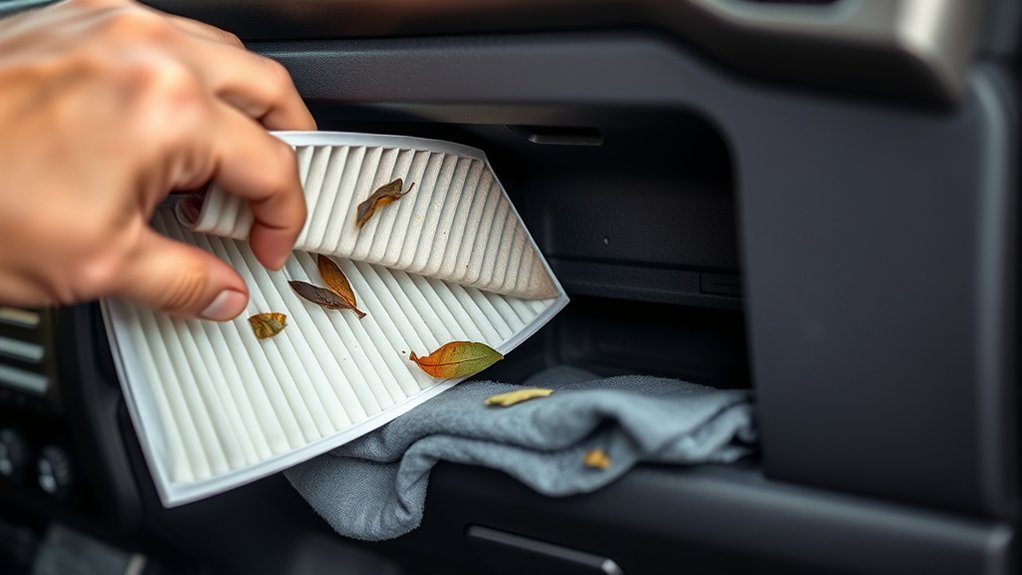
Your Tacoma’s cabin air filter sits in the HVAC intake path. As the blower draws outside air into the truck, the filter captures particles such as road dust, pollen, leaves, and other debris. A clean filter supports normal vent airflow and helps keep loose debris from reaching the blower housing and air ducts.
The cabin air filter is different from the engine air filter. The cabin filter serves the passenger compartment, while the engine filter protects the engine’s intake system. Replacing one does not replace the need to inspect the other.
Fitment and access can differ by model year. Many Tacomas with a serviceable cabin filter use a compartment behind the glove box, but you should confirm the location and procedure through Toyota’s manual and warranty portal. Use your VIN or exact year and trim when selecting a replacement because a filter that looks similar may not seal correctly.
What Happens When a Tacoma Cabin Air Filter Gets Dirty?
As the filter fills with debris, resistance to airflow can increase. You may notice weaker air from the vents, slower cabin heating or cooling, or more blower noise at a familiar fan setting. Replacing a loaded filter can restore airflow when the filter is the cause.
A damp or contaminated filter can also contribute to unpleasant odors. However, replacing the filter will not fix every smell. Water intrusion, a dirty evaporator case, leaves in the air intake, or microbial growth elsewhere in the HVAC system may require additional cleaning or diagnosis.
Regular inspection also gives you a chance to find rodent nesting material, damaged filter media, or moisture before the problem spreads. Do not claim that a filter change guarantees protection from allergies, prevents every HVAC repair, or removes all pollutants. A cabin filter is one part of the vehicle’s ventilation system, not a medical-grade air purifier.
Key Signs Your Cabin Air Filter Needs Replacement
Inspect the filter when you notice a change in airflow, odor, dust, or defogging performance. These symptoms are useful clues, but they are not a complete diagnosis. If a clean filter does not correct the problem, inspect the rest of the HVAC system or ask a qualified technician for help.
Reduced Airflow From Vents
A heavily loaded cabin filter can restrict airflow through the vents. Compare airflow at several fan speeds and check whether every vent is affected. If only one vent is weak, the problem may involve a closed damper, blocked duct, or blend-door issue rather than the filter.
Remove the filter and inspect the pleats. Replace it if the surface is packed with dust, leaves, insects, or other debris, or if the media is distorted and no longer sits flat in the frame.
Musty Odors Inside Cabin
A musty smell when the fan starts can come from a damp filter, but it can also come from moisture on the evaporator, a clogged drain, leaves in the cowl intake, or water entering the HVAC housing. Replace a wet, mold-stained, or foul-smelling filter instead of trying to reuse it.
If the odor returns soon after replacement, do not keep changing filters. Check for water leaks, verify that the evaporator drain is working, and have the HVAC case inspected if needed.
Frequent Window Fogging Issues
A restricted filter can reduce the volume of air available for windshield defogging. Still, fogging can also result from high cabin humidity, wet floor mats, recirculation mode, a coolant leak, or an HVAC door problem.
Use fresh-air mode and the windshield defog setting, remove wet items from the cab, and inspect the filter if airflow is weak. Seek service promptly if you smell coolant, see an oily film on the glass, or find unexplained moisture inside the truck.
How Often Should You Change a Toyota Tacoma Cabin Air Filter?

Use the maintenance guide for your exact model year. Toyota’s schedule is not identical across Tacoma generations. In the U.S. 2023 Tacoma guide, the cabin air filter is scheduled for replacement at 20,000 miles or 24 months. In the redesigned 2024 Tacoma guide, Toyota schedules cabin-filter replacement at 30,000 miles or 36 months. That change is why a generic “replace every 10,000” or “replace every 15,000 miles” rule can be wrong for a specific Tacoma.
Toyota also notes that heavy traffic, dirt roads, and urban, dusty, or desert conditions can shorten filter life. On the 2023 Tacoma, Toyota specifically says earlier replacement may be needed if HVAC airflow drops or the windows fog easily in Fresh mode. Those condition-based signs are more useful than blindly replacing a clean filter early.
| Tacoma Example | Toyota Schedule | What Can Move It Earlier |
|---|---|---|
| 2023 U.S. Tacoma | Replace at 20,000 miles or 24 months | Heavy traffic, dirt roads, urban/dusty/desert use, reduced HVAC airflow, or easy window fogging |
| 2024 U.S. Tacoma | Replace at 30,000 miles or 36 months | Inspect earlier when operating conditions load the filter faster or symptoms appear |
| Any other model year | Check the exact Toyota maintenance guide for that year | Visible loading, moisture, damage, odor, reduced airflow, or unusually dirty driving conditions |
Note: Toyota changed the factory interval between at least the 2023 and 2024 U.S. Tacoma schedules. Treat the owner’s or warranty-maintenance guide for your exact year as the final authority.
How Do You Inspect a Tacoma Cabin Air Filter?
For an interval check, you only need to expose the filter, inspect its condition, and reinstall it correctly. Access details vary by generation, so use your model-year manual before forcing a glove-box stop, damper, cover, or tray. For a full replacement walkthrough, see the site’s Toyota Tacoma cabin air filter replacement guide.
- Switch the truck off. Park safely, set the parking brake, and turn off the HVAC fan.
- Access the filter housing. Empty and lower the glove box only as your model-year instructions require, then release the filter cover without forcing its tabs.
- Record the filter direction. Photograph the old filter and its markings before removal. “UP” and “AIR FLOW” arrows do not mean the same thing.
- Inspect the media. Look for packed dust, leaves, tears, moisture, distorted pleats, odor, or rodent debris.
- Clean only the accessible housing. Use a small vacuum or lightly dampened cloth without pushing debris deeper into the blower or ducts.
- Reinstall or replace. Reuse only a filter designed to be reusable and still in serviceable condition. Otherwise install the correct VIN- or model-year-matched filter and confirm the cover latches fully.
Warning: Wear gloves and avoid disturbing rodent droppings or a heavily mold-contaminated filter. If you find nesting material, strong contamination, or signs that wiring has been chewed, stop and arrange professional cleaning and inspection.
Tips for DIY Cabin Air Filter Replacement
Before buying a filter, use Toyota’s parts catalog or another reliable catalog that checks your VIN or exact vehicle details. Confirm the filter dimensions, frame shape, and any activated-carbon option. A thicker filter is not automatically better if it reduces airflow or does not fit the housing.
Handle the new filter by its frame or edges to avoid crushing the pleats. Install it squarely so air cannot bypass the media. Make sure the cover latches completely and that no glove-box contents interfere with the housing.
Do not wash a disposable paper or electrostatic cabin filter. Do not use high-pressure compressed air, which can damage the media and blow trapped dust back into the work area. Follow the cleaning method supplied by the manufacturer only when the filter is specifically sold as washable or reusable.
Pro Tip: Write the installation date and mileage on the filter frame or keep a photo of the receipt. That record makes the next inspection easier without turning the date into a rigid replacement deadline.
What Should You Expect to Pay for a Cabin Air Filter Replacement?

Cabin air filter prices and labor rates change by model year, filter media, brand, seller, and location. A basic particle filter usually costs less than an activated-carbon or premium filter, while professional service adds labor and may include an HVAC inspection.
Instead of relying on a fixed national price, check current local parts listings and ask the shop what the quote includes. Confirm whether the service covers only filter replacement or also includes odor treatment, evaporator cleaning, or diagnosis. Those are separate services and should not be bundled without explanation.
How to Get an Accurate Replacement Price
The most accurate estimate comes from a VIN-matched filter price plus a current labor quote. Toyota’s genuine-parts page notes that parts are selected to fit vehicle specifications, and its online catalog asks you to add the vehicle before browsing fitment. Aftermarket filters can also work when the catalog clearly lists your exact Tacoma application.
Watch for unusually low-cost filters with weak frames, incorrect dimensions, or unclear fitment. Also avoid assuming the most expensive filter provides the best airflow. The correct balance depends on the filter design and your HVAC system.
DIY vs. Professional Services
DIY replacement usually offers the lowest total cost because the job often requires little time and no special equipment. Professional service may be worth paying for when the glove box will not release, the filter compartment is damaged, the old filter is wet, odors remain after replacement, or you suspect a leak or rodent problem.
Ask a shop to show you the removed filter and explain any additional recommendation. A dirty filter supports replacement, but it does not automatically prove that the evaporator, blower motor, or ducts need paid cleaning.
Maintaining Clean Air Quality in Your Tacoma
A fresh filter helps, but clean cabin air also depends on keeping moisture and pollution sources under control. The U.S. Environmental Protection Agency explains that source control, ventilation, and proper filter maintenance all affect indoor air quality. In a vehicle, that means combining filter care with a clean intake area and sensible HVAC use.
- Keep the cowl intake clear. Remove leaves and debris from the area near the base of the windshield.
- Inspect after severe dust or smoke exposure. Do not wait for the next calendar reminder if the truck has been used in unusually dirty air.
- Dry the cab. Remove wet mats and address water leaks that raise humidity and encourage odors.
- Use recirculation selectively. Recirculation can reduce outside dust for short periods, but fresh-air mode helps clear humidity and stale air.
- Choose the correct filter. Activated-carbon filters may help with some odors, but they do not remove every gas or pollutant and must still fit properly.
- Diagnose recurring symptoms. If airflow, fogging, or odor problems continue with a clean filter, inspect the blower, evaporator drain, air doors, and intake system.
A cabin filter should be replaced because its condition or the vehicle’s maintenance guide calls for it, not simply because a universal mileage claim appears online.
Related Guides
Frequently Asked Questions
How often should I change the cabin air filter on my Toyota Tacoma?
Use the maintenance guide for your exact model year. Toyota lists replacement at 20,000 miles/24 months for the 2023 U.S. Tacoma and 30,000 miles/36 months for the 2024 U.S. Tacoma. Inspect sooner in heavy traffic, dirt, dust, smoke, or pollen, and replace early if the filter is loaded, wet, damaged, or airflow is reduced.
How long does a Toyota cabin air filter last?
There is no one Tacoma-wide lifespan. Toyota’s scheduled replacement point changes by model year, and dirty operating conditions can shorten service life. Use the exact maintenance guide, then inspect sooner if airflow drops, odors appear, or the filter is visibly loaded or damp.
How do I know it is time to change my cabin filter?
Replace it when the pleats are packed with debris, the media is torn or damp, the frame is distorted, or airflow improves after removing a heavily loaded filter. Musty odors and excessive dust are also reasons to inspect, although those symptoms may have other causes.
Should you change the cabin air filter every 10,000 miles?
Not automatically. Ten thousand miles may be a reasonable inspection point for some trucks, but it is not a universal Tacoma replacement rule. Use your model-year schedule and the filter’s actual condition.
Can you clean and reuse a Tacoma cabin air filter?
Reuse only a filter that its manufacturer identifies as washable or reusable, and follow that product’s instructions. Replace ordinary disposable paper or electrostatic filters. Washing or blasting them with compressed air can damage the media.
Which way does the Tacoma cabin air filter go?
Follow the replacement filter’s marking and your owner’s manual. An “UP” arrow points upward, while an “AIR FLOW” arrow follows the direction of airflow. Photograph the old filter before removal and do not assume the two labels mean the same thing.
Where is the cabin air filter on a Toyota Tacoma?
On many serviceable Tacoma model years, the cabin air filter is behind the passenger-side glove box in the HVAC housing. The exact glove-box release, cover, tray, and filter orientation vary by generation, so confirm the procedure in the manual for your truck.
Conclusion
The right Toyota Tacoma cabin air filter replacement interval comes from the maintenance guide for your exact model year. Toyota’s U.S. schedule changed from 20,000 miles/24 months on the 2023 Tacoma to 30,000 miles/36 months on the 2024 Tacoma, so a universal interval is not reliable.
Inspect sooner when the truck sees heavy traffic, dust, dirt roads, smoke, or pollen, and replace a loaded, damaged, or wet filter. If weak airflow, fogging, odor, or moisture remains with a clean filter, diagnose the rest of the HVAC system instead of repeatedly replacing the filter.
Sources
- Toyota Manuals and Warranties — model-year owner’s manuals and warranty-maintenance guides.
- 2023 Toyota Tacoma Warranty & Maintenance Guide — lists cabin-air-filter replacement at 20,000 miles/24 months and condition-based early replacement guidance.
- 2024 Toyota Tacoma Warranty & Maintenance Guide — lists cabin-air-filter replacement at 30,000 miles/36 months.
- Toyota Interactive Manual — vehicle-specific operating and maintenance information.
- Toyota Genuine Parts — fitment guidance and access to maintenance parts.
- Toyota Parts: Maintenance Filters — vehicle and VIN-based filter lookup.
- U.S. Environmental Protection Agency: Indoor Air Quality Guide — background on particles, ventilation, moisture, and filter maintenance.
