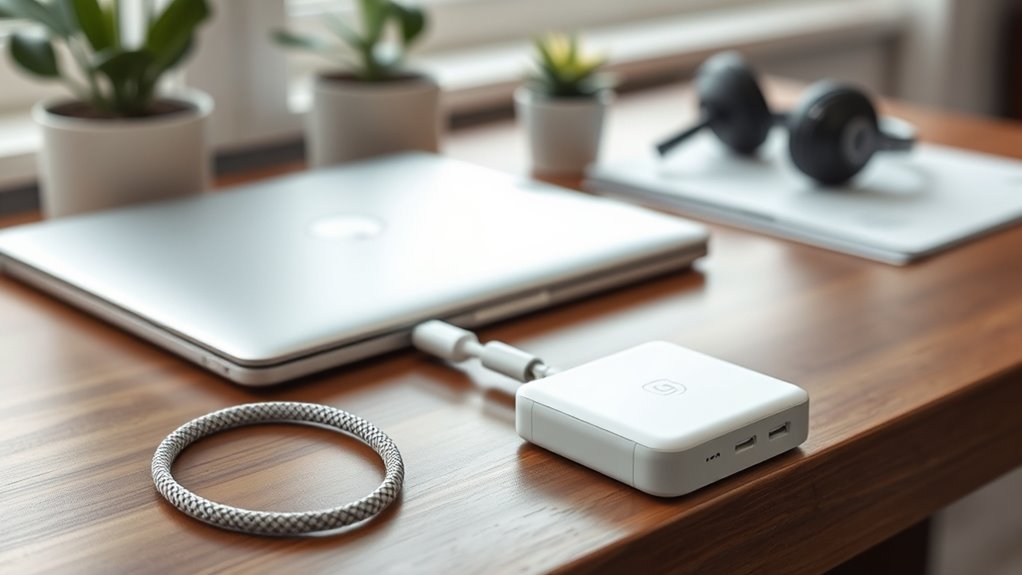
The SM65CL-01 is a part number used on many generic 65W USB-C Power Delivery laptop chargers, mostly sold as replacements for Chromebooks and USB-C laptops from Dell, HP, Lenovo, Acer, Asus and Samsung. It is not one branded product: several sellers use the same SM65CL-01 code, so quality and safety depend on who makes the unit you buy.
Here is what an SM65CL-01 charger typically offers, how to check compatibility, and what to look for before buying.
SM65CL-01 Charger: Typical Specs
| Spec | Typical SM65CL-01 listing |
|---|---|
| Max output | 65W (20V at 3.25A) |
| Standard | USB-C Power Delivery (PD) |
| Lower PD levels | Usually 5V, 9V and 15V for phones and tablets (varies by seller) |
| Connector | USB-C (often a fixed cable) |
| Protections claimed | Over-voltage and short-circuit protection |
| Marks claimed | CE, FCC, RoHS on many listings |
| Cross-reference part numbers | Often listed with SM45CL-01, SK90200325, ADP200325A |
Figures come from retailer listings. Because several sellers use the same part number, check the label photos on the listing you are buying.
Which Laptops Work With an SM65CL-01 Charger?
Sellers commonly list these families as compatible:
- Dell: Latitude 5320, 5420, 5520 and Dell Chromebook 3100 and 7200 series; XPS 13 9360, 9370, 9380.
- HP: Chromebook x360 models and some Spectre, Elite and Pro x2 tablets.
- Acer: many Chromebook Spin and Chromebook models.
- Lenovo, Asus, Samsung: USB-C Chromebooks and laptops that charge at 65W or less.
These are seller claims, not manufacturer approvals. Use the checklist below to confirm your own model.
Compatibility Checklist
- Confirm USB-C charging. Your laptop’s charging port should be USB-C (often marked with a lightning bolt or plug icon). Barrel-plug laptops need an adapter that matches their tip.
- Read your original charger label. If it says 65W or less (for example 20V 3.25A), a 65W charger is a direct match.
- If your laptop came with 90W or more, expect slower charging or a warning under heavy load.
- Check the cable and plug. Fixed-cable units can’t be swapped if the cable fails. With a detachable cable, full 65W (20V at 3.25A) needs a 5A e-marked USB-C cable; a standard 3A cable tops out at 60W.
- Check the region plug (US Type A, UK, EU) matches your outlets.
What to Check Before You Buy
- Safety listing: prefer units with UL, ETL or a similar recognized certification, not just CE/FCC claims.
- Seller reputation and return policy: generic chargers vary between batches.
- Weight and heat: a very light charger that runs hot under load is a warning sign.
- Warranty terms: these vary by seller; read them on the listing rather than assuming.
Pros and Limitations
Pros: covers many USB-C Chromebooks and laptops; one charger for laptop and phone; usually cheaper than OEM replacements.
Limitations: not a single verified product; certifications and build quality vary; may be underpowered for laptops shipped with 90W+ chargers.
Alternatives
- Your laptop maker’s own USB-C adapter, such as the one in our Lenovo USB-C 65W adapter guide.
- A higher-wattage branded charger, like the one covered in our Apple 70W USB-C adapter laptop compatibility guide.
- A multi-port GaN charger if you also charge drones or phones; see our USB-C PD charger picks.
FAQ
What is an SM65CL-01 charger?
SM65CL-01 is a part number used by many aftermarket 65W USB-C laptop chargers. It is not a single branded product, so specs, build quality and certifications depend on the seller.
Will an SM65CL-01 charger work with my laptop?
It should work with laptops that charge over USB-C Power Delivery and need 65W or less. Check that your laptop charges via USB-C and compare the wattage on your original charger label.
Can I use a 65W USB-C charger on a laptop that came with a 90W charger?
It will often work, but the laptop may charge slowly or drain under heavy load, and some laptops show a low-wattage warning.
Is it safe to use a 100W USB-C charger on a 65W laptop?
Generally yes. With USB-C Power Delivery, the laptop and charger negotiate the power level, so the laptop only draws what it needs.
What certifications should a generic USB-C laptop charger have?
Look for a recognized safety listing such as UL or ETL in the US, plus FCC marking. Many SM65CL-01 listings only mention CE, FCC and RoHS, which are not the same as an independent safety certification.

