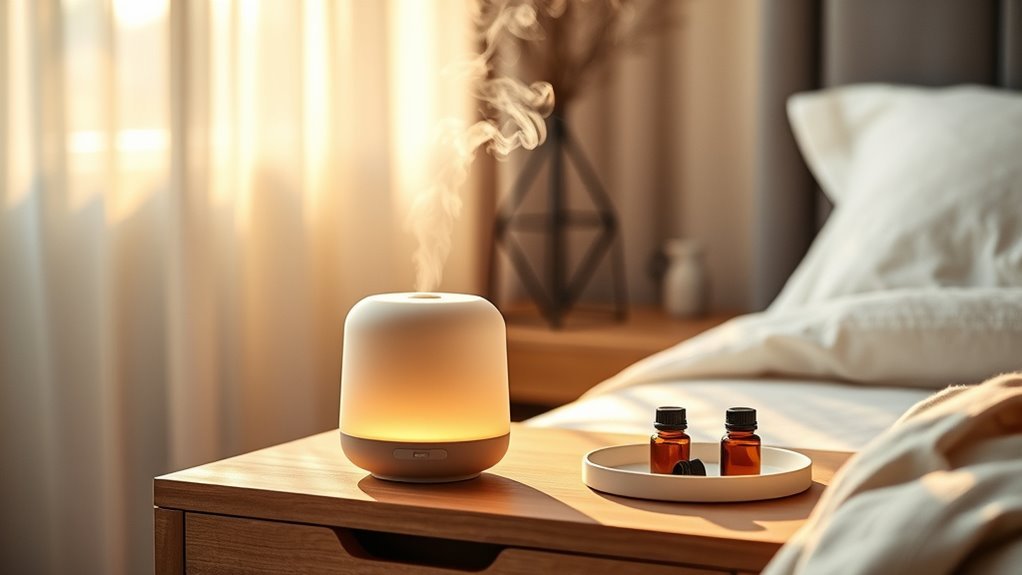
Smart diffuser personalized scent aromatherapy is becoming more practical in 2026 as connected fragrance devices add app controls, schedules, adjustable intensity, timers, and, on some models, voice-assistant integration. These features can make home scenting easier to customize by room and time of day. However, claims about AI-driven health optimization, hormone changes, stress detection, and medical benefits often go beyond what current consumer devices and aromatherapy research can support.
Quick Answer
Smart diffusers personalize home fragrance mainly through app-controlled schedules, timers, intensity settings, and sometimes voice control or adaptive output. Aromatherapy may help some people feel more relaxed or enjoy a bedtime routine, but evidence for treating anxiety, insomnia, hormonal changes, or other medical conditions remains limited.
Key Takeaways
Key Takeaways
- Current smart diffusers commonly use apps to control scent intensity, timers, schedules, and device settings.
- Some models also support Alexa or Google Assistant, but smart-home compatibility varies and should be checked before buying.
- Personalized scent routines can be built around personal preference and time of day, but scents should not be treated as proven medical therapy.
- Lavender aromatherapy has been studied for sleep, stress, and anxiety, but major health authorities still describe the evidence as limited or uncertain.
- People with asthma or fragrance sensitivity should use extra caution, and concentrated essential oils should be kept away from children and pets.
- AI and biometric scent systems exist mainly as emerging concepts and research prototypes rather than standard features in most home diffusers.
What Is Smart Diffuser Personalized Scent Aromatherapy?
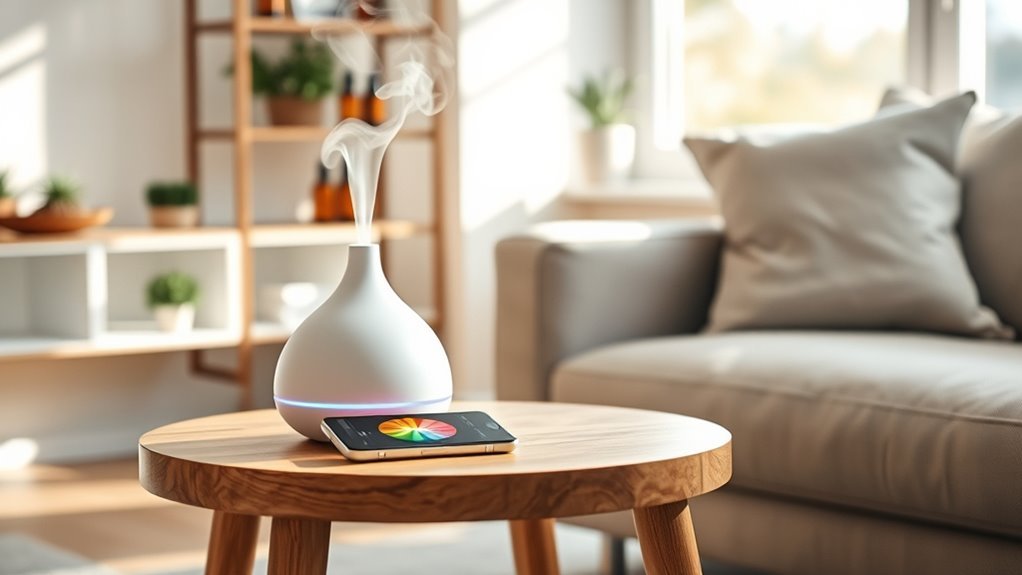
Smart diffuser personalized scent aromatherapy describes connected fragrance or essential-oil devices that let users adjust how and when scent is released. Depending on the product, controls may include a smartphone app, Wi-Fi or Bluetooth connectivity, schedules, timers, multiple fragrance slots, adjustable output, and voice commands.
For example, current Pura scheduling documentation lets users program fragrance for selected days and times, while the company also offers adjustable intensity and timers. Aera likewise documents app-based schedules and selectable fragrance intensity.
The practical benefit is control rather than medical personalization. A user might choose a brighter fragrance in the morning, reduce intensity during work hours, turn scent off when nobody is home, and schedule a preferred evening fragrance before bedtime.
Note: A smart fragrance diffuser is not automatically an aromatherapy diffuser. Some systems use proprietary fragrance cartridges, while other devices disperse user-added essential oils. Check what the manufacturer says the device is designed to use.
The most useful personalization in current smart diffusers is straightforward: control the fragrance, intensity, timing, and room based on your own preferences.
Why Personalized Scenting Is Growing in 2026
Personalized scenting fits a wider smart-home pattern: people increasingly expect household devices to remember schedules, run automatically, and respond to simple app or voice commands. Fragrance devices are applying that same convenience to home scenting.
The appeal is easy to understand. Instead of leaving a diffuser running continuously, users can program scent for the hours when a room is occupied, lower the intensity in smaller spaces, or create different routines for mornings and evenings.
Wellness marketing is also part of the trend. Fragrances are frequently promoted for relaxation, focus, or sleep routines. Those uses can be personally meaningful, but they should be separated from claims that a diffuser diagnoses stress, changes hormones, or treats a health condition.
Biohacking With Scent
The term biohacking is sometimes used in scent marketing to describe choosing fragrances around goals such as alertness, relaxation, or bedtime. In practice, most home scent routines are much simpler: users notice which aromas they enjoy and schedule those scents for particular activities or times of day.
A pleasant scent can influence how a space is perceived, and smell is closely linked with memory and emotion. However, that does not mean a consumer diffuser can reliably control cortisol, serotonin, GABA, or other biological markers.
The National Center for Complementary and Integrative Health notes that aromatherapy has been studied for problems including insomnia, but rigorous evidence remains limited.
For that reason, it is more accurate to treat a personalized scent routine as an environmental preference or complementary wellness practice rather than a medical biohacking intervention.
Biometric Personalization Tools
Biometric scent delivery is an interesting research direction, but it is not yet a standard feature of mainstream home smart diffusers.
Researchers have demonstrated wearable prototypes that can monitor physiological signals and release scents according to predefined rules. For example, the experimental BioEssence system described in a published engineering study combined physiological sensing with wearable scent release.
That is different from a typical consumer diffuser. Most current home products personalize scent through schedules, timers, intensity controls, fragrance selection, geofencing, environmental adjustments, or voice commands rather than by medically interpreting stress, sleep quality, or hormonal state.
AI-driven fragrance recommendation systems may continue to develop, but buyers should look at the exact documented features of a device rather than assuming that the word “smart” means biometric or AI-based health personalization.
How Smart Diffusers Personalize Scents in Real Time
Smart diffusers make home fragrance more responsive mainly by letting users change output without manually adjusting the device. Wi-Fi-connected models can provide remote access, while scheduled routines can change scent behavior automatically throughout the day.
| Feature | What It Actually Does |
|---|---|
| App control | Lets users change power, fragrance settings, or intensity from a phone. |
| Schedules and timers | Runs the diffuser only during selected times or for a set duration. |
| Adjustable intensity | Reduces or increases fragrance output to suit room size and preference. |
| Voice control | Allows compatible models to respond to supported Alexa or Google Assistant commands. |
| Adaptive diffusion | On certain models, output can adjust for factors such as room conditions or fragrance performance. |
| Biometric triggering | Still largely experimental rather than a normal home-diffuser function. |
Voice control is real on some products. Pura, for example, documents both Amazon Alexa integration and Google Assistant support. Compatibility is not universal, however, so buyers should verify the exact model and platform before purchase.
Likewise, adaptive output should not automatically be described as air-quality sensing. Some products adjust diffusion using environmental or fragrance data, but that is different from measuring indoor pollution or detecting a user’s physical condition.
The Wellness Science Behind Scent and Mood
Smell can influence perception, memory, preference, and emotion because olfactory processing interacts closely with brain systems involved in those experiences. That helps explain why a familiar aroma can feel comforting or why an unpleasant fragrance can quickly change how a room feels.
Research has also examined aromatherapy for stress, anxiety, and sleep. The evidence is not strong enough to claim that a home diffuser reliably treats these conditions. NCCIH states that more high-quality research is needed before firm conclusions can be made about many promoted lavender benefits.
Olfactory Pathways
Odor molecules are detected by receptors in the nose, and olfactory signals are processed through brain regions involved in smell, memory, and emotion. This close relationship helps scents produce strong associations with people, places, and past experiences.
That connection does not mean every fragrance produces a predictable psychological response. Personal history, culture, concentration, expectations, room conditions, and individual sensitivity can all change how a scent feels.
For a smart diffuser, personalization therefore makes practical sense: allowing users to choose their own fragrance and intensity is more reliable than assuming one aroma will produce the same response in everyone.
Mood And Hormones
Aromatherapy research has explored stress-related physiological measurements, but results vary substantially by study design, scent, population, dose, and delivery method.
It is therefore too strong to say that ordinary home fragrance reliably raises serotonin, lowers cortisol, or alters GABA in a clinically useful way.
Lavender is one of the more frequently studied aromas. According to NCCIH’s lavender review, some studies suggest possible benefits, but evidence for aromatherapy-related anxiety, stress, sleep quality, and insomnia remains uncertain and needs stronger research.
The safest interpretation is that a pleasant fragrance may support a relaxing routine for some people. It should not replace established treatment for anxiety, insomnia, depression, or another medical condition.
Circadian Scent Support
People can use different scents as cues for different parts of the day, much like changing lighting or music. A morning fragrance can become associated with starting work, while a familiar evening aroma can become part of a wind-down routine.
| Time | Scent Example | Why Someone Might Choose It |
|---|---|---|
| Morning | Citrus | Bright, fresh aroma associated with starting the day. |
| Morning | Peppermint | Sharp, cooling scent some people prefer while working. |
| Daytime | Soft woods or light florals | Lower-key background fragrance for occupied living or work areas. |
| Evening | Lavender | Traditionally associated with relaxation and bedtime routines. |
| Evening | Chamomile-inspired blends | Soft aroma that some users prefer during quiet evening activities. |
This type of routine can create useful behavioral cues, but a fragrance schedule has not been established as a treatment for circadian-rhythm disorders.
Warning: Aromatherapy is not a substitute for medical care. Stop using a fragrance if it causes coughing, wheezing, headache, nausea, eye irritation, or breathing difficulty. People with asthma or known fragrance sensitivity should be especially cautious.
Best Scent Profiles for Morning, Day, and Night
The best smart diffuser scent profile is the one that smells pleasant at a comfortable intensity without causing irritation. Time-of-day recommendations are useful starting points, not biological rules.
For mornings, citrus scents such as lemon, grapefruit, or orange are popular choices because their aroma feels bright and fresh to many users. Peppermint is another strong option, although its intensity can become overwhelming in a small room.
During the day, lighter woods, green notes, subtle florals, and mild citrus blends can provide background fragrance without dominating a workspace or living area.
Lavender is commonly associated with evening aromatherapy, and some people make it part of a bedtime routine. Evidence does not support guaranteeing better sleep from diffusion alone, so comfort and personal preference should guide the choice.
Instead of searching for a supposedly perfect “functional” fragrance, test one scent at low intensity and see how you respond. Personal tolerance matters more than trend labels such as focus, adaptogenic, detox, or hormone-balancing.
How to Build a Smart Scent Routine at Home
A good smart scent routine is simple: select a compatible fragrance, begin at low intensity, schedule it only when the room is occupied, and adjust the timing based on comfort rather than running the diffuser continuously.
At a Glance
| Time Required | About 10–15 minutes for initial setup and scheduling |
| Difficulty | Easy |
| Tools Needed | Compatible smart diffuser, approved fragrance or essential oil, smartphone, and Wi-Fi or Bluetooth if required |
| Cost | Varies by device, refill system, fragrance use, and subscription requirements |
- Check compatibility first. Use only fragrances, cartridges, essential oils, or water specified by the diffuser manufacturer.
- Place the diffuser correctly. Keep it stable, away from children and pets, and follow the manufacturer’s clearance and ventilation guidance.
- Start at low intensity. A small amount of fragrance is easier to increase than an overpowering room is to clear.
- Create a short schedule. Run the diffuser around the period when the room will actually be occupied.
- Test one routine at a time. Avoid changing scent, intensity, and timing simultaneously if you are trying to learn what feels comfortable.
- Turn it down if you stop noticing it. Olfactory adaptation can make people less aware of a fragrance even while it remains present.
- Clean or maintain it as directed. Ultrasonic tanks, cartridge systems, nebulizers, and cold-air diffusers can have very different maintenance requirements.
Pro Tip: Schedule fragrance for occupied periods instead of leaving the diffuser running continuously. This can reduce fragrance use and makes it easier to notice when the intensity is too high.
[Amazon Products Picked for You]
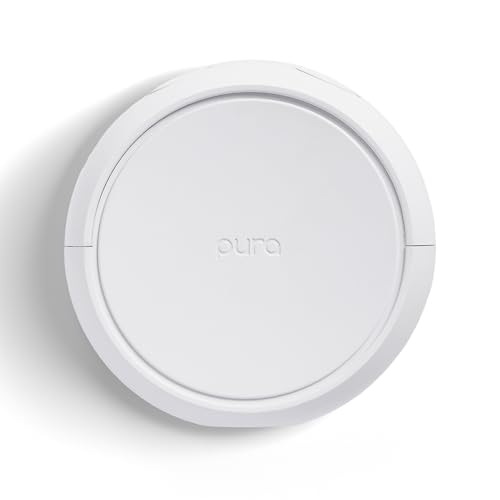
Smart Home Fragrance Diffuser: The Pura Home smart fragrance diffuser uses innovative smart features paired with premium, clean scents to give you the most modern, customized, and high-end scenting experience possible *Fragrances sold separately

Smart Home Fragrance Diffuser: Our diffuser features Puralast technology, providing long-lasting coverage in every smart vial refill of high-quality, inviting fragrances for your home, office, or apartment; Pura diffuser refills sold separately
Smart Diffuser Features That Matter Most
Useful smart-diffuser features are the ones that improve control, compatibility, and consistency rather than simply adding marketing terminology.
- Adjustable intensity: especially important for bedrooms, offices, and small rooms.
- Schedules and timers: useful for avoiding unnecessary continuous operation.
- Remote control: lets Wi-Fi-connected devices be changed without reaching the diffuser.
- Room-size guidance: helps prevent buying a device that is too weak or excessively powerful for the intended space.
- Refill format: proprietary cartridges are convenient but can create brand lock-in, while open essential-oil systems offer more choice.
- Maintenance: check whether the device needs tank cleaning, nozzle cleaning, cartridge replacement, or other regular care.
- Voice compatibility: verify Alexa, Google Assistant, Apple Home, Matter, or other support instead of assuming it is included.
- App longevity and privacy: connected devices may require an account, cloud service, location permission, Bluetooth, or Wi-Fi access.
- Fragrance transparency: review the manufacturer’s ingredient and safety information when available.
Aesthetics still matter, but a stylish diffuser with poor intensity control or expensive proprietary refills may be less useful over time than a simpler system with reliable scheduling.
Note: “Smart” does not guarantee universal smart-home support. Check the exact model’s compatibility before purchase, particularly if Apple Home, Matter, Alexa, or Google Assistant integration is important to you.
[Amazon Products Picked for You]
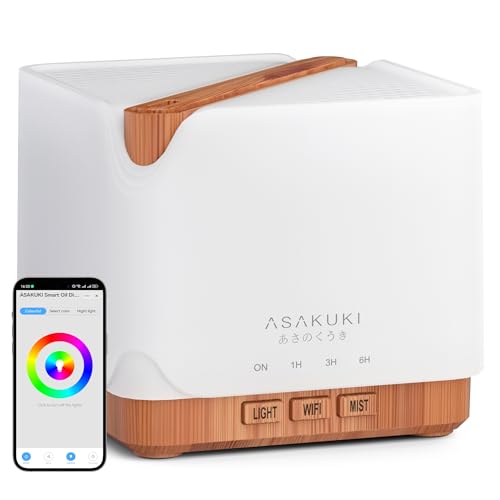
Work All Day and All Night - The ASAKUKI Smart WiFi Essential Oil Diffuser has a 700ml capacity and can run up to 20 hours. It lasts much longer than typical diffusers and less frequent refilling compared to smaller diffusers.

【Powerful Waterless Diffusion】This waterless diffuser uses advanced cold diffusion technology to convert fragrance oils into a pure nano mist without heat or water. Unlike traditional ultrasonic cold air diffuser, it preserves the strength and purity of every drop while delivering powerful scent coverage up to 1100 sq ft (100 m²). Ideal as a large room diffuser for homes, offices, hotels, spas, retail spaces, cafés, and libraries. Step into the room and instantly enjoy a luxurious fragrance atmosphere with this powerful scent diffuser.

5-IN-1 AROMATHERAPY DEVICE: This ultrasonic essential oil diffuser is an amazing multi-functional aromatherapy device unlike any other you've ever used. It features a large and easy to clean 500ml water tank, 7 LED light colors, multiple mist nebulizer modes and remote control, as well as a safety auto-switch that prevents it from overheating in case it runs out of water.
Smart Fragrance Diffusers vs. Essential-Oil Diffusers
The terms are often mixed together, but the devices are not always the same.
Smart fragrance systems commonly use sealed or proprietary fragrance refills. Their biggest advantages are convenience, consistent dispensing, app scheduling, and less handling of concentrated liquids.
Smart ultrasonic diffusers typically use water with a manufacturer-approved amount of essential oil. They require tank cleaning and should not be filled with liquids the manufacturer does not recommend.
Nebulizing or cold-air systems may disperse fragrance or essential-oil formulations without a traditional water tank. Their output can be stronger, making adjustable intensity and room-size matching particularly important.
The correct option depends on whether the goal is simple home fragrance, use of specific essential oils, minimal cleaning, broad scent choice, or integration with a smart-home routine.
[Amazon Products Picked for You]

Waterless Oil Diffuser: Utilizing advanced waterless cold diffusion technology, the scent diffuser machine operates without water or heat, ensuring optimal fragrance dispersion. Our waterless essential oil diffuser won't add humidity or leave residue, making it perfect for both home and commercial use

Industry-Leading Cold Diffusion Technology — Our advanced waterless cold diffusion technology transforms essential or fragrance oils into an ultra-fine dry mist without the use of heat or water, preserving the oil's purity. Engineered for max. reliability, our scent diffuser is widely compatible with most essential and fragrance oils on the market. Enjoy an ample, powerful mist that is whisper-quiet, ensuring your environment is perfectly scented without disturbance
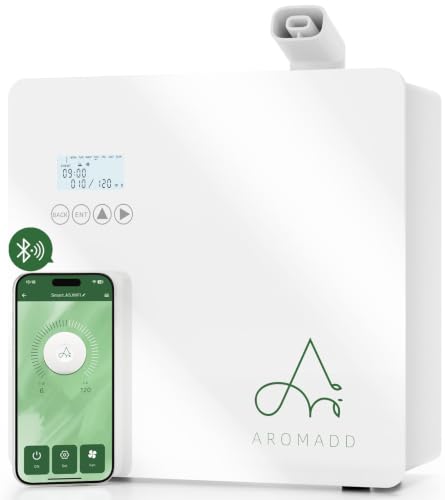
AROMADD HVAC DIFFUSERS FOR EVERY ENVIRONMENT: Whether as a standalone unit or wall-mounted, Aromadd diffusers are designed to seamlessly integrate with both new and existing HVAC systems, delivering an even and consistent fragrance throughout larger spaces. Perfect for homes and businesses, they ensure an immersive scent experience with maximum coverage and efficiency
Smart Diffuser Safety: Fragrance Sensitivity, Children, and Pets
Smart scheduling does not make fragrance exposure automatically safe. The liquid being dispersed, concentration, room size, ventilation, duration, and the people or animals in the room still matter.
The U.S. Environmental Protection Agency notes that fragrances can cause asthma episodes or other adverse effects in some sensitive individuals. If scent causes coughing, wheezing, throat irritation, headache, nausea, or breathing difficulty, stop the diffuser and ventilate the space.
Essential oils also require safe storage. Concentrated oils can be harmful if swallowed, and bottles should be kept out of reach of children.
Pet owners should be cautious as well. The ASPCA Animal Poison Control Center advises that concentrated essential oils can be hazardous to pets. Animals with respiratory problems may be more vulnerable to diffuser exposure, and the ASPCA advises avoiding essential-oil diffusers in homes with birds because of their sensitive respiratory systems.
Warning: Keep fragrance and essential-oil liquids where children and pets cannot drink, spill, or directly contact them. Never apply diffuser oils directly to a pet, and seek medical, poison-control, or veterinary advice if accidental ingestion or a serious reaction occurs.
What’s Next for Smart Scenting?
The next phase of smart scenting is likely to focus on better automation, easier multi-room control, more precise output, and more transparent refill systems rather than on turning fragrance devices into medical instruments.
Current products already demonstrate the practical direction: Wi-Fi connectivity, app-controlled schedules, adjustable intensity, multiple fragrances, timers, voice commands, and adaptive dispensing.
More advanced personalization may eventually combine fragrance preferences with smart-home routines or wearable data. Research prototypes show that physiological-triggered scent delivery is technically possible, but the idea remains far less established than ordinary schedule-based home fragrance.
Sustainability will also remain an important consideration. Buyers should look beyond broad claims such as “eco-friendly” and check whether cartridges are recyclable, containers are reusable, packaging is reduced, replacement parts are available, and a device depends on permanently proprietary refills.
In other words, the most useful progress is likely to come from systems that provide more control while using less fragrance unnecessarily and giving buyers clearer information about compatibility, ingredients, maintenance, and ongoing costs.
Frequently Asked Questions
What are the fragrance trends for 2026?
Personalization, app-controlled home fragrance, scent layering, flexible day-and-night routines, ingredient transparency, and sustainability are prominent themes. Buyers are also becoming more interested in adjustable intensity and automated schedules instead of leaving one fragrance running continuously.
Which smart scent diffuser is the best?
There is no single best model for every home. Compare diffusion method, room coverage, adjustable intensity, scheduling, app reliability, Alexa or Google compatibility, refill price, proprietary cartridge requirements, cleaning needs, and fragrance options before choosing.
What happens to your lungs when you diffuse essential oils?
A diffuser releases fragrance compounds into indoor air; it does not treat the lungs. Many people tolerate normal fragrance use, but sensitive individuals may develop coughing, irritation, headache, wheezing, or asthma symptoms. Stop exposure and seek medical attention for significant breathing difficulty.
What is the most popular diffuser smell?
There is no authoritative worldwide ranking that identifies one universal favorite. Lavender, citrus, vanilla, eucalyptus, peppermint, florals, and woody scents are all common diffuser choices. Personal preference, season, room type, and fragrance intensity usually matter more than overall popularity.
Are smart diffusers safe to run all day?
Continuous operation is not necessary for most users. Follow the manufacturer’s instructions, start with a low intensity, ventilate the room as needed, and use schedules or timers. Reduce or stop diffusion if anyone in the home develops irritation or discomfort.
Do smart diffusers really use AI?
Some fragrance companies may use algorithms for recommendations or adaptive features, but most consumer smart diffusers primarily rely on conventional app controls, schedules, timers, intensity settings, and predefined automation. Biometric scent systems that react to physiological signals remain more experimental than mainstream.
Conclusion
Smart diffuser personalized scent aromatherapy in 2026 is most useful when the technology solves practical problems: controlling fragrance intensity, scheduling scent for occupied rooms, switching between fragrances, and integrating compatible devices with a smart-home routine.
The wellness side needs more caution. Scent can be enjoyable, memorable, and relaxing for some people, but current evidence does not justify treating a diffuser as a tool that reliably alters hormones, diagnoses stress, fixes sleep disorders, or improves lung function.
Choose a device based on its diffusion method, room coverage, refill system, controls, maintenance, compatibility, and safety information. Then use fragrance at the lowest comfortable intensity and let personal preference—not exaggerated health claims—guide the routine.
Sources
- National Center for Complementary and Integrative Health — Aromatherapy — evidence and limitations surrounding aromatherapy.
- National Center for Complementary and Integrative Health — Lavender — current evidence and safety information for lavender.
- U.S. Environmental Protection Agency — Indoor Fragrances and Health — fragrance sensitivity and potential asthma effects.
- U.S. Environmental Protection Agency — VOCs and Indoor Air Quality — background on volatile organic compounds in indoor environments.
- ASPCA Animal Poison Control Center — Essential Oils Around Pets — pet and diffuser safety guidance.
- Pura — Smart Home Fragrance Diffuser — current examples of app-controlled intensity, schedules, timers, Wi-Fi, and adaptive diffusion.
