
The tire pressure placard in a Toyota Camry is normally inside the driver-side door opening on the driver-side B-pillar/door jamb. The label lists the vehicle-specific cold tire pressures, original tire sizes, and loading information you should use instead of a generic PSI chart.
Last updated: September 19, 2026 · Fact-checked against Toyota and NHTSA guidance.
Quick Answer
Open your Toyota Camry’s driver door and look on the driver-side B-pillar/door jamb for the “Tire and Loading Information” label. Use the cold front and rear pressures printed on that label. Do not use a generic 35 PSI target or the maximum pressure molded into the tire sidewall.
Key Takeaways
- The Camry tire placard is normally on the driver-side B-pillar/door jamb inside the driver-side door opening.
- Use the placard’s cold PSI or kPa value for each axle; front and rear specifications may differ.
- The pressure molded into the tire sidewall is a tire limit, not the recommended pressure for your Camry.
- A steady TPMS light usually points to low pressure, while a light that flashes for about one minute and then stays on indicates a system malfunction.
At a Glance
| Primary Location | Driver-side B-pillar/door jamb inside the driver-side door opening |
| Correct PSI Source | The vehicle’s Tire and Loading Information label; use the exact owner’s manual if the label is missing or unreadable |
| Cold Check | Check after the vehicle has been parked for at least three hours |
| Tire Sidewall Number | A tire limit, not the Camry’s recommended operating pressure |
Where Is the Tire Pressure Placard in a Toyota Camry?
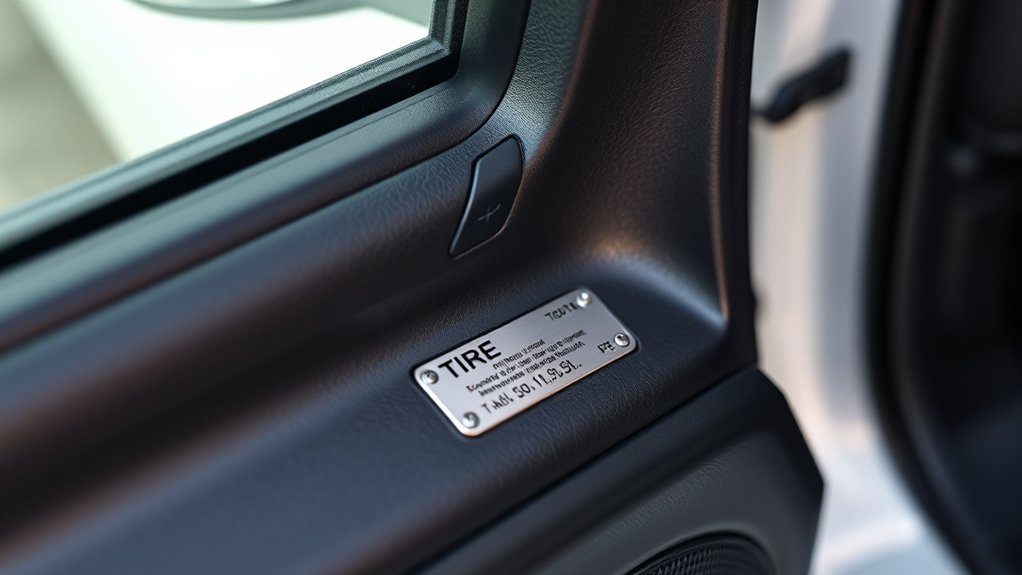
Start with the driver-side door opening. Toyota’s official tire-pressure guidance says the correct specifications can be found on the driver’s door-jamb sticker or in the owner’s manual. NHTSA guidance places the Tire and Loading Information label on the driver-side B-pillar on new vehicles that have one, which includes the Camry.
- Park safely, switch off the vehicle, and open the driver’s door fully.
- Inspect the vertical painted pillar beside the driver’s seat.
- If the label is not visible on the pillar, inspect the adjacent driver-side door opening and confirm the location in the owner’s manual for your exact model year and market.
- Look for a label headed “Tire and Loading Information.” Layout and wording can vary by market and model year.
Do not rely on generic advice that sends you to the rear passenger door, fuel door, glove box, or under the hood. Toyota and NHTSA tire-label guidance direct owners to the driver-side door opening and the vehicle-specific label.
Pro Tip: Take a clear photo of the placard with your phone. You can enlarge the image when checking the small tire-size, PSI, and kPa text at an air pump.
How Do You Identify and Read the Camry Tire Pressure Placard?
The tire placard may sit near other labels, including the vehicle certification label and VIN information. Use the label headed “Tire and Loading Information” for pressure and loading specifications.
The placard normally includes:
- Seating capacity: The maximum number of occupants covered by the label’s loading calculation.
- Combined occupant and cargo weight: The maximum combined load stated for the vehicle.
- Original tire size: The factory-specified front and rear tire sizes.
- Cold tire pressure: The recommended pressure for the front and rear tires, shown in PSI and kPa.
- Spare-tire information: The spare size and pressure may be listed when the vehicle is equipped with a spare.
Warning: Do not inflate your Camry’s tires to the maximum pressure molded into the tire sidewall. That number is a tire limit under specified conditions, not the vehicle manufacturer’s recommended operating pressure. Use the cold pressure on the Camry placard.
How the Tire Pressure Placard Supports Safe Driving and Recommended PSI
The placard gives you the pressure Toyota selected for the original vehicle configuration. Correct inflation supports predictable handling, braking, ride quality, fuel efficiency, load-carrying ability, and even tread wear.
Some Camry configurations use 35 PSI for all four road tires, while other years, trims, tire sizes, or markets may specify a different value. The front and rear values can also differ. For that reason, a generic range such as 32–35 PSI is not a substitute for the label on your car.
The printed values are cold tire pressures. NHTSA defines a cold tire as one that has not been driven for at least three hours. A short drive can warm the tires and raise the measured pressure, even when no air has been added.
Note: Do not release air from a warm tire merely because its reading is above the cold specification. Recheck it after the vehicle has been parked long enough for the tires to cool.
TPMS is a warning system, not a replacement for checking each tire with an accurate gauge.
Signs You Need to Check Your Tire Pressure
Check the pressure at least once a month, before a long trip, before carrying a heavy load, and whenever there is a major temperature change. You should also check it immediately when you notice any of the following:
- A steady TPMS light: At least one road tire may be significantly underinflated.
- Vehicle pulling or unusual steering feel: A pressure difference or tire problem may be affecting handling.
- A harsher or less stable ride: Incorrect inflation is one possible cause.
- Visible tire deformation: A low tire may look compressed, but visual inspection alone cannot confirm correct pressure.
- Repeated pressure loss: A puncture, damaged wheel, valve leak, or tire damage may be present.
- Uneven tread wear: Pressure, alignment, balancing, rotation, suspension, and driving conditions should all be considered.
Do not wait for the warning light before performing routine checks. TPMS is designed to warn about significant pressure loss and may not alert you when a tire is only a few PSI below its placard value.
Using Tire Pressure Information for Maintenance
Use the placard as the starting point for routine tire maintenance. Check each tire individually because the front and rear specifications may not be identical. For a focused pressure-setting procedure, see How to Set Tire Pressure on a Toyota Camry.
| Maintenance Item | Correct Reference or Action |
|---|---|
| Front pressure | Use the front cold PSI or kPa printed on the placard. |
| Rear pressure | Use the rear cold PSI or kPa printed on the placard. |
| Tire size | Compare the installed size with the original size listed on the placard. |
| Spare tire | Check it separately if equipped; its specification may differ from the road tires. |
| Checking frequency | At least monthly and before long trips or heavy loads. |
| Measurement condition | Measure when cold, preferably after the vehicle has been parked for at least three hours. |
How to Check and Adjust the Pressure
- Read the front, rear, and spare specifications from the placard.
- Remove the valve cap from the first cold tire.
- Press the gauge firmly onto the valve stem until the hissing stops.
- Compare the reading with the placard value for that axle.
- Add air in short bursts when the pressure is low, or release a small amount when it is high.
- Measure again and reinstall the valve cap.
- Repeat the process for every road tire and the spare, if equipped.
If the vehicle has been driven and you must add air immediately, do not bleed a warm tire down to the cold placard number. Perform the final adjustment after the tires have cooled and recheck them against the placard.
What If Your Camry Has Aftermarket Tires or Wheels?
The door placard describes the original vehicle configuration. Do not automatically change the pressure simply because a replacement tire has a different maximum sidewall rating.
If the installed tire size, load rating, or wheel size differs from the placard, ask Toyota or a qualified tire professional to confirm that the combination is appropriate and determine the correct cold operating pressure. Avoid relying on an online chart that does not account for the exact vehicle load, tire construction, and replacement size.
Troubleshooting Tire Pressure Problems
Start by observing how the TPMS light behaves, then check every tire with a gauge. Do not assume the warning identifies the exact tire unless your Camry’s display shows individual pressure readings. For a dedicated diagnosis guide, see Toyota Camry Tire Pressure Light Blinking: What It Means.
Steady TPMS Light
A steady low tire-pressure warning light usually means that one or more tires are significantly underinflated.
- Reduce speed and stop in a safe place.
- Inspect all tires for visible damage or a nearly flat condition.
- Check every tire with a gauge when it is safe to do so.
- Inflate each tire to the placard value for its axle.
- Follow the owner’s manual if your model requires TPMS initialization after pressure adjustment.
Flashing, Then Steady TPMS Light
Toyota’s 2025 Camry Quick Reference Guide states that a tire-pressure indicator that flashes for approximately one minute and then remains illuminated indicates a monitoring-system malfunction. The cause may involve a sensor, sensor registration, communication problem, or another TPMS fault.
Pressure should still be checked manually because a malfunctioning monitoring system may not provide a reliable low-pressure warning. Arrange diagnosis if the flashing-then-steady pattern returns.
Do Not Use a Universal Reset Procedure
Camry TPMS procedures vary by model year. Some older vehicles use a reset control, while newer versions use settings in the Multi-Information Display. Toyota’s 2025 Camry Quick Reference Guide, available through its official manuals page, for example, uses a TPWS settings menu.
Set all tires to their correct placard pressures before initialization, then follow the exact manual for your year. Initializing the system with incorrect pressure can teach it the wrong reference point.
Warning: Do not drive on a tire that is visibly flat, separating, bulging, exposing cords, or losing air rapidly. Use the approved spare or tire-repair equipment only as directed by the owner’s manual, or arrange roadside assistance or towing.
Next Steps After Troubleshooting Tire Pressure
After correcting the pressure, monitor the tires and dashboard rather than assuming the problem is solved. The light may need some driving time to turn off, and some model years require initialization.
| Action | What to Confirm |
|---|---|
| Recheck each cold tire | Match each tire to the placard value for its axle, not to a generic 35 PSI target. |
| Inspect the tread and sidewalls | Look for nails, cuts, bulges, cracking, exposed material, or other damage. |
| Monitor the dashboard | Confirm whether the light turns off or returns after the correct model-specific procedure. |
| Measure again after several days | A repeated drop in one tire suggests a leak or damage that needs inspection. |
| Arrange diagnosis | Seek service when pressure is correct but the warning persists, flashes, or returns repeatedly. |
What to Do If the Placard Is Missing or Unreadable
A label may become damaged, painted over, or removed during body repair. Do not substitute a pressure from another Camry or a general internet chart.
- Check the exact owner’s manual or tire-information section for your model year and market.
- Use Toyota’s official owner’s manual library when the original manual is unavailable.
- Contact a Toyota dealer with the VIN if the vehicle configuration or tire specification remains uncertain.
- Ask whether a replacement label is available after confirming the original equipment configuration.
When to Seek Professional Help for Tire Pressure Concerns
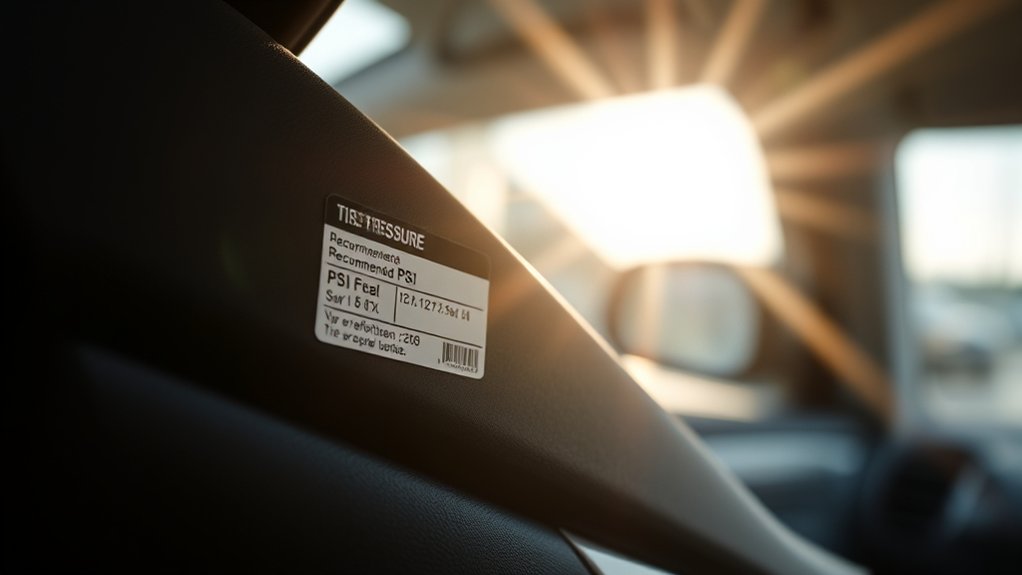
Professional inspection is appropriate when the warning persists despite correct cold pressure, when a tire repeatedly loses air, or when wear patterns suggest more than a simple pressure adjustment.
Persistent Warning Light Issues
Arrange service when:
- The light flashes for approximately one minute and then remains on.
- All tires match their placard specifications but the warning stays on or returns.
- The problem began after tire replacement, rotation, wheel replacement, or TPMS sensor work.
- The individual pressure display is unavailable, inaccurate, or missing one or more readings.
A technician can test the sensors, inspect for stored faults, verify sensor registration, and determine whether a repair, relearn procedure, or component replacement is needed.
Frequent Tire Pressure Loss
A tire that needs repeated inflation may have a tread puncture, leaking valve core, damaged valve stem, bead leak, corroded or bent wheel, or internal tire damage. Temperature changes can lower pressure in every tire, but one tire losing substantially more than the others deserves inspection.
Do not keep adding air indefinitely without finding the cause. A repair technician should determine whether the damage is in a repairable tread area and whether the tire remains safe to use.
Unusual Tire Wear Patterns
Wear on both outer shoulders can occur with prolonged underinflation, while pronounced center wear may be associated with excessive pressure. However, tread wear alone does not prove the cause.
Cupping, feathering, one-sided wear, vibration, or continuing irregular wear may involve alignment, wheel balance, rotation history, worn suspension parts, tire damage, or a combination of problems. Have the tires and vehicle inspected rather than correcting pressure alone.
Frequently Asked Questions
Where is the tire pressure placard located in a Toyota Camry?
Open the driver’s door and inspect the driver-side B-pillar/door jamb for a label headed “Tire and Loading Information.” If it is missing or unreadable, confirm the location and specifications in the owner’s manual for your exact model year and market.
How do I find the correct tire pressure for my Toyota Camry?
Use the cold front and rear PSI or kPa values printed on the Tire and Loading Information label. If the label is missing, consult the owner’s manual for the exact model year, trim, tire size, and market.
Is 35 PSI correct for every Toyota Camry?
No. Some Camry configurations specify 35 PSI, but the correct value varies by model year, trim, tire size, axle, and sales market. The vehicle’s own placard is the controlling reference.
How do I read a tire pressure placard?
Find the rows for the front, rear, and spare tires. Match the tire size and read the recommended cold pressure in PSI or kPa. Also note the seating capacity and combined occupant-and-cargo weight limit.
Should I use the PSI printed on the tire sidewall?
No. The sidewall number is the tire’s maximum pressure under specified conditions. It is not the recommended operating pressure for your Camry. Use the cold pressure printed on the vehicle placard.
What does it mean when the Toyota Camry TPMS light flashes and then stays on?
A light that flashes for approximately one minute and then remains on indicates a TPMS malfunction. Check all tire pressures manually and arrange diagnosis if the pattern continues.
Where can I find the tire pressure if the sticker is missing?
Use Toyota’s official owner’s manual for the exact vehicle or contact a Toyota dealer with the VIN. Do not copy a pressure value from another Camry because tire sizes and specifications can differ.
Conclusion
Your Toyota Camry’s tire pressure placard should normally be on the driver-side B-pillar/door jamb inside the driver-side door opening. Read the cold front and rear pressures directly from that label, check every tire with a gauge at least monthly, and treat a generic 32–35 or 35-PSI recommendation only as an example—not as your vehicle’s specification.
Correct pressure supports handling, braking, fuel efficiency, and tire life, but it does not replace tire inspection. Investigate recurring air loss, visible damage, uneven wear, or a TPMS light that flashes and then remains on.
Sources
- Toyota: How To Check Tire Pressure — supports the driver-door-jamb location, monthly checks, and use of vehicle-specific specifications.
- Toyota 2025 Camry manuals and Quick Reference Guide — the official model-year source for TPMS menu guidance, placard use, and the flashing-then-steady malfunction pattern.
- NHTSA TireWise — supports label location, monthly checks, cold-pressure measurement, spare-tire checks, and placard-versus-sidewall guidance.
- NHTSA Summer Driving and Road Trip Tips — supports checking tires cold and not using the tire sidewall maximum as the target pressure.

