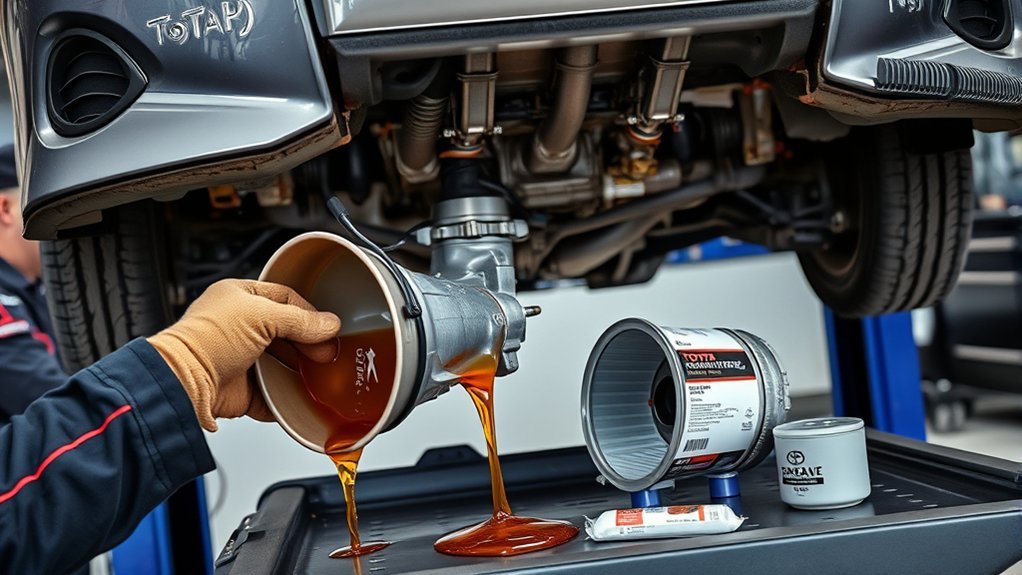
If your Toyota Camry hesitates when you accelerate, shifts late, hunts between gears, or takes too long to move after you select Drive, do not assume the transmission has failed. Engine, throttle, fuel, ignition, electrical, hybrid-control, driveline, and transmission faults can feel similar. On specified 2018–2019 Camrys with the A25A engine, Toyota T-SB-0152-19 Rev1 also documents a specific hesitation from a slow roll or rolling stop, so identifying the model year and powertrain is the first step toward an accurate diagnosis.
Last updated: September 22, 2026 — current 2026 Camry powertrain information and Toyota/NHTSA technical service bulletins for Camry hesitation, shift shock, and transmission noise were rechecked.
Source basis: This is a research-based troubleshooting guide using Toyota owner resources, Toyota technical service information hosted by NHTSA, Toyota recall tools, and NHTSA recall data. It does not claim a hands-on diagnosis of your specific vehicle.
Quick Answer
Toyota Camry hesitation is not automatically a failed transmission. First identify the model year, engine, drivetrain, and hybrid status; record exactly when the hesitation occurs; save warning messages and diagnostic codes; and check for visible leaks. Engine misfires, throttle or fuel faults, electrical problems, incorrect transmission-fluid level, applicable ECM calibration issues, hybrid-control faults, driveline problems, and internal transmission wear can all produce similar symptoms.
Key Takeaways
- Hesitation during acceleration does not automatically mean the transmission is defective.
- In a conventional automatic, engine RPM rising without a matching increase in road speed points more strongly toward slipping.
- Specified 2018–2019 A25A Camrys may match Toyota T-SB-0152-19 Rev1 when hesitation occurs at 6 mph or below, immediately after a 3–1 downshift, with less than 40% accelerator input.
- Hybrid Camrys do not shift like conventional stepped automatics, so changes in engine RPM are not automatically evidence of transmission slip.
- Some Camry transmissions require service plugs, fluid-temperature data, and a model-specific level procedure rather than an owner dipstick check.
- Stop driving if the Camry loses propulsion, produces smoke or a burning odor, leaks heavily, grinds severely, or cannot engage Drive or Reverse.
- Check recalls, campaigns, and applicable service bulletins before paying for a major repair, but remember that a technical service bulletin is not the same as a recall.
What Toyota Camry Transmission Hesitation Feels Like
Transmission hesitation may feel like a pause between pressing the accelerator and receiving power, a delayed shift, an unexpected downshift, or repeated gear changes on a steady road. You may also notice a clunk, a flare in engine RPM, shuddering, or a delay after selecting Drive or Reverse.
Your Camry’s model year and powertrain matter. Gasoline Camrys have used several conventional automatic transmissions, while Camry hybrids use a hybrid transaxle that does not behave like a stepped automatic. The current U.S.-market 2026 Toyota Camry has an all-hybrid powertrain, so conventional eight-speed automatic advice does not apply to every Camry on the road. For a generation-by-generation overview, see Toyota Camry Transmission Types Explained.
Note: Use the VIN, model year, engine, drivetrain, and hybrid status when searching for manuals, bulletins, recalls, fluid specifications, or parts. Advice for one Camry generation may be wrong for another.
Identify Your Camry’s Powertrain Before Diagnosing It
| Vehicle Type | How It Delivers Power | Why It Matters |
|---|---|---|
| Gasoline Camry with a conventional automatic | Uses fixed gear ratios and noticeable upshifts or downshifts | Shift flare, delayed engagement, repeated hunting, and RPM rising without matching speed may indicate a transmission or control concern |
| Specified 2018–2019 Camry with A25A engine and slow-roll hesitation | Toyota T-SB-0152-19 Rev1 covers a defined hesitation pattern at 6 mph or below, immediately after a 3–1 downshift, with less than 40% accelerator input | The ECM calibration and bulletin applicability should be checked before assuming internal transmission failure |
| Camry Hybrid | Uses a hybrid transaxle and blended gasoline-electric power rather than conventional stepped shifting | Engine RPM may change without a traditional gearshift, so diagnosis should focus on warning lights, loss of power, vibration, noise, and whether vehicle speed responds normally |
| All-wheel-drive Camry | Adds rear-drive components or electronic rear-motor operation, depending on the model | A vibration or hesitation complaint may involve an axle, wheel, bearing, rear-drive component, or control system rather than the front transmission alone |
Normal Hybrid Behavior vs. a Fault
A hybrid Camry can raise or lower gasoline-engine RPM without producing the distinct shifts expected from a conventional automatic. The engine may also stop and restart as operating conditions change. Those behaviors alone do not prove the transaxle is slipping.
Diagnosis is more urgent when the RPM change is accompanied by poor acceleration, a hybrid-system warning, shuddering, grinding, overheating, a burning odor, reduced-power mode, or failure to move. Use a Toyota-capable scan tool and model-specific repair information for hybrid-system concerns. If a warning points toward the high-voltage system, the Camry hybrid battery warning-sign guide explains why the battery is only one of several possible causes.
At a Glance
| Time Required | About 10 to 20 minutes for symptom logging, dashboard checks, and a safe visual inspection |
| Difficulty | Basic for observations; advanced for fluid-level checks, electrical testing, hybrid diagnosis, or internal repairs |
| Tools Needed | Flashlight, phone or notebook, model-specific owner’s manual, and an optional OBD-II scan tool |
| Cost | Basic observation may cost nothing; scanning, diagnosis, fluid service, calibration, and repairs vary by vehicle and confirmed fault |
Common Symptoms of Toyota Camry Hesitation
The exact symptom gives you more useful information than the word “hesitation.” Record what the engine, transmission or hybrid system, dashboard, and vehicle speed are doing at the same moment.
- Delayed response from a stop: The Camry pauses after you press the accelerator.
- Delayed engagement: The vehicle takes longer than expected to move after you select Drive or Reverse.
- Shift flare: Engine RPM rises during a conventional automatic-transmission shift before the next gear engages.
- Slipping: Engine speed increases, but road speed does not increase at the same rate.
- Gear hunting: A conventional automatic repeatedly changes gears while speed and road load remain fairly steady.
- Harsh shift or clunk: A shift or engagement produces a strong jolt or impact.
- Shudder: You feel a rapid vibration during acceleration or at a particular speed.
- Whine, grind, or hum: A new noise changes with speed, load, or gear selection.
- Reduced power: The Camry accelerates weakly or enters a limited-power operating mode.
- Warning light: The check-engine, master-warning, hybrid-system, or another warning appears.
If engine RPM repeatedly rises without matching road speed in a gasoline Camry with a conventional automatic, see the more focused Toyota Camry transmission slipping guide.
Engine Hesitation vs. Transmission Hesitation
An engine problem can imitate a transmission fault. Use the clues below as a starting point, not a final diagnosis. A lack of a generic check-engine code does not rule out an intermittent fault, a pending or history code, a manufacturer-specific condition, or a mechanical problem.
| What You Notice | More Consistent With | What to Check Next |
|---|---|---|
| RPM rises sharply without matching acceleration in a gasoline Camry with a conventional automatic | Transmission slipping, shift flare, or delayed engagement | Leaks, codes, fluid level by the correct procedure, commanded versus actual operation, and internal condition |
| Engine stumbles, shakes, or loses power in more than one gear | Engine, ignition, fuel, airflow, or throttle concern | Misfire codes, ignition operation, air intake, fuel delivery, throttle data, and sensor readings |
| Delay occurs only when selecting Drive or Reverse | Transmission hydraulic, fluid-level, control, or internal concern | Professional engagement, pressure, fluid, electrical, and code testing |
| Vibration follows vehicle speed rather than engine RPM | Tire, wheel, axle, bearing, or driveline concern | Tires, wheel balance, axles, bearings, mounts, and rear-drive components if equipped |
| Hybrid warning appears with reduced power, shuddering, or failure to move normally | Hybrid-system or powertrain-control concern | Toyota-capable diagnostic scan and model-specific service information |
The most useful clue is not simply that the Camry “hesitates,” but whether engine RPM, vehicle speed, warning lights, vibration, and gear engagement change together.
What the Timing of the Hesitation Can Suggest
| When It Happens | Useful Clues |
|---|---|
| Only during a cold start | Record outside temperature, idle quality, warm-up time, and whether the symptom disappears completely after warming |
| Only after the vehicle is fully warm | Heat-related electrical, fluid-pressure, sensor, or internal-component problems become more relevant |
| From a stop | Compare engine response, throttle input, RPM, traction-control activity, and the delay before road speed increases |
| From a slow roll on a specified 2018–2019 A25A Camry | If it occurs at 6 mph or below, immediately after a 3–1 downshift, and below 40% accelerator input, check T-SB-0152-19 Rev1 applicability and ECM calibration |
| During one particular shift | Note the speed, throttle opening, RPM change, shift direction, and whether the event is a flare, clunk, or pause |
| At steady highway speed | Gear hunting, torque-converter operation, engine-load changes, wind, road grade, and cruise-control commands may matter |
| Soon after fluid, battery, collision, or other repair work | Incorrect fluid level or type, a disturbed connector, low voltage, lost initialization, damaged wiring, or an unrelated new fault should be checked promptly |
Common Causes of Toyota Camry Hesitation
Engine, Throttle, Fuel, or Ignition Problems
A misfire, weak ignition component, air-intake fault, incorrect sensor reading, fuel-delivery problem, or throttle-control issue can create a pause or stumble when you accelerate. These faults often affect engine smoothness in more than one gear and may trigger a check-engine light. If a random or multiple-cylinder misfire code is stored, see the Toyota Camry P0300 guide for a more focused diagnostic path.
A flashing check-engine light combined with shaking or severe power loss can indicate an active misfire. Reduce speed, pull over safely, and avoid continued driving that could overheat the catalytic converter. Follow the warning-light instructions in the owner’s manual for your exact model.
Transmission Fluid Leak or Incorrect Level
Transmission fluid supports lubrication, cooling, and hydraulic operation in a conventional automatic. A leak, incorrect level, wrong fluid, or incorrect service procedure can contribute to delayed engagement, poor shift quality, overheating, or slipping.
Fluid may escape from a damaged seal, gasket, case, cooler line, fitting, or service plug. An electrical connector can cause a signal problem, but it does not normally create a fluid leak unless a surrounding seal or housing is also damaged.
Fluid color alone cannot confirm whether a transmission is healthy or failed. The correct diagnosis depends on leak location, level, fluid specification, temperature, debris, codes, operating data, and the vehicle’s service procedure.
Electronic Control, Battery, or Wiring Faults
Modern Camrys rely on multiple control modules and sensors. Damaged wiring, corrosion, poor grounds, low system voltage, a failing sensor, or a control-module fault can cause incorrect throttle, engine, hybrid, or shift decisions.
A technician should review stored codes, live data, battery and charging voltage, commanded gear, actual operation, throttle input, and relevant sensor signals before replacing major parts. A weak 12-volt battery can create confusing electronic symptoms, especially when several unrelated warnings appear together, but voltage testing is required before blaming the battery.
Software Calibration or Learned Values
A Toyota calibration update may correct a specific complaint when a service bulletin or diagnostic procedure calls for it. A generic “software update” is not a guaranteed cure, and disconnecting the battery to reset learned values can erase useful evidence without repairing the fault.
Could a Toyota Service Bulletin Explain 2018–2019 Camry Hesitation?
Yes, for a defined group of vehicles and symptoms. Toyota T-SB-0152-19 Rev1 applies to specified 2018–2019 Camrys with the A25A engine that may hesitate while accelerating from a slow roll or rolling stop. Toyota lists three conditions: the vehicle is traveling at 6 mph or below, the hesitation occurs immediately after a 3–1 downshift, and accelerator-pedal input is below 40%. The bulletin directs technicians to verify applicability and update the ECM calibration when required, followed by the specified drive pattern. It does not apply to every Camry or every hesitation complaint.
A separate Toyota bulletin, T-SB-0330-17, covers certain 2018 Camrys that may have shift shock when moving from Park to Reverse on initial startup or a delay/shock when reaccelerating quickly after slowing to a stop or near stop. That bulletin also uses an ECM calibration update for vehicles that meet its applicability requirements.
Battery replacement, control-module work, or certain repairs may require an initialization or relearn procedure on some vehicles. The shop should follow the model-specific Toyota procedure rather than repeatedly disconnecting the battery or clearing codes as a test.
Internal Transmission or Transaxle Problems
Worn clutch components, valve-body faults, solenoid problems, bearing damage, torque-converter concerns, or other internal failures can produce slipping, flare, delayed engagement, harsh shifts, shuddering, or noise. These symptoms require proper testing because several external faults can imitate internal damage.
As a noise-specific example, Toyota technical service bulletin T-SB-0008-21 addresses a whine or grind from certain 2021 Camry vehicles equipped with a UA80E transmission and built within specified production and transmission-serial ranges. The bulletin identifies a front carrier assembly pinion-shaft condition and instructs technicians to verify the noise and applicability before replacement.
Note: A technical service bulletin is repair guidance, not a safety recall or a blanket warranty extension. T-SB-0152-19 Rev1, T-SB-0330-17, and T-SB-0008-21 each apply only to defined vehicles and conditions. Warranty eligibility depends on the vehicle, condition, mileage, time in service, and applicable coverage.
Driveline, Tire, Wheel, or Mount Problems
A worn engine or transmission mount can create a clunk that feels like a harsh shift. A damaged axle, wheel imbalance, tire defect, or bearing problem can create vibration that owners describe as shuddering or hesitation. These faults often follow vehicle speed more closely than engine RPM.
Hybrid-System Faults
On a Camry Hybrid, reduced power or hesitation can involve engine operation, the hybrid transaxle, the high-voltage system, the inverter, cooling systems, control modules, sensors, or the 12-volt electrical supply. Hybrid warnings require compatible diagnostic equipment and appropriate high-voltage safety training.
Likely Fixes After the Cause Is Confirmed
The correct fix depends on test results, not the symptom name. Do not approve a transmission replacement solely because the Camry hesitates.
| Confirmed Cause | Evidence That Should Support It | Likely Repair Direction |
|---|---|---|
| Engine misfire, airflow, throttle, or fuel fault | Applicable codes, freeze-frame data, rough running, abnormal fuel or airflow data, and component testing | Repair the failed ignition, intake, fuel, throttle, wiring, or sensor component and verify smooth acceleration |
| Transmission-fluid leak or incorrect level | Visible leak source and level verified with the correct fluid-temperature procedure | Repair the leak, use the specified fluid, set the level correctly, and recheck operation; further testing is still needed if slipping remains |
| Low voltage, poor ground, wiring, or connector fault | Failed battery or charging test, voltage drop, damaged wiring, corrosion, or an intermittent signal captured in live data | Restore proper voltage, grounds, terminals, wiring, seals, or connectors and then clear codes only after documenting them |
| Applicable software calibration or initialization issue | Toyota procedure, bulletin, calibration information, or required relearn linked to the exact vehicle and symptom | Install the specified calibration or complete the prescribed initialization and verify the result with the required road-test or drive-pattern procedure |
| Valve-body, solenoid, torque-converter, bearing, clutch, or other internal automatic-transmission fault | Codes, pressure tests, commanded-versus-actual data, noise isolation, fluid findings, or internal inspection | Repair or replace the confirmed component, valve body, torque converter, or transmission assembly as the Toyota procedure directs |
| Hybrid-system or hybrid-transaxle fault | Hybrid-system codes, warning messages, live data, isolation tests, cooling checks, and model-specific diagnosis | Repair the confirmed engine, electrical, cooling, control, inverter, motor-generator, or transaxle fault using high-voltage safety procedures |
| Tire, wheel, axle, bearing, or mount problem | Physical inspection and vibration that follows road speed, wheel rotation, engine movement, or load changes | Repair or replace the confirmed tire, wheel, axle, bearing, or mount rather than servicing the transmission unnecessarily |
DIY Troubleshooting for Toyota Camry Hesitation

You can collect useful information without opening the transmission or replacing parts. These checks help a technician reproduce the concern and avoid guessing.
- Identify the exact vehicle. Record the model year, engine, trim, front-wheel-drive or all-wheel-drive configuration, VIN, and whether the Camry is a hybrid. Use Toyota’s manuals and warranties portal to find information for the vehicle.
- Describe the event precisely. Note whether the problem happens from a stop, from a slow roll, during an upshift or downshift, while passing, on a hill, at steady highway speed, or after selecting Drive or Reverse.
- Compare cold and warm operation. Record whether the symptom appears only after startup, only after the vehicle warms up, or under both conditions.
- Check the dashboard. Photograph any warning message before restarting the vehicle. Use Toyota’s warning-light resource and the owner’s manual to interpret it.
- Read codes without clearing them. An OBD-II scanner may reveal engine or transmission-related codes. A Toyota-capable scanner may retrieve additional transmission, hybrid, history, or body-system information. Save the code numbers and freeze-frame data before clearing anything.
- Look for a visible leak. With the vehicle parked safely on level ground, inspect the pavement and visible lower engine and transmission area with a flashlight. Note the fluid color and location without crawling beneath an unsupported vehicle.
- Review recent work. Note whether the symptom began after fluid service, battery replacement, jump-starting, collision repair, engine work, software programming, or another repair.
- Check applicable bulletins, recalls, and campaigns. If you have a specified 2018–2019 A25A Camry with slow-roll hesitation, ask whether T-SB-0152-19 Rev1 applies. Enter the VIN in Toyota’s Safety Recall and Service Campaign Lookup. You can also use the NHTSA recall database for open safety recalls and manufacturer communications.
- Take a cautious test drive only if the vehicle feels safe. Use a familiar, low-traffic route. Stop the test if the Camry slips badly, loses power, grinds, overheats, displays a red warning, or becomes difficult to control.
- Give the symptom log to the shop. Include speed, RPM, gear selection, throttle input, temperature, road grade, warning lights, noises, recent repairs, and whether the event was captured on video.
Pro Tip: A short video showing the instrument cluster, engine RPM, vehicle speed, warning message, and sound can help a technician reproduce an intermittent problem. Record only when a passenger can do it safely.
Can You Check Camry Transmission Fluid Yourself?
Some older Camrys use a dipstick-based procedure, while some later transmissions use service plugs and a specified fluid-temperature range to establish the correct level. Do not assume that a warm engine and level pavement are the only requirements.
Check the owner’s manual or Toyota repair information for the exact model. If the vehicle lacks a transmission dipstick, do not remove the fill, drain, or overflow plug unless you have the proper procedure, fluid specification, temperature data, lifting equipment, and safety training.
Warning: Never work beneath a vehicle supported only by a jack. Do not open a hot transmission, add an unverified fluid, or guess at the fluid level. An incorrect level or fluid can worsen shift problems and damage components.
What Not to Do
- Do not treat manual shifting as a repair for recurring hesitation.
- Do not add transmission additives without model-specific approval.
- Do not order a flush solely because the vehicle hesitates.
- Do not clear diagnostic codes or disconnect the battery before recording the evidence.
- Do not repeatedly reset learned values in place of diagnosis.
- Do not keep driving to “see if it improves” when the symptom is severe or worsening.
- Do not authorize a complete transmission replacement without asking what tests confirmed the failure.
- Do not assume an online bulletin applies without verifying the model, powertrain, production range, symptom, calibration, and warranty status.
When Should You Call a Mechanic About Camry Hesitation?
Repeated hesitation deserves diagnosis, but not every symptom requires the same response. Use the severity and accompanying warning signs to decide whether to stop, tow, or schedule service.
| Warning Sign | Recommended Action |
|---|---|
| Loss of propulsion, no Drive or Reverse, smoke, strong burning odor, large leak, severe grinding, or a red stop warning | Stop driving when safe and arrange towing. |
| Flashing check-engine light, severe shaking, or major power loss | Pull over safely and seek prompt assistance. |
| Repeated slipping, delayed engagement, harsh shifts, whine, grind, hybrid warning, or reduced-power message | Limit driving and schedule diagnosis promptly. |
| Occasional mild hesitation with no warning lights or loss of control | Record the conditions and schedule service if it repeats. |
| Hesitation began soon after fluid service, battery work, collision repair, or another repair | Contact the servicing shop promptly and explain the timing. |
What a Proper Diagnosis Should Include
A qualified shop should confirm the complaint before recommending parts. Depending on the Camry, diagnosis may include:
- A road test under the conditions that trigger the hesitation
- A full scan of engine, transmission, hybrid, and related control modules
- Stored, pending, permanent, and history codes with freeze-frame data where available
- Battery, charging-system, ground, and voltage-drop checks
- Inspection for fluid leaks and verification of the correct fluid level by the specified procedure
- Live-data review of throttle input, engine load, commanded operation, actual operation, and shift timing
- Inspection of wiring, connectors, mounts, axles, tires, wheels, bearings, and engine operation
- A check for applicable Toyota bulletins, recalls, campaigns, warranty coverage, and calibration updates
- Hydraulic, pressure, noise-isolation, or internal testing when earlier checks point to the transmission
- Hybrid-system testing by a technician with compatible equipment and high-voltage training when applicable
Ask the shop which test identified the failed component and whether the repair recommendation comes from a Toyota procedure or applicable bulletin. This helps separate evidence-based diagnosis from parts replacement by guesswork.
Questions to Ask Before Authorizing a Repair
- Which codes and freeze-frame data were found?
- Was the complaint reproduced during a road test?
- Was the transmission-fluid level checked with the correct temperature and model-specific procedure?
- What test confirmed that the recommended component is defective?
- Does T-SB-0152-19 Rev1, T-SB-0330-17, another Toyota bulletin, a recall, campaign, warranty, or calibration apply to this VIN?
- If a transmission assembly is recommended, were engine, electrical, wiring, fluid, axle, mount, calibration, and control-system causes ruled out first?
- Does the estimate include diagnosis, fluid, programming, initialization, road testing, and warranty terms?
- Will the shop provide the scan report and explain whether the old part can be inspected or returned where permitted?
Frequently Asked Questions
What causes a Toyota Camry to hesitate when accelerating?
Possible causes include an engine misfire, throttle or airflow fault, fuel-delivery problem, low electrical voltage, sensor or wiring fault, incorrect transmission-fluid level, fluid leak, applicable ECM calibration issue, hybrid-system fault, driveline problem, or internal transmission wear. RPM behavior, warning lights, codes, model year, and operating conditions help separate the causes.
Is there a Toyota service bulletin for Camry acceleration hesitation?
Yes. Toyota T-SB-0152-19 Rev1 applies to specified 2018–2019 Camrys with the A25A engine that may hesitate from a slow roll or rolling stop at 6 mph or below, immediately after a 3–1 downshift, with less than 40% accelerator input. The bulletin uses an ECM calibration update when the vehicle meets its applicability requirements, so it should not be applied to every Camry.
What does it mean when a transmission hesitates?
Transmission hesitation usually describes delayed engagement or a pause before power reaches the wheels. It may occur when selecting Drive, during a conventional shift, or while accelerating. The cause can involve fluid pressure, electrical controls, incorrect sensor data, software calibration, or internal components, so the symptom alone does not identify the failed part.
Do Toyota Camrys have transmission issues?
Any Camry can develop a powertrain fault as parts age, but problems vary by model year, engine, transmission or hybrid transaxle, production range, maintenance history, and operating conditions. Check the VIN for applicable recalls or campaigns and use only bulletins that match the vehicle and symptom.
Why is my Toyota Camry jerking?
Jerking may come from a harsh shift, engine misfire, throttle fault, worn mount, axle problem, tire or wheel issue, traction-control intervention, or hybrid-system concern. Note whether the engine also runs roughly and whether the jerk follows a gear change, engine RPM, road speed, or warning-light event.
Can low transmission fluid cause hesitation?
Yes. An incorrect fluid level caused by a leak or improper service can affect hydraulic pressure and shift operation in a conventional automatic. Do not add fluid until the leak, correct specification, temperature range, and model-specific level procedure have been confirmed.
Should I flush the transmission if my Camry hesitates?
Do not order a flush based only on hesitation. First identify the cause, review the maintenance history, check for leaks and codes, and verify Toyota’s service requirements for the exact model. Fluid service will not repair an engine fault, wiring problem, damaged bearing, worn clutch, failed sensor, hybrid-control fault, or an ECM calibration issue.
Can a software update fix Camry transmission hesitation?
A calibration update may help when Toyota has published an applicable procedure for the specific vehicle and symptom. T-SB-0152-19 Rev1 and T-SB-0330-17 are examples of model-specific calibration guidance. An update will not repair a fluid leak, mechanical damage, failed sensor, wiring fault, or worn internal component.
Will disconnecting the battery reset transmission hesitation?
Disconnecting the battery may erase learned values, warning evidence, and some diagnostic information, but it does not repair a leak, damaged part, wiring fault, failing sensor, or outdated calibration. Some vehicles require prescribed initialization or relearn steps after battery or module work, so follow the model-specific procedure.
Is changing engine RPM normal in a Camry Hybrid?
It can be. A hybrid Camry does not shift through fixed gears like a conventional stepped automatic, so gasoline-engine RPM can change as the system blends engine and electric power. Poor acceleration, warnings, shuddering, grinding, overheating, or failure to move normally still require diagnosis.
Is a Toyota transmission service bulletin the same as a recall?
No. A technical service bulletin gives technicians information about a defined condition and repair procedure. A safety recall requires a separate recall action. A bulletin does not automatically apply to every vehicle or guarantee free repair, so verify the VIN, production range, symptoms, calibration, and warranty status.
Conclusion
Toyota Camry transmission hesitation should be diagnosed from the symptom, model year, powertrain, warning lights, codes, and operating conditions rather than from mileage alone. Begin with safe observations, preserve diagnostic information, look for visible leaks, identify recent repairs, and check Toyota’s manuals, bulletins, and VIN-based campaigns.
A mild, isolated delay may only require monitoring and a scheduled inspection. Repeated slipping, delayed engagement, grinding, smoke, a major leak, a hybrid warning with reduced power, or loss of propulsion requires prompt professional attention. If you have a qualifying 2018–2019 A25A Camry with slow-roll hesitation, ask whether T-SB-0152-19 Rev1 applies before authorizing major transmission work. Accurate testing before fluid service or parts replacement gives you the best chance of fixing the actual cause without creating another problem.
Sources
- Toyota Manuals and Warranties — model-specific owner’s manuals, warranty documents, and maintenance information
- Toyota Warning Lights — official guidance for identifying warning indicators and consulting the correct manual
- Toyota Safety Recall and Service Campaign Lookup — VIN-based Toyota recall and campaign verification
- NHTSA Recall Lookup — open safety recalls and manufacturer communications
- Toyota Technical Service Bulletin T-SB-0152-19 Rev1 — specified 2018–2019 Camry A25A hesitation from a slow roll or rolling stop and ECM calibration procedure
- Toyota Technical Service Bulletin T-SB-0330-17 — specified 2018 Camry shift shock or delay/shock during reacceleration and ECM calibration procedure
- Toyota Technical Service Bulletin T-SB-0008-21 — limited 2021 Camry UA80E whine or grind condition, production applicability, and repair procedure
- 2026 Toyota Camry — current U.S. all-hybrid Camry powertrain information