
The Toyota RAV4 Hybrid has a strong reputation as a practical, fuel-efficient SUV, but reliability depends on the model year, maintenance history, climate, and how the vehicle was used. The proven 2019–2025 generation provides useful long-term evidence, while the redesigned 2026 RAV4 Hybrid is too new for meaningful long-term reliability data. Buyers should also understand Toyota’s hybrid warranty and a few model-year-specific issues before deciding.
Quick Answer
Yes, the Toyota RAV4 Hybrid can be a reliable long-term vehicle when it is properly maintained. The 2019–2025 generation has years of real-world use behind it, while the redesigned 2026 model is still too new to judge long-term. Used buyers should pay special attention to service history, recalls, battery-cooling maintenance, and model-year-specific issues.
Key Takeaways
- Toyota’s 10-year/150,000-mile warranty applies to the hybrid battery on model-year 2020 and newer vehicles; specified other hybrid components generally receive 8-year/100,000-mile coverage.
- The 2019–2025 RAV4 Hybrid uses a 219-hp hybrid system, while the redesigned 2026 model produces 226 hp with FWD or 236 hp with AWD.
- Certain 2019–2022 AWD RAV4 Hybrids have documented rear-motor/high-voltage cable-corrosion concerns that used buyers should investigate.
- Toyota’s maintenance schedule is more important than arbitrary rules such as changing oil every 3,000 miles or replacing brakes at a fixed mileage.
- Long-term reliability data for older RAV4 Hybrids should not automatically be applied to the newly redesigned 2026 generation.
Key Factors Contributing to Toyota RAV4 Hybrid Reliability
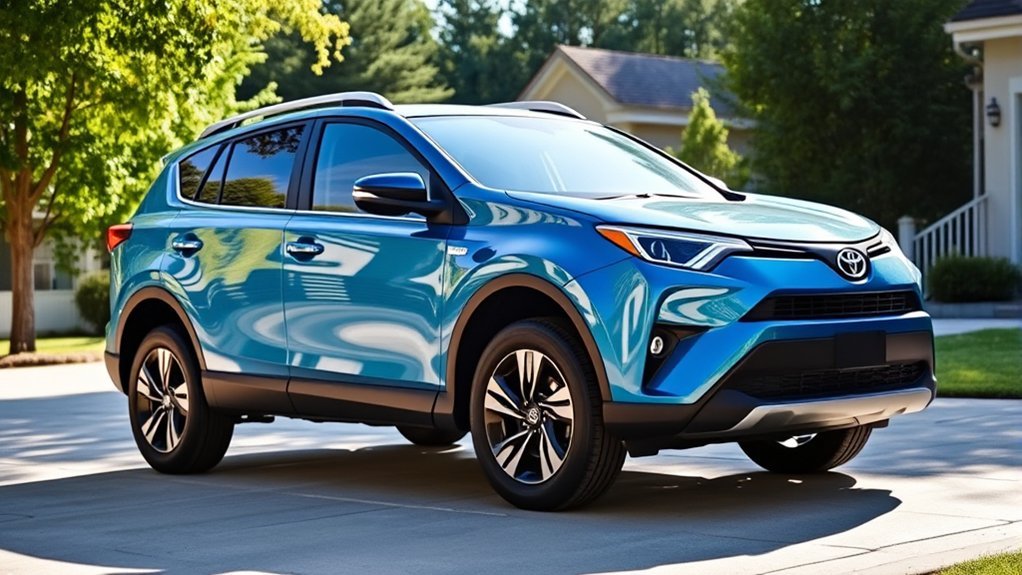
The RAV4 Hybrid’s reliability record benefits from Toyota’s long experience with gasoline-electric hybrid systems, but it is important to distinguish between generations. The fifth-generation RAV4 Hybrid sold from 2019 through 2025 combined a 2.5-liter four-cylinder gasoline engine with electric propulsion for a total system output of 219 horsepower.
The redesigned 2026 RAV4 moves to Toyota’s fifth-generation hybrid system. Toyota lists 226 combined horsepower for front-wheel-drive models and 236 horsepower for all-wheel-drive models. Fuel economy also varies significantly by drivetrain and trim, so a single mpg number should not be applied to every RAV4 Hybrid.
Note: The 2026 RAV4 is an all-new generation. Older RAV4 Hybrid durability records are encouraging, but they cannot prove how the redesigned 2026 vehicle will perform after 100,000 or 200,000 miles.
Warranty coverage also provides useful context. According to Toyota’s warranty information, the hybrid battery on model-year 2020 and newer Toyota hybrids is covered for 10 years or 150,000 miles from the original in-service date, whichever comes first. Specified hybrid-related components such as the battery control module, hybrid control module, and inverter with converter generally have 8-year/100,000-mile coverage.
Toyota’s 10-year/150,000-mile term is the hybrid-battery warranty, not a blanket 10-year warranty on every hybrid-system component.
Owner reviews can add useful context, but they should not be mistaken for controlled reliability studies. For example, consumer-review sites may combine comfort, value, styling, and reliability into one overall score. A high-mileage success story is encouraging, but one vehicle reaching 200,000 miles or more does not guarantee that every RAV4 Hybrid will do the same.
U.S.-Assembled and North American RAV4 Hybrids
Not every Toyota RAV4 Hybrid is built in the United States. For the 2026 model year, Toyota says RAV4 Hybrid models are assembled in Kentucky and at Toyota facilities in Ontario, Canada. Toyota Motor Manufacturing Canada began sixth-generation RAV4 production in January 2026, while Toyota Kentucky began building the new RAV4 Hybrid in June 2026.
If assembly location matters to you, check the vehicle’s VIN and certification label rather than assuming every RAV4 Hybrid has the same country of origin.
The 2026 redesign also changes several specifications. The new hybrid system offers up to 236 combined horsepower with AWD, and Toyota lists up to 37.8 cubic feet of cargo capacity. Selected AWD hybrid grades can tow up to 3,500 pounds, while lower-rated configurations are limited to less. Toyota Safety Sense 4.0 is also standard on the new generation.
These improvements make the 2026 RAV4 more capable, but added features and new-generation electronics also mean buyers should avoid assuming that its long-term reliability will be identical to the 2019–2025 model.
Essential Maintenance Tips for Extending RAV4 Hybrid Life
Regular maintenance is one of the biggest factors you can control. The safest approach is to follow the Warranty & Maintenance Guide for your exact model year rather than relying on universal mileage rules.
| Maintenance Item | Typical Toyota Guidance for the 2024 RAV4 Hybrid |
|---|---|
| General scheduled service | Every 5,000 miles or 6 months for items such as tire rotation, inspections, and fluid-level checks. |
| Engine oil and filter | Normally listed at 10,000 miles or 12 months when the specified oil is used; shorter intervals apply under certain special operating conditions. |
| HV battery cooling intake filter | Inspect every 5,000 miles for dirt or dust and clean as necessary; Toyota specifies cleaning at 20,000-mile intervals in the referenced guide. |
| Engine coolant | Initial replacement at 100,000 miles/120 months, then every 50,000 miles/60 months in the referenced guide. |
| Inverter coolant | Initial replacement at 150,000 miles/180 months, then every 50,000 miles/60 months in the referenced guide. |
| Spark plugs | Replace at 120,000 miles in the referenced guide. |
| Brakes | Inspect regularly and replace based on measured wear and condition rather than an automatic 100,000-mile replacement point. |
Hybrid regenerative braking can reduce use of the friction brakes during normal driving, so some owners may get long pad life. However, brake wear varies with traffic, hills, climate, road salt, towing, driving style, and corrosion. Regular inspection remains important.
Transmission and rear-differential fluid should also be handled according to the maintenance schedule for the exact model and operating conditions. Toyota’s 2024 guide, for example, specifies replacement at 120,000 miles for certain heavy-use conditions such as towing, car-top-carrier use, or heavy vehicle loading rather than giving every owner a universal 75,000-mile replacement interval.
Pro Tip: Keep the hybrid-battery cooling intake area unobstructed and free of excessive lint, pet hair, and dust. Restricted cooling can make the battery system work harder, especially in hot weather.
Warning: A RAV4 Hybrid contains high-voltage components. Toyota warns owners not to touch, disconnect, remove, or attempt to service orange high-voltage wiring, connectors, or the hybrid service plug. Hybrid-system repairs should be left to properly trained technicians.
Toyota RAV4 Hybrid Owner Experiences: Successes and Challenges
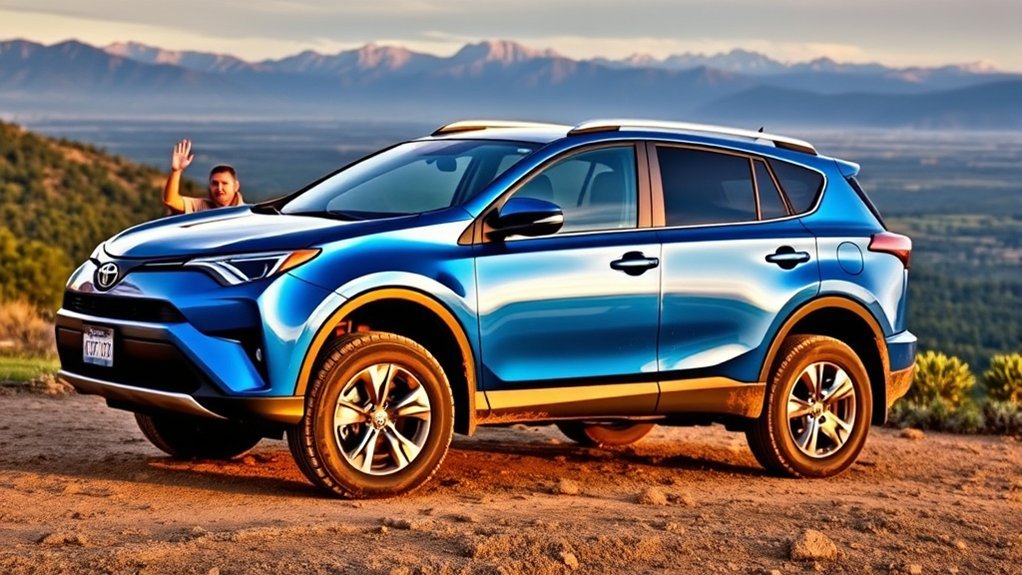
Many RAV4 Hybrid owners report strong fuel economy, routine maintenance, and high-mileage use. Those experiences are useful, but they need context. A well-maintained vehicle driven mostly on highways may age differently from one used for short trips, heavy towing, salted winter roads, or dense urban driving.
Owner-review scores also need careful interpretation. A frequently cited 3.6-out-of-5 figure from Kelley Blue Book is an overall consumer score, not its reliability score. Its displayed reliability subscore for the same review group is 3.9 out of 5, while 60% of reviewers recommend the vehicle. These numbers measure owner sentiment; they do not measure the mechanical failure rate of every model year.
Here’s a more useful way to interpret owner experiences:
| Aspect | Positive Signs | What to Verify |
|---|---|---|
| Reliability | Many high-mileage owner reports | Service records and model-year-specific problems |
| Maintenance Costs | Regenerative braking may reduce friction-brake wear | Hybrid-system, tire, suspension, and corrosion condition |
| Performance | Efficient hybrid powertrain and electric AWD on many models | Warning lights, abnormal noises, and smooth hybrid operation |
| Technology | Modern safety and infotainment features | Software updates, sensors, cameras, and infotainment function |
| Longevity | 200,000-mile ownership is possible with good care | No individual mileage outcome is guaranteed |
Common Toyota RAV4 Hybrid Problems to Check
One of the most important documented concerns for used fifth-generation models involves the high-voltage floor wire harness and rear traction-motor cable on certain AWD RAV4 Hybrids.
Toyota documentation filed with NHTSA describes corrosion that can occur at the rear motor-generator connector on certain 2019–2022 RAV4 Hybrid AWD vehicles. Symptoms can include diagnostic trouble codes P0AA649 or P1C8049 and, in some cases, AM-radio static or distortion. Toyota established a Customer Support Program covering the applicable cable-corrosion condition for 8 years or 100,000 miles, whichever comes first, when Toyota’s program conditions are met.
That does not mean every 2019–2022 RAV4 Hybrid will experience the problem. However, if you are shopping for one, ask whether the cable has been inspected, repaired, or replaced and whether any applicable Toyota program work has already been completed.
Owners sometimes also describe discharged 12-volt batteries, infotainment glitches, warning messages, or sensor complaints. These reports can have many causes, so they should not automatically be treated as a universal RAV4 Hybrid defect. Diagnostic history and model-year-specific technical information matter more than isolated anecdotes.
What to Check Before Buying a Used RAV4 Hybrid
- Check the VIN for open recalls. Use the official NHTSA recall lookup and Toyota’s owner resources.
- Review maintenance records. Look for regular oil service, coolant service when due, brake inspections, tire rotations, and hybrid-battery cooling-intake maintenance.
- Check model-year campaigns. On applicable 2019–2022 AWD vehicles, ask specifically about rear traction-motor/high-voltage cable corrosion.
- Test the 12-volt battery. A weak auxiliary battery can cause confusing electronic symptoms even when the high-voltage traction battery is healthy.
- Check for warning lights. Do not ignore hybrid-system, ABS, check-engine, or AWD warnings.
- Inspect underneath. In snow-belt or coastal regions, look for corrosion on suspension, brake, exhaust, and underbody components.
- Drive it from cold. Listen for unusual noises and make sure the gasoline engine, electric operation, regenerative braking, and AWD behavior feel smooth.
- Get a pre-purchase inspection. For an older or high-mileage hybrid, use a technician familiar with Toyota hybrid systems.
Reliability Comparison: RAV4 Hybrid vs. Other Hybrid Models
The Toyota RAV4 Hybrid competes most directly with hybrid compact SUVs such as the Honda CR-V Hybrid and Ford Escape Hybrid. The Honda Accord Hybrid is a sedan, so it is less useful as a direct reliability or practicality comparison.
Rather than choosing solely from an overall review score, compare vehicles from the same model year on the factors that affect ownership most: documented recalls and service campaigns, warranty coverage, maintenance history, fuel economy, insurance costs, cargo space, towing needs, and the condition of the exact vehicle you are buying.
The better reliability comparison is model year versus model year—not one brand’s reputation versus another brand’s reputation.
The RAV4 Hybrid does have an important warranty advantage for buyers concerned about the traction battery: Toyota provides 10-year/150,000-mile hybrid-battery coverage on model-year 2020 and newer Toyota hybrids, subject to the warranty’s terms and original in-service date.
Performance also depends heavily on generation. A 2025 RAV4 Hybrid produces 219 combined horsepower, while the redesigned 2026 model produces 226 horsepower with FWD or 236 horsepower with AWD. Selected 2026 AWD grades can also tow up to 3,500 pounds, substantially more than the 1,750-pound rating of previous-generation RAV4 Hybrids.
Related Guides
Frequently Asked Questions
What Is the Average Lifespan of a Toyota RAV4 Hybrid?
There is no official Toyota mileage at which a RAV4 Hybrid is expected to fail. Reaching 200,000 miles is possible, but lifespan depends on maintenance, climate, corrosion, driving conditions, accident history, and individual component wear. A documented service history is more useful than a generic mileage promise.
How Does the RAV4 Hybrid Perform in Extreme Weather Conditions?
The RAV4 Hybrid can work well in hot and cold climates, but temperature affects efficiency. Cold weather can reduce fuel economy because the engine runs more for cabin and powertrain warm-up, while extreme heat increases cooling demands. AWD can improve traction, but suitable tires remain critical for snow and ice.
Are There Any Common Issues Reported by RAV4 Hybrid Owners?
Yes. One documented issue involves corrosion of the rear traction-motor/high-voltage cable on certain 2019–2022 RAV4 Hybrid AWD vehicles. Owners also sometimes report 12-volt battery or infotainment concerns. Always check the exact VIN for recalls, service campaigns, and repair history rather than assuming every model year has the same problems.
What Warranty Coverage Is Offered for the RAV4 Hybrid?
Toyota’s new-vehicle basic warranty is generally 3 years/36,000 miles and powertrain coverage is 5 years/60,000 miles. For model-year 2020 and newer Toyota hybrids, the hybrid battery is covered for 10 years/150,000 miles. Specified other hybrid-related components generally receive 8-year/100,000-mile coverage. Exact terms should be confirmed for the vehicle and original in-service date.
How Does the RAV4 Hybrid Handle Towing Compared to Gas Models?
Towing capacity depends on model year, drivetrain, and trim. Previous-generation RAV4 Hybrids were generally rated for up to 1,750 pounds. For 2026, Toyota rates selected AWD hybrid grades for up to 3,500 pounds, while FWD versions and the LE AWD have lower ratings. Always use the rating for your exact vehicle.
Conclusion
The Toyota RAV4 Hybrid can be a dependable long-term SUV, especially when you choose a well-maintained example and follow Toyota’s service schedule. The established 2019–2025 generation provides the strongest long-term evidence, although certain 2019–2022 AWD vehicles deserve extra attention for rear-motor cable corrosion. The redesigned 2026 RAV4 Hybrid brings more power, efficiency, technology, and towing capability, but it is still too new for a meaningful long-term reliability verdict. Check the exact model year, VIN, warranty status, maintenance history, and pre-purchase inspection before making a decision.
Sources
- Toyota USA Newsroom — 2026 RAV4 — current hybrid output, efficiency, towing, safety technology, assembly, and warranty information.
- Toyota Owners — Manuals and Warranties — official warranty and owner-document resources.
- Toyota 2024 RAV4 Hybrid Warranty & Maintenance Guide — oil, coolant, spark-plug, brake, battery-filter, and severe-use maintenance guidance.
- Toyota/NHTSA Customer Support Program Documentation — rear traction-motor cable-corrosion coverage for applicable vehicles.
- National Highway Traffic Safety Administration Recall Lookup — VIN-specific open-recall checks.
- Toyota Canada — Sixth-Generation RAV4 Production — 2026 RAV4 Hybrid production in Ontario.
