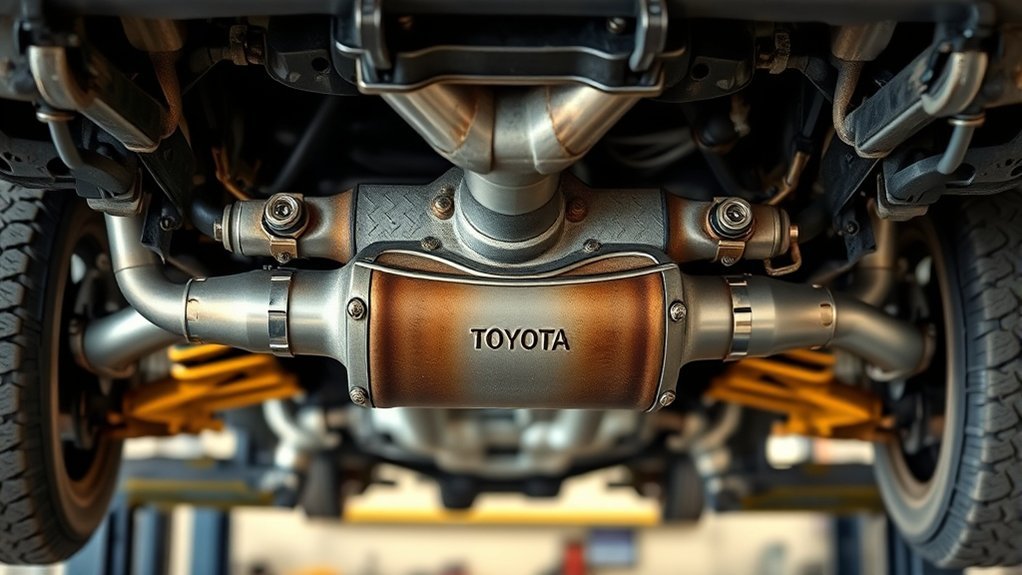
Your Toyota Tacoma’s catalytic converter is an emissions-control device in the exhaust system. It changes carbon monoxide, unburned hydrocarbons, and nitrogen oxides into less harmful gases before they leave the tailpipe. A healthy converter should not create noticeable power gains, but a damaged or restricted one can reduce acceleration, increase emissions, and trigger the check engine light.
Last Updated: July 13, 2026
Quick Answer
A Toyota Tacoma catalytic converter uses heat and catalyst-coated surfaces to reduce harmful exhaust pollutants. It oxidizes carbon monoxide and hydrocarbons into carbon dioxide and water, while reducing nitrogen oxides mainly into nitrogen. It also lets the truck’s onboard diagnostics monitor whether the emissions system is working correctly.
Key Takeaways
- The converter reduces carbon monoxide, hydrocarbons, and nitrogen oxides in your Tacoma’s exhaust.
- Loss of power, a check engine light, rattling, or unusual heat can point to a problem, but these symptoms do not prove the converter has failed.
- Misfires, an overly rich fuel mixture, oil burning, coolant leaks, and impact damage can ruin a converter.
- The number and type of converters vary by model year, engine, drivetrain, and emissions certification.
- Removing or disabling an emissions-control device can violate federal and state law.
How to Identify Signs of a Failing Catalytic Converter in Your Tacoma
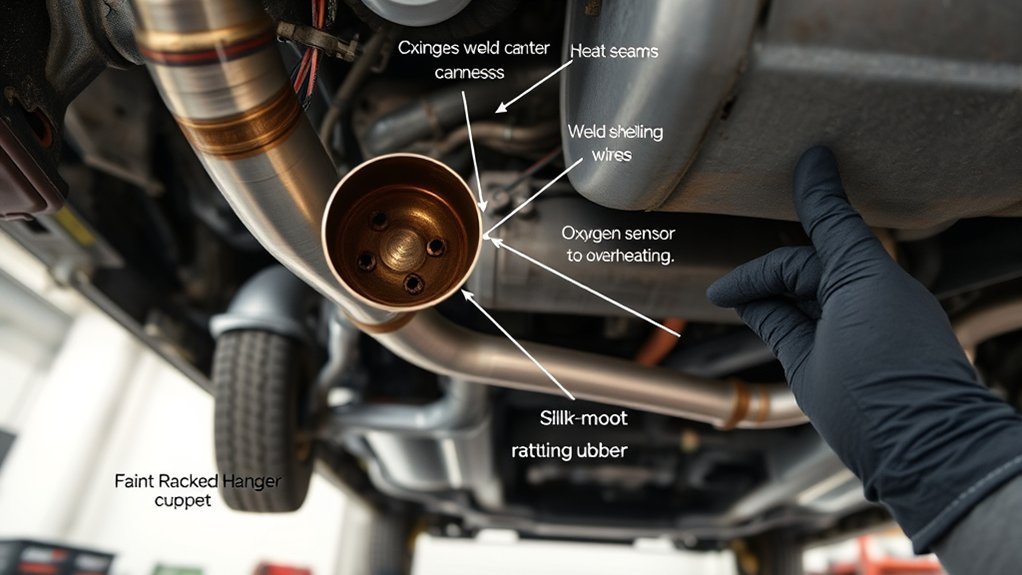
A failing or restricted catalytic converter can cause several warning signs. However, ignition, fuel, sensor, and exhaust problems can create similar symptoms, so diagnosis matters before replacement.
- Check engine light: Catalyst-efficiency codes such as P0420 or P0430 may appear, but a code alone does not prove the converter is bad.
- Sluggish acceleration: A melted or clogged substrate can restrict exhaust flow and make the engine feel weak, especially under load.
- Rattling from the exhaust: A loose or broken internal substrate may rattle during startup, idle, or acceleration.
- Unusual heat: A converter can overheat when unburned fuel enters the exhaust because of a misfire or fuel-control fault.
- Sulfur-like odor: A rotten-egg smell can occur during some fuel or catalyst problems, but it is not specific enough to diagnose the converter by itself.
- Failed emissions inspection: Excess tailpipe emissions or an active malfunction indicator light may prevent the truck from passing an inspection.
Warning: Stop driving and arrange an inspection if the check engine light flashes, the converter glows red, power drops sharply, or you smell exhaust inside the cab. A severe misfire can overheat the converter and create a fire or engine-damage risk.
What Is a Catalytic Converter and Its Role in the Toyota Tacoma?
The catalytic converter is part of your Tacoma’s exhaust aftertreatment system. It sits between the engine and the tailpipe, though its exact location and the number of converter assemblies depend on the truck’s year, engine, and emissions package.
Function of the Catalytic Converter
Inside the converter, exhaust passes through a honeycomb-like substrate coated with catalyst materials. These materials speed up chemical reactions without being consumed in the same way as fuel. The result is a large reduction in smog-forming and toxic pollutants regulated under U.S. vehicle-emissions standards. The U.S. Environmental Protection Agency’s vehicle-emissions guidance identifies nitrogen oxides, hydrocarbons or other organic gases, and carbon monoxide among the pollutants controlled by modern vehicle standards.
Why Emission Reduction Matters
Carbon monoxide is poisonous, while nitrogen oxides and hydrocarbons contribute to ground-level ozone and smog. By treating these pollutants before they reach the tailpipe, the converter helps your Tacoma meet its certified emissions limits and reduces its effect on local air quality.
Impact on Engine Performance
A properly sized, undamaged converter allows exhaust to flow while treating pollutants. It does not improve performance by creating “ideal back pressure.” Instead, problems begin when the converter melts, breaks apart, or becomes restricted. Excessive restriction raises exhaust pressure and can reduce power, throttle response, and fuel economy.
How Does the Catalytic Converter Work to Reduce Emissions?
Most gasoline Tacomas use three-way catalyst technology. The engine computer keeps the air-fuel mixture near the range the catalyst needs, while oxygen or air-fuel-ratio sensors help the system adjust fueling and monitor performance.
Oxidation and Reduction Reactions
The converter performs oxidation and reduction reactions. Oxidation adds oxygen to carbon monoxide and unburned hydrocarbons. Reduction removes oxygen from nitrogen oxides. The reactions become effective only after the converter warms up, which is why cold-start emissions are generally higher than emissions from a fully warmed vehicle.
Emissions Transformation Process
| Exhaust Pollutant | Converter Action | Main Products |
|---|---|---|
| Carbon monoxide (CO) | Oxidation | Carbon dioxide (CO2) |
| Unburned hydrocarbons (HC) | Oxidation | Carbon dioxide and water vapor |
| Nitrogen oxides (NOx) | Reduction | Mostly nitrogen, with other reaction products depending on conditions |
These outputs are less harmful than the original pollutants, but they are not all environmentally neutral. Carbon dioxide remains a greenhouse gas, so a catalytic converter is an air-pollution control device rather than a complete solution for vehicle carbon emissions.
Role of Sensors and Engine Control
The converter works as part of a system. Upstream sensors help the engine control fuel delivery, and downstream sensors help monitor catalyst performance. A faulty sensor, exhaust leak, misfire, or fuel-control problem can therefore set a catalyst-related code even when the converter is not the original cause.
Note: A P0420 or P0430 code describes low catalyst-system efficiency. It should start a diagnostic process, not an automatic converter replacement.
Common Causes of Catalytic Converter Issues in Toyota Tacomas
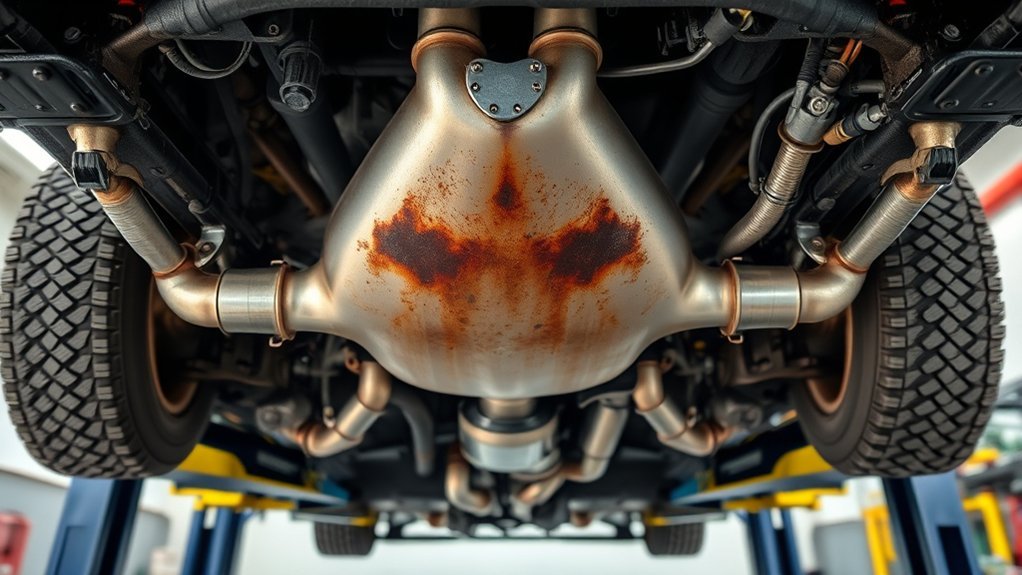
Converters often fail because another engine or exhaust problem damages them. Replacing the converter without correcting the root cause can ruin the new part.
| Cause | How It Damages the Converter |
|---|---|
| Engine misfire | Sends unburned fuel into the exhaust, causing extreme heat and possible substrate melting. |
| Rich fuel mixture or leaking injector | Adds excess fuel that overheats the converter and increases deposits. |
| Oil burning | Coats or contaminates the catalyst surface and can block the substrate over time. |
| Internal coolant leak | Introduces contaminants that can poison or coat the catalyst. |
| Sensor or wiring fault | Can disrupt fuel control or create misleading catalyst-efficiency readings. |
| Exhaust leak | Can alter oxygen-sensor readings and lead to an incorrect diagnosis. |
| Impact, corrosion, or thermal shock | Can crack the housing or break the internal substrate. |
Routine oil changes help protect the engine, but they do not directly “clean” a catalytic converter. The most important preventive step is fixing misfires, oil consumption, coolant loss, and fuel-control faults quickly.
How a Malfunctioning Catalytic Converter Affects Your Toyota Tacoma’s Performance
A chemically inefficient converter may trigger a check engine light without causing an obvious loss of power. A physically damaged or clogged converter can create more serious symptoms, including weak acceleration, hesitation under load, poor high-rpm performance, excess heat, or stalling in severe cases.
Fuel economy can also decline, but the converter may not be the direct cause. The underlying misfire, sensor problem, rich mixture, or engine wear that damaged the converter can also increase fuel use. That is why a complete diagnosis is more useful than replacing parts based on symptoms alone.
Troubleshooting Your Tacoma’s Catalytic Converter
A proper diagnosis checks the entire emissions and engine-control system before condemning the converter.
- Read all diagnostic trouble codes and freeze-frame data. Misfire, fuel-trim, oxygen-sensor, and air-fuel-ratio codes may reveal the root cause.
- Inspect for exhaust leaks and damaged wiring. Leaks near a sensor can distort oxygen readings.
- Confirm the engine runs correctly. Repair active misfires, injector faults, oil burning, coolant leaks, or rich-running conditions first.
- Test sensor behavior. A technician may compare upstream and downstream sensor data instead of judging the converter from one code.
- Check for restriction when symptoms support it. Back-pressure, vacuum, temperature, or flow testing can help confirm a clogged substrate.
- Match the replacement precisely. Use the VIN, model year, engine, emissions label, and test-group or engine-family information.
Pro Tip: Ask the shop what caused the converter to fail and how that cause was verified. A replacement is unlikely to last if an active misfire, oil-burning problem, or fuel fault remains.
Why Regular Maintenance Is Key for Your Tacoma’s Catalytic Converter
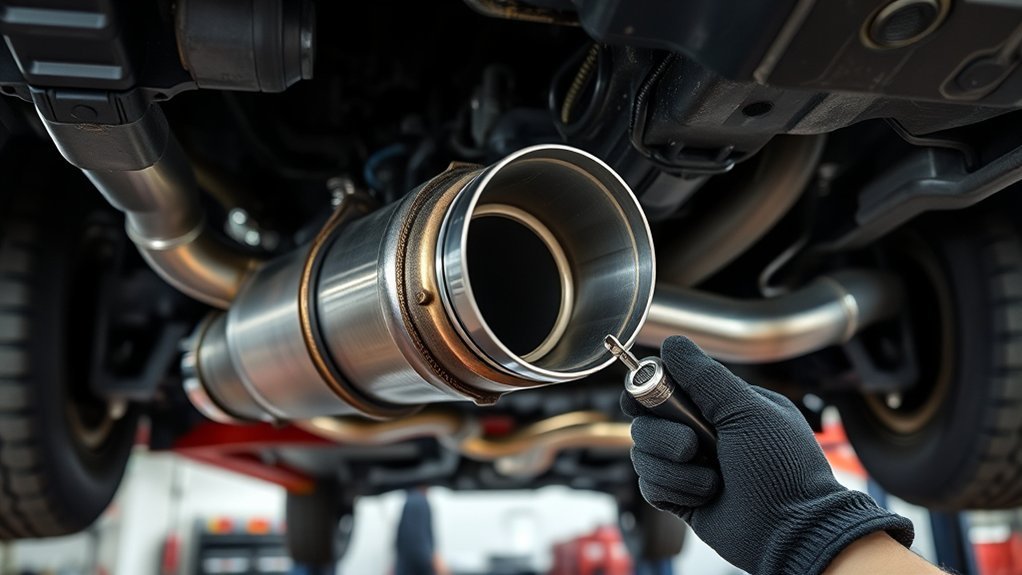
Your Tacoma does not normally need a scheduled catalytic-converter cleaning service. Protect the converter by following the maintenance schedule for your model, using the specified fuel and fluids, and responding quickly to warning lights or drivability problems.
- Do not continue driving with a flashing check engine light.
- Repair misfires and fuel-system faults promptly.
- Investigate unexplained oil or coolant loss.
- Fix exhaust leaks and damaged sensor wiring.
- Avoid striking the exhaust on rocks, curbs, or trail obstacles.
- Do not rely on fuel additives to repair a melted, cracked, contaminated, or stolen converter.
Use the maintenance and warranty guide for your exact model year. Toyota provides model-specific manuals and warranty documents through its Manuals and Warranties portal.
Replacement Laws, Warranty, and Correct Part Selection
Do not remove, gut, or bypass the converter on a street-driven Tacoma. The EPA enforces Clean Air Act requirements covering tampering and defeat devices. State inspection and anti-tampering rules may add further requirements.
Replacement fitment is not based on “Tacoma” alone. The correct part can depend on model year, engine, drivetrain, federal or California certification, and the emissions test group shown on the under-hood label. In California, an aftermarket converter must have a valid exemption for the specific application under California Air Resources Board requirements.
Before paying for a replacement, check your model-year warranty booklet. Federal or California emissions warranty coverage may apply in some cases, but terms vary by vehicle age, mileage, component, and certification.
Protecting Your Tacoma From Catalytic Converter Theft
Tacomas can attract converter thieves because a pickup’s ground clearance can make the exhaust easier to reach. Theft patterns vary by region and over time, so avoid relying on a fixed “most stolen” ranking.
A stolen converter usually causes a sudden, extremely loud exhaust sound at startup. You may also see cut pipes, hanging wires, a check engine light, or fresh damage beneath the truck.
- Park in a locked garage or a well-lit, visible area when possible.
- Use an application-specific shield, cage, or guard installed without damaging the exhaust or creating unsafe heat retention.
- Ask local law enforcement or your insurer whether VIN marking or registration programs are available.
- Use motion lighting or cameras where practical.
- Review whether your insurance policy includes comprehensive coverage for theft.
When to Seek Professional Catalytic Converter Diagnosis
Seek help from a Toyota dealer or a qualified emissions and exhaust specialist when the check engine light returns after basic repairs, the truck has major power loss, the converter rattles, or catalyst-efficiency codes persist. A good shop should inspect for leaks, review fuel trims and sensor data, check for misfires, and test for restriction when needed.
Choose a repair facility that can identify the root cause, document the correct emissions application, and explain whether an original-equipment or compliant aftermarket converter fits your needs. Avoid any shop that recommends deleting the converter, installing a test pipe for road use, or replacing the converter without checking why it failed.
Related Guides
Frequently Asked Questions
Can a Toyota Tacoma run without a catalytic converter?
The engine may start and run after the converter is removed, but the truck will be much louder, may set fault codes, will release far more pollution, and may not pass inspection. Removing or disabling emissions equipment can also violate federal and state law.
What are the three main functions of a three-way catalytic converter?
It oxidizes carbon monoxide into carbon dioxide, oxidizes unburned hydrocarbons into carbon dioxide and water, and reduces nitrogen oxides mainly into nitrogen.
How many catalytic converters does a Toyota Tacoma have?
The number varies by model year, engine, drivetrain, and emissions certification. Some systems use close-coupled converters plus additional underfloor catalyst sections. Check the VIN, under-hood emissions label, and Toyota parts information instead of assuming every Tacoma has the same count.
Are Toyota Tacomas targeted for catalytic converter theft?
They can be targeted because the converter may be easier to access on a high-clearance pickup. Actual theft risk depends on location, parking conditions, enforcement, and current scrap-metal demand.
Does a P0420 or P0430 code always mean the converter is bad?
No. These codes indicate that the computer sees catalyst efficiency below its expected threshold. Exhaust leaks, sensor faults, fuel-control problems, and engine misfires should be checked before replacing the converter.
Can a catalytic converter be cleaned instead of replaced?
A cleaner cannot repair a melted substrate, broken honeycomb, severe contamination, cracked housing, or missing converter. Diagnosis should focus on the underlying engine problem and the converter’s physical and chemical condition.
Conclusion
Your Tacoma’s catalytic converter reduces harmful exhaust pollutants and helps the truck meet its certified emissions standards. It should not be treated as a routine performance part or replaced from a trouble code alone. Protect it by fixing misfires and fluid-consumption problems quickly, using the correct replacement for the truck’s emissions certification, and choosing a shop that diagnoses the cause before installing a new converter.
Sources
- U.S. EPA: Smog Vehicle Emissions – regulated vehicle pollutants, emissions standards, and air-quality effects.
- U.S. EPA: Smog, Soot, and Other Air Pollution from Transportation – transportation pollutants and the role of catalyst technology.
- U.S. EPA: Clean Air Act Vehicle and Engine Enforcement – tampering, defeat-device, and emissions-compliance enforcement.
- California Air Resources Board: Aftermarket Catalytic Converters – California approval and application-matching requirements.
- Toyota Manuals and Warranties – model-specific maintenance and emissions warranty information.