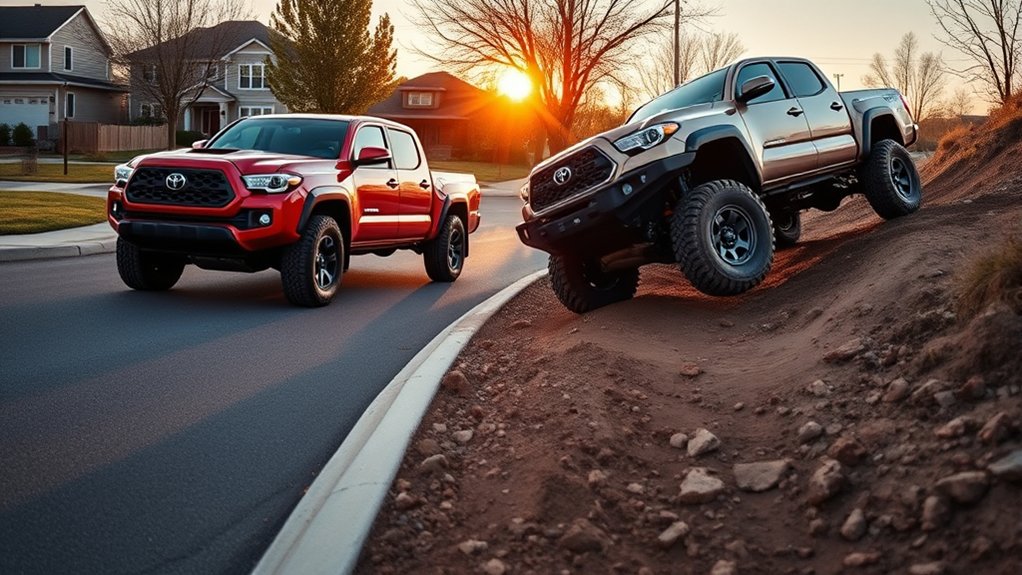
Choosing between a Toyota Tacoma 4×2 and 4×4 comes down to where you drive, how often you leave pavement, and whether the added traction is worth the higher purchase and ownership costs. A 4×2 is often the practical choice for dry roads and daily work, while a 4×4 gives you more control on loose, steep, snowy, or uneven terrain.
Quick Answer
Choose a Tacoma 4×2 if most of your driving is on paved roads and you want a lower purchase price, simpler drivetrain, and potentially better fuel economy. Choose a 4×4 if you regularly drive on trails, deep snow, mud, sand, steep grades, worksites, or poorly maintained roads.
Key Takeaways
- A Tacoma 4×2 is rear-wheel drive, not front-wheel drive.
- Most Tacoma 4×4 models use a selectable two-speed transfer case with high- and low-range four-wheel drive.
- Fuel economy, towing, payload, and price depend on the exact cab, bed, engine, transmission, trim, tires, and drivetrain.
- A 4×4 can improve forward traction, but it does not shorten braking distances or replace suitable tires.
- TRD PreRunner shows that a rear-drive Tacoma can still include off-road-oriented suspension, tires, and a locking rear differential.
Note: Toyota changes trim combinations and equipment by model year. The current information in this guide was checked against Toyota’s 2026 U.S. lineup. Confirm the exact drivetrain, ratings, and equipment on the truck’s window sticker, certification labels, build sheet, and owner’s manual.
Understanding Tacoma 4×2 and 4×4 Configurations
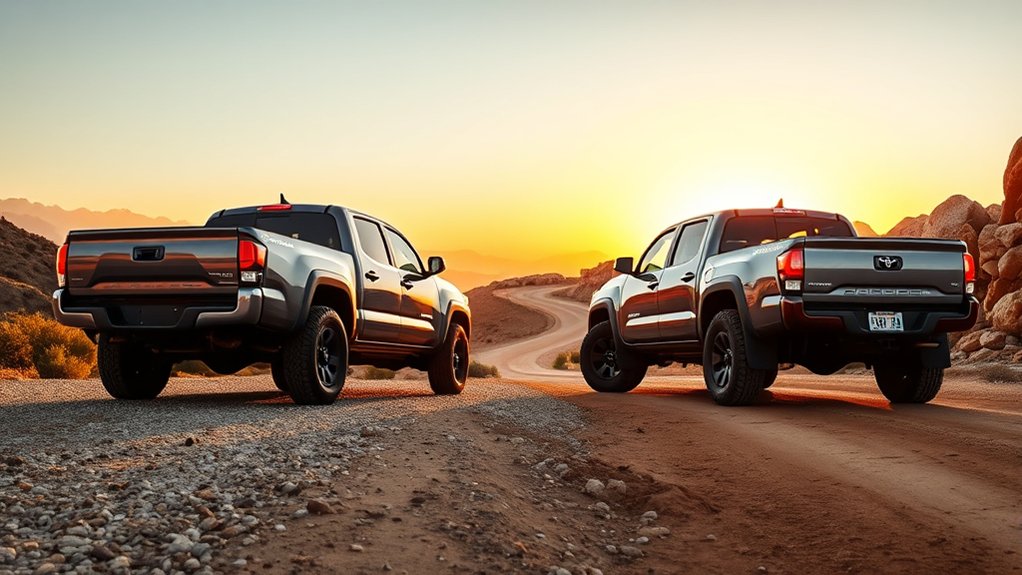
On a Toyota Tacoma, 4×2 means rear-wheel drive. The engine sends power to the two rear wheels. This layout is simple, capable on paved roads, and suitable for commuting, delivery work, light hauling, and maintained gravel roads.
Most Tacoma 4×4 models normally drive through the rear wheels and let you select four-wheel drive when conditions require it. Toyota describes these trucks as using an electronically controlled two-speed transfer case with high and low ranges. The i-FORCE MAX Limited uses a different full-time four-wheel-drive system with a locking center differential.
You can review Toyota’s drivetrain and grade information in its current-generation Tacoma product overview.
| Factor | Tacoma 4×2 | Tacoma 4×4 |
|---|---|---|
| Driven wheels | Rear wheels | All four wheels when selected, or full-time on certain configurations |
| Best use | Paved roads, dry climates, commuting, and routine work | Trails, mud, loose sand, deep snow, steep grades, and rough worksites |
| Purchase cost | Usually lower when comparing similar configurations | Usually higher because of added drivetrain hardware and equipment |
| Fuel economy | Can be better, but the exact rating depends on the complete configuration | Can use more fuel, especially with heavier off-road tires and equipment |
| Low range | Not available | Available with the two-speed transfer case on applicable models |
| Maintenance | Fewer drivetrain components to inspect and service | Adds a transfer case, front differential, front axles, and related components |
| Resale | May be competitive in warm, urban, or fleet-focused markets | May attract more buyers in snowbelt, mountain, rural, and recreation-focused markets |
Pros and Cons of the Toyota Tacoma 4×2 Configuration
A Tacoma 4×2 works well when your driving rarely requires low range or power at the front wheels. It can provide the capability you need without making you pay for hardware you may never use.
Advantages of a Tacoma 4×2
- Lower purchase cost: Comparable rear-drive trucks usually cost less than their four-wheel-drive versions.
- Simpler drivetrain: A 4×2 does not have the same transfer-case, front-differential, and front-axle hardware as a selectable 4×4.
- Potential fuel savings: Lower weight and reduced drivetrain losses can help, although tires, engine, transmission, cab, bed, and trim also affect the final rating.
- Suitable road performance: Rear-wheel drive works well for normal commuting, highway travel, towing within the truck’s ratings, and maintained gravel roads.
- Useful off-road-oriented option: The TRD PreRunner combines two-wheel drive with features such as a locking rear differential and off-road-focused equipment.
Disadvantages of a Tacoma 4×2
- It cannot send engine power to the front wheels when the rear tires lose traction.
- It does not provide four-wheel-drive low range for slow climbs, descents, rocks, or deep ruts.
- A lightly loaded rear bed can reduce rear-tire grip on snow, ice, wet grass, or loose surfaces.
- Recovery may be harder when both rear wheels lose usable traction.
- Buyer demand may be lower in areas where snow, mountain roads, or off-road recreation are common.
Advantages of the Toyota Tacoma 4×4 Configuration
A Tacoma 4×4 can send power through the front and rear axles, giving the truck more opportunities to find traction when a rear tire slips. This is valuable on loose climbs, muddy access roads, deep snow, sand, rocks, and uneven worksites.
The selectable two-speed transfer case on applicable models also provides a low-range setting. Low range multiplies torque at low speed and gives you finer control when climbing, descending, crossing ruts, or moving through technical terrain.
Selected Tacoma grades add specialized systems such as Crawl Control, Multi-Terrain Select, an electronically locking rear differential, underbody protection, recovery points, and trail-focused suspension. These features are not standard on every 4×4, so check the exact grade and package instead of assuming that all four-wheel-drive Tacomas are equipped alike.
Pro Tip: Buy for the hardest conditions you expect to face regularly, not for an unlikely once-a-year scenario. Occasional trail users may be better served by suitable tires, recovery gear, and careful route selection than by paying for a highly specialized trim.
Do You Need 4×4 for Off-Roading?
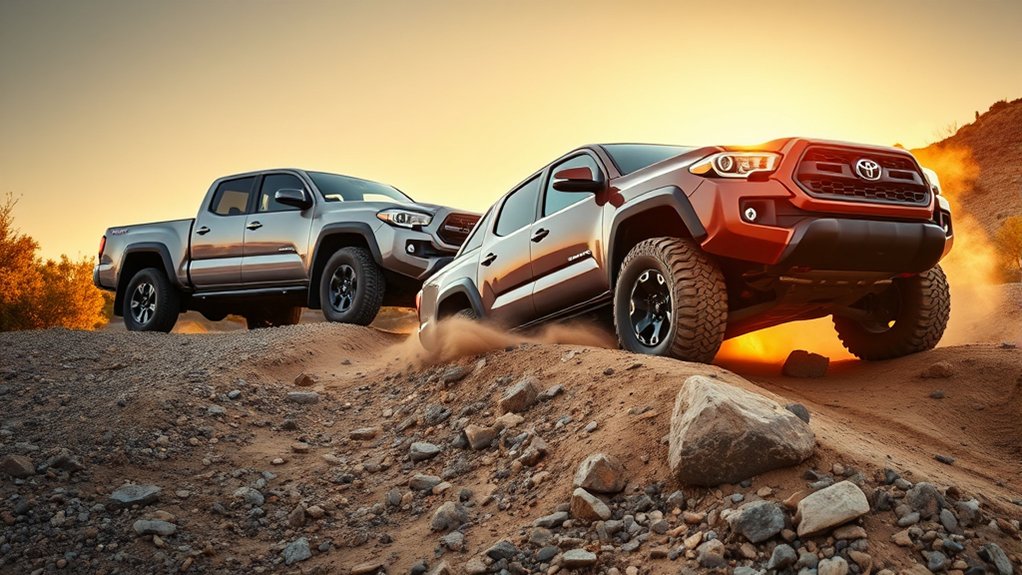
You do not need 4×4 for every dirt road or mild trail. A rear-drive Tacoma with suitable tires, adequate clearance, a locking rear differential, and a careful driver can handle many maintained roads and moderate surfaces.
Four-wheel drive becomes much more valuable as the terrain gets steeper, softer, deeper, or more uneven. It also gives you an extra margin when a route includes mud, deep sand, loose rocks, snow, crossed-up axle positions, or repeated climbs.
Traction, 4H, and 4L
4H is intended for conditions where you need additional traction at normal or moderate speeds, subject to the instructions in the owner’s manual. Examples may include snow-covered roads, loose gravel, dirt, and some sand.
4L is intended for slow, demanding conditions where you need increased torque multiplication and controlled speed. Examples include rocks, steep grades, deep ruts, difficult recoveries, and technical trail sections.
Do not call selectable 4H “all-wheel drive.” A selectable part-time four-wheel-drive system and a full-time all-wheel- or four-wheel-drive system operate differently. Follow the instructions for your exact Tacoma because permitted surfaces, shift procedures, and speed limits can vary.
What 4×4 Cannot Do
Four-wheel drive helps the truck move by distributing drive torque across more tires. It does not create unlimited grip, prevent every slide, eliminate the risk of getting stuck, or guarantee stability on a side slope.
It also does not shorten braking distance by itself. Braking and cornering still depend heavily on tire condition, tire type, road surface, speed, weight distribution, and driver input.
Warning: Do not treat 4WD as a substitute for winter tires, safe speed, increased following distance, correct tire pressure, or sound judgment. NHTSA advises drivers to slow down on snow and ice because controlling and stopping any vehicle becomes harder on a slick surface.
Fuel Efficiency of Tacoma 4×2 vs. 4×4 Trucks
A Tacoma 4×2 can use less fuel than a closely matched 4×4 because it carries fewer drivetrain components and does not have the same front-drive hardware. However, drivetrain alone does not determine the final rating.
Toyota’s 2026 Tacoma information lists different city and highway estimates across the lineup. Published trim figures range from 18/23 mpg to 23/24 mpg, but those numbers represent different engines, tires, transmissions, equipment, and grades. They should not be treated as a controlled 4×2-versus-4×4 test.
How to Compare Fuel Economy Correctly
Compare trucks with the same engine, cab, bed, transmission, axle equipment, and tire type whenever possible. Then check the fuel-economy label for each exact vehicle.
A 4×2 with large all-terrain tires may use more fuel than a differently equipped 4×4 with road-focused tires. Hybrid powertrains, ride height, wheel size, accessories, payload, towing, temperature, traffic, and driving speed can also change real-world consumption.
How Weight and Tires Affect Economy
Four-wheel-drive hardware adds weight and rotating components. Off-road-oriented 4×4 trims may also have heavier tires, skid plates, bumpers, suspension parts, recovery equipment, or roof accessories.
Tire pressure matters as well. Use the pressure shown on the truck’s Tire and Loading Information label, not the maximum pressure molded into the tire sidewall. Proper inflation supports safety, tire life, and fuel efficiency.
Cost of Buying and Maintaining 4×2 vs. 4×4
A 4×4 normally costs more to purchase than a similar 4×2. The difference may also increase registration, financing, insurance, or replacement costs, depending on your location and coverage.
A selectable 4×4 adds a transfer case, front differential, front driveshaft, axle shafts, joints, actuators, seals, and related controls. These components are durable when maintained correctly, but they create additional fluids, inspection points, and potential repairs as the truck ages.
You should also keep all four tires closely matched in approved size, construction, load rating, pressure, and wear. A major difference in tire circumference can place unnecessary stress on some four-wheel-drive systems. Follow the owner’s manual and seek professional advice when one tire is damaged but the others are significantly worn.
A 4×2 avoids some of these drivetrain costs. However, the cheapest truck to own is the one that can perform your work safely without repeated recovery expenses, damage, or forced upgrades.
Towing, Payload, and Work Use
Do not choose between 4×2 and 4×4 based on the assumption that one drivetrain always tows more. Toyota’s current-generation launch specifications listed a maximum towing rating of 6,500 pounds for specific configurations, including the rear-drive TRD PreRunner XtraCab.
Towing and payload ratings can change with the cab, bed, engine, transmission, drivetrain, suspension, hitch equipment, passengers, accessories, and cargo. Adding 4WD hardware may also reduce available payload because the hardware contributes to the truck’s curb weight.
Before towing, check all of the following:
- The exact truck’s certification and loading labels.
- The owner’s manual and towing guide for that model year.
- The hitch, receiver, ball, and trailer ratings.
- Gross vehicle, axle, combined, and trailer weight limits.
- Passenger, accessory, cargo, and tongue-weight deductions.
- Trailer brake and lighting requirements.
Never rely only on a dealership listing, online trim summary, or maximum number printed for another configuration.
Resale Value of 4×2 and 4×4 Tacomas
A 4×4 Tacoma may attract more buyers in mountain regions, snowbelt states, rural areas, and markets where hunting, camping, trail driving, or overlanding are popular. That demand can support a higher resale price.
A 4×2 can still sell well in warm climates, urban areas, commercial fleets, and markets where buyers value a lower price and simpler drivetrain. TRD PreRunner models may also appeal to buyers who want off-road styling and rear-differential capability without a full 4WD system.
Do not assume the 4×4 premium will automatically repay everything you spent. Resale value also depends on:
- Model year and trim.
- Mileage and service history.
- Accident, flood, and rust history.
- Tire and interior condition.
- Aftermarket modifications.
- Local fuel prices and buyer demand.
- Whether the four-wheel-drive system operates correctly.
Compare local used listings and trade-in offers for similarly equipped trucks before treating resale as a deciding factor.
How to Pick the Best Tacoma for Your Everyday Needs
Start with the conditions you face every month rather than choosing from appearance alone. A 4×4 badge is useful only when the added drivetrain solves a real problem for you.
Assess Your Driving Conditions
A Tacoma 4×2 may be enough when you mainly drive on:
- Dry paved streets and highways.
- Maintained gravel roads.
- Flat or gently rolling terrain.
- Cleared winter roads with suitable tires.
- Work routes where off-pavement travel is limited.
A Tacoma 4×4 deserves stronger consideration when you regularly encounter:
- Deep or unplowed snow.
- Mud, sand, rocks, or deep ruts.
- Steep unpaved climbs and descents.
- Remote trails with limited recovery help.
- Wet fields, construction sites, boat ramps, or forest roads.
Evaluate How Often You Need 4WD
Occasional bad weather does not automatically require a 4×4. Quality tires, route planning, reduced speed, and postponing unnecessary trips may cover your needs more economically.
Frequent off-road or winter use changes the calculation. If you expect to engage four-wheel drive every week, regularly travel alone in remote areas, or must reach a jobsite in poor conditions, the added capability may justify its cost.
Use This Decision Checklist
- Choose 4×2 if low cost, paved-road efficiency, and drivetrain simplicity matter most.
- Choose 4×4 if traction and low range are regular needs rather than rare possibilities.
- Consider TRD PreRunner if you want rear-wheel drive with off-road-oriented equipment.
- Compare exact specifications if towing or payload is central to your purchase.
- Prioritize tires if winter braking and cornering are your main concerns.
- Test drive both if ride, steering feel, tire noise, and acceleration matter to you.
How Geography Influences Your Choice
Climate and terrain influence how often you will benefit from four-wheel drive, but state or province names alone do not decide the answer.
A driver in Texas may need 4×4 for a muddy ranch, sandy access road, steep boat ramp, or remote worksite. A driver in Quebec may manage normal commuting in a 4×2 when roads are cleared and the truck has suitable winter tires.
Consider your specific routes, snowfall, road maintenance, elevation, driveway grade, job requirements, recreation plans, and access to recovery help. Local used-truck demand also affects how easily each drivetrain may sell later.
What Owners Commonly Notice in Daily Use
A 4×2 owner is most likely to appreciate the lower entry cost, simpler maintenance, and the fact that the truck performs normal road duties without unused four-wheel-drive hardware.
The limitations become more noticeable when the rear tires unload or lose grip. Snow, wet grass, deep sand, mud, steep loose climbs, and crossed-up trail sections can expose the difference quickly.
A 4×4 owner is more likely to value the confidence of engaging the front axle before a difficult section and using low range for slow control. However, that owner also pays for additional hardware, may have more drivetrain services, and may be driving on heavier or noisier off-road tires.
Neither experience is automatically better. Satisfaction depends on whether the truck’s equipment matches the conditions it actually faces.
What to Check When Buying a Used Tacoma
Drivetrain choice should not distract you from the condition of the individual truck. A well-maintained 4×2 can be a better purchase than a neglected or heavily modified 4×4.
- Review service records and verify fluid maintenance.
- Check the VIN for open recalls and service campaigns.
- Inspect the frame, underbody, suspension, brake lines, and mounting points for corrosion or damage.
- Look for leaks around the engine, transmission, differentials, transfer case, and axle seals.
- Test 4H and 4L according to the owner’s manual on an appropriate surface.
- Check for warning lights, binding, vibration, clicking, or delayed engagement.
- Inspect tire size, tread depth, age, and wear across all four positions.
- Evaluate lifts, oversized tires, spacers, skid plates, bumpers, and recovery modifications.
- Confirm the towing equipment and payload labels rather than trusting the seller’s estimate.
- Arrange an independent pre-purchase inspection before completing the sale.
Frequently Asked Questions
Should I get a Tacoma 4×4 or 4×2?
Get a 4×2 if you mainly drive on maintained roads and prioritize purchase price, simplicity, and fuel economy. Get a 4×4 if you regularly face deep snow, mud, sand, steep trails, rough worksites, or conditions where low range and front-wheel power provide a meaningful advantage.
What are the disadvantages of a Tacoma 4×2?
A 4×2 cannot power the front wheels when rear traction is poor, and it does not have four-wheel-drive low range. It may be easier to get stuck in deep snow, mud, loose sand, wet fields, or uneven terrain. Demand may also be lower in some snowbelt and recreation-focused markets.
Which used Tacoma should I stay away from?
Avoid a truck with severe corrosion, structural damage, missing service history, unresolved warning lights, mismatched tires, poor-quality modifications, drivetrain noises, or a four-wheel-drive system that does not engage correctly. Model year matters, but the condition and history of the individual truck matter more.
Does a Tacoma 4×4 tow more than a 4×2?
Not automatically. Toyota has rated some rear-drive Tacoma configurations at or near the top of the current generation’s towing range. Always compare the exact cab, bed, engine, transmission, drivetrain, hitch equipment, axle ratings, payload, and combined-weight limit.
Is a Tacoma 4×4 safer in snow?
A 4×4 can improve acceleration and help you keep moving when traction is limited. It does not automatically improve braking or cornering grip. Suitable tires, safe speed, increased following distance, proper tire pressure, and careful steering remain essential.
Is the TRD PreRunner a 4×4?
No. The current-generation TRD PreRunner is a two-wheel-drive XtraCab model. It combines rear-wheel drive with off-road-oriented features such as a lifted stance, all-terrain tires, and an electronically locking rear differential.
Conclusion
A Tacoma 4×2 is the sensible choice when you spend most of your time on maintained roads and do not need front-wheel power or low range. It can lower your purchase and maintenance costs while still handling normal commuting, hauling, and properly rated towing.
A Tacoma 4×4 is worth the added cost when snow, mud, sand, steep grades, rough worksites, or technical trails are regular parts of your driving. Compare exact configurations, choose suitable tires, and verify towing and payload labels before making your final decision.
Sources
- Toyota 2026 Tacoma – current trims, powertrains, fuel-economy estimates, and available capability features.
- Toyota USA Newsroom: 2026 Tacoma – current model-year updates and official product information.
- Toyota USA Newsroom: Current-Generation Tacoma – drivetrain systems, towing information, TRD PreRunner configuration, and off-road equipment.
- NHTSA Winter Weather Driving Tips – stopping, following distance, snow tires, vehicle preparation, and safe winter driving.
- NHTSA TireWise – tire selection, inflation, tread, sizing, maintenance, and safety guidance.

