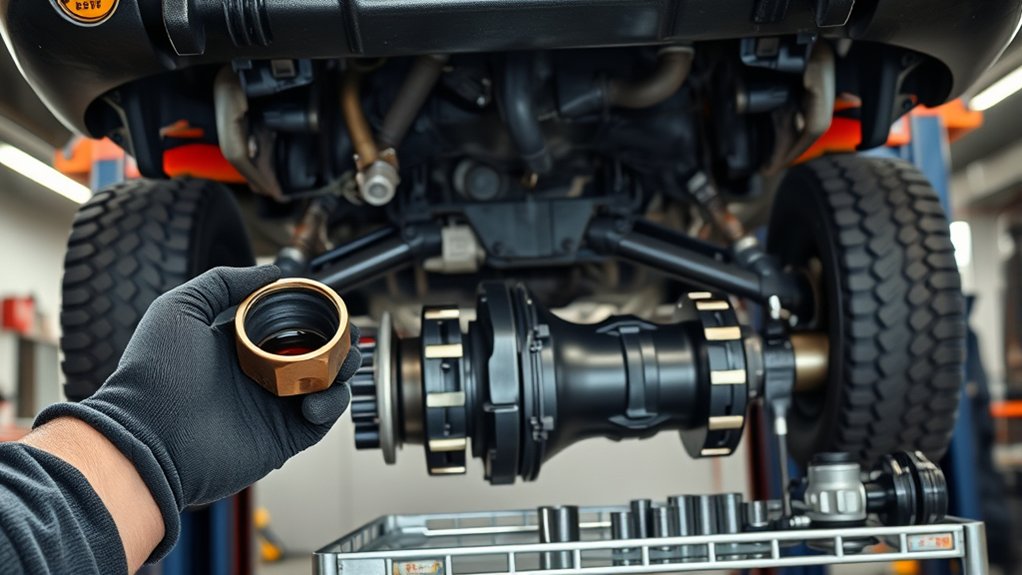
Your Toyota Tacoma does not have one universal differential-fluid replacement interval for every model year and driving pattern. Toyota’s maintenance chart separates routine inspections from fluid replacement under special use. The safest approach is to check the guide for your exact year, drivetrain, and axle, then service the fluid sooner when towing, heavy loading, leakage, or contamination increases the risk.
Quick Answer
Toyota does not publish one replacement interval for every Tacoma. In the 2026 U.S. maintenance chart, front and rear differential oil is inspected at 15,000-mile intervals during normal use. If the truck is driven primarily while towing, using a car-top carrier, or carrying heavy loads, Toyota calls for replacement at 15,000-mile intervals.
Key Takeaways
- Use the maintenance guide for your exact Tacoma year instead of relying on one mileage rule for every truck.
- The 2026 U.S. guide lists differential-oil inspections at 15,000-mile intervals under normal service.
- For primary use involving towing, a car-top carrier, or heavy loading, the same guide lists replacement at 15,000-mile intervals.
- Verify the fluid specification, capacity, plug tool, sealing washers, and torque values before beginning a DIY service.
Understanding the Importance of Differential Fluid Changes
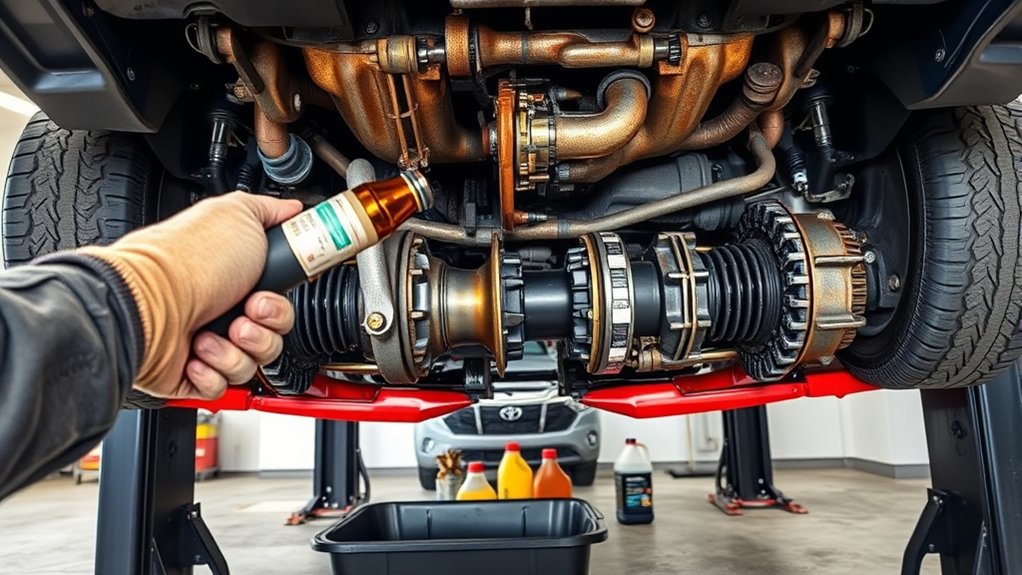
Differential oil forms a protective film between the ring gear, pinion, bearings, and other moving parts. It also carries heat and wear particles away from loaded contact surfaces. Low, contaminated, or incorrect fluid can increase noise, heat, and component wear.
A two-wheel-drive Tacoma normally has a rear differential. A four-wheel-drive Tacoma has front and rear differentials plus a separate transfer case. These housings may use different fluids and service procedures, so do not treat “drivetrain fluid” as one interchangeable product.
Note: Toyota changes specifications across generations, drivetrains, axle designs, and markets. Confirm your truck by model year and VIN before buying fluid or quoting torque values.
When Should You Change Your Tacoma’s Differential Fluids?
The correct answer starts with Toyota’s model-year maintenance chart. For example, the 2026 Tacoma Warranty & Maintenance Guide marks front and rear differential oil for inspection at 15,000, 30,000, and 45,000 miles, then continues that pattern. Under its special-use chart, it marks replacement at those intervals when the truck is driven primarily while towing a trailer, using a car-top carrier, or carrying heavy loads.
| Use Pattern | Practical Service Approach | Important Detail |
|---|---|---|
| Normal road use | Inspect at the intervals in your model-year guide. | The 2026 guide shows 15,000-mile inspection intervals, not a blanket normal-use replacement interval. |
| Towing, car-top carrier, or heavy loading | Follow the special-use replacement schedule. | The 2026 U.S. guide lists replacement at 15,000-mile intervals when the truck is driven primarily under these conditions. |
| Dirt, dust, or off-road use | Use the exact chart and inspect after severe exposure. | Do not automatically apply the towing interval. Water crossings, impacts, or a damaged vent can justify immediate inspection. |
| Unknown service history | Inspect the level, leaks, and fluid condition now. | Service the axle with the correct fluid if the history is uncertain and inspection shows age, contamination, or low level. |
Recommended Change Intervals
Do not label a Tacoma “overdue” from mileage alone unless its exact guide calls for replacement. A normal-use inspection and a special-use replacement are different maintenance actions. Check the Toyota manuals and warranties portal, then match the schedule to your year and use pattern.
Driving Conditions Impact
Towing and heavy payloads increase gear loading and heat. Long highway trips may be easier on the oil than repeated high-load work, but mileage alone cannot reveal leakage or contamination. Off-road driving also adds risks that a calendar cannot predict, including damaged seals, blocked vents, and water entry.
Signs of Fluid Issues
Inspect the axle promptly if you find wetness around the cover, pinion seal, axle seals, fill plug, or drain plug. A low level, burnt odor, milky appearance, heavy sludge, or visible metal chips also deserves attention. Noise or vibration needs diagnosis because bearings, tires, driveshafts, and gears can create similar symptoms.
Signs You Need to Change Your Differential Fluid
- Leakage or a low level: Fluid loss can leave bearings and gears without enough lubrication. Find and repair the leak instead of only topping up.
- Milky or foamy fluid: This can indicate water contamination, especially after a deep crossing or flood exposure.
- Burnt smell or thick sludge: Excess heat or extended service may have degraded the oil.
- Metal chips or flakes: A light gray paste on a magnetic drain plug can occur with normal wear, but sharp chips, flakes, or chunks call for professional inspection.
- New howl, whine, grinding, or clunking: Stop treating the problem as a simple fluid change until the axle is checked for mechanical damage.
- Repeated overheating or severe use: Heavy towing, high payloads, and sustained low-speed work can shorten fluid life.
Dark color by itself does not prove the fluid has failed. Gear oil can darken while still providing protection, so judge it with the service history, level, odor, contamination, debris, and the manufacturer’s schedule.
Difficulty engaging four-wheel drive is not a reliable differential-fluid test. The transfer case, actuator, switches, wiring, or control system may be involved. Diagnose the 4WD system instead of assuming a differential oil change will correct it.
How to Perform a Differential Fluid Change Yourself
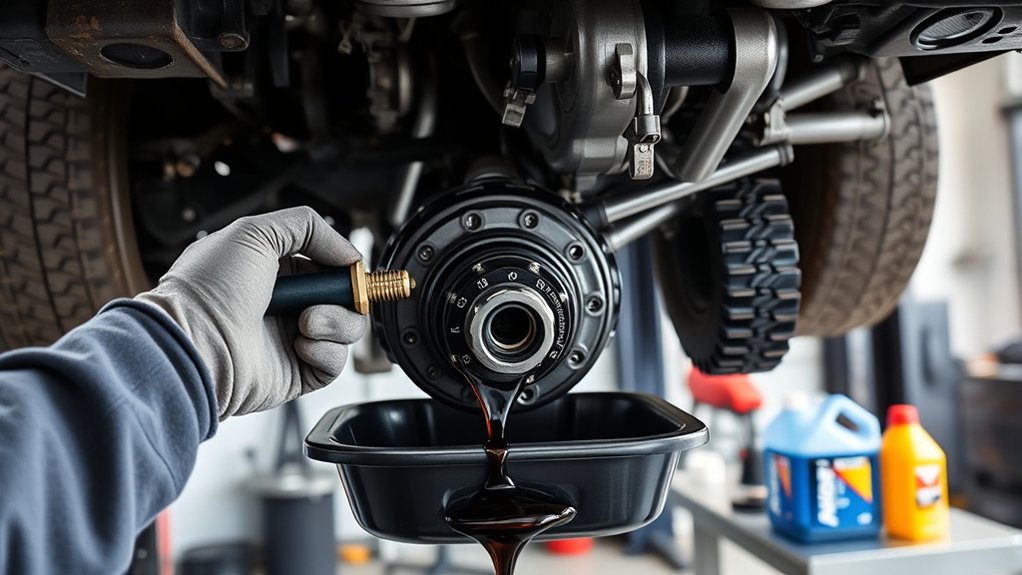
At a Glance
| Time Required | About 45–90 minutes for one axle, excluding seized plugs or cleanup |
| Difficulty | Moderate; safe lifting and accurate torque are required |
| Tools Needed | Correct plug tool, ratchet or breaker bar, torque wrench, fluid pump, drain pan, wheel chocks, and approved supports |
| Cost | Varies by axle capacity, specified fluid, brand, and whether you service one or two differentials |
Warning: Work on a cool drivetrain, chock the wheels, and keep the truck level. Never crawl under a vehicle supported only by a jack. Use ramps or jack stands rated for the truck and placed at approved support points.
Required Tools and Materials
- The exact gear oil specified for your model year, drivetrain, and axle
- Enough fluid for the stated capacity, with a small allowance for pumping loss
- New sealing washers or gaskets specified for the fill and drain plugs
- The correct socket, hex bit, or other plug tool for your truck
- A ratchet or breaker bar and a calibrated torque wrench
- A hand pump or squeeze-bottle hose that fits the fill opening
- A drain pan, shop towels, brake cleaner suitable for exterior cleanup, gloves, and eye protection
- Wheel chocks and approved ramps or jack stands when extra clearance is needed
Do not buy a “universal Tacoma” socket or fluid based only on an online list. Plug styles, capacities, and specifications can change. Toyota’s Technical Information System is the authoritative source for model-specific repair procedures and torque data.
Step-by-Step Process
- Confirm the specification. Record the model year, drivetrain, and axle information. Verify the fluid, capacity, plug tool, washer type, fill-level method, and torque values.
- Warm the oil slightly. A short, gentle drive can help the fluid drain. Let hot exhaust and driveline parts cool before working underneath.
- Park level and secure the truck. Set the parking brake, chock the wheels, and support the vehicle safely if it must be raised. Keep the axle level during filling.
- Identify and clean both plugs. Confirm which plug is the fill plug and which is the drain plug. Clean the surrounding area so dirt cannot enter the housing.
- Loosen the fill plug first. Make sure you can refill the axle before draining it.
- Drain the old oil. Position the pan, remove the drain plug, and allow the housing to empty. Avoid contact with hot fluid.
- Inspect what came out. Look for water, heavy sludge, burnt odor, and abnormal metal. Clean the magnetic plug if equipped. Large debris or severe noise calls for diagnosis before refilling and driving.
- Install the drain plug. Fit the specified new washer or seal and tighten the plug to the exact model-specific torque.
- Refill with the specified oil. Pump fluid into the fill opening. Use Toyota’s stated level-check method for your axle; many conventional housings are filled to the specified level near the lower edge of the fill opening while the truck is level.
- Install the fill plug. Use the specified seal and torque. Wipe the housing clean so a new leak will be easy to spot.
- Check the repair. Drive briefly, park on a clean level surface, and inspect both plugs and nearby seals for seepage.
- Recycle the old fluid. Store it in a clean, leak-proof container and take it to an approved collection point. Do not pour it onto the ground or into a drain.
Pro Tip: Remove or loosen the fill plug before touching the drain plug. A drained axle with a seized or damaged fill plug can leave the truck undriveable.
Safety Precautions to Consider
Wear gloves and eye protection, and keep the drain pan clear of your face. Do not use an impact wrench to install plugs. Differential housings can crack or threads can strip when a plug is overtightened. If a plug is rounded, seized, cross-threaded, or leaking around damaged threads, stop and use a qualified repair shop.
Keep used gear oil separate from coolant, brake cleaner, fuel, and other chemicals unless your local recycler says mixing is accepted. The U.S. Environmental Protection Agency advises using a leak-proof container and checking local facilities for used-oil recycling.
Selecting the Best Gear Oil for Your Tacoma
The best oil is the one that meets the exact viscosity and performance specification in your Tacoma’s owner information. Toyota Genuine Differential Gear Oil may be specified for some models, while an approved equivalent may also be allowed. Do not assume that 75W-85 GL-5 applies to every Tacoma generation, axle, climate, or market.
Check all of these before purchasing:
- Viscosity grade: Use the grade shown for your exact axle and operating temperature range.
- Performance category: Match the required API or Toyota specification.
- Axle type: Confirm whether a locking or limited-slip design has special requirements.
- Capacity: Front and rear differentials may hold different amounts.
- Transfer case fluid: Treat it as a separate service item and use its own specification.
Mixing a correct product with an unknown or incompatible product can make future diagnosis harder. When the old fluid type is uncertain, a complete drain and refill with the specified oil is safer than topping up with a guess.
How Driving Conditions Affect Fluid Changes
Your use pattern determines how much heat, load, and contamination the axle sees. Toyota’s special-use language matters because it ties replacement to how the truck is driven, not simply to ownership of a tow hitch or occasional gravel-road travel.
- Frequent towing or heavy payloads: Follow the model-year special-use schedule. Check the axle for leaks before and after demanding trips.
- Off-road use: Inspect the housing, seals, vent, and plugs after impacts, deep mud, or debris contact.
- Water crossings: Check for a milky appearance or level change as soon as practical. A submerged or blocked axle vent can increase contamination risk.
- Stop-and-go work: Delivery, job-site, and low-speed operation may add heat even when annual mileage is low.
- Highway commuting: Steady driving may be less severe, but it does not replace scheduled inspections.
Adjust the service plan to actual use, but keep Toyota’s guide as the baseline. A repair shop can sample the oil and inspect the axle when severe use, noise, or an uncertain history makes the decision unclear.
Essential Tools for a Differential Fluid Change
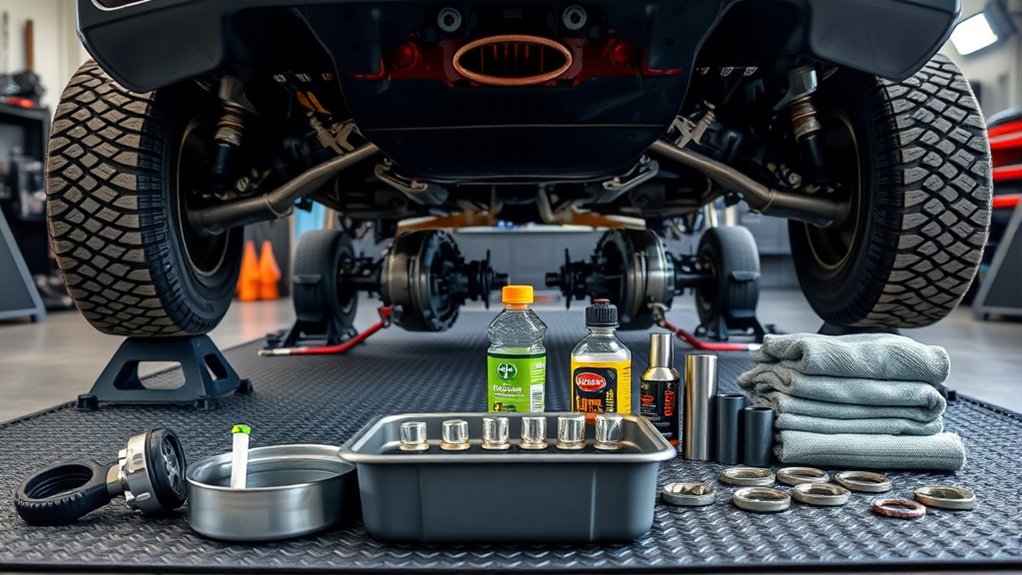
| Tool | Purpose | What to Verify |
|---|---|---|
| Correct plug socket or bit | Removes the fill and drain plugs without rounding them | Plug type and available clearance on your axle |
| Torque wrench | Tightens plugs without damaging threads or the housing | Correct range and model-specific torque |
| Fluid pump | Moves thick gear oil into a hard-to-reach fill opening | Hose diameter, bottle fit, and cleanliness |
| Drain pan | Contains used oil for inspection and recycling | Capacity and a pour spout for clean transfer |
| New washers or seals | Helps prevent seepage at the plugs | Correct part for each fill and drain plug |
| Safety supports | Keeps the vehicle stable when extra clearance is required | Load rating and approved support locations |
Avoid These Common Differential Maintenance Mistakes
- Using a universal interval: A 2026 schedule should not be applied automatically to an older Tacoma, and an older forum recommendation should not override a newer guide.
- Draining before checking the fill plug: Always confirm that the axle can be refilled first.
- Guessing the oil: Differential and transfer-case fluids are not automatically interchangeable.
- Filling while the truck is tilted: The level can be wrong if the axle is not positioned as Toyota specifies.
- Reusing a damaged seal: A flattened, cracked, or incorrect washer can cause a slow leak.
- Overtightening plugs: More force does not create a better seal and can damage the housing.
- Ignoring debris or noise: New oil cannot repair chipped gears, failed bearings, or excessive backlash.
- Judging only by color: Combine appearance with odor, debris, level, use history, and the maintenance schedule.
- Skipping the leak check: Reinspect after the first drive and again after several days.
The Role of Maintenance History in Fluid Change Decisions
A written service history helps you separate preventive maintenance from guesswork. Record the date, mileage, axle serviced, fluid brand and specification, quantity used, washer part numbers, torque source, and anything found on the drain plug. Keep the receipt or bottle label with the record.
If you bought a used Tacoma with no differential-service record, inspect for leaks and verify the fluid level. A baseline drain and refill can be reasonable when the correct fluid is known and the existing oil appears old or contaminated. However, unusual noise, large metal debris, or a badly leaking seal needs diagnosis rather than a routine fluid change.
Related Guides
Frequently Asked Questions
How often should I change the differential fluid on my Toyota Tacoma?
Use the maintenance guide for your exact model year. The 2026 U.S. guide calls for front and rear differential-oil inspection at 15,000-mile intervals during normal service. It calls for replacement at 15,000-mile intervals when the truck is driven primarily while towing, using a car-top carrier, or carrying heavy loads.
How often do I need to change the front and rear differential fluid?
The front and rear axles can share a service date, but their capacities, plug arrangements, and specifications may differ. A two-wheel-drive Tacoma does not have the same front-differential service as a four-wheel-drive truck. Follow the schedule and service data for each axle.
Can differential fluid last 100,000 miles?
It may remain in service for a long time under some conditions, but 100,000 miles is not a safe universal promise. Inspections, leaks, towing, contamination, axle temperature, and the model-year schedule all matter. Do not skip Toyota’s inspection points while waiting for a round mileage number.
Can I use differential gear oil in the transfer case?
Only if Toyota specifies the same product for your exact configuration. The transfer case is a separate unit and may require a different fluid, capacity, fill method, or service interval. Verify both systems independently.
What year was the worst year for the Toyota Tacoma?
No authoritative source identifies one objectively “worst” Tacoma year, and that label does not determine differential service. Condition, configuration, maintenance history, recalls, and prior use matter more. Check a specific truck’s VIN with the NHTSA recall lookup and review its service records.
Conclusion
Do not rely on a blanket 30,000-to-60,000-mile rule for every Tacoma. Start with the exact model-year guide, distinguish inspection from replacement, and apply the special-use schedule when your driving qualifies. Towing, heavy loading, leakage, water contamination, or unknown history may justify earlier attention.
A careful DIY service depends on correct information as much as correct tools. Verify the oil, capacity, seals, plug type, fill method, and torque before draining. If you find severe noise, large metal pieces, damaged threads, or a major leak, have the differential inspected before driving farther.
Sources
- Toyota 2026 Tacoma Warranty & Maintenance Guide — routine inspection and special-use replacement schedules
- Toyota 2023 Tacoma Warranty & Maintenance Guide — model-year comparison and special operating conditions
- Toyota Manuals and Warranties — official owner and maintenance information
- Toyota Technical Information System — model-specific repair procedures, specifications, and torque data
- U.S. EPA: Managing, Reusing, and Recycling Used Oil — safe collection and recycling guidance
- NHTSA Recall Lookup — VIN-based recall and safety-campaign checks

