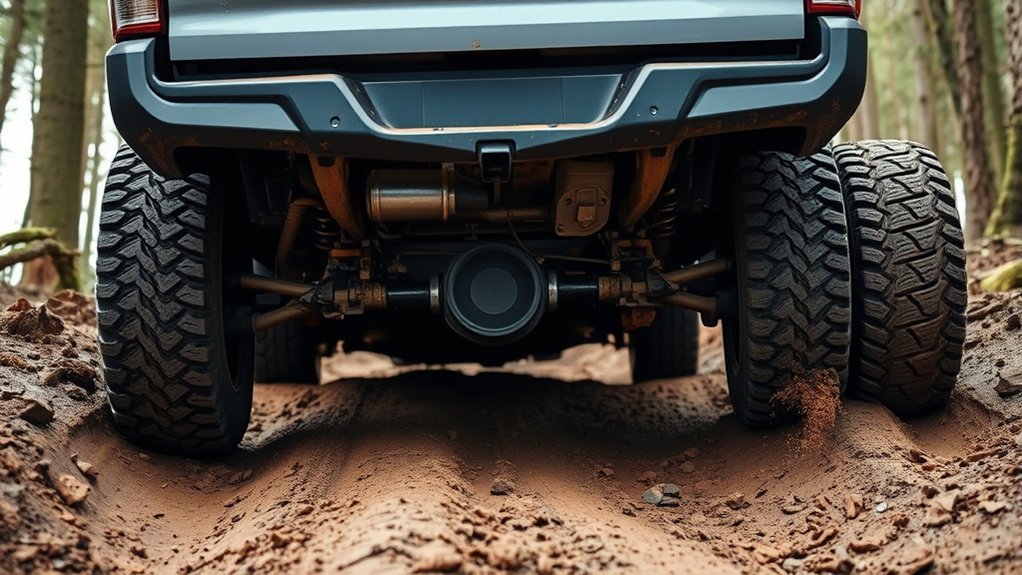
Your Toyota Tacoma’s rear differential lock can make the difference between calmly clearing a low-traction obstacle and spinning one rear tire without moving forward. The key is using it only when traction is genuinely limited, stopping wheel spin before engagement, keeping speed very low while locked, and disengaging it as soon as the obstacle is cleared. Exact controls can vary by model year and drivetrain, so always confirm the procedure in your Tacoma’s owner’s manual.
Quick Answer
Use the Tacoma rear differential lock only when one rear wheel is spinning or traction is extremely limited on slippery, rugged, or uneven ground. Stop the wheels before locking, wait for the indicator to turn solid, stay at or below 5 mph (8 km/h), and unlock it as soon as you clear the obstacle.
Key Takeaways
- Use the rear locker only for low-traction situations such as a spinning rear wheel in mud, loose terrain, deep ruts, or rugged trail conditions.
- Stop wheel spin before pressing the rear differential lock switch.
- A flashing rear-lock indicator is normal while the system is locking or unlocking; a solid indicator confirms engagement.
- Do not exceed 5 mph (8 km/h) with the rear differential locked.
- ABS, brake assist, VSC, TRAC, and Downhill Assist Control where equipped may be unavailable while the rear differential is locked.
- Unlock the differential as soon as you have cleared the obstacle and regained normal traction.
At a Glance
| Time Required | Usually less than 1 minute to engage or disengage once the truck is positioned safely |
| Difficulty | Easy to operate, but safety-critical |
| Tools Needed | None |
| Cost | $0 when the truck is factory-equipped with the rear locker |
Warning: Do not lock the rear differential while the rear wheels are spinning, do not use it unnecessarily on high-traction pavement, and do not exceed 5 mph (8 km/h) while it is locked. Toyota also states that ABS, brake assist, VSC, TRAC, and Downhill Assist Control where equipped do not operate normally while the rear differential is locked.
Understanding How the Rear Differential Lock Works
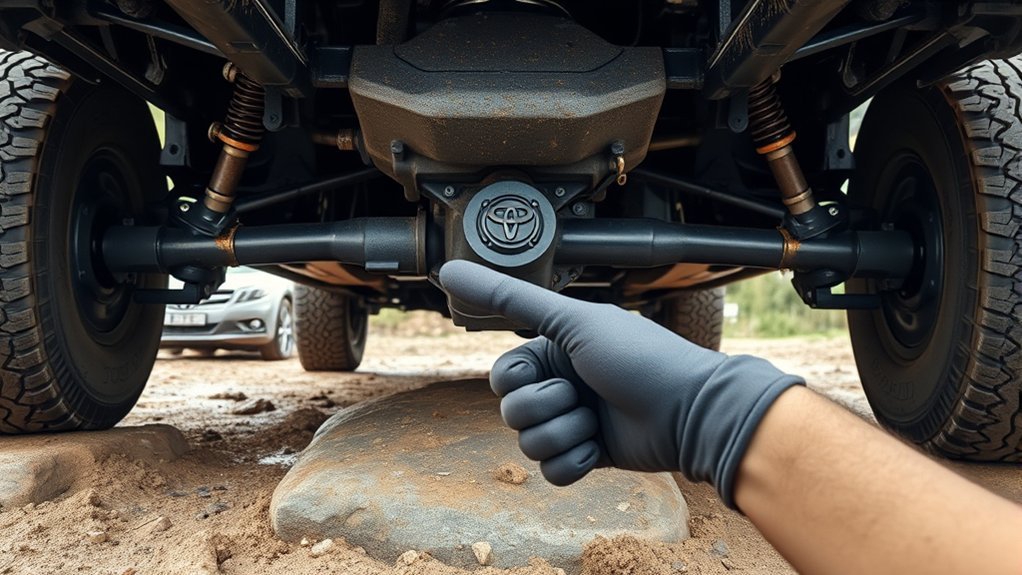
The rear differential lock in an equipped Toyota Tacoma is designed for situations where normal traction systems are not enough and one rear wheel is spinning. An open differential normally allows the two rear wheels to rotate at different speeds, which is useful during turns. The downside is that a wheel with very little grip can spin while the wheel with better traction contributes less useful drive force.
Engaging the electronic rear locker mechanically couples the rear axle so the two rear wheels rotate together. Toyota’s current 2026 Tacoma material describes the system as distributing power evenly between the rear wheels and helping them move at the same speed in low-traction conditions.
That can greatly improve traction when one rear tire is lightly loaded, in a rut, on loose rock, or on another surface where one wheel wants to spin. It does not guarantee traction, however. Tire grip, ground clearance, slope, vehicle loading, and the surface still determine whether the truck can safely move.
Note: Tacoma rear-locker availability and operating details vary by year, trim, transmission, and 4WD configuration. Toyota now publishes a 2026 Tacoma Owner’s Manual. For an older truck, use the manual that matches its exact model year rather than assuming every Tacoma follows the same sequence.
When to Engage the Rear Differential Lock for Optimal Performance
Engage the rear differential lock only when traction is poor enough that one rear wheel is spinning or the truck cannot move effectively with its normal traction systems. Typical examples include mud, loose rock, deep ruts, uneven terrain, sand, or other rugged surfaces where one rear tire has far less grip than the other.
The locker is not a normal-driving mode. It is a short-duration traction tool for getting through a specific obstacle.
Ideal Off-Road Conditions
The rear locker is most useful when the terrain creates a large traction difference between the left and right rear tires. Examples include:
- A diagonal rut that partially unloads one rear tire.
- A rocky ledge where one rear tire loses contact or has very little weight on it.
- Mud or loose soil where one rear wheel begins spinning.
- Deep snow or loose sand where available traction is uneven.
- A slippery ditch or rugged trail obstacle that the truck cannot clear with normal traction aids.
Apply the throttle gently after the locker is fully engaged. More throttle is not always better; aggressive wheel spin can dig the tires deeper, damage the trail, or increase drivetrain stress.
Slippery Terrain Usage
On mud, deep snow, loose gravel, or similar terrain, first use the appropriate 4WD and traction settings for your Tacoma. If a rear wheel continues to spin and the truck still cannot move, the rear locker can provide additional traction by keeping both rear wheels turning together.
Use this sequence:
- Stop wheel spin: Lift off the accelerator and make sure the rear tires are no longer spinning.
- Select the correct transfer mode: Many Tacoma systems use low range before the rear locker. Follow your exact model-year owner’s manual.
- Press the rear differential lock switch: The indicator should flash while the mechanism is moving.
- Wait for a solid indicator: Do not treat a flashing indicator as confirmation that the axle is fully locked.
- Move gently: Use light throttle and stay at or below 5 mph (8 km/h) while the rear differential is locked.
- Unlock promptly: Disengage it once the obstacle is cleared and normal traction returns.
How to Engage the Tacoma Rear Differential Lock Safely
The exact transfer-case and transmission steps vary across Tacoma generations, so treat the following as a safe operating framework rather than a replacement for your model-year manual.
- Position the truck on the safest available line and reduce throttle.
- Stop the rear wheels from spinning.
- Use the correct 4WD setting specified by your owner’s manual. On many factory Tacoma systems, that means selecting 4WD Low before requesting the rear locker.
- Press the rear differential lock switch once.
- Watch the rear differential lock indicator. Flashing means the system is still changing state.
- Wait until the indicator stays solid before applying meaningful throttle.
- Accelerate gently and keep vehicle speed at or below 5 mph (8 km/h).
- As soon as the truck is through the obstacle, press the switch again to unlock the rear differential.
Pro Tip: If the locker will not engage immediately, do not spin the tires harder. Release the throttle, make sure the wheels have stopped, confirm the required transfer-case mode, and operate the switch again.
[Amazon Products Picked for You]

Dual led backlit on-off push button switch, it comes with the wiring connector, convenient for you to install.

Sturdy and Durable: Made of high-quality plastic and well-conductive pins; ensure long lasting durability,highly optimized for general use and will give you a pleasant experience

5 Pins ON-OFF SPST(single pole single throw) blue led rocker switch,easy installation with the equipped wires.
Properly Disengaging the Rear Differential Lock
Once the truck has moved through the low-traction obstacle, press the rear differential lock switch again. The indicator may flash while the mechanism unlocks, then go out when disengagement is complete.
On applicable Tacoma systems, changing the transfer case back to a high-range mode can also automatically unlock the rear differential. For example, Toyota’s fourth-generation part-time-4WD guidance lists automatic unlocking when the control is moved to 2H or 4H. Full-time-4WD versions use different mode names, so confirm the procedure for your truck.
If the rear differential lock indicator still flashes after you request unlocking, first make sure the surrounding area is safe. Toyota’s factory guidance for applicable models allows a slight steering input while the vehicle is moving to help the mechanism release. If the indicator continues flashing, stop completely and operate the switch again.
If it still will not unlock or the warning remains, stop using the system and have the 4WD system inspected by a qualified Toyota technician.
Mistakes to Avoid With Your Rear Differential Lock
Most problems come from using the locker longer than necessary, engaging it while a tire is spinning, or treating it like a normal on-road traction mode.
Engaging on Dry Pavement
A locked rear differential prevents the rear wheels from rotating at the different speeds they normally need during a turn. On high-traction pavement, that can make the truck resist turning and increase tire scrub and driveline stress.
Avoid these mistakes:
- Using the locker for normal pavement driving: Save it for the slippery or rugged conditions for which Toyota designed it.
- Locking while a tire is spinning: Stop wheel spin first.
- Driving before engagement is complete: Wait until the indicator becomes solid.
- Leaving it locked after the obstacle: Unlock it as soon as extra traction is no longer needed.
Ignoring Speed Limitations
The 5 mph (8 km/h) figure is an important safety limit while the rear differential is locked. It should not be interpreted as an instruction to engage the locker at any speed below 5 mph.
Stop wheel spin before locking the differential, and do not drive faster than 5 mph (8 km/h) while it is locked.
Slow movement also gives you more time to choose a safe tire line and reduces shock loading when a spinning or lightly loaded tire suddenly finds grip.
Troubleshooting Blinking Indicators for the Differential Lock
A blinking rear differential lock indicator is not automatically a fault. The indicator normally flashes while the locking mechanism is moving between locked and unlocked positions.
If it keeps flashing:
- Stop wheel spin. Do not try to force engagement with more throttle.
- Check the transfer mode. Make sure your Tacoma is in the mode required by its model-year owner’s manual.
- Stop the vehicle completely and operate the switch again.
- When unlocking, allow the driveline to unload. If your manual permits it, a slight steering input while moving slowly can help the mechanism release.
- Watch the indicator. A solid light means the rear differential is locked; an extinguished light means it is unlocked.
- Get the system inspected if flashing persists. Toyota advises dealer inspection when the indicator repeatedly fails to complete the requested lock or unlock operation.
Do not rely on a page number quoted by a generic online guide. Toyota changes manual pagination between generations. Use the Rear Differential Lock System section in the owner’s manual for your exact Tacoma year.
[Amazon Products Picked for You]

20 Amp 12 Volt Dual LED lights (5-PINs) Single Pole Single Throw (SPST) ON / OFF Rocker Switch

Sturdy and Durable: Made of high-quality plastic and well-conductive pins; ensure long lasting durability,highly optimized for general use and will give you a pleasant experience
20 Amp 12 Volt Dual LED lights (5-PINs) Single Pole Single Throw (SPST) ON / OFF Rocker Switch
Essential Safety Tips for Differential Lock Use
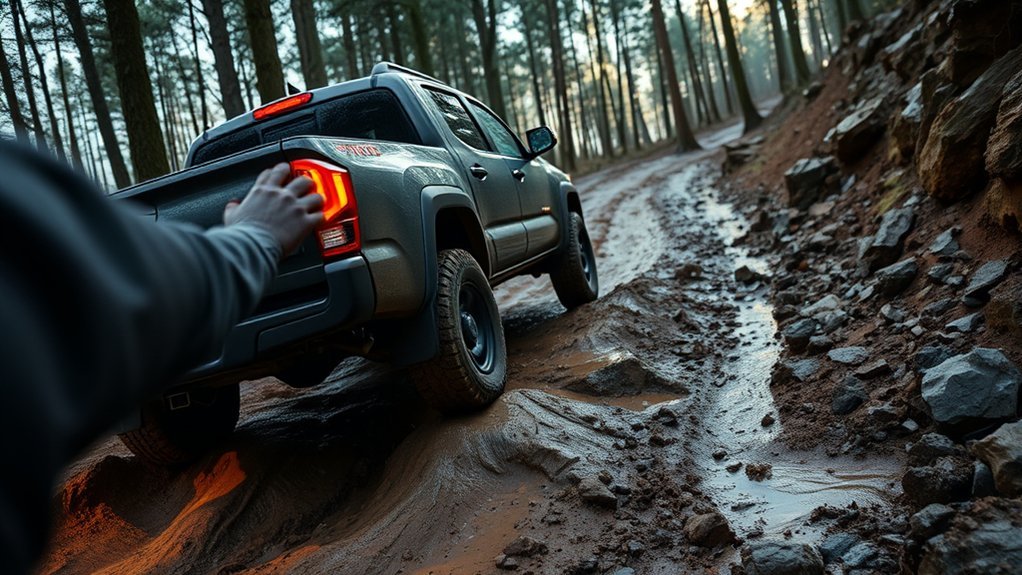
The rear locker changes both traction and handling. When the rear axle is locked, the truck may require more steering effort because the two rear tires cannot freely rotate at different speeds.
Follow these safety rules:
- Use the locker only when wheel spin or severely uneven traction makes it necessary.
- Do not press the lock switch while the rear wheels are spinning.
- Wait for a solid lock indicator before proceeding.
- Keep speed at or below 5 mph (8 km/h) while locked.
- Avoid unnecessary sharp turns while the rear axle is locked.
- Do not use the locker for ordinary dry-pavement driving.
- Unlock it immediately after the difficult section.
- Remember that several electronic braking and stability systems may be unavailable while the differential is locked.
Warning: On applicable Tacomas, Toyota states that ABS, brake assist, Vehicle Stability Control (VSC), traction control (TRAC), and Downhill Assist Control where equipped do not operate while the rear differential is locked. Drive slowly and leave extra room for braking and steering.
Rear Locker vs. Auto LSD and Other Tacoma Traction Systems
The rear locker is not the same as Toyota’s other traction aids.
- Rear differential lock: Mechanically keeps the rear wheels rotating together for maximum low-speed traction when one rear tire has little grip.
- Auto LSD: Uses braking and engine-control strategies to reduce wheel spin without mechanically locking the rear axle.
- TRAC/A-TRAC: Uses brake and power control to limit individual wheel spin.
- Multi-Terrain Select: Changes throttle and traction-control behavior for different surfaces. Toyota’s recent Tacoma systems can use Multi-Terrain Select in both 4WD High and 4WD Low.
- Crawl Control: On equipped trucks, manages very low vehicle speed so the driver can concentrate on steering.
The locker is usually the tool to reach for when the normal traction systems cannot overcome a large difference in grip between the two rear tires.
[Amazon Products Picked for You]

Designed for efficient, consistent performance and manufactured using only the highest quality materials

✅ Enhanced Traction & Stability – Differential Locker ensures power is evenly distributed to both wheels, preventing wheel spin and improving off-road, towing, and daily driving performance.

Replacement for Toyota 8 Inch Differential Locker 30 Spline Axles
Practical Differential Lock Operation and Best Practices
Experienced off-road driving comes down to using the least aggressive traction aid that safely solves the problem. Start with good tire placement, an appropriate 4WD mode, and smooth throttle. Add the rear locker only when the terrain calls for it.
- Know your manual: Tacoma generations use different switches, transfer-case modes, and automatic-unlock logic.
- Read the obstacle first: Look for rocks, holes, drop-offs, and side slopes before committing.
- Use smooth throttle: A locked differential improves traction, but excessive throttle can still cause sliding or drivetrain shock.
- Watch the indicators: Confirm the locker is fully engaged before relying on it.
- Unlock early: As soon as the obstacle is cleared, return the differential to normal operation.
- Know when to stop: If the truck still cannot move safely, repeated wheel spin is rarely the answer. Reassess the line or use appropriate recovery equipment and assistance.
Related Guides
Frequently Asked Questions
When should I use the rear locker on a Tacoma?
Use it when one rear wheel is spinning or traction is extremely uneven on a slippery, rugged, or off-road surface and the truck cannot move effectively with its normal traction systems. It is intended for short, low-speed use rather than routine driving.
When should you lock your rear differential?
Lock it when there is a major traction difference between the two rear tires, such as when one tire is in a rut, on loose rock, in mud, or lightly loaded over uneven terrain. Stop wheel spin before pressing the switch.
When would you normally use a diff lock?
A diff lock is normally used at very low speed on difficult terrain where an open differential allows one drive wheel to spin. Common examples include rocks, deep ruts, mud, loose surfaces, and uneven obstacles.
When should you not use diff lockers?
Do not use the Tacoma rear locker for ordinary dry-pavement driving, at high speed, while the rear wheels are spinning, or after the low-traction obstacle has been cleared. Avoid unnecessary tight turns while the rear axle is locked.
Why is my Tacoma rear differential lock light blinking?
Blinking is normal while the system is locking or unlocking. If it continues flashing without completing the operation, stop completely, confirm the required 4WD mode, and operate the switch again. Persistent flashing can indicate a 4WD-system problem that should be inspected by Toyota.
Can you drive fast with a Tacoma rear differential locked?
No. Toyota specifies a maximum of 5 mph (8 km/h) while the rear differential is locked. The locker is designed for slow obstacle clearance, not normal-speed trail or road driving.
Conclusion
The Tacoma’s rear differential lock is most useful when one rear tire is spinning and ordinary traction aids are not enough. Stop wheel spin before engaging it, confirm the indicator is solid, use gentle throttle, stay at or below 5 mph (8 km/h), and disengage the locker as soon as the obstacle is behind you.
Most importantly, use the procedure written for your exact model year. Tacoma drivetrain controls have changed over time, and the owner’s manual remains the final authority for transfer-case position, indicator behavior, and automatic unlocking on your truck.
Sources
- Toyota — 2026 Tacoma Owner’s Manual — current factory manual reference for model-specific operation and safety instructions.
- Toyota — 2026 Tacoma Brochure — current description of the electronically locking rear differential and its low-traction purpose.
- Toyota USA Newsroom — 2026 Tacoma — current Tacoma off-road-system overview, including the electronic rear locker, Multi-Terrain Select, and Crawl Control.
- Toyota TechInfo — 2024 Tacoma Owner’s Manual — factory rear-differential-lock operating limits, indicator behavior, automatic unlocking, and systems disabled while locked.
- Toyota Owners — Tacoma Warning Lights and Indicators — factory reference for the rear differential lock indicator.
