Last updated: September 19, 2026
A Toyota Tacoma gas cap warning light or “Check Fuel Cap” message usually means the truck has detected a possible leak in the sealed fuel-vapor system. Start by removing the cap, checking the gasket and filler-neck sealing surface, and reinstalling the cap securely. If the warning remains after normal driving or an EVAP code returns, scan the truck before replacing parts because the leak may be somewhere else in the system.
Quick Answer
Remove the Tacoma’s fuel cap, inspect its seal and the filler opening, then reinstall it securely according to the cap label or owner’s manual. Drive normally and allow the emissions monitor time to run again. If the warning remains, returns, or appears with a fuel odor, retrieve the EVAP trouble codes and test the system rather than assuming the cap is the only possible cause.
Key Takeaways
- A loose, missing, damaged, or incorrectly fitted fuel cap is a common cause, but it is not the only possible cause.
- The exact warning may be a fuel-cap message, a check-engine light, or another model-specific notification.
- Tighten the cap according to the cap label or owner’s manual rather than forcing a universal number of clicks.
- An EVAP trouble code identifies the system and type of fault, not necessarily the failed component.
- A persistent gasoline odor, visible fuel, or a flashing check-engine light requires prompt attention.
At a Glance
| Time Required | 5–10 minutes for the initial cap inspection |
| Difficulty | Easy for the basic inspection; moderate or professional for EVAP testing |
| Tools Needed | Clean cloth and flashlight; an OBD-II scanner is optional |
| Cost | No cost if the cap only needs tightening; replacement and diagnostic costs vary |
Warning: If you smell strong gasoline fumes, see wet fuel, or notice fuel dripping, stop in a safe and well-ventilated area. Shut the engine off, keep flames and sparks away, and arrange an inspection before continuing to drive.
What the Toyota Tacoma Gas Cap Warning Light Means

Your Tacoma’s fuel system is designed to contain gasoline vapor instead of releasing it into the air. The evaporative-emissions system, commonly called the EVAP system, checks whether that sealed system can hold the expected pressure or vacuum.
If the fuel cap is loose, missing, cracked, or unable to seal, the truck may detect a vapor leak. Depending on the Tacoma’s model year, you may see a message such as “Check Fuel Cap,” a malfunction indicator lamp, or another vehicle-specific warning.
Model-year note: Toyota’s 2005 Tacoma owner’s manual says to turn the cap until a click is heard and notes that an inadequately tightened cap can switch on the malfunction indicator. Toyota’s 2009 Tacoma quick-reference guide likewise specifies one click. Use the instructions for your exact Tacoma year instead of forcing an arbitrary number of clicks.
Toyota recommends checking the information for your exact vehicle rather than assuming every dashboard symbol has the same meaning. You can use Toyota’s warning-light resource and manual library to confirm the correct procedure.
A fuel-cap leak does not always cause poor acceleration, rough running, or reduced power. The more common results are a stored EVAP fault, increased vapor emissions, a failed emissions inspection, or a warning that remains on until the system successfully retests itself.
Note: A flashing check-engine light can indicate a more urgent engine fault rather than a simple loose fuel cap. Reduce speed, avoid hard acceleration, and seek service promptly if the light flashes.
Common Reasons the Warning Appears
A loose cap is the first item to check because it is simple and common. However, replacing the cap without inspecting the rest of the system can waste money if another component is leaking.
- Loose fuel cap: The cap was not fully tightened after refueling.
- Missing cap: The cap was left at the pump or not reinstalled.
- Cracked or hardened seal: The rubber sealing ring can deteriorate with age, heat, dirt, or chemical exposure.
- Damaged cap threads or ratchet: The cap may turn without applying enough sealing pressure.
- Dirty filler opening: Dirt, rust, or debris can prevent the seal from sitting evenly.
- Incorrect replacement cap: A cap with the wrong pressure or sealing design may not work correctly.
- Filler-neck damage: Corrosion, dents, or a damaged sealing surface can allow vapor to escape.
- EVAP hose or connection leak: A cracked hose, loose connector, or damaged line may imitate a cap leak.
- Purge or vent valve fault: A valve that sticks open, remains closed, or leaks can prevent the system from completing its test.
- Charcoal-canister problem: Physical damage or liquid-fuel contamination can interfere with vapor storage and ventilation.
How to Check the Fuel Cap Step by Step
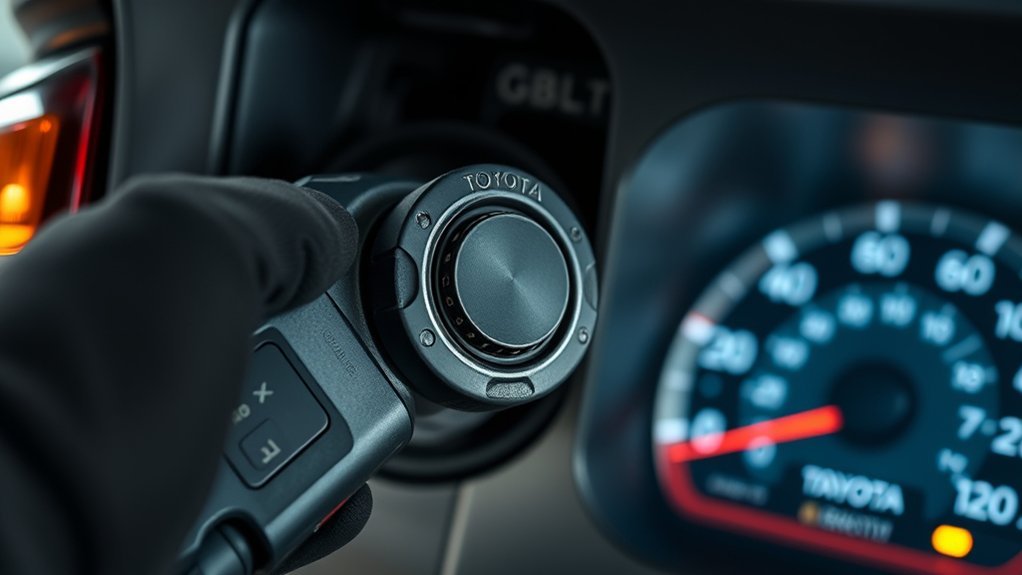
- Park safely and switch the engine off. Do not inspect the filler area while smoking or near flames, sparks, heaters, or other ignition sources.
- Remove the fuel cap. Check whether it was cross-threaded, loosely installed, or sitting at an angle.
- Inspect the sealing ring. Look for cracks, flattening, hardened rubber, missing pieces, swelling, or cuts.
- Check the cap body and threads. Replace the cap if its plastic body is cracked or its tightening mechanism no longer holds correctly.
- Inspect the filler opening. Use a flashlight to look for dirt, corrosion, dents, or damage where the cap seal contacts the neck.
- Clean light debris. Wipe the sealing surface gently with a clean, dry cloth. Do not push dirt into the tank.
- Reinstall the cap. Turn it until it clicks and stops tightening normally. Follow the cap label or owner’s manual instead of forcing a specific number of clicks.
- Drive normally. The warning may not disappear immediately because the EVAP monitor must run again under suitable conditions.
- Scan the truck if the warning remains. Record stored and pending trouble codes before clearing anything.
Pro Tip: Photograph or write down every trouble code and its status before clearing it. Freeze-frame information can show the fuel level, temperature, speed, and operating conditions present when the fault was detected.
How Fueling Practices Affect the EVAP System
Stop adding fuel when the pump automatically shuts off. Repeatedly squeezing in more gasoline reduces useful expansion space in the tank and can increase the risk of overflow or liquid fuel reaching vapor-control plumbing.
The onboard refueling vapor recovery system routes displaced gasoline vapor to an activated-carbon canister. The stored vapor is later drawn into the engine and burned. The U.S. Environmental Protection Agency describes this process in its onboard refueling vapor recovery guidance.
Repeated topping off can also lead to spilled gasoline at the filler opening, creating a fire and environmental hazard. Stop at the pump’s automatic shutoff unless the instructions for the specific vehicle state otherwise.
After refueling, reinstall the cap carefully. Starting it at an angle can damage the cap or filler threads and prevent an even seal.
How the Tacoma EVAP System Works
The EVAP system prevents gasoline vapor from venting directly into the atmosphere. Although designs vary by year, the system generally includes the following parts:
- The fuel tank and filler neck
- The fuel cap and its seal
- Vapor hoses and hard lines
- An activated-charcoal canister
- A purge valve that meters vapor into the engine
- A vent or canister-closure valve
- Pressure or vacuum sensing equipment
- The engine control module and onboard diagnostic monitor
During an EVAP self-test, the control module operates parts of the system and watches the pressure response. If the system cannot create or hold the expected condition, it can store a diagnostic trouble code.
An EVAP trouble code describes what the system detected. It does not automatically identify which part must be replaced.
What to Do if the Warning Stays On
Do not assume the repair failed because the warning remains immediately after tightening the cap. EVAP monitors normally run only when several operating conditions are suitable, which may include fuel level, temperature, soak time, and driving pattern.
Toyota’s documented Tacoma guidance for some model years says a malfunction indicator caused by an inadequately tightened cap can go out only after several driving trips. The exact timing varies, so no fixed number of miles or trips applies to every Tacoma.
For broader engine-light triage, see Toyota Tacoma Check Engine Light: Meaning & Next Steps. If you need to retrieve codes, see How to Use a Code Reader to Clear a Tacoma Check Engine Light before clearing stored diagnostic information.
Recheck the Cap and Filler Neck
Remove the cap again and confirm that no strap, dirt, ice, or foreign material is trapped under the seal. Check whether the cap ratchets normally and whether the filler neck is round, clean, and free from heavy corrosion.
Toyota owner’s manuals for some Tacoma model years instruct owners to use a genuine Toyota fuel-tank cap for replacement. Follow the manual for your exact year. If you are considering an aftermarket cap, verify that it is specifically listed for your Tacoma and matches the required sealing and pressure-control design.
Read the Trouble Codes
An OBD-II scanner can retrieve stored, pending, and permanent emissions-related codes. A code such as P0456 indicates a small or very-small EVAP leak condition, but it does not prove the fuel cap caused it.
Other EVAP faults may involve purge flow, vent operation, electrical circuits, pressure sensing, or larger leaks. Diagnose the code and test the related system before replacing valves, sensors, or the charcoal canister.
What Do P0441, P0455, and P0456 Mean?
| Code | What It Indicates | What It Does Not Prove |
|---|---|---|
| P0441 | Incorrect EVAP purge flow or an unexpected purge-system response | That the purge valve itself must be replaced |
| P0455 | A large or gross EVAP leak | That the cap is definitely the leak source |
| P0456 | A small or very-small EVAP leak | That replacing the cap alone will correct the fault |
2005 Tacoma-specific note: Archived Toyota bulletin EG037-05 covers certain 2005 Tacomas with P0456 or P0455 together with P0441 and directs technicians to check for an EVAP leak at the top of the fuel-suction-plate sub-assembly. The bulletin applies only to specified 2005 configurations, so it is not a blanket diagnosis for every 2005 Tacoma.
Do Not Hide the Warning by Disconnecting the Battery
Disconnecting the battery or clearing codes may turn the light off temporarily, but it does not repair the leak. It also resets emissions readiness monitors and may erase useful diagnostic information.
After a proper repair, allow the truck to rerun its monitors. A technician can confirm whether the relevant monitor has completed and whether the code has returned.
Use an Approved EVAP Smoke Test When Needed
A low-pressure automotive smoke machine can help locate leaks that are too small to see. The technician seals or commands parts of the system, introduces approved test vapor, and checks the cap, filler neck, hoses, canister, valves, and connections for escaping smoke.
Caution: Do not use cigarettes, burning materials, shop-made heaters, or unapproved smoke sources around the fuel system. EVAP testing requires equipment designed for automotive fuel-vapor systems.
Fuel-Cap and EVAP Maintenance
Inspect the Cap During Routine Service
Inspect the fuel-tank-cap gasket at the intervals specified for your Tacoma’s model year. Toyota’s 2025 Tacoma HV maintenance guide, for example, calls for visually inspecting the fuel-tank-cap gasket for cracks, deterioration, and damage and replacing it when necessary.
Keep the filler recess clean enough to prevent grit from collecting on the sealing surface. Avoid applying oil, grease, solvent, or gasket sealer unless the owner’s manual or an approved repair procedure specifically calls for it.
Use Proper Refueling Habits
- Switch the engine off before refueling.
- Use the fuel grade listed in the owner’s manual.
- Stop when the pump automatically shuts off.
- Do not repeatedly top off the tank.
- Install the cap straight rather than cross-threading it.
- Confirm that the cap tightens and clicks normally according to the model-year instructions.
- Close the fuel door before driving away.
Address Returning EVAP Faults
A warning that returns after cap replacement deserves a complete diagnosis. Replacing additional parts by guesswork can cost more than testing the system properly.
A technician may inspect hose routing, electrical connectors, purge operation, vent operation, tank-pressure data, filler-neck condition, canister damage, and technical service information for the specific model year.
When to Seek Professional Help

Schedule professional diagnosis when the warning remains after the cap has been correctly installed and given enough time to retest. Service is also appropriate when the same code returns after it has been cleared or repaired.
Seek help sooner if you notice any of the following:
- A strong or persistent gasoline odor
- Visible wet fuel or dripping
- Difficulty filling the tank because the pump repeatedly shuts off
- A damaged or heavily corroded filler neck
- Several EVAP codes appearing together
- Rough running immediately after refueling
- A warning that returns after installing the correct replacement cap
- A flashing check-engine light
A professional-grade scan tool and EVAP smoke machine can reduce guesswork. These tools help determine whether the problem is at the cap, filler neck, canister, hoses, valves, sensor, wiring, or another connection.
How to Prevent Future Fuel-Cap Warnings
- Tighten the cap securely after every refueling stop according to the model-year instructions.
- Do not force the cap after it has clicked and stopped normally.
- Replace a cracked, hardened, or poorly fitting cap.
- Use the correct cap for your Tacoma’s exact model year.
- Keep the cap seal and filler opening clean.
- Stop fueling at the pump’s first automatic shutoff.
- Do not ignore recurring EVAP codes.
- Inspect vapor hoses and connectors during related repair work.
- Check the owner’s manual before relying on generic dashboard-light advice.
Frequently Asked Questions
What causes a Toyota Tacoma fuel-cap warning?
Common causes include a loose or missing cap, a damaged seal, an incorrect replacement cap, debris on the filler opening, filler-neck damage, leaking EVAP hoses, or faulty purge and vent components. The exact warning display varies by model year.
Why does my Toyota keep saying “Check Fuel Cap” after I tightened it?
The EVAP monitor may not have rerun yet, the cap seal may be damaged, or the leak may be elsewhere in the system. Inspect the cap and filler neck, drive normally, and scan the truck if the message remains or returns.
How do I reset the Tacoma fuel-cap warning?
Correct the sealing problem first, reinstall the cap properly, and allow the truck to complete normal emissions self-tests. Avoid disconnecting the battery merely to erase the warning because that resets readiness monitors and removes useful diagnostic information.
How long does it take for the warning to go away?
It may clear after the EVAP monitor completes one or more successful tests. Toyota documentation for some Tacoma years says the malfunction indicator may go out after several driving trips, but the timing depends on the vehicle and operating conditions, so no universal mileage or trip count applies.
Is it safe to drive with the fuel-cap warning on?
A steady warning caused by a loose cap usually does not require emergency towing. Tighten and inspect the cap promptly. Stop driving and seek assistance if you smell strong gasoline, see leaking fuel, have serious drivability problems, or the check-engine light flashes.
Does code P0456 always mean the gas cap is bad?
No. P0456 indicates that the system detected a small or very-small EVAP leak. The cap is one possible source, but the filler neck, hoses, valves, canister, sensor connections, or other sealed components may also be involved.
What do P0441, P0455, and P0456 mean on a Toyota Tacoma?
P0441 indicates an EVAP purge-flow problem, P0455 indicates a large or gross EVAP leak, and P0456 indicates a small or very-small EVAP leak. None of these codes alone proves that the fuel cap or any other single component has failed.
Do I have to use a Toyota OEM fuel cap?
Toyota owner’s manuals for some Tacoma model years instruct owners to use a genuine Toyota fuel-tank cap. Follow your exact model-year manual. If you are considering an aftermarket cap, verify that it is specifically listed for the truck and matches the required sealing and pressure-control design.
Conclusion
A Toyota Tacoma gas cap warning light deserves attention, but it does not automatically mean the truck needs an expensive repair. Begin by inspecting the cap, gasket, threads, and filler opening. Reinstall the cap according to the instructions for your exact model year, stop topping off the tank, and give the emissions monitor time to rerun.
If the warning remains or returns, retrieve the trouble codes and test the entire EVAP system rather than replacing parts by guesswork. Treat a strong gasoline odor, visible fuel, serious drivability symptoms, or a flashing check-engine light as a more urgent concern.
Sources
- Toyota Warning Lights — vehicle-specific warning-light and indicator guidance
- Toyota Manuals and Warranties — model-year-specific owner’s manuals and operating instructions
- 2005 Toyota Tacoma Owner’s Manual — fuel-cap installation, malfunction-indicator behavior, and replacement-cap guidance
- 2009 Toyota Tacoma Quick Reference Guide — fuel-cap tightening and check-engine-light guidance
- 2025 Toyota Tacoma HV Warranty & Maintenance Guide — fuel-tank-cap-gasket inspection guidance
- Archived Toyota TSB EG037-05 — configuration-specific 2005 Tacoma P0456/P0455/P0441 diagnostic guidance
- U.S. EPA Federal Register: Onboard Refueling Vapor Recovery — EVAP canister and refueling-vapor system operation
- U.S. EPA Regulations for Emissions from Vehicles and Engines — federal vehicle-emissions and onboard-monitoring framework