A Toyota Tacoma cabin odor usually comes from trapped moisture, a dirty cabin air filter, wet carpet, debris, or residue around the air-conditioning evaporator. Sweet, burning, fuel, and exhaust smells point to different problems and should not be treated as ordinary mildew or covered with an air freshener.
Start by noting what the odor smells like and exactly when it appears: when the fan starts, only with the A/C, with heat, after rain, or even with the HVAC switched off. That pattern helps separate a cabin-cleaning problem from an HVAC, coolant, electrical, fuel, or exhaust issue.
Last updated: September 19, 2026. This is a source-based troubleshooting guide and does not claim hands-on testing across every Tacoma generation. Filter access, drain routing, HVAC construction, and service procedures can vary by model year, so confirm invasive procedures with the information for your exact truck.
Quick Answer
To remove a Toyota Tacoma cabin odor, clear wet items and debris, inspect the cabin air filter, check the carpet for moisture, and identify when the smell appears. A musty odor that starts with the fan may involve a damp filter, evaporator residue, or drainage problem. Stop normal driving and arrange prompt inspection for fuel, exhaust, electrical-burning, or strong coolant odors.
Key Takeaways
- Musty smells commonly involve moisture, the cabin filter, carpet, the evaporator, debris near the intake, or a restricted condensate drain.
- Timing matters: an odor that appears when the fan starts points in a different direction than a smell that remains with the HVAC switched off.
- Sweet, burning, fuel, and exhaust smells need different checks than ordinary mildew and can require prompt repair.
- Cabin air filter intervals vary by Tacoma model year and operating conditions, so use the maintenance guide for your exact truck.
- Air fresheners mask odors. Lasting results come from removing the moisture, spill, debris, contamination, or leak causing them.
- Do not use a consumer ozone generator inside the truck. Ozone can harm lungs and may damage rubber, wiring coatings, and fabrics.
At a Glance
| Time Required | Varies by cause; basic cabin and filter inspection is straightforward, while drain, evaporator, wiring, or leak diagnosis can take substantially longer |
| Difficulty | Easy for cabin cleaning and filter inspection; professional diagnosis may be appropriate for drainage, evaporator, wiring, coolant, fuel, or exhaust faults |
| Tools Needed | Flashlight, vacuum, clean paper towels, microfiber cloths, gloves, replacement filter if needed, and a vehicle-safe interior cleaner |
| Cost | Usually lowest for cleaning or a filter; higher when the heater core, drain, blower, wiring, water leak, or evaporator requires repair |
Common Causes of Cabin Odors in Your Toyota Tacoma
Cabin odors often begin with water, organic debris, or a fluid leak. Wet boots, drink spills, a leaking door or body seal, a damp cabin filter, leaves near the cowl intake, and moisture under floor mats can all create a stale or musty smell. Food, pet hair, smoke residue, and forgotten trash can produce odors even when the HVAC system is clean.
If the smell appears mainly when the fan or air conditioner starts, focus first on the cabin filter, exterior air intake, evaporator area, and condensate drainage. If it remains with the HVAC switched off, inspect the carpet, seats, storage pockets, headliner, under-seat areas, and other places where water or debris can remain hidden.
Match the Odor to When It Appears
| When It Appears | Likely Area to Check | First Step |
|---|---|---|
| Mainly when the fan or A/C first starts | Cabin filter, evaporator area, cowl intake, or condensate drainage | Check the filter for moisture and debris, then compare fresh-air and recirculation modes |
| Present even with the HVAC switched off | Carpet, seats, storage areas, headliner, wet insulation, food, pet residue, or smoke contamination | Empty the cabin and inspect hidden fabric and padding for moisture or contamination |
| Worse after rain or washing | Water intrusion, wet carpet, seals, cowl debris, or intake-area moisture | Check carpet, door openings, headliner edges, rear cab area, and intake area for new dampness |
| Sweet smell that changes with engine temperature or heater use | Cooling system or heater core | Check for unexplained coolant loss, damp front carpet, or oily windshield film and arrange service |
| Odor | Possible Source | First Action |
|---|---|---|
| Musty, sour, or “wet socks” | Damp filter, wet carpet, evaporator residue, organic debris, or restricted drainage | Inspect for moisture, check the filter, and note whether the smell starts with the fan |
| Sweet or syrup-like | Possible engine-coolant or heater-core leak | Check for unexplained coolant loss, damp front carpet, or oily windshield film; arrange service |
| Fuel or exhaust | Fuel-vapor leak or exhaust entering the cabin | Move to fresh air, leave the vehicle, and have it inspected before normal driving |
| Burning plastic or electrical | Blower motor, resistor, wiring, connector, or debris near a hot component | Switch off the HVAC system and arrange prompt diagnosis |
| Food, pet, smoke, or stale air | Upholstery, carpet, storage areas, or recirculated cabin air | Remove the source, vacuum thoroughly, clean suitable fabrics, and ventilate with fresh air |
Warning: Carbon monoxide has no smell. An exhaust odor can still signal an exhaust-system leak and possible carbon-monoxide exposure. Leave the cabin, seek fresh air, and arrange an exhaust inspection if you notice exhaust fumes or symptoms such as headache, dizziness, weakness, nausea, chest pain, or confusion.
Why Does Your Tacoma A/C Smell Musty?
A mildew-like smell that is strongest when the fan first begins moving air often points to moisture or debris around the cabin filter or evaporator area. The odor may fade as airflow changes the conditions inside the HVAC case, but repeated odor means the underlying moisture, debris, drainage, or contamination issue remains. You do not need visible mold before checking for moisture and contamination.
Toyota’s HVAC odor bulletin T-SB-0022-20 explains that odors from inside or outside a vehicle can accumulate in the HVAC system and on an evaporator, then be released as its temperature changes. The bulletin is useful as general Toyota HVAC context, but its applicability chart does not list the Tacoma, so it should not be treated as a Tacoma-specific repair procedure.
Common Mildew Symptoms
- A musty or sour odor appears when the fan starts.
- The smell is stronger after rain, washing the truck, or using the air conditioner.
- Airflow is weaker than normal or the windows fog more easily.
- The cabin filter feels damp, looks heavily soiled, or contains leaves and debris.
- Carpet or insulation feels wet, especially near the front passenger footwell.
- You experience coughing, wheezing, eye irritation, or allergy-like symptoms in the truck.
The CDC notes that damp and moldy environments can cause no symptoms in some people but may trigger coughing, wheezing, eye irritation, or stronger reactions in people with asthma or mold allergies. Persistent symptoms deserve medical advice as well as vehicle inspection.
What Causes a Musty Tacoma A/C Smell?
The evaporator becomes cold during air-conditioning use, so moisture condenses on it and normally drains outside the truck. Leaves, dust, pollen, and other debris can hold moisture around HVAC surfaces. A restricted drain, damp cabin filter, water intrusion, or contaminated material in the HVAC case can allow a musty odor to return.
Recirculation mode keeps more cabin air moving through the system. It is useful for rapid cooling and for limiting some outside dust or odors, but fresh-air mode exchanges cabin air when outside conditions are acceptable. The best setting depends on smoke, pollution, dust, temperature, and weather outside.
How Do You Prevent Musty Odors in a Tacoma A/C?
Control moisture first. Remove wet floor mats, dry spills promptly, clear loose leaves from the exterior air-intake area, and investigate water under the carpet instead of assuming it will evaporate. Floor liners can contain water from boots, but they must still be emptied, cleaned, and dried.
- Use the cabin filter type specified for your model year and install it in the direction indicated by the filter, housing, or Toyota instructions.
- Do not keep the HVAC on recirculation for every drive when outside-air conditions are acceptable.
- When practical, use fresh-air mode near the end of a drive so humid air is not unnecessarily trapped inside the HVAC system after parking.
- After rain or washing, check the headliner edges, door openings, rear cab area, floor mats, and carpet for dampness.
- Do not spray household bleach, ammonia, perfume, or an unapproved disinfectant into the vents or HVAC intake.
Pro Tip: Before cleaning, compare the odor with the fan only, A/C on, heat on, fresh-air mode, recirculation mode, and HVAC off. Record when the odor begins and whether it comes from every vent. That pattern can narrow the diagnostic path before you buy parts or cleaners.
How Do You Diagnose and Remove a Persistent Tacoma Cabin Odor?
Identify the Odor Source First
- Empty the cabin. Remove food, trash, wet clothing, tools, child-seat debris, and items stored under or behind the seats.
- Inspect for water. Lift removable mats and press clean paper towels against carpeted areas to find hidden dampness.
- Check the cabin filter. Replace it if it is wet, damaged, heavily loaded, or due under the correct maintenance schedule.
- Inspect the cowl intake. Remove loose leaves and debris without forcing material deeper into the intake.
- Run the HVAC test. Compare fan-only, A/C, heat, recirculation, fresh-air, and HVAC-off conditions.
- Check for condensate. In warm, humid conditions, a functioning A/C commonly leaves clear water beneath the vehicle. A musty odor combined with repeated cabin water or suspected poor drainage warrants further inspection.
- Match the odor to the likely system. Sweet, burning, fuel, and exhaust odors should not be treated as ordinary mildew.
| Source of Odor | What to Check | Best Response |
|---|---|---|
| Moisture accumulation | Wet shoes, spills, leaking seals, damp insulation | Remove water, clean the surface, and dry it fully |
| Clogged or wet cabin filter | Restricted airflow, debris, staining, dampness | Replace with the correct filter and remove accessible loose debris from the housing |
| Evaporator or drain area | Odor at startup, recurring moisture, repeat mildew smell | Use a model-appropriate approved service procedure or qualified HVAC technician |
| Debris under seats or carpet | Food, pet hair, smoke residue, trapped moisture | Vacuum, spot-clean, extract only when suitable, and dry completely |
Which Cleaning Methods Are Safe to Try First?
Start with the least invasive method. Vacuum dry debris, clean hard surfaces with a product approved for automotive interiors, and spot-test upholstery cleaner in a hidden area. Use a wet/dry vacuum or extractor only when the material can be dried completely afterward. Leaving padding damp can make the odor return or become worse.
If the smell clearly comes from the HVAC system after the filter, intake, carpet, and obvious moisture sources have been checked, use only a vehicle-appropriate evaporator-cleaning procedure that is compatible with your Tacoma model year, or have a qualified technician perform the service. Do not blindly push sharp wire, tools, or high-pressure air into a condensate drain because HVAC components can be damaged and drain routing varies by generation.
Warning: Do not use a consumer ozone generator as a routine odor fix. The EPA warns that inhaled ozone can damage lungs, can exceed health limits, is generally ineffective at safe concentrations for many indoor contaminants, and can damage materials such as rubber, electrical-wire coatings, and fabrics. Source removal, ventilation, filtration, and proper cleaning are safer first choices.
Why Does the Tacoma Cabin Air Filter Matter for Odors?
A loaded cabin air filter can reduce airflow and hold dust, pollen, leaves, and moisture. Replacing it can improve airflow when the filter is restricted and can remove one odor source, but a new filter will not repair a clogged drain, wet carpet, coolant leak, water intrusion, or contamination farther inside the HVAC system.
Do not use one replacement interval for every Tacoma. Toyota’s 2023 Tacoma maintenance guide, for example, calls for cabin-filter inspection at 10,000 miles or 12 months and replacement at 20,000 miles or 24 months. It also says heavy traffic, dirt roads, urban dust, and desert conditions may shorten filter life. Other model years can use different schedules, so confirm yours through the Toyota manuals and warranties portal.
How Often Should You Clean Your Tacoma’s A/C System?
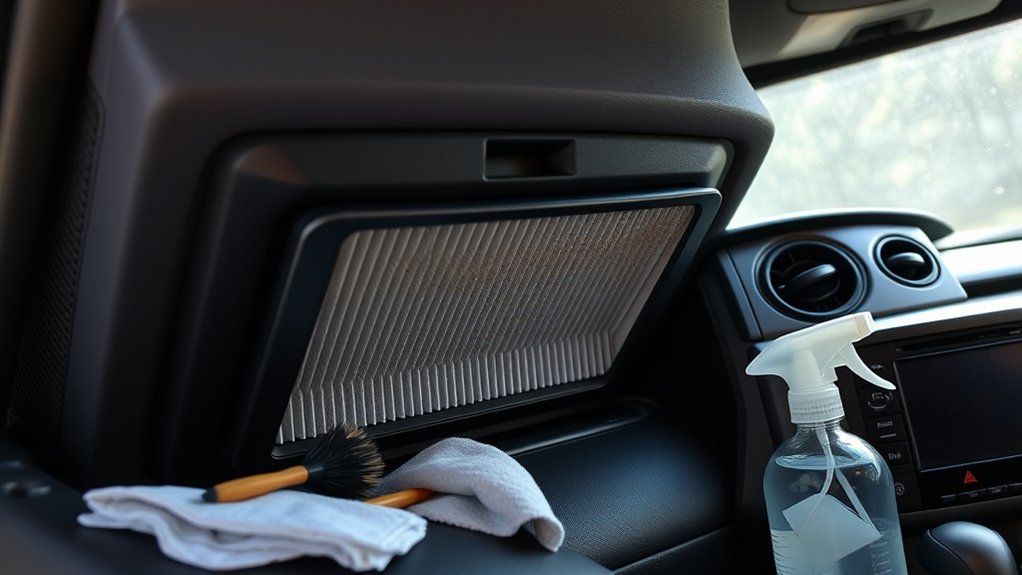
Toyota does not publish one universal rule that every Tacoma evaporator must be cleaned every 6 or 12 months. Inspect and clean based on symptoms, contamination, water intrusion, driving environment, and the maintenance information for your model year. Do not convert a cleaning product’s recommendation or a bulletin for another Toyota model into a universal Tacoma service interval.
- Inspect promptly when a musty smell begins, airflow drops, the filter becomes wet, or water appears in the cabin.
- Replace the cabin filter at the model-year interval or earlier when its condition or operating environment requires it.
- Clean the evaporator only when diagnosis points to contamination there and basic source removal does not solve the odor.
- Arrange professional service when the odor returns quickly, water repeatedly enters the cabin, drainage appears abnormal, or access requires HVAC disassembly.
When Should You Call a Mechanic for a Tacoma Cabin Odor?
Book professional diagnosis when the odor remains after you remove wet items, clean the cabin, and inspect the filter. A technician should also check the truck when you have weak airflow, abnormal blower noise, repeated wet carpet, unexplained coolant loss, a greasy or oily windshield film, or a smell that changes with engine temperature.
Fuel, exhaust, electrical-burning, and strong coolant odors deserve prompt attention. The CDC advises having a mechanic check a vehicle’s exhaust system because even a small leak can allow carbon monoxide to build inside. You can also search the truck’s VIN or year, make, and model through NHTSA for applicable recalls and related vehicle information.
What Should You Use to Remove a Tacoma Cabin Odor?
Use products that help remove the source instead of simply adding fragrance. Useful supplies can include the correct cabin air filter, a vacuum with a crevice tool, absorbent towels, microfiber cloths, an automotive interior cleaner suitable for the material being cleaned, and a model-appropriate HVAC or evaporator cleaner only when contamination has been traced to that area.
- Cabin air filter: Match it to the exact model year and HVAC configuration and follow the airflow-direction markings.
- Vacuum and absorbent materials: Remove dry debris and locate or absorb moisture before applying cleaners.
- Automotive interior cleaner: Use only on compatible surfaces and spot-test fabrics in a hidden area first.
- Evaporator cleaner: Use only when the odor is traced to the HVAC system and the product or service procedure is appropriate for the vehicle.
- Avoid household aerosols and ozone generators: They do not repair leaks, wet carpet, drainage problems, or contaminated HVAC components and may create additional exposure or material risks.
How Do You Keep a Tacoma Cabin Smelling Fresh Long Term?
A fresh cabin comes from a repeatable moisture-control routine. Check the carpet after storms, remove leaves from the cowl area, avoid storing damp gear in the cab, and use fresh-air mode when conditions allow. If the truck has had flooding or a major spill, dry affected material promptly and replace padding that cannot be adequately cleaned and dried.
| Maintenance Step | When to Do It | Why It Helps |
|---|---|---|
| Remove trash and inspect for dampness | Regularly and after wet weather | Stops spills and moisture from becoming hidden odor sources |
| Inspect or replace cabin air filter | Per the exact model-year guide or earlier when condition requires it | Supports airflow and removes trapped debris or a damp filter from the diagnostic chain |
| Check the cowl intake and investigate drainage symptoms | When debris accumulates or a musty odor appears | Reduces debris and helps identify standing moisture around HVAC components |
| Clean the evaporator | Only when diagnosis points to contamination | Treats residue at the source instead of masking the smell |
| Repair water, coolant, fuel, electrical, or exhaust faults | Promptly after detection | Prevents odor recurrence and addresses mechanical or safety risks |
Related Guides
Frequently Asked Questions
Why does my Toyota Tacoma smell musty?
Common sources include a damp cabin filter, moisture or residue around the evaporator, poor condensate drainage, wet carpet, water intrusion, or organic debris near the air intake. Note whether the smell begins with the fan, then inspect the filter and cabin for moisture before using any deodorizer.
Why does the odor appear only when the A/C first starts?
Moisture, debris, or residue around the filter or evaporator area can release odor when airflow first passes through the HVAC system. The smell may fade after startup, but recurring odor means the underlying moisture, debris, drainage, or contamination problem still needs attention.
Why does my Toyota A/C smell bad even after I changed the filter?
The filter may not be the only source. Check for wet carpet, water intrusion, debris in the intake, drainage problems, or contamination farther inside the HVAC system. A replacement filter cannot remove residue that is already beyond the filter.
Is water dripping under my Tacoma after using the A/C normal?
Clear water under the vehicle can be normal condensation when the A/C has been operating, especially in humid weather. Investigate further when water repeatedly appears inside the cabin, the carpet becomes wet, a musty odor persists, or drainage behavior changes along with other HVAC symptoms.
What is the Toyota A/C smell lawsuit?
The California HVAC settlement concerned certain 2012–2015 Toyota Camry XV50 vehicles purchased or leased in California. It should not be presented as proof that a Tacoma has the same alleged defect or qualifies for the same remedy. Tacoma owners should check their own VIN, model-year service information, recalls, and manufacturer communications.
Can an air freshener or ozone generator permanently remove the smell?
An air freshener can mask an odor temporarily but cannot repair a leak, remove wet padding, clear debris, or correct HVAC contamination. A consumer ozone generator is not a recommended routine solution because ozone can harm lungs, may be ineffective at safe concentrations, and can damage some vehicle materials.
Which cabin odors mean I should stop normal driving and get the Tacoma inspected?
Fuel, exhaust, smoke, strong electrical-burning odors, and a strong coolant smell accompanied by other leak symptoms deserve prompt inspection. Move to fresh air and avoid normal driving when you suspect fuel or exhaust entering the cabin or an active electrical problem.
Sources
- Toyota 2023 Tacoma Warranty & Maintenance Guide — cabin air filter inspection, replacement, and severe-condition guidance.
- Toyota Manuals and Warranties — model-year-specific owner and maintenance documents.
- Toyota T-SB-0022-20: HVAC Odor Maintenance — general Toyota HVAC-odor context; its applicability list does not include Tacoma.
- U.S. Environmental Protection Agency: Ozone Generators Sold as Air Cleaners — ozone health, effectiveness, and material risks.
- CDC: Mold — dampness, mold, and possible health effects.
- CDC: Carbon Monoxide Poisoning Basics — vehicle exhaust-system and carbon-monoxide safety.
- NHTSA Recall Search — VIN and year/make/model vehicle safety information.
- Salas v. Toyota California HVAC Settlement — official scope of the settlement involving certain 2012–2015 Camry XV50 vehicles.
Conclusion
A lasting Toyota Tacoma cabin-odor fix begins with identifying both the smell and when it appears. Start with wet materials, carpet, debris, and the cabin filter. If the smell begins with the fan, investigate the intake, filter, evaporator area, and drainage before repeatedly replacing parts or masking the odor.
Treat sweet, burning, fuel, and exhaust odors as repair warnings rather than ordinary cleaning problems. Keep the cabin dry, follow the maintenance guide for your exact model year, and arrange professional diagnosis when the odor returns, water keeps entering the cab, airflow changes significantly, or a safety-related smell appears.

