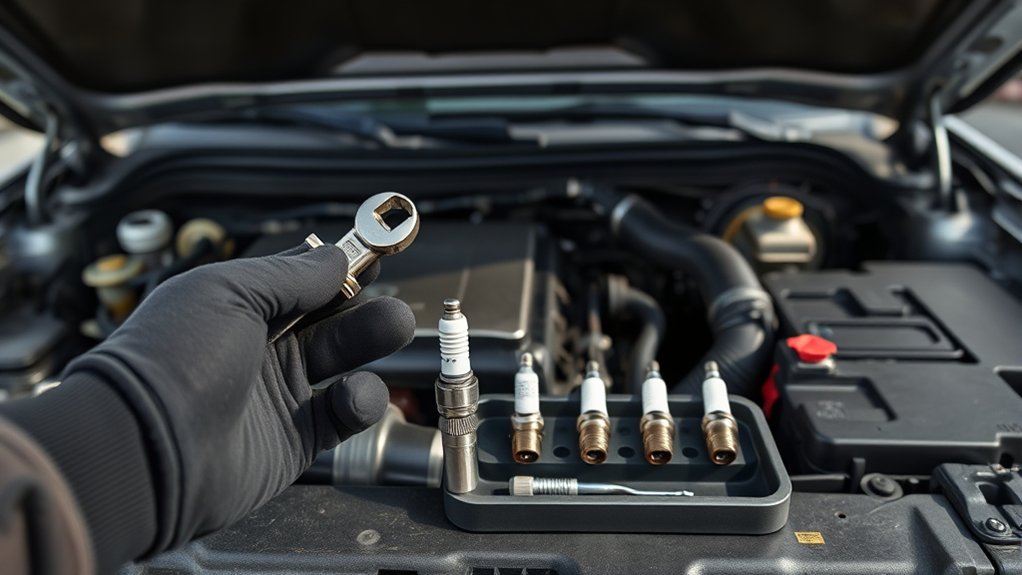
Your Toyota Tacoma does not have one universal spark plug replacement interval. The correct mileage depends on the model year and engine. Using a broad rule based only on whether a plug is copper, platinum, or iridium can lead you to replace it too early or leave it installed too long.
Quick Answer
For 2024-2025 Tacoma models, Toyota schedules spark plug replacement at 40,000-mile intervals. For 2016-2023 trucks, the 3.5-liter V6 is due at 60,000 miles, while the 2.7-liter four-cylinder is due at 120,000 miles. Earlier or later trucks require the schedule for their exact year and engine.
Key Takeaways
- Use your Tacoma’s model year and engine, not plug material alone, to determine the replacement interval.
- Toyota’s 2025 U.S. maintenance guide schedules spark plugs at 40,000, 80,000, and 120,000 miles.
- The 2016-2023 3.5-liter V6 uses a 60,000-mile schedule, while the 2.7-liter four-cylinder reaches its scheduled replacement at 120,000 miles.
- Select plugs by VIN or verified engine application. Do not assume one NGK or DENSO part number fits every Tacoma.
- Use the exact engine-specific gap and torque specification, and install plugs only in a cool, clean cylinder head.
What Are Spark Plugs?
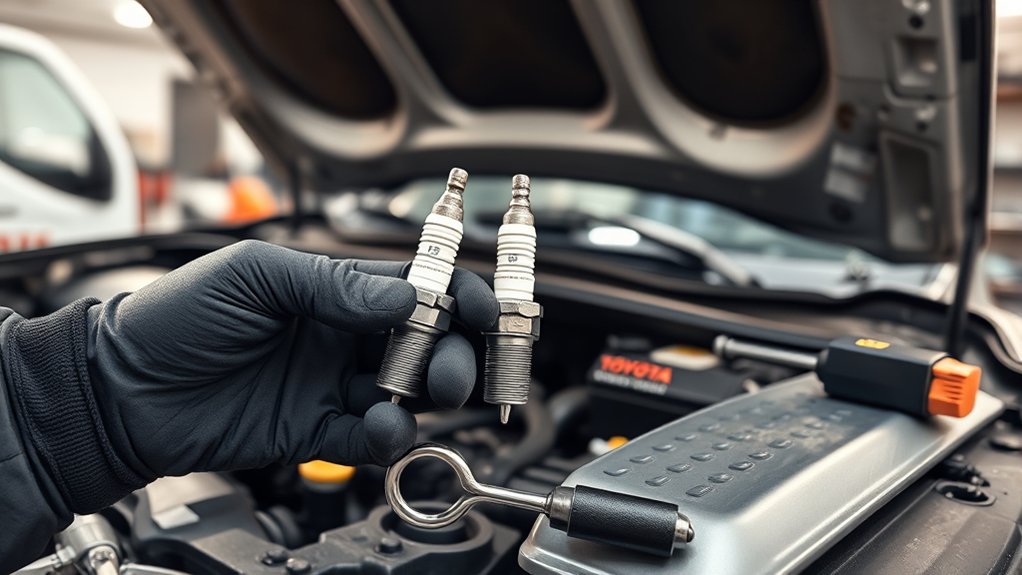
Spark plugs sit in the cylinder head and ignite the compressed air-fuel mixture inside a gasoline engine. Each plug receives high voltage from an ignition coil, creates a spark across its electrode gap, and seals combustion pressure inside the cylinder.
A healthy plug helps the engine start cleanly, idle smoothly, deliver normal power, and control emissions. A worn, fouled, cracked, or incorrectly installed plug can cause a misfire, hesitation, hard starting, reduced power, or increased fuel use.
Spark plugs also provide diagnostic clues. Unusual deposits, oil, fuel, overheating marks, or a damaged insulator can point to a problem beyond normal plug wear. Replacing the plugs may restore operation temporarily, but it will not correct an oil leak, failed ignition coil, injector fault, coolant leak, or compression problem.
Toyota Tacoma Spark Plug Replacement Intervals
The safest answer comes from the Toyota maintenance guide for your truck’s exact model year and engine. The following table summarizes verified U.S.-market schedules and avoids treating an entire generation as though every engine uses the same interval.
| Model Years | Engine | Verified Schedule | What to Know |
|---|---|---|---|
| 2026 and later | Varies | Check the model-year Toyota guide | Do not assume Toyota kept the previous schedule after a model-year update. |
| 2024-2025 | 2.4-liter turbo and applicable hybrid powertrain | Every 40,000 miles | Toyota’s 2025 chart lists replacement at 40,000, 80,000, and 120,000 miles. |
| 2016-2023 | 3.5-liter 2GR-FKS V6 | 60,000 miles or 72 months | The 60,000-mile Toyota service entry specifically identifies the 2GR-FKS engine. |
| 2016-2023 | 2.7-liter 2TR-FE four-cylinder | 120,000 miles or 144 months | The general 120,000-mile replacement entry applies after Toyota limits the earlier 60,000-mile service to the V6. |
| 2005-2015 | 2.7-liter or 4.0-liter | Use the exact model-year guide | Do not apply a 40,000- or 60,000-mile rule across the full second generation without checking the engine and guide. |
| 1995-2004 | 2.4-liter, 2.7-liter, or 3.4-liter | Use the exact model-year guide | Older engines may use different plug designs and service intervals. A blanket 120,000-mile copper-plug claim is not dependable. |
Note: These intervals come from U.S.-market maintenance documentation. A Tacoma sold in another country, modified for forced induction, or fitted with a nonstandard engine calibration may have different requirements.
How to Find Your Tacoma’s Exact Interval
- Confirm the model year. Use the registration, VIN label, or the tenth VIN character rather than the date you purchased the truck.
- Identify the engine. Check the emissions label under the hood, service records, VIN-based parts catalog, or Toyota dealer information.
- Open the model-year maintenance guide. Search the guide for “spark plugs” and read any engine-specific footnote attached to the service entry.
- Use the mileage or time limit that applies. When Toyota provides both, service is normally due when either limit is reached first.
- Check for modifications. A supercharger, aftermarket turbocharger, nonfactory tune, or racing use may require a plug type and interval specified by the kit maker or engine calibrator.
Do not choose an interval from plug material alone. Iridium and platinum electrodes can support long service life, but Toyota may still schedule a shorter interval because of the engine design, emissions certification, operating temperature, or original plug specification.
Symptoms of Worn or Fouled Spark Plugs
A scheduled interval is the normal replacement point, but a damaged or contaminated plug can fail sooner. Common warning signs include:
- Longer cranking or difficult cold starts
- Rough or uneven idling
- Hesitation during acceleration
- Reduced power under load
- Engine misfire or shaking
- A steady or flashing check-engine light
- Increased fuel use without another clear cause
- Failed emissions testing
- Misfire trouble codes such as P0300 or a cylinder-specific P0301-P0306 code
Warning: If the check-engine light flashes, the engine shakes severely, or power drops suddenly, reduce load and stop driving when it is safe. Continuing to drive with a serious misfire can cause additional damage. Have the truck diagnosed before assuming the plugs are the only problem.
Symptoms alone do not prove the plugs are worn. A failed ignition coil, damaged coil boot, injector fault, vacuum leak, low compression, wiring problem, or contaminated plug well can produce similar behavior. Scan the trouble codes and inspect the affected cylinder before replacing unrelated parts.
Choosing the Right Spark Plug for Your Tacoma
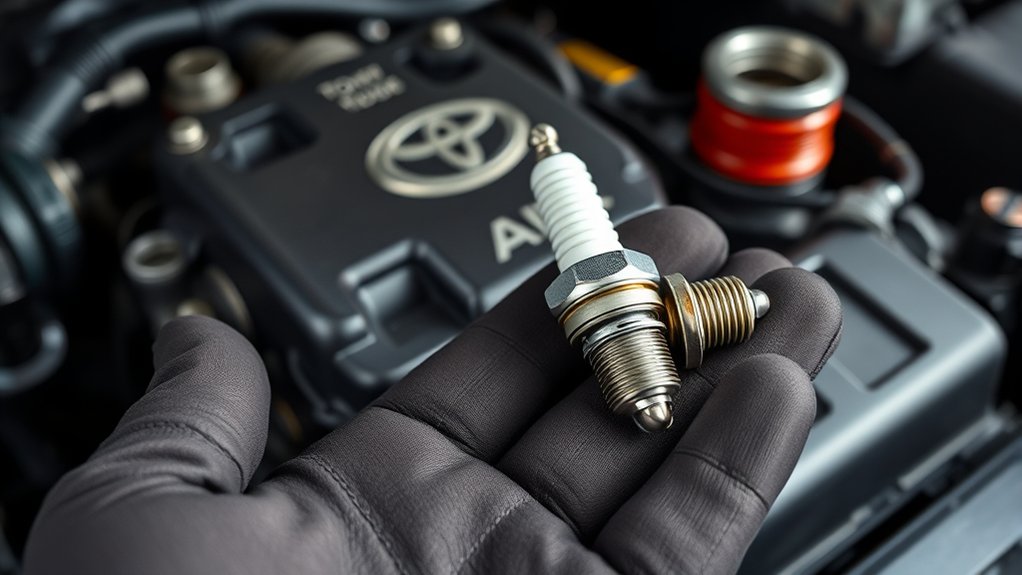
Choose a spark plug that matches the original specification for your exact engine. Toyota has used different Tacoma engines, so one NGK or DENSO part number cannot be recommended for every model year.
The replacement plug must match the required:
- Thread diameter and thread reach
- Gasket or tapered seat design
- Heat range
- Resistor specification
- Electrode design and material
- Factory gap or approved gap range
- Engine and emissions application
An OEM-branded Toyota plug or an exact NGK or DENSO equivalent can both be suitable when the catalog specifically lists the part for your engine. Do not select a plug only because it physically threads into the cylinder head.
Pro Tip: Use the VIN when ordering plugs, then compare the new part number, thread reach, seat, and electrode layout with the removed plug before installation. Stop if the parts do not match.
If your Tacoma has a dealer-installed or aftermarket supercharger, turbocharger, or engine tune, use the plug specification provided for that setup. A colder or differently gapped plug should not be installed in an otherwise stock engine without an approved reason.
How Driving Conditions and Engine Problems Affect Spark Plugs
Heavy towing, long periods of idling, stop-and-go traffic, frequent short trips, and sustained high engine load can expose a weak ignition system sooner. However, these conditions do not automatically create a shorter spark plug interval unless Toyota’s guide or an approved modified-engine specification says they do.
Plug condition can deteriorate early when another problem is present:
- Dry black deposits: A rich mixture, repeated short trips, weak ignition, or an incorrect heat range may be involved.
- Wet fuel deposits: The cylinder may not be firing, or excessive fuel may be entering it.
- Oily deposits: Oil may be entering the combustion chamber through worn rings, valve seals, or another mechanical fault.
- White, blistered, or overheated electrodes: Excessive heat, an incorrect plug, detonation, or a mixture problem may be present.
- Oil or water in the plug well: A valve-cover seal, tube seal, wash-water intrusion, or another external leak may need repair.
- Cracked insulator: The plug may have been dropped, struck during gapping, or over-tightened.
Replacing a fouled plug without correcting the cause often results in another misfire. Diagnose abnormal deposits rather than treating every damaged plug as ordinary wear.
Best Practices for Spark Plug Maintenance
Follow the Engine-Specific Replacement Interval
Use Toyota’s schedule as the normal service point. Replacing plugs substantially earlier is rarely necessary on a healthy stock engine unless diagnosis finds damage, contamination, an excessive gap, or an ignition problem.
Replace the full set at the scheduled service. Replacing only one normally worn plug leaves the other cylinders operating with plugs of the same age and mileage.
Inspect Symptoms Before Removing Parts
When the engine runs poorly, scan for diagnostic trouble codes before disconnecting the battery or removing components. Record the codes and freeze-frame data when your scanner provides them. This information can help distinguish a single-cylinder problem from a random misfire.
Inspect coil connectors, wiring, boots, and plug wells while gaining access. A torn boot, corrosion, oil, or moisture can cause a misfire even when the plug itself is serviceable.
Avoid Unnecessary Plug Removal
You do not need to remove healthy long-life plugs every 30,000 miles unless the Toyota schedule or a diagnostic procedure calls for it. Repeated removal adds a small risk of introducing debris or damaging aluminum cylinder-head threads.
You can still inspect the surrounding ignition system during routine maintenance. Look for damaged wiring, loose connectors, oil around the valve cover, and signs that rodents or heat have affected the harness.
How to Replace Your Tacoma Spark Plugs
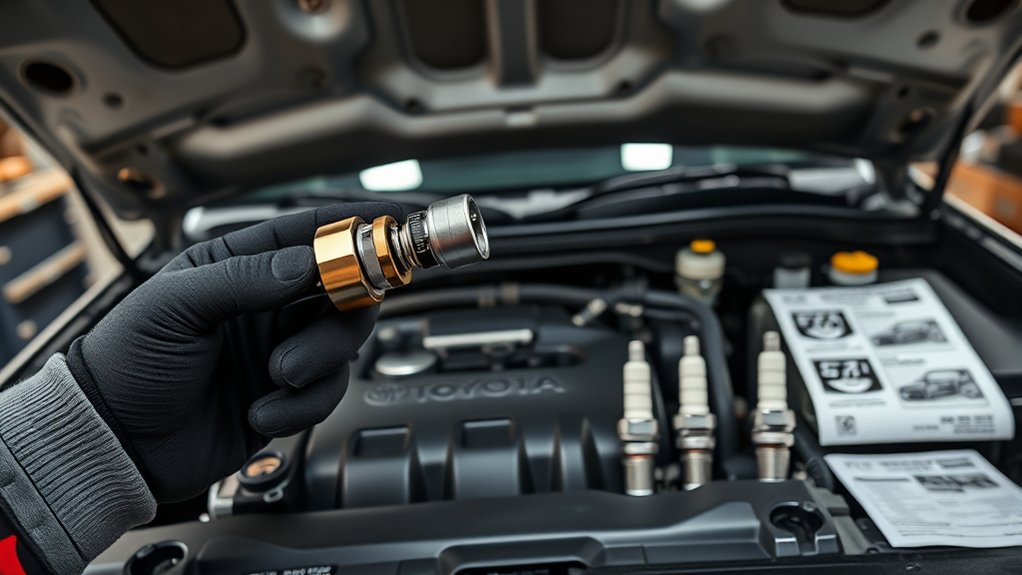
Spark plug replacement is manageable for an experienced DIY owner, but access and specifications differ by engine. Some Tacoma engines require removal or repositioning of intake ducting, brackets, hoses, or other components before every ignition coil can be reached.
At a Glance
| Time Required | About 1-3 hours, depending on engine access and experience |
| Difficulty | Moderate; careful hand-threading and accurate torque are essential |
| Tools Needed | Ratchet, correct spark plug socket, extensions, torque wrench, basic hand tools, clean compressed air or a suitable vacuum, and a scan tool if diagnosing a misfire |
| Cost | Varies by four-cylinder or six-cylinder engine, plug specification, and whether damaged coils or boots also need replacement |
Warning: Work only on a fully cooled engine. Dirt in a plug well can fall into the cylinder, and a plug started at an angle can damage the aluminum cylinder-head threads. Never force a plug that does not turn smoothly by hand.
Gather the Correct Tools and Parts
- A complete set of plugs verified for the model year, engine, and VIN
- The correct spark plug socket
- A ratchet and suitable extensions
- A calibrated inch-pound or foot-pound torque wrench covering the required specification
- Basic sockets or screwdrivers for covers and intake components
- Clean compressed air or a vacuum suitable for cleaning plug wells
- A flashlight
- A scan tool when diagnosing a warning light or misfire
- The engine-specific Toyota repair procedure and torque specification
Replacement Steps
- Verify the specifications. Confirm the plug part number, quantity, factory gap, and installation torque for the exact engine before taking the truck apart.
- Park safely and cool the engine. Set the parking brake, switch the ignition off, remove the key or move the smart key away from the truck, and wait until the cylinder head is cool.
- Remove only the components needed for access. Take photos before disconnecting hoses, brackets, or intake ducting. Keep fasteners organized.
- Disconnect one ignition coil at a time. Release the connector lock without pulling on the wiring. Remove the coil fastener and lift the coil straight out.
- Inspect the coil and plug well. Look for oil, water, corrosion, a torn boot, carbon tracking, or damaged wiring. Correct contamination before installing new plugs.
- Clean around the plug. Remove loose dirt before loosening the plug. Keep debris from entering the open cylinder.
- Remove the old plug carefully. Keep the socket aligned with the plug. If the plug binds abnormally, stop rather than applying enough force to break it.
- Compare the old and new plugs. Confirm thread size, reach, seat, terminal, electrode layout, and part number. Inspect the new ceramic for shipping damage.
- Verify the gap without damaging the electrode. Many fine-wire iridium plugs arrive factory-gapped. Do not force a round tool between the electrodes or press against the fine center wire. Follow the plug manufacturer’s and Toyota’s instructions.
- Start the new plug by hand. Insert it squarely and turn it several full rotations with the extension and socket but no ratchet. It should thread smoothly.
- Torque it to the exact specification. Use the Toyota value for that engine and plug design. Do not substitute a universal 13-15 lb-ft figure.
- Reinstall the coil. Seat the boot fully, tighten its fastener to the correct specification, and reconnect the electrical connector.
- Repeat cylinder by cylinder. Working one at a time reduces the chance of mixing connectors or leaving a plug well open.
- Reassemble the removed components. Check every hose, clamp, electrical connector, bracket, and tool before starting the engine.
- Start and verify operation. Listen for an even idle. Recheck trouble codes and inspect for a loose connector if a warning light or misfire remains.
Note: Do not apply anti-seize, oil, or another thread lubricant unless the Toyota procedure or plug manufacturer specifically calls for it. Lubricated threads change the relationship between wrench torque and clamping force, which can lead to over-tightening.
When to Let a Technician Handle the Job
Arrange professional service when:
- A plug is seized, unusually tight, broken, or cross-threaded
- The plug well contains a large amount of oil or coolant
- A coil connector or engine harness is brittle or damaged
- Access requires removing components beyond your experience
- The engine continues to misfire after the correct plugs are installed
- A compression, injector, timing, or internal engine problem is suspected
- You cannot confirm the correct plug, gap, or torque specification
Common Myths About Tacoma Spark Plug Maintenance
- Myth: Every newer Tacoma needs plugs every 40,000 miles.
Fact: The verified current-generation guide uses a 40,000-mile interval, but 2016-2023 engines use different schedules. - Myth: Every iridium plug lasts at least 100,000 miles.
Fact: Electrode material affects durability, but the engine manufacturer’s schedule remains the controlling service interval. - Myth: A smooth-running engine means scheduled replacement can be skipped.
Fact: Wear can increase gradually before you notice a clear symptom. Follow the maintenance guide unless an approved procedure says otherwise. - Myth: One NGK or DENSO part number fits every Tacoma.
Fact: Plug dimensions and heat ranges vary by engine. Use a verified application listing. - Myth: Every Tacoma uses a 0.044-inch gap and 13-15 lb-ft of torque.
Fact: Gap and torque are engine- and plug-specific. Universal numbers can damage a plug or cylinder head. - Myth: A misfire always means the spark plug is bad.
Fact: Coils, injectors, wiring, air leaks, compression, fuel delivery, and contamination can cause similar symptoms. - Myth: Towing automatically halves the plug interval.
Fact: Heavy use can expose a weak ignition component, but you should not invent a new scheduled interval unless Toyota or an approved modified-engine specification provides one.
Related Guides
Frequently Asked Questions
How often should I change my Toyota Tacoma spark plugs?
Use the schedule for the exact model year and engine. Verified U.S. intervals include every 40,000 miles for the 2024-2025 generation, 60,000 miles for the 2016-2023 3.5-liter V6, and 120,000 miles for the 2016-2023 2.7-liter four-cylinder.
Do I need to change Tacoma spark plugs at 100,000 miles?
Not as a universal rule. Some Tacoma engines are due earlier, while the 2016-2023 2.7-liter engine reaches its verified scheduled replacement at 120,000 miles. Your model-year guide provides the correct answer.
How often does Toyota recommend changing spark plugs?
Toyota does not publish one interval for every Tacoma. Its schedule changes with the generation and engine, which is why the engine-specific footnotes in the maintenance guide matter.
How long do Toyota OEM spark plugs last?
They should remain in service until the scheduled replacement point unless diagnosis finds damage or fouling sooner. Depending on the Tacoma engine, the verified interval may be 40,000, 60,000, or 120,000 miles.
Should I change the plugs sooner if I tow or drive off-road?
Not automatically. Harsh use can reveal a weak coil or plug sooner, but the examined Toyota special-condition schedules do not create a blanket shortened plug interval. Inspect and diagnose symptoms, then follow the model-year guide.
Can I replace only one bad spark plug?
You can replace one physically damaged plug during a targeted repair, but at the scheduled interval it is better to replace the complete set. Diagnose why a single plug failed before assuming normal wear caused it.
Conclusion
The correct Toyota Tacoma spark plug interval depends on the engine and model year. Current-generation trucks use a shorter verified schedule than many third-generation models, while the 2016-2023 four-cylinder and V6 do not share the same interval.
Confirm your engine, follow the matching Toyota maintenance guide, and buy plugs through a verified application catalog. During installation, protect the aluminum threads by working on a cool engine, cleaning each plug well, starting every plug by hand, and using the exact torque specification. When a misfire remains or a plug shows abnormal deposits, diagnose the underlying problem instead of treating replacement as a complete repair.
Sources
- Toyota 2025 Tacoma Warranty & Maintenance Guide — current-generation maintenance chart and spark plug schedule
- Toyota 2021 Tacoma Warranty & Maintenance Guide — 60,000-mile 2GR-FKS service and 120,000-mile replacement entry
- Toyota 2016 Tacoma Warranty & Maintenance Guide — engine-specific third-generation schedule
- Toyota Technical Information System — model-specific Toyota repair and service information
- NGK Spark Plug Installation Guidance — torque, clean-thread, and cool-engine precautions
- DENSO Spark Plug Installation Guidance — fine-wire iridium gapping and installation cautions

