
Last updated: September 19, 2026 — battery-life guidance, hybrid-battery distinction, diagnosis steps, warranty notes, and disposal references were rechecked.
A Toyota Tacoma’s 12-volt starting battery commonly lasts about three to five years, but age alone should not decide replacement. Heat, repeated short trips, long storage, vibration, corrosion, electrical demand, and charging-system health can shorten Toyota Tacoma battery life. Begin periodic testing around the three-year mark, and test sooner if starting performance changes.
Quick Answer
A Toyota Tacoma’s 12-volt starting battery commonly lasts about three to five years. Heat, repeated short trips, long storage, vibration, corrosion, and heavy accessory use can shorten that span. Begin periodic testing around the three-year mark, and replace the battery when testing shows weak capacity, starting becomes unreliable, or the battery is physically damaged.
Key Takeaways
- Three to five years is a common 12-volt starting-battery lifespan, not a guaranteed replacement interval.
- Slow cranking, repeated clicking, persistent corrosion, swelling, leakage, or unreliable starting require attention.
- Battery-like symptoms can also come from loose cables, a starter problem, parasitic drain, or a weak charging system.
- Confirm the correct replacement by vehicle configuration, physical fit, terminal layout, battery type, and required cranking rating.
- The three-to-five-year range in this guide applies to the 12-volt starting battery, not the separate hybrid traction battery in Tacoma i-FORCE MAX models.
- Return the old lead-acid battery to a retailer or approved collection program instead of putting it in household trash.
Important: This guide covers the Tacoma’s 12-volt starting battery. The 2024-and-newer Tacoma i-FORCE MAX also uses a separate hybrid traction battery. Toyota introduced the i-FORCE MAX Tacoma with a 1.87-kWh NiMH hybrid battery and lists separate hybrid-battery warranty coverage of 10 years or 150,000 miles, whichever comes first, subject to the applicable warranty terms. See Toyota’s Tacoma i-FORCE MAX information and Toyota’s hybrid battery warranty information.
How Long Does a Toyota Tacoma 12-Volt Battery Last?
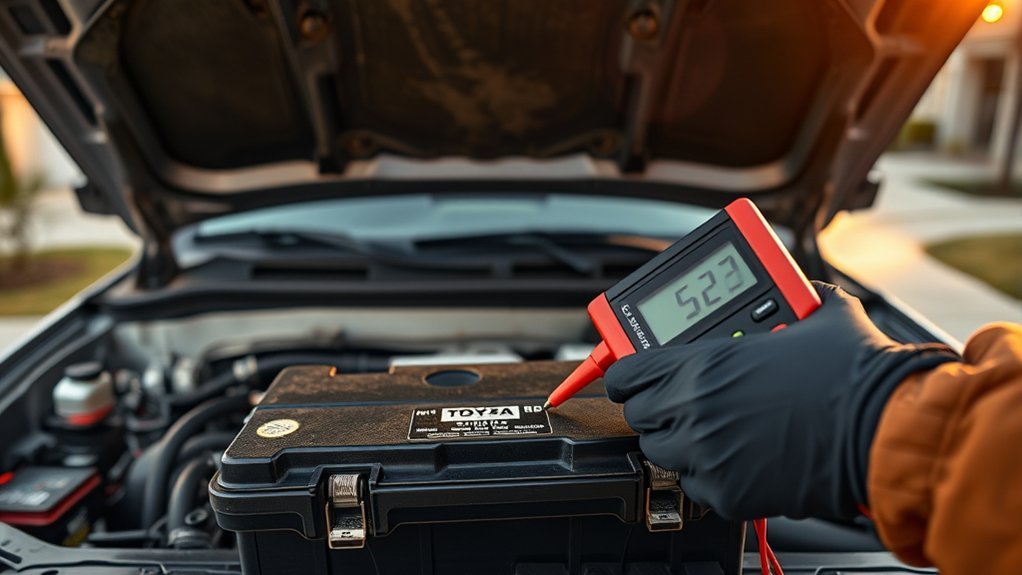
A conventional 12-volt automotive battery often provides about three to five years of service. However, that range is only a planning guide. A battery in a hot climate or a truck used mostly for short trips may fail sooner, while one kept fully charged and securely mounted may last longer.
AAA identifies time, heat, vibration, short-trip driving, storage, and charging-system condition as major influences on automotive battery life. AAA also notes that batteries may last around three years in hotter southern climates while five years or longer can be possible in cooler northern climates. Because two batteries of the same age can test very differently, condition testing is more useful than age alone.
Rule of thumb: Once your Tacoma’s 12-volt battery is around three years old, periodic condition testing gives you a better chance of identifying deterioration before an unexpected no-start.
Should You Test or Replace Your Tacoma Battery?
Use battery age as a reason to pay closer attention, not as the only replacement rule. Starting behavior, physical condition, and test results provide a better basis for deciding what to do next.
|
What You Notice |
Best Next Step |
|---|---|
|
Battery is under about three years old, starts normally, and has no visible damage |
Continue routine inspection. Keep the terminals and hold-down secure, and test sooner if symptoms develop. |
|
Battery is around three years old or older but still starts normally |
Have its condition tested periodically rather than replacing it only because of age. |
|
Slow cranking, repeated clicking, intermittent starting, or repeated jump-starts |
Test the battery, cable connections, starter circuit, and charging system before replacing parts. |
|
Battery-shaped warning light stays on while the engine is running |
Arrange charging-system diagnosis promptly. The warning does not prove that the battery itself is the failed component. |
|
Swollen case, leak, excessive heat, crack, or strong sulfur-like odor |
Stop charging or jump-starting the battery and have it handled by a qualified professional. |
How Can You Tell If a Toyota Tacoma Battery Is Going Bad?
A weak battery does not always fail suddenly. It may lose starting power gradually, especially during cold weather or after the truck has been parked. Pay attention to changes in cranking speed, lighting behavior, electrical operation, and the battery’s physical condition.
Slow Cranking, Clicking, or Intermittent Starting
A healthy battery should turn the engine at a consistent speed. Slow cranking, repeated clicking, or a start that requires several attempts can indicate low battery charge, internal battery deterioration, resistance at the terminals, or a starter-system problem.
Do not assume the battery is defective based on sound alone. Have the battery, cable connections, starter circuit, and charging system tested. A battery that repeatedly needs a jump-start may also be losing charge because of an alternator problem or an electrical draw while the truck is parked.
Corrosion, Loose Connections, or Damaged Cables
White, blue, or green buildup around the terminals can increase electrical resistance and interfere with starting. Minor surface corrosion does not automatically mean the battery has failed, but heavy or recurring corrosion deserves inspection.
- Check whether both cable connections are clean and tight.
- Look for cracked insulation, damaged cable ends, or a loose battery hold-down.
- Have persistent corrosion investigated instead of repeatedly cleaning it without finding the cause.
- Replace damaged terminals or cables before they create excessive resistance or heat.
Dimming Lights and Electrical Warning Signs
Flickering interior lights, slow power-window operation, or headlights that change brightness can point to low voltage. However, these symptoms are not exclusive to the battery. They can also indicate a loose connection or weak charging-system output.
A battery-shaped dashboard warning light usually means the charging system needs attention. The truck may continue running briefly on stored battery power, but it can shut down once that charge is depleted. Arrange diagnosis promptly rather than replacing the battery without testing the alternator and related wiring.
Swelling, Leaks, or an Unusual Odor
A swollen case, visible crack, leaking fluid, excessive heat, or a strong sulfur-like odor is a safety concern. Do not continue charging, jump-starting, or handling a visibly damaged battery.
Warning: Automotive lead-acid batteries contain corrosive sulfuric acid and can release flammable gas. Keep sparks and flames away, follow the warnings printed on the battery, and have a leaking, swollen, frozen, or damaged battery handled by a qualified professional.
How Do You Confirm Whether a Tacoma Battery Is Actually Bad?
Visual inspection can reveal corrosion or damage, but it cannot measure the battery’s remaining starting ability. A proper test should evaluate the battery under load or with an electronic conductance tester. A voltage reading by itself does not provide the same information about remaining starting capacity.
A complete diagnosis may include:
- Battery condition: Determines whether the battery can still deliver adequate starting current.
- State of charge: Shows whether the battery is fully charged, partly discharged, or deeply discharged.
- Charging-system output: Checks whether the alternator and voltage regulation are charging correctly.
- Starter-system performance: Identifies excessive current draw or voltage loss during cranking.
- Parasitic draw testing: Checks whether a module, light, accessory, or wiring fault is draining the battery while the truck is off.
Pro Tip: If the battery is discharged but passes a condition test after a proper recharge, investigate why it lost charge before buying a replacement. Otherwise, the new battery may develop the same problem.
What Shortens Toyota Tacoma Battery Life?
Your battery’s service life depends on how the truck is used and the conditions it faces. The most important factors include:
- Heat: High under-hood temperatures accelerate internal deterioration and can shorten service life.
- Cold weather: Cold reduces available starting power and makes an aging battery’s weakness more noticeable.
- Short trips: Repeated brief drives may not restore all the energy used to start the engine.
- Long storage periods: Batteries slowly discharge while parked, and vehicle electronics may continue drawing a small amount of power.
- Vibration: A loose hold-down can allow movement that damages internal battery components.
- Deep discharge: Leaving lights or accessories on can drain a starting battery and reduce its remaining life.
- Added electrical equipment: Winches, auxiliary lighting, audio equipment, refrigerators, and other accessories can increase demand.
- Charging-system faults: Persistent undercharging or overcharging can damage a battery.
How Can You Make a Tacoma Battery Last Longer?
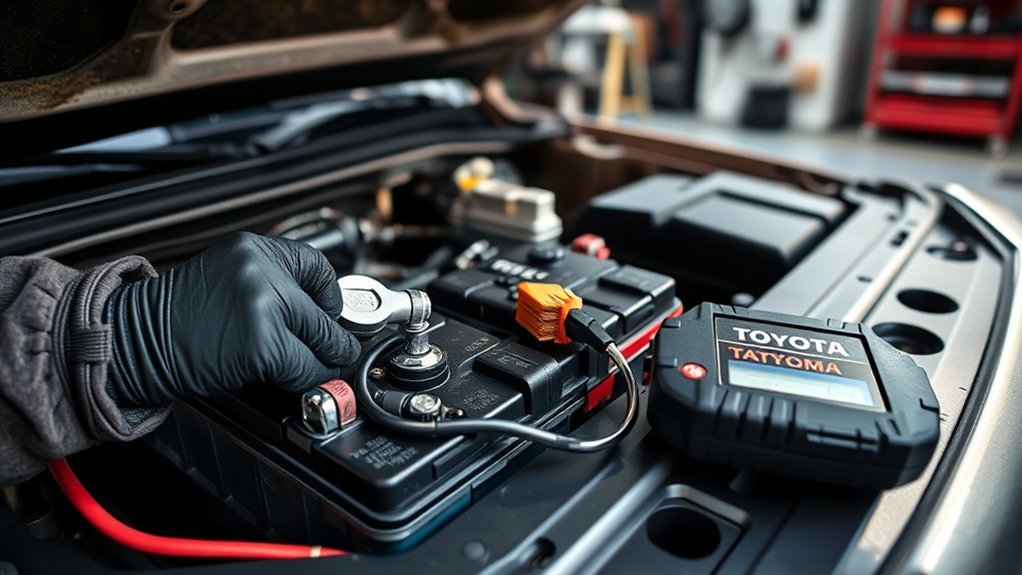
Routine inspection cannot stop normal battery aging, but it can prevent avoidable problems. Check the terminals, cables, battery case, and hold-down during regular maintenance. The battery should sit securely without movement, and the cable connections should remain clean and tight.
If your Tacoma is driven infrequently or stored for weeks at a time, consider a compatible automatic battery maintainer. Use a device intended for the installed battery type and follow both the charger and vehicle instructions.
Longer drives may restore more charge than repeated short starts, but driving is not a substitute for diagnosis when a battery is deeply discharged or repeatedly goes flat. A suitable charger and electrical-system test are safer ways to address a recurring low-charge condition.
Note: Many modern automotive batteries are sealed or maintenance-free. Do not remove caps, add fluid, or open the case unless the battery manufacturer specifically provides a user-service procedure.
How Much Does a Toyota Tacoma Battery Replacement Cost?
The installed price of a Tacoma battery changes with battery size, cranking capacity, technology, warranty, location, taxes, labor, and current inventory. A live quote is more reliable than a fixed online price range that may quickly become outdated.
Your total may include:
- the replacement battery,
- a refundable or credited core charge,
- installation labor,
- terminal or cable repair,
- battery-system registration or reset procedures when applicable,
- taxes and environmental fees.
Flooded and AGM Battery Differences
Conventional flooded lead-acid batteries are common and usually cost less than AGM batteries. AGM batteries are sealed, spill resistant, and better suited to some vehicles or operating conditions involving repeated charging and discharging.
AGM is not automatically the correct upgrade for every Tacoma. Charging systems may be designed around a particular battery type. AAA recommends replacing the battery with the same technology as the original unless a reliable vehicle-specific application source confirms another option.
Installation and Related Repair Costs
Installation may be included with a battery purchase or charged separately. The final cost can increase if the terminals are badly corroded, the cables are damaged, the hold-down is missing, or electrical diagnosis is required.
Before approving replacement, ask whether the quote includes installation, testing, taxes, the core charge, and disposal of the old battery.
Warranty Coverage Insights
Battery warranties differ by brand and product line. Compare the full-replacement period, any prorated period, required documentation, transfer rules, and exclusions for improper installation or misuse.
For an original vehicle battery or a Toyota-supplied replacement, review the applicable written warranty through Toyota’s manual and warranty portal. Do not assume that every Toyota battery has the same coverage period.
Using an aftermarket battery does not automatically cancel an entire vehicle warranty. According to the Federal Trade Commission, warranty coverage generally cannot be denied solely because a consumer used a third-party part or service. However, damage caused by an incompatible battery, reversed polarity, improper installation, or another unauthorized modification may not be covered.
How to Choose the Right Battery for Your 2021 Toyota Tacoma
Do not choose a replacement for a 2021 Tacoma from model year alone. Confirm the truck’s engine, configuration, current battery label, and vehicle-specific application information. A VIN-based Toyota parts lookup, the owner documentation, or a reputable battery application guide can help verify compatibility. For other Tacoma model years, use the same vehicle-specific verification process rather than assuming that 2021 fitment carries over.
Match all of the following:
- Physical dimensions: The battery must fit the tray with proper clearance.
- Hold-down configuration: The factory restraint must secure the battery without modification.
- Terminal position and polarity: The positive and negative posts must align with the cables without stretching or crossing them.
- Battery technology: Use the correct flooded or AGM design for the application.
- Cold cranking amps: Do not install a battery rated below the vehicle’s specified starting requirement.
- Reserve capacity or amp-hour rating: Match the vehicle requirement and expected electrical load.
- Vent or heat-shield requirements: Reinstall any factory protection or venting components.
AAA warns that automotive batteries are not one-size-fits-all. An incorrect terminal layout or poor physical fit can create cable problems, insufficient clearance, or an electrical short.
For more detail on starting-current ratings, see Toyota Tacoma battery CCA explained.
Should You Replace a Tacoma Battery Before It Fails?
You do not need to replace a healthy battery simply because it reaches a particular birthday. However, proactive replacement may be reasonable when an older battery tests marginal and dependable starting is especially important.
Consider replacement before a long trip, severe-weather season, remote off-road travel, or extended storage when:
- the battery is near or beyond the common service-life range,
- test results show declining capacity,
- starting has become slower or inconsistent,
- the battery has suffered repeated deep discharges, or
- the case, terminals, or internal condition is deteriorating.
How Should You Dispose of an Old Tacoma Battery?
Do not place an automotive lead-acid battery in household trash or a municipal recycling bin. Return it to the battery retailer, an automotive service facility that accepts used batteries, or an approved household hazardous-waste collection program.
The U.S. Environmental Protection Agency notes that automotive lead-acid batteries contain lead and corrosive sulfuric acid and recommends returning them to a retailer or appropriate collection program.
Keep the battery upright during transport, protect the terminals from contact with metal objects, and follow local transportation and recycling requirements.
Frequently Asked Questions
How long should a battery last in a Toyota Tacoma?
A Tacoma’s 12-volt starting battery commonly lasts about three to five years. Hot weather, repeated short trips, vibration, storage, deep discharges, and charging-system problems can shorten that period. Begin periodic battery testing around the three-year mark, and test sooner if starting performance changes.
Does the three-to-five-year lifespan apply to a Tacoma i-FORCE MAX hybrid battery?
No. The three-to-five-year range in this guide refers to the 12-volt starting battery. The 2024-and-newer Tacoma i-FORCE MAX uses a separate hybrid traction battery. Toyota lists hybrid-battery warranty coverage of 10 years or 150,000 miles, whichever comes first, subject to the applicable warranty terms.
How much does it cost to replace a battery in a Toyota Tacoma?
The cost depends on the required battery size, cranking rating, flooded or AGM design, warranty, local labor, taxes, and whether cable or terminal repairs are needed. Request a current installed quote that identifies the core charge and confirms whether testing and disposal are included.
How do I know if my Tacoma battery is going bad?
Common warning signs include slow cranking, repeated clicking, unreliable starting, persistent terminal corrosion, or a battery that repeatedly loses charge. Swelling, leakage, unusual heat, or a sulfur-like odor requires immediate professional attention. Confirm the diagnosis with battery and charging-system tests.
What is the life expectancy of a Toyota battery?
Toyota does not use one universal replacement age for every 12-volt battery and driving condition. Three to five years is a useful general range, but periodic testing, starting performance, physical condition, climate, and charging-system health should guide the replacement decision.
Can a bad alternator look like a bad battery?
Yes. A weak alternator, damaged cable, poor ground, or charging-control fault can leave the battery undercharged and cause slow starting or electrical problems. Test the battery and charging system together before replacing parts.
Does the battery warning light mean the battery itself is bad?
Not necessarily. A battery-shaped warning light while the engine is running usually indicates a charging-system problem. The alternator, wiring, connections, or charging controls may be responsible, so diagnose the charging system before assuming the battery needs replacement.
Will a non-OEM battery void my Toyota warranty?
An aftermarket battery does not automatically void the entire warranty. However, a warranty claim may be denied when damage was caused by an incompatible battery, incorrect polarity, improper installation, or another related modification. Keep the receipt and select a battery that meets the vehicle’s requirements.
Conclusion
A Toyota Tacoma 12-volt battery commonly lasts three to five years, but testing and operating conditions matter more than age alone. Inspect the connections and hold-down, watch for changes in starting performance, and test both the battery and charging system when symptoms appear.
When replacement becomes necessary, verify the exact fit, terminal layout, battery technology, and required cranking rating for your truck. If you plan to do the work yourself, see how to replace a Toyota Tacoma battery. Owners comparing starting-current requirements can also read the Toyota Tacoma battery CCA guide. Return the old battery through an approved retailer or collection program so its lead and acid are handled safely.
Sources
- AAA Automotive: How Long Do Car Batteries Last — battery lifespan, testing, heat, vibration, short trips, charging systems, and replacement fitment.
- Toyota Manuals and Warranties — vehicle-specific owner documentation and warranty information.
- Toyota USA Newsroom: 2024 Tacoma i-FORCE MAX — Tacoma hybrid powertrain and hybrid-battery information.
- Toyota Hybrid Battery Warranty — current Toyota hybrid-battery warranty coverage.
- Federal Trade Commission: Warranties and Repair Restrictions — warranty guidance concerning aftermarket parts and services.
- U.S. Environmental Protection Agency: Used Batteries — safe handling and disposal guidance for automotive lead-acid batteries.
