If your Toyota Tacoma transmission is slipping, the clearest sign is engine RPM rising without a matching increase in road speed. Delayed Drive or Reverse engagement, shudder, harsh shifts, and gear hunting can feel similar but may have different causes. This guide shows how to separate true slip from look-alike symptoms, check safe owner-level clues, match symptoms to Toyota service information, and know when to stop driving.
Quick Answer
Toyota Tacoma transmission slipping can come from low or incorrectly serviced fluid, a leak, faulty sensors or solenoids, valve-body trouble, torque-converter problems, or internal wear. First confirm that RPM rises without matching vehicle speed, then check warning lights, recent service history, and visible leaks. Certain 2024 Tacoma and Tacoma Hybrid vehicles with specific transmission DTCs are covered by Toyota T-SB-0094-24 Rev1, but that bulletin does not apply to every slipping complaint. Stop driving if the truck loses safe acceleration, will not stay in gear, overheats, smokes, or leaks heavily.
Last updated: September 19, 2026. This revision adds Toyota service-bulletin context for 2016–2017, 2016–2023, and certain 2024 Tacoma transmission or driveline complaints. This guide is based on Toyota owner information, maintenance guidance, and manufacturer service bulletins; it does not claim a hands-on diagnosis of your truck.
Key Takeaways
- True slipping usually causes an engine-speed flare without matching vehicle acceleration.
- Your Tacoma’s model year, engine, transmission, and drivetrain determine the correct fluid and diagnostic procedure.
- Do not assume that every hesitation, shudder, or hard shift means the transmission needs replacement.
- ECT, PWR, Tow/Haul, or other drive modes can change shift behavior, but they cannot repair a fault.
- Follow your exact Toyota maintenance guide rather than a universal transmission-fluid interval.
- Toyota service bulletins can explain some model-year-specific shift or vibration complaints, but each bulletin has exact applicability requirements.
- Severe slipping, loss of drive, smoke, overheating, or a major leak requires immediate professional help.
At a Glance
| Time Required | About 10–20 minutes for owner-safe observations; a professional road test and diagnosis may take longer. |
| Difficulty | Easy for symptom notes and an external leak check; advanced for fluid-level testing, electrical diagnosis, or internal repairs. |
| Tools Needed | Flashlight, gloves, paper towel or clean white cloth, owner’s manual, and an OBD-II scanner if available. |
| Cost | Basic observations cost little or nothing. Diagnostic and repair costs vary widely depending on whether the cause is a leak, wiring fault, control issue, valve body, torque converter, clutch, or internal damage. |
What Transmission Slipping Means in a Toyota Tacoma
Transmission slipping occurs when the engine produces power but the transmission does not transfer that power to the wheels as expected. The clearest sign is an increase in engine RPM without a matching increase in road speed.
You may notice the problem while accelerating, climbing a hill, towing, or shifting between gears. The truck may also hesitate when you select Drive or Reverse, briefly fall into neutral, or struggle to remain in gear.
Not every unusual shift is true slipping. An automatic Tacoma may downshift on a hill, hold a lower gear while towing, or shift differently when cold. Those behaviors can be normal if engine speed and vehicle acceleration remain connected.
A manual-transmission Tacoma has a different type of slipping problem. If engine speed rises while the truck accelerates poorly in a higher gear, the clutch may be slipping rather than the transmission gears themselves.
Note: Toyota Tacoma powertrains differ by generation. The redesigned 2024 Tacoma introduced an eight-speed automatic, retained an available six-speed manual, and added the i-FORCE MAX hybrid with an electric motor integrated into the eight-speed transmission. Always diagnose the exact model year and powertrain rather than applying one procedure to every Tacoma.
Common Symptoms and What They May Mean
Record when each symptom occurs, whether the truck is cold or fully warmed up, and whether you are accelerating, coasting, towing, turning, or climbing. Those details help separate transmission trouble from an engine or driveline problem.
| Symptom | Possible Meaning | Urgency |
| RPM rises but speed does not | True clutch or transmission slip, low hydraulic pressure, converter trouble, or internal wear | High |
| Delay when selecting Drive or Reverse | Fluid-level problem, hydraulic leak, valve-body issue, worn seals, or internal wear | Moderate to high |
| Shudder under light acceleration | Torque-converter clutch behavior, engine misfire, driveline vibration, mount, tire, or control issue | Moderate |
| Hard or jerking shifts | Solenoid, sensor, wiring, adaptation, fluid, valve-body, engine, or mount problem | Moderate |
| Whining, grinding, or metallic noise | Low fluid, pump trouble, bearing damage, planetary damage, or another rotating component | High |
| Transmission or check-engine warning | A stored engine, transmission, speed-sensor, solenoid, pressure, temperature, or communication fault | Scan promptly |
| Burning odor, smoke, or heavy leak | Overheated fluid, fluid contacting a hot surface, severe leak, or another mechanical problem | Stop driving |
Warning: Stop in a safe location and arrange towing if your Tacoma cannot accelerate with traffic, unexpectedly drops out of gear, will not remain in Drive or Reverse, produces smoke, displays an overheating warning, or leaves a substantial fluid trail. Continuing to drive may increase damage and create a collision risk.
Model-Year Clues: Toyota Bulletins Worth Checking
Tacoma complaints that feel like transmission slipping can have different documented causes depending on model year and drivetrain. A Toyota technical service bulletin (TSB) is not a blanket diagnosis and is not the same as a safety recall. The vehicle must match the bulletin’s stated year, equipment, production range, symptoms, and any required diagnostic trouble codes.
| Tacoma Application | Toyota Bulletin | Why It Matters |
| 2012–2014 Tacoma with A340 4-speed automatic | T-SB-0021-14 Rev1 | Addresses a deceleration shudder around 20 mph after a cold soak on specified vehicles. That symptom is not the same as sustained RPM flare under acceleration. |
| 2016–2017 Tacoma with 2GR engine and AC60 6-speed automatic | T-SB-0077-16 Rev1 | Covers specified shift-feel concerns including delayed engagement, harsh 1–2 upshift, highway gear hunting, and a cold 3–4 engine flare. Toyota revised ECM calibration for the listed condition. |
| 2016–2023 Tacoma with 6-speed automatic, subject to bulletin applicability | T-SB-0124-20 Rev1 | Addresses driveline vibration during deceleration, typically between 30 and 10 mph. This is an important look-alike because the vibration may be mistaken for a transmission fault. |
| Certain 2024 Tacoma and Tacoma Hybrid vehicles | T-SB-0094-24 Rev1 | Applies when the MIL is on and one or more specified transmission DTCs are present. For the covered condition, Toyota calls for transmission and torque-converter replacement; Tacoma Hybrid repair also includes the hybrid module. Verify the production-range VIN and exact DTCs before assuming the bulletin applies. |
Important: A TSB documents a manufacturer repair procedure for a defined condition. It does not mean every Tacoma from that model year has the defect, and it does not automatically create recall coverage. Check the VIN, stored DTCs, warranty status, and bulletin applicability before authorizing repairs.
Common Causes of Tacoma Transmission Slipping
Low Fluid or a Transmission-Fluid Leak
Automatic transmissions depend on correctly controlled fluid pressure. A leak or incorrect level can reduce that pressure and cause delayed engagement, slipping, overheating, or harsh shifts.
Possible leak points include cooler lines, seals, electrical connectors, the transmission pan area, and connections disturbed during prior service. Used transmission fluid may appear red, reddish-brown, or darker, so color alone does not identify the source.
Incorrect Fluid or an Incorrect Service Level
Using the wrong fluid specification, mixing incompatible fluids, or setting the level incorrectly can affect shift quality and lubrication. “Universal” fluid is not automatically suitable for every Tacoma transmission.
Use the exact fluid specification listed for your model year and transmission. If the symptoms began immediately after service, have the fluid type, service method, temperature procedure, and final level verified before assuming an internal failure.
Faulty Solenoids, Sensors, Wiring, or Connections
The transmission control system uses speed, temperature, throttle, pressure, and other information to manage shifts. A defective solenoid, damaged wire, poor connector contact, speed-sensor fault, or communication problem can cause erratic shifting or fail-safe operation.
Valve-Body or Hydraulic-Pressure Problems
The valve body directs fluid to the correct clutch circuits. Wear, sticking valves, contamination, or pressure-control trouble may cause delayed shifts, flare between gears, harsh engagement, or slipping under load.
Torque-Converter Problems
A damaged torque converter or torque-converter clutch may cause shudder, excessive heat, poor power transfer, or unusual noise. However, shudder alone does not confirm converter failure because engine misfires and driveline problems can feel similar.
Internal Clutch, Seal, Pump, Bearing, or Gear Damage
Worn friction material, leaking internal seals, a weak pump, damaged bearings, or gearset damage may prevent the transmission from holding a gear. Internal wear becomes more likely when the truck has persistent RPM flare, debris in the fluid, loss of multiple gears, or symptoms that remain after external faults are corrected.
Overheating and Heavy Use
Towing, carrying heavy loads, deep sand, repeated hill climbs, excessive idling, or inadequate cooling can raise transmission temperature. Always remain within the truck’s published towing and payload limits and follow the severe-use maintenance requirements for your exact vehicle.
Engine or Driveline Problems That Feel Like Slipping
An engine misfire, restricted power output, throttle-control problem, worn mount, driveshaft vibration, differential issue, transfer-case problem, or tire defect can imitate a transmission symptom. A complete diagnosis should consider these systems before major transmission work is approved.
How to Diagnose a Slipping Tacoma Transmission
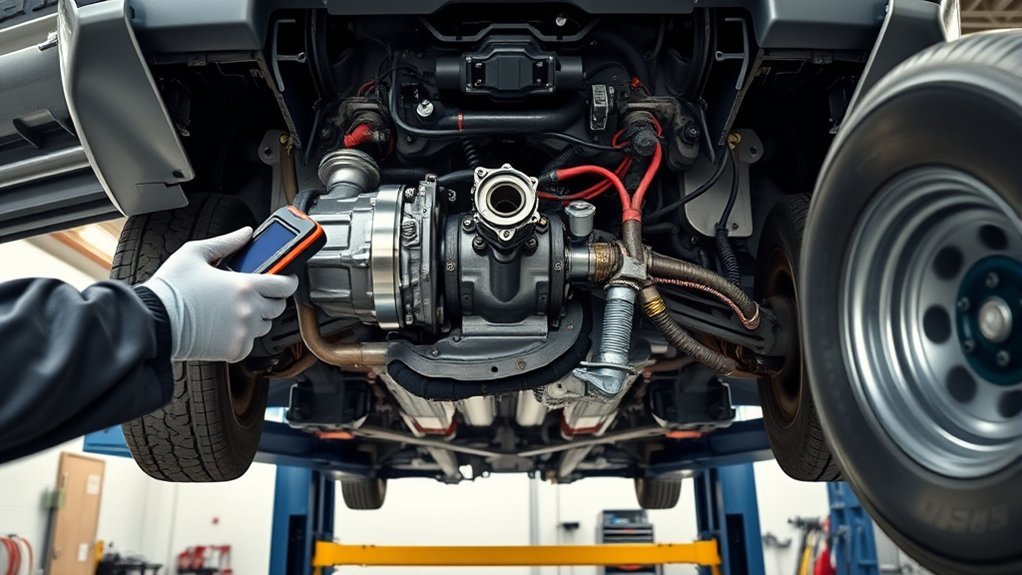
1. Identify the Exact Vehicle Configuration
Write down the model year, engine, two-wheel-drive or four-wheel-drive configuration, automatic or manual transmission, current mileage, and any modifications. Also note whether the truck recently received transmission, engine, driveline, tire, or electrical work.
2. Describe the Symptom Precisely
Record whether the problem occurs:
- Only when the truck is cold or hot
- From a stop or during an upshift
- At a particular road speed or engine RPM
- During light throttle, hard acceleration, towing, or climbing
- When selecting Drive or Reverse
- After rain, off-road use, battery work, or recent service
A short phone video of the tachometer and road speed may help a technician understand an intermittent RPM flare, provided a passenger records it and the driver remains focused on the road.
3. Check Warning Lights and Scan for Codes
An OBD-II scanner may reveal engine, transmission, sensor, pressure, temperature, solenoid, or communication faults. Record the full code numbers and freeze-frame data before clearing anything.
A code identifies the circuit or condition that the control module detected. It does not automatically prove that the named component has failed. Wiring, connectors, fluid pressure, voltage, software, and related components may produce the same code. On a 2024 Tacoma or Tacoma Hybrid, compare any transmission codes with T-SB-0094-24 Rev1 before parts are ordered, because that bulletin applies only when one or more of its listed DTCs are present and the vehicle falls within its production range.
4. Look for Leaks Without Crawling Under an Unsupported Truck
Park on a level, clean surface and look for fresh spots after the truck has been parked. Use a flashlight to inspect around the visible transmission area, cooler lines, and the route between the transmission and radiator or cooler.
Do not crawl under a truck supported only by a jack. A properly rated lift or correctly positioned jack stands on a stable surface are required for under-vehicle inspection.
5. Check Service Records
Look for the date, mileage, fluid specification, service method, and repair facility from the last transmission service. Symptoms that began immediately afterward may point to an incorrect level, wrong fluid, loose connection, or leak.
6. Verify the Fluid Only With the Correct Procedure
Some older vehicles may have a conventional dipstick, while other transmissions use fill and overflow plugs with a specified fluid-temperature range. Do not remove a plug or add fluid based on a generic online procedure.
Use the instructions for your exact Tacoma in Toyota’s manual and warranty-maintenance library. Repair procedures and technical service information are available through the Toyota Technical Information System.
7. Request a Professional Road Test and Data Review
A qualified technician may compare engine speed, input speed, output speed, commanded gear, actual gear, converter-clutch operation, fluid temperature, pressure-related data, and misfire counts during a controlled road test.
The technician may also inspect electrical connectors, wiring, fluid condition, leaks, engine operation, mounts, driveshafts, and related systems. This is more reliable than replacing parts based only on a symptom description.
Note: Dark fluid does not by itself prove that the transmission is ruined, and clear fluid does not prove that the transmission is healthy. Fluid condition must be considered with service history, debris, odor, level, diagnostic data, and driving symptoms.
Transmission Fluid and Maintenance Requirements
A single 30,000-to-60,000-mile replacement rule does not apply to every Toyota Tacoma. The correct schedule depends on model year, transmission, time, mileage, towing, loading, prolonged low-speed operation, and other operating conditions. Treat fluid maintenance as a separate question from fault diagnosis: an overdue service item does not by itself prove that fluid condition caused a slipping complaint.
Use the maintenance guide for your exact truck and pay attention to any separate schedule for special operating conditions. Do not substitute a generalized shop recommendation for the manufacturer’s vehicle-specific information without understanding why the additional service is being suggested.
If fluid replacement is due, confirm all of the following:
- The exact Toyota fluid specification for the transmission
- Whether the service calls for a drain-and-fill, pan service, or another procedure
- The required fluid-temperature and level-setting method
- Whether a filter, strainer, gasket, seal, or one-time-use plug component is required
- Whether the truck has an existing leak or transmission fault that should be diagnosed first
A fluid service can help when the level, fluid condition, or service history contributes to poor operation. It cannot rebuild worn clutches, restore a damaged pump, repair a faulty solenoid, seal an internal hydraulic leak, or correct mechanical damage.
Repairs That May Correct Transmission Slipping
Correcting a Leak, Fluid Specification, or Fluid Level
If diagnosis finds a leak or incorrect service level, the repair may involve replacing a damaged seal, line, gasket, fitting, or other component and then setting the fluid level with the proper procedure.
If the wrong fluid was installed, the technician should determine the safest correction based on the transmission, fluid mixture, mileage, and symptoms. Repeated flushing should not be treated as a universal cure.
Repairing Electrical or Control Problems
A damaged connector, wiring fault, weak electrical supply, speed sensor, temperature sensor, pressure-control solenoid, shift solenoid, or control issue may be repairable without replacing the entire transmission.
Some symptoms may also involve software calibration or model-specific service information. For example, Toyota T-SB-0077-16 Rev1 addressed specified 2016–2017 Tacoma 6AT shift-feel complaints with revised ECM calibration. A technician should verify applicable bulletins and calibration procedures for the exact vehicle identification before recommending hardware replacement.
Valve-Body or Hydraulic Repairs
When tests identify a valve-body or hydraulic-control fault, the repair may involve cleaning, repairing, or replacing the affected assembly. Pressure testing and scan data should support this decision.
Torque-Converter Repair or Replacement
A confirmed converter or converter-clutch failure may require converter replacement and inspection of the transmission and cooling circuit for contamination. The cause of excessive heat or debris should also be corrected.
Internal Repair, Rebuild, or Replacement
Severely worn clutches, damaged seals, pump failure, bearing damage, metal debris, or loss of multiple gears may require internal repair, rebuilding, or transmission replacement. Before approving major work, request the diagnostic findings, stored codes, test results, warranty terms, and an itemized estimate.
What Driving Adjustments Can and Cannot Do
Gentle acceleration and reduced loading may lower stress while you arrange an inspection, but driving technique cannot repair an active fault.
ECT, PWR, Tow/Haul, or other available modes may change throttle response, shift points, or gear-holding behavior. A symptom that feels different in another mode still needs diagnosis.
Higher-octane fuel is also not a transmission repair. Use the fuel grade required by your owner’s manual and diagnose slipping independently.
Pro Tip: Ask the repair facility to document the stored codes, fluid condition, leaks, commanded and actual gear behavior, and the test that confirmed the failed component. A clear evidence trail helps you compare estimates and avoid replacing parts by guesswork.
When to Seek Professional Help
Arrange an inspection soon if the Tacoma has intermittent RPM flare, delayed engagement, repeated harsh shifts, shudder, a warning light, a small leak, or a new noise. Avoid towing and hard acceleration until the cause is known.
Stop driving and arrange towing when:
- The engine revs but the truck cannot keep pace with traffic
- Drive or Reverse will not engage reliably
- The transmission repeatedly falls into neutral
- A temperature warning appears
- You smell a strong burning odor or see smoke
- A large amount of fluid is leaking
- You hear grinding, banging, or strong metallic noises
- The truck enters reduced-power or fail-safe operation and drives unpredictably
If the vehicle may still be covered by a powertrain warranty, extended coverage, recall, service campaign, or a bulletin-specific warranty provision, contact Toyota or an authorized dealer before authorizing major repairs. A TSB is not automatically a recall. Toyota provides a VIN-based recall and service-campaign lookup. You can also check the NHTSA recall database for safety recalls, investigations, complaints, and manufacturer communications.
How to Reduce the Risk of Future Transmission Problems
- Follow the exact maintenance guide: Use the schedule for your Tacoma’s model year, powertrain, mileage, and operating conditions.
- Use the correct fluid specification: Do not mix fluids or rely on a label that merely says “universal.”
- Repair leaks promptly: A minor seep can become a low-fluid and overheating problem.
- Stay within towing and payload ratings: Excess weight and heat increase stress on the engine, cooling system, transmission, brakes, and driveline.
- Use the proper towing setup: Follow Toyota’s instructions for trailer weight, hitch equipment, braking, drive modes, and cooling considerations.
- Respond to warning lights: Scan and document codes before clearing them.
- Keep service records: Record the fluid specification, quantity, mileage, procedure, and repair facility.
- Investigate changes after service: New leaks, delayed engagement, or unusual shifts following maintenance should be checked promptly.
- Check recalls and campaigns by VIN: Do not assume that advice for another model year applies to your truck.
What Owner Reports Can and Cannot Tell You
Owner forums can reveal patterns worth investigating, such as a shudder at a certain speed, hesitation after a specific repair, or improvement after an identified service procedure. They can also help you describe an intermittent symptom more clearly.
However, an owner report does not confirm that your truck has the same failed component. Similar symptoms may come from different transmissions, engines, calibrations, driving conditions, modifications, or maintenance histories.
Use owner experiences to create questions for a technician, not to select a repair. Verify any claimed technical service bulletin by its exact number, applicable model years, production range, symptoms, and repair instructions through Toyota service information.
Frequently Asked Questions
Why does my Tacoma transmission slip when accelerating?
Acceleration increases transmission load and can expose low hydraulic pressure, an incorrect fluid level, worn friction components, valve-body trouble, a failing torque converter, or an electrical-control problem. An engine misfire or driveline issue may create a similar sensation, so the symptom requires testing.
Can low transmission fluid cause a Tacoma to slip?
Yes. A low level can reduce hydraulic pressure, lubrication, and cooling. Because many leaks are not obvious and some Tacoma transmissions require a temperature-controlled level check, use the model-specific procedure rather than adding fluid by guesswork.
Will changing the transmission fluid fix slipping?
It may help when the problem involves an incorrect level, wrong fluid, or overdue service specified by the vehicle’s maintenance guide. It will not repair worn clutches, damaged gears, a weak pump, faulty solenoids, internal seal leakage, or a failed torque converter.
Is ECT or PWR mode a fix for transmission slipping?
No. A selectable mode may change throttle response, shift timing, or how long the transmission holds a gear. It cannot restore fluid pressure, repair worn components, stop a leak, or correct an electrical failure.
How can I tell transmission slip from torque-converter shudder or an engine misfire?
True slipping often produces an RPM increase without matching acceleration. Shudder feels more like a repeated vibration, while a misfire may cause rough running, power loss, or a flashing check-engine light. Scan data, a controlled road test, and inspection of the engine and driveline provide a more reliable distinction.
Can I keep driving a Tacoma with a slipping transmission?
Continuing to drive can create more heat and damage. A mild, intermittent symptom still deserves prompt inspection. Stop and tow the truck if it cannot accelerate safely, will not stay in gear, overheats, smokes, makes strong metallic noises, or has a substantial leak.
Will 91-octane fuel stop transmission slipping?
No. Premium fuel does not repair transmission pressure, friction, converter, sensor, solenoid, wiring, or mechanical problems. Use the fuel grade specified in your Tacoma owner’s manual and diagnose the transmission symptom separately.
Can a slipping Tacoma transmission be repaired without replacing it?
Often, yes. The solution may be a leak repair, correct fluid level, wiring repair, sensor, solenoid, software procedure, valve-body work, or torque-converter replacement. Extensive clutch, pump, bearing, or gear damage may require rebuilding or replacement.
Is there a Toyota service bulletin for 2024 Tacoma transmission problems?
Yes. Toyota T-SB-0094-24 Rev1 covers certain 2024 Tacoma and Tacoma Hybrid vehicles with the MIL on and one or more specified transmission DTCs. For the covered condition, Toyota calls for transmission and torque-converter replacement, with the hybrid module also included on Tacoma Hybrid vehicles. The bulletin has production-range and diagnostic-code requirements, so it should not be applied to every 2024 transmission complaint.
Is Tacoma gear hunting the same as transmission slipping?
No. Gear hunting means the transmission repeatedly changes or searches between ratios, while true slipping usually produces an RPM flare without matching vehicle acceleration. Some 2016–2017 Tacoma 6-speed automatic shift-feel complaints, including highway gear hunting and a cold 3–4 engine flare, were addressed by Toyota T-SB-0077-16 Rev1, so model-year-specific diagnosis matters.
Conclusion
Toyota Tacoma transmission slipping should not be diagnosed from one symptom or corrected with a universal fluid interval. Confirm whether RPM actually rises without matching road speed, identify the exact model year and transmission, document when the problem occurs, check warning lights and external leaks, and compare the vehicle with applicable Toyota service information.
Some Tacoma complaints have model-year-specific explanations, including ECM calibration for specified 2016–2017 6AT shift behavior, driveline-vibration guidance for specified 2016–2023 trucks, and T-SB-0094-24 Rev1 for certain 2024 Tacoma and Tacoma Hybrid vehicles with listed DTCs. A fluid or electrical correction may solve some cases, while converter, valve-body, clutch, pump, or internal damage requires more extensive work. Stop driving if the truck loses reliable acceleration, will not stay in gear, overheats, smokes, or leaks heavily.
Sources
- Toyota Manuals and Warranties — model-specific owner’s manuals, maintenance guides, and warranty information.
- Toyota Technical Information System — Toyota repair manuals, service bulletins, wiring diagrams, diagnostics, and calibration information.
- Toyota: 2024 Tacoma Powertrain Overview — fourth-generation engine, eight-speed automatic, six-speed manual, and i-FORCE MAX hybrid details.
- T-SB-0021-14 Rev1 — Toyota bulletin for specified 2012–2014 Tacoma A340 automatic-transmission deceleration shudder after a cold soak.
- T-SB-0077-16 Rev1 — Toyota bulletin covering specified 2016–2017 Tacoma AC60 6AT shift-feel concerns and revised ECM calibration.
- T-SB-0124-20 Rev1 — Toyota bulletin covering specified 2016–2023 Tacoma driveline vibration during deceleration.
- T-SB-0094-24 Rev1 — Toyota bulletin, revised February 5, 2026, covering certain 2024 Tacoma and Tacoma Hybrid vehicles with specified transmission DTCs.
- Toyota Recall and Service Campaign Lookup — VIN-based Toyota safety recall and service-campaign information.
- National Highway Traffic Safety Administration Recall Database — safety recalls, investigations, complaints, and manufacturer communications.
