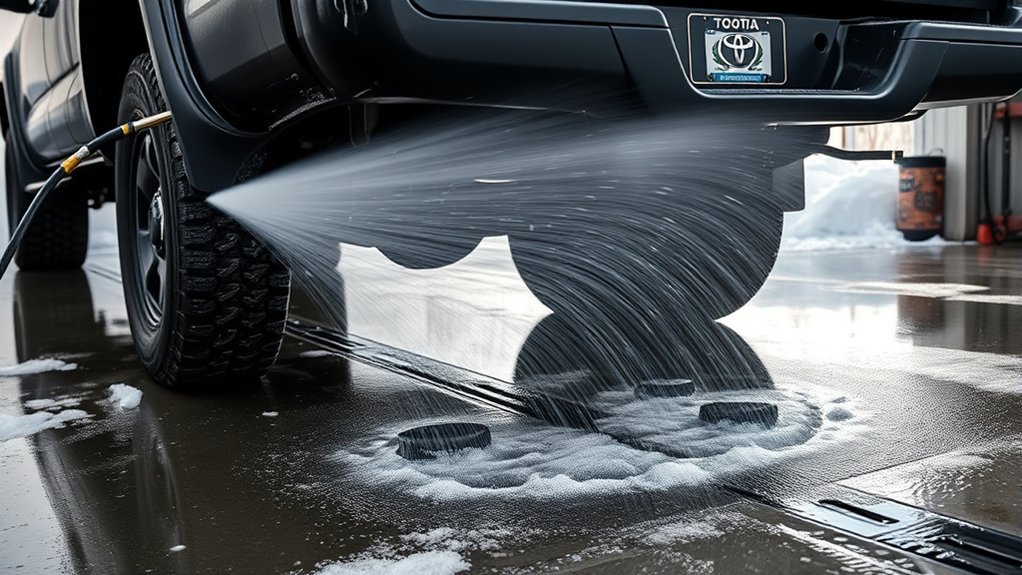
Winter road treatments can leave salt and brine on your Toyota Tacoma’s frame, suspension, wheel wells, fasteners, and other exposed components. A thorough fresh-water rinse removes much of that residue before it remains trapped in seams and damaged coatings. The right schedule depends on how often you drive on treated roads, not on a single interval for every Tacoma.
Quick Answer
Wash your Tacoma’s undercarriage after significant salt or brine exposure when outdoor temperatures are safely above freezing. In heavily treated areas, this may mean about once a week. Use fresh water, controlled pressure, and an underbody sprayer, then inspect the frame and let the truck dry before applying a compatible corrosion inhibitor.
Key Takeaways
- Base your washing schedule on salt exposure, visible residue, and road conditions rather than a rigid calendar.
- A complete fresh-water rinse is more important than using strong detergent during every wash.
- Never crawl beneath a Tacoma supported only by a jack, and let the exhaust cool before washing.
- Keep high-pressure spray and corrosion products away from brake friction surfaces, seals, sensors, and vulnerable connectors.
- Inspect the frame, brake and fuel lines, suspension mounts, skid plates, and drain openings after winter.
At a Glance
| Time Required | About 20–40 minutes for a thorough rinse and inspection |
| Difficulty | Easy to moderate |
| Tools Needed | Hose or pressure washer, underbody attachment, eye protection, optional cleaner, and a soft long-handled brush |
| Cost | Varies by water access, wash method, cleaner, and optional corrosion treatment |
Why Winter Undercarriage Washing Is Essential for Your Tacoma
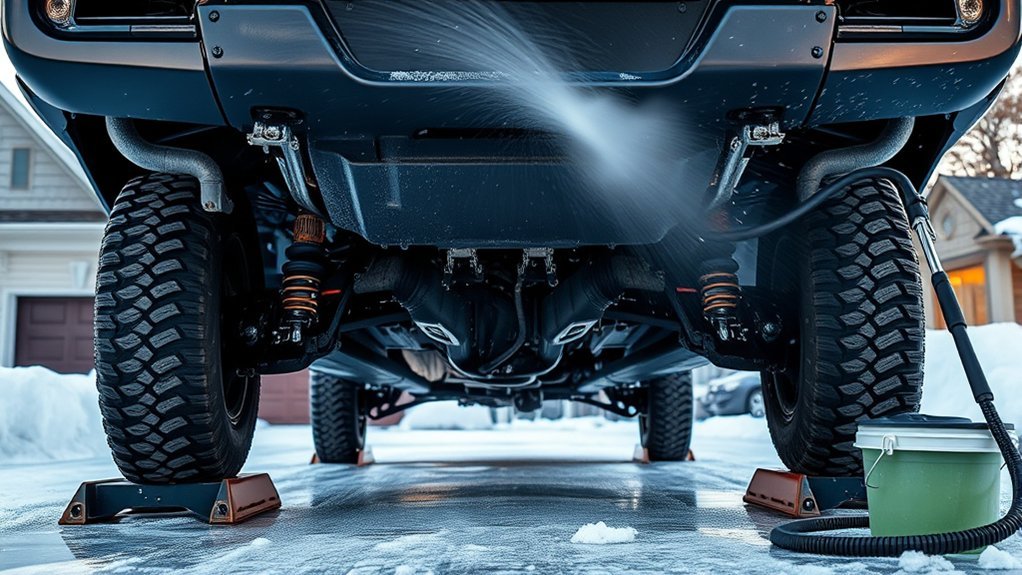
Road crews commonly use chloride-based salt or brine to manage snow and ice. When salty moisture remains on exposed steel, damaged coatings, fasteners, and seams, it can speed up corrosion. The underbody receives direct spray from the tires, so residue often collects where you cannot see it during a normal exterior wash.
Pay particular attention to the frame rails, crossmembers, suspension mounting points, wheel wells, skid plates, spare-tire hardware, brake and fuel lines, and the areas behind plastic liners. A fresh-water rinse will not reverse existing corrosion, but it can reduce the amount of corrosive residue left on these parts.
The goal is not to make the underside look polished. The goal is to flush salt from seams, ledges, mounting points, and other places where wet residue can remain.
Toyota publishes owner manuals and warranty guides by model and year. Check the instructions for your Tacoma before using a pressure washer, cleaner, or aftermarket coating. Toyota’s general warranty information also distinguishes rust-through coverage from ordinary surface corrosion, so do not assume every rust condition is covered. You can find the correct documents through the Toyota Manuals and Warranties portal.
Recommended Washing Frequency for Different Winter Conditions
Toyota does not provide one universal undercarriage-washing interval for every Tacoma and climate. Use your exposure to treated roads as the main guide.
| Driving condition | Practical washing approach |
| Daily driving on heavily salted or brined roads | Rinse after major exposure and consider a weekly wash while treatment remains frequent. |
| Occasional winter driving on treated roads | Wash after storms, long highway trips, or when white residue becomes visible. |
| Mostly untreated roads or a mild winter climate | Inspect periodically and rinse after any known salt, coastal spray, mud, or chemical exposure. |
| End of winter | Perform a detailed rinse and inspection after road treatment has ended. |
Wait for a period when the temperature is above freezing and the wash water can drain without creating ice. Washing immediately before a hard freeze may leave water in seams, locks, parking-brake mechanisms, or other confined areas.
Note: A low-mileage Tacoma may need fewer washes than a daily-driven truck in the same region. Visible salt, wet brine spray, and repeated highway exposure matter more than mileage alone.
Step-By-Step Guide to Washing Your Tacoma’s Undercarriage
Choose a location with safe drainage, place the Tacoma on level ground, and let the engine and exhaust cool. Keep the truck on the ground unless you have suitable ramps or correctly rated jack stands placed at approved support points.
Essential Tools Required
- A garden hose with a strong spray nozzle or a pressure washer with adjustable pressure
- An undercarriage spray bar or wide-angle nozzle
- Safety glasses and water-resistant gloves
- A soft, long-handled brush for wheel wells and accessible frame surfaces
- A vehicle-safe cleaner for oily dirt or stubborn film
- A foam cannon or pump sprayer, if required by the cleaner
- Clean towels or a blower for accessible areas
- A bright flashlight for the final inspection
A powerful pressure washer is not automatically better. Controlled water volume and proper coverage are more useful than holding a narrow jet close to a seal, connector, hose, coating edge, or damaged component.
Warning: Never crawl beneath a Tacoma supported only by a floor jack. Do not direct high-pressure water at brake calipers from close range, axle or differential vents, electrical connectors, cameras, sensors, seals, damaged undercoating, or hot exhaust components.
Step-By-Step Cleaning Process
- Cool and inspect the truck. Let the exhaust cool. Look for loose shields, hanging wiring, fluid leaks, damaged coatings, and components that should not receive direct spray.
- Start with the wheel wells. Rinse behind the tires, around liners, and along the lower body seams. This prevents loosened dirt from falling onto a cleaned underbody later.
- Pre-rinse the undercarriage. Move from the front toward the rear with a wide spray pattern. Flush the frame rails, crossmembers, suspension arms, skid plates, spare-tire area, and accessible seams.
- Apply cleaner only where needed. Plain fresh water can remove loose salt. Use a vehicle-safe cleaner when oily grime or compacted dirt prevents water from reaching the surface. Follow the label’s dilution and dwell-time instructions.
- Agitate accessible buildup. Use a soft long-handled brush on wheel wells, frame surfaces, and skid plates. Do not force a brush around brake hoses, wiring, or delicate connectors.
- Rinse thoroughly. Remove all cleaner and loosened material. Pay attention to ledges, boxed areas with drain openings, the tops of crossmembers, and areas behind shields.
- Allow the truck to drain. Park where water can escape. Dry accessible areas with clean towels or moving air, but do not blow contamination into connectors or vents.
- Test operation. Before normal driving, press the brake pedal and confirm that it feels normal. Drive slowly in a safe area and apply the brakes gently to confirm normal response.
Pro Tip: Approach the underbody from several angles. A single spray bar pass may miss the tops of crossmembers, the rear side of skid plates, and recesses near suspension mounting points.
How to Choose the Right Car Wash for Undercarriage Maintenance
A commercial wash can be useful when home water access is limited or freezing runoff would create a hazard. Confirm that the selected package includes a dedicated underbody cycle rather than only wheel or rocker-panel spray.
Look for these features:
- A clearly identified underbody or chassis rinse
- Multiple nozzles that cover more than the center of the truck
- A strong final rinse
- Well-maintained equipment and a clean wash bay
- A touchless or brushless option if you want to avoid exterior brushes
- Enough clearance for your Tacoma’s tires, steps, suspension, and accessories
Ask the operator about restrictions for lifted trucks, aftermarket skid plates, oversized tires, roof accessories, or loose exterior parts. A wash may clean exposed surfaces well but still miss areas hidden above skid plates and liners.
Reclaimed water is not automatically unsuitable. Proper commercial systems may filter and treat reused water. The more important questions are whether the equipment is maintained and whether the final rinse removes remaining detergent and residue.
DIY vs. Professional Services: Choosing the Best Option for Your Tacoma
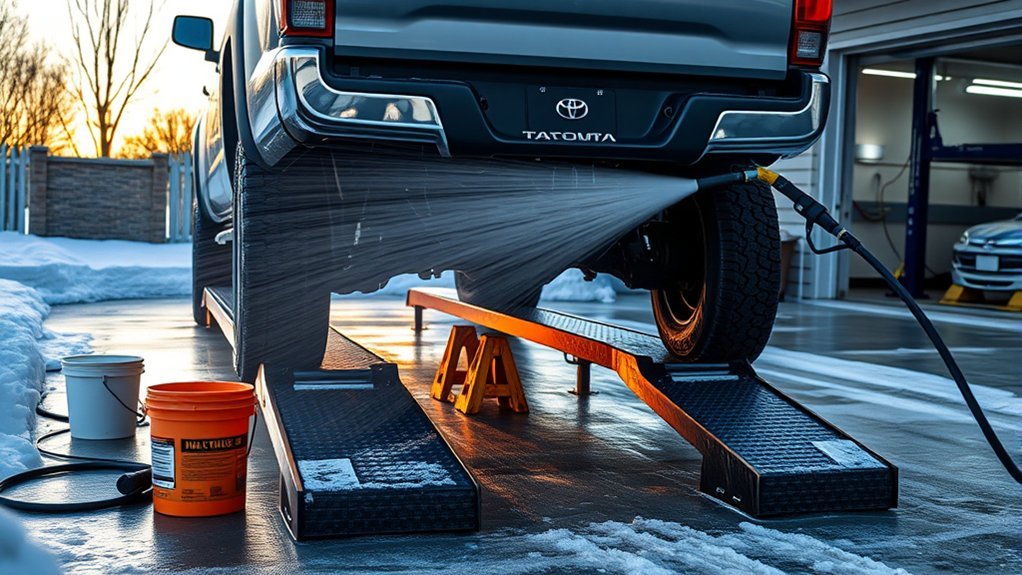
DIY washing gives you control over where the water goes and how long you rinse each section. It works well when you have suitable drainage, safe temperatures, enough lighting, and an underbody attachment. You can also inspect the frame while you work.
A professional wash or detailing service may be the better choice when:
- Outdoor temperatures make home washing unsafe
- You cannot control runoff at home
- The underside has thick mud, oil, or compacted debris
- Skid plates or accessories limit access
- You see heavy scaling, perforation, loose coating, or leaking lines
- You want a professionally applied corrosion treatment
Before paying for rustproofing, ask what preparation is included. Applying a coating over trapped dirt, wet salt, loose rust, or leaking fluid can hide the condition without correcting it.
Gather Essential Tools and Chemicals for Undercarriage Cleaning
Fresh water should perform most of the work. An all-purpose cleaner can help with oily film, but stronger chemistry is not always better. Choose a product labeled for automotive exterior or underbody use, follow its dilution instructions, and test it on a small area when compatibility is uncertain.
Avoid household bleach, acidic wheel cleaner, aggressive degreaser, and solvent-based products unless the manufacturer specifically approves the application. These products may stain metal, attack finishes, affect rubber, or remove existing protective material.
Do not allow detergent, oily residue, or corrosion products to flow directly into a storm drain. Municipal stormwater systems may discharge to local waterways without the same treatment used for sanitary wastewater. Review local rules and use a commercial wash facility when home runoff cannot be controlled. The U.S. EPA’s municipal stormwater guidance explains how these systems are regulated.
How to Keep Your Tacoma Rust-Free in Winter?
No washing or coating method can guarantee a completely rust-free Tacoma. You can, however, reduce exposure, protect damaged surfaces, and identify corrosion before it becomes severe.
Regular Undercarriage Washing Schedule
Use a simple exposure-based routine:
- Rinse after driving through heavy brine, salty slush, or coastal spray.
- Wash when visible white residue appears on the frame, wheel wells, steps, or lower body.
- Repeat during long periods of road treatment rather than waiting until spring.
- Complete a final detailed wash when winter road treatment ends.
- Inspect again after the underside has dried.
If freezing weather continues for weeks, use a commercial indoor wash rather than creating ice on your driveway or leaving large amounts of water trapped underneath the truck.
Effective Rust Prevention Products
Corrosion inhibitors generally fall into several groups:
- Lanolin- or oil-based films: These remain flexible and may creep into seams, but they can attract dirt and require inspection or reapplication.
- Wax-based cavity products: These may suit enclosed seams and internal panels when applied correctly.
- Hard or rubberized coatings: These can resist abrasion, but damaged edges may conceal corrosion if moisture enters beneath the coating.
- Professional oil-spray treatments: These provide broad coverage but should be applied by a service familiar with the Tacoma’s drain holes, wiring, brakes, exhaust, and factory coatings.
Warning: Never spray corrosion inhibitor on brake rotors, brake pads, tires, belts, pedals, exhaust components, oxygen sensors, catalytic converters, or any friction surface. Mask restricted areas and follow the product label.
Community Recommendations: Best Places to Wash Your Tacoma
Local Tacoma groups can help you identify washes with suitable clearance and a strong underbody cycle. Treat community recommendations as a starting point, then inspect the facility yourself.
Useful questions include:
- Does the wash have a true chassis-rinse option?
- Can it accommodate lifted or modified Tacomas?
- Are the underbody nozzles operating across the full bay?
- Does the wash close during extreme cold to prevent icing?
- Does the operator offer a final fresh-water rinse?
- Are professional rustproofing services performed only after cleaning and drying?
Visit after road spray has accumulated, but wait until travel and washing conditions are safe. A wash immediately followed by another trip on freshly treated roads may provide only brief benefit.
Recommended Products for Tacoma Undercarriage Protection
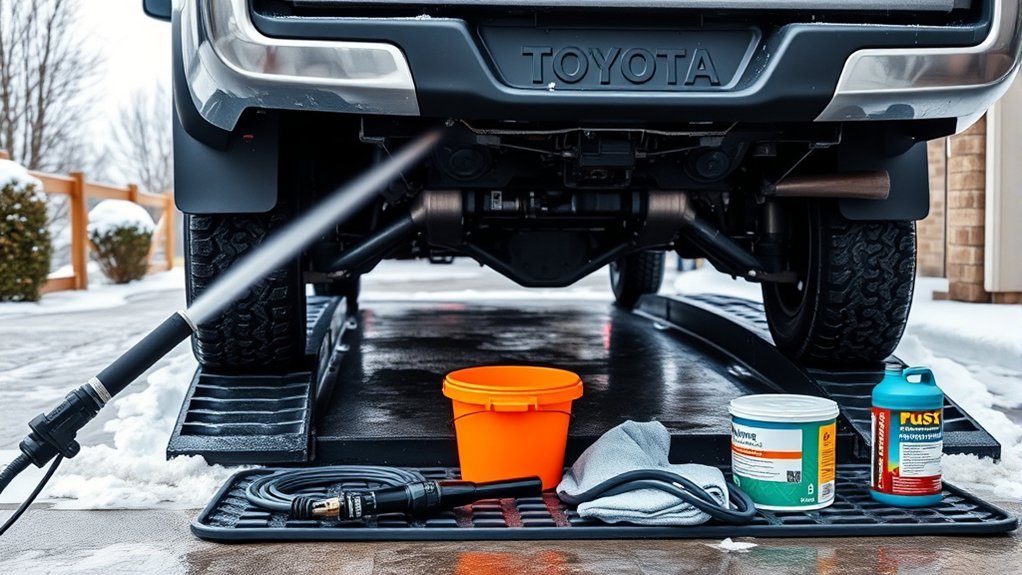
Choose a protection product by application area and compatibility rather than by brand name alone. Clean and dry the surface as directed before application, and do not cover active leaks, loose rust, blocked drains, or damaged components.
- Fluid Film: A lanolin-based corrosion inhibitor intended for automotive applications. Its manufacturer says it may provide protection for up to a year, but also warns that it can swell non-oil-resistant rubber and soften some undercoatings. Read the official Fluid Film automotive instructions and test compatibility before use.
- Krown rust-protection oil: A professional or retail oil-based option. Follow the current label or service instructions and confirm where the applicator will drill, spray, or avoid.
- Chemical Guys Bare Bones Undercarriage Spray: Primarily a dressing and protectant for suitable underbody surfaces. Do not treat it as a substitute for rust repair or a full corrosion-control program.
- Cosmoline-type wax coatings: These may provide durable storage or corrosion protection on compatible metal surfaces, but application and later removal can be difficult. Use only a product intended for the specific automotive area.
After applying any product, inspect the treated area periodically. Road abrasion, washing, heat, dirt, and repairs can remove or disturb protection before a stated maximum interval.
Long-Term Care Tips for Your Tacoma’s Undercarriage
Inspect the underside at least before and after winter, and more often if you drive on salted roads or off-road. Use a flashlight and look from several angles without placing yourself beneath an unsupported truck.
Check for:
- Orange surface rust that is spreading
- Flaking scale or swollen coating
- Soft, perforated, or deeply pitted metal
- Rust around frame welds and suspension mounts
- Corrosion on brake and fuel lines
- Loose skid plates or trapped mud above them
- Blocked frame, body, door, or rocker-panel drain openings
- Damaged paint or coating caused by stones and off-road contact
- Fluid leaks that leave an oily film and trap dirt
- Loose wiring clips, shields, or fasteners
Light surface corrosion may be treatable after proper cleaning and preparation. Deep scaling, perforation, cracked mounts, weakened structural metal, or corroded brake lines requires professional inspection. Do not hide structural corrosion beneath a fresh coating.
Keep photographs from each seasonal inspection. Comparing the same areas over time can reveal expanding rust, coating failure, or a leak that was easy to miss during one inspection.
Related Guides
Frequently Asked Questions
How do you wash a Tacoma’s undercarriage during winter?
Wait for temperatures above freezing, let the exhaust cool, and rinse the wheel wells and underbody with fresh water. Use a wide spray pattern and cover the frame, crossmembers, suspension, skid plates, and spare-tire area. Apply cleaner only where grime prevents water from reaching the surface.
How often should you wash a Tacoma’s undercarriage in winter?
Wash according to exposure. A daily-driven Tacoma in a heavily salted area may benefit from weekly rinsing and additional washes after major storms. A truck driven only occasionally may need washing after specific salt or brine exposure rather than every week.
Do automatic car washes clean the entire undercarriage?
A functioning underbody cycle can remove loose salt from exposed areas, but it may miss the tops of crossmembers, areas behind liners, and surfaces above skid plates. Inspect the truck and perform a more detailed rinse when residue remains.
What is the best type of undercarriage wash?
The most useful setup provides broad fresh-water coverage at controlled pressure. An underbody spray bar helps reach the frame and crossmembers. Cleaner is optional unless oily grime or compacted dirt prevents water from contacting the surface.
Can you wash the undercarriage when it is below freezing?
Avoid outdoor washing when runoff or trapped water will immediately freeze. Use a suitable indoor commercial wash or wait for a warmer period. Ice can create a walking hazard and may form around drains, locks, cables, or other confined areas.
Should you apply rustproofing immediately after washing?
Follow the product instructions. Many products require a clean surface, and some require it to be fully dry. Inspect for loose rust, leaks, and damaged coatings first. Never spray brakes, tires, exhaust parts, sensors, or friction surfaces.
Conclusion
A winter undercarriage wash is most effective when it removes salt safely without damaging seals, wiring, coatings, or brake components. Match the schedule to your Tacoma’s exposure, use fresh water and controlled pressure, and complete a final inspection after winter.
Corrosion protection can add another barrier, but it cannot repair weakened metal or replace proper cleaning. Check your model-year Toyota manual, follow every product label, and have structural rust or corroded lines inspected by a qualified professional.
Sources
- Toyota Manuals and Warranties — model-specific owner manuals, maintenance information, and warranty terms
- Fluid Film Automotive Applications — manufacturer application guidance and material-compatibility cautions
- U.S. EPA Municipal Stormwater Guidance — information supporting responsible handling of vehicle-wash runoff
