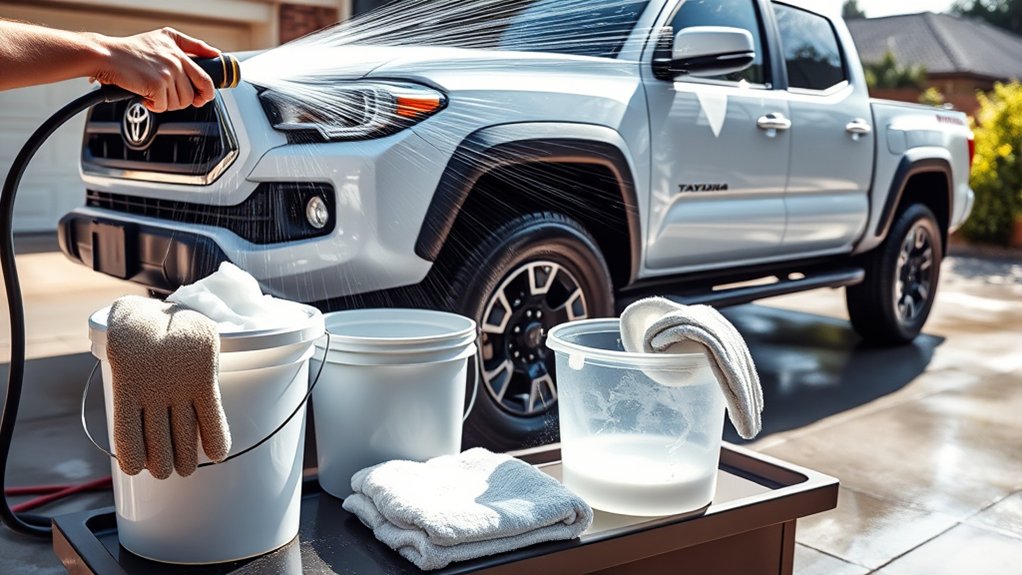
Washing a Toyota Tacoma without adding swirl marks comes down to removing loose grit before you touch the paint and keeping dirty tools away from clean panels. A two-bucket wash gives you better control than washing with one bucket, but careful preparation, light pressure, clean microfiber, and safe drying matter just as much.
Quick Answer
Pre-rinse your Tacoma, wash it on a cool surface with automotive soap and a clean microfiber mitt, and rinse the mitt in a separate water bucket after every small section. Work from the roof downward, keep wheel tools separate, rinse thoroughly, and dry with clean microfiber towels or filtered air.
Key Takeaways
- A soap bucket and a separate rinse bucket help reduce the amount of grit returned to your Tacoma’s paint.
- Pre-rinsing is important because rubbing dry mud or dust across the clear coat can create visible marks.
- Use automotive wash soap, clean microfiber tools, light pressure, and straight overlapping passes.
- Keep wheel brushes, towels, and wash water separate from the tools used on painted body panels.
- Clay, polishing, paint correction, wax, sealant, and ceramic coating are different processes and should not be treated as routine washing steps.
At a Glance
| Time Required | About 45 to 90 minutes, depending on mud, wheel condition, accessories, and drying method |
| Difficulty | Easy, with careful tool handling |
| Tools Needed | Two buckets, automotive wash soap, microfiber mitt, hose or vehicle-safe pressure washer, wheel tools, and microfiber drying towels |
| Cost | Varies; the cost stays low when you already own buckets, a hose, and clean microfiber towels |
Why You Should Use the 2 Bucket Method for Washing Your Tacoma
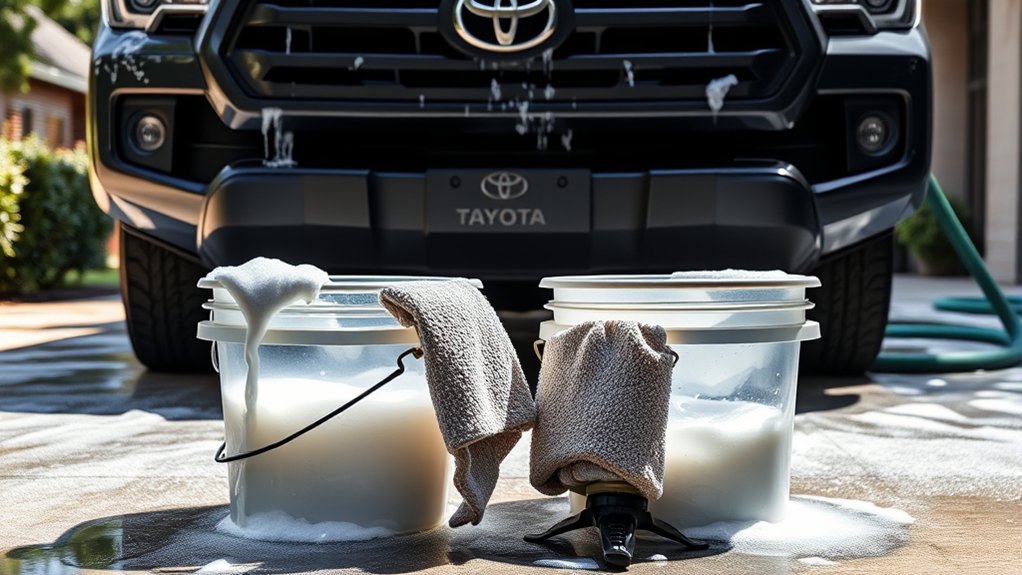
The two-bucket method uses one bucket for automotive wash solution and another for rinsing your mitt. After cleaning a small section, you rinse and gently agitate the mitt in the clean-water bucket before loading it with fresh soap.
This separation helps keep some of the loosened dirt out of your soap solution. It does not make the wash automatically scratch-free, because grit can remain in a mitt, towel, bucket, brush, or panel seam. You still need a thorough pre-rinse, clean tools, light hand pressure, and frequent inspections.
Before starting, check the care instructions for your model year, trim, decals, accessories, or special finish in Toyota’s official Tacoma manuals and warranties portal. Instructions can differ for cameras, sensors, matte parts, graphics, tonneau covers, and aftermarket equipment.
Step-by-Step Guide to the 2 Bucket Wash Method
Park your Tacoma where the body can remain cool during the wash. Gather every tool before you begin so soap is not left drying while you search for a towel, brush, or hose attachment.
Required Materials Overview
- Two clean buckets, preferably with removable dirt screens
- A third bucket if you want completely separate wheel wash water
- Automotive-specific wash soap mixed according to its label
- A clean microfiber or soft synthetic wash mitt
- Separate wheel brushes, tire brushes, and wheel towels
- A hose with a gentle spray nozzle or a vehicle-safe pressure washer
- Several clean microfiber drying towels
- An optional automotive drying aid compatible with your existing wax, sealant, or coating
- Optional compressed or filtered air for mirrors, emblems, handles, and panel gaps
A five-gallon bucket is convenient, but the exact bucket size matters less than using enough clean solution and changing visibly dirty water. Dirt screens can help loosened debris settle below the area where you move the mitt, but they cannot clean a contaminated mitt by themselves.
Warning: Do not reuse a mitt or towel after it falls on the driveway. Set it aside for laundering and replace it with a clean one. Small stones and grit trapped in the fibers can mark the clear coat.
Detailed Washing Process
- Choose a cool washing area. Work in shade or during a cooler part of the day. Avoid washing panels that feel hot to the touch because water and soap can dry before you rinse them.
- Prepare the truck. Close the windows and sunroof, retract or fold accessories as directed, and remove jewelry, watches, belt buckles, or clothing hardware that could contact the paint.
- Clean the wheels with separate tools. Rinse one wheel at a time and use products that are suitable for its finish. Do not use the same mitt, brush, towel, or bucket on the body afterward.
- Pre-rinse the body. Start at the roof and rinse downward. Spend extra time on wheel arches, rocker panels, the lower doors, the tailgate, and areas holding visible mud.
- Pre-treat stubborn contamination. Use an automotive bug remover, tar remover, or other finish-compatible product according to its directions. Do not scrub dried bugs, sap, or bird droppings with a dry towel.
- Fill the buckets. Mix automotive wash soap in the soap bucket according to its label. Fill the second bucket with clean rinse water.
- Wash a small upper section. Begin with the roof, glass, hood, and upper doors. Move the mitt in light, mostly straight passes rather than pressing hard or scrubbing in tight circles.
- Rinse the mitt after each section. Agitate it in the rinse bucket, inspect it for grit, and then reload it in the soap bucket. Use a fresh mitt if the first one remains dirty.
- Leave the dirtiest panels until last. Wash rocker panels, lower doors, bumpers, and the lower tailgate after the cleaner upper sections.
- Rinse thoroughly. Remove soap from panel gaps, mirrors, emblems, door handles, bed rails, accessories, and the rear camera area. Do not allow residue to dry on the finish.
- Dry immediately. Use clean microfiber drying towels, a compatible drying aid, or filtered air. Replace a towel when it becomes dirty or saturated.
Warning: A pressure washer can damage loose paint, decals, seals, sensors, cameras, trim, and protective coatings when used too close or with a concentrated nozzle. Select a low-pressure vehicle setting, use a wide fan pattern, keep the wand moving, and maintain a safe distance. Use an ordinary hose when you cannot confirm that the equipment and setting are suitable.
Post-Wash Care Tips
Inspect the Tacoma under good lighting after drying. Look for missed soap, water trapped around mirrors, fresh chips, tar spots, or contamination that did not release during the contact wash.
| Stage | Action | Purpose |
|---|---|---|
| Pre-rinse | Remove loose mud, dust, and grit | Reduce abrasive material before contact |
| Two-bucket wash | Separate soap solution from rinse water | Reduce dirt returned to the soap bucket |
| Wash order | Clean upper panels before lower panels | Keep the dirtiest areas until last |
| Final rinse | Flush soap from seams and accessories | Prevent dried residue and hidden drips |
| Drying | Use clean microfiber or filtered air | Limit towel friction and water spotting |
Do not treat paint correction as a normal post-wash step. If you find scratches, oxidation, or water-spot etching, inspect the finish before using an abrasive polish. Deep damage, thin clear coat, matte paint, and unfamiliar coatings are better evaluated by an experienced detailer or body shop.
Advantages of the 3 Bucket Wash Method for Enhanced Protection
A third bucket is useful when your Tacoma collects heavy brake dust, mud, road salt, or off-road grime. The third bucket is reserved for wheels and tires, while the soap and rinse buckets remain dedicated to painted body panels.
Enhanced Dirt Containment
Wheel and tire tools often collect gritty brake dust, sand, and road residue. Keeping those tools and their wash water separate lowers the chance that this contamination will reach a paint mitt or body towel.
Use dedicated brushes for tires, wheel faces, barrels, and tight areas when needed. A brush that has touched a tire or wheel well should not be used on painted body panels, even when it looks clean.
Minimized Paint Contamination
The third bucket also makes your process easier to control. You can finish the wheels, rinse the surrounding bodywork, wash your hands or gloves, and then begin the body wash with clean tools and fresh water.
Washing the wheels first does not eliminate every contamination risk. Splashing can still place wheel cleaner or grime on nearby panels, so rinse those panels before beginning the contact wash.
Improved Cleaning Efficiency
A three-bucket setup can save time on heavily used trucks because you do not need to stop and replace body-wash water after cleaning dirty wheels. It is most valuable after off-road driving, winter road exposure, construction-site use, or travel on muddy roads.
A third bucket is optional for a lightly dusty Tacoma when you already use fully separate wheel tools and clean the wheels during a different part of the wash.
Must-Have Tools for Your 2 Bucket Car Wash Kit
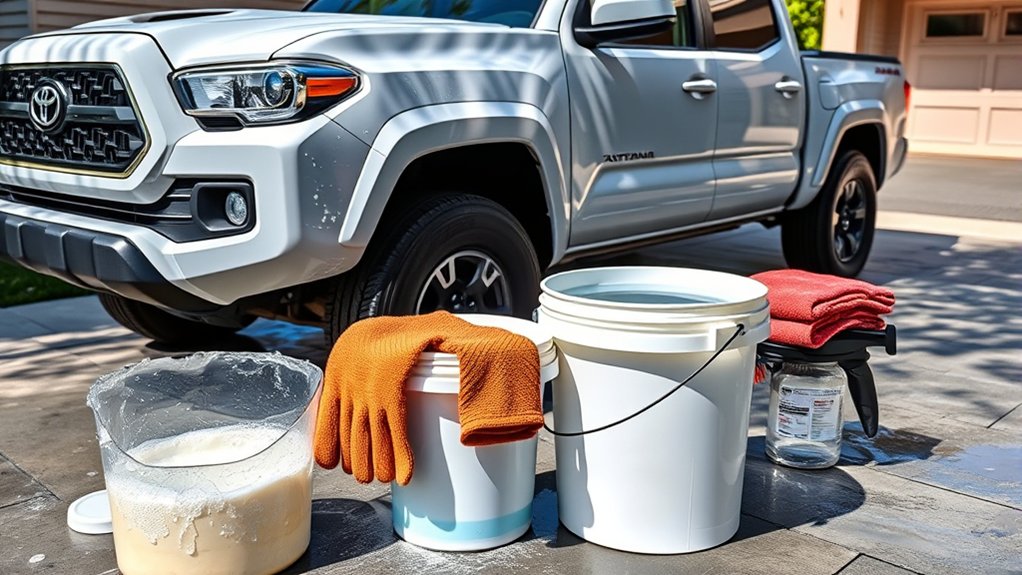
You do not need a large detailing collection to wash your Tacoma safely. Cleanliness, softness, and correct product use matter more than buying a specific brand.
- Two clean buckets: One holds wash solution, and the other holds rinse water.
- Optional dirt screens: These can help keep settled debris below the area where you move the mitt.
- Automotive wash soap: Choose a product intended for exterior vehicle finishes and follow its dilution directions.
- Microfiber wash mitt: Use a clean, soft mitt that releases dirt easily during rinsing.
- Multiple mitts: Using a second mitt for lower panels can further separate heavy grime from cleaner upper areas.
- Dedicated wheel tools: Keep wheel brushes, tire brushes, and wheel towels away from bodywork.
- Microfiber drying towels: Use large, clean towels designed to absorb water without heavy rubbing.
- Gentle water source: A hose is adequate. A pressure washer is optional and requires careful setup.
Pro Tip: Use one mitt for the roof, glass, hood, and upper doors and another for bumpers, rocker panels, and lower doors. This reduces the amount of heavy lower-body grime carried to cleaner paint.
How to Avoid Scratches When Washing Your Tacoma
No contact wash can promise zero marks, but you can greatly reduce avoidable damage by controlling dirt and friction. Never begin rubbing a dry or muddy panel. Rinse first and allow an appropriate pre-treatment product time to loosen stubborn material.
Use light pressure and let the wash solution provide lubrication. If a mark does not release with a gentle pass, stop and identify it. Tar, sap, mineral deposits, overspray, and bonded iron contamination require different products. Scrubbing harder can turn a cleaning problem into a paint defect.
Inspect your mitt during the wash. Replace it when it holds visible grit or stops rinsing clean. Launder microfiber separately from cotton, avoid fabric softener, and store clean towels where they cannot collect garage dust or floor debris.
Automatic washes are not automatically damaging, and hand washing is not automatically safe. The risk depends on equipment condition, chemical strength, tool cleanliness, paint condition, and technique. A careful hand wash gives you more control, while a well-maintained touchless wash can be useful when home washing is not practical.
How to Safely Dry Your Tacoma After Using the 2 Bucket Method
Drying can create marks when a dirty towel is dragged across the paint or when too much pressure is used. Rinse the truck thoroughly before touching it with a drying towel.
A clean wash can still end with fresh marks when the drying towel is contaminated, overloaded, or pressed hard against the paint.
- Use clean microfiber towels made for vehicle drying.
- Lay or lightly glide the towel across the panel instead of scrubbing.
- Start with the roof and glass, then work downward.
- Use a compatible drying aid when extra lubrication is needed.
- Switch towels when one becomes saturated or touches a dirty area.
- Use filtered air around mirrors, grilles, emblems, cameras, handles, bed rails, and panel gaps.
- Dry the wheels and exhaust area with separate towels.
If water spots begin forming before you finish, rinse the affected panel again and dry it immediately. Do not try to remove hardened mineral spots by pressing harder with a dry towel.
Common Mistakes to Avoid When Washing Your Tacoma
A careful wash is mostly about avoiding preventable contamination. Watch for these common mistakes:
- Washing a hot truck: Soap and water can dry quickly and leave residue or spots.
- Skipping the pre-rinse: Dry grit remains on the surface when the mitt first touches the paint.
- Using household dish detergent: It is designed for kitchen grease and may weaken or remove existing wax protection. Use automotive wash soap for routine care.
- Using one sponge or towel everywhere: Lower panels and wheels can contaminate tools used on cleaner paint.
- Scrubbing stubborn marks: Bugs, sap, tar, and mineral deposits need suitable products rather than extra pressure.
- Letting the mitt touch the ground: Driveway grit can lodge deep in the fibers.
- Using a concentrated pressure-washer nozzle: A narrow jet can damage paint edges, graphics, trim, seals, or sensors.
- Allowing soap to dry: Wash and rinse manageable sections in warm or windy conditions.
- Drying with bath towels or paper products: Use clean automotive microfiber instead.
- Applying polish or compound without inspection: Abrasive correction removes material and should match the actual defect.
How to Handle Mud, Bugs, Sap, and Road Salt
Heavy contamination needs more preparation than ordinary dust. Let dried mud soften during a thorough rinse instead of attacking it with a mitt. Rinse wheel wells, steps, bumpers, and the lower body until loose grit stops running from the truck.
Use an automotive bug remover for dried insects and a finish-safe tar or sap product when ordinary wash soap is not enough. Follow the product’s dwell-time instructions and never let a chemical dry on the surface.
Road salt should be removed promptly from the body, wheels, wheel wells, and accessible underbody areas. When temperatures or local rules make driveway washing impractical, a professional wash with underbody cleaning and wastewater handling may be the better option.
Note: Wash water can carry soap, oil, road residue, and metals into storm drains. Follow local rules, keep runoff away from storm drains when possible, and consider a commercial facility that captures or treats wash water.
When to Use Clay, Polish, Wax, or Ceramic Protection
Washing removes loose and water-soluble dirt. It does not correct every paint problem, and the next step depends on what remains after the truck is clean and dry.
- Clay or mechanical decontamination: Use it only when clean paint still feels rough because bonded contamination remains. Apply plenty of suitable lubricant and work gently. Clay can leave light marring, especially on dark or soft paint.
- Polish: Polish uses fine abrasives to improve light defects and gloss. Inspect the paint first and begin with the least aggressive suitable method.
- Paint correction: Correction is a controlled abrasive process for defects such as swirls, oxidation, or etching. It removes a small amount of clear coat and is not routine wash maintenance.
- Wax or sealant: These products add sacrificial protection and may improve gloss and water behavior. Reapply according to the product instructions and observed performance.
- Ceramic coating: A coating requires careful cleaning and preparation. It can make maintenance easier, but it does not make paint scratch-proof or eliminate the need for safe washing.
Do not polish matte paint, matte decals, textured plastic, or vinyl wraps unless the surface manufacturer specifically approves the product and method.
How to Preserve Your Tacoma’s Finish Between Washes
Wash frequency should follow conditions rather than a rigid calendar. A garage-kept Tacoma driven on clean roads may need less frequent washing than a work truck exposed to mud, insects, salt, dust, or industrial fallout.
- Remove bird droppings, sap, fuel residue, and insect remains promptly with a suitable lubricated cleaner.
- Do not wipe ordinary dust from dry paint with an unlubricated towel.
- Rinse road salt and heavy mud as soon as practical.
- Inspect paint chips before corrosion begins around damaged areas.
- Keep microfiber tools clean, dry, and stored in sealed containers.
- Renew wax, sealant, or coating maintenance products according to their instructions.
- Avoid parking under leaking trees or sprinklers when another location is available.
- Check decals, cameras, sensors, tonneau covers, steps, and accessories for product-specific care limits.
Frequently Asked Questions
What is the best way to wash a Tacoma without scratching the paint?
Pre-rinse the truck thoroughly, use automotive wash soap and clean microfiber tools, wash small sections from the top downward, rinse the mitt in a separate bucket, and dry with clean microfiber or filtered air. Light pressure and tool cleanliness matter more than scrubbing strength.
What type of car wash is least likely to scratch paint?
No wash type is completely risk-free. A careful hand wash gives you control over tool cleanliness and pressure. A well-maintained touchless wash avoids brush contact but may use stronger chemicals. Avoid any process that uses visibly dirty brushes, towels, or shared tools on the paint.
Is Dawn dish soap safe for Toyota Tacoma paint?
Household dish detergent is not the best product for routine vehicle washing because it can weaken or remove wax and other protective products. Use an automotive-specific wash soap that is intended for clear-coated paint and mix it according to the label.
How do you wash a Tacoma with wax, sealant, or ceramic protection?
Use a compatible automotive shampoo, soft wash media, and light pressure. Avoid harsh degreasers unless the protection manufacturer approves them. Dry carefully and use only maintenance sprays designed for the existing wax, sealant, or coating.
Can you use a pressure washer on a Toyota Tacoma?
You can use suitable equipment cautiously, but an ordinary hose is safer when you are unsure about pressure or nozzle selection. Use a low-pressure vehicle setting, a wide fan, and adequate distance. Avoid directing concentrated spray at damaged paint, decals, cameras, sensors, seals, electrical connectors, and trim edges.
Do you need grit guards for the two-bucket method?
They are optional but useful. A dirt screen can help keep loosened debris lower in the bucket and gives you a surface for gently agitating the mitt. It does not replace a thorough pre-rinse, frequent water changes, or inspection of the wash mitt.
Conclusion
The two-bucket method helps you control dirt during a Toyota Tacoma hand wash, but the buckets are only part of the process. Pre-rinse thoroughly, use clean automotive wash tools, keep wheel equipment separate, work from cleaner upper panels to dirtier lower panels, and dry without heavy rubbing.
Treat stubborn contamination with the correct product instead of extra pressure. Save clay, polishing, paint correction, and ceramic coating work for situations that actually require them. A careful routine will not make paint immune to wear, but it can reduce avoidable swirl marks and keep the finish easier to maintain.
Sources
- Toyota Tacoma Manuals and Warranties — model-year-specific owner information and vehicle care guidance.
- U.S. Environmental Protection Agency: Polluted Runoff and Nonpoint Source Pollution — background on runoff pollution and water-quality protection.
- Popular Mechanics: Can You Pressure Wash Your Car? — pressure, nozzle, distance, and sensitive-component precautions.
- The Times: What’s the Best Way to Clean a Car? — two-bucket washing, microfiber tools, shade, and automotive shampoo guidance.
- The Washington Post: Cleaning Myths Debunked — why household dish detergent is not preferred for routine vehicle washing.

