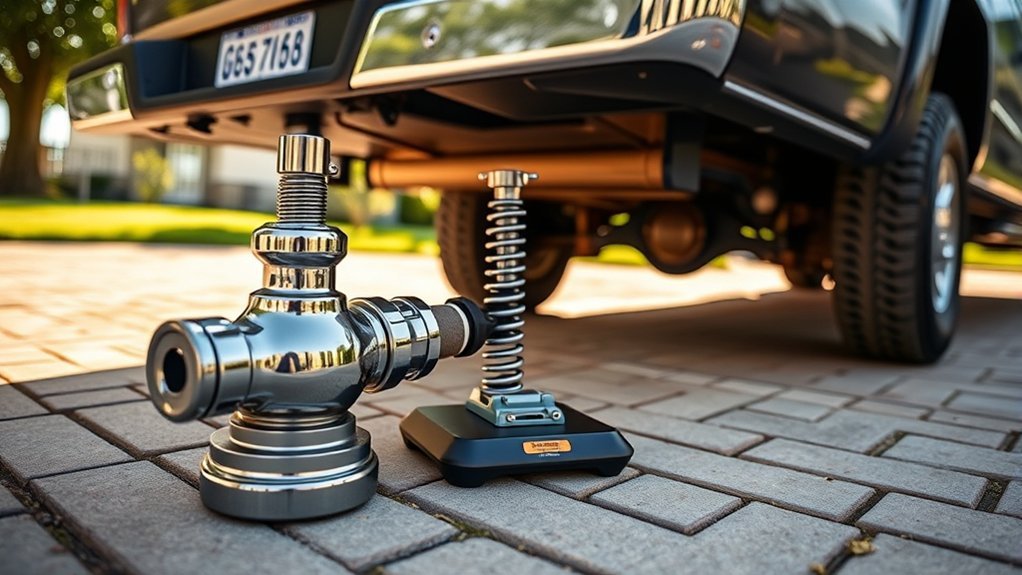
“Tongue weight” and “hitch weight” usually describe the same thing: the downward load a trailer places on the tow vehicle at the coupling point. The term that means a fixed maximum is tongue-weight rating, vertical-load rating, or maximum tongue load. Keeping the actual loaded tongue weight within the trailer maker’s recommended range—and below every vehicle and hitch-system limit—is essential for stable towing.
Last updated: September 19, 2026. Towing definitions and percentage guidance were rechecked against current Ford, Airstream, Jayco, and CURT resources.
Quick Answer
Tongue weight and hitch weight are commonly two names for the trailer’s actual downward load on the hitch. Do not confuse either term with the hitch’s maximum tongue-weight rating. For most conventional trailers, loaded tongue weight is commonly targeted at 10%–15% of loaded trailer weight, subject to the manufacturer’s instructions and all equipment limits.
Key Takeaways
- Tongue weight and hitch weight are often synonyms for the actual vertical load at a conventional trailer’s coupler.
- A tongue-weight rating is a fixed maximum for a vehicle, receiver, ball mount, hitch ball, or other component.
- Use the trailer’s fully loaded, ready-to-tow weight—not dry weight—to calculate and measure tongue weight.
- The safe setup is limited by the lowest-rated component and by the tow vehicle’s payload, GVWR, rear GAWR, and GCWR.
- Recheck tongue weight whenever cargo, water, batteries, propane, or mounted accessories change.
At a Glance
| Time Required | About 10–30 minutes after the trailer is loaded |
| Difficulty | Easy with a tongue-weight scale; moderate with a public vehicle scale |
| Tools Needed | Tongue-weight scale or public vehicle scale, wheel chocks, and a calculator |
| Cost | Varies by public-scale fee or the cost of a dedicated scale |
Tongue Weight vs Hitch Weight: Are They the Same?
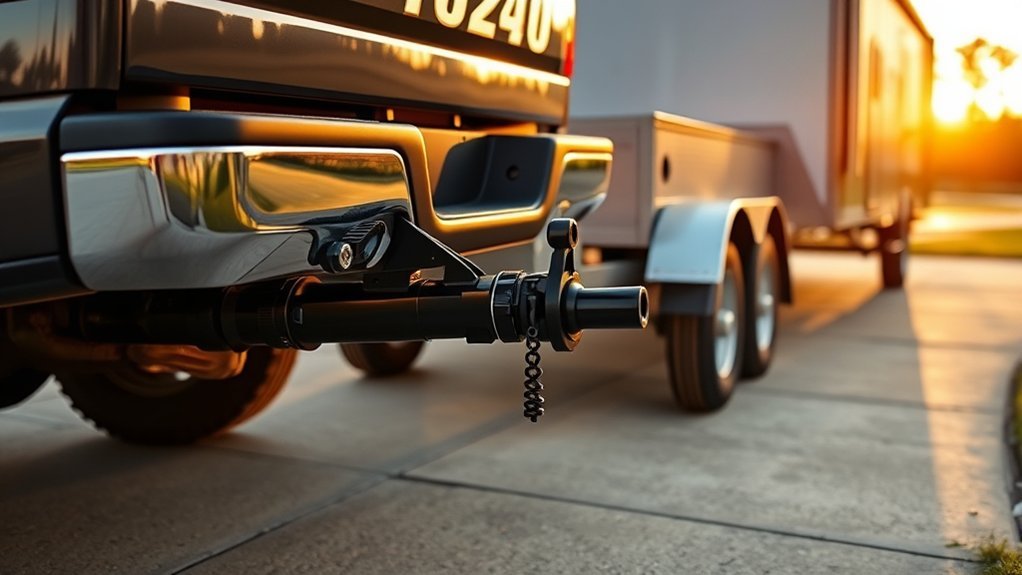
In travel-trailer and towing terminology, hitch weight is usually another name for tongue weight. Airstream states that both terms refer to the force the travel-trailer tongue exerts on the hitch ball, and Jayco likewise defines hitch weight as the portion of trailer weight carried on the hitch. The actual value changes when you add cargo, fill tanks, install batteries, or move weight forward or rearward. See Airstream’s weight-distribution guidance and Jayco’s RV weight definitions.
The fixed number is the maximum tongue-weight rating of the tow vehicle or towing hardware. A receiver hitch may have separate ratings for weight-carrying and weight-distributing configurations. The vehicle, receiver, ball mount, hitch ball, coupler, and weight-distribution system can each have different limits, so the usable capacity is never higher than the lowest applicable rating.
| Term | What it means | Does it change? |
|---|---|---|
| Tongue weight / hitch weight | Actual downward load at a conventional trailer’s coupling point | Yes—cargo and fluid placement change it |
| Published or dry hitch weight | A manufacturer’s specification for a particular unloaded configuration | The published figure is fixed, but the real loaded value changes |
| Maximum tongue-weight rating | The most vertical load a specified vehicle or component is rated to carry | No, unless the manufacturer specifies different approved configurations |
| Pin weight | The load a fifth-wheel or gooseneck trailer places on the truck | Yes—loading changes it |
Note: A published “hitch weight” is configuration-specific. Do not assume every manufacturer includes the same items or that the brochure number equals your trip-ready load. Airstream, for example, states that its published hitch weight includes batteries and propane, while cargo, water, options, and accessories can still change the actual loaded value.
What Is Tongue Weight and Why Does It Matter?
Tongue weight (TW) is the static downward force a conventional trailer’s coupler places on the hitch ball. For many conventional trailers, a common starting target is 10%–15% of the fully loaded trailer weight, also called gross trailer weight (GTW). Ford notes that the correct percentage can vary with trailer design, load distribution, and towing conditions, so the trailer and tow-vehicle manuals always take priority. Ford lists a broader 15%–25% range for fifth-wheel and gooseneck trailers. See Ford’s towing guidance.
The basic calculation for a conventional trailer is:
Loaded trailer weight × recommended percentage = target tongue-weight range
- 7,000-pound loaded conventional trailer: 700–1,050 pounds at 10%–15%.
- 3,500-pound loaded conventional trailer: 350–525 pounds at 10%–15%. A 420-pound reading is 12%, which falls inside that general range.
The percentage is only one test. The measured load must also stay below the tow vehicle’s, receiver’s, ball mount’s, hitch ball’s, and other components’ ratings while keeping the vehicle within payload, GVWR, GAWR, and GCWR limits.
Use Three Checks Before Towing
- Balance check: Confirm the measured tongue weight falls within the trailer manufacturer’s specified range for the trailer as loaded.
- Vehicle check: Confirm passengers, cargo, hitch hardware, and trailer load do not push the tow vehicle over payload, GVWR, either GAWR, or GCWR.
- Hardware check: Confirm the actual load stays below the lowest applicable rating for the receiver, ball mount, hitch ball, coupler, and weight-distribution equipment.
| Condition | Likely concern | Corrective direction |
|---|---|---|
| Too light | Greater risk of trailer sway or unstable tracking | Move suitable secured cargo forward in small steps, then reweigh |
| Within the specified range | Supports stable handling when every other rating and setup requirement is also satisfied | Confirm all ratings, tire pressures, hitch adjustment, brakes, and cargo security |
| Too heavy | Rear-axle or payload overload, rear sag, reduced front-axle loading, and poorer steering or braking response | Reduce or reposition cargo and verify the entire towing combination |
Measuring and Adjusting Tongue Weight for Optimal Safety
Measure tongue weight with the trailer configured exactly as it will travel. Include normal cargo, food, tools, batteries, propane, water you intend to carry, and any accessories mounted ahead of or behind the axles. A dry or empty measurement can be misleading because even a modest cargo change can shift the load at the coupler.
1. Prepare the Trailer
- Park on firm, level ground and chock the trailer wheels.
- Load and secure the trailer for travel, including fluids and removable equipment.
- Set the coupler near its normal towing height.
- Confirm that the scale and supporting equipment are rated above the expected load.
2. Use a Tongue-Weight Scale
- Follow the scale manufacturer’s instructions and place the scale at the coupler or approved support point.
- Slowly lower the trailer until the full tongue load rests on the scale.
- Record the reading, raise the trailer, and compare the result with the trailer maker’s recommended percentage and every applicable rating.
- After any cargo adjustment, repeat the measurement.
A purpose-built scale is the most direct option. CURT also describes approved methods using a vehicle scale and, for sufficiently light loads, a supported bathroom-scale setup. See CURT’s tongue-weight measurement guide.
3. Use a Public Vehicle Scale
- Load the tow vehicle with the people and cargo that will be present during travel.
- Weigh the tow vehicle by itself and record the total and individual axle weights.
- Connect the fully loaded trailer. For a raw tongue-load comparison, follow the hitch and scale instructions regarding weight-distribution spring bars; they are commonly disengaged for this measurement.
- Place only the tow vehicle’s axles on the scale, leaving the trailer axles off the platform, and record the tow vehicle’s new total.
- Subtract the tow vehicle-only total from the hitched tow-vehicle total. The difference is the vertical load being carried by the tow vehicle in that test configuration.
- Use additional axle-platform readings to verify the tow vehicle’s front and rear GAWR, total GVWR, payload, and weight-distribution adjustment.
Weight-distribution note: A scale reading taken with the spring bars tensioned shows the redistributed axle loads in that setup. If you are trying to isolate raw tongue load, follow the vehicle, hitch, and scale instructions for the required test configuration before comparing readings.
4. Adjust the Load and Recheck
If tongue weight is too light, move suitable cargo forward in small increments. If it is too heavy, reduce cargo or move suitable items rearward without creating a tail-heavy trailer. Keep dense items low, close to the axle area, evenly balanced side to side, and securely restrained.
A 60/40 front-to-rear loading split is often offered as a starting guideline for conventional travel trailers; Airstream recommends placing about 60% of the load ahead of the center axle and 40% behind it. It is not a universal substitute for the trailer manufacturer’s instructions or an actual scale reading. See Airstream’s loading precautions.
Warning: Never solve excessive tongue weight by merely adding a stronger receiver or weight-distribution hitch. The tow vehicle can still exceed its payload, GVWR, rear GAWR, GCWR, or manufacturer-specified maximum tongue load. If any limit is exceeded, unload or reconfigure the combination before towing.
Debunking Myths About Tongue and Hitch Weight
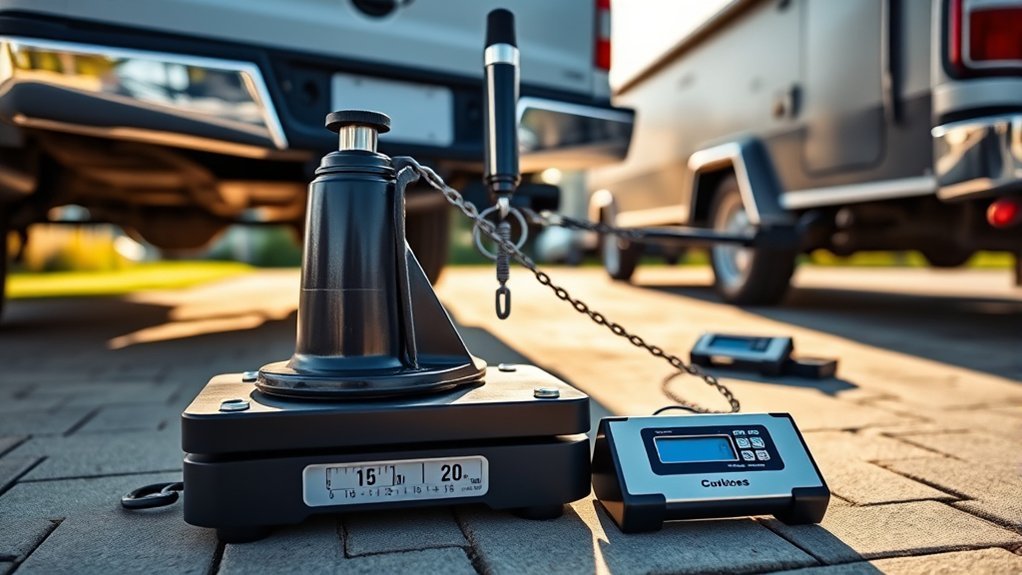
Myth 1: Tongue Weight and Hitch Weight Always Mean Different Things
Reality: In many RV brochures, owner resources, and towing discussions, the terms are interchangeable. The important distinction is between the actual load and a component’s maximum tongue-weight rating.
Myth 2: A Weight-Distribution Hitch Reduces Tongue Weight
Reality: A weight-distribution hitch redistributes some of the load among the tow vehicle’s front axle, rear axle, and the trailer axles. It does not make the trailer’s actual tongue weight disappear, and it does not authorize towing beyond vehicle or component limits. Airstream explicitly notes that weight distribution does not reduce tongue weight or increase vehicle capacity.
Myth 3: The Brochure’s Dry Hitch Weight Is the Number You Will Tow
Reality: Cargo, fresh water, propane, batteries, options, and accessories can raise or lower the actual loaded hitch weight. Measure the ready-to-tow trailer rather than relying only on a catalog specification.
Myth 4: Being Within 10%–15% Guarantees a Safe Setup
Reality: The percentage does not override any rating. A trailer can fall within the percentage range while still overloading the tow vehicle’s payload or rear axle, or exceeding the receiver, ball mount, or hitch-ball rating.
| Value | Variable or fixed? | Why |
|---|---|---|
| Actual tongue/hitch weight | Variable | Changes with cargo, fluids, accessories, and their position |
| Published dry hitch weight | Fixed specification | Describes a defined factory configuration, not every loaded trip |
| Receiver tongue-weight rating | Fixed maximum for the approved configuration | Set by the manufacturer for that part and installation |
| Available vehicle payload | Variable remaining capacity | Passengers, cargo, hitch hardware, and tongue load use it up |
Tools for Measuring Tongue Weight Effectively
Choose a method that is safely rated for the expected load and practical for your trailer:
- Dedicated tongue-weight scale: Direct and convenient for repeat checks at home.
- Public vehicle scale: Best when you also need actual trailer weight, tow-vehicle axle loads, and combined-weight checks.
- Bathroom-scale lever method: Suitable only for relatively light loads when you follow a verified setup exactly and every board, pipe, block, and scale is stable and adequately rated.
- Owner’s manuals and certification labels: Needed to confirm payload, GVWR, GAWR, GCWR, maximum trailer weight, and maximum tongue load.
- Component labels: Check the receiver, ball mount, hitch ball, coupler, and weight-distribution system rather than assuming the hitch class alone determines capacity.
Receiver classes describe broad capacity ranges, but individual hitch ratings vary by part number and vehicle application. CURT advises that towing capacity is limited by the lowest-rated component in the system. See CURT’s hitch-class and rating guide.
Pro Tip: Keep a simple weight record for each normal loading configuration. Reweigh after adding a front storage box, batteries, propane cylinders, a rear cargo rack, full water tanks, or other equipment that can shift the trailer’s balance.
Frequently Asked Questions
Are tongue weight and hitch weight the same thing?
Usually, yes. In conventional-trailer and RV specifications, both commonly mean the actual downward load the trailer places on the hitch. The separate fixed limit is the maximum tongue-weight, tongue-load, or vertical-load rating of the vehicle or component.
What is the tongue weight of a 7,000-pound trailer?
For a 7,000-pound fully loaded conventional trailer, the common 10%–15% guideline equals 700–1,050 pounds. Use the trailer manufacturer’s specified range and confirm that the measured load stays below the tow vehicle’s and every hitch component’s limits.
What happens if you exceed the maximum tongue-weight rating?
Excessive vertical load can overload the receiver, ball mount, rear axle, tires, suspension, or vehicle payload. It may also reduce load on the front axle, hurting steering and braking response. Reduce or reposition the load and verify all ratings before towing.
What is the tongue weight of a 3,500-pound trailer?
For a 3,500-pound fully loaded conventional trailer, 10%–15% equals 350–525 pounds. A 420-pound tongue weight is 12%, but it is acceptable only if it also complies with the trailer instructions and all vehicle and hitch-system ratings.
Does a weight-distribution hitch reduce tongue weight?
No. It redistributes some load among the tow vehicle and trailer axles to restore a more appropriate stance and axle loading. It does not erase tongue weight or permit the vehicle or hitch to exceed its ratings.
Does trailer tongue weight count against vehicle payload?
Yes. The portion of the trailer load carried by the tow vehicle, along with hitch hardware, passengers, and cargo, uses available payload and affects GVWR and axle loading. Verify the door-jamb label, owner’s manual, and actual scale weights.
Can I rely on the trailer’s published dry hitch weight?
Use it only as an initial planning figure. The actual ready-to-tow hitch weight can change substantially after cargo, water, propane, batteries, options, and accessories are added. Measure the loaded trailer.
Is tongue weight included in gross trailer weight?
Gross trailer weight is the total weight of the loaded trailer and its cargo. Tongue weight is the portion of that trailer load supported at the coupler by the tow vehicle. If you weigh only the trailer axles, that axle reading does not by itself include the load carried at the coupler.
How do you calculate tongue-weight percentage?
Divide measured tongue weight by the fully loaded trailer weight, then multiply by 100. For example, 420 pounds of tongue weight on a 3,500-pound loaded trailer is 12%. Compare that percentage with the trailer manufacturer’s recommendation and all vehicle and hitch-system limits.
Conclusion
Tongue weight and hitch weight are generally two names for the same actual vertical load; the fixed maximum is the tongue-weight or vertical-load rating. Before towing, pass all three checks: trailer balance, tow-vehicle limits, and hitch-hardware limits. Measure the fully loaded setup again whenever cargo, water, batteries, propane, or accessories change—because a brochure number cannot confirm the safety of the combination you are actually towing.
Sources
- Airstream: Towing Basics — current Airstream guidance on hitch/tongue weight, towing capacity, and loaded setup checks.
- Airstream: Weight Distribution Hitches 101 — defines tongue weight and hitch weight as equivalent terms and explains what weight distribution does.
- Ford Towing Guide and Calculator Resources — supports loaded-weight percentages, scale measurement, and vehicle-rating checks.
- CURT: How to Measure Tongue Weight — provides tongue-weight scale, supported bathroom-scale, and vehicle-scale methods.
- CURT: Trailer Hitch Classes and Ratings — supports component-specific ratings and the lowest-rated-component rule.
- Jayco: Understanding RV Weights — defines hitch weight as tongue weight and explains GVWR, GAWR, and loaded weighing.
- Airstream: Basic Safety Precautions — supports balanced loading, cargo security, and the 60/40 loading starting point.