
If your Toyota Tundra power window is not working, first determine whether the problem affects one window or every window. That distinction helps you narrow the fault to the window lockout, fuse or power supply, master switch, individual door switch, wiring, motor, or regulator. Because fuse layouts and reset procedures vary by model year, use your exact owner’s manual before replacing electrical parts.
Quick Answer
Check the window lockout button, ignition mode, and the correct model-year fuse first. If only one window fails, compare its individual switch with the driver’s master switch. Motor noise with no glass movement usually points to a regulator problem, while total silence may indicate a switch, wiring, motor, or power-supply fault.
Key Takeaways
- If every window stops working, check operating conditions, the lockout button, shared power supply, and model-specific fuses.
- If one window fails, test it from both the individual door switch and the driver’s master switch.
- A working motor sound with no glass movement often suggests a damaged regulator, cable, carrier, or glass attachment.
- Never install a higher-amperage fuse or repeatedly replace a fuse that continues to blow.
- Use the owner’s manual for your Tundra’s exact year because fuse assignments and initialization steps can differ.
At a Glance
| Time Required | 10–30 minutes for basic checks; longer if door-panel diagnosis is required |
| Difficulty | Easy for lockout and fuse checks; moderate to advanced for electrical or door repairs |
| Tools Needed | Owner’s manual, flashlight, fuse puller, matching replacement fuse, and an automotive multimeter for experienced users |
| Cost | Little or no cost for basic checks; parts and labor vary by the failed component |
Understanding Common Causes of Power Window Failures
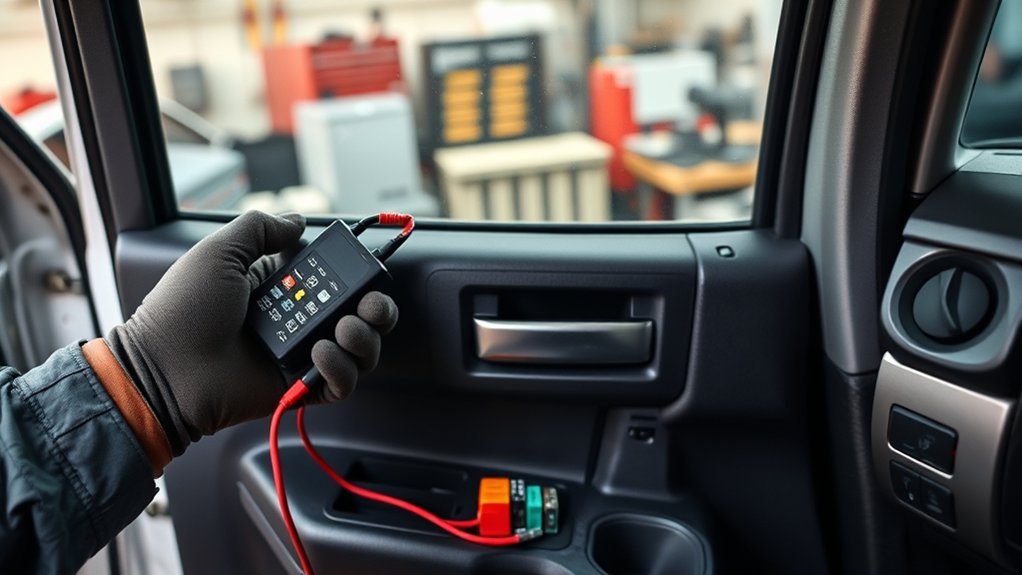
A Toyota Tundra power window can stop working because of an electrical fault, a mechanical failure, or an operating condition that prevents the system from responding. The most likely cause depends on how many windows are affected and what you hear when you press the switch.
- Window lockout activated: Passenger switches may stop responding even though the driver’s controls still work.
- Power-supply or fuse problem: Several windows may stop together if a shared circuit loses power.
- Failed individual switch: One window may work from the driver’s master switch but not from its own door switch.
- Failed master switch: Multiple control functions may become intermittent or stop responding.
- Damaged door-jamb wiring: Wires can fatigue where the harness repeatedly bends between the door and body.
- Weak or failed motor: The window may move slowly, stop at certain positions, or remain silent.
- Broken regulator or carrier: You may hear the motor running while the glass stays still, tilts, drops, or binds.
- Frozen or obstructed glass: Ice, dirt, a damaged weatherstrip, or an object in the channel can stop movement.
- Lost initialization: Automatic up/down or anti-pinch operation may stop after battery or electrical work on some models.
One failed window usually points toward that door’s switch, wiring, motor, or regulator. Several failed windows make the lockout, shared power supply, master switch, or control electronics more likely.
Step-By-Step Troubleshooting for Non-Functional Power Windows
Work through these checks in order. Stop before removing door trim or probing connectors if you do not have the correct wiring diagram and electrical-testing experience.
1. Check the Operating Conditions and Window Lockout
Place the Tundra in Park, switch the ignition to the operating mode required for the windows, and close the doors. Depending on the year, the windows may also work briefly after the ignition is turned off until a door opens.
Locate the window lockout button on the driver’s switch panel. Press it once, then test each passenger window again. The lockout is a normal safety feature, so reactivate it later when you want to restrict passenger control.
If the glass is frozen to the weatherstrip, do not keep holding the switch. Clear the ice and allow the seal to release before trying again. Repeatedly powering a stuck window can overload the motor or circuit.
2. Identify Whether One Window or All Windows Fail
Test every window from the driver’s master panel. Then test the affected window from its individual door switch.
- All windows fail: Check ignition mode, shared power, the appropriate fuse or circuit protection, the master switch, and related control electronics.
- One window fails from both switches: Suspect that door’s wiring, motor, regulator, connector, or glass mechanism.
- Window works from the master switch only: The individual door switch or its connection may be faulty.
- Window works from the door switch only: The master switch or the circuit between the master switch and that door may have a fault.
Pro Tip: Write down exactly which switches work. That simple comparison can prevent unnecessary replacement of a motor or regulator.
3. Inspect the Correct Model-Year Fuse
Do not rely on a universal fuse number or amperage. Open the fuse-box cover and check the diagram, then confirm the information in the Toyota owner’s manual for your exact Tundra year.
- Turn the ignition off and remove the key or switch the vehicle fully off.
- Identify the fuse or circuit protection associated with the power windows, doors, body electronics, or related control system.
- Use the supplied fuse puller or an insulated automotive fuse tool.
- Inspect the fuse element or test continuity with the fuse removed and the circuit de-energized.
- Replace a blown fuse only with the same type and amperage shown by Toyota.
- Test the windows once after replacement.
Warning: Never install a higher-amperage fuse. If the correct replacement blows again, stop testing. A short circuit, damaged wire, binding regulator, or overloaded motor may be present and can create heat or fire risk.
4. Try Model-Specific Window Initialization
Initialization may be needed when automatic up/down or anti-pinch operation stops after a battery disconnection, fuse removal, switch replacement, or related electrical work. It does not repair a defective motor, switch, regulator, fuse, or wire.
The exact process can vary by model year. Follow the procedure in your Tundra’s owner’s manual. A common Toyota-style procedure involves switching the ignition on, fully closing the affected window with its switch, and continuing to hold the switch in the closing direction briefly after the glass reaches the top. Some systems require a complete opening and closing cycle first.
Note: If the window does not move at all, initialization is unlikely to help. Continue with switch, wiring, motor, and regulator diagnosis.
5. Test Window Switch Functionality
Press the affected switch while listening closely. A click, brief movement, or change in interior-light brightness can indicate that the circuit is attempting to power the motor, although none of these signs proves that a specific component is good.
Inspect the switch area for spilled liquid, sticky movement, loose fit, cracks, or corrosion. Do not spray cleaner into an assembled powered switch unless the product and repair procedure specifically allow it.
An experienced technician can use the correct Toyota wiring diagram and a multimeter to check power, ground, switch output, and voltage drop. Continuity testing alone may not reveal a poor connection that fails under load.
6. Inspect Door Wiring and Connectors
Open the affected door and inspect the rubber wiring boot between the door and body. Look for cuts, pinching, previous repairs, or signs that the harness has been stretched. An internal wire can break even when the insulation looks normal.
Intermittent operation that changes when the door moves can point toward a damaged wire or loose connector. Do not pierce wires or probe control-module terminals without the correct wiring diagram and test method.
7. Check the Window Motor and Regulator
Use the sound and movement of the glass to separate electrical and mechanical symptoms:
- Motor runs but glass does not move: The regulator cable, gear, carrier, or glass attachment may have failed.
- Glass tilts or drops inside the door: A carrier, guide, or regulator may be broken.
- Grinding, popping, or scraping: Stop using the switch because the regulator or glass could suffer more damage.
- Window moves slowly in both directions: The channels may be dirty or binding, the regulator may be worn, or the motor may be weak.
- Complete silence with confirmed power and ground: The motor may have failed.
Directly powering a motor should be left to a trained technician. Terminal assignments and control methods vary, and unexpected motor movement can damage the glass or cause injury.
Common Symptoms of Power Window Problems
| Symptom | Likely Areas to Check |
|---|---|
| All windows are inoperative | Ignition mode, shared power, fuse or circuit protection, master switch, control module, or main wiring |
| Passenger switches do not work | Window lockout, master switch, or communication and wiring between doors |
| One window fails from both switches | Door wiring, connector, motor, regulator, or glass mechanism |
| Motor sound but no glass movement | Regulator, cable, gear, carrier, or glass attachment |
| Slow or uneven movement | Dirty or damaged channels, binding glass, worn regulator, weak motor, or low voltage |
| Works only when the door moves | Broken or intermittent wiring near the door hinge |
| Auto up/down stops but manual movement works | Lost initialization, obstruction detection, or a model-specific control issue |
Window Not Responding
A silent window does not automatically mean the motor has failed. First compare both available switches, check the lockout, and confirm the correct fuse. If the other windows operate normally, focus on the affected door’s switch, connector, wiring, motor, and regulator.
If all windows stop together, a shared power or control problem is more likely than several motors failing at the same time.
Intermittent Functionality Issues
A window that works only sometimes may have worn switch contacts, a loose connector, damaged door-jamb wiring, a motor with an internal dead spot, or a regulator that binds at certain positions.
Moisture and freezing weather can expose an existing weakness. However, normal rain alone should not make a properly sealed electrical system stop working. Water inside the switch or door connector should be treated as a leak or drainage problem, not simply a weather inconvenience.
How Fuses Affect Power Window Performance
A fuse protects wiring and electrical components when current rises beyond the circuit’s intended limit. It does not cause a fault by itself. A blown fuse is evidence that an overload or short may have occurred.
Tundra fuse assignments vary by generation, model year, cab configuration, and equipment. Do not assume that a fuse rating from another Tundra applies to yours. Confirm the label and rating through the fuse-box diagram and model-specific owner’s manual.
- Replace a fuse only with the same type and amperage.
- Do not wrap a fuse in foil or bypass it with wire.
- Do not repeatedly install replacement fuses to see whether they keep blowing.
- Check for pinched wiring, water intrusion, a binding regulator, or a stalled motor when a fuse fails again.
- Seek professional diagnosis when the fuse is difficult to identify or the circuit involves a body or door control module.
Signs Your Power Window Switch Needs Replacement
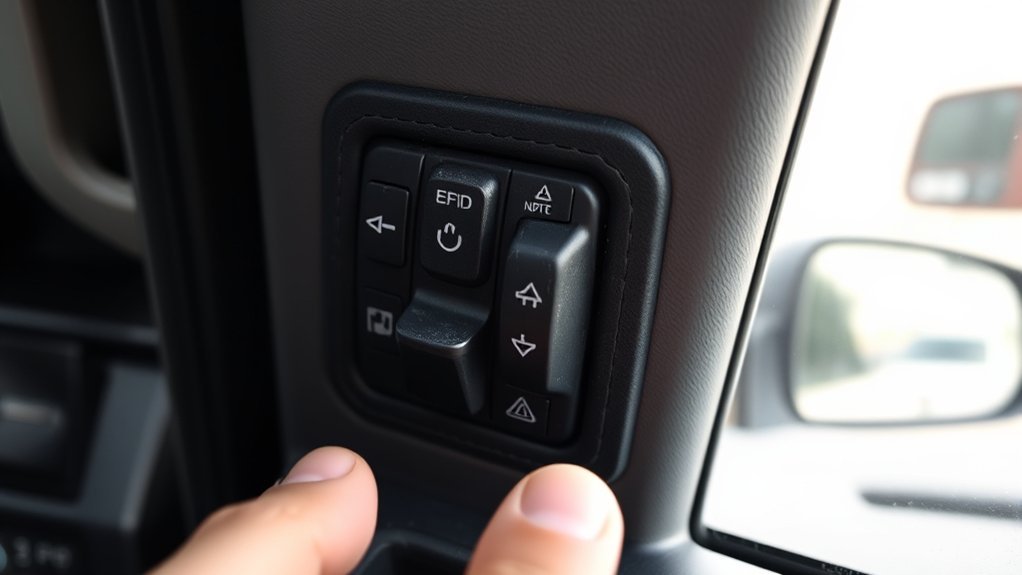
A switch becomes a stronger suspect when the window works from one control location but not another. Physical damage, liquid contamination, inconsistent response, or a switch that must be pressed at a certain angle also supports that diagnosis.
| Sign | What It May Mean |
|---|---|
| Works from the master switch only | The individual door switch or its connector may be faulty. |
| Works from the individual switch only | The master switch or related circuit may have a fault. |
| Intermittent response when pressed | Contacts may be worn, contaminated, or loose. |
| Cracked, sticky, or loose switch | Physical damage may prevent reliable operation. |
| Several functions on the master panel fail | The master switch, its power supply, connector, or control circuit needs diagnosis. |
Do not replace the switch based only on a lack of movement. A broken wire, failed motor, damaged regulator, poor ground, or missing power can produce the same symptom.
Check Your Window Motor and Regulator Functionality
The motor creates movement, while the regulator guides and supports the glass. A failure in either part can leave the window stuck.
A regulator problem is likely when you hear the motor but the glass does not move normally. You may also notice tilted glass, popping sounds, cable noise, uneven travel, or glass that falls into the door.
A motor problem becomes more likely when the switch, fuse, wiring, power, and ground test correctly but the motor remains silent or stalls. The final diagnosis may require checking voltage under load with the correct factory wiring information.
Warning: Do not remove the regulator or place your hands inside the door unless the glass is securely supported. Loose glass can fall suddenly, and the regulator mechanism can pinch fingers.
Top Tips to Keep Your Power Windows Working
| Maintenance Tip | Why It Helps | When to Do It |
|---|---|---|
| Keep window channels clean | Dirt and sticky residue can increase drag on the glass. | During normal vehicle cleaning |
| Clear ice before operating | A frozen seal can stall the motor or stress the regulator. | During freezing weather |
| Avoid holding the switch after travel stops | Unnecessary operation can add heat and load. | During normal use |
| Address slow or noisy movement early | Binding can place extra stress on the motor and regulator. | As soon as symptoms appear |
| Protect the switch panel from liquid | Spills can contaminate contacts and connectors. | At all times |
| Use correct-fit replacement parts | Correct connectors, travel, mounting points, and control compatibility reduce installation problems. | When replacement is necessary |
Fuses do not need routine monthly removal. Inspect them when diagnosing a fault or when Toyota’s maintenance or repair information directs you to do so.
Seeking Professional Help: When DIY Solutions Aren’t Enough
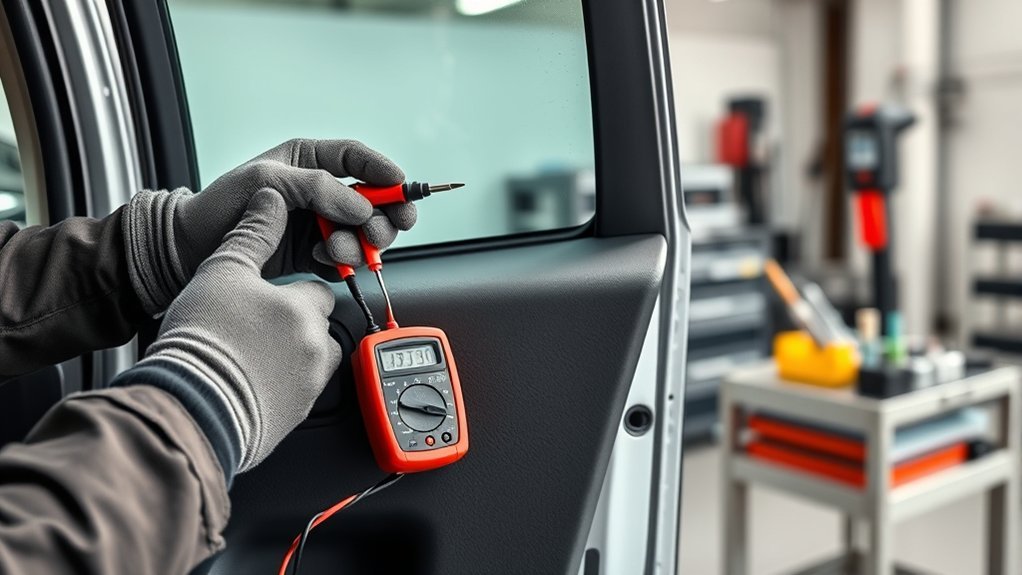
Basic lockout, operating-condition, and fuse checks are reasonable for many owners. More advanced testing may require factory wiring diagrams, trim-removal procedures, connector pin information, scan-tool data, and load testing.
Stop DIY troubleshooting and arrange professional service when:
- The correct replacement fuse blows again.
- You notice smoke, heat, melting, a burning odor, or unexpected sparks.
- The glass is tilted, loose, unsupported, or dropping inside the door.
- The regulator produces grinding, snapping, or cable noises.
- Several door functions fail together.
- Water has entered a switch, connector, or control module.
- The problem requires connector-level testing without a factory wiring diagram.
- You cannot identify the correct fuse or initialization procedure for the model year.
Toyota’s Technical Information System contains factory repair manuals, wiring diagrams, service bulletins, and diagnostic information. A Toyota dealer or qualified independent repair shop can also check the vehicle for stored body-system faults.
Before paying for a repair, enter the VIN in the Toyota recall and service-campaign lookup and the NHTSA recall database. A recall or active campaign may provide inspection or repair instructions for an affected vehicle.
Frequently Asked Questions
What would cause Toyota Tundra power windows to stop working?
Possible causes include the window lockout, an incorrect ignition mode, a blown fuse, loss of shared power, a failed master or individual switch, damaged door wiring, a faulty motor, a broken regulator, frozen glass, or lost window initialization. The number of affected windows helps narrow the cause.
How do you reset a Toyota Tundra power window?
Use the initialization procedure in the owner’s manual for your exact model year. Many Toyota procedures involve fully closing the window and continuing to hold the switch in the closing direction briefly, while some require a complete opening and closing cycle. A reset will not repair a failed fuse, switch, wire, motor, or regulator.
Does each Toyota Tundra power window have its own fuse?
Not necessarily. Fuse and circuit design varies by Tundra model year. Several windows may share power feeds, circuit protection, relays, or control electronics. Check the fuse-box cover and the model-specific owner’s manual instead of assuming that every window has a separate fuse.
Why can I hear the window motor but the glass does not move?
The regulator, cable, gear, carrier, guide, or glass attachment may have failed. Stop operating the switch if the glass tilts, drops, grinds, or binds because continued use can cause more damage.
Why does the driver’s window work when the other windows do not?
First check the window lockout button. If the lockout is off, possible causes include the master switch, shared passenger-window power, wiring, control electronics, or more than one door fault. Do not assume that the driver’s window always has a completely separate fuse without checking the year-specific diagram.
Conclusion
Start Toyota Tundra power-window troubleshooting with the simplest checks: confirm the ignition mode, test the lockout button, and determine whether one window or every window is affected. Then verify the correct model-year fuse and compare the individual switch with the driver’s master switch.
Motor noise without normal glass movement usually points toward the regulator or glass mechanism. Silence can indicate a switch, wiring, power, ground, or motor fault. Stop testing if a fuse blows again, the glass becomes loose, or you notice heat, smoke, sparks, or a burning odor. Those symptoms require proper electrical or mechanical diagnosis.
Sources
- Toyota Manuals and Warranties — model-specific owner’s manuals, operating instructions, and fuse information.
- Toyota Technical Information System — factory repair manuals, wiring diagrams, service bulletins, and diagnostic resources.
- Toyota Safety Recall and Service Campaign Lookup — VIN and license-plate campaign lookup for eligible Toyota vehicles.
- National Highway Traffic Safety Administration Recall Lookup — federal VIN-based vehicle recall information.
