To replace Toyota Tundra wiper blades, first confirm the correct blade lengths and connector for your truck’s exact model year. Common current U.S. aftermarket catalogs list 19/19-inch front blades for 2000–2006 models, 26/22 inches for 2007–2021 models, and 24/24 inches for 2022–2026 models, but fitment databases and adapter terminology can differ. Verify the fit before buying, protect the windshield from the spring-loaded arms, and follow the adapter instructions supplied with your new blades.
Last updated: September 11, 2026
Quick Answer
First verify the blade lengths and connector for your Tundra’s exact model year. Common current U.S. aftermarket-catalog fitments are 19/19 inches for 2000–2006, 26/22 inches for 2007–2021, and 24/24 inches for 2022–2026. Confirm your vehicle before purchasing. Then park, switch the truck off, protect the glass with a towel, lift one arm, release the old blade, and lock the matching new blade in place. Lower the arm gently, wet the windshield, and test for smooth, streak-free operation.
Key Takeaways
- Toyota Tundra wiper blade sizes vary by model year, so do not rely on one universal size.
- Match the model year, driver/passenger blade length, and wiper-arm connector before opening the package.
- Treat size charts as a shopping starting point when databases disagree; confirm the exact vehicle in a current fitment selector.
- Place a folded towel on the windshield and never let a bare metal arm snap against the glass.
- Test new blades on a wet windshield and correct any skipping, streaking, interference, or looseness before driving.
At a Glance
| Time Required | About 10–20 minutes |
| Difficulty | Easy for most owners |
| Tools Needed | Correct replacement blades, folded towel, clean cloth, and an optional small flat screwdriver if the blade instructions require one |
| Cost | The cost of two replacement blades; the amount varies by blade type, brand, and region |
What Size Wiper Blades Does a Toyota Tundra Use?
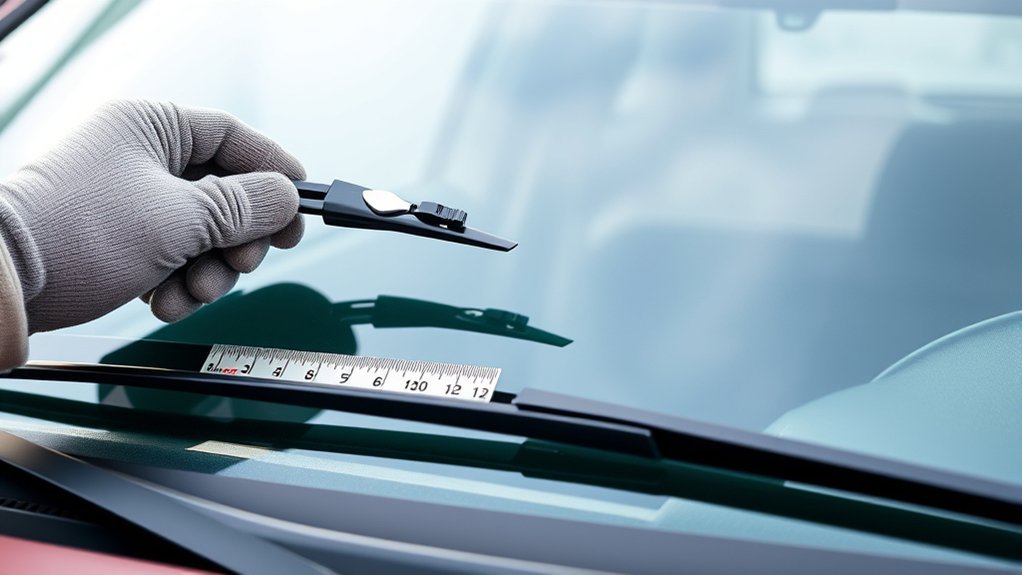
Toyota Tundra wiper blade sizes are not the same for every year. Current U.S. aftermarket parts catalogs commonly list the front-blade combinations below. Because fitment databases can differ for some legacy vehicles and aftermarket products may use proprietary adapters, treat the chart as a starting point rather than a universal Toyota specification. Confirm your exact model year or VIN through Toyota parts information, the blade packaging, or the manufacturer’s current vehicle selector before buying.
| Tundra Model Years | Driver Side | Passenger Side |
|---|---|---|
| 2000–2006 | Commonly 19 inches | Commonly 19 inches |
| 2007–2021 | Commonly 26 inches | Commonly 22 inches |
| 2022–2026 | Commonly 24 inches | Commonly 24 inches |
Fitment check: Confirm three things before opening the package: your exact model year or VIN, the driver/passenger blade lengths, and the physical arm-to-blade connector. If two catalogs disagree, do not guess from length alone. Check a second current vehicle selector or Toyota parts information and compare the connector on the truck. A useful starting point is the Rain-X blade-size finder.
Blade length is only one part of fitment. The connector on the blade must also match the arm on your truck. Connector terminology can vary between blade makers because universal products use different proprietary adapters. A universal blade may include several adapters, while a direct-fit blade may arrive with the required connector already installed.
Use the old blade as a useful comparison for length and orientation, but do not rely on it as the only fitment authority. If a previous replacement was incorrect, copying it can repeat the same problem. The current vehicle-fit listing and physical connector should agree before installation.
Replacing both front blades together is not mechanically required, but it is often practical when the blades are the same age. A matched pair usually provides more consistent clearing during rain or snow.
A correct wiper fit requires the right model year, blade length, and arm connector. Matching only the length is not enough.
What Tools Do You Need to Replace Toyota Tundra Wiper Blades?
Most Toyota Tundra wiper blade replacements require few or no hand tools. Gather everything before lifting the arms so you do not leave a spring-loaded arm unattended.
| Item | Purpose |
|---|---|
| Correct replacement blades | Match the model year, lengths, and arm connectors |
| Folded towel | Protect the windshield if an arm slips |
| Clean microfiber cloth | Clean the windshield and blade-contact area |
| Small flat screwdriver | Optional; use only if the blade instructions call for it |
| Flashlight | Helpful when the connector release is difficult to see |
Park on a level surface with enough light to see the release mechanism. Set the parking brake, switch the ignition off, and make sure the wiper control is in the off position.
What Should You Check Before Replacing Tundra Wipers?
- Compare the new blades with the old ones. Confirm the lengths, connector shapes, and labeled driver or passenger positions before removing anything.
- Confirm the current vehicle fitment. Make sure the package or manufacturer selector explicitly lists your exact Tundra model year before relying on the old blade as a reference.
- Read the supplied instructions. Adapter orientation and release methods vary among conventional, beam, hybrid, and direct-fit blades.
- Check hood clearance. If a wiper arm approaches or contacts the hood when you try to lift it, stop. Use the safe lifting or service-position procedure in your model-year owner’s manual.
- Place a folded towel on the glass. Position it under the arm you are working on.
- Replace one blade at a time. The installed blade on the opposite side provides a useful orientation reference.
Warning: Wiper arms are spring-loaded. Never release a raised arm or place a bare metal arm directly against the windshield. If it snaps down, it may chip or crack the glass.
Toyota also advises checking the owner’s manual before lifting arms that park below the hood. The company’s general wiper blade replacement guide warns that lifting a retracted arm when it cannot safely clear the hood can damage the wiper or hood.
How Do You Remove Old Toyota Tundra Wiper Blades?
Lift the first wiper arm only as far as the truck’s design safely allows. Hold the arm securely while you inspect the connection between the blade and arm.
- Rotate the blade away from the arm if the connector design allows it.
- Locate the release. It may be a tab, push button, latch, or cover depending on the model year, arm, and replacement-blade design.
- Press or lift the release according to the blade manufacturer’s instructions.
- Slide or rotate the old blade out of the connector without twisting the arm.
- Keep control of the metal arm after the blade separates.
Do not force a release that will not move. Recheck the connector diagram and confirm that you are pressing the correct tab. Excessive prying can crack a plastic adapter or bend the arm.
Pro Tip: Before discarding the first old blade, place it beside the replacement. Compare the total length, connector position, curve, and adapter orientation, then confirm that the new blade is also listed for your exact Tundra year.
How Do You Prepare New Wiper Blades for Installation?

Open the replacement package carefully and keep its instructions nearby. Universal blades may include several adapter pieces, while direct-fit blades may need no adapter change.
Identify the Correct Adapter Type
Compare the original connector with the diagrams supplied with the new blade. Select only the adapter identified for your arm style. Do not assume the adapter installed on the blade is correct simply because the blade length matches.
Manufacturer installation pages, including the Rain-X installation-instruction library, show how different connectors release and lock.
Ensure Proper Orientation
Position the blade so its wiping edge will face the windshield and its aerodynamic spoiler, when present, follows the direction shown in the instructions. An adapter installed backward may appear to engage while preventing the blade from sitting correctly.
Keep any protective cover on a silicone-treated or coated blade until the manufacturer tells you to remove it.
Align the Wiper Blade and Connector
Guide the arm into or through the adapter without forcing it. Depending on the product, you may need to slide the blade, rotate it into place, close a cover, or press a button until the connector locks.
Look at the blade from both sides before applying final pressure. Misalignment can damage a small plastic latch and prevent the blade from locking securely.
How Do You Attach the New Wiper Blade?
- Hold the raised wiper arm firmly with one hand.
- Position the new blade and adapter as shown in its instructions.
- Slide, rotate, or press the connector into place.
- Continue until the latch closes or you feel the connector lock.
- Perform a gentle pull test in the direction opposite installation.
An audible click is common, but not every connector produces a loud sound. A closed latch, flush adapter cover, and successful pull test are better confirmation than sound alone.
Once the blade is secure, remove the towel only after you have lowered the arm slowly onto the windshield. Repeat the same process on the other side.
How Do You Confirm the Wiper Blade Is Secure?
Inspect each installed blade before operating the wipers. The adapter should sit squarely on the arm without a raised cover, exposed release tab, or visible gap.
- Gently tug each blade to confirm it cannot slide off the arm.
- Check that the blade pivots naturally at its connector.
- Confirm that the rubber edge sits against the glass along its full length.
- Make sure the driver and passenger blades do not touch each other while parked.
- Remove all packaging, protective strips, and transport clips.
If the connector feels loose, remove the blade and inspect the adapter rather than adding tape, bending a tab, trimming plastic, or forcing the latch. A replacement blade should fit securely without modification.
How Do You Test New Toyota Tundra Wiper Blades?
After both arms are lowered, clean loose dirt from the windshield. Wet the glass with washer fluid before evaluating the new blades under normal operating conditions.
Confirm Wiper Blade Movement
Operate the wipers at low speed and watch at least two complete cycles. Each blade should travel smoothly without striking the windshield trim, hood, opposite blade, or edge of the glass.
- Confirm that the blades complete their full sweep.
- Watch for lifting, hesitation, or sudden jumps.
- Make sure the blades return to their normal parked position.
Stop the system immediately if the blades collide or move beyond the intended wiping area. Recheck the blade lengths, orientation, and connector fit.
Check for Streaking Issues
A new blade should leave a clear path across a clean, wet windshield. If streaks remain, clean the glass and wipe the rubber edge with a damp, clean cloth before assuming the blade is defective.
Persistent streaking may indicate:
- A protective strip was not removed
- The adapter is not fully seated
- The blade is twisted or installed backward
- The rubber edge is contaminated or damaged
- The windshield has wax, oil, sap, or another film on it
- The wiper arm is bent or no longer applies even pressure
Listen for Unusual Noises
Some noise can come from a dirty or nearly dry windshield, but repeated squeaking, chattering, grinding, or rattling requires inspection.
- Squeaking: Clean the windshield and blade edge, then retest on wet glass.
- Chattering: Check for film on the glass, a twisted blade, or uneven arm pressure.
- Rattling: Stop the wipers and verify that the adapter is locked.
- Grinding: Stop immediately and check for exposed metal, a damaged blade, or contact with the trim.
Common Mistakes to Avoid When Replacing Wiper Blades
- Buying by length alone: The connector must also fit the Tundra’s arm.
- Treating one size chart as an OEM specification: Current aftermarket catalogs can disagree, especially for older model years. Confirm your exact vehicle before buying.
- Using one size for every model year: Tundra blade lengths changed between generations.
- Copying an old blade without checking fitment: The previously installed blade may not be the correct original size or adapter.
- Forcing an arm past the hood: Check the manual if the parked arm does not lift freely.
- Letting a bare arm touch the windshield: Keep a towel on the glass and maintain control of the arm.
- Using the wrong adapter: Compare the original connector with the supplied diagrams.
- Assuming every blade clicks loudly: Inspect the latch and perform a gentle pull test.
- Dry-testing dirty glass: Clean and wet the windshield before judging wiping quality.
- Ignoring blade interference: Stop immediately if a blade contacts trim or the other blade.
- Discarding the instructions too early: Keep them until both blades pass the final test.
How Do You Troubleshoot Problems After Installing New Wipers?
| Problem | Likely Cause | What to Do |
|---|---|---|
| Blade will not lock | Wrong adapter, backward adapter, or incomplete alignment | Remove it, compare the arm with the instruction diagram, and reinstall without forcing it |
| Blade hits trim or another blade | Incorrect length or installation position | Stop operating the wipers and verify the model-year fitment |
| Blade leaves an unwiped area | Poor glass contact, contamination, damaged blade, or weak arm pressure | Clean the glass and blade, inspect the adapter, and examine the arm |
| Blade chatters when new | Dry glass, windshield film, twisted rubber, or incorrect orientation | Clean and wet the glass, then check orientation and seating |
| Blade lifts at road speed | Wrong blade design, reversed spoiler, loose adapter, or arm problem | Recheck orientation and fit; seek professional inspection if the arm appears damaged |
If the correct blade remains loose, collides with surrounding parts, or cannot maintain contact with the windshield, do not modify the connector. Exchange it for a verified direct-fit product or ask a Toyota dealer or qualified technician to inspect the arm.
If the blades are correctly installed but the arms do not move, move slowly, stop in the wrong position, or fail on one or more settings, the problem may be in the wiper system rather than the replacement blades. Use the separate guide to Toyota Tundra windshield wipers not working for system-level troubleshooting.
How Do You Know When Tundra Wiper Blades Need Replacement?
Inspect your wiper blades regularly and before a season with heavy rain, snow, or road salt. Toyota notes that wiper blades commonly last about 6–12 months, but this is not a fixed replacement interval. Sunlight, ice, dirt, mileage, storage, blade quality, and local weather can shorten or extend their useful life. Replace them when visibility declines or physical damage appears.
Toyota’s maintenance guidance says the blades should be free from cracking, splitting, wear, contamination, and deformation. They should also clear the glass without streaking or skipping. You can review this guidance in Toyota’s 2024 Tundra Warranty and Maintenance Guide.
Visible Wear and Tear
Replace a blade when you find physical damage that cleaning cannot correct. Common warning signs include:
- Cracks, splits, cuts, or missing pieces in the rubber
- A hardened, rounded, or uneven wiping edge
- A bent frame or damaged beam
- Separation between the rubber and blade structure
- A broken or loose adapter
- Permanent deformation after ice or snow buildup
Do not use a blade with exposed metal because it can scratch the windshield.
Streaks on the Windshield
Streaking does not always mean the blade must be replaced immediately. First clean the windshield and wipe the rubber edge with water and a clean cloth. Wax, road film, washer-fluid residue, and dirt can imitate blade wear.
Replace the blade if streaking, skipping, smearing, or missed areas continue after cleaning and confirming the installation.
How Should You Choose Replacement Wiper Blades?
Genuine Toyota blades and reputable aftermarket blades can both provide good results when they are correctly matched to the truck. Fit and installation quality matter more than a broad claim that one category always outperforms the other.
When comparing replacements, consider:
- Verified vehicle fit: The product catalog should identify your exact Tundra model year.
- Connector compatibility: Direct-fit connectors can reduce adapter guesswork.
- Blade construction: Conventional, beam, and hybrid designs respond differently to snow, wind, and windshield curvature.
- Rubber material: Natural rubber, coated rubber, and silicone products may differ in noise, weather resistance, and price.
- Climate suitability: A covered winter blade or beam design can reduce exposed joints where ice commonly collects.
- Warranty and instructions: Clear fitment support and installation diagrams are useful if the connector does not lock as expected.
A premium price does not guarantee better wiping on every truck. Choose a blade that is explicitly listed for your vehicle, locks onto the arm without modification, maintains even glass contact, and performs well in your local weather.
Related Guides
Frequently Asked Questions
What size wiper blades does a Toyota Tundra use?
Common current U.S. aftermarket-catalog fitments are 19/19 inches for 2000–2006 models, 26/22 inches for 2007–2021 models, and 24/24 inches for 2022–2026 models. Because fitment databases and adapter systems can differ, confirm your exact model year or VIN and connector with the blade manufacturer’s current vehicle selector before purchasing.
How do you change Toyota Tundra windshield wipers?
Switch the truck and wipers off, protect the windshield with a folded towel, lift one arm safely, release the old blade, and attach the correct new blade according to its connector instructions. Confirm the lock with a gentle pull, lower the arm slowly, and test the blades on a wet windshield.
Can I use a 24-inch blade instead of a 22-inch blade?
Use a different length only when a current fitment catalog approves it for your exact Tundra. An oversized blade may hit the trim or opposite blade, while an undersized blade can reduce the cleared area. Do not change sizes based only on available shelf stock.
What size wiper blades go on a 2018 Toyota Tundra?
Current U.S. aftermarket catalogs commonly list a 2018 Toyota Tundra with a 26-inch driver-side blade and a 22-inch passenger-side blade. Verify the connector and vehicle fit through the blade manufacturer or parts seller before opening the package.
Do Toyota Tundra wipers need to be placed in a service position?
Not every model year uses the same lifting procedure. If an arm cannot be raised without approaching the hood, do not force it. Check the owner’s manual for your exact model year and follow its safe wiper-arm or service-position instructions.
Should both Tundra wiper blades be replaced together?
You can replace one damaged blade, but replacing both is sensible when they are the same age or show similar wear. A matched pair usually produces more consistent clearing and reduces the chance that the second old blade will need replacement soon afterward.
How often should Toyota Tundra wiper blades be replaced?
Toyota says windshield wiper blades commonly last about 6–12 months, but that is not a fixed rule. Replace them sooner if visibility declines or you find cracking, splitting, deformation, persistent streaking, skipping, or other physical damage.
Why do new Tundra wiper blades still streak or chatter?
First clean and wet the windshield and wipe the blade edges with a clean damp cloth. Then confirm that protective strips were removed, each adapter is fully locked, the blades are correctly oriented, and the rubber is not twisted or damaged. Continued problems may indicate glass contamination or uneven pressure from the wiper arm.
Conclusion
A successful Toyota Tundra wiper blade replacement starts with verified fitment. Use the model year or VIN, driver and passenger blade lengths, and physical arm connector together rather than trusting blade length alone. Protect the windshield, keep control of each spring-loaded arm, follow the new blade’s adapter instructions, and confirm every latch before lowering the arms.
Finish by cleaning and wetting the windshield, then watch and listen through several full wiping cycles. Properly installed blades should remain secure, sweep without interference, and clear the glass without persistent streaking, skipping, or chatter. If the blades fit correctly but the wiper system itself does not operate normally, diagnose the wiper mechanism or electrical system separately.
Sources
- Toyota: How to Change Windshield Wiper Blades — supports typical blade life, connector guidance, ignition precautions, arm lifting, hood clearance, removal, attachment, and testing.
- Toyota 2024 Tundra Warranty and Maintenance Guide — supports inspection for cracking, splitting, wear, contamination, deformation, streaking, and skipping.
- Rain-X Blade Size Finder — current manufacturer vehicle-fitment lookup.
- Rain-X Wiper Installation Instructions — supports product-specific connector and adapter installation guidance.
- 2000 Toyota Tundra Wiper Fitment — supports the commonly listed 19/19-inch early-generation fitment.
- 2006 Toyota Tundra Wiper Fitment Catalog — supports current 19-inch fitment listings.
- 2007 Toyota Tundra Wiper Fitment — supports the commonly listed 26/22-inch fitment.
- 2013 Toyota Tundra Wiper Fitment Catalog — supports current 26/22-inch vehicle-specific listings.
- 2014 Toyota Tundra Wiper Fitment Catalog — supports current 26/22-inch vehicle-specific listings.
- 2018 Toyota Tundra Wiper Fitment — supports the commonly listed 26/22-inch fitment.
- 2021 Toyota Tundra Wiper Fitment — supports the commonly listed 26/22-inch fitment.
- 2026 Toyota Tundra Wiper Fitment Catalog — supports current 24-inch vehicle-specific listings.