Disclosure: As an Amazon Associate, we earn from qualifying purchases. If you click a link on this page and make a purchase, we may receive a small commission at no extra cost to you.
A strong mesh WiFi system matters when dead zones, slow video calls, and crowded smart-home networks start to affect your daily routine. The TP-Link Deco XE75 AXE5400 Tri-Band WiFi 6E Mesh System is built for larger homes and busy households that need wider coverage, support for many connected devices, and easier network management through one app. Its biggest strengths are the 6 GHz WiFi 6E band, three-unit coverage, and AI-driven mesh optimization. The main tradeoff is that it costs more than a basic router and depends heavily on app-based setup and control.
Quick Verdict
Rating: Recommended with caveats
Best For: Larger homes, small offices, smart-home users, and households with many connected devices.
Bottom Line: The Deco XE75 is a strong choice if you want wide mesh coverage, WiFi 6E support, and simple app control. It may be more system than you need if you live in a small apartment or only use a few basic devices.
| Specification | Detail |
|---|---|
| Brand | TP-Link |
| Model | Deco XE75 AXE5400 |
| Product Type | Tri-band WiFi 6E mesh system |
| System Design | Three-unit mesh setup |
| Coverage | Up to 7,200 square feet, as stated in the article |
| Supported Devices | Up to 200 devices, as stated in the article |
| Wireless Bands | Tri-band setup with 6 GHz WiFi 6E band support |
| Combined Speed Class | AXE5400, up to 5,400 Mbps combined speed class |
| App Control | Deco app for setup and network management |
| Voice Assistant Support | Alexa compatibility, as stated in the article |
| Backhaul Support | Supports wired backhaul connections, as stated in the FAQ |
| Best Use | Large homes, small offices, device-heavy households, and areas with WiFi dead zones |
Overview
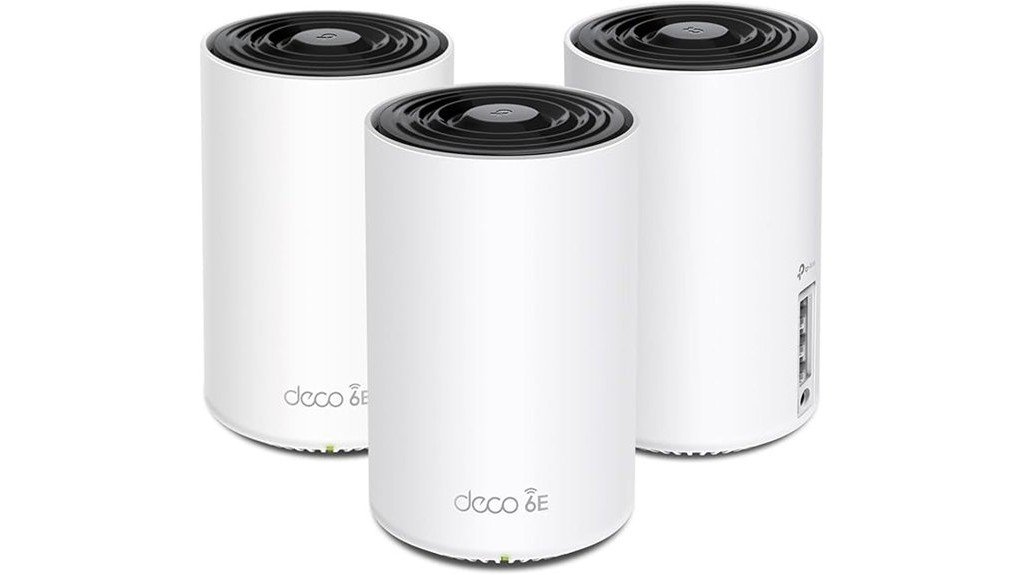
The TP-Link Deco XE75 AXE5400 Tri-Band WiFi 6E Mesh System is designed to replace a traditional router and range extender setup with a three-unit mesh network. Instead of relying on one central router, the system spreads WiFi coverage through several Deco units placed around your home or small office.
The article-supported coverage claim is up to 7,200 square feet, which makes this system more useful for larger homes, multi-floor layouts, and spaces where one router struggles to reach back bedrooms, garages, upstairs rooms, or home offices. It also supports up to 200 devices, so it fits homes with laptops, phones, tablets, smart TVs, security cameras, smart speakers, and connected appliances.
The main upgrade over older mesh systems is the addition of WiFi 6E. The 6 GHz band can reduce interference and help the mesh nodes maintain a cleaner connection, especially in homes where the 2.4 GHz and 5 GHz bands are already crowded.
Before You Buy: The Deco XE75 makes the most sense when you need wide coverage or support for many connected devices. If you only need WiFi for a small apartment or a few basic devices, a simpler router may be enough.
What Is the TP-Link Deco XE75?
The TP-Link Deco XE75 is a WiFi 6E mesh networking system in the AXE5400 speed class. The article describes it as a true tri-band system with combined speeds up to 5,400 Mbps and support for the newer 6 GHz band.
It is made for people who want fewer dead zones, easier whole-home coverage, and simpler network control from one app. Instead of managing a separate router and extender, you use the Deco app to set up the mesh system, manage connected devices, and adjust network settings.
This system is also a practical option for small offices, remote workers, online classes, streaming rooms, and smart homes. Its value comes from coverage, device capacity, and mesh stability rather than just raw speed.
Who Should Buy It?
Best For
- Homes with dead zones where one router does not provide stable coverage.
- Families with many phones, laptops, TVs, gaming devices, and smart-home products.
- Users who want a mesh system with WiFi 6E and a 6 GHz band.
Skip If
- You live in a small space where a single router already covers every room well.
- You prefer advanced router settings without relying on an app-based interface.
- You do not have WiFi 6E devices and do not need a premium mesh system yet.
Detailed Features
The Deco XE75 focuses on three key areas: wider mesh coverage, higher device capacity, and cleaner wireless performance through WiFi 6E. Its true tri-band configuration gives the system more flexibility than a basic dual-band router, especially when several users are streaming, gaming, working, or browsing at the same time.
The 6 GHz band is one of the most important features. It helps reduce congestion from older wireless devices and crowded nearby networks. This can improve node-to-node communication and make the mesh network feel more stable in busy homes.
The system also uses AI-driven mesh technology to adapt to network conditions and device behavior. In practical terms, that means your devices can connect through the Deco unit that gives them the best available signal instead of staying tied to a weak connection.
The Deco app keeps setup and daily control simple. You can use it to install the system, view connected devices, manage settings, and use available parental control features. Alexa compatibility adds another control option if your home already uses voice commands.
Coverage and Mesh Performance
Coverage is one of the strongest reasons to consider the Deco XE75. The three-unit setup is designed to cover up to 7,200 square feet, which gives you more placement flexibility than a single router. This is useful in long homes, two-story houses, and spaces with thick walls or router placement problems.
Mesh performance also depends on where you place each Deco unit. The best results usually come when the units are close enough to communicate with each other but spread far enough to cover weak areas. If you place one unit too far away, it may still show coverage but deliver weaker speeds.
WiFi 6E and the 6 GHz Band
The Deco XE75 uses WiFi 6E technology, which adds access to the 6 GHz band. That band is helpful because it gives compatible devices and mesh nodes more room to operate with less interference from older WiFi equipment.
This matters most in homes with many connected devices or nearby networks. Apartments, townhomes, and dense neighborhoods often have crowded 2.4 GHz and 5 GHz bands. The 6 GHz band can help reduce that congestion, although your final speed still depends on your internet plan, device compatibility, and placement.
Device Capacity and Smart-Home Use
The article states that the Deco XE75 supports up to 200 devices. That makes it a practical choice for homes with smart speakers, doorbell cameras, security systems, smart plugs, TVs, tablets, phones, and work devices.
High device capacity is not only about how many gadgets can connect. It also helps prevent the network from feeling overloaded when several people are active at once. A household can have someone on a video call, another person streaming, and another person gaming while smart-home devices remain connected in the background.
App Control and Parental Features
The Deco app is a key part of the XE75 experience. It helps you set up the system, manage connected devices, check network status, and adjust settings without needing a complicated router dashboard.
The article also notes that the Deco XE75 includes parental controls. These can help you manage screen time, content filtering, and internet usage. That makes the system more useful for families that want simple controls without installing separate software on every device.
The drawback is that app-based control may not appeal to every user. If you prefer deep manual settings, advanced networking menus, or a traditional router interface, this system may feel more guided than fully customizable.
Wired Backhaul Support
The Deco XE75 supports wired backhaul connections, which is useful if your home has Ethernet wiring. Wired backhaul lets Deco units communicate through cable instead of relying only on wireless links.
This can improve stability in large homes, homes with thick walls, or layouts where one wireless node struggles to reach another. It is especially helpful for home offices, media rooms, and gaming areas where a more reliable connection matters.
Pro Tip: Place the main Deco near your modem, then place the other units halfway between the main unit and weak-signal areas. Avoid hiding units inside cabinets or behind large metal objects.
Setup Tips for Better Results
Start by setting up the main Deco unit close to your modem. After that, add the second and third units in areas where you need stronger signal, but do not place them at the farthest edge of the weak zone. They need a solid link back to the main unit or another Deco node.
For a two-story home, try placing one unit near the center of the lower floor and another near the center of the upper floor. For a long single-story home, spread the units across the length of the space while keeping them within a practical signal range.
Keep each Deco in an open area when possible. Shelves, TV stands, and open counters are better than closed cabinets, closets, or areas blocked by appliances. Small placement changes can make a noticeable difference in signal strength.
How It Performs in Real Use
For Large Homes
In a larger home, the three-unit design gives the Deco XE75 a clear advantage over a single router. It can spread WiFi across more rooms and reduce weak areas where video calls, streaming, or browsing used to drop.
For Working From Home
For remote work, the system is useful when your desk is far from the modem. A well-placed Deco node can improve signal quality in a home office, which helps with video meetings, file uploads, and daily browsing.
For Streaming and Gaming
The AXE5400 tri-band speed class and 6 GHz band can help homes with several high-bandwidth devices. Streaming, gaming, and downloads still depend on your internet plan, but the mesh system can reduce local WiFi bottlenecks caused by poor coverage.
For Smart Homes
Smart-home devices often spread across the whole house, including corners, entryways, garages, and outdoor-adjacent areas. The Deco XE75 can help keep those devices connected because it extends the network through multiple nodes instead of relying on one central signal source.
Pros and Cons
Pros
- Three-unit mesh design can cover up to 7,200 square feet, as stated in the article.
- WiFi 6E support adds a 6 GHz band to help reduce wireless congestion.
- Supports up to 200 devices, which fits smart homes and busy families.
- Deco app makes setup and daily network management easier.
- Wired backhaul support can improve stability in homes with Ethernet wiring.
Cons
- Costs more than many single-router setups.
- Best performance depends on proper unit placement.
- App-based management may not satisfy users who want advanced manual controls.
Is It Worth the Price?
The TP-Link Deco XE75 sits closer to the premium side of home networking because it includes WiFi 6E, a tri-band mesh design, and three units for broad coverage. It is worth considering if your current router leaves dead zones, struggles with many devices, or cannot keep up with a large home.
You get the most value from it if you need coverage and capacity more than a bargain price. A smaller home with light internet use may not need this level of mesh system, but a larger home or small office can benefit from the stronger coverage design.
The honest limitation is that the system cannot make your internet plan faster than what your provider delivers. It can improve WiFi distribution inside your home, but speed also depends on your modem, plan, device hardware, and placement.
How It Compares to Alternatives
Compared with a basic single router, the Deco XE75 is better for coverage, multi-room performance, and device-heavy homes. A single router may still be enough if your home is small and your modem is already placed near the center of your space.
Compared with older dual-band mesh systems, the Deco XE75 stands out because of WiFi 6E and the 6 GHz band. If you care more about budget than newer wireless technology, an older mesh system may cost less. If you want better future readiness and stronger mesh capacity, the Deco XE75 is the more appealing option.
Concluding Thoughts
The TP-Link Deco XE75 combines WiFi 6E, tri-band mesh coverage, and app-based control in a system designed for busy homes and small offices. Its strongest benefits are wide coverage, support for many devices, and the added 6 GHz band for reduced interference.
- Strong Mesh Coverage: The three-unit setup is designed for homes up to 7,200 square feet.
- Better Network Capacity: Support for up to 200 devices makes it useful for smart homes and families.
- Simple App Management: The Deco app helps with setup, device control, and daily management.
- Useful Upgrade Path: Wired backhaul support gives you another way to improve stability if your home supports Ethernet.
For buyers who want fewer dead zones and more stable whole-home coverage, the Deco XE75 is a strong mesh system. For buyers who only need basic WiFi in a small area, it may be more expensive and more capable than necessary.
Frequently Asked Questions
How does the TP-Link Deco XE75 handle network congestion?
The Deco XE75 uses WiFi 6E and a 6 GHz band to reduce interference from crowded 2.4 GHz and 5 GHz networks. This can help the mesh system manage more devices with better stability, especially in busy homes.
Can the Deco XE75 mesh system be expanded with additional units?
Yes, the Deco mesh system can be expanded with additional compatible Deco units. This is useful if your home is larger than expected or if you need stronger coverage in a garage, office, or far bedroom.
What devices work with the Deco app?
The article states that the Deco app works with Android and iOS devices. You use the app for setup, network management, device control, and supported parental control features.
Are parental controls available with the Deco XE75 system?
Yes, the Deco XE75 includes parental control features. These can help you manage screen time, content access, and internet usage for family devices.
Does the Deco XE75 support wired backhaul connections?
Yes, the Deco XE75 supports wired backhaul connections. If your home has Ethernet wiring, this can improve stability between mesh units and reduce the load on wireless backhaul.
Is the Deco XE75 good for gaming and streaming?
It can be a good fit for gaming and streaming if poor WiFi coverage is your main issue. Your actual speed and latency still depend on your internet plan, modem, device, and how well the Deco units are placed.
Who should skip the TP-Link Deco XE75?
You may want to skip it if you live in a small space, already have strong WiFi in every room, or do not need WiFi 6E. It is also not ideal if you prefer advanced router controls instead of app-based management.
Where should you place the Deco XE75 units?
Place the main unit near your modem, then place the other units between the main unit and weak-signal areas. Keep each unit in an open spot and avoid hiding it behind appliances, inside cabinets, or near large metal objects.
The Bottom Line
The TP-Link Deco XE75 is worth considering if you want a WiFi 6E mesh system with wide coverage, support for many devices, and simple app control. It is best for larger homes, smart homes, and small offices, but it may be more than you need for a small space or light internet use.
Its main strength is whole-home mesh coverage with a 6 GHz band. Its main limitation is the higher cost compared with a basic router and the need for good placement to get the best results.
