Walleye fishing is all about matching your timing, location, bait, and presentation to how walleye feed. These fish often bite best in low light, hold close to structure, and move between shallow and deeper water as weather, season, and light levels change. Use this guide to plan your trip, pick the right rig, and fish with more confidence.
Quick Answer
To catch walleye, fish near rock piles, weed edges, drop-offs, points, and gravel bars during dawn, dusk, cloudy weather, or windy conditions. Start with a jig and minnow, slip bobber rig, spinner rig, or crankbait, then adjust depth and speed until you find active fish.
Key Takeaways
- Dawn, dusk, cloudy skies, and light wind often create better walleye feeding windows.
- Target structure first, especially rock piles, weed beds, drop-offs, gravel bars, points, and current edges.
- Live bait works well for beginners, while jigs, crankbaits, swimbaits, and jerkbaits help you cover water faster.
- Use lighter presentations in clear or pressured water, and use brighter, louder, or bulkier lures in stained water.
- Always check local seasons, size limits, possession limits, bait rules, and boating safety requirements before your trip.
At a Glance
| Best Time | Dawn, dusk, overcast days, windy shorelines, spring shallows, and fall feeding periods |
| Difficulty | Beginner to intermediate, depending on depth, weather, and boat control |
| Basic Gear | Medium-light or medium spinning rod, spinning reel, 6-10 lb monofilament, fluorocarbon leader, jigs, hooks, sinkers, slip bobbers, and bait |
| Best Beginner Rig | Slip bobber with a minnow, leech, or nightcrawler near weeds, rocks, or a drop-off |
Understanding Walleye Behavior
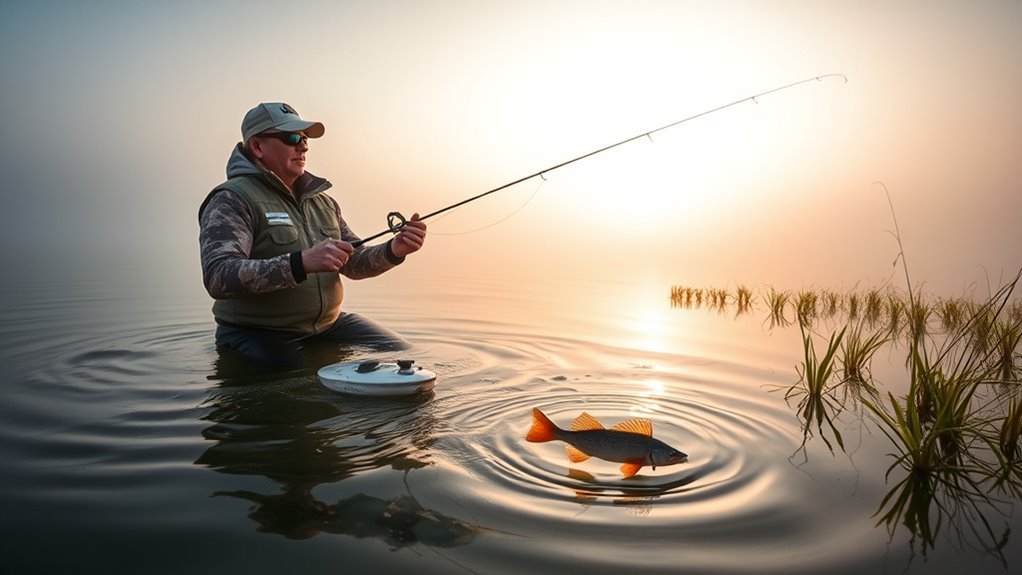
When you’re out on the water, understanding walleye behavior can greatly boost your chances of a successful catch. Walleye are most active during dawn and dusk, so plan your fishing trips around these prime times. During these hours, they often move into shallow water to feed on smaller fish like minnows and perch.
However, on sunny days, you’ll often find them sliding into deeper water, holding near the bottom, or staying close to shaded structure. They do this because their eyes are built for low-light feeding, which gives them an advantage when sunlight fades or water clarity drops.
Using effective fishing techniques is key. Look for walleye in areas where they habitually return, as they travel in loose groups and follow consistent patterns. Their excellent low-light vision makes them strong hunters in dim conditions, so don’t overlook overcast days for fishing.
Also, keep an eye out for their feeding behavior, as they’re opportunistic feeders and may eat minnows, perch, shiners, leeches, nightcrawlers, crayfish, and insects. Understanding these habits can greatly enhance your walleye fishing success.
Walleye do not stay in one depth all season. In spring, they often use shallow rock, gravel, and current areas. In summer, they may hold deeper during bright conditions but move shallower during low light. In fall, they often feed heavily again as baitfish schools shift.
Note: Walleye location changes fast. If you do not get bites after 15 to 30 minutes, change depth, speed, bait size, or location before assuming the fish are not feeding.
Best Times to Fish for Walleye
Knowing the best times to fish for walleye can greatly improve your odds of landing a catch. The prime moments are early morning and dusk, when walleye are most active and likely to feed.
The best times to catch walleye are early morning and dusk, when lower light helps them hunt more confidently.
During these times of year, especially in spring and mid-summer, walleye move into shallower waters, making them easier to target. Overcast days can also provide some of the best fishing opportunities, as walleye tend to venture closer to shore, seeking food without the bright sun’s glare.
Windy conditions can further stimulate their feeding activity, so don’t shy away from a little breeze. Wind pushes plankton and baitfish toward shorelines, points, and weed edges. Walleye often follow that food source, especially on windblown banks.
As you approach early fall, the walleye remain active, offering excellent chances for both size and numbers. Cooler water can push baitfish into predictable areas, and walleye often feed aggressively before winter.
Pay attention to these factors, and you’ll greatly enhance your chances to catch walleye throughout the fishing season.
Seasonal Walleye Patterns
Season matters because walleye feeding areas change as water temperature and bait movement shift. Use these seasonal patterns as a starting point:
- Spring: Target shallow rock, gravel, current breaks, and spawning areas after the season opens in your region.
- Early summer: Fish weed edges, points, rocky shorelines, and the first drop near shallow feeding flats.
- Mid-summer: Look deeper during bright sun, then return to shallow edges during dawn, dusk, night, or cloudy weather.
- Fall: Follow baitfish schools around points, gravel bars, rocky shorelines, and steeper breaks.
- Winter: In ice-fishing regions, focus on humps, flats, drop-offs, and evening feeding windows.
Optimal Walleye Fishing Locations
To effectively target walleye, it’s important to understand their preferred habitats and the structures they frequent. Knowing the ideal walleye fishing locations can dramatically improve your success.
Focus on these key underwater structures:
- Rock piles: These provide shelter and attract walleye, especially in spring.
- Weed beds: Great spots during warmer months; walleye often hide along the edges.
- Drop-offs: Look for depth changes; these are prime areas for catching walleye.
- Gravel bars: Effective in fall as walleye move back towards shore.
Also check points, inside turns, humps, saddles, current seams, bridge areas, and the edges of flats. Walleye often use these places as travel routes between deep resting water and shallow feeding water.
Utilizing the right fishing gear is vital when exploring these locations. In clear water, consider using lighter tackle to avoid spooking the fish. In stained water, you can often use heavier line, brighter lures, and more vibration.
Remember, walleye are often found at depths of 10-40 feet, but that range changes by lake, river, season, light level, oxygen, and forage. Shallow fish may be active and easier to catch, while deeper fish may require slower, more precise presentations.
By targeting these structures during the right seasons, you’ll increase your chances of landing those prized catches. Happy fishing!
Pro Tip: Start on the windblown side of a point, weed edge, or rocky shoreline. If baitfish are present and the water has a slight chop, walleye may be nearby.
Essential Fishing Techniques
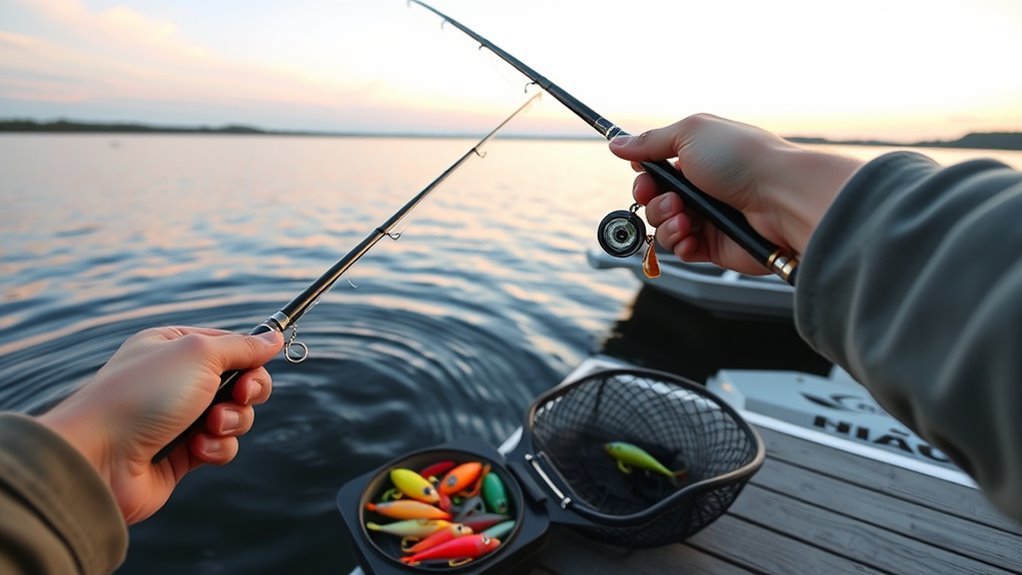
While targeting walleye, mastering essential fishing techniques can make all the difference in your success on the water. Start by using jigging techniques with 1/8- to 3/16-ounce jigs tipped with soft-plastic minnows in spring, which effectively reach walleye near the bottom.
In mid-summer, switch to slip-sinker rigs that let your live bait sit on the bottom, enticing walleye in deeper structures. For those low-light conditions at dawn and dusk, experiment with crankbaits and swimbaits while trolling to cover more water and locate active fish.
Don’t overlook bobber fishing year-round; using slip bobbers allows you to adjust bait depth and helps in finding walleye over structures. This is one of the easiest ways for beginners to keep bait in the strike zone without constantly casting.
Be sure to adapt your techniques based on the season. Jig-and-minnow combos work well in spring, while hard plastic baits shine in autumn when walleye chase baitfish more aggressively.
With these essential fishing techniques in your arsenal, you’ll be well on your way to walleye fishing success!
Jigging for Walleye
Jigging works because it keeps your bait near bottom, where walleye often feed. Cast or drop the jig, let it reach bottom, then lift it with short hops. Pause often because many strikes happen as the jig falls.
Use lighter jigs in shallow water or slow current, and heavier jigs when fishing deeper water, wind, or current. If you lose bottom contact, increase weight until you can feel the jig again.
Trolling for Walleye
Trolling helps you cover water when walleye are scattered. Use crankbaits, crawler harnesses, spinner rigs, or swimbaits along breaklines, weed edges, and flats. Change speed until you trigger bites.
If one rod gets hit, repeat that depth, lure style, and speed. Walleye often group in small zones, so a single bite can reveal a productive stretch.
Slip Bobber Fishing for Walleye
A slip bobber rig is simple and effective around rock piles, weeds, docks, and drop-offs. Set the bobber stop so your bait rides slightly above the fish or just off bottom.
This method works especially well when walleye are holding in one area but do not want a fast-moving lure. Use a minnow, leech, or nightcrawler and let the bait move naturally.
Recommended Baits for Walleye
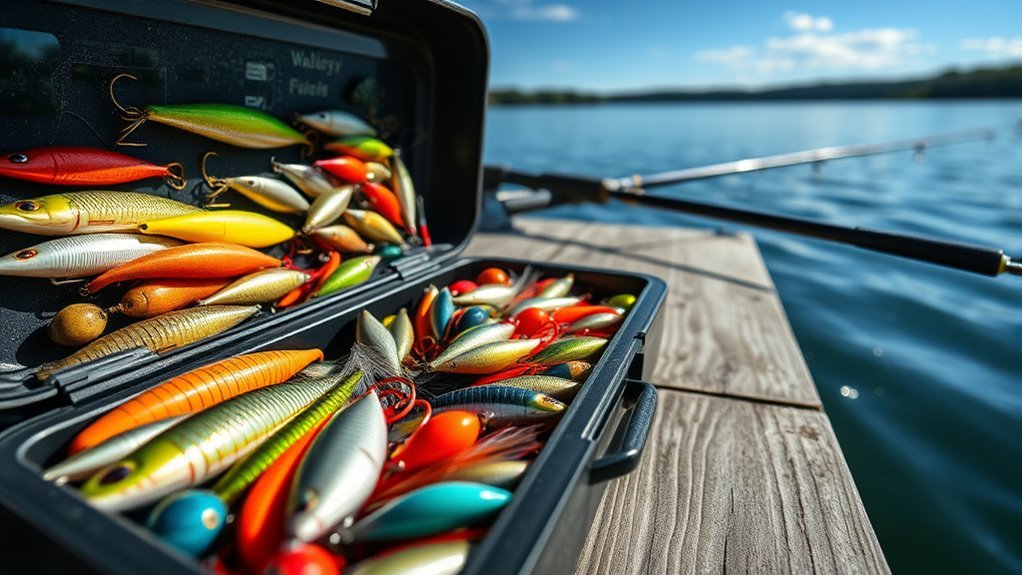
When it comes to walleye fishing, choosing the right bait is essential for your success.
Live bait like minnows, leeches, and nightcrawlers can be irresistible to these fish year-round, while effective artificial lures like fork-tailed minnows and jigs can mimic their natural prey.
With a solid understanding of both options, you’ll be well-equipped to attract walleye in any season.
Live Bait Options
Many anglers find that live bait options are the key to successfully catching walleye throughout the year. Walleye often respond well to specific types of live bait, making them popular among experienced anglers.
Here are some effective choices:
- Minnows: Great for tipping jigs and enhancing attractiveness.
- Leeches: Versatile and effective, especially during summer months.
- Nightcrawlers: Ideal for various rigging techniques, including slip bobbers.
- Fathead chubs: Particularly effective in spring and fall when walleye are feeding in shallow waters.
When using these live bait options, always check local fishing regulations to guarantee compliance. Some waters restrict bait transport, live bait types, or the use of certain minnows.
Suspend your bait beneath a slip bobber to present it effectively over structures where walleye like to hide. This technique increases your chances of landing a catch!
Effective Artificial Lures
Effective artificial lures can greatly boost your walleye fishing success. Popular options like swimbaits, crankbaits, and jerkbaits mimic the movement of prey fish, making them irresistible to walleye.
Lipless crankbaits shine in dirty water, helping you locate fish even when visibility is low. Jigs tipped with soft-plastic minnows or worms are versatile and can be used year-round, making them essential in your tackle box.
In low-light conditions, opt for brightly colored lures to enhance visibility and attract actively feeding walleye. In clear water, natural colors like perch, shiner, silver, smoke, and green pumpkin often look more realistic.
Remember to experiment with different lure sizes, colors, and retrieval speeds, as these variations can greatly increase your chances to catch.
Stay adaptable, and you’ll find the perfect combination for success on the water!
Bait Color and Water Clarity
Water clarity should guide your color choice. In clear water, use natural patterns that match local baitfish. In stained water, try gold, chartreuse, orange, white, or other colors that stand out.
On cloudy days or at night, vibration and silhouette can matter more than fine detail. Crankbaits, spinner rigs, and paddle-tail swimbaits can help walleye find your lure when visibility is limited.
Fishing Gear and Equipment
When it comes to walleye fishing, having the right rod and reel combo is essential for success.
A quality 6-foot, 6-inch medium power rod paired with a spinning reel in the $80 to $120 range will serve you well.
Don’t forget about your fishing line; using 8-pound monofilament or 12-pound fluorocarbon can make a big difference in detecting those subtle strikes.
Recommended Rod and Reel
Choosing the right rod and reel combo is essential for a successful walleye fishing experience. A quality spinning rod and spinning reel combo, priced between $80 and $120, will serve you well.
Here are some recommendations to guide your choice:
- Opt for a 6-foot, 6-inch medium fast action rod with a size 35 reel for general use.
- For jigging and live bait, go with a 6-foot medium light fast action rod and a size 30 reel.
- Use 8 lb. monofilament line on the medium rod for strength and sensitivity.
- Consider a braided line of 10 lb. with a 12 lb. fluorocarbon leader for better casting accuracy.
With these necessary gear tips, you’ll be well-equipped for walleye fishing!
Essential Line Types
Selecting the right fishing line is essential for your walleye fishing success, and there are three main types to take into account: monofilament, fluorocarbon, and braided line. Each line has unique advantages that can enhance your catch rates.
| Line Type | Best For | Strength Range |
|---|---|---|
| Monofilament | Beginners | 6-10 pounds |
| Fluorocarbon | Clear water | 12 pounds |
| Braided | Experienced anglers | 8-15 pounds |
Monofilament line is user-friendly and affordable, while fluorocarbon line’s invisibility boosts sensitivity in clear waters. Braided line provides strength and accuracy, making it ideal for precise casts. Consider the conditions and your skill level when choosing.
If you use braid, add a fluorocarbon leader with a double uni knot, blood knot, or small swivel. The leader reduces visibility and adds abrasion resistance around rocks, zebra mussels, timber, and sharp edges.
Basic Walleye Tackle Checklist
You do not need a huge tackle box to start. A simple, organized kit helps you change presentations quickly when fish move or stop biting.
- 1/8-, 3/16-, and 1/4-ounce jigs
- Slip bobbers, bobber stops, split shot, and small swivels
- Live bait hooks in common walleye sizes
- Crankbaits for shallow and mid-depth trolling
- Soft-plastic minnows, worms, and paddle tails
- Needle-nose pliers, hook remover, line clippers, and a landing net
- Measuring board, license, and local regulation summary
Setting Up Walleye Fishing Rigs
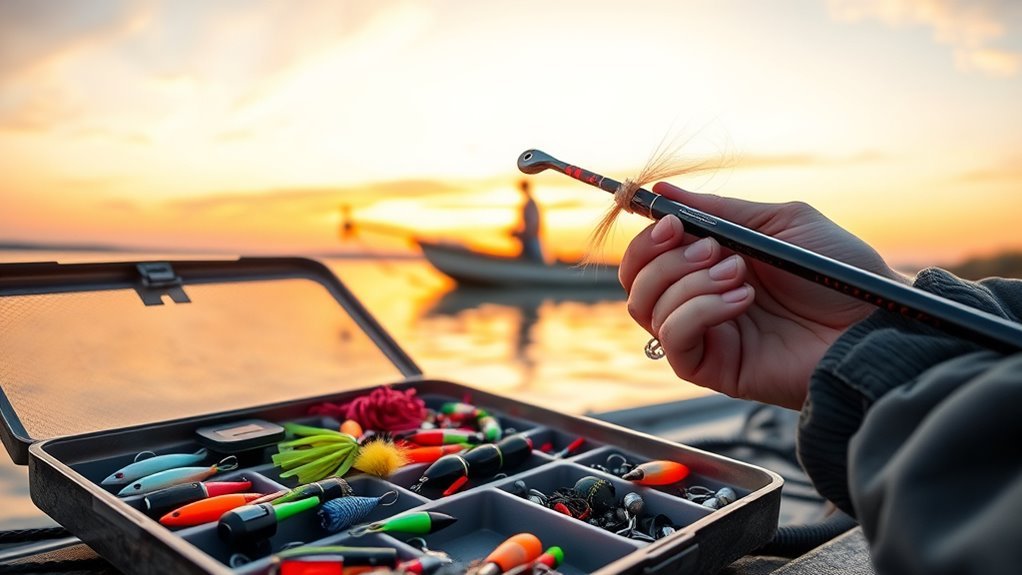
Setting up the right walleye fishing rig can make all the difference in your success on the water.
Each rig serves specific techniques and conditions, so understanding the options is key for anglers seeking to maximize their catch.
Here are four popular rigs you should consider:
- Spinner Rig: Utilizes a double-hook harness and is effective with trolling techniques.
- Slip Bobber Rig: Offers versatility, allowing you to adjust bait depth easily over underwater structures.
- Jig Rig: Great for jigging live bait, with Fireball style jigs ranging from 1/8 oz. to 1/4 oz. for varying depths.
- Hook Sizes and Weights: Tailor your setup for each rig to optimize your chances of landing that walleye.
How to Set Up a Slip Bobber Rig
- Slide a bobber stop onto your main line and set it to the depth you want to fish.
- Add a small bead below the bobber stop so the stop does not pass through the bobber.
- Thread on the slip bobber, then tie on a small swivel or hook.
- Add split shot above the hook to help the bait sink naturally.
- Hook a minnow, leech, or nightcrawler so it stays lively.
- Cast near structure and let the bait sit slightly above the fish or just off bottom.
How to Set Up a Jig Rig
- Tie your jig directly to monofilament or fluorocarbon, or tie it to a fluorocarbon leader if using braid.
- Add a minnow, soft-plastic minnow, worm, or leech to the jig.
- Cast beyond the target and let the jig reach bottom.
- Lift the rod tip with short hops, then let the jig fall on a semi-slack line.
- Set the hook when you feel a tap, extra weight, or sudden slack.
How to Set Up a Spinner Rig
- Use a bottom bouncer, inline weight, or sliding sinker to keep the rig near bottom.
- Attach a spinner harness with one or two hooks.
- Add a nightcrawler, minnow, or leech to the hooks.
- Troll slowly along weed edges, flats, drop-offs, or gravel bars.
- Adjust speed and weight until the rig runs close to bottom without dragging constantly.
Warning: Check local walleye size limits, slot limits, possession limits, bait rules, and season dates before fishing. Rules can vary by lake, river, state, province, and time of year.
Common Walleye Fishing Mistakes
Many beginners struggle because they fish one spot too long or use one presentation all day. Walleye can be active one hour and neutral the next, so you need to adjust quickly.
- Fishing too fast in cold water: Slow down with jigs, live bait, or slip bobbers.
- Ignoring depth changes: Use drop-offs, points, humps, and weed edges as your starting map.
- Using line that is too heavy in clear water: Downsize your leader when fish seem cautious.
- Missing subtle bites: Watch your line and set the hook when the jig feels heavier than normal.
- Skipping windy areas: Windblown structure often collects baitfish and feeding walleye.
- Forgetting regulations: Size and harvest rules can change by waterbody.
Catch-and-Release and Fish Handling
Good fish handling helps protect the resource and keeps released walleye healthier. Keep fish in the water as much as possible, especially during warm weather.
- Wet your hands before handling a walleye.
- Use pliers or a hook remover to reduce handling time.
- Support larger fish horizontally instead of hanging them by the jaw.
- Measure fish quickly and release any fish outside the legal harvest range.
- Revive tired fish by holding them upright in the water until they swim away.
If you plan to keep fish, place legal harvest fish on ice quickly. Clean, cold storage protects flavor and food safety.
Tips for Booking a Guided Fishing Trip
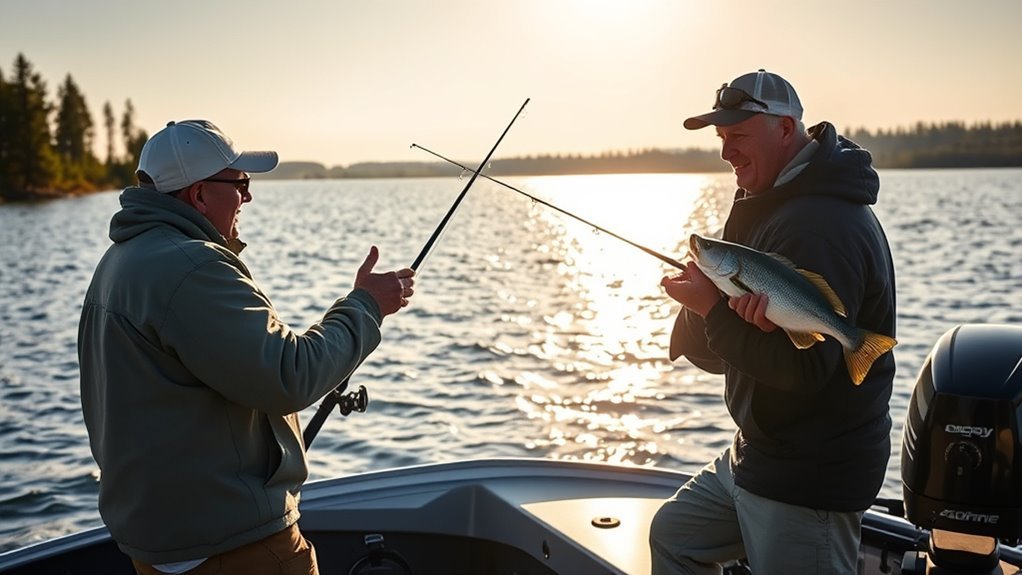
After you’ve got your walleye fishing rigs set up, the next step is to contemplate how to enhance your experience on the water by booking a guided fishing trip.
Start by researching local fishing regulations and seasons to guarantee compliance and find the best times for your guided trip. In Minnesota, for instance, the inland walleye fishing season commonly opens in May, while end dates and special rules vary by waterbody. Always check the current regulation booklet before you go.
Consider the trip duration. Options typically include full-day and half-day fishing charters. Choose one that fits your experience level, budget, and schedule.
Choose a fishing charter duration that matches your experience, schedule, and goals for the best adventure on the water.
Look for guides with strong local knowledge and positive customer reviews; this will boost your chances of success. Ask what gear is included, whether bait is provided, how many anglers can fish comfortably, and whether fish cleaning is available.
Finally, prepare by packing essential gear, including a quality fishing rod if required, appropriate fishing line, rain gear, polarized sunglasses, sunscreen, drinking water, snacks, and safety equipment. A guide can help with locations and technique, but your comfort still matters.
Questions to Ask Before Booking a Guide
- Do you specialize in walleye, or do you target multiple species?
- What season and time of day usually produce the best bite?
- Do you provide rods, reels, bait, tackle, life jackets, and electronics?
- How many people can fish comfortably from the boat?
- What happens if bad weather cancels the trip?
- Do you practice catch and release, harvest, or both?
- Are licenses, stamps, or special permits required?
Frequently Asked Questions
How do you fish walleye for beginners?
To fish walleye effectively, start with medium-light spinning gear, 6-10 lb line, and simple rigs like a jig and minnow or slip bobber rig. Target underwater structures during low-light hours, then adjust depth, bait size, and speed until you find active fish.
What is the best rig for beginner walleye fishing?
For beginners, a slip bobber rig is one of the easiest and most effective choices. It lets you keep a minnow, leech, or nightcrawler at a set depth near weeds, rocks, docks, or drop-offs. Jig rigs and spinner rigs are also strong options as your skills grow.
How old is a 20-inch walleye?
A 20-inch walleye is often around 4 to 7 years old, but age varies by lake, forage, genetics, growing season, and fishing pressure. Fisheries biologists can estimate age more accurately by examining growth rings on scales, fin rays, or otoliths.
What is the best bait for walleye?
The best bait for walleye depends on season and conditions. Minnows, leeches, and nightcrawlers are reliable live bait choices. Jigs, crankbaits, swimbaits, jerkbaits, and spinner rigs can also work well when they match local baitfish and the right depth.
What depth should you fish for walleye?
Many walleye anglers start in the 10-40 foot range, but the right depth depends on light, temperature, oxygen, baitfish, and structure. Fish shallower during low light and deeper during bright sun, then adjust based on bites and sonar marks.
Can you catch walleye from shore?
Yes, you can catch walleye from shore, especially near rocky points, piers, current areas, dams, bridges, weed edges, and windblown banks. Dawn, dusk, night, and cloudy weather usually give shore anglers the best chance.
Conclusion
Now that you’ve got the basics of walleye fishing down, it’s time to hit the water and put your knowledge to the test. Start with low-light timing, fish structure first, and keep your bait close to the depth where walleye are feeding.
Remember, every cast could lead to that thrilling moment when you feel a tug on the line. The truth is, fishing isn’t just about catching fish; it’s about reading the water, improving your skills, and enjoying the quiet moments outdoors.
So grab your gear, check your local regulations, embrace the adventure, and stay adaptable. With the right timing, location, rig, and bait, you might just reel in the catch of a lifetime.
Sources
- Minnesota Department of Natural Resources: Walleye — general walleye background and management context.
- Minnesota Department of Natural Resources: Fishing Regulations — reminder to check current seasons, limits, and special rules.
- National Weather Service: Safe Boating — boating weather and safety awareness before fishing trips.
- U.S. Coast Guard Boating Safety Division — recreational boating safety resources.