Picture yourself standing by a serene lake, rod in hand, waiting for that telltale tug on the line. Freshwater fishing can feel simple from the shore, but your first few trips go better when you understand the basics before you cast. The right beginner rod, legal fishing license, simple bait, safe fish handling, and smart location choice can turn a confusing first outing into a calm, enjoyable day on the water.
Quick Answer
To start freshwater fishing, use a simple spinning or spincast rod and reel, 6 to 10 lb. monofilament line, a small tackle box, hooks, sinkers, bobbers, and bait such as worms or minnows. Buy the proper license, choose an easy-access lake or pond, follow local rules, and practice patience.
Key Takeaways
- Start with a basic spinning or spincast setup instead of expensive specialty gear.
- Check license rules, size limits, bag limits, and bait rules before every trip.
- Worms, minnows, soft stickbaits, spinnerbaits, and small crankbaits cover many beginner situations.
- Fish near structure, shade, weeds, docks, drop-offs, and other places where fish can hide or feed.
- Handle fish gently, release them quickly when needed, and leave the area cleaner than you found it.
At a Glance
| Best Beginner Setup | Spinning or spincast rod and reel, 6 to 10 lb. monofilament line, hooks, sinkers, bobbers, and a small tackle box |
| Difficulty | Beginner-friendly |
| Best Starter Spots | Local ponds, small lakes, fishing piers, stocked waters, and calm river access points |
| Common Fish | Bluegill, crappie, bass, trout, catfish, perch, and other local freshwater species |
| Main Rule | Buy the correct license and follow your local fishing regulations before you cast |
Essential Fishing Gear for Beginners
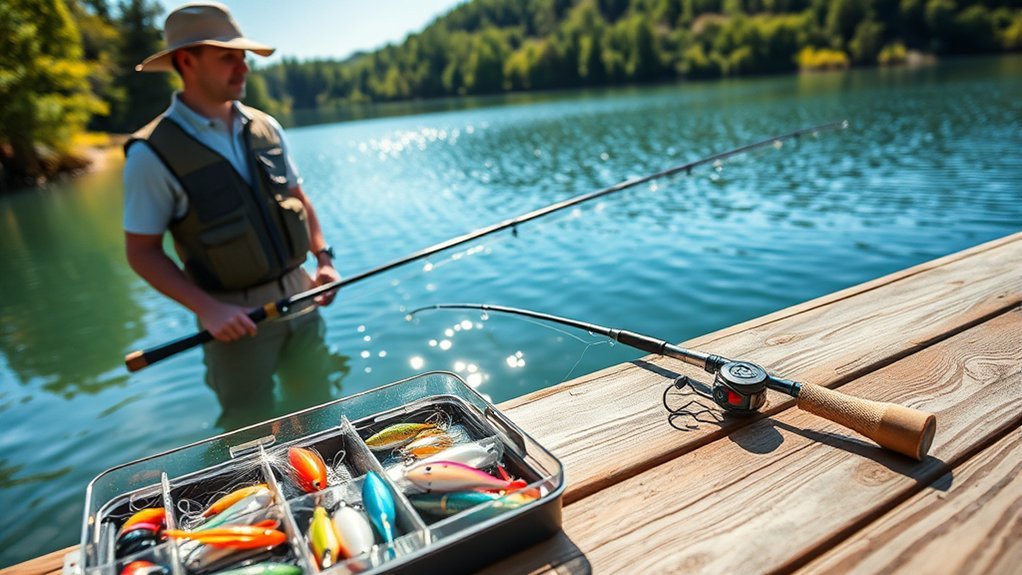
When you’re stepping into the world of freshwater fishing, having the right gear can make all the difference in your experience. You do not need a large collection of rods, reels, and lures to begin. A simple, balanced setup helps you cast more easily, feel bites better, and spend less time fighting tangled line.
You’ll want to start with a 6’6” spincast combo rod or a medium-light to medium spinning rod for better casting accuracy. A spincast combo is easy for new anglers because the reel has a push-button design. A spinning combo takes a little more practice, but it gives you more control as your skills improve.
Pair it with a 150-size spincast reel, which simplifies casting and is perfect for beginners. For your fishing line, a 6 to 10 lb. mono or nylon line offers the versatility and strength you need to target many freshwater species. Lighter line works well for panfish and trout, while 8 to 10 lb. line gives you more confidence around bass, catfish, weeds, and docks.
A simple spincast or spinning setup with 6 to 10 lb. monofilament line gives beginners an easy, affordable way to target many common freshwater fish.
When it comes to bait, live worms and minnows are popular choices that attract fish effectively. Worms work especially well for bluegill, perch, catfish, and many other fish that feed near the bottom or around cover. Minnows often appeal to bass, crappie, trout, and larger panfish because they look like natural prey.
Don’t forget about lures, though. Topwater lures, crankbaits, spinnerbaits, and soft plastics can help you cover water faster and search for active fish. Topwater lures work best when fish feed near the surface. Crankbaits imitate small baitfish. Spinnerbaits create flash and vibration, which helps fish find them in stained water. Soft stickbaits and small grubs give you a slower, more natural look when fish feel cautious.
Finally, invest in a well-designed tackle box or an Urban Angler Backpack to keep your gear organized and make transport to your fishing spots a breeze. Add needle-nose pliers, line clippers, a small first-aid kit, extra hooks, split shot sinkers, bobbers, sunscreen, water, and a towel. With this essential gear, you’re set for an enjoyable fishing adventure.
Pro Tip: Buy fewer lures at first and learn how to use them well. A few worms, bobbers, hooks, soft plastics, and spinnerbaits can teach you more than a crowded tackle box.
Understanding Fishing Licenses
Before you cast your line, it’s essential to understand the importance of fishing licenses. A current fishing license is usually mandatory for anglers above a certain age, but the exact age, fee, season, and exemption rules depend on your state, province, or local agency.
You can often purchase these licenses online, at fishing shops, sporting goods stores, or approved license vendors. Some areas offer short-term, annual, senior, youth, resident, and non-resident licenses. Non-residents often face higher fees, so it’s smart to check local regulations before heading out.
Licenses aren’t just about legality. They help fund fish stocking, habitat restoration, access sites, conservation officers, education programs, and sustainable fisheries management. Responsible angling protects fish populations so future generations can enjoy fishing too.
If you plan to fish frequently, an annual license usually offers better value than buying multiple day licenses. If you only want to try fishing once or twice, a one-day or short-term license may be enough. Always read the rules for the exact water body you plan to fish because special regulations may apply.
Warning: Do not assume one license covers every water, species, or method. Some areas require trout stamps, salmon permits, catch cards, special tags, or separate saltwater and freshwater licenses.
Know the Basic Fishing Rules Before You Go
A license gives you permission to fish, but local regulations tell you how to fish legally. These rules protect fish during spawning seasons, prevent overharvest, and help keep waterways healthy. Before each trip, review the rules for your exact lake, river, pond, reservoir, or stream.
Look for rules on seasons, legal fishing hours, bait restrictions, hook types, size limits, and daily bag limits. A size limit tells you how large a fish must be before you keep it. A daily bag limit tells you how many fish you may keep in one day. Some waters also have catch-and-release rules for certain species.
Pay close attention to signs at boat ramps, fishing piers, parks, and access points. These signs may explain local rules that differ from statewide rules. If a rule feels unclear, contact your local fish and wildlife agency before fishing.
Choosing the Right Location
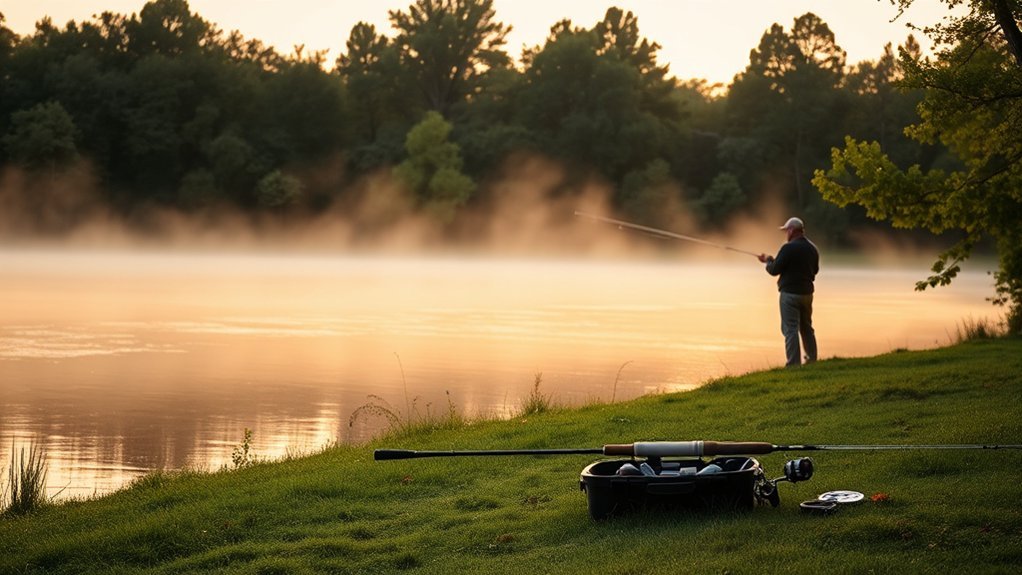
Where are the best spots to cast your line? Choosing the right location can make all the difference in your fishing experience. Beginners usually do best on waters that are easy to reach, safe to stand near, and known for active fish.
Finding the perfect fishing spot is key to a successful outing. Start with simple, legal, easy-access water before moving into tougher rivers or remote areas.
- Consult local experts: Talk to tackle shops, park staff, local clubs, or experienced anglers for insights on the best fishing locations in your area.
- Use crowdsourced apps: Platforms like Fishbrain and FishAngler provide real-time updates on fishing conditions and successful spots shared by fellow anglers.
- Focus on lakes: For beginners, lakes are ideal due to their accessibility and abundance of species like bass, panfish, catfish, and rainbow trout.
- Explore rivers carefully: Rivers can be great for targeting salmon and various trout species, but make sure you understand the current, depth, slippery banks, and water conditions.
Once you arrive, look for areas where fish can feed, hide, or rest. Docks, weed edges, fallen trees, brush piles, shaded banks, rocks, points, creek mouths, drop-offs, and current seams often hold fish. Cast near the edge of cover instead of directly into heavy weeds or branches at first, so you avoid constant snags.
Always remember to check local fishing regulations for specific water bodies to guarantee you’re fishing legally and sustainably.
Selecting Baits and Lures
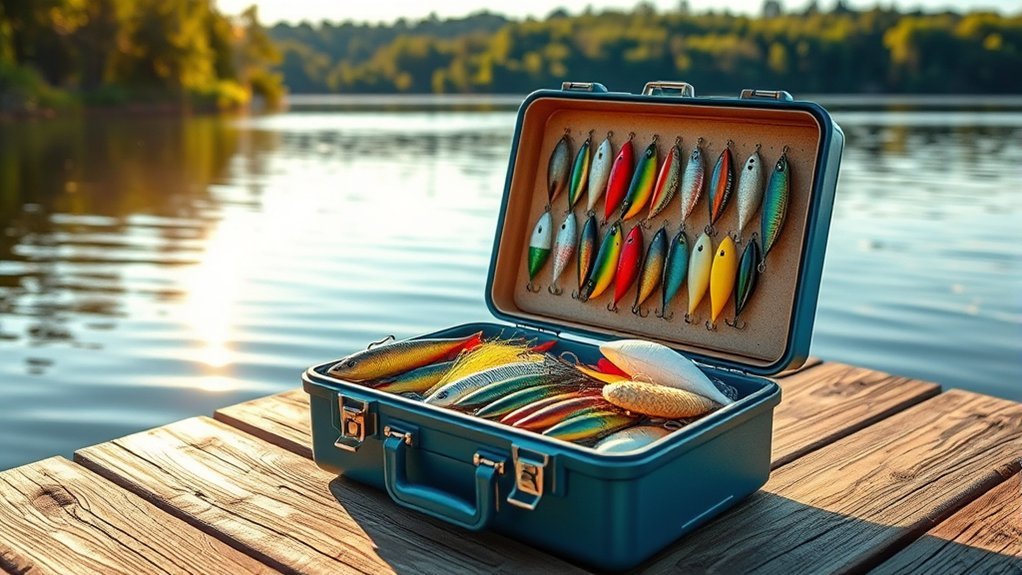
Finding the right fishing location sets the stage for a successful day on the water, but selecting the right baits and lures is what truly brings the fish to your line. For beginners, live baits like worms and minnows are excellent for attracting panfish and game fish such as largemouth bass and catfish. Alternatively, lures like soft stickbaits and spinnerbaits can mimic the movement of prey, enticing fish to bite.
| Type of Bait/Lure | Best For |
|---|---|
| Live Bait (Worms) | Panfish, Catfish |
| Live Bait (Minnows) | Largemouth Bass |
| Soft Stickbait (5″) | Versatile for Multiple Species |
| Spinnerbait (3/8 oz) | Great for Various Conditions |
| Crankbaits | Mimicking Injured Fish |
Always match your bait or lure to the local fish species’ diet and water conditions to enhance your chances of success. If the water is clear, natural colors often work well. If the water is muddy or stained, brighter colors, vibration, and scent can help fish notice your bait. In cooler water, slow your retrieve. In warmer water, try a slightly faster retrieve until fish show you what they want.
Do not change bait every few casts. Give each option enough time to work, then adjust one thing at a time. Try a new depth, cast angle, retrieve speed, or location before assuming the bait is wrong.
Simple Beginner Rigs That Work
A basic rig can catch plenty of fish without complicated knots or expensive gear. Start with a bobber rig for panfish and shallow fish. Tie on a small hook, pinch a split shot sinker above it, add a bobber higher on the line, and bait the hook with a worm. Set the bobber depth so your bait hangs near weeds, docks, or the bottom.
For bottom-feeding fish such as catfish, try a simple bottom rig. Slide or pinch a sinker above the hook, bait the hook, and let it rest near the bottom. Keep your line slightly tight so you can see or feel bites.
For bass and other predators, a soft plastic stickbait rigged weedless can help you fish around weeds, brush, and docks. Cast it out, let it sink, twitch it gently, and pause often. Many bites happen during the pause.
Basic Casting and Retrieval Tips
Good casting starts with safety. Look behind you before each cast, especially if you fish near other people, trees, pets, or power lines. Keep your hook away from faces, hands, and clothing. Practice in an open area with a casting plug before using a sharp hook near the water.
When casting a spincast reel, press the button, bring the rod tip back, swing forward smoothly, and release the button as the rod points toward your target. With a spinning reel, open the bail, hold the line with your finger, cast forward, release the line, and close the bail by hand after the lure lands.
Retrieve your bait or lure with purpose. For live bait under a bobber, let the bait move naturally and watch for the bobber to dip, twitch, or slide sideways. For lures, mix steady retrieves with pauses, small twitches, and slow lifts. If fish follow but do not bite, slow down or try a smaller lure.
Tips for Patience and Persistence in Fishing
While fishing can often test your patience, embracing the wait is part of the journey. Every angler knows that success doesn’t come instantly, and sometimes you’ll return home empty-handed.
To cultivate a mindset of patience and persistence, consider these tips:
- Enjoy the Environment: Use the waiting time to soak in nature’s beauty; it’s an integral part of the fishing experience.
- Be Prepared for Skunk Days: Understand that not every trip will yield results; these experiences build resilience.
- Observe Nature: Take the opportunity to learn about fish behavior and environmental factors that affect your catch.
- Connect with Others: Join fishing clubs or chat with fellow anglers for support and insights, fostering a community of persistence.
Keep notes after each trip. Write down the weather, water clarity, time of day, bait, location, and fish activity. Over time, these small details help you notice patterns and make smarter choices.
Freshwater Fishing Safety and Etiquette
Freshwater fishing should feel relaxing, but safety still matters. Wear a properly fitted life jacket when fishing from a boat, kayak, canoe, dock with deep water, or steep bank. Watch for slippery rocks, sudden drop-offs, fast current, storms, and changing water levels. Bring drinking water, sun protection, insect repellent, and a charged phone when possible.
Respect other anglers by giving them space, keeping noise low, and never casting across their lines. Do not leave hooks, fishing line, bait containers, food wrappers, or other trash behind. Discarded line can harm birds, turtles, fish, pets, and other wildlife.
If you keep fish, place them on ice quickly and follow all size and bag limits. If you release fish, wet your hands first, keep the fish low over the water or net, remove the hook carefully, and return it as soon as possible. Avoid holding fish by the gills or squeezing the body.
Note: If a fish swallows the hook deeply, cutting the line close to the hook may be safer than pulling hard and causing more damage.
Common Beginner Mistakes to Avoid
Many new anglers struggle because they fish too fast, use hooks that are too large, or ignore local conditions. A smaller hook with a natural bait often catches more fish than a large hook loaded with too much bait. Fish also spook easily in shallow water, so avoid stomping on docks, shining bright lights into the water, or throwing shadows over clear, shallow spots.
Another common mistake is fishing only one depth. Fish may hold near the surface in low light, suspend in the middle of the water column, or rest near the bottom during bright sun. Change your bobber depth, lure retrieve, or casting angle until you find active fish.
Finally, do not overlook small fish. Bluegill, perch, and other panfish teach you how bites feel, how to set the hook, and how to land fish gently. Those skills help when you later target larger bass, trout, or catfish.
Frequently Asked Questions
What are the best times of day for freshwater fishing?
The best times for freshwater fishing are often early morning and late evening. During these cooler, lower-light hours, many fish move shallower and feed more actively. Midday can still produce fish, especially near shade, deeper water, current, weeds, docks, or during cloudy weather.
How do weather conditions affect fish behavior?
Weather conditions can greatly affect fish behavior. On overcast days, fish often roam and feed more comfortably. Bright sun may push them deeper or tighter to cover. Light rain can improve fishing, but you should leave the water quickly during thunder, lightning, strong wind, or unsafe conditions.
What types of fish can I catch in freshwater?
In freshwater, you can often catch bass, trout, catfish, crappie, bluegill, perch, walleye, carp, and other local species. The exact fish available depend on your region, water temperature, habitat, stocking programs, and local regulations.
Are there fishing etiquette rules I should follow?
Yes, there are fishing etiquette rules you should follow. Respect other anglers by giving them space, keeping noise down, avoiding overcrowded spots, cleaning up after yourself, and handling fish carefully. Good etiquette helps keep fishing areas friendly, safe, and open for everyone.
How can I safely handle and release fish?
To safely handle and release fish, wet your hands before touching them, avoid squeezing, and support the fish gently. Use a rubber landing net if possible, remove the hook carefully, and return the fish to the water quickly to reduce stress.
What is the easiest freshwater fish for beginners to catch?
Bluegill and other panfish are often some of the easiest freshwater fish for beginners to catch. They live in many ponds and lakes, bite small hooks and worms, and help new anglers practice casting, hook-setting, and safe handling.
Do I need expensive gear to start freshwater fishing?
No, you do not need expensive gear to start freshwater fishing. A basic rod-and-reel combo, monofilament line, hooks, sinkers, bobbers, bait, pliers, and a small tackle box are enough for many beginner trips.
Conclusion
As you cast your line into the shimmering water, the anticipation thickens in the air. Will today be the day you reel in a trophy catch, or will you leave with memories of a peaceful day spent in nature? Either way, every trip teaches you something valuable.
Start with simple gear, follow your local rules, choose easy water, and give yourself time to learn. Each outing holds the promise of adventure, with lessons waiting to unfold. So gear up, embrace the thrill of the unknown, and let the excitement of fishing guide you to new experiences. Your next big catch could be just a tug away.
Sources
- Take Me Fishing — Fishing Basics — beginner fishing setup, basic skills, and starter guidance
- U.S. Fish & Wildlife Service — Fishing — fishing access, conservation, and responsible angling context
- Take Me Fishing — How to Catch and Release Fish — safe fish handling and release practices
- BoatUS Foundation — Life Jackets — safety guidance for wearing life jackets around boats and water