To fish a Ned rig, pair a short 2–4 inch soft plastic with a light mushroom-style jighead, cast it to likely bass cover or structure, let it fall, then work it with slow drags, small hops, swims, or pauses. Start with the lightest head that still lets you control the bait and feel bottom. The rig is especially useful when bass are pressured, the water is clear or cold, or faster presentations are not getting bites. This guide covers setup, line, jighead choice, open-hook and weedless rigging, retrieves, depth control, seasonal locations, bite detection, and common mistakes.
Last updated: September 11, 2026 — hook-size guidance, weedless rigging, sources, schema, and technique coverage reviewed.
Quick Answer
A Ned rig is a finesse setup built around a small soft plastic and a light mushroom-style jighead. For a simple starting setup, use a medium-light spinning rod, light line, and roughly a 1/16–1/8 oz head when conditions allow. Let the bait fall on controlled slack, then drag, hop, swim, shake, or dead-stick it. Go heavier only when depth, wind, or current makes the lighter head hard to control.
Key Takeaways
- The Ned rig works best when you keep the bait small, straight, subtle, and close to bottom.
- A medium-light spinning rod with light fluorocarbon or a light braid-to-fluorocarbon-leader setup covers most bass applications.
- Choose lighter jigheads for shallow water, calm conditions, and slow falls; choose heavier heads for wind, current, or deeper water.
- Dragging, hopping, swimming/gliding, and dead-sticking are four useful retrieves to learn first.
- Straight rigging matters. A crooked bait twists, looks unnatural, and reduces bites.
At a Glance
| Time Required | 5–10 minutes to rig; a few short trips to build feel and confidence |
| Difficulty | Beginner-friendly, with room for advanced presentation control |
| Tools Needed | Spinning rod and reel, light line, mushroom jigheads, 2–4 inch soft plastics, pliers or line cutters |
| Cost | Low to moderate; a small pack of jigheads and soft plastics can cover many trips |
What Is a Ned Rig and Why It Works

The Ned rig is a compact finesse presentation built around a short soft plastic on a light mushroom-style jighead. Modern Ned-rig fishing grew from Midwest finesse methods associated with Ned Kehde and other Midwestern finesse anglers. The goal is not maximum action. It is a small, unobtrusive presentation that can fall, glide, swim, or rest with very little input.
Buoyant plastics can make the tail rise off the bottom at rest, while non-buoyant plastics can still work through their compact profile and subtle movement. A Ned rig can suggest a small crawfish, goby, baitfish, leech, or other easy meal without needing to imitate one forage species exactly.
The rig is particularly useful in pressured water, clear water, cold water, and other situations where bass refuse faster or bulkier lures. It also catches fish on ordinary days because the presentation is easy to control around rock, gravel, docks, sparse grass, points, and other high-percentage targets.
The practical keys are simple: keep the bait straight, use enough weight to maintain control without making the fall unnecessarily fast, watch the line on the drop, and adjust your retrieve before you assume the lure itself is wrong.
Note: “Ned rig” is now used broadly, but classic Midwest-finesse versions are light, compact, and often fished with less action than a shaky head or power-finesse jig. Treat the technique as a presentation system, not just a specific worm-and-jig combination.
Essential Tackle and Line Choices

For the Ned rig, a medium-light or medium-power spinning rod with a fast or extra-fast action is a practical starting point. The setup should cast light jigheads well, transmit changes in bottom contact, and still have enough backbone for a controlled sweep hookset.
Pick light fluorocarbon when you want a simple, low-visibility main line, or use light braid with a fluorocarbon leader when you want easier casting and strong bite feedback. A common bass range is about 6–10 lb for the fluorocarbon portion, but cover, rocks, fish size, and local conditions should decide the final strength.
Match your jighead weight to depth, wind, current, and bottom type. A 1/16–1/4 oz range covers most fishing, while 1/8 oz is the most versatile starting point. Lighter heads fall slower and look more natural. Heavier heads help you keep contact in wind or deeper water.
Rod and Reel Selection
Choose a medium-light or medium-power spinning rod with a fast or extra-fast action that can cast light heads and show subtle changes in pressure. A balanced spinning reel with a smooth drag is more important than chasing one exact reel size or gear ratio.
Sensitivity helps because a Ned-rig bite may feel like a tick, a sudden loss of weight, or simply more pressure than the cast before. The rod should also load smoothly so you can reel down and sweep instead of snapping a small hook on light line.
A 1/8 ounce jighead is a useful starting point when it keeps you in contact with the bait. Drop lighter for a slower fall in shallow, calm water. Move heavier when wind, current, or depth prevents you from tracking the rig.
Line Type and Strength
For most bass fishing, 6–10 lb fluorocarbon is a practical range when you want to fish straight fluorocarbon. If you prefer braid, a light braid main line with a 6–10 lb fluorocarbon leader is another common approach.
Use the lighter end of the range in open, clear water and move stronger around abrasive rock, wood, grass, or larger fish. The point is not to use the lightest line possible; it is to use line light enough for the finesse presentation while still landing fish reliably.
A frequently used braid-to-leader setup is around 10 lb braid with a 6 lb fluorocarbon leader. Keep the connection knot compact and check the leader often for abrasion.
Mind spool diameter and line lay. A properly filled spinning reel helps casting distance and reduces loops. Keep light tension during retrieves so the bait moves naturally, but do not let so much slack develop that you miss soft taps.
Whatever line system you choose, keep it light enough to cast the jighead cleanly and strong enough for the cover and fish you expect.
Pro Tip: If you struggle to feel bites, try braid with a fluorocarbon leader. The braid improves sensitivity, while the leader keeps the bait less visible near the fish.
Choosing the Right Jighead and Bait
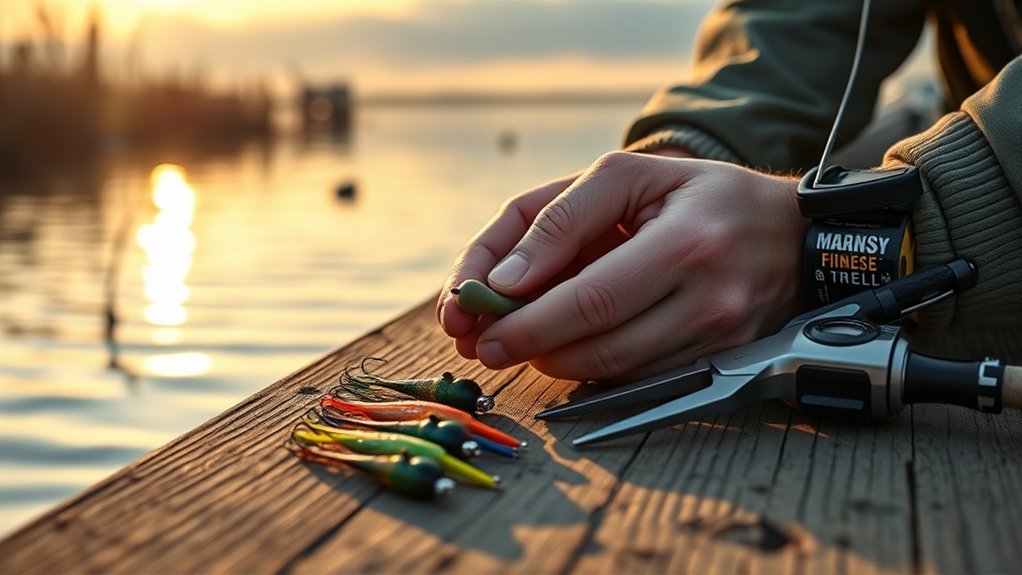
Pick a jighead and bait combo that matches the depth and presentation you want, and you’ll make the Ned rig much more effective. Choose a jighead weight between 1/16 and 1/4 ounce. A 1/8-ounce head is versatile for many depths and light wind, so you can fish confidently without changing constantly.
Favor mushroom-shaped heads like the Z-Man Finesse ShroomZ style because they help the bait balance and stand well. Other Ned-style heads can also work if they match your hook size, line, and cover.
Match hook size to the actual jighead system rather than assuming that every Ned head uses the same numbering. For example, Z-Man’s standard Finesse ShroomZ uses light-wire size 1 and 2 hooks, while its downsized Micro Finesse ShroomZ uses size 4 and 6 hooks. Choose a head whose hook gap and wire strength fit your bait, line, cover, and target fish.
Select soft plastics 2–4 inches long. A buoyant stick-style bait, short worm, small craw, or half stickbait can all work. Buoyant materials help the bait rise, stand, or quiver on the bottom, which is one reason fish often bite during the pause.
Pick bait colors by water clarity. Natural greens, watermelon, brown, and green pumpkin shades usually work well in clear to lightly stained water. Black, blue, junebug, or darker silhouettes can help in stained water, low light, or cloudy conditions.
When in doubt, prioritize three things: a straight bait, enough hook gap for clean penetration, and the lightest head that still gives you useful control.
| Condition | Best Starting Choice | Why It Works |
|---|---|---|
| Shallow calm water | 1/16 oz head | Slower fall and less splash |
| Everyday bank or boat fishing | 1/8 oz head | Good balance of casting distance and bottom contact |
| Wind, current, or deeper water | 3/16–1/4 oz head | Helps you keep feel and control |
| Clear water | Green pumpkin, watermelon, brown | Natural colors look less threatening |
| Stained water | Black/blue, junebug, darker green | Creates a stronger silhouette |
How to Rig a Ned Worm (Open and Weedless)
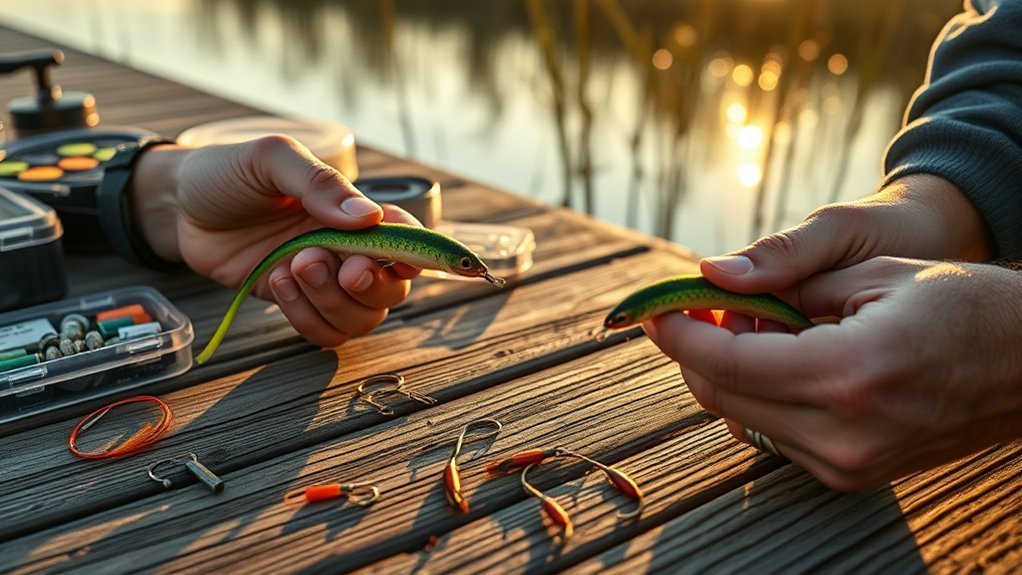
Use an open-hook Ned rig around clean rock, gravel, sand, sparse cover, or open water where snag risk is low. Thread the soft plastic straight onto the jighead so the hook point remains exposed and the bait sits flush against the head.
Use a weedless Ned rig around grass, brush, wood, dock cover, or other snag-prone areas. The rigging method depends on the head: a wire-guard jighead is threaded much like an open-hook Ned, while an offset or EWG-style Ned head lets you Texas-rig and skin-hook the bait.
Keep the bait straight in either version. A crooked bait can twist line, track poorly, and use up hook gap. Glue is optional; many dedicated Ned heads use wire keepers that hold durable plastics without it.
Open-Hook Threading
Rigging a Ned worm with the open-hook method is straightforward and gives the bait a natural, upright presentation that triggers bites. This is the best starting method for beginners fishing open water, gravel, rock, sand, or sparse cover.
Insert the hook point into the center of the soft plastic and thread it straight onto the shank. Bring the point out through the side or top of the bait at the right distance so the plastic rests snugly against the jighead.
Position the hook exit at the midpoint that keeps the bait straight. The Ned rig should stand, glide, or settle naturally instead of bending into a curve.
Check alignment before every cast. The bait must be centered on the hook to keep a natural look and effective fishing technique.
Seat the front of the bait snugly against the jighead or keeper. If your head does not hold the plastic securely, a tiny amount of compatible adhesive can help, but many dedicated Ned heads already use wire keepers and do not require glue.
Weedless Rigging Steps
If you are using an offset or EWG-style Ned head, first measure where the hook should exit so the bait will lie straight. Insert the point into the nose, bring it out, slide the bait into position, rotate it, and reinsert the point through the body as you would with a small Texas rig.
Skin-hook the point lightly so it is protected from cover but can clear the plastic on a bite. Do not bury it so deeply that the bait blocks the hook gap.
If you are using a wire-guard Ned head, thread the bait straight on the shank as you would with an open hook and let the guard protect the point. Do not force a wire-guard head into an offset-hook rigging method it was not designed for.
Use lighter heads when you want a slow fall in shallow or calm water and heavier heads only when depth, wind, or current makes control difficult. Match hook size to the specific jighead design rather than to weight alone.
Warning: Do not bury the hook point too deeply in weedless setups. If the plastic blocks the point, you may get bites but miss fish because the hook cannot penetrate cleanly.
Hook Placement Tips
For clean Ned rig hook placement, keep the plastic straight and centered from the nose to the hook exit. On an open-hook rig, the point should exit cleanly without bunching the bait or crowding the hook gap.
On an offset weedless head, rotate the bait and reinsert the point so the body lies straight. Skin-hook only as much plastic as needed to protect the point from cover. The plastic should shield the hook, not trap it.
After a fish, snag, or missed strike, inspect the bait before the next cast. Re-thread it if it has twisted or slipped because alignment matters more than adding extra movement.
How to Fish a Ned Rig: Dragging, Hopping, Swimming, and Dead-Sticking

Start with four simple Ned rig retrieves: dragging, hopping, swimming/gliding, and dead-sticking. The rig is more versatile than a bottom-only bait, and current Midwest-finesse logs still document fish caught on the initial drop, swim-glide-and-shake, drag-and-shake, hop-and-bounce, and deadstick presentations.
You’ll drag the finesse rig slowly along rocky, sandy, or gravel bottoms to imitate a crawfish or small bottom-dweller. Use the reel and rod together, and avoid pulling so hard that the bait looks unnatural.
When you hop, lift the rod tip gently to give the small bait a short burst, then let it fall on semi-slack line. Keep the movement controlled; the goal is a small change in position, not a violent snap.
For a swim-glide-and-shake retrieve, reel slowly enough to keep the bait near the target depth while adding small rod-tip shakes. This is useful when fish are off the bottom or when you need to cover water without abandoning a finesse presentation.
Dead-sticking is patience. Pause and leave the rig motionless to tempt inactive or pressured fish. Maintain light line tension to feel subtle taps, but keep enough slack for proper bait action.
- Match retrieve speed to conditions; warmer water usually allows quicker drags.
- Use gentle hops to avoid spooking wary bass in clear or pressured water.
- Hold dead-sticks longer in cold, clear, or heavily fished waters.
- Keep line tension consistent to detect bites and preserve lure action.
- Watch the line as much as you feel the rod, because many bites look like a small jump, twitch, or sideways movement.
Start with the slowest retrieve that lets you understand where the bait is. If fish are active, add swimming or short hops. If they are reluctant, lengthen the pause before changing color or bait style.
With a Ned rig, the pause often does more work than the pull. When the bite gets tough, slow down before you switch baits.
Advanced Presentations and Bite Triggers

Once you master the basics, push your Ned rig game by layering subtle actions. Try slow swims with a rod-tip shake, brief hops followed by a long deadstick, or a gentle drag interrupted by tiny twitches. These small changes can provoke wary bass that ignore simple retrieves.
Experiment with the swim, glide, and shake method. Reel slowly while shaking the rod tip just enough to make the bait quiver. This can mimic a small baitfish, goby, or craw moving along bottom without panic.
Use the deadstick method when bass follow but will not commit. Cast past the target, let the bait settle, and leave it still. After several seconds, move it only a few inches. Many bites happen when you are doing almost nothing.
Mix drag and deadstick when fish hold tight to rock, points, docks, or brush. Slowly drag the bait, add one or two tiny twitches, then pause again. This creates the look of injured prey and keeps the bait in the strike zone longer.
Adjust retrieve speed for cold water; slower presentations work best when fish are sluggish. In warmer water, you can add more hops and steady movement, but the Ned rig still works best when it looks easy to catch.
Watch environmental factors like wind and water clarity; they change how you present and where fish react. Wind may require a heavier jighead. Clear water may demand lighter line and natural colors. Stained water may call for darker colors and a slightly stronger profile.
Use those retrieves as adjustments, not rules. Change one variable at a time—speed, pause length, weight, or depth—so you can tell which change actually produces bites.
| Presentation | Purpose |
|---|---|
| Shake + Swim | Entice movement |
| Deadstick | Trigger cautious bites |
| Drag + Twitch | Mimic injured prey |
Best Spots and Seasonal Strategies
If you want consistent Ned-rig results, pick spots that concentrate bass through the seasons. Target points, humps, ledges, and brush piles in spring and fall when fish are staging and feeding. Shift to shaded docks and overhanging trees in summer where bass shelter from heat. Fish deeper in winter with slower presentations near the bottom.
The Ned rig is a strong choice when you want a compact presentation that can stay in the strike zone. Use it around rock, gravel, sparse grass, docks, riprap, bridge corners, bluff ends, and clean bottom transitions. In very clear water, combine it with the stealth principles in this clear-water fishing tactics guide.
In early morning and low light, try slow lift/drop retrieves near shallow water or just off cover. Smallmouth bass often treat the bait like an easy meal around rock piles, points, current seams, and clear-water flats.
Use points, humps, shade, depth changes, current seams, and bottom transitions as starting targets, then let bites tell you whether to move shallower, deeper, faster, or slower.
- Target spring and fall staging areas: points, humps, ledges, and brush piles.
- Fish shaded docks, overhangs, and deeper edges in summer.
- Work deeper winter areas slowly and keep the bait near bottom.
- Use low-light early morning tactics to catch fish shallow.
- Try riprap, gravel banks, bridge areas, and boat ramps when you need quick high-percentage targets.
Spring Ned Rig Strategy
In spring, bass often move from deeper winter areas toward spawning flats, pockets, and protected banks. Use the Ned rig on secondary points, gravel transitions, shallow rock, and the first hard cover outside spawning areas.
Start with a 1/16 or 1/8 oz head and a natural bait color. Drag and pause it slowly until you find active fish. If the water warms during the day, add small hops or a swim-and-shake retrieve.
Summer Ned Rig Strategy
In summer, bass may use shade, current, deeper structure, or low-light feeding windows. Skip or pitch a weedless Ned around docks, overhanging trees, and shady banks when the sun is high.
On clear lakes, move offshore and work points, humps, brush piles, and ledges. A 1/8 or 3/16 oz head can help you maintain bottom contact and feel light bites in deeper water.
Fall Ned Rig Strategy
In fall, bass often follow baitfish into creeks, pockets, and wind-blown banks. The Ned rig still works, but you may need to cover water faster until you locate groups of fish.
Use a swim-glide-shake retrieve around rock, shallow flats, and channel swings. If fish miss moving baits or short-strike faster lures, follow up with a Ned rig and let it settle in the same area.
Winter Ned Rig Strategy
In winter, slow down and keep the bait close to bottom unless fish are visibly suspended. Bass may hold near steep banks, bluff ends, deep points, rock transitions, and warmer pockets during stable weather. For broader seasonal adjustments, see these cold-water fishing tips.
Use lighter movement and longer pauses. A small hop followed by a long deadstick can outfish steady dragging when the water is cold and fish do not want to chase.
How Deep to Fish a Ned Rig
There is no single “correct” Ned-rig depth. You can fish it in very shallow water or on deeper offshore structure. The useful depth is the one where your chosen head still lets you control the fall, track the bait, and present it where the fish are holding.
In shallow, calm water, lighter heads reduce splash and slow the fall. As depth, wind, or current increases, step up in weight only enough to regain control. Common Ned-style heads span roughly 1/16 to 1/4 oz for many bass situations, with lighter and heavier options available for specialized uses.
The rule is simple: use the lightest head that still lets you know where the bait is. If you cannot tell when it reaches bottom or crosses a depth change, add enough weight to restore contact.
Common Mistakes and How to Fix Them
When you’re dialing in the Ned rig, small mistakes add up fast. Most are easy to fix once you know what to look for: keep your retrieves subtle and slow, match jighead weight to depth and current, make sure the soft plastic is perfectly straight on the hook, and don’t be afraid to deadstick for longer stretches when fish seem lethargic.
Watch for common mistakes like overworking the Ned rig. Quick, aggressive twitches can ruin the subtle profile that triggers bites. If the bait looks like it is fleeing too fast, inactive fish may ignore it.
Check jighead weight every time conditions change so your presentation sits where fish expect it. If you cannot feel bottom in wind or current, go heavier. If the bait falls too fast in shallow clear water, go lighter.
Inspect the soft plastic for proper alignment. A crooked bait twists, spins, and looks unnatural. Re-rig it as soon as it slides, tears, or bends out of line.
Embrace deadsticking and patience. Letting the rig rest often breaks slow-bite spells. The longer pause can make a neutral bass decide the bait is safe and easy.
Clarity, temperature, wind, bottom type, fishing pressure, and available forage all change how the rig behaves and how fish respond. Adjust one variable at a time so you can separate a weight problem from a depth, color, or retrieve problem.
| Mistake | What Happens | Easy Fix |
|---|---|---|
| Using too heavy a jighead | The bait falls too fast and looks less natural | Drop to 1/16 or 1/8 oz when conditions allow |
| Overworking the bait | Pressured bass may shy away | Use slower drags, smaller hops, and longer pauses |
| Crooked soft plastic | The rig spins or tracks poorly | Re-thread the bait straight through the center |
| Setting the hook too hard | Light line can break or small hooks can pull free | Reel down and use a firm sweep instead |
Bite Detection and Hookset Tips
Ned rig bites are not always sharp. Sometimes you feel a tick. Sometimes the line jumps. Sometimes the bait simply feels heavier than usual. Train yourself to notice changes instead of waiting for a hard strike.
Keep the rod high enough to maintain controlled contact without pulling the bait constantly. Many anglers work around the 10 o’clock position, then watch the line where it enters the water—especially on the fall. If the line moves sideways, stops early, or twitches, reel down and sweep.
Avoid a huge overhead hookset with light line and small hooks. Instead, reel until you feel pressure, then sweep the rod firmly to the side. Keep steady pressure during the fight and let the drag protect your line.
Frequently Asked Questions
How do you fish the Ned rig for beginners?
Start with a 2–4 inch soft plastic on a 1/16–1/8 oz mushroom jighead. Cast it near rock, points, docks, or clean bottom, let it sink, then drag, hop, or pause it slowly. Use a medium-light spinning rod, 6–10 lb line, and a gentle sweep hookset.
How do you rig a fishing hook step by step for a Ned rig?
For an open hook, thread the soft plastic straight onto the jighead and bring the point out so the bait sits flush. For an offset or EWG-style weedless head, rotate the bait and skin-hook the point back into the plastic. A wire-guard Ned head is threaded like an open hook and uses the guard to protect the point.
How deep should you fish a Ned rig?
There is no fixed Ned-rig depth. Fish it wherever bass are holding and use the lightest head that still gives you control. Go lighter in shallow, calm water and heavier when depth, wind, or current makes the rig difficult to track.
What lb test should you use for a Ned rig?
Use 6–10 lb fluorocarbon for most Ned rig fishing. You can also use 10–15 lb braid with a 6–10 lb fluorocarbon leader for better casting distance and sensitivity. Drop lighter in ultra-clear water and go stronger around cover.
What is the best Ned rig color?
Green pumpkin is a common all-around starting color. Use watermelon, brown, and other natural colors in clear water. Try black/blue, junebug, or darker shades in stained water, cloudy conditions, or low light.
Can you fish a Ned rig from the bank?
Yes. The Ned rig is excellent from the bank because it casts well on light spinning gear and works around riprap, boat ramps, points, docks, gravel, and shallow cover. Use an open hook around clean bottom and a weedless head around grass or brush.
Does a Ned rig always have to stay on the bottom?
No. Bottom contact is a common starting point, but a Ned rig can also be swum, glided, shaken, skipped, or worked through the water column when bass are suspended or feeding away from bottom.
When should you use a weedless Ned rig?
Use a weedless Ned rig around grass, brush, wood, dock cover, and other snag-prone targets. Use an open hook on cleaner rock, gravel, sand, or sparse cover when snag risk is low and you want maximum hook exposure.
Sources
- Z-Man Finesse ShroomZ — standard Ned-style jighead design, keeper, and hook sizing.
- Z-Man Finesse TRD — 2.75-inch floating ElaZtech bait and Midwest-finesse/Ned-rig positioning.
- Wired2Fish Ned Rig Guide — setup, line, jighead range, retrieves, weedless options, and Ned-rig history.
- Rapala Ned Rig 101 — when, where, and how to fish light Ned-style presentations.
- Tackle Warehouse Weedless Ned Rig Guide — weedless rigging options for cover.
Conclusion
The Ned rig works because it gives you control over a small, low-pressure presentation. Keep the bait straight, start with a light head, watch the line on the fall, and use simple retrieves before adding extra movement.
On your next trip, begin with a 1/16–1/8 oz head when conditions allow, make a few casts with a drag-and-pause retrieve, then change only one variable at a time. Go heavier if you lose contact, switch to weedless around snaggy cover, swim the rig if fish are suspended, and lengthen the pause when bites slow down.