Choosing fishing lures works a lot like choosing the right tool for a job. You need the lure’s shape, size, color, depth, and action to match the fish, the water, and the prey they are feeding on. Once you understand the main lure types, you can stop guessing and start making smarter choices on every cast.
Quick Answer
The most common fishing lures are plugs, jigs, spinnerbaits, spoons, and soft plastics. Each one works best in different water depths, cover, clarity levels, and feeding situations. Match your lure to the local prey, target species, and water conditions, then adjust your retrieve until fish respond.
Key Takeaways
- Use plugs when you want to imitate baitfish at a specific depth with a steady, twitching, or stop-and-go retrieve.
- Choose jigs and soft plastics when fish hold near the bottom, around cover, or in pressured water.
- Pick spinnerbaits and spoons when you need flash, vibration, and water coverage.
- Lures are reusable and precise, but they can cost more upfront and require better technique than live bait.
- Water clarity, temperature, season, forage size, and retrieve speed often matter more than lure brand.
Most Common Types of Fishing Lures

When it comes to fishing lures, five common types give you a strong starting point: plugs, jigs, spinnerbaits, spoons, and soft plastics. Each one creates a different look, vibration, fall, and swimming action in the water.
First up are plugs, which are hard-bodied lures designed to imitate baitfish, crawfish, frogs, or other prey. Many plugs use a diving lip, internal rattles, treble hooks, and different buoyancy styles to create lifelike movement.
Next, jigs feature a weighted head and hook, often paired with skirts, hair, feathers, or soft plastic trailers. They work especially well when fish hold near the bottom, around rocks, docks, brush, grass, or other cover.
Spinnerbaits combine a skirted hook with one or more spinning blades. Those blades create flash and vibration, which helps fish locate the lure in stained water, wind, shade, or low-light conditions.
Spoons are curved metal lures that wobble, flutter, and flash during the retrieve. That action imitates an injured baitfish, which can trigger strikes from bass, trout, pike, salmon, and many saltwater predators.
Finally, soft plastics, such as worms, grubs, craws, tubes, flukes, and swimbaits, give you outstanding versatility. You can rig them weightless, Texas-rigged, Carolina-rigged, on jigheads, on drop shots, or as trailers behind other lures.
At a Glance
| Best Beginner Lures | Soft plastic worms, small jigs, inline spinners, spinnerbaits, and shallow-diving plugs |
| Best For Covering Water | Spinnerbaits, spoons, crankbaits, jerkbaits, and swimbaits |
| Best Around Cover | Texas-rigged soft plastics, weedless jigs, swim jigs, and spinnerbaits |
| Main Skill Needed | Controlling depth, speed, pauses, and contact with cover without making the lure look unnatural |
The Pros of Fishing Lures
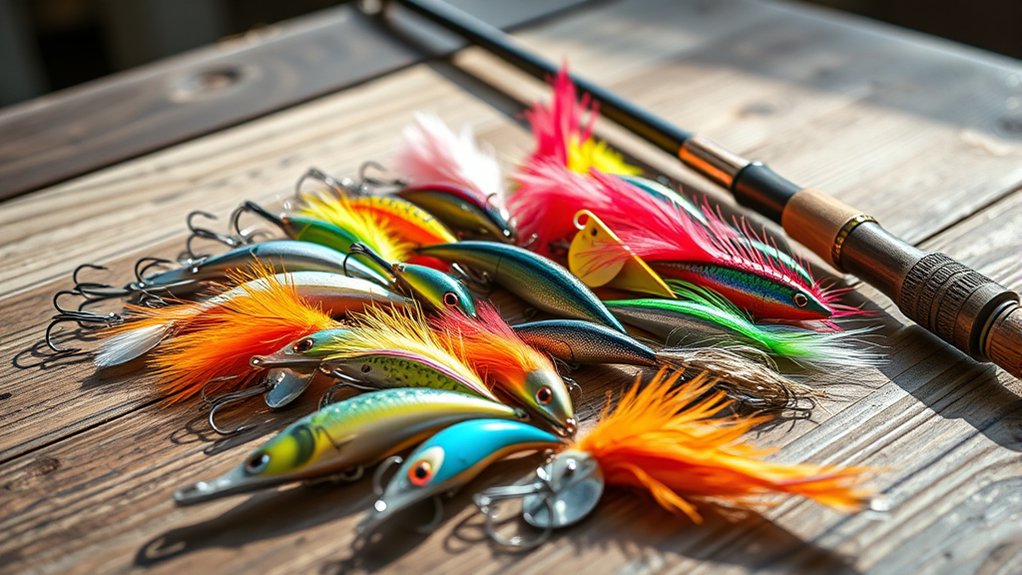
Fishing lures offer several advantages, especially when you want to cover water, target specific species, and adjust quickly to changing conditions.
You can cast lures repeatedly without rebaiting a hook, which helps you search docks, points, weed edges, current seams, shorelines, and open water faster. Lures also create action, flash, vibration, or scent cues that can trigger reaction strikes.
By selecting the right lure type, size, and retrieve, you can focus on your desired catch and avoid wasting time with presentations that do not match the situation.
Longer Casting Distance
One key advantage of using fishing lures is their ability to achieve longer casting distances than many live-bait setups. Compact spoons, hardbaits, jigs, and weighted soft plastics often cast well because their weight is built into the lure or rig.
Many hardbaits and soft plastics are shaped to reduce air resistance, helping you reach offshore cover, schooling fish, deeper breaks, or windy banks. You can also adapt your casting angle, line size, rod power, and lure weight to improve distance and accuracy.
Longer casts also keep you farther from spooky fish in clear or shallow water. That extra distance can matter when fish react to boat noise, shadows, footsteps, or sudden movement along the bank.
Target Species Accuracy
Achieving longer casting distances with lures not only enhances your reach but also improves your targeting accuracy for specific fish species.
By selecting lures that mimic the natural prey of your target fish, you increase your chances of enticing a bite. For instance, jigs are effective for bottom-oriented fish, while topwater lures attract fish feeding near the surface.
Specialized lures like spinnerbaits for bass, spoons for trout and pike, or small soft plastics for panfish cater to individual species’ behaviors and feeding habits. Furthermore, easily swapping lures allows you to adapt to changing conditions and fish activity levels.
Researching local fish populations and their preferred prey helps you choose the right lure type, color, and profile. That leads to better targeting accuracy and, over time, higher catch rates.
Pro Tip: Start by matching the size of the local forage. If baitfish are small, use smaller lures first, even when you are targeting larger fish.
The Cons of Fishing Lures
While fishing lures offer unique advantages, they also come with notable drawbacks. The biggest issues are cost, snagging, learning curve, and the need to match conditions more carefully.
You’ll find that their higher upfront cost compared to simple bait rigs can strain your fishing budget, especially if you lose several lures in rocks, brush, docks, or weeds.
Additionally, using lures effectively demands a skill set that can be intimidating for beginners still learning casting, depth control, hooksets, and retrieval techniques.
Higher Cost Compared to Bait
Although fishing lures offer versatility and can mimic a wide range of prey, their higher upfront cost compared to basic bait can be a drawback for anglers. A single hardbait, premium jig, spoon, or specialty soft plastic pack can cost more than a simple bait-and-hook setup.
| Item | Cost Pattern | Additional Costs |
|---|---|---|
| Fishing Lures | Higher upfront cost | Terminal tackle, replacement hooks, trailers, jigheads, snaps, or split rings |
| Live Bait | Lower upfront cost per trip | Hooks, floats, weights, bait containers, aerators, or bait storage |
| Reusability | Multiple uses when not lost or damaged | May need sharpening, cleaning, drying, or hook replacement |
| Materials Used | Plastic, metal, wood, silicone, rubber, or lead-free alternatives | Natural bait varies by species, availability, and local rules |
This investment in lures can lead to frustration if you choose the wrong size, depth, color, or action for the day’s conditions. Still, lures can pay off over time because many can be reused for multiple trips.
Snagging on Structures
One of the significant downsides of using fishing lures is their tendency to snag on underwater structures. This can lead to losing your lure, damaging your fishing line, or wasting time trying to free tackle.
Snagging often occurs because lures move through rocks, wood, grass, dock cables, brush piles, shell beds, and submerged vegetation. Treble-hook lures can be especially tricky in heavy cover.
Certain lure types increase this risk, particularly:
- Jigs – Designed for bottom fishing, they can get caught in rocks, weeds, brush, and laydowns.
- Soft Plastics – Their flexible design can lead to entanglement in submerged grass, roots, or debris.
- Topwater Lures – While they’re generally less prone to bottom snags, they can still catch on branches, reeds, pads, dock ropes, or overhead cover.
To minimize snagging, consider using lures with weed guards, single hooks, Texas rigs, or lighter weights. You can also lift your rod tip, slow down near cover, and avoid dragging open-hook lures through heavy brush.
Warning: Check local fishing rules before using multi-hook lures, treble hooks, scented baits, or lead tackle. Some waters restrict certain hook styles, bait types, lure materials, or species-specific methods.
Requires Skillful Usage
Snagging on structures isn’t the only challenge when using fishing lures; they also demand a level of skill that can feel intimidating for newer anglers.
Unlike live bait, lures require you to understand fish behavior and employ various retrieval techniques to increase your chances of success. You may need to retrieve steadily, twitch, hop, pause, burn, crawl, yo-yo, or dead-stick the lure based on fish mood.
Constant movement during retrieval can be tricky if you’re still mastering your casting skills. Some lures also need precise depth control, especially crankbaits, jerkbaits, swimbaits, and bottom-contact jigs.
Additionally, lure effectiveness often changes with water temperature, clarity, current, light level, season, and fishing pressure. You’ll need to experiment with different speeds and movements to discover what triggers strikes.
Being cautious and skilled in your techniques is vital to avoid losing tackle in underwater structures. It also helps you keep the lure in the strike zone longer.
Understanding Plugs
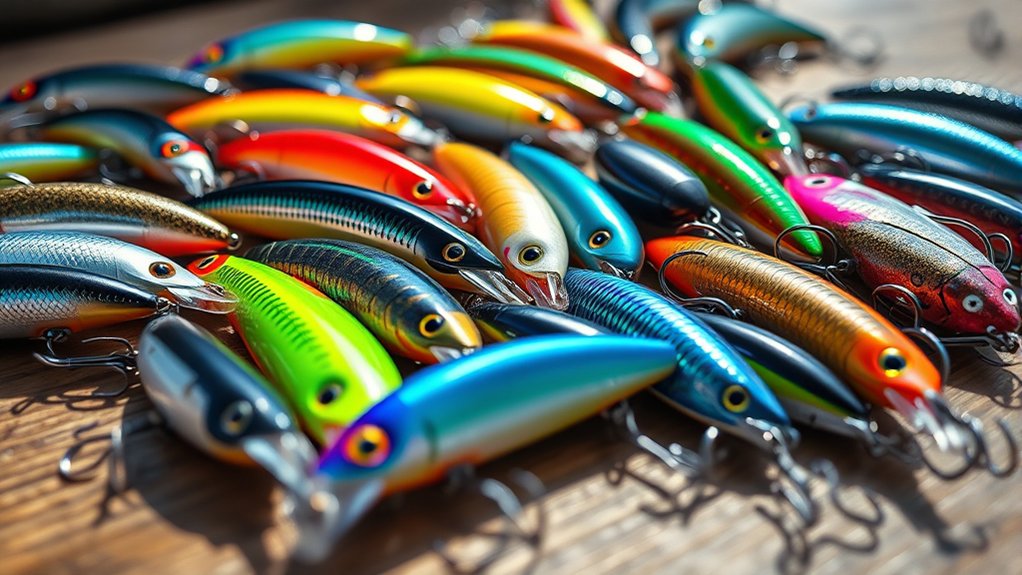
How can you enhance your fishing success with plugs? Start by understanding what each plug is designed to do. These hard plastic lures, and sometimes wood-bodied lures, often mimic baitfish with a diving lip, body roll, wobble, rattle, or darting action.
Many plugs come equipped with two or three treble hooks, which can improve hookup chances during retrieval. However, those hooks also increase snagging risk, so choose your plug carefully around weeds, wood, rocks, and docks.
To effectively use plugs, consider these techniques:
- Vary Speed: Change your retrieval speed to create an erratic motion that mimics injured prey.
- Twitch Intervals: Incorporate pauses and twitches in your retrieve to increase the lure’s attractiveness.
- Choose the Right Type: Select plugs based on buoyancy, bill shape, diving depth, and target species.
Common plug styles include crankbaits, jerkbaits, minnows, poppers, wake baits, squarebills, lipless crankbaits, and topwater walking baits. Each style has a different role.
Use shallow-diving plugs over flats, grass edges, and riprap. Use deeper plugs when fish hold along ledges, channels, points, or submerged structure. Use suspending jerkbaits when fish follow but refuse faster-moving lures.
Exploring Jigs
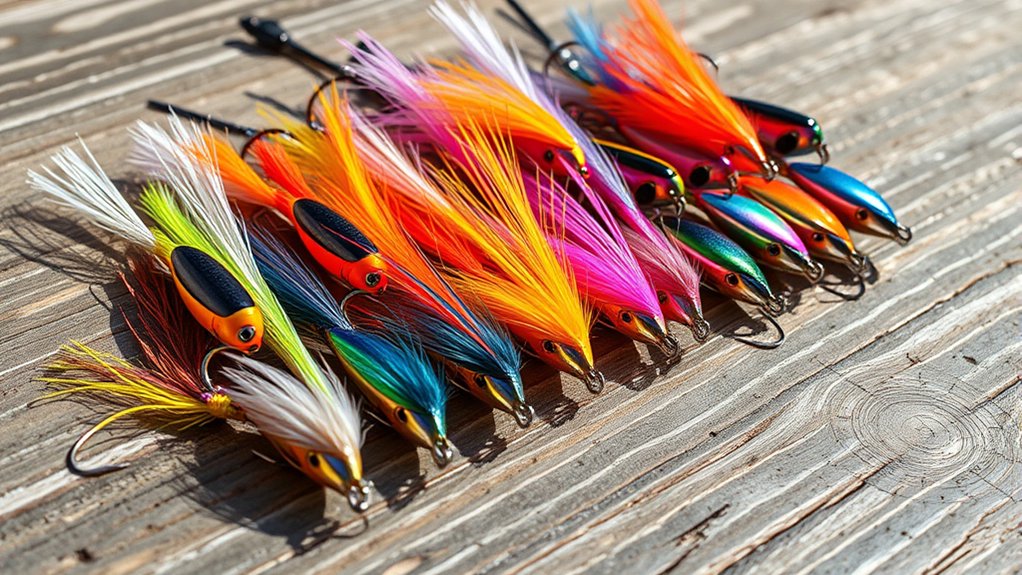
Plugs are just the beginning of the diverse world of fishing lures, and jigs stand out as one of the most adaptable options available. With a weighted head and hook, jigs often feature a feather skirt, hair dressing, silicone skirt, or plastic trailer to attract fish.
They come in various types, each suited for specific conditions:
| Jig Type | Best For | Depth/Conditions |
|---|---|---|
| Football Jig | Bottom fishing | Rocky or hard-bottom areas |
| Finesse Jig | Light bites | Shallow, clear, cold, or pressured water |
| Swim Jig | Active fish | Grass lines, open water, and mid-depth cover |
Jigs are perfect for targeting bottom-oriented fish. You’ll cast, let them sink, and then use a jigging, dragging, hopping, swimming, or shaking motion.
Experimenting with retrieval speed and movement is essential because small changes can influence your catch rates. Sometimes fish want a jig crawled slowly along the bottom. Other times they respond better to a sharp hop or steady swim.
Rigging jigs with soft plastics enhances their appeal, making them particularly effective for species like bass. Craw trailers add a defensive look, paddle-tail trailers add swimming action, and chunk trailers create a compact profile.
The Appeal of Spinnerbaits
While exploring the versatility of fishing lures, spinnerbaits emerge as a top choice for anglers seeking to entice predatory species. Their unique design, featuring spinning blades and a rubber or silicone skirt, creates both vibration and flash, effectively mimicking baitfish.
This makes them particularly appealing to fish like bass, pike, and panfish. Spinnerbaits also work well around grass, wood, and shallow cover because their bent-wire frame helps deflect away from some obstacles.
Here are three reasons why spinnerbaits stand out:
- Versatility: You can fish them at various depths and speeds, adapting to different water conditions and fish behaviors.
- Blade Variety: The choice of blade size, shape, and color impacts effectiveness; for example, willow leaf blades allow for faster retrieves, while Colorado blades create more vibration.
- Murky Water Performance: Spinnerbaits excel in low-visibility conditions, using their flash and vibration to attract fish when they might otherwise be hard to catch.
With these features, spinnerbaits are a must-have in any angler’s tackle box. Use them along windy banks, laydowns, weed edges, docks, and shallow flats when fish are feeding aggressively.
Insights on Soft Plastics
Soft plastics are a game changer in the world of fishing lures, offering unmatched versatility for anglers targeting a variety of species. Made from flexible materials, these baits can effectively imitate aquatic creatures like worms, lizards, craws, minnows, leeches, insects, and baitfish.
You can rig soft plastics using various techniques, such as Texas rigs, Carolina rigs, drop shots, Ned rigs, wacky rigs, shaky heads, and weightless presentations. This allows you to adapt to different fishing conditions, depths, and environments.
While they may not be as durable as hardbaits, their cost-effectiveness allows you to experiment with shapes and colors without committing to a single presentation. Keep in mind that some soft plastics tear after several fish or after repeated contact with cover.
To maximize effectiveness, consider pairing soft plastics with jigheads or using them alone, depending on your target species and the fishing scenario. A paddle-tail swimbait on a jighead covers water quickly, while a Texas-rigged worm works better in grass or brush.
Their ability to mimic real prey makes soft plastics an essential tool in your tackle box, increasing your chances of a successful catch while offering endless possibilities for customization.
Note: Store soft plastics in their original packaging when possible. Some soft materials can react with other plastics, bleed color, or warp if mixed together in one tackle tray.
Understanding Spoons
Spoons may look simple, but their curved metal design creates a wobbling, flashing action that many predatory fish find hard to ignore. They imitate injured baitfish and work well when fish chase moving prey.
You can cast spoons from shore, jig them vertically, troll them behind a boat, or work them through open water. Heavier spoons cast far and sink quickly, while lighter spoons flutter more slowly and stay higher in the water column.
Use silver, chrome, or natural finishes in clear water when fish are feeding on shad, minnows, or other bright baitfish. Use gold, copper, painted, or high-contrast finishes in stained water, low light, or cloudy conditions.
Spoons can be effective for trout, bass, pike, walleye, salmon, striped bass, redfish, and many other species. However, they often use treble hooks, so watch for snags around weeds, brush, and rocks.
Matching Lures to Water Conditions
Water conditions should guide your lure choice before color or brand. Fish react differently in clear, stained, muddy, warm, cold, shallow, deep, calm, and windy water.
In clear water, start with natural colors, smaller profiles, lighter line, and subtle action. Fish can inspect the lure more closely, so an oversized or overly bright lure may look unnatural.
In stained or muddy water, choose lures that create vibration, flash, or a strong silhouette. Spinnerbaits, chatter-style bladed jigs, rattling plugs, dark soft plastics, and Colorado-blade spinnerbaits can help fish locate your lure.
In cold water, slow down. Use suspending jerkbaits, finesse jigs, Ned rigs, small spoons, or slow-rolled spinnerbaits. In warm water, fish often respond better to faster retrieves, topwater lures, swimbaits, crankbaits, and reaction baits.
Wind can also help. A windblown bank often pushes plankton, baitfish, and oxygen-rich water toward feeding zones. In those areas, moving lures like spinnerbaits, crankbaits, and spoons can outperform slower presentations.
Matching Lures to Fish Behavior
Fish behavior changes throughout the day, season, and weather pattern. A lure that works in the morning may stop working by noon if fish move deeper, suspend, or stop chasing.
When fish are aggressive, use search baits that cover water quickly. Spinnerbaits, crankbaits, lipless plugs, spoons, swimbaits, and topwater lures help you find active fish fast.
When fish are neutral or pressured, slow down with soft plastics, finesse jigs, drop shots, wacky rigs, or small swimbaits. These lures stay in the strike zone longer and look less threatening.
When fish follow but do not strike, change one variable at a time. Try a smaller size, slower retrieve, longer pause, different color, quieter lure, or more natural profile before switching everything at once.
When fish strike short, add a trailer hook where legal and practical, use a smaller lure, or switch to a bait with a more compact profile. Short strikes often mean fish are interested but not fully committed.
How to Choose the Right Lure Size and Color
Lure size should match both your target species and the prey they are eating. Small panfish, trout, and pressured bass often prefer smaller lures, while pike, striped bass, muskie, and trophy bass may respond to larger profiles.
Start with natural colors in clear water: silver, shad, green pumpkin, watermelon, brown, pearl, and translucent patterns. These colors imitate baitfish, crawfish, worms, and small aquatic prey.
Use brighter or darker colors when water visibility drops. Chartreuse, white, black, blue, orange, and high-contrast patterns can help fish find the lure in stained water or low light.
Do not overcomplicate color. If fish are feeding actively, location and presentation usually matter more. If fish are finicky, small color changes can help, especially in clear water or heavily fished areas.
Basic Retrieval Techniques for Fishing Lures
Your retrieve brings a lure to life. Even the best lure can fail if it moves too fast, too slow, too straight, or at the wrong depth.
A steady retrieve works well with spinnerbaits, crankbaits, spoons, and swimbaits when fish are chasing. Keep the lure moving at a consistent pace, then adjust speed if fish follow without biting.
A stop-and-go retrieve works well with plugs, jerkbaits, topwater lures, and soft swimbaits. The pause often triggers the strike because the lure looks injured or vulnerable.
A lift-and-fall retrieve works well with jigs, spoons, tubes, and soft plastics. Let the lure fall on semi-slack line while watching for ticks, jumps, or sideways movement.
A bottom-drag retrieve works well with football jigs, Carolina rigs, Ned rigs, and craw-style plastics. Drag the lure slowly so it bumps rocks, shells, sand, or hard bottom like natural prey.
A twitching retrieve works well with jerkbaits, flukes, soft stick baits, and topwater walking baits. Use short rod-tip movements to make the lure dart, glide, or walk side to side.
Common Lure Mistakes to Avoid
Many anglers struggle with lures because they change baits too often without learning what the fish are doing. Instead of switching every few casts, adjust location, depth, and retrieve first.
A common mistake is fishing above or below the strike zone. If fish hold near the bottom, a shallow lure may pass over them unnoticed. If fish are feeding high in the water, a bottom rig may waste time.
Another mistake is using the wrong hookset. With single-hook lures like jigs and Texas rigs, you often need a firmer hookset. With treble-hook lures, a sweeping hookset usually keeps fish pinned without tearing hooks free.
Ignoring line condition is another problem. Lures rub against rocks, wood, teeth, docks, and shells. Check your line often and retie when you feel nicks, rough spots, or weak knots.
Finally, many anglers retrieve too fast in cold water and too slowly when fish are actively chasing. Let the fish tell you what they want, then repeat the speed and action that produces bites.
Lure Care, Storage, and Safety
Good lure care helps your tackle last longer and perform better. Rinse saltwater lures with fresh water, dry wet lures before storage, and replace rusty hooks or split rings.
Keep hardbaits separated from soft plastics because some soft materials can damage paint, melt surfaces, or stick to other baits. Use labeled tackle trays so you can find the right lure quickly.
Sharpen dull hooks with a hook file or replace them when they no longer grab lightly against your fingernail. Sharp hooks improve hookups and reduce the need for overly hard hooksets.
Handle treble-hook lures carefully, especially when unhooking fish. Use pliers, keep your fingers away from thrashing fish, and carry a small first-aid kit in your tackle bag.
Dispose of damaged line, torn plastics, and broken tackle properly. Loose fishing line can harm wildlife, boat props, and other anglers.
Frequently Asked Questions
How Do I Choose the Right Fishing Lure for My Location?
To choose the right fishing lure for your location, consider the local fish species, water clarity, depth, cover, current, weather, and time of year. Match the lure’s color, size, and movement to the natural prey in that environment.
Can Fishing Lures Be Used in Both Freshwater and Saltwater?
Yes, many fishing lures can be used in both freshwater and saltwater. For saltwater, choose corrosion-resistant hooks, split rings, and hardware, then rinse and dry your lures after each trip.
What Is the Best Time of Day to Use Fishing Lures?
The best time to use fishing lures is often early morning, late afternoon, evening, or during changing weather. Fish commonly feed more actively during low light, wind, current, cloud cover, or baitfish movement.
How Do Water Temperature and Clarity Affect Lure Effectiveness?
Water temperature affects fish activity, while clarity affects how easily fish see your lure. Use slower, subtle presentations in cold or clear water. Use stronger vibration, contrast, flash, or scent when water is warm, stained, or muddy.
Are There Any Specific Techniques for Using Fishing Lures Effectively?
To use fishing lures effectively, match the lure to the target species, control depth, vary your retrieval speed, and add pauses. Watch water conditions and adjust until the lure looks natural and stays in the strike zone.
What Fishing Lure Should a Beginner Start With?
A beginner should start with simple, versatile lures such as soft plastic worms, small jigs, inline spinners, and spinnerbaits. These lures work in many places and teach depth control, casting, and retrieve speed.
Do Fishing Lures Work Better Than Live Bait?
Fishing lures can work better when fish are active, spread out, or reacting to movement. Live bait can work better when fish are inactive or feeding slowly. The better choice depends on species, season, water conditions, and local rules.
Conclusion
Fishing lures give you more control over how you target fish, but they also reward practice. Plugs, jigs, spinnerbaits, spoons, and soft plastics each shine in different situations, so the best choice depends on depth, cover, clarity, forage, and fish behavior.
Start simple, learn what each lure does, and make small adjustments before changing everything. Vary your retrieve, watch how fish react, and match your lure to the prey they already expect to see. Once you understand those patterns, mimicking a fish’s dinner becomes less of a guessing game and more of a repeatable skill.
With the right lure and a thoughtful approach, you can fish cleaner, cover more water, and improve your odds of landing the trophy catch you’ve been dreaming about.