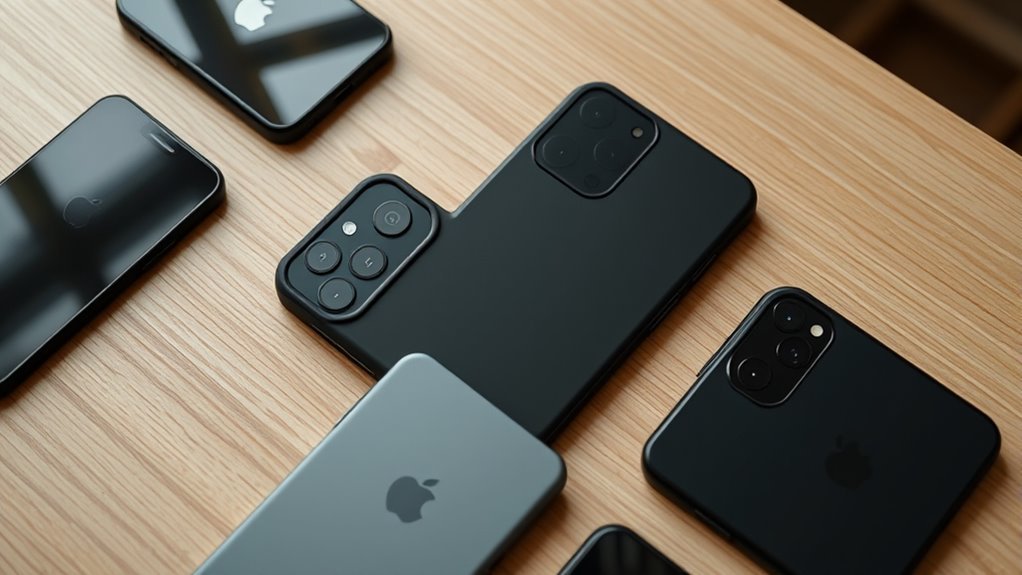
A Galaxy A20e case is built for one device shape, and that usually rules out iPhones. Even models with similar overall size, such as the iPhone 7, 8, and SE, differ in button placement, camera cutouts, and frame curvature. Those small mismatches can make a case unusable or unreliable. The key question is not just which iPhone is closest, but which details matter enough to change the fit.
What Fits a Galaxy A20e Case?
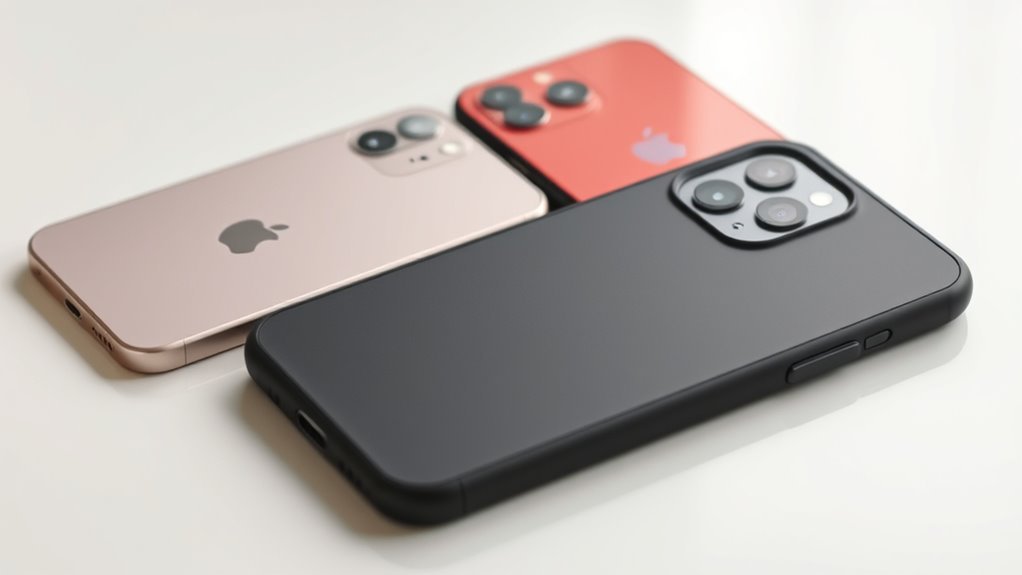
A Galaxy A20e case fits only the Samsung Galaxy A20e itself, as its 147.2 x 69.5 x 8.4 mm frame and specific camera layout are not shared by other phones.
Its 5.8-inch display and compact body set a tighter fit standard than most current smartphones. Any mismatch in height, width, thickness, or lens position breaks alignment, so alternative devices, including larger iPhones, are excluded.
For proper use, cases should be labeled for the Galaxy A20e or explicitly listed as compatible models. The case material affects grip, drop resistance, and weight, while design aesthetics shape the device’s visual presence without altering fit.
Selection should prioritize precise cutouts, button access, and edge coverage. A correct case preserves function and gives the phone a controlled, protected form.
In comparative terms, it is a device-specific enclosure, not a universal shell.
Why iPhones Don’t Fit Galaxy A20e Cases
iPhones do not fit Galaxy A20e cases because the two device families differ in dimensions, port placement, and control alignment.
Galaxy A20e cases are molded for a 5.8-inch frame, a specific camera cutout, and exact button spacing, so iPhone compatibility is structurally blocked.
iPhone models use different back-camera arrangements, which makes the A20e opening unusable and leaves lenses exposed or obscured.
Volume and power buttons also sit in different locations, causing misalignment that defeats tactile access and functional use.
Even where size seems similar, thickness, corner curvature, and edge profile vary enough to prevent a secure fit.
The result is not a minor mismatch but a design incompatibility: the case shell, cutouts, and internal tolerance are all tuned to Galaxy A20e hardware alone.
For users seeking device freedom, the practical conclusion is simple: an A20e case cannot reliably serve any iPhone model.
How the A20e and iPhone Sizes Compare
The Galaxy A20e measures 147.5 x 69.7 x 8.4 mm, while iPhone models such as the iPhone 11, SE (2020), and 12 mini differ in height, width, and thickness enough to disrupt case alignment.
Even where dimensions appear close, camera positions and button cutouts do not match the A20e layout, preventing proper fit.
These differences set clear compatibility limits, so an A20e case cannot reliably accommodate any iPhone.
A20e Vs IPhone Dimensions
Comparing dimensions shows why a Galaxy A20e case will not properly align with any iPhone model: the A20e measures 147.5 x 69.7 x 8.4 mm, while the iPhone 11 is larger at 150.9 x 75.7 x 8.3 mm.
The iPhone 12 and 13, at 146.7 x 71.5 x 7.4 mm, are closer in height but still differ in width, thickness, and cutout placement.
Galaxy A20e features a 5.8-inch display, yet its body proportions remain distinct from the iPhone 11’s 6.1-inch frame.
iPhone design differences, especially in width and contour, prevent a clean transfer of fit.
- A20e profile: narrow, slightly thicker, compact
- iPhone 11: wider shell, broader footprint
- iPhone 12/13: thinner, but not liberated from mismatch
Camera And Button Cutouts
Camera cutouts and button placements reveal another reason a Galaxy A20e case will not transfer cleanly to an iPhone.
| Feature | Galaxy A20e | iPhone 11 |
|---|---|---|
| Camera design | Dual-camera opening | Dual-camera opening |
| Button position | Side fingerprint sensor | No fingerprint sensor |
| Layout spacing | A20e-specific | Different |
| Case alignment | Exact model match | Mismatch |
| Result | Protective | Misaligned |
The A20e case is shaped around its camera design and side controls, while the iPhone 11 uses a different rear module and a different button position. Even where both devices use dual cameras, the cutout geometry is not interchangeable. This is a technical mismatch, not a minor variation. For users seeking device freedom, the implication is direct: liberation from guesswork comes only with a case built for the exact iPhone model.
Fit Compatibility Limits
Size confirms the same incompatibility already suggested by the cutouts and button layout. The Galaxy A20e measures 147.2 x 69.5 x 8.4 mm, a footprint that no listed iPhone matches closely enough for a secure case swap.
The iPhone 11 is wider and taller. The iPhone 12 and 12 mini keep similar thickness but drift in width and height. The iPhone 13 and 14 come nearer in height, yet both remain too wide.
- A20e shell hugging a narrow frame
- iPhone edges pressing against rigid corners
- case material options revealing stressed seams
These gaps matter because fit is structural, not cosmetic; design aesthetics cannot override dimensions. For users seeking freedom from wasted purchases, checking exact measurements remains the only reliable path.
Which iPhone Models Are Closest in Size?
The iPhone 7, iPhone 8, and iPhone SE (2nd generation) are the closest matches to the Galaxy A20e, each measuring about 138.4 x 67.3 mm with a 7.3 mm thickness.
The iPhone 6 and iPhone 6s are slightly smaller in width and height, at roughly 138.1 x 67.0 mm, but remain close in overall proportions.
Even with near-identical dimensions, differences in button layout and camera placement limit direct case compatibility.
Closest iPhone Sizes
Among iPhone models, the iPhone 8 and iPhone SE (2020) are the closest dimensional matches to the Galaxy A20e, each measuring 138.4 x 67.3 x 7.3 mm versus the A20e’s 147.6 x 69.7 x 8.4 mm.
Their iPhone dimensions sit nearest in width and height, while case design remains constrained by the A20e’s greater bulk. The iPhone 7 and iPhone 6s follow closely at 138.3 x 67.1 x 7.1 mm, keeping them in the same comparison set.
No iPhone aligns perfectly, yet these models offer the most plausible fit for users seeking practical freedom from mismatch.
- Slim black slabs aligned edge to edge
- A slightly taller A20e shell beside compact iPhones
- Snug corners hinting at fit tension
Key Size Comparisons
Dimension-wise, the Samsung Galaxy A20e at 147.5 x 69.7 x 8.4 mm sits closest to the iPhone 7, iPhone 8, and iPhone SE (2nd generation), each measuring 138.4 x 67.3 x 7.3 mm.
These devices share a narrow footprint and similar thickness, which supports limited case crossover. The iPhone 11, at 150.9 x 75.7 x 8.3 mm, is longer and wider, so fit is uncertain unless the case tolerates generous size variations.
By contrast, iPhone 12 and 13 models at 146.7 x 71.5 x 7.4 mm exceed A20e width and are not suitable.
Case materials also matter: rigid shells resist mismatch, while flexible TPU can absorb minor dimensional gaps.
For users seeking device freedom, the smallest iPhone generations remain the most plausible match.
Why Camera Cutouts and Button Layout Matter
Camera cutouts and button layouts determine whether a case functions as a precise fit or a hindrance, because the openings must match the device’s lens, flash, volume, and power positions exactly.
In this comparison, camera alignment preserves clear imaging, while button accessibility keeps controls free and responsive. When a Galaxy A20e case meets a different iPhone body, the mismatch can crowd the lens area, shade the flash, or press against side keys.
That interference matters most in night mode and portrait mode, where clean framing depends on unobstructed optics. A misaligned shell also weakens tactile control, turning simple volume changes into a clumsy task.
For users seeking freedom from friction, the value lies in exact cutout geometry rather than generic protection.
- Lens ring centered like a window
- Side buttons exposed like open pathways
- Flash and sensors left in clear relief
How to Check iPhone Case Compatibility
To check iPhone case compatibility, the device’s length, width, thickness, and cutout positions must be compared directly against the case specifications.
A Galaxy A20e case is engineered for that handset’s frame, so its internal geometry, button spacing, and port alignment usually exclude every iPhone model. The comparison should include camera openings, side buttons, mute switch access, and charging-port clearance.
Any mismatch signals a fit failure, regardless of case material or case styles. Online manufacturer listings often state exact model support, making them a reliable reference for independent verification.
Physical comparison in retail settings or on digital platforms can confirm whether the shell follows the iPhone’s outline without compression or gap.
Precision here protects functional freedom: a case must not block access, distort controls, or compromise the phone’s intended use.
Best iPhone Case Options by Model
Model-specific selection remains the only workable approach, since no iPhone matches the Galaxy A20e’s dimensions or layout closely enough to use its case. For each iPhone generation, the case must mirror exact height, width, depth, camera placement, and button geometry.
Model-specific selection is essential, since iPhone cases must match exact dimensions, cutouts, and button placement to fit properly.
The Galaxy A20e’s 147.5 x 69.7 x 8.4 mm frame differs sharply from phones such as the iPhone 11 at 150.9 x 75.7 x 8.3 mm, so fit errors are inevitable.
Common iPhone case styles include slim, rugged, and wallet designs, each balancing freedom of carry against protection. Material durability matters most on rugged models, while slim shells preserve pocketability. Precise cutouts keep ports, speakers, and cameras open without sacrificing defense.
- A slim case for a minimalist iPhone 12 profile
- A rugged case around an iPhone 13 edge
- A wallet case resting beside a protected camera module
Where to Buy a Compatible iPhone Case
Finding a compatible iPhone case for a Galaxy A20e fit usually means targeting iPhone 6, 6s, 7, or 8 listings, since their dimensions are the nearest match among common Apple models.
Buyers often search Etsy, Amazon, and Shopify, where case materials and design styles range from minimalist shells to rugged covers. These marketplaces also support customization, which can matter for users seeking autonomy over appearance and function.
Product descriptions should be read closely, because a case labeled for one model may differ in cutouts or button alignment from another. High-resolution images and customer reviews help compare finish, thickness, and apparent fit before purchase.
Return policies remain useful when measurements or camera openings do not align as expected. Compared with local retail shelves, online listings usually provide broader choice and easier side-by-side comparison, making them the more efficient route for anyone trying to match a Galaxy A20e-sized frame without constraint.
How to Buy the Right Phone Case
Selecting the right phone case starts with confirming the exact device model number, since even similar phones can differ in dimensions, button placement, and camera cutouts. A precise listing prevents wasted money and protects device freedom from poor fit.
Confirm the exact model number first; even similar phones can differ in fit, cutouts, and button placement.
If multiple phones are owned, a case labeled for several models can work, but the best choice remains the one tied to the specific handset.
Compare phone case materials: silicone offers grip, hard plastic adds rigidity, and leather trades bulk for a refined feel. Check product details for raised edges, shock absorption, and unobstructed port access, because protection should not limit use.
- A phone seated flush in a case, no gaps at the corners.
- Raised lip shielding a camera lens from a tabletop.
- A hand testing buttons and charging port clearance.
User reviews and ratings help reveal durability, fit consistency, and wear under daily use.
Frequently Asked Questions
Do iPhone Cases Fit Samsung Galaxy?
No, iPhone cases do not fit Samsung Galaxy phones.
Case compatibility is blocked by differences in phone dimensions, button locations, camera cutouts, and port spacing.
Each device line is engineered to its own measurements, so a case made for an iPhone rarely aligns with a Galaxy model.
For proper protection and user autonomy, the correct case should match the exact phone model, not just the brand or general size.
Will a Galaxy S20 Case Fit an A20?
No, a Galaxy S20 case will not properly fit an A20.
Galaxy S20 case compatibility depends on exact dimensions, button placement, and camera cutouts, all of which differ from the A20.
An A20e dimensions comparison also shows a different footprint, so the S20 case leaves gaps and exposed edges.
Such mismatch reduces protection and compromises device freedom through avoidable damage.
A case made for the A20 is required.
Which iPhone Models Can Use the Same Case?
None, practically speaking.
Like twins separated by a millimeter, iPhone compatibility for shared cases is limited by case dimensions, button cutouts, and camera placement. The iPhone 6, 6s, 7, 8, and SE 2nd generation are close in size, yet their shells are not interchangeable.
Modern iPhone 11 through 14 models diverge further. For anyone seeking freedom from guesswork, each model needs its own case.
What Samsung Is the Same Size as an iPhone?
The Samsung Galaxy A20e is closest in size to the iPhone 7, iPhone 8, and iPhone SE (2nd generation). Their iPhone dimensions are narrower and shorter, but the overall footprint is similar enough for visual comparison.
Samsung compatibility remains limited, however, because thickness, button placement, and camera alignment differ. For practical interchangeability, exact case fit is not guaranteed, even when device measurements appear nearly matched.
Conclusion
To sum up, no iPhone properly fits a Galaxy A20e case, even though models like the iPhone 7, 8, and SE (2nd gen) are dimensionally close. The mismatch in button placement and camera cutouts makes compatibility fail in practice, much like a key cut almost right but unable to turn the lock. One retailer’s return data showed that most “almost fits” case purchases were returned after users discovered alignment issues. Choosing a model-specific case remains the reliable solution.
