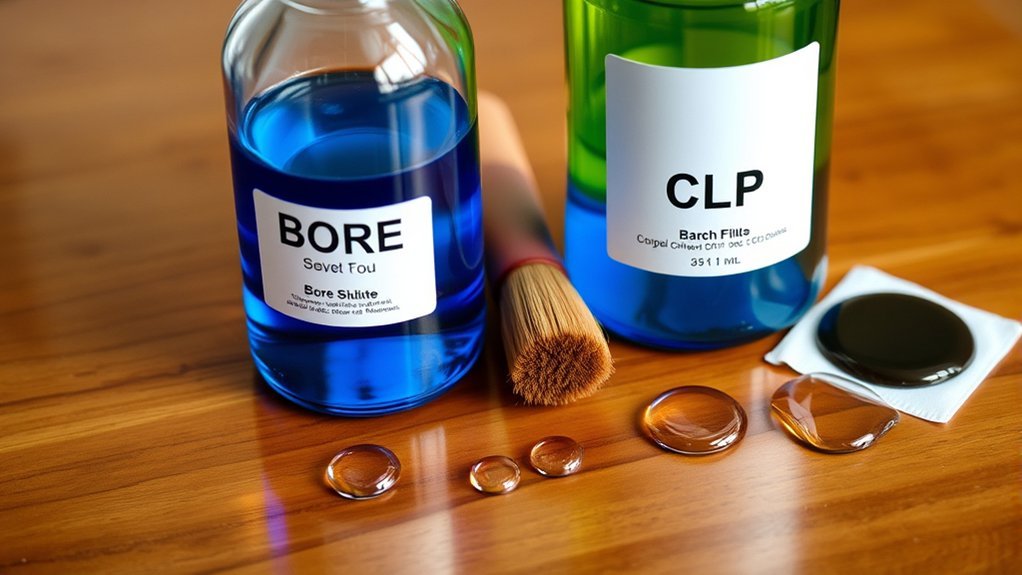
When it comes to firearm maintenance, choosing the right product can feel like maneuvering through a maze. Bore solvents and CLP each have their own strengths, and they solve different cleaning and protection problems. Understanding those key differences helps you clean more safely, avoid overusing harsh chemicals, and choose the right product for the job. For clarity and searchability, this guide compares bore solvent vs CLP based on practical cleaning needs, current standards, and safe-use guidance.
Quick Answer
Use bore solvent when you need deep barrel cleaning, especially for copper, carbon, or lead fouling. Use CLP when you want one product that cleans lightly, lubricates moving parts, and adds short-term corrosion protection. Many owners use both: solvent for the bore, then CLP for lubrication and protection.
Key Takeaways
- Bore solvent is best for deep cleaning the inside of the barrel when fouling has built up.
- CLP is best for routine maintenance because it combines cleaning, lubrication, and short-term protection.
- Dedicated solvents may remove stubborn fouling better, but they often need careful handling, ventilation, and dwell-time control.
- CLP leaves a protective film, while many bore solvents evaporate quickly and are not meant to be a final lubricant.
- The safest routine often uses both products: bore solvent first, dry patches next, and a light CLP or lubricant layer afterward.
At a Glance
| Best For | Bore solvent: deep barrel cleaning. CLP: routine cleaning, lubrication, and short-term protection. |
| Main Difference | Bore solvent focuses on removing fouling. CLP balances cleaning with lubrication and corrosion protection. |
| Application Style | Bore solvent usually goes on patches or brushes. CLP is usually wiped or sprayed lightly onto metal surfaces. |
| Safety Priority | Always work on an unloaded firearm, ventilate the area, avoid ignition sources, and follow the product label and SDS. |
Understanding Bore Solvent
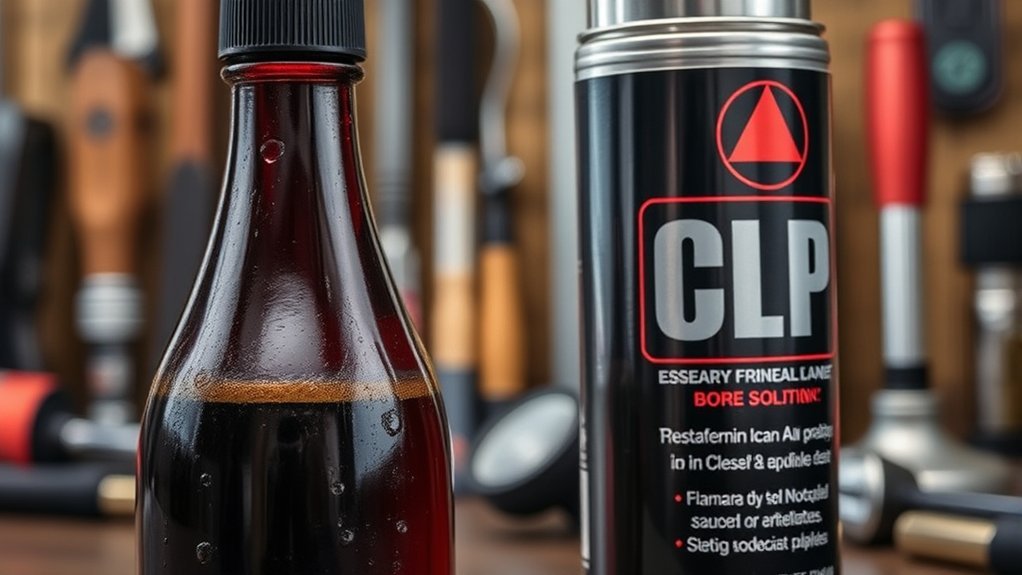
Bore solvent is a specialized cleaning agent designed to remove fouling and residue from the interior of firearm barrels. It helps break down carbon, copper, and lead deposits, which can affect barrel performance and consistency over time.
When using bore solvent, apply it to a cleaning patch or brush and push it through the barrel. Let it sit for the product’s recommended dwell time so it can soften stubborn fouling. Afterward, run dry patches through the bore until they come out clean.
Regular bore cleaning can help support consistent accuracy and prolong barrel life, especially after heavy range sessions. Always follow the manufacturer’s instructions for safe handling and proper application. For copper removers that use ammonia, avoid prolonged exposure and ensure good ventilation, since some solvent fumes can irritate the eyes, skin, or respiratory system. NRA solvent guidance
Warning: Clean only unloaded firearms. Remove ammunition from the work area, keep the muzzle pointed in a safe direction, and follow your firearm manual before disassembly or cleaning.
The Role of CLP
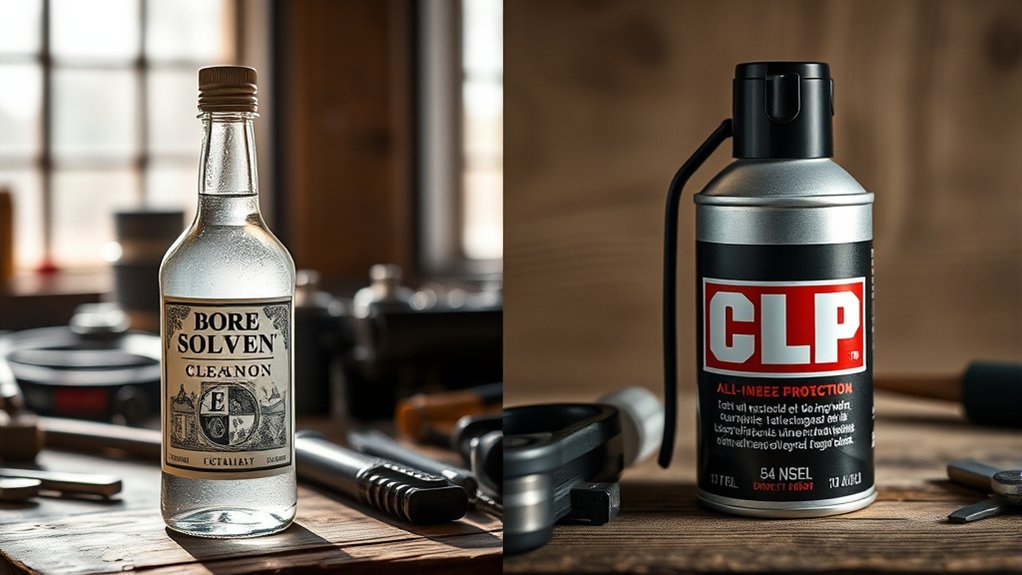
When you consider the role of CLP, it is crucial to understand its multifunctional nature as a cleaning agent, lubricant, and corrosion protector. CLP can remove light fouling and debris while leaving a protective film that helps reduce friction and wear.
CLP also helps combat rust and corrosion, which supports reliable operation during regular use. Per the current U.S. Department of Defense specification, CLP is designed for cleaning, lubrication, and short-term preservation. MIL-PRF-63460G, 2023
Cleaning Agents Overview
Cleaning agents play an essential role in maintaining firearm performance and longevity, and CLP is a popular choice because it handles several maintenance steps in one product. CLP can remove dirt, light carbon buildup, and surface fouling while leaving a protective barrier against corrosion.
Its formulation allows quick application, which simplifies routine cleaning. CLP’s versatility also makes it suitable across many firearm types, although you should still follow the firearm maker’s manual for model-specific lubrication points and product restrictions.
CLP can penetrate tight spaces and reach areas that may be missed with traditional cleaners. While it works well for routine cleaning, its protective and lubricating properties are the main reason many owners keep it in their maintenance kit.
Lubrication Properties Explained
While many gun owners focus on cleaning, understanding the lubrication properties of CLP is equally essential for firearm performance. CLP stands for Cleaner, Lubricant, and Protectant, so it does more than remove residue.
Its lubricant component minimizes friction between moving parts. That helps reduce wear and supports smoother operation. When applied correctly, CLP creates a thin film that adheres to metal surfaces and supports reliable cycling.
This film also helps maintain tolerances and keeps metal parts from running dry. Unlike some dedicated lubricants, CLP combines cleaning and lubrication, which can streamline your maintenance routine. Regular application of CLP can help enhance your firearm’s performance and preserve parts when used as directed.
Protection Against Corrosion
CLP not only enhances lubrication but also plays a significant role in protecting your firearm against corrosion. Its formulation includes rust-inhibiting additives that form a protective barrier on metal surfaces.
This barrier helps prevent moisture and environmental contaminants from causing oxidation and rust. When you apply CLP correctly, it can reach small crevices and add protection to exposed metal. Regular application is especially important in humid conditions or after exposure to moisture.
CLP is intended for cleaning, lubrication, and short-term preservation. For long-term storage, follow your firearm manufacturer’s recommendations for preservatives, oils, or greases. In extreme cold, some platforms may specify arctic-grade lubricant instead of CLP, so check your model’s technical manual. U.S. Army small-arms lubricant guidance
Composition Differences
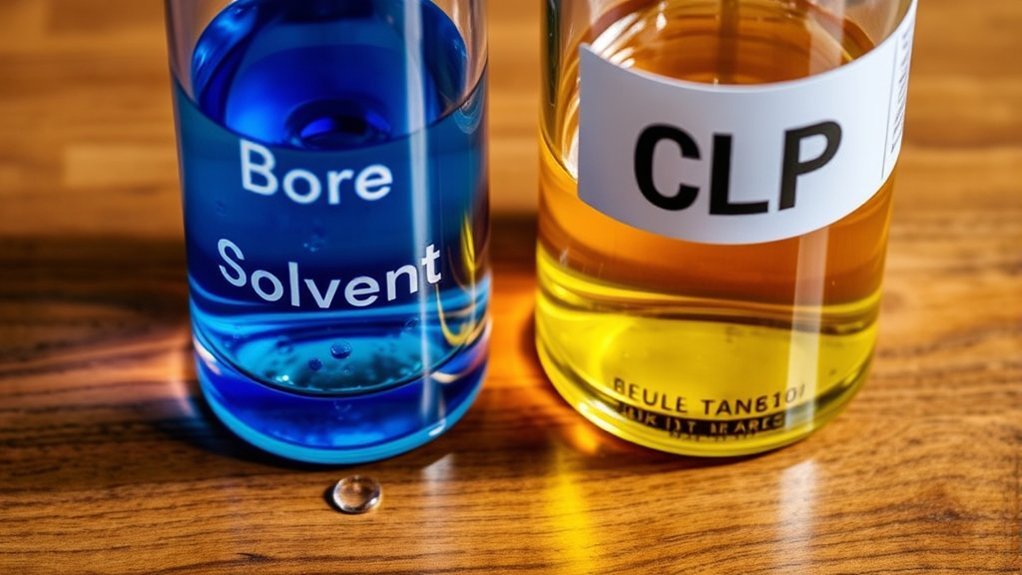
When comparing bore solvents and CLP, it is essential to understand their distinct compositions. Bore solvents typically contain stronger cleaning solvents and detergents designed to dissolve fouling inside the bore. In contrast, CLP combines cleaning agents, lubricants, and corrosion inhibitors to provide a broader maintenance solution.
| Bore Solvent | CLP |
|---|---|
| High concentration of solvents | Balanced blend of cleaners and lubricants |
| Primarily for cleaning | Multi-functional: clean, lubricate, protect |
| Quick evaporation | Slower evaporation for lasting protection |
Understanding these composition differences helps you choose the right product for your firearm maintenance needs. A bore solvent is more focused, while CLP is more versatile. That difference matters because the wrong product may clean less effectively, leave too much residue, or fail to lubricate the parts that need protection.
Application Methods
As you evaluate the application methods for bore solvents and CLP, it is crucial to recognize the differences in their usage. The right method helps maximize effectiveness and reduces the risk of overapplying chemicals.
Bore solvents typically require direct application using patches or brushes. This ensures thorough contact with the bore’s interior surfaces. You should apply the solvent according to the product label and allow the recommended dwell time to dissolve fouling.
CLP products are often sprayed or wiped onto surfaces. They provide a more versatile application because they function as cleaners, lubricants, and protectants in one step. When using CLP, apply a thin, even coat and make sure it reaches the mechanical parts that need lubrication.
For safety, always clean only unloaded firearms, work in a well-ventilated area away from ignition sources, and follow each product’s Safety Data Sheet. OSHA solvent hazards OSHA ventilation standard
Pro Tip: Use the lightest effective amount of CLP. Too much lubricant can attract dirt, migrate into unwanted areas, or create a messy surface that needs extra wiping.
Cleaning Effectiveness
While both bore solvents and CLP are designed to clean firearms, their effectiveness varies considerably based on the type of fouling you need to remove. Bore solvents usually perform better when the bore has stubborn deposits that need targeted chemical action.
Bore solvents excel at breaking down specific residues, making them ideal for:
- Copper fouling: They aggressively target and dissolve copper deposits from the bore, helping restore a cleaner barrel surface. Strong copper solvents are often ammonia-based and can be irritating, so use them with care. NRA solvent guidance
- Carbon buildup: Bore solvents can tackle carbon residues that accumulate after firing, particularly in semi-automatic and automatic firearms.
- Lead deposits: Certain bore solvents are formulated to remove lead fouling, which can affect accuracy and make later cleaning harder.
In contrast, CLP products offer more general cleaning capability. CLP may remove light fouling well, but it may not penetrate and dissolve stubborn deposits as effectively as a dedicated bore solvent. Understanding these differences will help you choose the right product for your cleaning needs.
Lubrication Properties
When evaluating lubrication properties, consider the viscosity comparison between bore solvents and CLP products. Viscosity affects how well a lubricant adheres to surfaces and reduces friction. The longevity of lubrication also matters because it determines how often you need to reapply the product for reliable performance.
Viscosity Comparison
Viscosity plays an essential role in lubrication. It influences how well a product stays on metal surfaces and protects moving components. When comparing bore solvents and CLP, you will notice distinct differences in viscosity that affect their applications.
- Bore solvents: These typically have lower viscosity, allowing quick penetration into tight spaces and thorough cleaning of fouling materials.
- CLP: CLP generally has a higher viscosity than a fast-evaporating solvent, helping it leave a protective film on metal surfaces.
- Temperature variance: Both products may behave differently under temperature changes, which can affect viscosity and lubrication performance. In extremely cold environments, some manuals specify arctic-grade lubricant instead of CLP. U.S. Army small-arms lubricant guidance
Understanding these viscosity characteristics can help you choose the right product for peak performance. Use bore solvent when cleaning is the priority. Use CLP when you need lubrication and protection after the bore and parts are clean.
Longevity of Lubrication
The longevity of lubrication is essential for maintaining firearm performance and reliability. It directly affects how well a product can protect against wear and corrosion over time.
When comparing bore solvents and CLP, you will find significant differences in how long each product stays active on metal. Bore solvents typically evaporate quickly, providing short-term cleaning benefits but requiring a separate lubricant or protectant afterward.
In contrast, CLP formulations are designed for extended use compared with cleaning-only solvents. They offer better adhesion and more resistance to breakdown under normal storage and handling conditions. This means CLP not only lubricates but also protects equipment over longer intervals.
Choosing the right product depends on your specific needs. If you prioritize long-lasting protection, CLP is usually the better option. If your main goal is removing stubborn fouling, a bore solvent may be the better first step.
Protection Against Corrosion
While both bore solvent and CLP may contribute to corrosion control in different ways, their effectiveness and application methods vary considerably. Understanding these differences is essential for better firearm maintenance.
- Bore solvent: Bore solvent is primarily designed for cleaning. Some products may include ingredients that help neutralize residue or moisture, but most are not intended to be the final protective layer.
- CLP: CLP not only cleans and lubricates but also forms a protective barrier against corrosion. It is particularly useful for regular maintenance and short-term preservation. MIL-PRF-63460G, 2023
- Application: Bore solvent is often used as a pre-cleaning step, while CLP can be applied more frequently to maintain a protective layer during routine usage.
Selecting the right product based on these attributes can enhance your firearm’s lifespan and performance. In humid environments, a light protective film matters more because moisture speeds corrosion. After any wet-weather exposure, clean and dry the firearm before applying CLP or another recommended protectant.
Note: CLP is not always the best long-term storage product. For extended storage, use the preservative, grease, or oil recommended by your firearm manufacturer.
Bore Solvent vs CLP: Which Should You Use First?
In many cleaning routines, bore solvent comes first and CLP comes later. That order makes sense because bore solvent removes fouling from the barrel, while CLP can lubricate and protect after cleaning.
A practical sequence looks like this:
- Verify the firearm is unloaded and remove ammunition from the cleaning area.
- Apply bore solvent to the bore with a patch or brush, following the solvent label.
- Allow the recommended dwell time, but do not let harsh solvents sit longer than directed.
- Run dry patches through the bore until they come out clean enough for your maintenance goal.
- Apply a light CLP layer to the right metal surfaces for lubrication and short-term protection.
- Wipe away excess product so the firearm is not left wet, sticky, or over-lubricated.
This approach gives you the deep cleaning benefit of a dedicated solvent without losing the lubrication and protection benefits of CLP. It also keeps each product in the role it handles best.
Common Mistakes to Avoid
Even good cleaning products can cause problems when used incorrectly. Avoid these common mistakes when comparing bore solvent vs CLP:
- Using bore solvent as a final lubricant: Many bore solvents evaporate quickly and are not designed to protect moving parts after cleaning.
- Using CLP for heavy copper fouling: CLP may not remove stubborn copper deposits as well as a dedicated copper solvent.
- Over-lubricating: Too much CLP can attract dust, lint, and powder residue.
- Ignoring dwell time: Removing solvent too quickly may reduce cleaning effectiveness, while leaving it too long may risk damage depending on the formula.
- Mixing chemicals: Do not mix cleaners unless the manufacturer clearly says they are compatible.
- Skipping ventilation: Solvent vapors can irritate your eyes, skin, and lungs, especially in small indoor spaces.
A careful routine is better than an aggressive one. Use the right product, follow the label, and keep your cleaning area controlled and ventilated.
Choosing the Right Product for Your Needs
How do you determine the right product for your firearm maintenance needs? Start by evaluating the specific task you need to perform. If you are primarily focused on cleaning the bore and removing fouling, a dedicated bore solvent is your best option.
Bore solvent is designed to penetrate and break down residues effectively. It is the better pick when you see accuracy changes, heavy carbon, visible lead deposits, or copper fouling after repeated shooting sessions.
On the other hand, if you want a versatile solution for cleaning, lubricating, and protecting, CLP is the better choice. It is especially useful for quick maintenance after normal range use, light cleaning, and protecting exposed metal from moisture.
Consider the environment where you will use or store your firearm. If you are in humid conditions, a product with strong corrosion protection is essential. For long-term storage, consult your firearm manufacturer’s guidance on preservatives or greases rather than relying solely on CLP. MIL-PRF-63460G, 2023
Ultimately, your choice should align with your maintenance routine, firearm type, cleaning frequency, and personal preferences for ease of use and effectiveness.
When to Use Both Products
You do not always need to choose only one product. In many cases, bore solvent and CLP work best as a pair. Bore solvent handles the deep cleaning stage, and CLP handles the lubrication and protection stage.
Use both products when:
- You have fired many rounds and suspect heavy carbon or copper fouling.
- You need to clean the bore thoroughly before storing the firearm.
- You want to remove stubborn residue but still leave parts protected afterward.
- You cleaned with a fast-evaporating solvent and need to restore lubrication.
- You used a harsh solvent and want to wipe, dry, and protect exposed metal after cleaning.
This two-step approach gives you better control. You can clean aggressively only where needed, then use a lighter protective product on the parts that benefit from lubrication.
Safe Handling and Storage Tips
Firearm cleaners are chemical products, so safe handling matters. Read the product label and Safety Data Sheet before use. Wear gloves when appropriate, protect your eyes from splashes, and avoid breathing concentrated vapors.
Keep solvents and CLP containers tightly closed when not in use. Store them away from heat, sparks, open flame, and children. Dispose of solvent-soaked patches and rags according to local rules because some products may be flammable or irritating.
Good ventilation is especially important when working indoors. OSHA identifies solvent exposure as a workplace hazard, and the same basic caution applies in a home cleaning area. OSHA solvent standards
Conclusion
In the world of firearm maintenance, choosing between bore solvent and CLP is like selecting the right tool for a job. Each product serves a unique purpose. Bore solvents act like your precision tool for deep cleaning, while CLP works as a versatile maintenance product for cleaning, lubrication, and short-term protection.
By understanding their differences, you can tailor your approach and keep your firearm in better condition. Use bore solvent when fouling is the main problem. Use CLP when you need routine care, friction reduction, and corrosion protection. For many maintenance routines, the best answer is not bore solvent or CLP. It is bore solvent first, then CLP afterward.
Always handle chemicals safely. Work with ventilation, wear appropriate PPE, and dispose of solvent-soaked rags per local regulations. OSHA solvent standards
Sources
- Defense Logistics Agency QuickSearch: MIL-PRF-63460G — CLP cleaning, lubrication, and short-term preservation specification.
- U.S. Army: Small Arms, Does Your Weapon Need LAW Instead of CLP? — cold-weather lubricant considerations.
- OSHA: Solvent Hazards — solvent exposure and safe handling considerations.
- OSHA Standard 1915.36: Ventilation and Protection in Welding, Cutting and Heating — ventilation principles for hazardous fumes and vapors.
- OSHA: Solvents Standards — solvent-related safety standards and regulatory references.
- NRA American Hunter: Keepin’ ’Em Cleaned and Oiled — practical firearm cleaning and solvent-use guidance.
