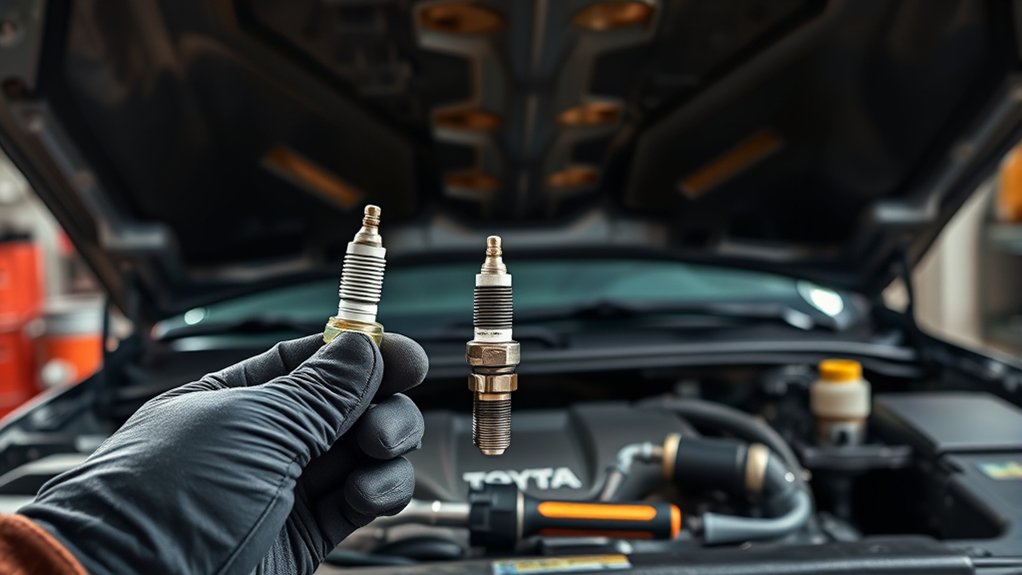
Toyota Tundra spark plug replacement is usually a long-interval maintenance job, not an automatic 60,000-mile service on every truck. Toyota’s schedule depends on model year and engine, so the safest starting point is the maintenance guide tied to your vehicle identification number (VIN), followed by diagnosis if the engine is running poorly.
Quick Answer
For many late-model Toyota Tundras—including the 2018, 2021, 2022, 2025, and 2026 model years—Toyota schedules spark plug replacement at 120,000 miles. Some guides also state 144 months. Because schedules vary, confirm your year and engine. Replace plugs earlier only when testing finds wear, fouling, damage, or a plug-related misfire.
Key Takeaways
- Do not use a universal 60,000-to-100,000-mile rule; several official late-model Tundra guides specify 120,000 miles.
- A rough idle, misfire code, hard start, or Check Engine light can involve spark plugs, but none proves the plugs are the cause.
- Install the exact plug type specified for the VIN and engine rather than choosing solely by “iridium” or “platinum” marketing.
- Use a cold engine, clean plug wells, hand-start every plug, and follow the model-specific torque procedure to protect the cylinder-head threads.
At a Glance
| Time Required | Plan several hours for a first-time DIY job; professional labor time varies by engine and access. |
| Difficulty | Intermediate to advanced; tight access and aluminum cylinder-head threads leave little room for error. |
| Tools Needed | VIN-correct plugs, OBD-II scanner, basic sockets, spark-plug socket, extensions, torque wrench, and compressed air or a vacuum. |
| Cost | Varies by engine, plug quantity, plug type, local labor rate, diagnostic time, and whether coils or boots also need service. |
Understanding Spark Plugs and Their Role in Your Toyota Tundra
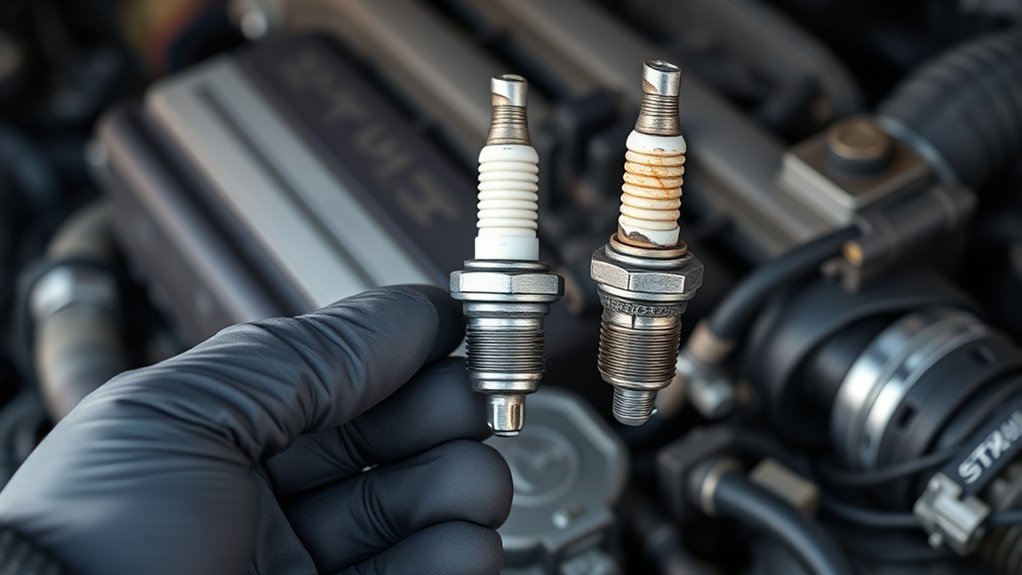
Spark plugs create the electrical spark that starts combustion in each gasoline-engine cylinder. An ignition coil supplies the high voltage, while the plug’s electrode, heat range, reach, and gap must match the engine’s design.
As plugs age, electrode wear or deposits can increase the voltage needed to fire them. A plug can also be fouled by oil, excess fuel, or another engine problem. Replacing the plug without fixing the underlying cause may only provide temporary relief.
Toyota’s current guidance is straightforward: replace plugs at the specified interval, install the same type as originally equipped, and use a qualified technician when the procedure is beyond your experience. That is more reliable than assuming that any iridium or platinum plug is an upgrade.
When to Replace Toyota Tundra Spark Plugs
The correct interval comes from the Toyota maintenance guide for the truck’s model year. The following official U.S. guides all place scheduled spark plug replacement at 120,000 miles:
| Model Year | Official Scheduled Interval | Toyota Source |
|---|---|---|
| 2018 Tundra | 120,000 miles or 144 months | 2018 Warranty & Maintenance Guide |
| 2021 Tundra | 120,000 miles or 144 months | 2021 Warranty & Maintenance Guide |
| 2022 Tundra | 120,000 miles or 144 months | 2022 Warranty & Maintenance Guide |
| 2025 Tundra | 120,000 miles | 2025 Warranty & Maintenance Guide |
| 2026 Tundra | 120,000 miles | 2026 Warranty & Maintenance Guide |
Toyota’s checked 2018, 2021, 2022, 2025, and 2026 Tundra maintenance guides place scheduled spark plug replacement at 120,000 miles—not at a blanket 60,000-to-100,000-mile interval.
Note: These examples do not cover every Tundra ever built. Select the exact year or enter the VIN in Toyota’s Manuals and Warranties portal. Follow that schedule if it differs from this guide.
Do not replace plugs early solely because the odometer passes 60,000 or 100,000 miles. Earlier replacement makes sense when inspection or diagnosis finds a damaged, heavily worn, oil-fouled, fuel-fouled, overheated, or misfiring plug.
Signs Your Toyota Tundra May Need Spark Plug Diagnosis
Worn or fouled plugs can contribute to the symptoms below, but the same symptoms can come from ignition coils, fuel injectors, vacuum leaks, low compression, wiring faults, sensors, or fuel-quality problems:
- Rough or uneven idle
- Hesitation or weak acceleration
- Hard starting or extended cranking
- Engine misfire or shaking under load
- Lower fuel economy without another clear cause
- A steady or flashing Check Engine light
Note: A Check Engine light does not prove that spark plugs need replacement. Read the diagnostic trouble codes, record freeze-frame data when available, and test the affected cylinder before buying parts.
A useful diagnosis starts with an OBD-II scan. Codes such as P0300 or a cylinder-specific P030x code identify a misfire pattern, not the failed part. A technician may inspect the plug, check coil output, move a coil between cylinders, test injector operation, inspect for air leaks, or perform compression testing before reaching a conclusion.
A Check Engine light is a request for diagnosis—not a spark-plug verdict.
How Worn Spark Plugs Affect Your Tundra’s Performance
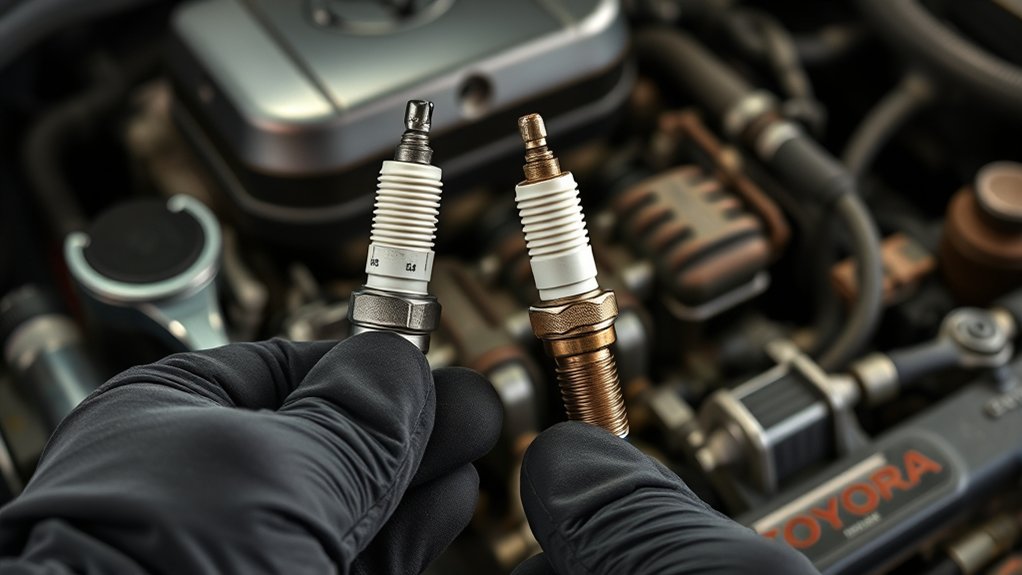
A worn plug may need more voltage to jump its electrode gap. Under heavy acceleration, towing, or high cylinder pressure, the spark may become weak or fail, causing hesitation or a misfire. Incomplete combustion can reduce power and waste fuel.
Continuing to drive with a severe misfire can send unburned fuel into the exhaust and place extra heat on the catalytic converter. It can also make the engine run roughly enough to create additional stress and mask other faults.
Warning: If the Check Engine light flashes, the engine shakes strongly, or power drops suddenly, reduce load and arrange prompt diagnosis. Do not keep towing or accelerating hard while an active misfire is present.
Choosing the Correct Spark Plugs for a Toyota Tundra
Buy plugs by VIN, model year, engine, and the exact Toyota or approved-equivalent part specification. Toyota’s 2025 and 2026 maintenance guides say to install the same type as originally equipped.
Before installation, confirm all of the following:
- The part number matches the engine application.
- The thread diameter, reach, seat design, heat range, and terminal style are correct.
- The specified gap and torque procedure match Toyota service information and the plug manufacturer’s instructions.
- Every plug in the set is undamaged and has a straight, intact electrode.
Do not select a plug only because it is labeled iridium, platinum, “performance,” or “long life.” The wrong heat range, reach, or seat can cause poor running or engine damage even when the material sounds premium.
How to Replace Toyota Tundra Spark Plugs: Procedure Overview
Access and torque specifications vary by Tundra engine, so this is a planning guide rather than a substitute for Toyota’s model-specific repair manual.
- Verify the parts and procedure. Use the VIN to confirm plug quantity, part number, gap policy, torque specification, and any components that must be removed for access.
- Let the engine cool fully. Work on a stable, parked truck with the ignition off. Follow Toyota’s battery-disconnection procedure only if the repair manual calls for it.
- Remove access components carefully. Depending on the engine, this may include an engine cover, intake ducting, brackets, hoses, or wiring retainers.
- Label and disconnect one ignition coil at a time. Remove its fastener and lift the coil straight out without pulling on the wiring.
- Clean the plug well. Use compressed air or a vacuum so dirt cannot fall into the cylinder when the plug comes out. Wear eye protection when using compressed air.
- Remove and inspect the old plug. Note heavy deposits, oil, cracked porcelain, damaged threads, or unusual electrode wear because these can point to another problem.
- Start the new plug by hand. Use the spark-plug socket and extension without a ratchet at first. The plug should turn smoothly; stop if it binds.
- Torque it to the exact specification. Do not guess, and do not add anti-seize or lubricant unless the applicable Toyota or plug-manufacturer instructions specifically require it.
- Reinstall the coil and removed parts. Seat connectors fully, route wiring as before, and repeat the process for the remaining cylinders.
- Start and verify. Check for a smooth idle, scan for returning codes, and inspect the work area for loose connectors, hoses, or tools.
Warning: Cross-threading or over-tightening a spark plug can damage the aluminum cylinder head. If a plug will not thread smoothly by hand or will not loosen normally, stop and use a qualified technician.
Pro Tip: Photograph hose, connector, and bracket routing before disassembly, then service one cylinder at a time. This reduces the chance of crossed connectors or missing hardware.
What to Check After Spark Plug Replacement
The engine should start normally and settle into a steady idle. A brief rough moment can occur if the battery was disconnected, but persistent shaking, a flashing warning light, fuel smell, or a returning misfire code requires immediate rechecking.
- Confirm every ignition-coil connector is locked.
- Verify any intake tubes, vacuum lines, and brackets are reinstalled and sealed.
- Check that the correct plugs were installed and torqued correctly.
- Rescan for codes after a road test; do not assume that clearing a code repaired the cause.
- If the same cylinder still misfires, diagnose its coil, injector, wiring, compression, and air-fuel control rather than replacing more parts at random.
Where to Replace Toyota Tundra Spark Plugs in Jackson, MS
An authorized Toyota dealer or a reputable independent repair shop can perform the work. In Jackson, Toyota of Jackson states that its service center uses factory-trained technicians and offers rental cars, a waiting area, refreshments, and Wi-Fi. Its published page does not promise a free shuttle, so confirm transportation options when booking.
When comparing shops, ask for an itemized, VIN-based estimate that identifies:
- The plug brand and exact part number
- The number of plugs included
- Labor time and shop rate
- Whether diagnosis, code scanning, or intake-component removal is extra
- Whether ignition coils or boots are being recommended, and why
- The parts-and-labor warranty
Choose a shop that will diagnose an active misfire instead of treating spark plugs as the automatic answer to every rough-running complaint.
Related Guides
Frequently Asked Questions
How often should I replace the spark plugs on my Toyota Tundra?
Use the maintenance guide for the exact model year and engine. Toyota’s official 2018, 2021, 2022, 2025, and 2026 Tundra guides place scheduled replacement at 120,000 miles; the 2018, 2021, and 2022 guides also state 144 months. Other years may differ.
Why do 5.7 HEMI engines have 16 spark plugs, and does that apply to a Tundra?
Certain Chrysler and Ram 5.7-liter HEMI engines use two spark plugs per cylinder, producing a total of 16. A Toyota Tundra does not use Chrysler’s HEMI engine, so HEMI plug counts, parts, and procedures should not be applied to a Tundra. Confirm the Tundra’s plug quantity and part numbers by VIN.
Do I really need to change Tundra spark plugs at 100,000 miles?
Not automatically. The checked late-model Toyota schedules specify 120,000 miles, not 100,000. Replace them sooner when the year-specific guide calls for it or when proper diagnosis finds a plug-related fault.
How much does it cost to replace spark plugs in a Toyota Tundra?
There is no dependable one-price answer. The total depends on the engine, plug quantity and type, access time, local labor rate, diagnostic charges, taxes, and whether coils or boots also need replacement. Request an itemized quote using the VIN rather than relying on a generic national estimate.
Can I replace only one bad spark plug?
A single damaged or fouled plug can be replaced during a repair, but when the full scheduled interval has arrived, replacing the complete set keeps age and wear consistent. Diagnose why one plug failed unusually early before assuming the others are the cause.
Should I gap new Toyota Tundra spark plugs?
Confirm the model-specific specification and inspect every new plug for shipping damage. Do not force or bend a fine-wire electrode unless the plug manufacturer and Toyota procedure permit adjustment. Use the exact pre-gapped, VIN-correct part whenever specified.
Sources
- Toyota 2018 Tundra Warranty & Maintenance Guide — 120,000-mile/144-month spark plug interval.
- Toyota 2021 Tundra Warranty & Maintenance Guide — scheduled interval and maintenance notes.
- Toyota 2022 Tundra Warranty & Maintenance Guide — scheduled interval for the third-generation Tundra.
- Toyota 2025 Tundra Warranty & Maintenance Guide — 120,000-mile replacement and same-type plug guidance.
- Toyota 2026 Tundra Warranty & Maintenance Guide — current maintenance chart and installation guidance.
- Toyota of Jackson Service Center — verified technician and amenity information for the Jackson, Mississippi section.
Conclusion
For the late-model Tundras checked here, the evidence-based replacement point is 120,000 miles, not a generic 60,000-to-100,000-mile range. Confirm the exact schedule and plug specification by VIN, diagnose symptoms before replacing parts, and use the correct torque procedure. Done properly, fresh spark plugs help restore dependable ignition without turning routine maintenance into a cylinder-head repair.
