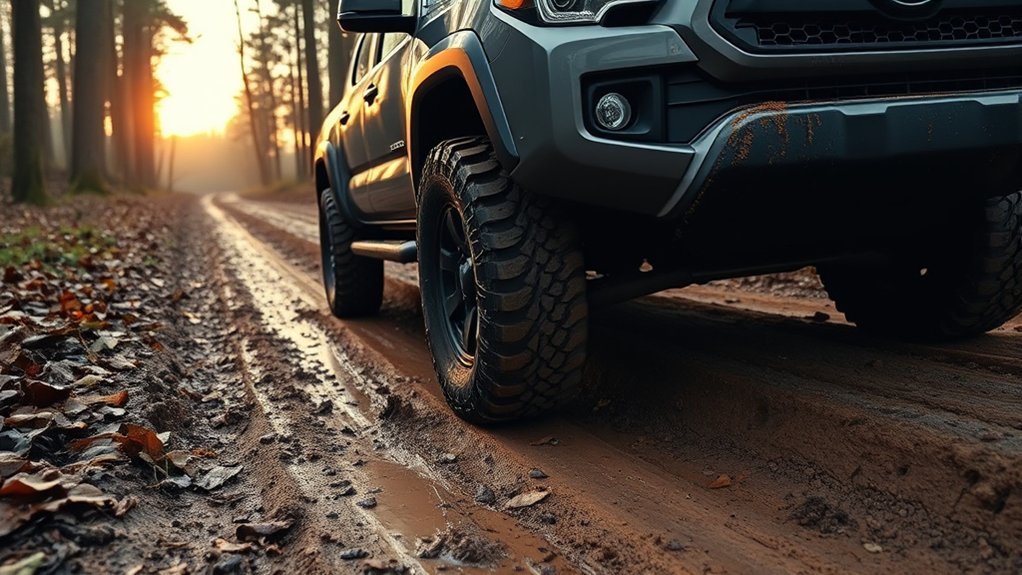
Quick Answer: When to Engage 4WD on a Toyota Tacoma
Last updated: September 16, 2026.
If your Toyota Tacoma has selectable part-time 4WD, use 2H for normal driving on dry or consistently high-traction pavement, 4H when the surface is loose or slippery enough to allow some tire slip, and 4L for slow, demanding terrain that needs low-range gearing and maximum control. Typical 4H surfaces include snow, ice, gravel, mud, sand, and suitable off-road trails. Rain alone is not a reason to select part-time 4H if the pavement still has good grip.
- 2H: Normal paved-road driving when traction is good.
- 4H: Snow, ice, gravel, mud, sand, and other loose or slippery surfaces where tire slip can occur.
- 4L: Slow steep climbs or descents, deep mud or snow, sand, rocky terrain, and other difficult off-road conditions that need low gearing.
- Do not use part-time 4H or 4L continuously on dry, high-traction pavement. The driveline can bind because the front and rear axles need to rotate at different average speeds during turns.
- 4WD helps drive traction, not braking. It does not shorten normal braking distance or prevent hydroplaning.
- Follow the owner’s manual for your exact model year and drivetrain because current Tacomas can use different 4WD systems.
Understanding the Four-Wheel Drive System in Your Tacoma
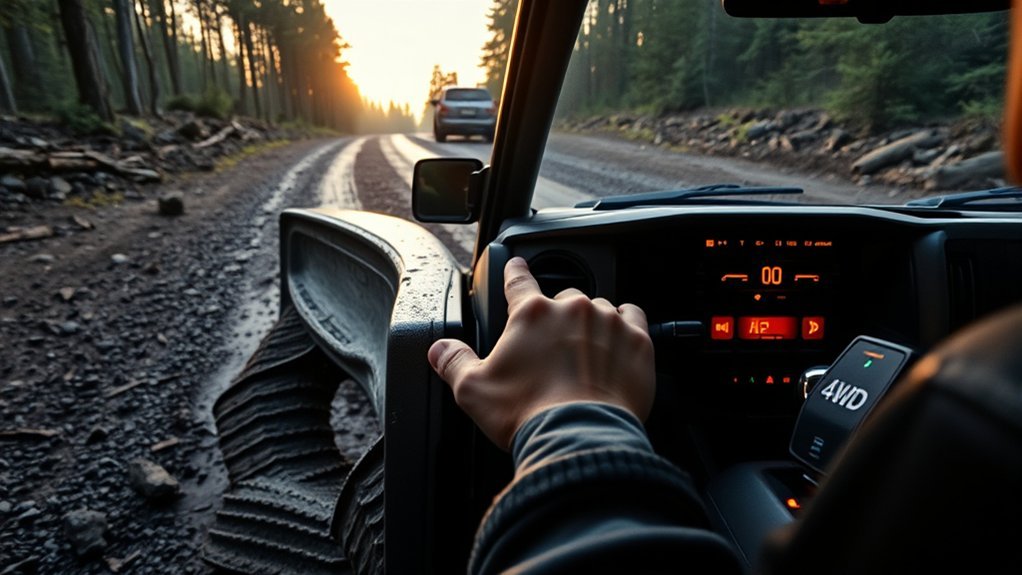
This guide focuses on Tacomas with selectable part-time 4WD. Some current Tacoma configurations use full-time 4WD, so first confirm which system your truck has. The operating rules for a full-time system and its center differential are not identical to the 2H/4H/4L rules below.
| Mode | Best Use | Avoid |
|---|---|---|
| 2H | Normal dry or high-traction paved driving | Using it when extra drive traction is genuinely needed |
| 4H | Snow, ice, gravel, mud, sand, loose dirt, and suitable off-road terrain | Continuous use on dry, high-traction pavement |
| 4L | Slow steep terrain, deep mud or snow, sand, rocks, and difficult low-speed off-road work | Routine paved driving or using low range merely because a load is heavy |
On Toyota’s current-generation part-time system, shifting between 2H and 4H requires reducing vehicle speed below 62 mph (100 km/h) before operating the selector. That number is a shift threshold; it is not a recommendation to drive 62 mph when snow, ice, mud, or other conditions require a much lower safe speed.
For a 4H-to-4L shift on current automatic-transmission models, stop completely, keep the brake pedal depressed, shift the transmission to Neutral, then operate the 4WD selector. Current manual-transmission procedures use the clutch instead. Procedures can differ by generation, so check your exact owner’s manual or the official Toyota Quick Reference Guide before relying on a generic sequence.
How Do You Know 4H or 4L Has Engaged?
Wait for the appropriate 4HI or 4LO indicator to illuminate steadily before assuming the shift is complete. A flashing indicator is not confirmation that 4WD has fully engaged. If the light continues flashing, follow the troubleshooting procedure in the owner’s manual before entering difficult terrain.
When Should You Use Four-Wheel Drive High (4H)?
Use 4H when your Tacoma needs more drive traction and the surface is loose or slippery enough to let the tires release driveline tension. Snow-covered roads, ice, gravel, mud, sand, loose dirt, and many off-road trails fit that description. Ordinary wet pavement may not.
| Condition | Recommended Action | Why |
|---|---|---|
| Snow or ice | Use 4H when extra drive traction is needed | The slippery surface permits tire slip while both axles help propel the truck |
| Loose gravel or dirt | Use 4H as needed | Improves drive traction on a surface that can release driveline windup |
| Mud or sand | Use 4H for moderate conditions; consider 4L when low gearing is required | Helps both axles contribute to forward motion |
| Ordinary wet pavement | Usually stay in 2H on a part-time system | Rain alone does not guarantee enough tire slip for part-time 4WD |
| Dry pavement | Use 2H on part-time 4WD models | High grip can cause driveline binding in 4H or 4L |
Four-wheel drive can improve the Tacoma’s ability to accelerate when more than one axle has useful grip, but it does not create extra tire-to-road friction. Your tires, vehicle speed, following distance, and road surface still determine how well the truck can turn and stop.
Avoid These Common 4WD Engagement Mistakes
Most problems come from using the correct mode on the wrong surface or changing modes with the wrong procedure. Avoid these mistakes:
- Using part-time 4H or 4L on dry, high-traction pavement: the front and rear driveline can bind because the tires cannot easily slip enough to release the speed difference.
- Switching from 2H to 4H while the wheels are spinning: stop the wheelspin before changing modes.
- Treating a flashing 4HI or 4LO light as confirmation: wait until the transfer-mode change has completed.
- Assuming 62 mph is a universal 4H speed limit: on current-generation part-time systems, it is the specified threshold for shifting between 2H and 4H. Always drive at a speed appropriate for the actual surface.
- Using 4L merely because you are towing or carrying a heavy load: low range is for conditions that require low-speed gearing and maximum control, not routine paved-road towing.
- Using one procedure for every Tacoma: model year, transmission, trim, and part-time versus full-time 4WD can change the controls and required steps.
What If the 4HI or 4LO Light Keeps Flashing?
A flashing indicator usually means the requested transfer-mode change has not completed. Do not force the selector or immediately enter difficult terrain. Follow the instructions for your model year. Current Toyota procedures may call for driving straight while gently accelerating or decelerating, moving slowly forward or in reverse, stopping, and then retrying the shift. If the indicators flash rapidly or the system repeatedly refuses to change modes, have the 4WD system inspected.
When Should You Engage Four-Wheel Drive Low (4L)?
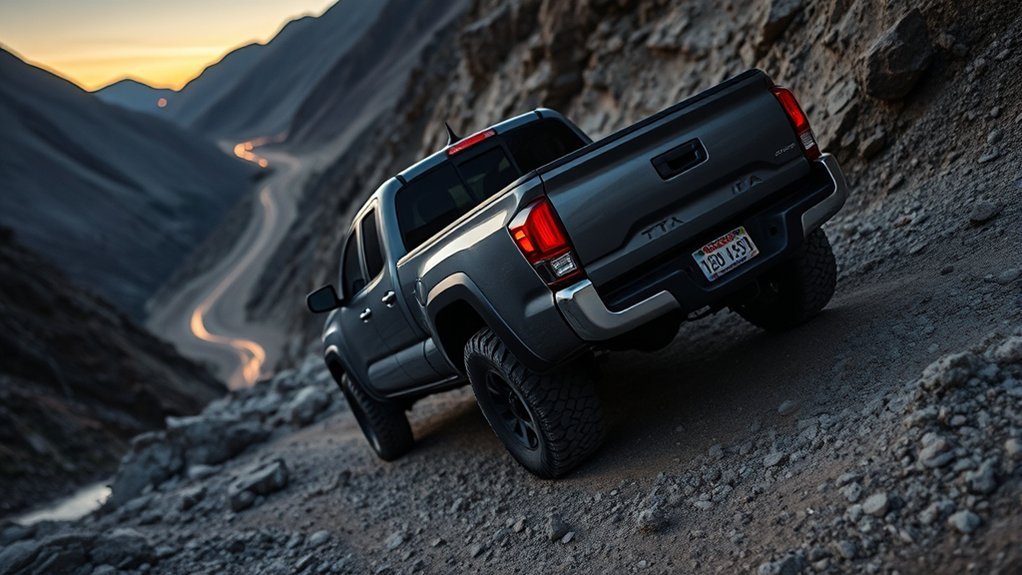
Use 4L when you need low gearing, very low speed, and maximum control rather than simply more traction at normal road speeds.
| Situation | Why 4L Helps | Main Benefit |
|---|---|---|
| Steep Inclines or Declines | Low gearing provides controlled power and stronger engine braking | Better low-speed control |
| Technical Off-Road Terrain | Reduces the road speed produced for a given engine speed | More precise obstacle negotiation |
| Deep Mud, Sand, or Snow | Provides low-range gearing for hard pulling | Improved ability to maintain controlled forward movement |
| Rocks, Ruts, or Large Obstacles | Lets the truck move slowly without relying on excessive speed | More deliberate wheel placement and control |
Do not use 4L as a general “heavy load” setting on dry pavement. If you are towing, follow Toyota’s towing instructions, payload and tow-rating limits, and the 4WD procedure for your exact Tacoma. Use low range only when the terrain and traction conditions actually call for it.
How Often Should You Use Your Tacoma’s 4WD?
Toyota states in recent part-time Tacoma owner guidance that the truck should be driven in four-wheel drive for at least 10 miles (16 km) each month so the front-drive components remain lubricated. Choose a suitable loose or slippery surface for that exercise. Do not satisfy the monthly recommendation by driving 10 miles in part-time 4H on dry, high-traction pavement.
While exercising the system, confirm that it shifts into and out of the requested mode normally and that the indicator lights complete their normal transition. If a 4HI or 4LO indicator repeatedly flashes or the transfer case refuses to change modes, use the troubleshooting steps in your model-year owner’s manual or have the system inspected.
Everyday Scenarios for Choosing 2H, 4H, or 4L
- Dry commute or highway: Use 2H on a part-time 4WD Tacoma when the pavement has normal grip.
- Snow-covered or icy road: Use 4H when extra drive traction is needed, but reduce speed for the conditions. Four-wheel drive does not shorten your braking distance.
- Gravel, dirt, or muddy access road: Use 4H when the loose surface makes additional drive traction useful.
- Rain on normal pavement: Stay in 2H if the pavement still provides normal grip. If rain has turned the route into mud, loose gravel, or another surface that permits tire slip, 4H may be appropriate.
- Steep, rocky, deeply rutted, or very soft terrain: Select 4L when you need low gearing and precise low-speed control.
The simplest rule is to choose the mode from the surface grip and required gearing, not from the weather label alone. Snow, ice, mud, sand, gravel, and technical terrain can justify 4WD; a paved road does not automatically require it merely because it is raining.
Frequently Asked Questions
When Should I Use 4H on a Toyota Tacoma?
Use 4H on a part-time 4WD Tacoma when the surface is loose or slippery enough to permit some tire slip and you need additional drive traction. Common examples include snow, ice, gravel, mud, sand, loose dirt, and suitable off-road trails.
Can I Use Tacoma 4H on Wet Pavement?
Do not select part-time 4H simply because the pavement is wet. If the road still has substantial grip, stay in 2H. Use 4H when the surface has become genuinely loose or slippery enough to allow tire slip, such as mud, loose gravel, snow, or ice.
How Do I Shift From 2H to 4H?
On Toyota’s current-generation part-time Tacoma system, reduce speed below 62 mph (100 km/h), then operate the 4WD selector and wait for the 4HI indicator to confirm the shift. Do not change modes while the wheels are spinning. Procedures vary by model year, so follow the manual for your truck.
Is It Bad to Switch From 2WD to 4WD While Driving?
No, not when your Tacoma’s manual permits an on-the-fly 2H-to-4H shift and you follow its speed and surface requirements. On current-generation part-time models, Toyota specifies reducing speed below 62 mph (100 km/h) before the shift. That number is the shift threshold, not a recommended speed for snow, ice, or other low-traction conditions.
How Do I Shift From 4H to 4L?
On current automatic-transmission part-time models, stop completely, keep the brake depressed, shift the transmission to Neutral, select 4L, and wait for the 4LO indicator to confirm engagement. Current manual-transmission models use a clutch-based procedure. Always confirm the exact sequence in your model-year owner’s manual.
Why Is My Tacoma’s 4HI or 4LO Light Flashing?
A flashing indicator can mean the requested transfer-mode change has not completed. Follow the model-specific procedure in the owner’s manual rather than assuming 4WD is engaged. Persistent or rapid flashing can indicate a system problem that needs inspection.
Do I Need to Drive My Tacoma in 4WD Every Month?
Recent Toyota part-time 4WD guidance says to drive in four-wheel drive for at least 10 miles (16 km) each month to help keep the front-drive components lubricated. Do this on a suitable surface that permits tire slip rather than dry, high-traction pavement.
Conclusion
For a part-time 4WD Toyota Tacoma, the basic rule is simple: use 2H for normal high-traction pavement, 4H for loose or slippery surfaces, and 4L for slow terrain that requires low gearing and maximum control. Do not treat ordinary rain as an automatic reason to select 4H, and do not use 4L merely because the truck is carrying or towing a heavy load. Confirm that the indicator is steady rather than flashing, follow the shifting procedure for your exact model year, and return a part-time system to 2H when you are back on dry, high-traction pavement.
