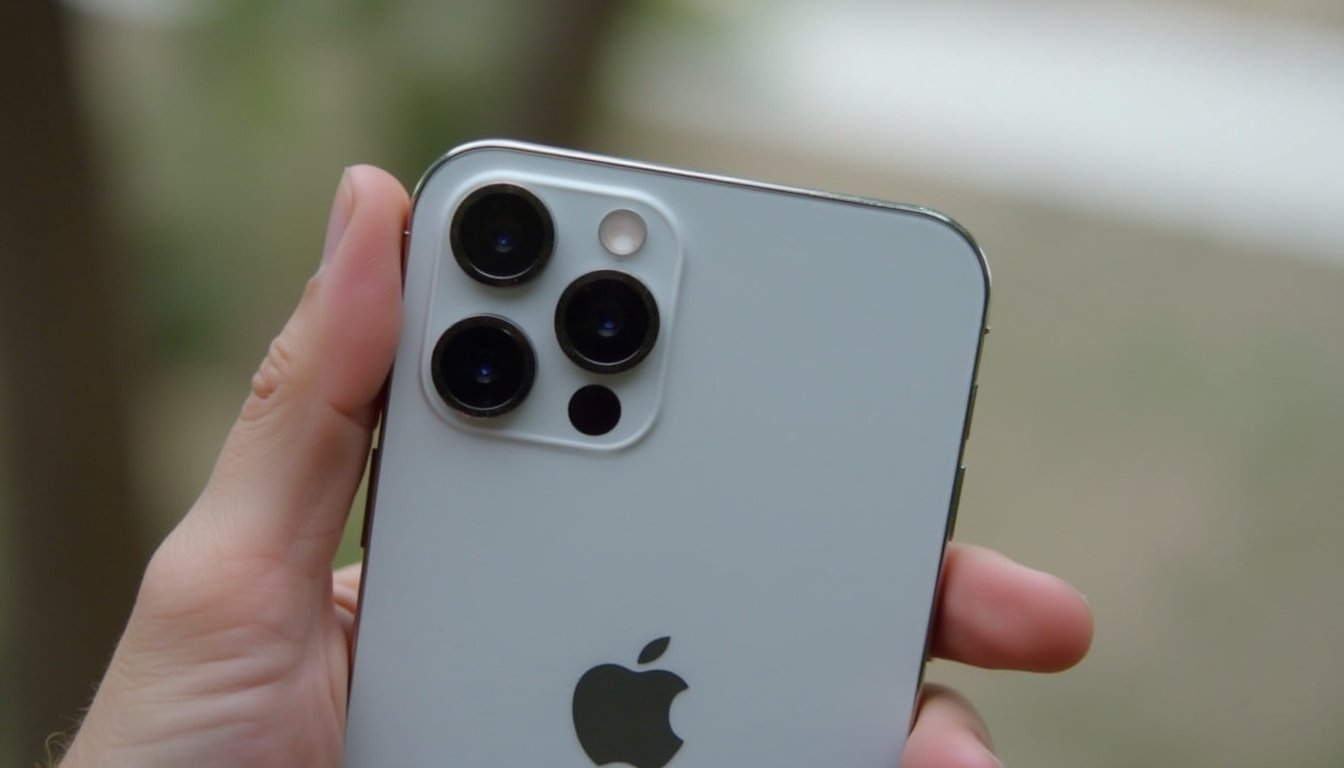
Every iPhone with three physical rear cameras has been a Pro or Pro Max model, starting with the iPhone 11 Pro and iPhone 11 Pro Max in 2019. As of September 22, 2026, the newest models with three rear cameras are the iPhone 18 Pro and iPhone 18 Pro Max.
These triple-camera systems combine a Main or Wide camera, an Ultra Wide camera, and a dedicated Telephoto camera. That gives you more framing choices for everyday photos, landscapes, portraits, distant subjects, low-light shooting, and video.
If you are choosing an iPhone mainly for photography, check the exact model name rather than the generation alone. Standard, Plus, Air, e, and other iPhone variants can use different camera layouts from their Pro counterparts.
Last updated: September 22, 2026
Quick Answer
The iPhones with three physical rear cameras are the iPhone 11 Pro and Pro Max, 12 Pro and Pro Max, 13 Pro and Pro Max, 14 Pro and Pro Max, 15 Pro and Pro Max, 16 Pro and Pro Max, 17 Pro and Pro Max, and 18 Pro and Pro Max. Each generation uses a Main or Wide camera, an Ultra Wide camera, and a dedicated Telephoto camera.
Key Takeaways
- The first iPhones with three rear cameras were the iPhone 11 Pro and iPhone 11 Pro Max.
- The current iPhone 18 Pro and iPhone 18 Pro Max each have three 48MP rear cameras: Fusion Main, Fusion Ultra Wide, and Fusion Telephoto.
- A 2x “optical-quality” zoom option does not always mean an iPhone has a separate telephoto camera; some models create that view from the Main camera sensor.
- A dedicated third telephoto camera matters most if you regularly shoot portraits, events, travel details, wildlife, or other distant subjects.
Which iPhones Have 3 Cameras?
| Generation | Models With Three Rear Cameras | Camera Layout | Key Camera Change |
|---|---|---|---|
| 2019 | iPhone 11 Pro, iPhone 11 Pro Max | Wide + Ultra Wide + Telephoto | First triple-camera iPhones |
| 2020 | iPhone 12 Pro, iPhone 12 Pro Max | Wide + Ultra Wide + Telephoto | ProRAW and LiDAR-equipped Pro camera system |
| 2021 | iPhone 13 Pro, iPhone 13 Pro Max | Wide + Ultra Wide + Telephoto | Macro photography and 3x Telephoto |
| 2022 | iPhone 14 Pro, iPhone 14 Pro Max | Main + Ultra Wide + Telephoto | 48MP Main camera |
| 2023 | iPhone 15 Pro, iPhone 15 Pro Max | Main + Ultra Wide + Telephoto | 15 Pro Max introduced a 5x Telephoto |
| 2024 | iPhone 16 Pro, iPhone 16 Pro Max | Fusion Main + Ultra Wide + Telephoto | 5x Telephoto available on both Pro sizes |
| 2025 | iPhone 17 Pro, iPhone 17 Pro Max | 48MP Fusion Main + 48MP Fusion Ultra Wide + 48MP Fusion Telephoto | Three 48MP rear cameras with up to 8x optical-quality zoom |
| 2026 | iPhone 18 Pro, iPhone 18 Pro Max | 48MP Fusion Main + 48MP Fusion Ultra Wide + 48MP Fusion Telephoto | Variable-aperture Main camera and up to 8x optical-quality zoom |
Apple’s current specifications confirm that the iPhone 18 Pro and iPhone 18 Pro Max use three 48MP physical rear cameras: Fusion Main, Fusion Ultra Wide, and Fusion Telephoto. See Apple’s iPhone 18 Pro technical specifications.
Evolution Of iPhone Cameras
Apple moved gradually from single-camera iPhones to multi-camera systems. The important change for this guide came in 2019, when the iPhone 11 Pro and iPhone 11 Pro Max combined three different rear perspectives in one phone.
The first triple-camera system paired a Wide camera for everyday shooting with an Ultra Wide camera for a larger field of view and a Telephoto camera for tighter framing. Later Pro generations kept that basic three-camera idea while changing sensor resolution, focal lengths, stabilization, processing, and video features.
Early Models With Single Cameras
The original iPhone, launched in 2007, had one rear camera. It was simple compared with modern iPhones, but it helped make the phone a practical everyday camera.
Apple improved that camera over later generations with autofocus, flash, higher-resolution sensors, better processing, and stronger video capabilities. A single fixed perspective still limited how users could frame very wide scenes or distant subjects.
Transition To Dual Camera Systems
In 2016, the iPhone 7 Plus introduced a dual-camera arrangement with Wide and Telephoto cameras. The extra focal length enabled 2x optical zoom and helped Apple introduce Portrait mode.
Dual cameras gave users more control over framing, but the system still lacked an Ultra Wide perspective for architecture, interiors, large groups, and expansive landscapes.
Introduction Of Triple Camera Setup
The triple-camera setup arrived with the iPhone 11 Pro and iPhone 11 Pro Max in 2019. Apple added an Ultra Wide camera alongside the Wide and Telephoto cameras, creating its first three-camera iPhone system.
The Ultra Wide camera lets you fit more of a scene into the frame, while the Telephoto camera provides a tighter physical focal length for portraits and distant details. Apple has continued this Main/Wide + Ultra Wide + Telephoto structure across later Pro generations.
Apple’s original iPhone 11 Pro announcement identifies it as the first iPhone triple-camera system.
Note: Camera count can vary within the same iPhone generation. Always check the complete model name rather than assuming every phone with the same generation number has the Pro camera system.
Credit: www.simplymac.com
Which iPhones Have 3 Cameras? Model-by-Model Guide
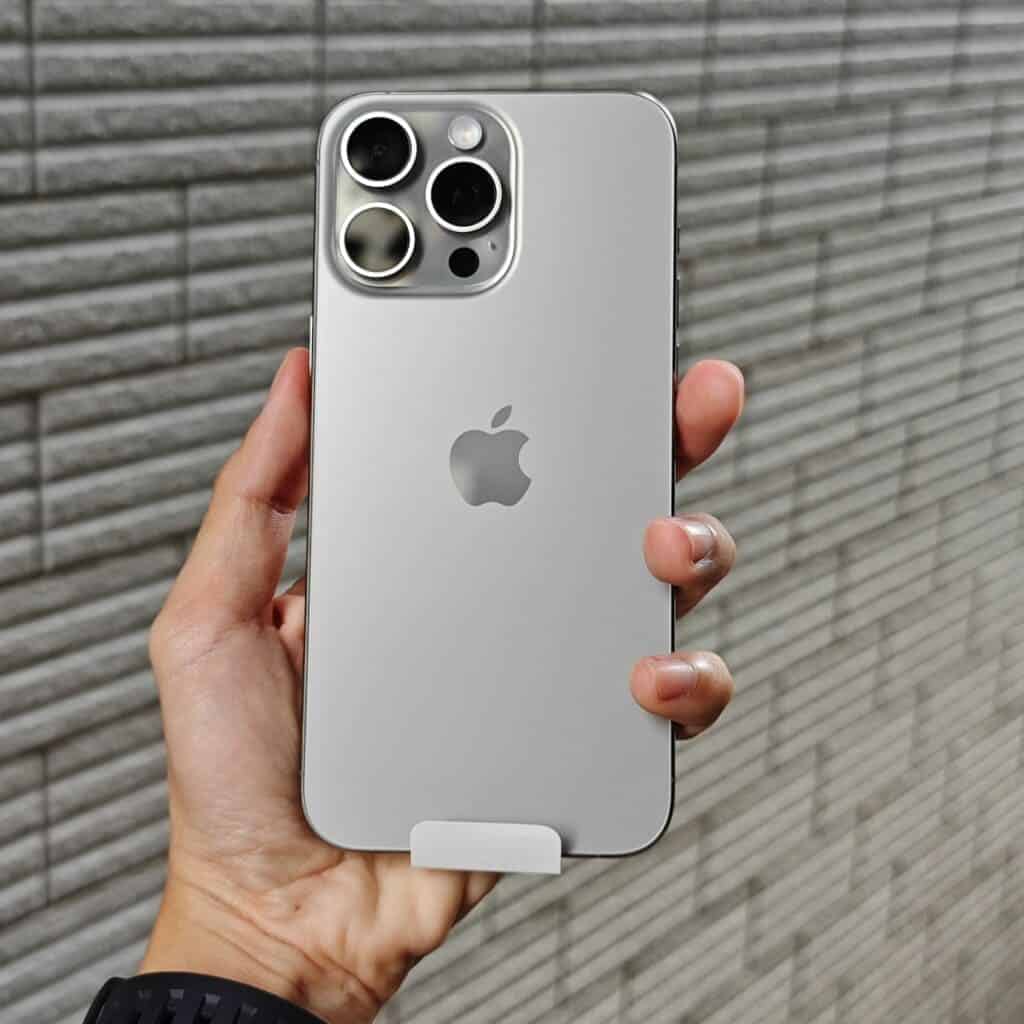
Apple has historically reserved three physical rear cameras for Pro and Pro Max iPhones. The basic idea remains consistent, but the sensors, telephoto reach, low-light performance, stabilization, and video tools change from generation to generation.
iPhone 11 Pro And 11 Pro Max
The iPhone 11 Pro and iPhone 11 Pro Max were the first iPhones with three rear cameras. Their system combines Wide, Ultra Wide, and Telephoto cameras.
The standard iPhone 11 has two rear cameras instead. The Pro models added the dedicated telephoto perspective while also introducing Apple’s new Ultra Wide camera and Night mode generation.
Today, the iPhone 11 Pro family is best understood as the oldest entry in Apple’s triple-camera lineup rather than automatically the cheapest option. Used-device pricing varies, and battery condition, storage, carrier status, repair history, and remaining software compatibility should all be checked before buying.
iPhone 12 Pro And 12 Pro Max
The iPhone 12 Pro and iPhone 12 Pro Max continued with Wide, Ultra Wide, and Telephoto cameras. Apple also added a LiDAR Scanner to the Pro models and introduced Apple ProRAW.
The iPhone 12 Pro Max uses different camera hardware from the smaller 12 Pro, including a longer telephoto focal length. This is an early example of why the exact Pro versus Pro Max model can matter even within one generation.
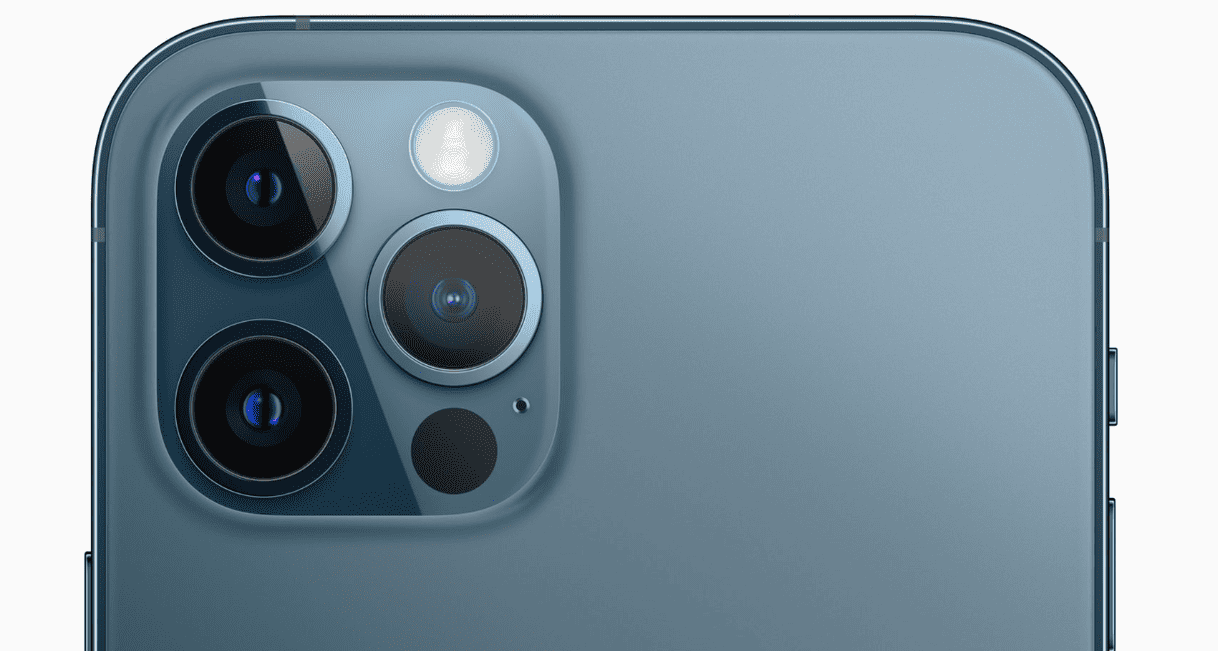
The LiDAR Scanner is a depth-sensing component, not a fourth photographic camera. That distinction matters when counting the visible circles on the rear camera module.
iPhone 13 Pro And 13 Pro Max
The iPhone 13 Pro and iPhone 13 Pro Max use Wide, Ultra Wide, and 3x Telephoto cameras. The Ultra Wide camera gained autofocus, enabling macro photography at very close distances.
Apple also added Cinematic mode, while the Pro models support ProRAW photography and ProRes video workflows. These features make the generation more capable than simply counting its three lenses suggests.
iPhone 14 Pro And 14 Pro Max
The iPhone 14 Pro and iPhone 14 Pro Max have three physical rear cameras: a 48MP Main camera, 12MP Ultra Wide camera, and 12MP 3x Telephoto camera.
The 48MP Main sensor also enables a 2x telephoto-style view by using the center portion of the Main sensor. That 2x option is not an additional physical camera, which is why the phone still has three rear cameras rather than four.
iPhone 15 Pro And 15 Pro Max
The iPhone 15 Pro and iPhone 15 Pro Max each have three physical rear cameras. The standard iPhone 15 and iPhone 15 Plus use a different two-camera system.
The iPhone 15 Pro has a 3x Telephoto camera, while the iPhone 15 Pro Max introduced Apple’s 5x tetraprism Telephoto. That makes the Pro Max especially relevant if longer telephoto reach is one of your main reasons for choosing a three-camera iPhone.
Apple’s iPhone 15 Pro announcement details the different telephoto systems used by the Pro and Pro Max.
iPhone 16 Pro And 16 Pro Max
The iPhone 16 Pro and iPhone 16 Pro Max also have three physical rear cameras. Apple lists a 48MP Fusion camera, a 48MP Ultra Wide camera, and a 5x Telephoto camera.
Unlike the iPhone 15 generation, the 5x Telephoto camera is available on both iPhone 16 Pro sizes. The generation also added Camera Control and supports 4K Dolby Vision recording at up to 120 fps on the Fusion camera.
iPhone 17 Pro And 17 Pro Max
The iPhone 17 Pro and iPhone 17 Pro Max moved to three 48MP Fusion rear cameras: Main, Ultra Wide, and Telephoto. Apple introduced a new 48MP Telephoto camera with a 4x optical focal length and an 8x optical-quality option.
This generation is important because all three physical rear cameras use 48MP sensors. Apple also increased digital zoom to 40x and expanded its professional video tools.
Apple’s iPhone 17 Pro announcement confirms the three 48MP Fusion cameras.
iPhone 18 Pro And 18 Pro Max
The iPhone 18 Pro and iPhone 18 Pro Max are the newest three-camera iPhones as of September 22, 2026. Both have a 48MP Fusion Main camera, 48MP Fusion Ultra Wide camera, and 48MP Fusion Telephoto camera.
The major 2026 change is the Main camera’s variable aperture. Apple lists four aperture settings—ƒ/1.48, ƒ/1.8, ƒ/2.8, and ƒ/4.0—allowing the camera to alter light gathering and depth of field physically. The Telephoto system provides a 4x physical focal length and an 8x optical-quality option.
The iPhone 18 Pro models also add manual Pro controls for settings such as aperture, shutter speed, and white balance. Apple announced the iPhone 18 Pro lineup on September 9, 2026, with availability beginning September 18.
Features Of Triple Camera Systems
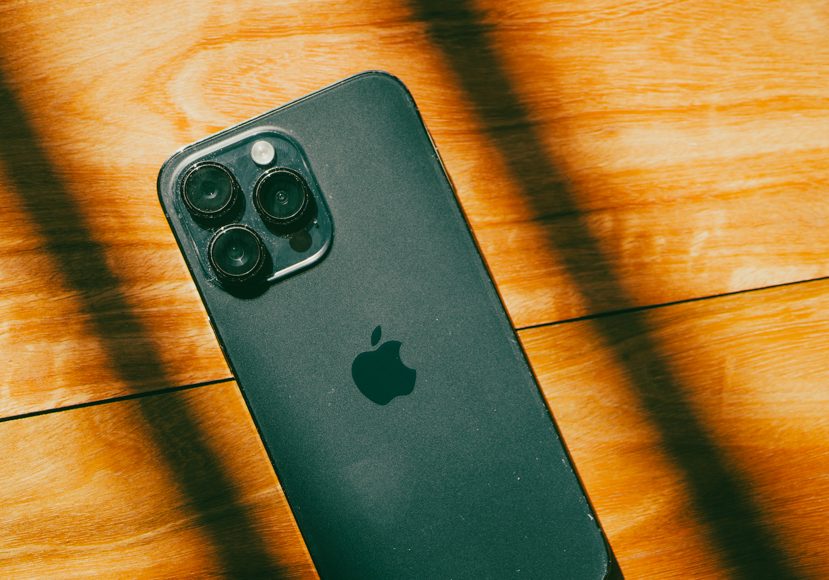
A triple-camera iPhone uses three physical rear cameras with different focal lengths. The benefit is not simply having more circles on the back of the phone; it is being able to change perspective without relying entirely on digital cropping.
Wide, Ultra-Wide, And Telephoto Lenses
The Main or Wide camera is the everyday camera. It generally handles people, pets, food, street photography, products, and low-light scenes well.
The Ultra Wide camera captures a much broader field of view. It is useful for architecture, interiors, landscapes, large groups, and situations where you cannot step farther back.
The dedicated Telephoto camera provides a tighter physical focal length. It is useful for portraits, events, travel details, performances, wildlife, and subjects that you cannot approach closely.
Why Can An iPhone Offer 2x Zoom Without A Third Camera?
A zoom option shown in the Camera app does not necessarily represent a separate physical lens. High-resolution Main sensors can use their central pixels to create an optical-quality cropped view.
For example, Apple’s iPhone Duo has two physical rear cameras—a Fusion Main and Fusion Ultra Wide—but its 48MP Main camera also enables a 12MP optical-quality 2x Telephoto view. That does not turn the phone into a three-camera model.
This is why the safest way to identify a triple-camera iPhone is to check whether its specifications list three separate physical rear cameras: Main or Wide, Ultra Wide, and Telephoto.
Night Mode And Low Light Enhancements
Night mode uses longer capture times and computational processing to produce brighter, more detailed images in dark conditions. Results vary by generation and by which camera you use.
A three-camera layout gives you more composition choices in low light, but the newest or highest-resolution sensor is not automatically best in every situation. Available light, stabilization, focal length, sensor size, and processing all affect the result.
Deep Fusion And Computational Photography
Deep Fusion and related computational photography systems combine information from multiple image frames to improve detail, texture, color, and noise handling.
This processing is also why physical camera count does not tell the whole story. Sensor design, image processing, stabilization, and the software available on a particular generation can matter as much as the number of lenses.
ProRAW, ProRes, And Advanced Video Features
Supported Pro iPhones provide Apple ProRAW for photography and, on compatible generations, ProRes video features. These formats are intended for users who want more control during editing.
ProRAW retains more image information than a typical processed photo, while ProRes can fit professional video workflows. The tradeoff is substantially larger files, so storage capacity and transfer workflow matter if you use these formats regularly.
Pro Tip: Do not choose storage capacity based only on ordinary snapshots if you expect to use ProRAW or high-bitrate video. Professional photo and video formats can consume storage much faster than standard HEIF photos and everyday video.
Credit: shotkit.com
Advantages Of Triple Cameras
The main advantage of a three-camera iPhone is focal-length flexibility. A dedicated Telephoto camera complements the Main and Ultra Wide cameras, so you can change perspective without depending only on digital zoom.
Improved Zoom Capabilities
A dedicated Telephoto camera gives you a tighter native view than the Main camera. That is useful when a subject is too far away to approach, such as a performer, architectural detail, landscape feature, or animal.
Exact telephoto reach differs by generation. For example, iPhone 15 Pro uses a 3x Telephoto while iPhone 15 Pro Max uses 5x; iPhone 16 Pro brought 5x to both sizes; and iPhone 17 Pro and iPhone 18 Pro generations use a 4x Telephoto with an 8x optical-quality option.
More Flexible Portrait Framing
The Telephoto camera can make portrait composition easier because you can stand farther from the subject while keeping a tighter frame. This can produce a perspective many photographers prefer for faces and upper-body portraits.
Portrait blur and subject separation also depend heavily on computational processing. Three physical cameras therefore give you more focal-length options, but camera count alone does not determine portrait quality.
More Video Framing Options
Triple-camera iPhones provide multiple physical perspectives for video. Depending on the model and recording mode, you can move between Ultra Wide, Main, and Telephoto views to match the scene.
Later Pro generations also add capabilities such as Dolby Vision, ProRes, Log recording, stabilization improvements, and other professional video tools. Check the exact model specifications if one of those features is essential to your workflow.
More Creative Control
A three-camera setup gives you three distinct physical perspectives. Ultra Wide exaggerates space and fits more into the frame, Main handles most everyday scenes, and Telephoto isolates subjects or brings distant details closer.
The important buying question is therefore not simply “Are three cameras better?” but “Will I actually use the dedicated telephoto perspective enough to justify choosing a Pro model?”
A three-camera iPhone gives you three physical perspectives: Ultra Wide for more of the scene, Main for everyday photography, and Telephoto for tighter framing and distant subjects.
Choosing The Best Triple Camera iPhone
The right three-camera iPhone depends on the camera features you need, the condition of the device, storage capacity, and how long you expect to keep it. Model age alone does not tell you whether a specific used or refurbished phone is a good purchase.
Choose By Camera Generation, Not Just Price
If you want Apple’s newest Pro camera hardware, the iPhone 18 Pro and iPhone 18 Pro Max are the current models. Their distinguishing camera feature is the variable-aperture 48MP Fusion Main camera.
If you want three 48MP physical rear cameras but do not specifically need the 2026 variable-aperture system, the iPhone 17 Pro generation also uses 48MP Main, Ultra Wide, and Telephoto cameras.
If 5x telephoto reach is the feature you care about, both iPhone 16 Pro sizes provide a dedicated 5x Telephoto. On the iPhone 15 generation, 5x is limited to the Pro Max, while the smaller 15 Pro uses 3x.
Photography Needs And Preferences
A dedicated telephoto camera is especially useful for portraits, concerts, school events, travel details, wildlife, and other subjects that are difficult to approach closely.
If you mostly take everyday snapshots, scan documents, photograph food, or share casual photos, a non-Pro iPhone may already cover your needs. High-resolution Main cameras can also provide useful cropped zoom views without a separate telephoto lens.
Newer Models And Remaining Software Life
Newer iPhones generally have more remaining software life than much older models, but Apple does not advertise a fixed support duration for every iPhone at launch.
If you plan to keep the phone for several years, compare current software compatibility along with camera hardware. For an older used phone, also consider battery condition and whether replacement parts or service make economic sense.
Battery Health And Storage
Battery health is especially important on older triple-camera iPhones. A worn battery can affect daily usability even when the cameras still work correctly.
Storage matters too. High-resolution photos, 4K video, ProRAW, and supported ProRes formats can consume substantial space. Choose capacity according to how much high-quality video and RAW photography you actually expect to keep on the device.
Warning: Do not buy a used iPhone based only on the number of camera lenses. Verify the exact model, battery health, storage capacity, carrier-lock status, repair history, and whether every rear camera focuses and records correctly.
Credit: www.simplymac.com
Related Guides
Frequently Asked Questions
Does The iPhone 15 Have Three Cameras?
The standard iPhone 15 and iPhone 15 Plus have two physical rear cameras. The iPhone 15 Pro and iPhone 15 Pro Max have three: Main, Ultra Wide, and Telephoto. The 15 Pro uses a 3x Telephoto, while the 15 Pro Max uses a 5x Telephoto.
Is iPhone 12 A 3 Camera Phone?
The standard iPhone 12 is not a three-camera phone. It has Wide and Ultra Wide rear cameras. The iPhone 12 Pro and iPhone 12 Pro Max add a dedicated Telephoto camera, giving them three physical rear cameras.
Do All iPhone 11 Models Have 3 Cameras?
No. The standard iPhone 11 has two rear cameras. The iPhone 11 Pro and iPhone 11 Pro Max have three rear cameras: Wide, Ultra Wide, and Telephoto. They were Apple’s first triple-camera iPhones.
Does The iPhone 16 Pro Have Three Cameras?
Yes. The iPhone 16 Pro and iPhone 16 Pro Max each have three physical rear cameras: a 48MP Fusion camera, a 48MP Ultra Wide camera, and a 5x Telephoto camera.
Does The iPhone 17 Pro Have Three Cameras?
Yes. The iPhone 17 Pro and iPhone 17 Pro Max each have three 48MP physical rear cameras: Fusion Main, Fusion Ultra Wide, and Fusion Telephoto. The Telephoto provides a 4x optical focal length and an 8x optical-quality option.
Does The iPhone 18 Pro Have Three Cameras?
Yes. The iPhone 18 Pro and iPhone 18 Pro Max each have three 48MP physical rear cameras: Fusion Main, Fusion Ultra Wide, and Fusion Telephoto. The Main camera adds variable aperture, while the Telephoto provides 4x and 8x optical-quality framing options.
Does iPhone Duo Have Three Rear Cameras?
No. Apple lists iPhone Duo with a dual physical rear-camera system: a 48MP Fusion Main camera and a 48MP Fusion Ultra Wide camera. Its Main sensor can also produce an optical-quality 2x Telephoto view, but that 2x view is not a separate third camera.
Which Was The First iPhone With 3 Cameras?
The first iPhones with three rear cameras were the iPhone 11 Pro and iPhone 11 Pro Max, released in 2019. Their system combined Wide, Ultra Wide, and Telephoto cameras.
Are Three Cameras Better Than Two On An iPhone?
Three physical cameras are more versatile if you want a dedicated telephoto lens in addition to Main and Ultra Wide views. Two-camera iPhones can still produce excellent photos, so the third camera matters most when you regularly use longer focal lengths for portraits, events, travel details, or distant subjects.
Conclusion
If you want an iPhone with three physical rear cameras, look for a Pro or Pro Max model from the iPhone 11 Pro generation onward. As of September 22, 2026, that list extends through the iPhone 18 Pro and iPhone 18 Pro Max.
The three-camera formula is Main or Wide + Ultra Wide + Telephoto, but the hardware has changed substantially between generations. Recent models offer higher-resolution sensors and longer telephoto options, while the iPhone 18 Pro generation adds variable aperture to the Main camera.
Before buying, decide whether you actually need the dedicated Telephoto camera. If you regularly shoot portraits or distant subjects, it adds useful framing options. If most of your photos use the Main or Ultra Wide view, a two-camera iPhone may already meet your needs.